







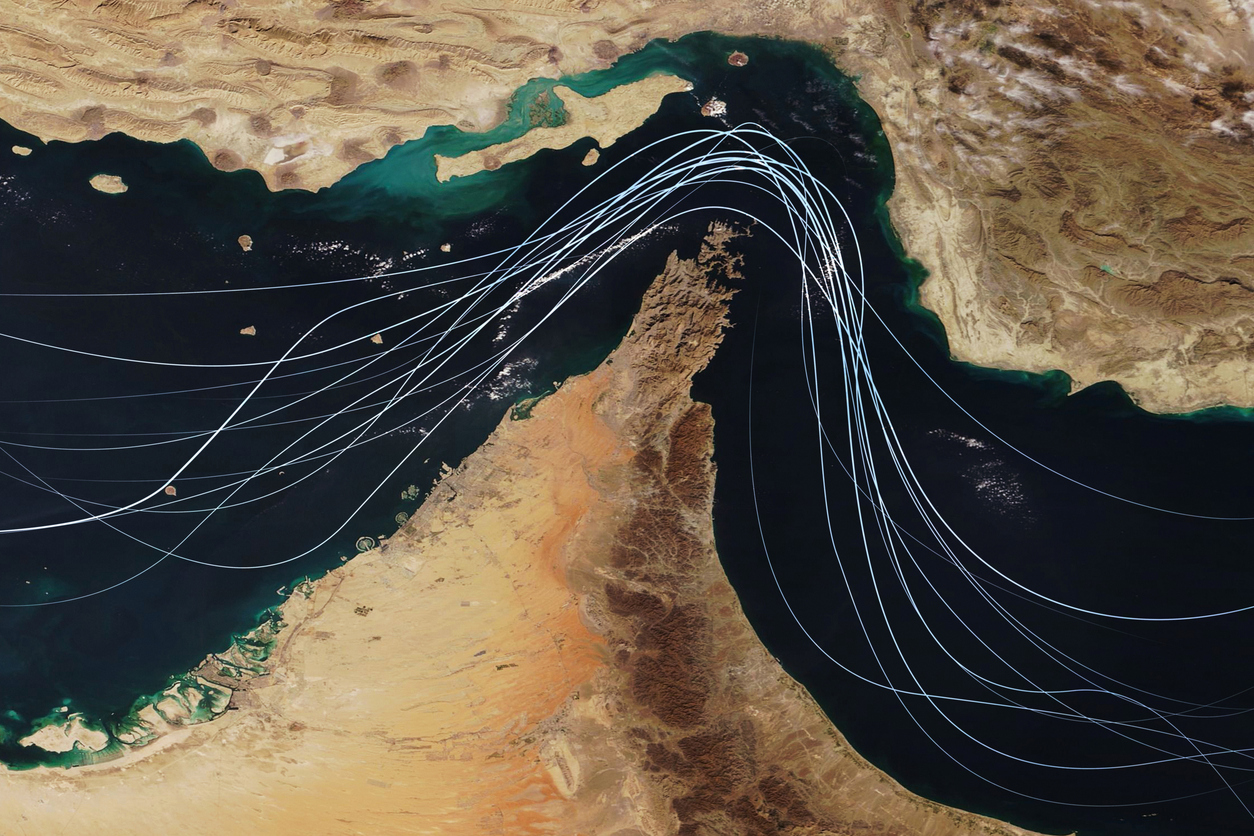
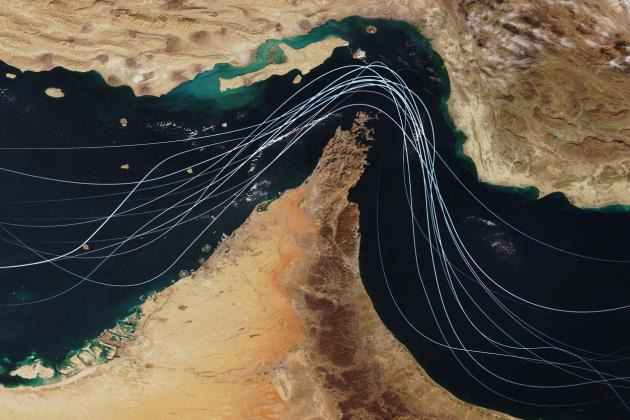
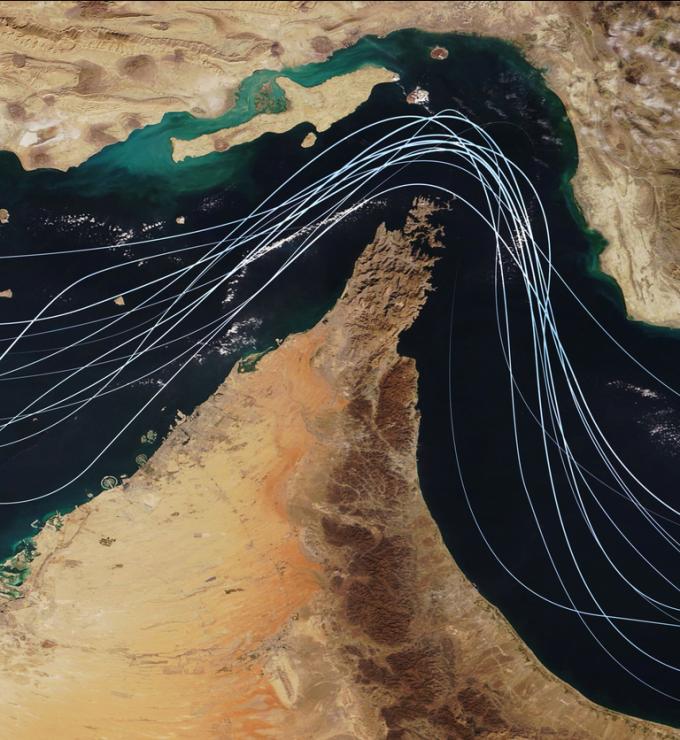
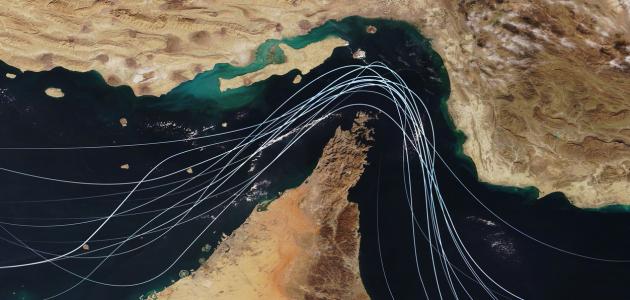
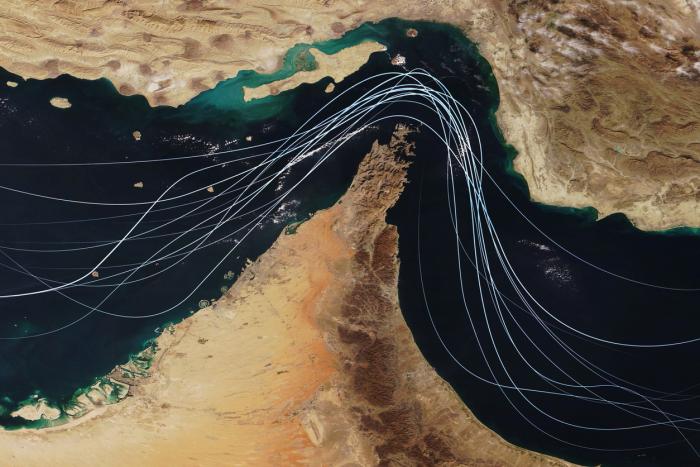
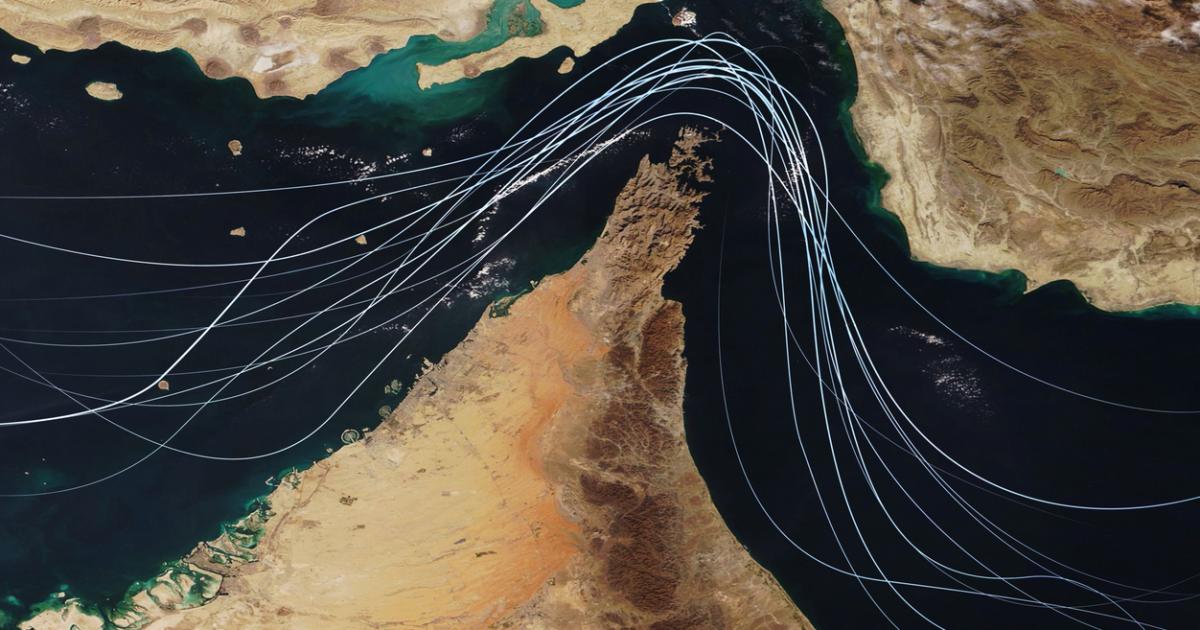
As the Iran conflict moves into its third month, two facts have hardened for the region’s leaders. The Islamic Republic, despite the severe degradation of its conventional military and the decapitation of its senior leadership by the U.S. and Israeli military, has survived, and it has retained the capacity to contest the Strait of Hormuz on terms it believes give it strategic leverage. For the Gulf Cooperation Council, the consequences of that survival outweigh anything the protracted nuclear negotiations are likely to deliver. The compact on which the Gulf order has rested for almost a half century - that the U.S. and international community would keep the Strait commercially functional even when Iran chose to render it militarily contested - has been broken. The Gulf states that built globalized national economies on that compact must now reconstruct their security paradigms, capital allocation, and industrial policy under conditions of permanent and profound maritime risk. Their internal divisions, the uneven performance of external guarantors, and the constraints of geography make the task more complex than any challenge their leaders have faced in modern times. But of the many decisions ahead, none will prove more consequential than the political and economic restructuring required to deny Iran enduring coercive power over the Strait. As Gulf leaders consider maps of their region in the coming months, they will likely conclude that geography is no longer a background feature. It is the battlefield.
The Shattered Compact
The conflict has broken the foundation on which the Gulf order, and much of the global economy, has rested for more than a generation. The Gulf monarchies built globalized economies on a narrow geographic base, exporting hydrocarbons, petrochemicals, fertilizer, aluminum, helium, and capital while presenting themselves as stable platforms for finance, logistics, tourism, artificial intelligence, and advanced manufacturing. They further protected that architecture through a powerful web of global partnerships, and the calibrated diplomacy they hoped would neutralize an increasingly aggressive Iran.
For nearly five decades, the strategy endured severe tests and proved its worth. It survived the Tanker War of the 1980s, the 2003 Iraq war, the rise of Iran-backed militias, the Arab Spring, the Houthi missile and drone campaigns against Saudi Arabia and the United Arab Emirates, the Qatar crisis, and the Israeli-Iranian missile exchanges of 2024. Yet its durability concealed a growing brittleness. The system rested on two assumptions: that Iran would calibrate violence below the threshold that closed or crippled Hormuz, and that a U.S.-managed international response could quickly restore commercial maritime confidence if Tehran launched a region-wide war. Both have now failed.
In retrospect, the cracks were visible earlier than most policymakers and analysts cared to admit. On July 14, 2006, Lebanese Hezbollah, using Iranian-supplied C-802 Noor anti-ship cruise missiles, struck the Israeli corvette INS Hanit off Beirut; a second missile in the same attack sank the Cambodian-flagged merchantman MV Moonlight some sixty kilometers offshore.[1] Four precedents were established in this incident that would shape the region’s history for the next two decades: that Iranian non-state actors would seek to hold surface combatants at risk; that Iran would supply anti-ship missiles to its proxies; that third-country commercial shipping fell within Iran’s threat envelope; and that the international community would take no action against Iran despite its role in the operation. The lesson read backward is that a revisionist Iran, having watched its proxy demonstrate maritime coercion at no cost, would continue to develop the tools and proliferate them to proxies throughout the region.
The Quds Force extended the template through the 2008 Basra crisis, when Iran-aligned militias threatened the southern Iraqi oil export infrastructure during Operation Charge of the Knights, and through the parallel development of small surface combatants, midget submarines, sea mines, and shore-based anti-ship cruise missiles documented in the same period.[2] [3] The decisive step was the transfer of short and medium-range ballistic and cruise missiles, including anti-ship variants, to the Houthis of Yemen.[4] By 2017, U.S. maritime authorities were warning that Houthi forces had attacked a Saudi warship and Emirati logistics vessels and attempted attacks on U.S. Navy ships in the southern Red Sea.[5] In April 2018, Houthi missiles struck Saudi energy facilities; in July, anti-ship missiles targeted two Saudi tankers near the Bab el-Mandeb, forcing Riyadh to suspend oil shipments through the Strait - the first clear case of an Iran-aligned militia translating capability into the operational disruption of a major energy route. The international response against Iran was negligible.[6] By the 2023-2024 Red Sea campaign, the Houthis had demonstrated the same coercive logic that would later play out in Hormuz: capability, distributed launchers, and political will were enough.
Like the Houthis in the Red Sea, Iran in 2026 did not need to defeat the United States Navy. It was necessary only to demonstrate that the artery on which the Gulf and the global economy depend could be converted from infrastructure into a battlefield. The difference for Iran, however, is in terms of magnitude. Closure of Bab el-Mandeb meant longer delivery times and higher shipping costs; closure or sustained disruption of Hormuz threatens irreplaceable sources of energy, fertilizer, petrochemicals, and regional food security. Before the conflict, the Strait carried roughly 20 million barrels per day of crude, condensate, and petroleum products - about one-fifth of global petroleum liquids consumption and roughly a quarter of seaborne oil trade. It carried about one-fifth of global LNG trade and the overwhelming share of Qatari LNG exports. Its fertilizer exposure is more severe still: between 20 and 30 percent of global fertilizer exports, and roughly 35 percent of global urea exports transit the Strait. Qatar’s helium production, indispensable for semiconductor manufacturing, medical imaging, and advanced industrial cooling, accounts for nearly a third of global supply.[7] [8] [9] [10] [11] [12] The narrative of the Hormuz crisis is generally set in Washington, London, and Brussels, but its first economic casualties sit in Asia. China, India, Japan, South Korea, Pakistan, Bangladesh, Sri Lanka, and the Philippines are not distant consumers of Gulf risk. They are among the first casualties of its events.
The Strait is also becoming a chokepoint for data, finance, cloud, and AI. Major underwater telecommunications cables include the Asia-Africa-Europe 1 (AAE-1), which connects Southeast Asia to Europe via Egypt, with landing points in the UAE, Oman, Qatar, and Saudi Arabia; and the FALCON network, which connects India and Sri Lanka to the GCC and East Africa. The Gulf Bridge International Cable System links the GCC and Iran. Billions have been spent on these systems and others currently under construction.[13] On May 9, 2026, IRGC-linked media demanded that foreign cable operators obtain Iranian permits, pay tolls, and assign repair contracts to Iranian companies. Whether or not Tehran can deliver on these demands, the demand is the point: the region’s digital arteries are now contested as well.
Tehran’s Strategic Logic
The Gulf countries must contend with the fact that the Islamic Republic has not abandoned its ambition to be a, if not the, regional hegemon. Iran’s size, population, and resources merit a large regional role; that is not the issue. Nor should we overstate its power: the conflict severely reduces its conventional capabilities. Iran lacks capital, alliances, and the trust of its people. But it retains the capacity to be a malign spoiler, readily using the opportunities of geography, inexpensive asymmetric technology, and patience to grind away at its adversaries. In the Strait, one of Tehran’s strategic targets has proven to be insurers who set the price for shipping along the route. Once war-risk premiums, letters of credit, crew availability, and port-call restrictions price Hormuz as a conditional route, diplomacy alone cannot restore the previous discount.[14]
The issue is also the regime’s revolutionary and expansionist ideology, its export of that ideology through armed proxies with a long history of violence, and the documented history of Iranian aggression against its neighbors. As long as Iran’s Quds Force exists, the regime’s external intent to destabilize its neighbors is clear.
Tehran’s claim to control Hormuz now adds a new and more dangerous dimension to that threat. If Iran succeeds in establishing that capability as a permanent feature of the regional balance, it acquires the ability to choke any Gulf economy, dictate its trading partners, and influence the global economy at a moment of its choosing - a coercive instrument the regime can hold in reserve against a future Western campaign against Iran in response to its support for militias, role in terrorism, or nuclear weapons-related activity.
There was some reason to believe the war might have produced a different outcome. Opening strikes killed Supreme Leader Ali Khamenei and much of the wartime command structure; U.S. and Israeli operations crushed Iran’s conventional military and destroyed a substantial portion of its missile program.[15] The conflict began when the regime was at what many believed to be a weak point, having just survived unprecedented levels of unrest. Yet, the system did not collapse, and no popular uprising took place. Decades of Revolutionary Guard penetration of Iranian society, and the harsh discipline imposed by wartime mobilization, have produced a more securitized regime, not a less stable one. The factional frictions now visible in Tehran are not about whether the Islamic Republic should survive but about which tactical concessions are required to sustain it. Its negotiating objectives remain familiar: reject calls to dismantle any facilities; preserve enrichment capacity while accepting finite, reversible constraints; demand substantial sanctions relief; protect missile capabilities; restore the regional proxy network; and sustain the new generation of leadership of the Islamic Republic.
The conflict has reinforced an older lesson Iran absorbed in the Iran-Iraq war: it will never be able to compete with its Arab neighbors in allies, capital, or military technology. However, by deploying asymmetric tools and absorbing whatever punishment the United States and its partners can deliver, it can impose strategic costs and shape the terms of conflicts. Missiles, drones, mines, fast boats, cyber operations, proxy forces, and (likely in the future) swarms of autonomous drones give Tehran leverage far disproportionate to its conventional weight. Outside such conflicts, Iran will use the same asymmetric tools to degrade regional stability and give itself a political edge. If it retains coercive power over the Strait, it can move the price of oil and LNG at will, distort capital flows, raise insurance premiums, and force Gulf states to spend vast sums on security and infrastructure to escape its reach. Having deployed the instrument once, it need not deploy it again; the threat alone will be sufficient in many diplomatic discussions.
If the regime is not overthrown in the next round of nationwide unrest, the next 18 to 36 months will be the most dangerous period for the Gulf and its people. Iran will likely rebuild air defenses first, then offensive weaponry, then proxies. The gray zone will remain its preferred battlefield: attributable enough to intimidate, deniable enough to complicate retaliation, and conducted in shades of gray against an international community that responds only when confronted with hard evidence. A poorer, more isolated, more paranoid Iran will lean harder on the instruments least susceptible to decisive defeat: cyber tools, more survivable drones, swarm-capable systems, distributed launch networks, and AI-enabled targeting. Iran has watched cheap systems impose expensive costs on defenses in Ukraine. It will likely export these lessons and new technologies to its proxies.
That is why nuclear diplomacy alone is insufficient as a policy to contain Iran. Europe, and at times Washington, has treated Iran primarily as a proliferation problem, often in the half-hearted hope that other files could be addressed later. The nuclear file matters most because the stakes are ultimate. Still, the artificial separation of nuclear diplomacy from missiles, militias, maritime coercion, cyber operations, and hostage-taking has been an indulgence the West can no longer afford. Whatever the intent, Western policy makers have long known that sanctions relief tied solely to nuclear restraint will inevitably be used, in part, to sustain Iran’s missile program and the proxy infrastructure. Any agreement that reduces enrichment while leaving Iran’s regional coercion structurally intact will buy time and simultaneously subsidize a future Iranian campaign of terror or missile attacks against others. This isn’t to say that sanctions relief can’t be used as a tool in nuclear talks. Rather, if sanctions relief is to be granted, it must be accompanied by a serious program that will constrain Iran's malign programs, which will be sustained and funded with these funds.
Deterrence remains possible, but only actions that target and degrade the instruments Iran uses in these operations, and the pain of sanctions and diplomatic isolation is legitimately felt by Iran’s leadership. For two decades, the Gulf states managed Iran through deterrence, outsourcing, and selective accommodation, often because of United Nations resolutions and Western pressure. They relied on U.S. Central Command to police the maritime arena and kept channels with Tehran open because geography made confrontation impossible. That was defensive realism in practice. Gulf rulers did not believe the Islamic Republic could be transformed by dialogue; nor did they see rapprochement as a goal. But they believed Iranian coercion could be bounded so long as Washington remained present and Gulf engagement remained a calibrated détente. That model may seem inadequate, but it is likely not yet obsolete. Shared gas and oil fields, narrow geography, maritime safety, and the requirements of the Hajj still require communication. Engagement without genuine pressure, however, will be read in Tehran as a sign of weakness.
The New Arithmetic of Gulf Power
If Iran’s behavior will seem a familiar challenge to policymakers, the regional political and economic topography that follows the conflict is not. The national strategies of the Council depend on sustained foreign capital inflows, expatriate labor, and access to sensitive advanced technology, all of which depend on a global perception of the region’s long-term potential for prosperity. Iran’s actions now put all this at risk, and the world will watch to see how the region reacts. In the near term, the post-conflict Gulf will be simultaneously more integrated and more fragmented. The more urgent functional pressures that involve missile defense, maritime insurance, food security, energy flows, capital markets, and data networks will lead to increased integration. However, when decisions affect elements of national systems that leaders believe involve assets that define sovereignty or national pride, the political instincts of rulers will push in the other direction.
Ideally, the Gulf Cooperation Council would respond to events by consolidating security and economic efforts among its members. By 2024-25, the six GCC states were spending approximately $120 billion a year on defense, making the Gulf one of the world’s most concentrated markets for air defense, missile defense, and counter-drone systems.[16] Regional collaboration with a focus on air defense integration, early warning systems, and the establishment of a joint “missile shield" to manage shared threats remains a long-term logical but politically elusive goal. Fragmentation has reduced the return on that investment. Ongoing Saudi-Emirati tensions, Omani neutrality towards Iran, and other differences make greater integration improbable at present. Rulers are also unlikely to surrender control over the ports, pipelines, air defenses, customs regimes, logistics corridors, and external partnerships that define their political and economic visions as well as national security. The most likely near-term outcome will be selective functional integration without greater political union: summits and exercises followed by improvements in joint early warning, maritime domain awareness, cross-border trucking, port substitution, and infrastructure hardening. Progress will be best measured collectively and when considered over the years.
A new arithmetic of regional power follows from this. States able to combine geography, capital, administrative discipline, and external partnerships will gain economic advantages and global stature. However, coastal states whose economic models depend on exposed maritime routes and on others to secure them must be willing to lose some degree of strategic autonomy. Legitimacy and finances will always remain a limiting factor in this dynamic: rulers cannot spend indefinitely on defense and corridors. The region’s citizens and expatriates must see that welfare, housing, employment, and services remain attractive. The new architecture must be paid for in ways that preserve the social contract. It is here that a collective approach offers the attraction of burden sharing. Lastly, the thin performance of regional institutions in the Iran conflict also has lessons. The winners will not be voices with the loudest communiqués. Rather, they will be those able to finance the construction of redundant and protected economic structures faster than Iran can rebuild its offensive reach.
Infrastructure expansion has already proven its worth. Past Saudi investments in the East-West pipeline and Emirati investments at Fujairah have proven both wise and profitable. Gulf states will now build pipelines westward to the Red Sea, creating expansion opportunities for existing Red Sea ports, including the new port of NEOM. Routes north will bring prosperity to Syria and Iraq if security issues are addressed.[17] But the region will also require additional protected tank farms, cross-border rail and trucking capacity, port substitution, emergency storage, hardened terminals, inland data centers, and more secure corridors for food, fertilizer, petrochemicals, aluminum, LNG, crude, and refined products. They have little choice. Hormuz, having been closed or made commercially unreliable once, regional leaders will assume it can happen again. The cost of these projects will be measured in years and billions of dollars, but also in dramatic shifts away from prior well-publicized priorities.
The logic of this dynamic will inevitably place Saudi Arabia at the center of this emerging architecture. The Kingdom’s advantages are now more than oil. It is depth. In a region built on coastlines, the Saudis offer a hinterland of size and scale located between the Persian Gulf and the Red Sea. Riyadh can connect the Gulf coast to the Red Sea, convert its massive cross-peninsula pipelines into strategic delivery systems, integrate ports and industrial zones, link logistics with Vision 2030 investments, and offer its territory as a land bridge to Gulf littoral neighbors. A Saudi-centered logistics map also gives Riyadh leverage over the prioritization of port access, tariffs, customs procedures, security guarantees, and investment sequencing. The westward development shift already underway will accelerate. Red Sea ports, industrial zones, tourism projects, logistics hubs, and pipelines will rise to national priority status.
The Red Sea, however, is not an escape from geography; it is a form of risk displacement. Iran and its Houthi proxies have missiles and drones that can reach western targets within the Kingdom. As in the past, Iran will want to build on its influence over the global economy because of its position at the Strait of Hormuz by threatening the Bab el-Mandeb through the Houthis or seeking to elevate Red Sea insurance costs through low-grade maritime harassment. The Quds Force is likely to introduce new drone technologies to extend the reach and lethality of Houthi missiles and drones across the Red Sea basin and the Gulf of Aden. Thus, a strategy that solves Hormuz by using Red Sea ports is not a clean escape. But it does open the field to new layers of defense being built there.
The United Arab Emirates carries its own advantages. Abu Dhabi and Dubai have built one of the world’s most capable and dynamic centers of multicultural commerce and technology, a tightly organized network of ports, finance, aviation, logistics, services, and, increasingly, artificial intelligence and digital infrastructure. Fujairah and Khor Fakkan sit outside the narrowest Hormuz kill zone and thus allow the UAE to export crude oil and refine products when the Strait is closed. The UAE’s diversified economy and rapid decision-making culture allow it to reallocate capital, cut deals, and develop international coalitions faster than most regional competitors. Its recent departure from OPEC underscored its economic independence and strategic agility. Qatar’s position will remain complicated. In the long term and despite Iran’s attacks on Doha, it, like other Gulf states, will need to engage with Tehran on the handling of shared gas fields. Qatar will also leverage its relations with Washington and Riyadh, as well as its media influence, to shape the narrative around the export of its LNG, petrochemicals, and aluminum.[18] Oman, with direct access to the Arabian Sea through Salalah and Duqm, leverages its neutrality to reduce its exposure to threats from Iran and its proxies. Kuwait's decisions in the coming months will likely not be dramatic. Domestic politics will constrain its diplomatic actions, and export limitations will constrain its immediate options. Bahrain’s options are also limited. Geography and fiscal reality will likely mandate increased economic integration with Saudi Arabia.
The conflict has allowed each Gulf state to demonstrate capable militaries and internal security services, as well as energy sectors built for redundancy and rapid restoration following attacks. None of these capabilities, however, solves Qatar’s LNG exposure, Kuwait’s oil export problem, Bahrain’s dependence on Saudi routes, Iraq’s southern terminal vulnerability, or the regional need to move helium, aluminum, fertilizer, and petrochemicals. Qatar has no alternative export route for LNG: liquefaction at Ras Laffan, loading at the Ras Laffan terminal, and passage through Hormuz are the only paths. Aluminum producers in Bahrain, Qatar, and the UAE face significant challenges. These metals can be moved overland to ports outside the Strait, but the process is slow, inefficient, and expensive. The region must also rely on the Strait to import alumina and bauxite, which feed its smelters. Nonetheless, in a system that may well be defined, at least to some extent, by differences in sectoral vulnerability, even partial escape will mean a shift in international stature.
The Reality of Magazine Depth and the Need for Indigenous Industrial Defense
Many of the military lessons of the conflict are already being absorbed by policymakers in the Gulf and Washington. It was clear from the first moments of the conflict that the region’s layered air defense architecture would be a powerful asset. The attack on the Gulf was fierce, and it cannot be forgotten that the defenders had relatively little wartime experience. Gulf militaries and security services fought with courage and skill throughout this conflict. At the time of this writing, the UAE successfully engaged more than 551 ballistic and 29 cruise missiles and 2,263 UAVs, becoming a far greater target for Iran than Israel.[19] Saudi Arabia intercepted hundreds of drones and dozens of ballistic and cruise missiles. Bahrain’s military faced more than one hundred missiles and hundreds of drones. While no defense system is perfect, the cost in lives and damage to these countries would have been substantially worse without the system they had so carefully put in place. [20] Gulf investments in Patriot, THAAD, advanced aircraft, radars, command-and-control systems, cyber capabilities, and maritime defenses took years to install and cost billions of dollars. Gulf officials assigned strong leadership to these programs, invested heavily in training, and developed deep relationships with reliable Western defense firms. Locally developed capabilities also played a critical defensive role. The UAE claimed that 85% of Iranian drones were eliminated by systems developed by the Emirati defense and technology conglomerate Edge.[21] Although less well-publicized, Gulf cyber defenses proved equally successful against Iran’s offensive cyberattacks, employing a similar architecture.
Unfortunately, the crisis also exposed an increasingly well-known and decisive constraint: interceptor magazine depth. High-cost interceptors cannot be expended indefinitely against mixed salvos of ballistic missiles, cruise missiles, drones, and decoys. A state that uses million-dollar interceptors against thousand-dollar drones will win individual engagements but could lose the campaign by exhausting itself financially. Prestige military platforms will not disappear. Gulf rulers will continue to value advanced aircraft and powerful naval assets. But defense dollars are already being shifted toward less expensive counter-UAS systems, electronic warfare, layered low-cost interceptors, passive defense, hardened command-and-control, shelters, redundancy, cyber defense, and improved radar coverage.
Gulf defense industrial policy will therefore become an element of economic diversification rather than an adjunct to it. Gulf states will demand co-production, technology transfer, and preferential access to replenishment queues. The United States will remain the anchor supplier because no other power can match its intelligence, logistics, missile defense, naval capability, airpower, or defense-industrial depth. France, the United Kingdom, Italy, South Korea, Turkey, Israel, Australia, and Ukraine are already competing successfully in this sector. The conflict has reinforced the lesson that, whereas it may be cost-effective and politically useful to diversify partners, no Gulf state can afford to lack a deep defense architecture, preferably one with local manufacturing of key elements.
Washington - The Indispensable Military and Technological Partner
It is common to hear that influential voices in every Gulf capital argue for reducing or ending military ties with Washington, citing the failure of U.S. commitments to deter the Iranian attacks and the consequences for the region following the months-long war. Gulf leaders are likely to reject this advice, having learned that. In contrast, they may be able to diversify their economic partners, but the U.S. remains the world’s sole military and technological superpower. An alliance with Washington may not be sufficient protection in the modern age, but it remains indispensable.
The Gulf has explored other engagements and will continue to do so. Qatar’s relationship with the Turkish military did not produce greater deterrence than Saudi Arabia’s Strategic Mutual Defense Agreement with Pakistan, signed in September 2025. France and the United Kingdom are important players in Gulf security. All will play a role in the Gulf's new evolution. Still, all lack the industrial base, the advanced semiconductor industry, the economic clout and diplomatic muscle, and, when needed in a conflict, the sheer military power that the U.S. can offer.
The same logic governs cyber and data infrastructure. Data centers, AI platforms, cloud systems, undersea cables, desalination plants, airports, and ports are now strategic targets. Data centers that cannot guarantee their air defenses, power security, and cyber defenses risk becoming expensive hostages to Iranian attacks. The Gulf’s economic transformation depends on confidence in precisely the assets Iran can threaten with low-cost tools. The Gulf Countries will use the urgency of this moment to expedite regional digital integration where possible and to accelerate dispersal, hardening, and redundancy of infrastructure. Hardening digital infrastructure is no longer a technology policy, given the priority regional countries have given to this issue in their development plans. It will become a core national security policy in a world where Gulf states must compete to earn the trust of the Western technology companies whose access decisions shape the next stage of growth.
Iraq - A Source of Hope and Concern
Iraq will rise on the Council’s list of priorities for reasons beyond its history and its oil. Iraq represents a potential corridor through which the Gulf could free itself of much of Iran’s control, but also an avenue which Tehran is currently using to attack the region directly. It will likely continue to be used to sabotage Gulf hopes. Iraqi militias were among the most aggressive actors during the conflict, launching dozens of drones against Gulf states and Kurdish areas.[22] [23]
Until that capability is neutralized, the Council will treat Iraq as much of a security theater as a potential target for strategic investment. Iraqi economic integration into the Gulf cannot proceed absent evidence that integration erodes rather than reinforces Iranian authority in Baghdad. Any major pipeline project intended to bypass Iran will be delayed until the militia threat is reduced. Washington has already begun to press Baghdad to constrain Iran’s clients in the country; it will press Riyadh and the other Gulf capitals to do the same.
Gulf Evolution and External Actors
Gulf states will maintain economic and technological relations with non-Western powers. Doing so has economic advantages but also reminds Iran that such relations are more important to these countries than any Iran might hope to establish. This rationale was likely one of the many reasons for the highly publicized mid-April 2026 visit of the Emirati Crown Prince to Beijing.[24] However, the conflict has also shown the hard limits of strategic diversification. China can build ports and data centers; Russia can be useful on OPEC+. Neither was able to constrain Iran during the Gulf crisis; both can be fairly accused of enabling the missile and drone programs that struck Gulf cities. Ukraine’s growing relations with the Gulf in support of counter-drone defense will also dim regional ties with Moscow. The Gulf states will not sever ties with Beijing or Moscow - the economic stakes are too high - but it may be less forthcoming with privileged access absent evidence that either will press Tehran toward more positive diplomatic outcomes and away from regional aggression.
Europe’s economic dependence on the region is well known, but its force projection capabilities are equally recognized, particularly in naval capacity. Europe will retain strong commercial interests in Gulf oil, LNG, hydrogen corridors, trade, weapons sales, Red Sea security, and reduced dependence on Russia, and it can finance, regulate, insure, and provide technology. The conflict, however, demonstrated that it cannot be considered a hard-security anchor. India may have additional capacity to serve as a swing actor: its need for Gulf energy, remittances, and trade routes; its wariness of China; its unwillingness to surrender strategic autonomy to Iran. If the Gulf states are willing to commit capital, port capacity, and political attention to the India-Middle East-Europe Economic Corridor (IMEC) and related Gulf infrastructure, it could become an important part of the new economic architecture.
Pakistan’s relationship with Saudi Arabia likely has improved as a result of the conflict, while its relationship with the Emirates has publicly suffered.[25] The September 2025 Saudi-Pakistan Strategic Mutual Defense Agreement formalized a partnership that had ripened over six decades, and the ambiguity over nuclear coverage gives the pact a strategic weight the public text does not. Nonetheless, the agreement did not deter the Iranian missile attacks on Gulf cities. Islamabad has served a useful diplomatic purpose, but reported Iranian use of Pakistani land corridors for trade with China raises an important question: whether Pakistan can be both a Saudi security partner, a reliable diplomatic interlocutor with Washington, and an economic pressure-release valve for Tehran.[26] Whether the pact evolves toward concrete operational integration or remains the symbolic instrument it appears to be today depends on multiple variables, including Pakistan’s own political and economic trajectory and Washington's patience with Saudi diversification of security relationships.
Turkey occupies an awkward middle ground. Ankara has improved ties with Riyadh, retains operational reach in Qatar, and supplies drones that have become familiar across regional inventories. Yet Turkey’s ties to the region did not deter Iranian attacks, and it competes with Gulf states for influence in Iraq and Syria. It will remain useful as a selective defense and political partner, not as an anchor of Gulf security.[27].[28] Its regional trajectory is likely to continue on its present course, in which it is used selectively for economic and military diversification.
The Gulf states will deal with the wider neighborhood as an arena for ad hoc competition rather than as a common architect. Egypt may benefit from commercial traffic related to the Red Sea and Suez. Still, its debt issues, local African priorities, and Gulf wariness about assigning it too great a role will limit its involvement against Iran. Jordan could become a critical transit state if the corridor's northern economic arc develops. Israel may gain from security integration, intelligence cooperation, and even plans for Mediterranean connectivity. Still, any overt corridor architecture involving Israel will remain hostage to developments in Gaza, to a Jerusalem whose political missteps with Arab capitals have not abated, and to Arab publics that in recent years have increasingly perceived Israel as part of the region’s problem rather than its solution.
Washington’s Moment for Action
For Washington, the previous U.S.-Gulf relationship has not ended; it will need to be managed differently in terms of strategy, diplomatic approach, burden-sharing, and military presence. If the next arrangement will be more transactional and less automatic, it will also offer fresh opportunities and new benefits. The conflict has demonstrated that Gulf access to the Strait and energy stability require U.S. security, especially now that Europe is plainly unable to share more than a fraction of the burden during hostilities. Even with regional doubts about Washington’s reliability, the conflict has demonstrated what only the United States can do at scale: simultaneous complex military operations supported by intelligence, logistics, and a private defense sector no other power can match. France, the United Kingdom, Italy, Ukraine, and, selectively, Israel will remain valuable partners to the Gulf. But none can be considered a substitute for the U.S. The lesson of this conflict is not that American power is in decline; it is that its power, even when applied decisively, does not automatically produce strategic stability - and that Washington no longer brings a coalition with it. Some may argue, however, that even when the U.S. brought an international coalition, i.e., in Iraq or Afghanistan, that stability did not follow.
Some of the region’s skepticism about Washington’s reliability is unfortunately earned. Two decades of U.S. policy reversals on Iran across successive administrations have produced a credibility problem that no single deal or administration will repair. The burden-sharing argument must acknowledge that the Gulf is hedging in part because its experience of American constancy has been mixed. The region has good reason to wonder what position the next administration will take. At the same time, one may argue that the region collectively may have owed a greater degree of collective response to the Iranian proxy threat, which was too often allowed to be seen solely in terms of their proxy actions against Israel. Washington should also urge partners to do more to counter the anti-US and, when appropriate, the anti-Israel narratives that have dominated the region’s airwaves in recent years.
U.S. policymakers will continue to pursue the ambitious economic partnership agenda laid out during President Trump’s Riyadh visit and the subsequent Washington visit by the Saudi Crown Prince, including aviation, energy, infrastructure, artificial intelligence, and quantum computing. The U.S. defense industry is already deeply and successfully engaged. Washington will also want to ensure that the U.S. private sector can engage on emerging infrastructure and security opportunities as the region develops its new approach to national economic security. These will likely include Syria, Lebanon, and Jordan, where Washington has invested diplomatic bandwidth in encouraging development.
In terms of policy, however, three paths are likely available to Washington. The first is to focus on the security of the Strait, integrated air defense, replenishment depth, and infrastructure-specific guarantees. The second is to shift toward offshore balancing and accept greater regional risk, and the ensuing drift of Gulf states away from the U.S. orbit. The third is a middle road that will be less defined, remaining indispensable in crises, reluctant and slow to respond to commitments, and unclear on an ultimate strategy. Unfortunately, the history of U.S. foreign policy suggests that Washington will likely choose the third option. This will be the most dangerous choice because it guarantees high costs without maximizing long-term influence. If the United States wants the post-Hormuz order to favor its interests, it must encourage an order that promotes regional equilibrium and security cooperation to the infrastructure that will define the next order: pipelines, ports, rail, data cables, missile and cyber defense, ammunition stocks, air bases, energy corridors, and digital systems. The latter is important, but we also need to keep in mind that Infrastructure development alone should not be confused with a political strategy.
The United States should not try to restore the prewar Gulf. That order depended on an assumption already disproved. Washington’s task is to shape the post-Hormuz balance before Tehran, Beijing, and Moscow shape it to fit their own priorities. Implementation of a specific plan will also allow some effort at budget discipline and policy sequencing, and even an effort at reattaining a degree of bipartisanship on Iran policy. The alternative is to surrender the future of the order to those willing to bear the costs necessary to achieve a region more conducive to their long-term vision. For Tehran, this would be through violent coercion; for Beijing, through commerce; for Moscow, through energy markets; while the United States would be perceived as retaining the obligations without the leverage.
The Gulf the West will encounter in the coming months after the Hormuz crisis will not be the Gulf it knew. Its rulers have learned what every generation of statesmen must learn: that regional order survives only when someone wills it into being and pays a high national price in inevitably difficult moments. Their new world may not be more harmonious, but it may be more disciplined by the vulnerability of the times.
The United States retains the indispensable instruments that traditionally shape global trade: semiconductors and capital markets, as well as aircraft carriers and the men and women willing to defend international waterways. Its absence would create a vacuum no other country can or would wish to fill. What it requires, and has too often seemed to lack in recent years, is the temperament of constancy in statecraft: the discipline to sustain policy across administrations, to sequence economic and military instruments coherently, to end the incoherence of trying to deal with Iran simultaneously as a cause and a country, to treat the Gulf not as a basket of bilateral transactions subject to domestic political ideologies but as a system whose equilibrium would serve long-term U.S. and global interests.
It would not be sufficient to focus solely on the instruments of order and engagement without describing the regional equilibrium we hope to achieve and how we will overcome internal disputes within the Gulf Cooperation Council. Likewise, we will at some point need to consider what a disciplined U.S diplomatic path would hope to achieve in the region regarding such nagging issues as Gaza, Yemen, and normalization with Yemen. We should have the humility to appreciate that the demands of the times require perhaps a more tempered initial focus. Such ideas will need to wait until the conclusion of the ongoing conflict and maturation of strategies by the leaders of the Gulf states themselves.
The question history will ask of this generation of policymakers is not whether Iran will retain a capacity to threaten the Strait of Hormuz. The question is whether Washington, having understood the consequences of that capacity, can possess the imagination and discipline to work with Gulf partners to construct a regional order in which the threat no longer poses a risk to the global economy. Statesmanship is the discipline of choosing, in the absence of certainty, the course one can defend before posterity.
[1] U.S. Navy: Hezbollah Attack: Lessons for the LCS? By Norman Polmar, Author, Ships and Aircraft of the U.S. Fleet, September 2006; Proceedings. Vol. 132/9/1,243; https://www.usni.org/magazines/proceedings/2006/september/us-navy-hezbollah-attack-lessons-lcs; PowerPoint Briefing: Risk Intelligence: Maritime Threats Relating to the Conflict in Yemen. https://www.ukmto.org/-/media/ukmto/mievom-notes-pdf/indian-ocean/2017/dec/20171128-risk-intelligence-ian-wilkinson-maritime-threats-related-to-yemen.pdf?rev=c3aa98952ffb4b91a8ac712384b7c4b5.
[2] Haitham Numan, In Southern Iraq, Iran’s Intentions Backfire, The Washington Institute, August 9, 2018. See also Michael Knights, Operation Knight’s Charge (Saulat al-Fursan), Institute for the Study of War, April 16, 2008, https://understandingwar.org/research/middle-east/operation-knights-charge-saulat-al-fursan/
[3] Daniel Gouré and Rebecca Grant U.S. Naval Options for Influencing Iran, Naval War College Review, Volume 62, No. 4, 2009, 16.
[4] Defense Intelligence Agency Report: Seized at Sea: Iranian Weapons Smuggled to the Houthis, April 30, 2024. Seized_at_Sea.pdf
[5] Al Safina Security. “MARAD advisory warns of Yemen risks to U.S.-flag ships,” April 4, 2017. https://alsafinasecurity.com/marad-advisory-warns-yemen-risks-u-s-flag-ships/.
[6] Tsvetana Paraskova, Oil Prices Surge After Houthi Missile Attacks On Riyadh, Aramco Facilities, OilPrice.com, April 11, 2018, https://oilprice.com/Energy/Energy-General/Oil-Prices-Surge-After-Houthi-Missile-Attacks-On-Riyadh-Aramco-Facilities.html.
[7] Susannah Savage, Malcolm Moore and Verity Ratcliffe, Hormuz disruption raises risk of global food shock, traders warn, The Financial Times, April 21, 2026, https://www.ft.com/content/648a37b8-e73b-490b-8fd2-fe3e0d4f5c2d?syn-25a6b1a6=1
[8] Amid regional conflict, the Strait of Hormuz remains critical oil chokepoint - U.S. Energy Information Administration (EIA)
[9] Guy Chaza, The Financial Times, April, 23, 2026, The last thing we needed’: US farmers hit by spiralling prices due to Iran war, https://www.ft.com/content/c3b70fde-3e8a-4661-a4cb-7dc1564f43b1?syn-25a6b1a6=1
[10] Mischa Frankl-Duval, A helium shortage could be the next Hormuz headache, March 27, 2026. https://www.ft.com/content/8d715a36-ddb0-4dec-95c9-9a9b1214d873
[11] Iran war chokes off helium supplies in threat to chipmakers and healthcare. The Financial Times, March 29, 2026. https://www.ft.com/content/2c5068d6-b0a5-4b9e-967f-958f8df23899?syn-25a6b1a6=1
[12] Leslie Hook, Abu Dhabi aluminium plant faces lengthy outage, warns EGA, The Financial Times, April 3, 2026, https://www.ft.com/content/c860846e-e7e9-42cf-9c26-15ca516169b0?syn-25a6b1a6=1#post-f8ab05bf-7693-4822-a8a4-43b897da7335 and Kevin Chan, Iran war halts Qatar helium output, threatening global tech supply chains, Associated Press, March 21, 2026, https://apnews.com/article/iran-chips-semiconductor-helium-exports-war-fe934332f7c83bb722ca87db22cd57d0.
[13] Federico Maccioni, The Hormuz digital chokepoint: How does the Iran war threaten subsea cables? Reuters, April 26, 2026. https://www.reuters.com/business/media-telecom/hormuz-digital-chokepoint-how-does-iran-war-threaten-subsea-cables-2026-04-28/.
[14] Global Risks: How war in the Middle East is turning governments into insurers of last resort, World Economic Forum, April 9, 2026, https://www.weforum.org/stories/2026/04/how-middle-east-war-turning-governments-into-insurers-last-resort/
[15]Mark Mazzetti, Tyler Pager, Ronen Bergman, Farnaz Fassih, Eric Schmitt, Erika Solomon, and Julian E. Barnes, In War’s First Week, a Punishing Military Campaign With No Coherent Endgame, The New York Times, March 7, 2026, https://www.nytimes.com/2026/03/07/us/politics/iran-war-first-week.html.
[16] Missile Strikes: CSIS Missile Gulf States Missile Defense — Strategic Impact Analysis
Impact March 21, 2026, Gulf States Missile Defense — Strategic Impact Analysis — MissileStrikes.com. See also Trends in World Military Expenditure, 2024, Stockholm International Peace Research Institute. Trends in World Military Expenditure, 2024 | SIPRI.
[17] Iraq plans new pipeline to Syria as oil exports slump amid regional conflict, Arab News, March 26, 2026. https://www.arabnews.com/node/2637770/business-economy
[18] Ivana Kottasová, What is the South Pars gas field and why is Israel’s attack an escalation? CNN, March 19, 2026, https://edition.cnn.com/2026/03/19/middleeast/iran-qatar-south-pars-gas-field-explainer-intl.
[19] UAE air defence systems engaged 2 ballistic missiles and 3 UAVs on Friday, 3 injured. Aletihad, May 8, 2026. UAE air defence systems engaged 2 ballistic missiles and 3 UAVs on Friday, 3 injured - Aletihad News Center
[20] Hassan Al-Mustafa, GCC’s post-Strait of Hormuz crisis challenges, Arab News. May 6, 2026. https://www.arabnews.com/node/2642551.
[21] Fareer Rahman, More than 85% of Iran's drone strikes on UAE thwarted by Edge defence systems, The National, May 5, 2026. https://www.thenationalnews.com/business/economy/2026/05/05/more-than-85-of-irans-drone-strikes-on-uae-thwarted-by-edge-defence-systems/.
[22] Mustafa Saadoon, Militia Drones from Iraq Threaten New Gulf Crisis, Alhurra, March 31, 2026. https://alhurra.com/en/17451.
[23] Francesco Salesio Schiavi, Iran-Aligned Militias Jeopardize Iraq’s Gulf Reset, The Stimson Center, https://www.stimson.org/2026/iran-aligned-militias-jeopardize-iraqs-gulf-reset/,
[24] Zeng Jixin, Sheikh Khaled's Beijing visit affirms UAE-China ties in a troubled world, The National, April 15, 2026. https://www.thenationalnews.com/opinion/comment/2026/04/15/uae-china-middle-east/
[25] Elian PeltierZia ur-Rehman and Vivian Nereim, U.A.E. Expels Pakistani Workers, as Pakistan’s Peacemaking Creates a Rift, The New York Times, May 8, 2028, https://www.nytimes.com/2026/05/08/world/asia/uae-pakistan-workers-deportations.html.
[26] Alex Kimani, Pakistan Opens Iran Land Corridors as Region Scrambles for Routes Beyond Hormuz, Oilprice.com, May 4, 2026. https://oilprice.com/Energy/Crude-Oil/Pakistan-Opens-Iran-Land-Corridors-as-Region-Scrambles-for-Routes-Beyond-Hormuz.html
[27] Tim Chattell, Talk of a Turkish military alliance with Saudi Arabia and Pakistan reflects Ankara’s opportunistic ‘hedging’ strategy, Chatham House, January 2026, https://www.chathamhouse.org/2026/01/talk-turkish-military-alliance-saudi-arabia-and-pakistan-reflects-ankaras-opportunistic.
[28] Ali Mammadov, What Iran’s attacks on Turkey reveal about NATO’s future, The Atlantic Council, March 26, 2026, https://www.atlanticcouncil.org/blogs/turkeysource/what-irans-attacks-on-turkey-reveal-about-natos-future/

