







- International Affairs
- Middle East
Introduction
Prince Reza Pahlavi’s European tour in the spring of 2026 developed into a matter of public discussion within the European debate on Iran. His appearances in Italy, Sweden, and Germany took place at a moment when the Islamic Republic was coming under increasing international pressure following the protests after the death of Jina Mahsa Amini in 2022, new waves of repression, and the military escalations of 2025 and 2026. At the same time, reactions to Prince Reza Pahlavi demonstrated how uncertain European states remain in dealing with Iranian opposition movements, exile politics, and scenarios of regime change.
During the tour, Prince Reza Pahlavi became a target for people's projected fears and prejudices. Supporters presented him as a secular transitional figure, an international voice of the protest movement, and a symbol of an Iran beyond the Islamic Republic. His opponents, mainly from the left-wing spectrum, by contrast, regarded him as a restorative figure burdened by an authoritarian historical legacy, closely aligned with Western and Israeli interests.
Particularly controversial was his position on the conflict between Israel, the United States, and the Islamic Republic. Prince Reza Pahlavi repeatedly argued that military measures were not directed against Iran as a nation, but against the regime’s apparatus of repression. Opponents countered that military violence cannot be cleanly separated from its societal consequences and inevitably affects civilians, infrastructure, and political dynamics within Iran.
Especially in Europe, this argument provoked sharply contrasting reactions. Conservative and transatlantic circles interpreted Prince Reza Pahlavi’s statements as legitimate support for an oppressed population. Left-wing and anti-imperialist groups, by contrast, viewed them as rhetorical preparation for Western regime-change policy. The tour thus exposed three lines of conflict: the strategic ambivalence of European Iran policy, the fragmentation of the Iranian exile opposition, and the polarization of Western debates over interventionism, human rights, and the geopolitical order.
Europe and the Crisis of Iran Policy
Since the protests following the death of Jina Mahsa Amini in 2022, European criticism of the Islamic Republic has intensified significantly. Images of demonstrations, executions, women’s protests, and state violence generated considerable public pressure on European governments. The “Woman, Life, Freedom” movement rapidly became a global symbol against authoritarian rule and patriarchal violence.
Nevertheless, European states maintained diplomatic channels. The Islamic Republic’s nuclear program, regional security issues, prisoner/hostage exchanges, and economic interests prevented a policy of complete isolation toward the regime. This produced the structural ambivalence of European Iran policy: on the one hand, Europe intensified sanctions and human rights criticism; on the other hand, it avoided any open support for regime change or an exile-political alternative leadership.
Several think tanks warned against underestimating the consequences of a possible state collapse of the Islamic Republic. The German Stiftung Wissenschaft und Politik pointed to the danger of regional destabilization; Chatham House repeatedly examined the Islamic Republic’s regional influence and the risks of an open military conflict.
Iran occupies a central geopolitical position in the Middle East. The country borders Iraq, Afghanistan, Pakistan, and Turkey and exerts considerable influence over conflicts in Lebanon, Syria, Iraq, and Yemen. An uncontrolled collapse of state institutions would have far-reaching consequences: regional power struggles, new refugee movements, even more disruptions of energy and trade routes, and the escalation of ethnic conflicts.
In addition, there is a domestic security dimension within Europe itself. Intelligence services have repeatedly warned of the Islamic Republic's influence and surveillance operations targeting opposition figures. The Dutch intelligence service AIVD documented corresponding activities by the Islamic Republic's security apparatuses; Germany’s Federal Office for the Protection of the Constitution also warned about the regime's intelligence operations in Germany.
Thus, a paradoxical situation emerged: the Islamic Republic was increasingly perceived as a security problem, while at the same time, no clear strategy existed for dealing with possible alternatives. Within this field of tension, Prince Reza Pahlavi gained international visibility.
Prince Reza Pahlavi as a Political Figure
Prince Reza Pahlavi, son of the last Shah Mohammad Reza Pahlavi, has for decades been among the best-known personalities of the Iranian exile opposition. After the revolution of 1979, the Pahlavi family left Iran and has since lived predominantly in the United States. The legitimacy crisis of the Islamic Republic following the protest movements beginning in 2017, and especially since 2022, brought him renewed international attention.
Supporters regard him as a secular symbolic figure against the regime. His Western socialization, media presence, and contacts with political elites in Europe and North America make him, in the eyes of his supporters, a suitable spokesperson for the opposition. Prince Reza Pahlavi regularly emphasizes that he does not seek a return to absolute monarchy. Instead, he supports a democratic referendum on Iran’s future form of government.
Opponents, however, accuse him of relativizing the authoritarian legacy of the Pahlavi era. Particular focus is placed on restrictions on political freedoms before 1979. In addition, there is a fundamental problem: under the conditions of the Islamic Republic, neither free political organizations nor reliable opinion polls can be established. It therefore remains unclear how much actual support various opposition actors possess within Iran.
Reuters reported in 2023 on his visit to Israel and its symbolic effect. Supporters interpreted it as a signal of possible future rapprochement between Iran and Israel. Opponents, by contrast, viewed it as confirmation of his proximity to the geopolitical interests of Western states.
Le Monde described Prince Reza Pahlavi at the beginning of 2026 as a central figure of a new monarchist mobilization within the exile opposition, while pointing to his difficulties in building stable opposition alliances. Kurdish groups, left-wing organizations, and republican forces in particular frequently rejected his political role.
Thus, even before the beginning of his European tour, Prince Reza Pahlavi was already a highly polarizing figure: for his supporters, he embodied national unity, secularism, and international compatibility; for his opponents, he represented monarchist nostalgia, political personalization, and problematic proximity to external power interests.
Due to the comprehensive surveillance and control exercised by the regime, it is currently hardly possible to conduct objective and transparent opinion polls on the ground in Iran in which representative segments of the population can freely express their assessments of political actors affiliated either with the regime or with the opposition. Against this background, studies conducted by external research institutes assume particular importance.
A central source for analyzing the political attitudes of the Iranian population is the study by the institute GAMAAN (“Group for Analyzing and Measuring Attitudes in Iran”), published in June 2024 under the title “Political Preferences of Iranians.” The aim of the study was to assess the political preferences of Iranian society as well as attitudes toward various opposition figures. At the center of the findings was Prince Reza Pahlavi, who, according to the survey, with 31 percent approval, is considered the most popular political figure among the opponents of the Islamic Republic.
The results of the study demonstrated that Prince Reza Pahlavi already occupied a significant role within the Iranian opposition in June 2024.
A particular focus of the survey concerned the question of a possible leadership role for Prince Reza Pahlavi during a political transition phase in Iran. Around 49 percent of respondents stated that they would “fully” or “partially” support such a role. By contrast, approximately 35 percent rejected this idea.
These findings illustrate the political tensions and differing visions for the future within Iranian society. While part of the population sees Prince Reza Pahlavi as a suitable figure for a process of political transformation, others express reservations regarding a possible return of monarchical structures or a concentration of political power in the hands of a single individual.
The Global Day of Action for Iran: International Protests and Support for Prince Reza Pahlavi
On February 14, 2026, large-scale protest demonstrations by Iranians living abroad took place worldwide at the initiative of Prince Reza Pahlavi. The events were held under the slogan “Global Day of Action” and pursued the goal of drawing international attention to the political crisis, the human rights violations, as well as the ongoing protest movements in Iran. At the same time, the aim was to increase international pressure on the Islamic Republic and strengthen support for the Iranian opposition movement. Demonstrations were organized, among other places, in Toronto, Los Angeles, Washington, and Munich, and brought together hundreds of thousands of participants who expressed their solidarity with the protesters in Iran.
The largest rally took place in the North York district of Toronto. There, the demonstrators called on the Canadian government to officially recognize Prince Reza Pahlavi as the leading figure of a future transitional government in Iran. According to the Canadian broadcaster CBC, Toronto police estimated the number of participants at approximately 350,000 people. If this figure is confirmed, it would constitute the largest gathering of Iranians outside their homeland in recent history. Despite temperatures around the freezing point, numerous participants traveled from various regions of Canada as well as from the United States in order to take part in the demonstration. The organizers also stated that the protests were intended not only to mobilize the Iranian diaspora, but also to inform the international public about the political situation in Iran and to encourage foreign governments to take more decisive action.
The Canadian government responded to the demonstrations by reaffirming its existing position toward the Islamic Republic. It declared that it would continue to hold the leadership of the Islamic Republic accountable for human rights violations and pointed out that the IRGC had already been designated as a terrorist organization by Canada in 2024.
Extensive protests also took place in the United States. In Los Angeles, according to police reports, more than 300,000 people participated in the demonstrations. In addition, smaller rallies were organized in other cities, including Washington. In Munich, despite winter weather conditions, around 250,000 participants gathered. During his speech, Prince Reza Pahlavi commemorated the victims of the recent protests in Iran and emphasized that the people in Iran were not isolated. At the same time, he contradicted the portrayal that the Iranian population was politically divided or disunited.
In his public appearances, Prince Reza Pahlavi called on the international community to take more decisive action against the Islamic Republic. Among other things, he advocated weakening the state repression apparatus, cutting off the regime’s financial resources, expelling diplomats, and criminally prosecuting those responsible for human rights violations. Furthermore, he argued in favor of recognizing a legitimate transitional government that should lead Iran toward democratic reforms and political transformation.
Supporters of Prince Reza Pahlavi argued that no left-wing opposition group had mobilized comparable numbers within the diaspora in recent decades. Particularly noteworthy about the demonstration in Munich was the participation of veterans and former leading figures of Marxist and radical Islamist organizations, some of whom had been imprisoned for up to eleven years in prisons of the Islamic Republic. They appeared as invited guest speakers at the mass event and emphasized that they recognize the leadership role of Prince Reza Pahlavi during a transitional phase following the fall of the Islamic Republic, without necessarily advocating a monarchical form of government in a future Iran.
With regard to the left-wing and anti-imperialist opponents of Prince Reza Pahlavi in Italy, Sweden, and Germany, it should be noted that they remained largely silent concerning the massacres of defenseless demonstrators on January 8 and 9, 2026. Furthermore, many of them tacitly or openly adopted the narrative of an alleged Israeli-American conspiracy.
Italy: Symbolism, Media, and Political Conflicts
Italy was one of the most important stops on the European tour. Rome traditionally maintains close economic relations with the Islamic Republic, but since 2025 it has intensified its political rhetoric toward the Islamic Republic and the IRGC. The Italian government thus positioned itself between economic pragmatism and growing security-political distance from Tehran.
Prince Reza Pahlavi appeared in Rome in mid-April 2026 and was present, among other places, in Montecitorio, the seat of the Italian Chamber of Deputies. Italian media frequently described him as a possible transitional actor after a collapse of the Islamic Republic. At the same time, the government avoided any official diplomatic elevation.
During his stay, Prince Reza Pahlavi sharply criticized European diplomacy toward Tehran. In his view, negotiations and diplomatic contacts effectively stabilize a repressive regime. However, the visit also triggered protests. Left-wing Iranian exile factions and Italian anti-imperialist groups warned against a glorification of the monarchy and against the political legitimization of Western interventions.
Particularly symbolic was his presence in Montecitorio. Images of the exiled prince in the Italian parliament circulated extensively within monarchist diaspora networks. Supporters interpreted this as a sign of growing international recognition. Yet the actual political significance remained limited: neither the Italian government nor official EU institutions signaled support for an exile-political alternative leadership.
Clear lines of conflict also became visible within the Iranian diaspora in Italy itself. Monarchist groups presented the pre-revolutionary Lion-and-Sun flag as a symbol of national identity. Other groups warned against romanticizing the Shah era and recalled political repression during the monarchy. The Italian debate thus highlighted how difficult it is for European states to support democratic protest movements without slipping into the logic of geopolitical interventions.
Sweden: Diaspora Center and Political Polarization
In Sweden, the diasporic-political dimension became particularly evident. Hardly any other European country hosts such a large and politically active Iranian diaspora. Since the 1980s, Sweden has developed into an important center of exiled Iranian politics. Left-wing activists, monarchists, liberal opposition figures, and members of ethnic - particularly Kurdish - minorities found refuge there.
Meanwhile, relations between Stockholm and Tehran deteriorated considerably in recent years. The case of Ahmadreza Djalali, the conviction of Hamid Nouri, and security warnings concerning the Islamic Republic’s intelligence activities led to increasing distance between the two states.
Against this background, Prince Reza Pahlavi’s visit to Stockholm acquired particular political significance. On April 13, 2026, he appeared in the Swedish parliament. The invitation was supported especially by the Christian Democrats and the Sweden Democrats.
Le Monde described the visit as controversial. The newspaper emphasized that Prince Reza Pahlavi’s invitation triggered intense debates in the Swedish public sphere and within the Iranian diaspora. His party-based embedding reinforced the impression that Prince Reza Pahlavi primarily found support in anti-clerical, national-conservative, and security-oriented milieus.
In parliament, Prince Reza Pahlavi once again criticized European policy toward the Islamic Republic. The regime, according to his message, was not reformable. At the same time, he presented himself as the representative of a secular and democratic transitional project. His rhetoric aimed to distance himself from notions of a restorative monarchy. Reactions nevertheless remained polarized. Monarchist groups organized demonstrations in Stockholm and displayed the Lion-and-Sun flag as a symbol of national unity. Opponents accused him of authoritarian nostalgia, political centralism, and legitimizing Western military interventions.
According to Le Monde, 71 public figures published an open protest against his invitation to parliament. The open letter argued that the invitation could be understood as support for an ongoing war. The debate intensified particularly after Prince Reza Pahlavi’s support for U.S.-Israeli attacks. His distinction between Iran as a nation and the Islamic Republic as a regime failed to convince some of his opponents. They responded that military violence always carries civilian and societal consequences.
In Sweden’s left-wing and anti-imperialist circles, this criticism became linked to the experiences of Western interventions in Iraq and Libya. Monarchist groups, by contrast, argued that anti-imperialist positions effectively bolstered the Islamic Republic because they focused too heavily on Western power politics instead of the regime’s repression.
Despite the high visibility of the visit, the Swedish government itself remained cautious. Prince Reza Pahlavi received a parliamentary platform, but no official government reception. This restraint corresponded to the general European line: increasing distance from the Islamic Republic, but no open regime-change policy.
Germany: Federal Press Conference, Media Criticism, and Escalation
Media controversies became most concentrated in Germany. Germany traditionally occupies a special role within European Iran policy. Economic relations, diplomatic mediation, and security interests have shaped relations with Tehran over decades. Germany’s Federal Agency for Civic Education describes the Mykonos trial of the 1990s in particular as a turning point in German Iran policy.
Since the protest movements beginning in 2022, criticism by German government representatives regarding human rights violations and repression intensified significantly. At the same time, the German government remained conspicuously reserved toward Prince Reza Pahlavi. Government spokespersons declared before his visit that no meetings with government members were planned.
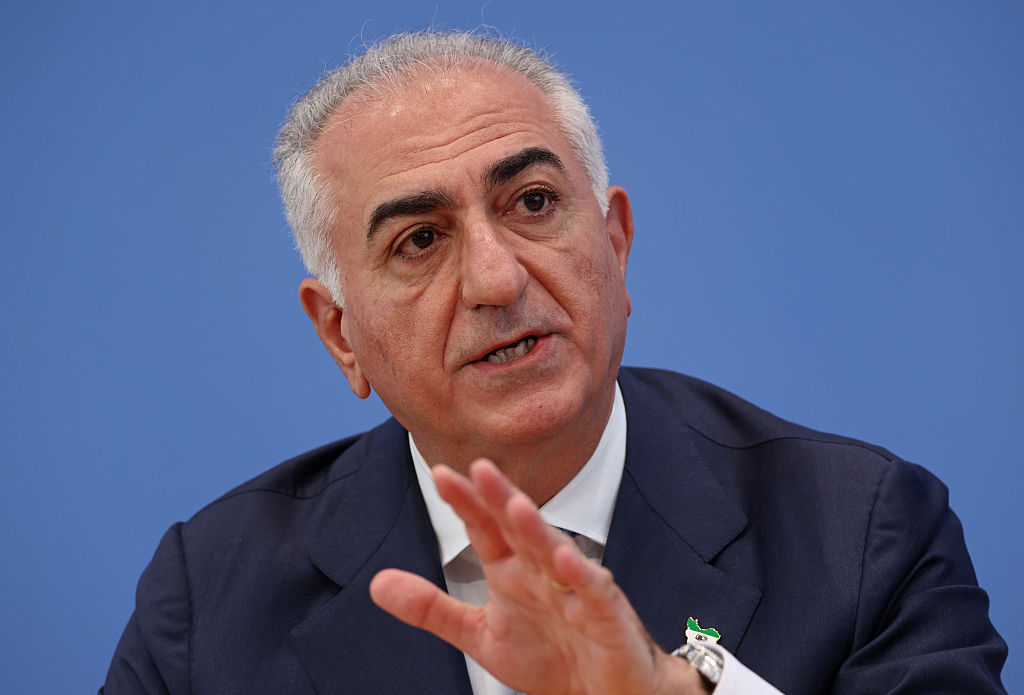
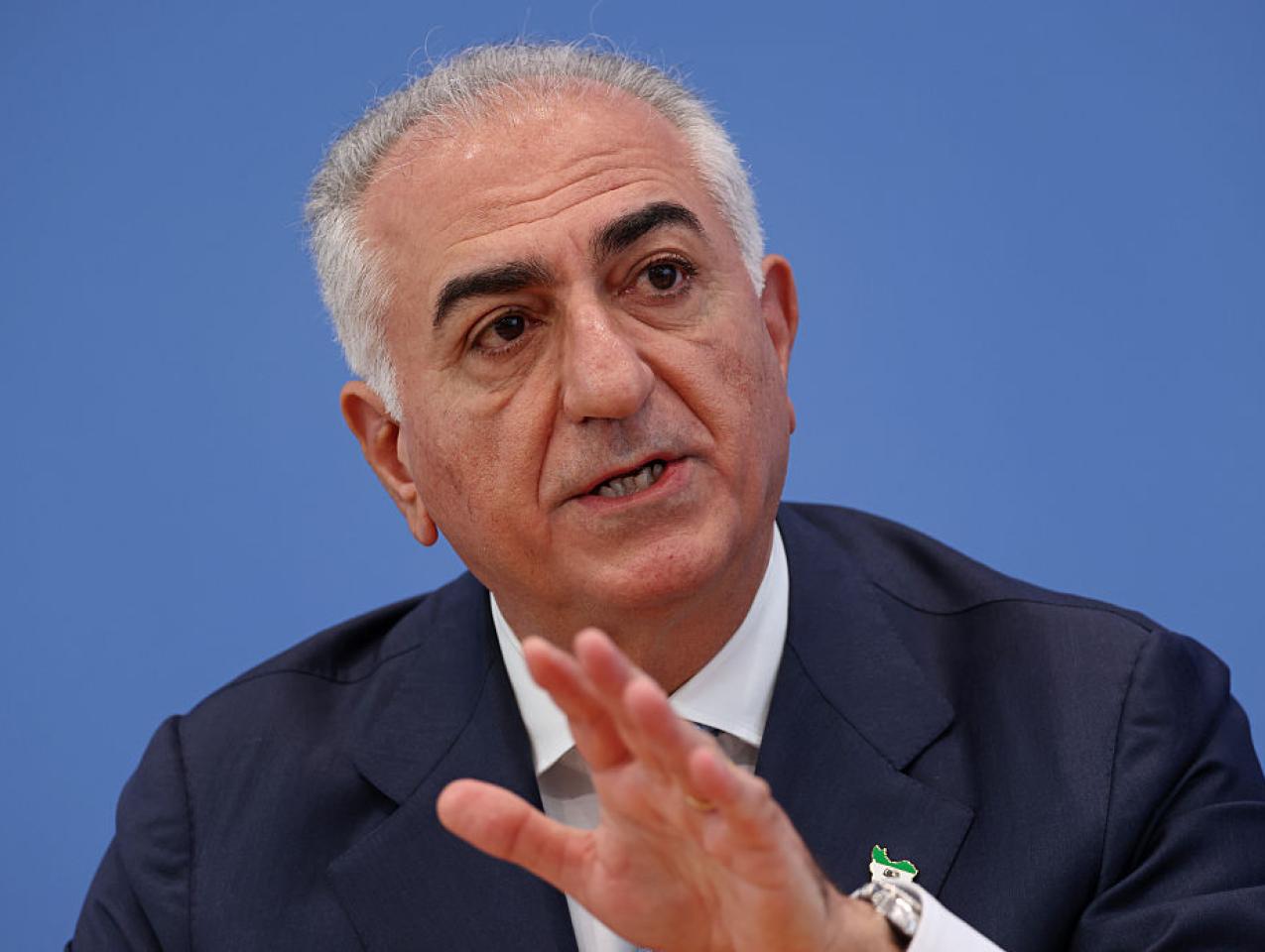
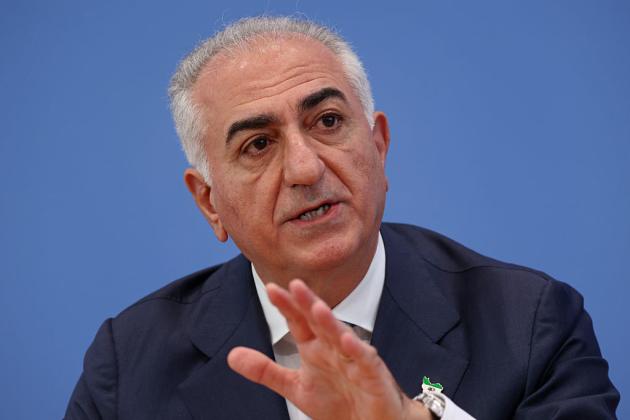
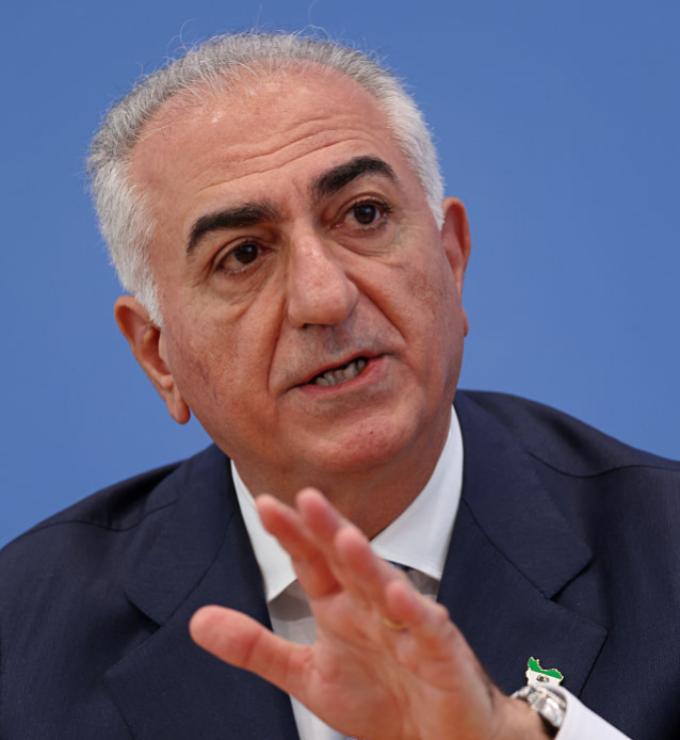
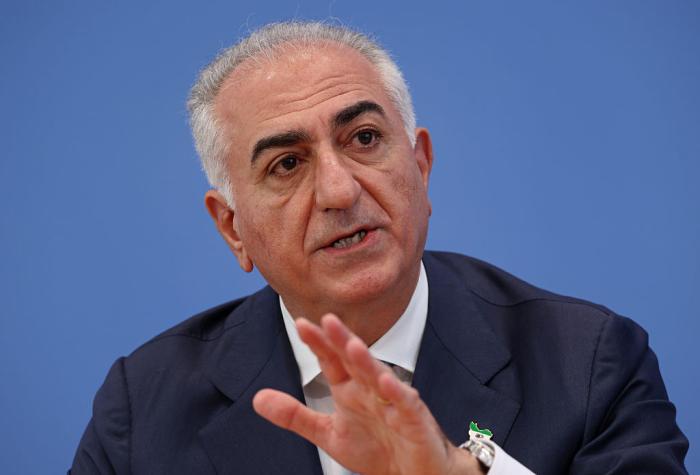
This distance was highly symbolic politically. Germany wanted to express solidarity with opposition forces while simultaneously avoiding officially elevating an exile-political leadership figure. Prince Reza Pahlavi publicly criticized this position. During his appearance at the Federal Press Conference, he declared that it was “a disgrace” that democratic governments did not speak with those who were “the voice of the voiceless.”
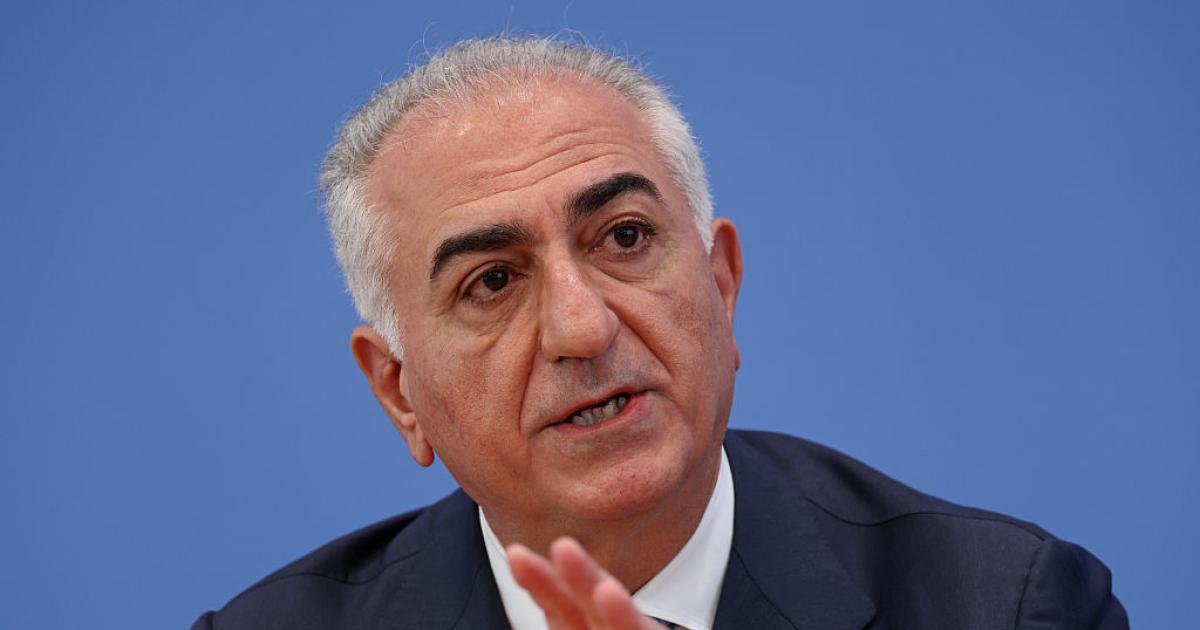
Particularly noteworthy was the course of the press conference itself. German journalists asked Prince Reza Pahlavi direct questions concerning his position toward Israel, his support for military attacks, and the authoritarian past of the monarchy. Journalist Tilo Jung openly questioned him about his proximity to Israel and confronted him with the accusation that he was effectively perceived as an “agent of Israel.”
The scene spread rapidly on social media and became a central symbol of the German debate surrounding Prince Reza Pahlavi. Supporters interpreted the questions as an expression of anti-monarchist or anti-Western bias in German media. Critics regarded them as legitimate journalistic confrontation with geopolitical and historical contradictions.
Additional journalists addressed his relationships with conservative American networks, his contacts with Israeli politicians, and the accusation that he romanticized the monarchy. Prince Reza Pahlavi, in turn, accused German media of paying too little attention to political prisoners, executions, and repression in Iran under the rule of the Islamic Republic.
The confrontation made clear that the conflict surrounding Prince Reza Pahlavi was no longer being conducted solely within the Iranian diaspora. It developed into a broader debate over Middle East policy, Western interventionism, media narratives, and the limits of normative foreign policy. This discussion possesses particular historical sensitivity in Germany. The experiences of the Iraq War produced lasting skepticism toward Western intervention strategies among large segments of the German public. At the same time, German memory culture, relations with Israel, and debates over antisemitism significantly influence perceptions of Iranian opposition politics.
Left-Wing Media, Tageszeitung Criticism, and the Question of Political Substance
Left-wing media in Germany reacted particularly critically. The newspaper Germans call taz (Die Tageszeitung) published several articles on Prince Reza Pahlavi’s visit to Berlin. The article “Many Appeals, No Proposed Solutions” fundamentally questioned his political strategy. The newspaper argued that while he formulated moral appeals and sharp criticism of the regime, he failed to provide concrete answers to central political questions.
Particular emphasis was placed on the absence of concepts for democratic transitional structures, unclear ideas regarding minority rights, and the question of democratic legitimacy. The taz also criticized Prince Reza Pahlavi’s support for U.S.-Israeli attacks against the Islamic Republic. His characterization of the war as a “humanitarian intervention” was interpreted as a problematic rhetorical shift.
This criticism corresponded to a broader left-wing debate over regime-change policy and Western interventionism. Some commentators argued that previous Western interventions had indeed overthrown authoritarian regimes, but had simultaneously produced civil war, state collapse, and regional destabilization. Iraq, Afghanistan, and Libya in particular were repeatedly cited as warning examples.
By contrast, some transatlantic media outlets have assessed the same factors far more positively. There, Prince Reza Pahlavi has frequently appeared as a secular alternative to the Islamic Republic and as a voice of the protest movement against authoritarian rule.
The debate surrounding Prince Reza Pahlavi thereby became a debate about Europe itself: should European states more strongly support opposition figures in exile? Or would this inevitably be perceived as geopolitical interference?
Symbolic Escalation and Public Perception
After the press conference, a symbolically-charged incident occurred in front of the Federal Press Conference building: Prince Reza Pahlavi was struck with red liquid, allegedly tomato juice or tomato sauce. The incident received considerable media attention.
Supporters interpreted the attack as an expression of increasing radicalization among anti-monarchist and anti-Israeli protests. Opponents, by contrast, argued that monarchist networks used such incidents for political victimization narratives. Regardless of interpretation, the incident demonstrated how emotionally charged the debate surrounding Prince Reza Pahlavi had become.
Polarization intensified further, especially on social media. Monarchist accounts described Prince Reza Pahlavi as the legitimate voice of the Iranian people, a symbol of national unity, and a victim of anti-Western propaganda. Opponents, by contrast, accused him of promoting authoritarian nostalgia, representing the geopolitical interests of Western states, and rhetorically legitimizing military violence against Iran.
The dynamics of social media reinforced simplified friend-enemy schemes. Complex political questions became increasingly morally charged: either as a struggle against a repressive regime or as resistance against Western imperialism. Nuanced positions found little space within this logic.
Media Reactions and Competing Narratives
The European tour demonstrated how differently European and international media classified Prince Reza Pahlavi. Conservative and transatlantic media frequently described him as a secular alternative to the Islamic Republic, an international voice of the protest movement, and a symbol of a possible democratic transition.
Left-wing and anti-imperialist media focused more strongly on the authoritarian past of the monarchy, his relations with Israel and the United States, the danger of Western regime-change policy, and the question of lacking democratic legitimacy.
Le Monde emphasized above all the fragmentation of the diaspora and the controversies surrounding monarchism. Fox News, by contrast, highlighted his role as an opponent of the Islamic Republic and his support for Israeli and American measures.
Media perceptions of Prince Reza Pahlavi were thus closely tied to broader geopolitical narratives: democracy versus authoritarianism, interventionism versus anti-imperialism, stability versus regime change. These narratives in turn influenced perceptions of the Iranian protest movement itself. Some commentators interpreted the protests primarily as a democratic revolt against an authoritarian regime. Others warned against reducing complex societal conflicts to a simplified narrative of “people versus regime.”
Organizations representing ethnic minorities in particular criticized monarchist discourses for frequently ignoring questions of regional autonomy and minority rights. In this way, Prince Reza Pahlavi’s tour became not only a foreign-policy controversy, but also a dispute over the internal structure of a possible future Iran.
Diaspora, Politics of Memory, and Exile Nationalism
The European tour also demonstrated that the Iranian diaspora has long become an independent political factor in Europe. Exiled Iranian groups organize demonstrations, lobbying efforts, media campaigns, parliamentary contacts, and digital mobilization.
Since the protests of 2022, these activities have intensified considerably. Mass demonstrations in Berlin, Paris, Stockholm, London, Toronto, and Los Angeles mobilized hundreds of thousands of people. The diaspora creates international visibility, organizes lobbying toward governments, documents human rights violations, and supports opposition networks financially and through media.
At the same time, it remains deeply fragmented. The Iranian diaspora is not a homogeneous political bloc, but a field of competing memories, ideologies, and visions of the future. Monarchist groups, republican liberals, left-wing organizations and ethnic movements pursue, in part, strongly contradictory political projects.
This fragmentation not only complicates the formation of common opposition platforms. It also contributes to the restraint of European governments. Even where sympathies for opposition forces exist, it often remains unclear which actors might possess long-term societal legitimacy.
Particularly disputed remains the evaluation of the Pahlavi monarchy. For supporters, the period before 1979 symbolizes modernization, secularism, economic development, and national strength. Critics, by contrast, recall political repression and authoritarian rule.
There are well-documented examples showing that segments of the monarchist movement surrounding Prince Reza Pahlavi advocate maximalist and at times verbally aggressive positions regarding the restoration of the monarchy in Iran. At the same time, there is also substantial evidence that Prince Reza Pahlavi’s opponents use exactly these radical fringes to portray him as authoritarian or anti-democratic - despite repeated public statements in which he distances himself from dictatorship and insists that Iran’s future system should be decided democratically.
In numerous interviews, Prince Reza Pahlavi has explicitly stated that he does not seek absolute power and that Iranians themselves should determine whether the future state is a republic or a constitutional monarchy through a referendum and free elections. Reuters reported in June 2025 that Prince Reza Pahlavi said he was “not seeking political power” and saw his role primarily as facilitating a transition process.
Similarly, Reuters described him as advocating “non-violent civil disobedience and a referendum on a new government” rather than simply restoring the monarchy:
Other major outlets have made similar observations. ABC Australia wrote that many supporters view Prince Reza Pahlavi as representing “democratic and secular values”.
At the same time, however, parts of the monarchist diaspora openly embrace highly polarizing rhetoric centered on nationalism, anti-left hostility, and nostalgia for the Pahlavi state apparatus. The Times reported that figures connected to the pre-revolution security apparatus and personalities from the Shah era remain visible around Prince Reza Pahlavi’s movement, causing suspicion among critics and parts of the Iranian diaspora:
This directly relates to the controversy surrounding recent monarchist demonstrations in Regensburg and other German cities. Images and videos circulated online showed demonstrators wearing shirts or carrying symbols associated with SAVAK, the pre-revolution intelligence and security organisation.
These demonstrations can reasonably be interpreted as part of the phenomenon in question. Even if they represent only a radical subsection of monarchist activists, such imagery provides material for Prince Reza Pahlavi’s opponents, who argue that monarchism ultimately implies a return to authoritarian politics. Critics - including left-wing exile groups, republicans, and organizations hostile to monarchism - frequently point to SAVAK symbolism as evidence that parts of the movement glorify repression. Some explicitly argue that this undermines Prince Reza Pahlavi’s democratic messaging and damages opposition unity.
At the same time, no credible evidence shows that Prince Reza Pahlavi himself endorsed SAVAK symbolism at these demonstrations. The political dynamic is therefore complex: radical monarchist supporters undeniably exist, but opponents often generalize from those fringes to delegitimize Prince Reza Pahlavi as a whole, despite his repeated public insistence on elections, constitutionalism, and democratic legitimacy.
These conflicts of memory continue to shape political identities within the diaspora today. Younger generations in particular sometimes interpret the monarchy less as a concrete historical experience than as a symbolic counter-image to the Islamic Republic. Thus, a new form of exile-nationalist symbolism emerged: within monarchist networks, the Lion-and-Sun flag became a sign of anti-Islamist identity, secular nationalism, and oppositional mobilization.
Critics accuse these movements of reducing political complexity to nostalgic national myths. Kurdish groups, in particular, criticize the centralist character of many monarchist discourses. They argue that both the monarchy and the Islamic Republic systematically marginalized ethnic minorities.
Anti-Imperialism and Western Debates
A central conflict concerns the question of Western interventions. Left-wing and anti-interventionist groups repeatedly warned against regime-change policy and pointed to the experiences of Western interventions in Iraq, Afghanistan, and Libya. This tension has shaped Western debates over Iran for years.
On the one hand, broad criticism exists regarding the human rights violations and authoritarian rule of the Islamic Republic. On the other hand, there is considerable skepticism toward geopolitical intervention strategies. For decades, the Islamic Republic has strategically used anti-imperialist narratives and regularly portrays exile opposition groups as tools of Western powers.
Prince Reza Pahlavi’s proximity to conservative American networks and his contacts with Israeli politicians reinforced this perception. Following his support for American-Israeli attacks against the Islamic Republic, the debate intensified considerably. Anti-imperialist groups argued that his rhetoric concerning “humanitarian intervention” reproduced moral justification patterns of earlier military interventions in the Middle East.
Prince Reza Pahlavi and his supporters firmly rejected this criticism. They argued that the Islamic Republic itself bears responsibility for regional conflicts, repression, and the militarization of the Middle East. International support against the regime’s apparatus of repression therefore does not constitute an attack on Iran as a nation, but solidarity with the Iranian population.
Precisely this distinction between Iran as a nation, the Iranian population, and the Islamic Republic as a regime formed the core of Prince Reza Pahlavi’s argumentation. His opponents, however, regarded it as politically insufficient, since military violence always carries civilian and societal consequences. The debate points to a fundamental dilemma of Western democracies: how can solidarity with democratic protest movements be articulated without slipping into geopolitical intervention logics?
Europe’s Strategic Ambivalence
Ultimately, the European tour made visible the crisis of European Iran policy. European governments operate toward the Islamic Republic within a field of tension: human rights criticism, security interests, diplomatic communication channels, and fear of regional destabilization frequently stand in contradiction to one another.
This ambivalence became visible in all three countries, though in different forms. Italy enabled parliamentary visibility but avoided diplomatic elevation. Sweden offered a public stage but remained institutionally cautious. Germany demonstratively maintained distance and focused more strongly on security-political stability.
Prince Reza Pahlavi repeatedly criticized this policy as appeasement. In his view, diplomatic contacts and negotiations effectively stabilize a repressive regime. European governments, by contrast, argue more pragmatically: the nuclear program, regional conflicts, consular security, and economic stability render a complete isolation of the Islamic Republic unrealistic.
This tension points to a fundamental problem of Western foreign policy. Human rights and democracy are emphasized normatively, yet concrete strategies often remain shaped by stability interests. Prince Reza Pahlavi’s tour demonstrated that Europe has so far found no clear answer to this tension. The Islamic Republic has lost considerable legitimacy internationally, but no generally recognized alternative is available.
Conclusion
Prince Reza Pahlavi’s European tour in the spring of 2026 revealed less a coherent alternative to the Islamic Republic than the deep strategic and political uncertainties surrounding Iran itself. The tour exposed three interconnected crises: the growing loss of legitimacy of the Islamic Republic, the fragmentation of the Iranian opposition in exile, and Europe’s inability to formulate a clear policy between human rights rhetoric and geopolitical caution.
In Italy, Sweden, and Germany, the same pattern emerged in different forms. Prince Reza Pahlavi received visibility, parliamentary access, and support from monarchist, conservative, and transatlantic circles. Yet no European government was prepared to politically recognize him as the representative of a future Iranian order. Europe increasingly distances itself from Tehran rhetorically and strategically, while simultaneously avoiding any explicit commitment to regime change. This ambivalence became the defining feature of the tour.
At the same time, the journey clarified both the strengths and limitations of Prince Reza Pahlavi’s political role. His international profile, symbolic connection to pre-revolutionary Iran, and ability to mobilize sections of the diaspora grant him considerable visibility. Yet visibility is not the same as democratic legitimacy. Under conditions in which free political organization and reliable polling remain impossible inside Iran, no opposition actor can credibly claim a verified national mandate.
The controversies surrounding his appearances - especially in Germany - also demonstrated that debates over Iran are increasingly inseparable from broader Western conflicts over interventionism, anti-imperialism, Israel, media narratives, and the legacy of past wars in the Middle East. Prince Reza Pahlavi has thus become more than an exile politician: he’s become a projection surface for competing geopolitical and ideological narratives.
Ultimately, the tour demonstrated that Europe faces a dilemma for which it still has no coherent answer: how to support democratic opposition movements without appearing to impose external political outcomes and how to confront an authoritarian regime without reproducing the logic of interventionist regime-change politics. The significance of the tour therefore lies not in resolving these contradictions, but in making them impossible to ignore.
Dr. Nima Mina teaches Persian and Iranian Studies at the Institute of Oriental and Asian Studies at the University of Bonn. His teaching and research focus on contemporary Iranian society and culture, as well as Iranian diaspora studies.

