

- International Affairs
- Security & Defense
- US Foreign Policy
- Key Countries / Regions
- Military
- History
- Democracy
- Europe
- Determining America's Role in the World
- Revitalizing History
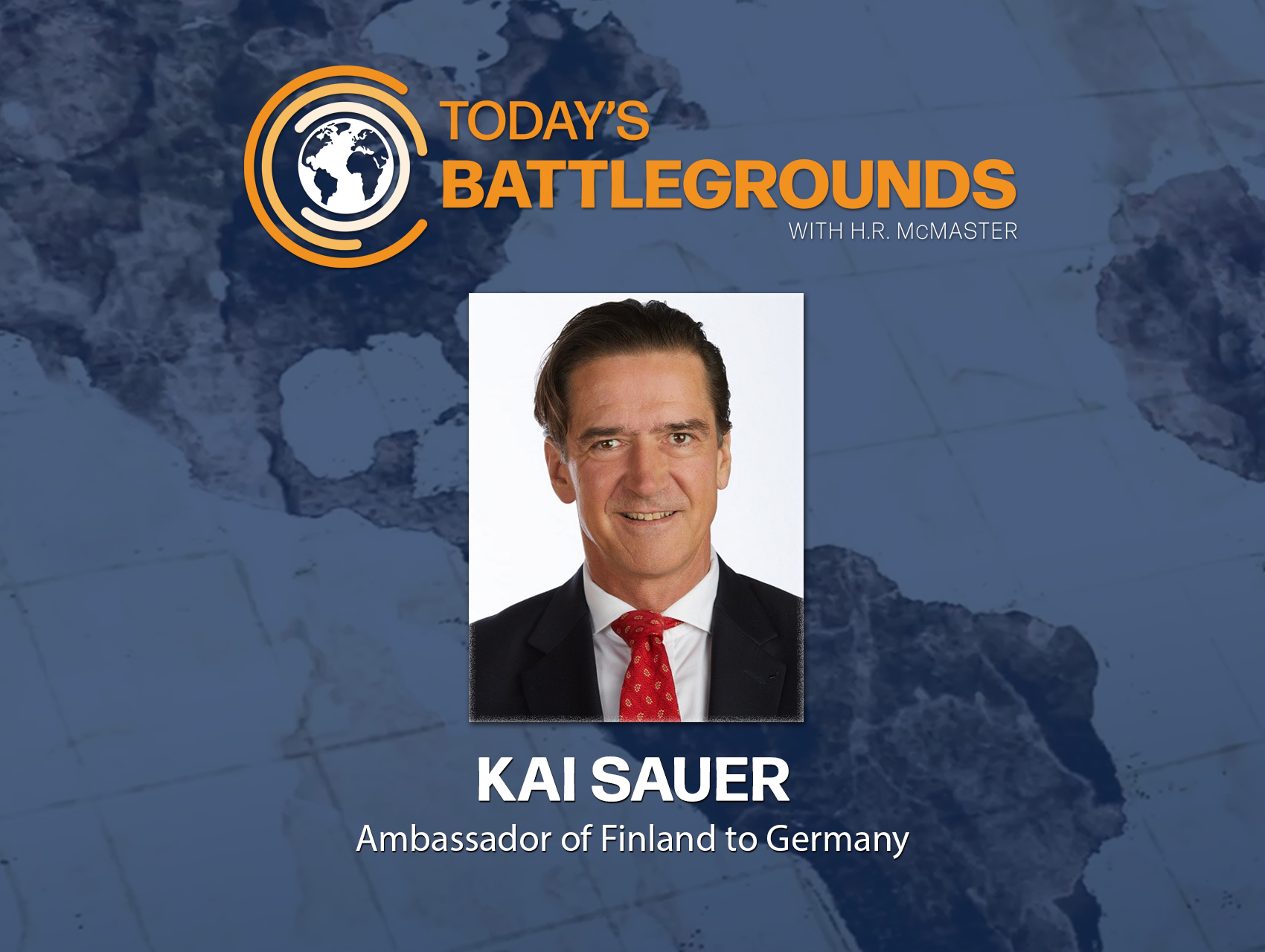
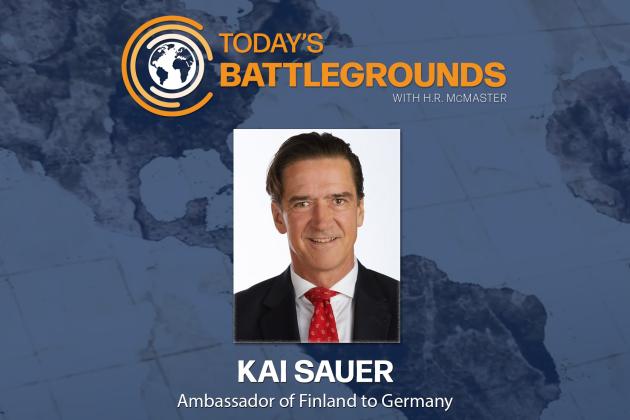
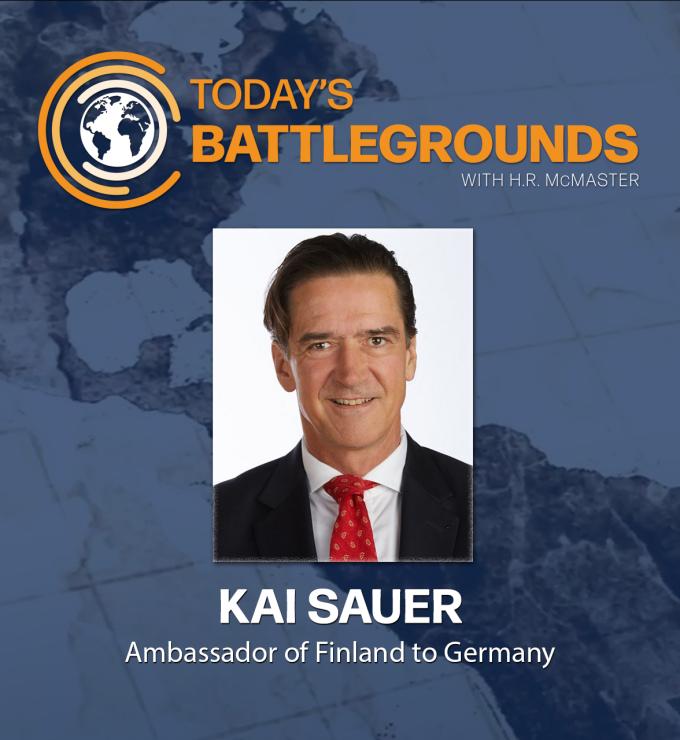
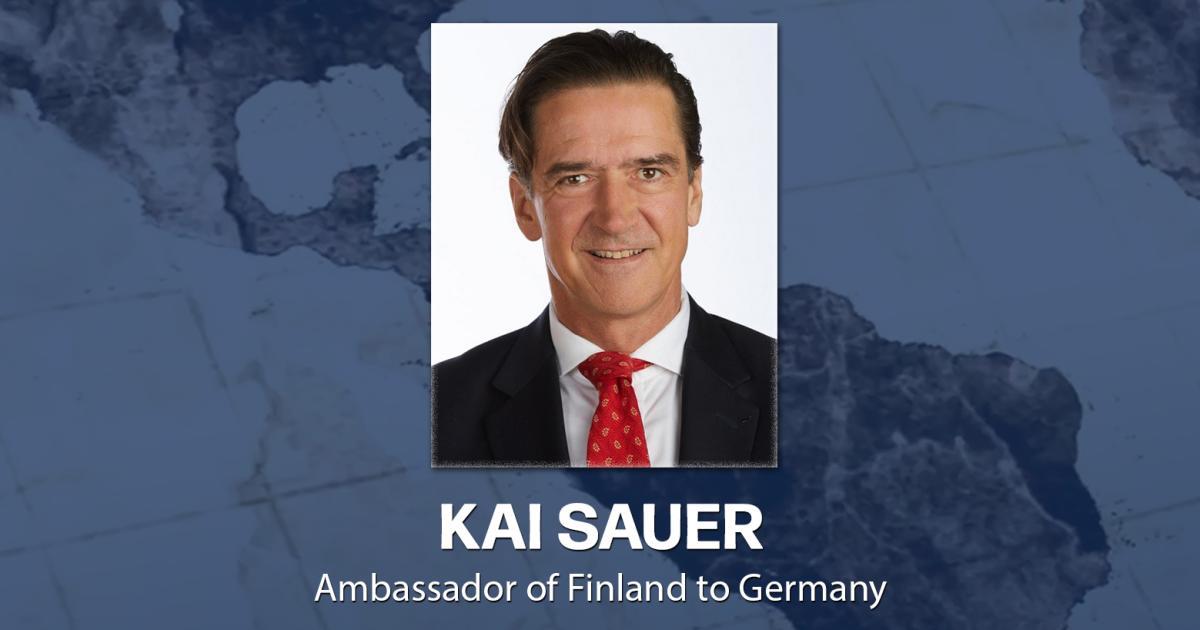
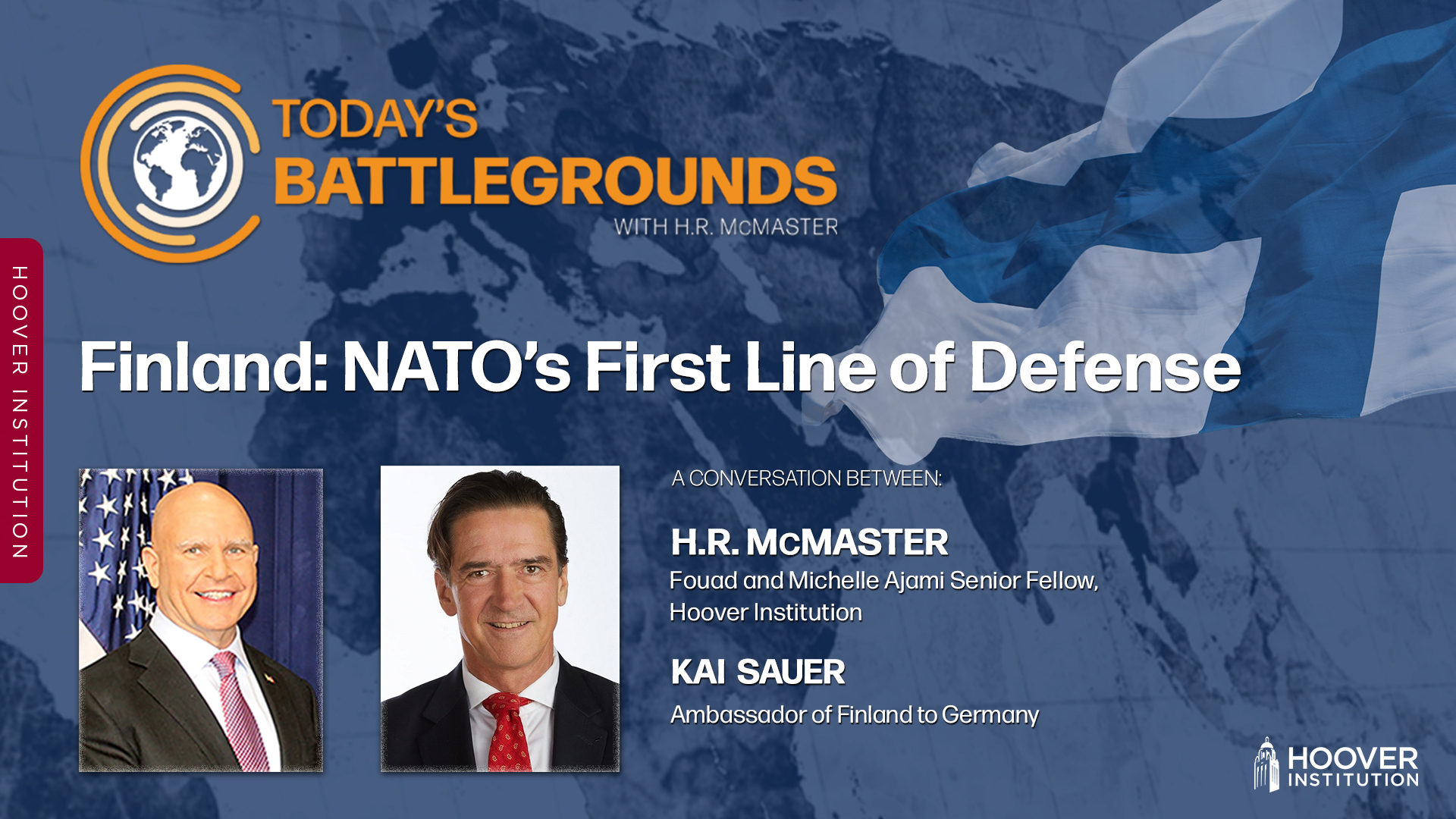
Join Kai Sauer, ambassador of Finland to Germany, and Hoover senior fellow H.R. McMaster, as they discuss Finland's defense and economic priorities, its role in NATO, Russia's persistent threat to European security, and how US-Finland cooperation enhances both nations’ security and prosperity.
Sauer and McMaster reflect on the importance of transatlantic cooperation amid growing geopolitical competition, examining the strategic significance of Arctic security and the lessons other nations can draw from Finland’s defense preparedness in the face of Russian aggression. The conversation also explores the future of NATO burden-sharing, the challenge of countering authoritarian influence in the Global South, the economic and strategic measures needed to impose costs on the Kremlin, and Finland’s role in advancing innovation in AI and emerging technologies.
- Ukraine has evolved from kind of the low military power into a, a front runner in, in many, many fields. So this is very clear that Ukraine, by resisting this incursion, is also protecting Europe.
- This is today's battlegrounds. Our discussions with leaders from around the world consider how history produced the present, and how we can work together to overcome obstacles, to progress, seize opportunities, and build a better tomorrow.
- On this episode of Today's Battlegrounds, our focus is on Finland. Our guest is Ambassador Kai Sauer Finland's ambassador to Germany. Since September, 2023, ambassador Soer served as ambassador to Indonesia, Timor-Leste, and Ossian from 2010 to 2014, and as Finland's permanent representative to the United Nations from 2014 to 2019, he then served as under Secretary of State for foreign and security policy, where he helped guide Finland's response to Russia's invasion of Ukraine and its decision to apply for NATO membership. Finland has fought for sovereignty in a neighborhood dominated by imperial powers. Following the 18 0 8 18 0 9 Russo Swedish War, Finland established itself as an autonomous grand dutches as it passed from Swedish to Russian control. Finland declared independence in 1917 amid the Bolshevik Revolution and the collapse of Imperial Russia, and thereafter fought a civil war that divided the country along political and social lines. During World War ii, Finland fought the Soviet Union in the Winter War and the continuation war, losing territory, but preserving its sovereignty. Throughout the Cold War, Finland maintained its independence through a policy of military non-alignment to manage its relations with the Soviet Union and building democratic institutions, and developing close commercial and diplomatic ties with the West. Finland helped create the organization for security and cooperation in Europe and joined the European Union in 1995. Following the Soviet Union's collapse, Russia's invasion of Ukraine in 2022 marked a turning point for Finn Strategy. Finnish leaders assessed that military non-alignment was no longer sufficient to deter Russian aggression. Finland applied for NATO membership and formally joined the Alliance in April, 2023, extending NATO's border with Russia by more than 800 miles, and strengthening NATO defense capabilities in the Baltic, Nordic and Arctic regions. Finland's bilateral security and economic relationship with the United States deepened. Russia continued to pressure Finland through gray zone warfare, weaponizing refugees conducting cyber attacks and engaging in other forms of subversion through cyber activity, border tensions and other forms of hybrid interference. Helsinki and Washington signed a defense cooperation agreement in December, 2023 to improve interoperability access and joint planning. We welcome Ambassador Soer back to today's battlegrounds to discuss Finland's defense and economic priorities. Its role in nato, Russia's persistent threat to European security, and how US Finland cooperation enhances both nation's security and prosperity.
- Ambassador Kai Soer, welcome back to Today's Battlegrounds. Thank you. What a pleasure to be back with you. We're, we are here right by the Brandenburg Gate, and of course, you, you are no stranger and your family's no stranger to living on the frontier between freedom and authoritarian rules and rule. And, and you have a family history that goes back to this gate and the division in East and West Berlin. Could you maybe share that with our viewers before we even get started here?
- Yeah. In Indeed. It's good to see you again after two and a half years. And the family connection is that my, my father who was born in 1942, he ended up as a IDP after the war in, and then the Soviet Zone. And then his family, his parents, they decided to cross from the Soviet zone to the, to the western zone in Berlin. So in 19 50, 52, they came here and crossed the zone line and spent one year in, in 1952 Berlin environment before being relocated in Western Germany. So my father then grew up in the war region, and well then met at some point my, my finished mother in Hamburg, and the rest is, yeah.
- Well, Hamburg is one of my favorite cities, right? I I remember Hamburg in the spring with the big win the window boxes, and it's yes, a beautiful place. And, and, and of course, you know, I've mentioned in our last episode of, of Battlegrounds with Norbert R and who we both know that, that I had this great privilege of, of serving the second cavalry regiment and patrolling the East West German border the day that travel restrictions were lifted from, you know, from the east to the west and
- Historical moment.
- It was a historical moment. It was, it was, it was a beautiful moment, really, where we went from one moment staring down to East German border guards to the next moment seeing tens, hundreds, thousands, then tens of thousands of people coming across the border with bouquets of flowers and bottles of wine and hugs and, and tears of joy. Right? And, and so this was the beginning of Kai, this period of, of optimism, right? About, about our future. And, and of course now though, we're had a period of that's maybe a bit more pessimistic Yeah. Associated with kinda the failure of reforms in, in, in Russia and, and Putin's sort of aggressive behavior toward, toward Europe and, and the west. But of course, Finland is no stranger to that. I mean, you've been on the border of Russia, you've fought wars to, to protect your sovereignty. And so the finished perspective, I think is, is more important than ever. And so can you maybe talk about how Finland sees its place in the world, but also within the NATO alliance? You've, you've talked in the past about, about the ins, you know, the opt-ins that someone has chosen independence, European integration, and now, and now of course the, the obsession to nato.
- Yeah, yeah, that's a good, good lead. But since you, you started with, with the family history, and I have to say that there are probably very few places in the world which are so much loaded with history in the place where we are now, and we are just at the, at the edge of the Parisa plots, you have the four embassies here, the US Embassy, the British Embassy, French, and the, the Russian Embassy, the, the occupying powers you have the Brandenburg gate. So it's actually an interesting venue to to, to hold this discussion since the ins you, you mentioned independence, European integration, NATO membership, there haven't been any ins. It has been kind of a stable in, in terms of geopolitical moves for Finland. After that, it's maybe more about consolidating our position within nato, which of course is itself now in kind of in, in transition. And I think what we are now trying to achieve is, is kind of structured and well managed transition shift of, of burden from the US to, to Europe. And my number one, you know, guideline while seeing this transition through would be that it is managed in the way that we are also maintaining the necessary deterrents. I think that that is, that is key. We can do the transition, I think political will to do that, understanding the necessity, but it needs to be managed so that we will maintain the deterrence for us. That's very important.
- And you know, your president has been sort, sort of at the forefront of, of thinking about this, this transition. And of course we're talking a little bit around the issues of, of the, the strain in the relationship associated with President Trump's skepticism about burden sharing in nato, which I think is an argument that he's won. Yeah. Take credit for winning that argument. But then, you know, the, the very public, and I think lamentable from my perspective, comments about, about, about Greenland and Denmark and those kind of, those blows landed pretty heavy in terms of deteriorating trust. But I think President Stoop has been, your president has been a pretty strong voice, is both a political leader, but also kind of a scholar and someone who's thought about this transition. And, and so he's, he's talked about really this, this very important competition that we're in competition with, with Russia for security and to reestablish security. And he's also talked about the importance of deterrence from physical strength, but also values-based realism is what he's called this, this, this concept. Could you maybe help our audience understand what, you know, how Finland, how your president is approaching this transition and what he means by this term in particular, value values-based realism?
- Yeah. President Stoop has an interesting cv. He, he is not a career politician despite of his many offices as a president, prime minister, foreign minister, a member of the European Parliament, but he's also a scholar. He spent a long time in in Florence at the, at the Europe, European University. And I think he was already there working on this, this book, which then included the concept, you, you mentioned values-based realism, which I think is indicating that the world is, is changing power is not, not permanent. And in the, the current situation, power is also economic power is also emerging in, in other parts of the world than we are used to. Huh, so meaning the global, global south, right. That
- She's written a lot about, about the, this competition that's ongoing between the, you know, between, I, I guess I, what I would call anxi of authoritarians or, or an axis of aggressors. This is China, Russia, they port ran into this and others Yeah. And, and, and the free world in, in within
- Developing
- Economies, right?
- Yes. No, I mean, coming to the point, I think this concept includes the idea that despite of the fact that we are not necessarily sharing the same values with our partners in the global south, we are still having a dialogue with them and looking at the common ground. And I think Finland as a smaller country, I'm not saying that we are small, but as a smaller country, we also believe in, in the institutions, sir, because institutions, they provide you with a certain protection and predictability. And in, in, in, in stoops concept, the global south countries like, like India, Indonesia, others, they might look for more, more where, where you've served. Yeah, exactly. Yeah. So
- Viewers will know. You've been in bachelor, Indonesia,
- I I know the Indonesians quite, quite well. And the idea is also to maybe reform the institutions according to the new, new power structures, global globally.
- You, you know, Kai, I, I, you know, I, because I I've served in a lot of different places across my career, people oftentimes stress cultural differences, right? And, and the importance, which is, is true of being culturally sensitive. But I think oftentimes we, we skip over our common humanity, you know, and, and I think kind of the fundamental desire of everyone to want a better life for their children and grandchildren. And I think the common des desire for people to, to want to, to have a say in how they're governed, right? This idea of sovereignty, I mean, we're in the 250th anniversary of, of, of our republic in, in the United States. And our revolution was based on this radical idea that that that that sovereignty lies with the people. Finland has been at the forefront of protecting your sovereignty against really an, an expansionist aggressive neighbor for so long. Could you maybe talk a little bit about that, how you see sovereignty as, as, as maybe, you know, one of the ways to make this bridge between European countries, countries in, in, who have developing economies and so forth.
- Yeah. This is probably for Europe, US this is not that well, well known part of the world history, how, how Finland has managed between two, two great powers. And I'm talking about Sweden and Russia now, and we were part of Sweden for 600 years. We were Sweden's frontline against the Russian, Russian empire. And you can imagine how, how that felt in the, in the 1800 or or 19 hundreds constant incursions, constant wars. Also, Sweden was an expansive power at, at that time. I mean, Gus go absolutely the 30 year war were hesitant to say, but there were a lot of fins doing bad things as part of the Swedish army on the continental, well, right. Europe in some of the,
- Some of the cities that were besieged and
- Destroyed. Absolutely. You are a professor of history. You, you know, this stuff. So 150 years Sweden controlled sliver of northern Germany, the Mecklenburg Forman part. So, but the fa faith of Finland was basically that we, we, we didn't win in the Geo Geographic lottery, huh? I mean, there are some other countries like Iceland and New Zealand who, who did, but we, we didn't. So we ended up between Sweden and Russia, I think the US Russia,
- The United States wanted the geographic lottery in,
- In a way. Yes. Yeah.
- We should maybe, should we, we should
- Appreciate
- Our Canadian neighbors more.
- Yeah, but I mean, but the, these geographic kind of, yeah, circumstances say change. If you look at Germany, for instance, cold War Germany was a frontline country, but now Germany is surrounded by nine friendly, friendly neighbors who are basically protecting Germany. But in our case, we have always been no in a tough position. And that has this geography and history has also determined our DNA in the way that we have always, you know, be willing to invest in our defense and also the second World war. If we jump in that period, I think one lesson of that war is that you should never walk alone. I mean, we, we were in a very tight, tight spot then, and we, we learned from, from that. And that is also why we, we tried to be a member of a larger family, first with the Nordics when EU integration was not possible during the Cold War. Then when it became possible, the opt-in into the European integration, and then after our kind of geopolitical security environment change as a result of the Russian incursion or invasion on Ukraine, we, we opted for, for nato. The NATO option was always there. We were very transparent about it. It was in all our white papers through throughout the decades, our Russian neighbors aware of it. But I would say that they themselves with this aggression on, on, on Ukraine, they changed the equilibrium. And we, we reacted to that with
- The invasion in 2014, but then a massive invasion in
- 22. In
- 2022.
- Yeah,
- Absolutely.
- Yeah, yeah. But I, I would also like to emphasize that NATO is a defensive organization. We are not projecting aggression, and we are a predictable, reliable neighbor to the east and to the west. Yeah.
- Well, and, and, and Finland is in many ways a a model of a, of a, of a, a defensive partner in an alliance based on your mobilization, your ability to, yeah. To, to, to defend yourself based on being able to bring so many of your citizens rapidly into military service, for example. And, and you've really strengthened the alliance tremendously with the entry of Finland first and then Sweden after the, you know, the obstruction by the church we talked about yesterday. Yeah. And, and, and so what do you think we can learn from Finland's defense? You know, really a approach to defense? You know, there's been these tensions in the trans transatlantic relationship where a lot of Americans, you know, a lot of Americans thought, Hey, you know, Europe is 19% of the world's GDP, 50% of the world's social spending. They're not investing in defense. So American taxpayers are underwriting European social programs by covering their defense bills, essentially. And this is sort of the, what you see, I think President Trump manifesting in many ways is this kind of frustration. But Finland has always been sort of a model of, you know, self-sufficiency and, and, and, and, and taking ownership of its defense. What, what do you think other nations c can learn from that experience as we see, you know, Germany, other countries really stepping up in terms of their responsibility in, as part of the collective defense of nato?
- Yeah, I think most European countries have received the memo and they are acting upon of it. For us, the change is not that dramatic, as you explained. We have always, due to our history and geography, been investing in our defense. But maybe there's one, one critical difference for US, security is not only military security, it is comprehensive se security, which also means that you are more secure if you can provide your people a certain standards of, of living also social, social standards. That is one point. But then you also need to integrate the society. You, you need to get the people on your side in participating in providing this security. And that is something where, where Finland is different from even many, many Europeans, that we have this 360 degrees of understanding and acceptance of, of security. Let's take the private sector as an example. We have a network of our companies, which are critical for, for security, logistics, construction, telecommunication, medical. Yes. Yeah, defense, of course. And they, they are actually, they have this real network and they not know what to do because they have rehearsed it several time and they're willing to invest their resources in, in, in like action in, in crisis, be it a military crisis, be it a natural disaster, whatever type of crisis you have the private sector's participation, the same with the Civico organization and, and other, other actors. And I think that is pretty, pretty unique.
- It is. And I think we can learn a lot from Finland's experience because you've been on this frontline, I mean, literally a frontline with an authoritarian hostile government. And Finland has this comprehensive approach to security associated with really all, you know, there's the psychological and cognitive domain, you know, the, this, this, this, the way that Russia has really perfected, I think means of cognitive warfare, you know, of polarizing society, pitting people against each other, trying to, trying to, to foam it, weakness within society. This is the gray zone, you know, kind of, or the shadow war that Russia's been waging across Europe. Could you maybe share some of Finland's big lessons that that could be, you know, learned by other countries in terms of defending their sovereignty against really what is a very sophisticated campaign of political subversion that has integrated some new technologies and new capabilities associated with social media and so forth?
- First, you need to invest in, in education. Media literacy is, is key, huh? I mean, the social media landscape today is quite Yeah, unhealthy, aade unhealthy is a, is a good word. I mean, there are healthy parts, but there are, yeah, yeah. It's a zoo, huh. With with different type of animals. And you need to distinguish between real and, and fake information. And that is that you can do, if you have the media literacy, which you learn at, at school basically, or by reading books or by, you know, yeah. And we, we have one ben benefit maybe, which is you don't have an, especially in the English speaking world or in the francophone or the German speakers, we have a small language, a very difficult language, which is difficult to penetrate with all kind of trolls or, or, or memes or whatever, whatever you, you call them.
- So you form of encryption almost.
- Yeah. Good, good parts. Yeah. Yeah. But when you, when you read the text and there are a lot of grammatical errors or, or strange words, you, you know, that's okay. It's artificially created. Somebody wants to Yeah, yeah. And you don't, you don't believe it. But then I think in, in, in, in the, in the larger way, conscription for us is, is very important. You know, I think that it's a guarantee that this security awareness goes from generation to, to generation. I meanger Germany, they, they froze their conscription in 2011, I think it was, and it's really difficult to bring that back. Yeah. Right, right. Yeah.
- I mean, civic education, the sense of, you know, service to the country and yeah. Breaking down the, the social barriers that existed are artificial between different identity categories. I mean, I think there are so many benefits in, in, in some ways, I think Finland is a lot like Israel at this connection in terms of being on a, in a insecure environment, having the need to, to, for the society to defend itself and, and to, to create that kind of common identity.
- Yeah, no, just on on that point. I, I think you're right, Israel is, is one example. Singapore, South Korea, Ty, Taiwan, you have this where you're on association of like-minded, huh? Yeah.
- And you know, of course, fin Finland did opt in to nato, and, and I think Finland has become, in many ways a new anchor of the transatlantic relationship and a relationship that's been under duress, you know, with some of the public statements I think that President Trump has made about, you know, Greenland that is offensive to, to Greenlands and Denmark's sovereignty, for example, disparaging comments about NATO never being there, you know, for the United States, when in fact, the only time that NATO invoked Article five and attack one is attack on All, was after the mass murder attacks of nine 11. Yes. And your president said, you know, he said, I'm the most pro-American president in Europe. Right. He said, and I'm quoting him, I'm an avid transatlanticists. I want the relationship to work, but I fully also realize that with certain patterns of behavior, there's going to be a feeling of, okay, if you treat me like that, I don't feel very good about it. Right. And so, you know, as, as I've been here in Germany for a few days now, and talking to old friends, meaning some new ones, there are some hurt feelings, you know? And, and, and so I, I think Americans should recognize that these, these words matter. Yes. But, you know, I, I'm hopeful that we can build or build back kind of the trust, you know. So I, I would just love to hear, you're, you're a accomplished diplomat. You've served around the world, you know, you're, you have these German roots, but, and, but you're a finished diplomat here in right by the Brandenburg Gate. What, what's your assessment of the transatlantic relationship and what's your prognosis, I guess, and, and what are your recommendations about how we can strengthen the relationship?
- Yeah, that's a big, big question.
- And don't be too
- Diplomatic. Yeah.
- Just go, just lay it out there.
- Have to protect my career. Yeah. But yeah, president Stoop, he, he is a very tra transatlantic person also because of his personal history studied in, in the us I would claim that I, I, I belong to a group of diplomats, which are also very transatlantic minded. I lived in the States eight, eight years altogether. Although in New York it's, well, New York is New York, but I, I traveled a lot. We have a lot of friends in, in the us I was serving in New York during nine 11. So I, I took it really to my, my heart. And I, I saw how it affected the country. I, I was very also proud even though we went even close to become NATO members in 2001. But I, I, I saw how NATO reacted and how, how Article five was invoked. I, I, I was there at the security council witnessing it per personally. So it had a very, very deep effect. And I think, you know, there are different phases in the transatlantic relationship. You can go back to, I mean, US and uk, they, they have had a special relationship, but that relationship has also ups, ups, ups and downs.
- Absolutely. I mean, here in Germany, the US you know, was odden hour Yes. The problems that President George W. Bush had with Gerhard Schroeder, for example.
- Oh, yeah.
- You know? Yeah, yeah. During, during the Iraq, during the Iraq war.
- Yeah. But I think the key here is somehow to understand our common interest, intergovernmental relations interest base. Yeah. There might be personal friendships, but in the end it's, it's interest which, which matter. And I think the US and, and Europe, we, we have a lot of common interest, economic interest, and strategic interest when it comes to Finland. I think what, what we have, what is interesting in us for you is first of all, our kind of political in inclination, huh? Pro west, pro-American. But then there are certain kind of facts like our geographical location. Again, you look at the, the threats the US is, is facing not an of the, the smallest threat is not, not the, the Russian missile. Yeah. Like ba basis, which are very close to, you know, our border, the Norwegian border. So we are basically the ice and ears in, in that region. Again, not projecting aggression, but we, we are there and we are equipped, like you said, we, we have invested in our and of defense and, and resources. So we, we can be useful in that sense.
- Absolutely. And,
- And then one, one more point, if you, if I may, it's also no, between partners, I think it's, it's like in the family, everyone doesn't have to do everything. Yeah. I mean, it's, it's, it's more rational, more pragmatic to have a division of labor. So we have, we are an IT driven country. We have a long engineering history. We know how to build icebreakers. I'm sure you come to that. Yes. And yeah, communication technology, I mean, there are certain assets Yeah. Which are useful for you as well,
- Right. We're talking about the 5G communications, right. Hardware where, you know, or where you can't have a competitor to, to Huawei, you know, the, the Chinese
- Yeah.
- You know, companies trying to dominate that. I think Finland designs 80% of the world's icebreakers. And I think the, the United States has realized that ha, the Department of Defense has realized to burn a war now has realized that, hey, we can't do this on our own. This being, making our supply chains more resilient, invigorating our defense industrial base, countering various forms of Chinese economic aggression. You know, and, and so I, I think you're right about this. I mean, we, we have this period of strain in the relationship, but the gravity, you know, of our common interests and, and the fact that our adversaries aren't going away. Right. So could you maybe help our audience understand, you know, the, you know, how we have these opportunities, what are the opportunities for us to work together? You've mentioned missile defense. We're talking about Arctic security. But what I would like to do is, is be part of an effort to term what has been kind of a negative dialogue about, you know, burden sharing in defense, which I think now is, is, is a resolved, you know, to a positive agenda. What should the positive agenda be from your view on finished US relations, but maybe just European US relations as well? Where are the opportunities, I guess, and how do we work together to exploit those opportunities?
- Yeah. I, I think it's always a bit of a missed opportunity when two friends are, are, are competing unnecessarily when, where they're in areas where they could co cooperate. So I think we are now going through this, this phase where we need to identify the, the common, common interest and act upon them more, more actively. Yeah. And that is taking place, I mean, there are probably many individual areas where that could, could happen. And
- I think energy security is a big one, obviously as we're looking at what's happening in the Middle East.
- Yeah, yeah.
- And Finland has, you know, been at the forefront of this. I mean, Finland became sort of energy independent of, of Russia.
- Yeah. - I mean, could you, could you maybe share that, those lessons and how Yeah. Finland recognized that it's a bad idea Yeah. To give a hostile regime course of power over your economy. Yeah. Right. Because I think this is a lesson that we're learning Yeah. China and other areas, you know, with our dependence on, on Yeah. Manufacturing in China, critical supply chains. Yeah.
- Yeah. Again, we, the, the, this lottery, I I we discussed earlier didn't bless us with oil, oil or, or other kind of natural resources, but we are an engineering nation. And this has made, made us also take tech open in, in, in the energy sector. So we are pro nuclear energy. We are actually, this is quite interesting. We are opening a, a nuclear waste storage facility now. It's unique in, in, in the world. This is a very sensitive topic or interesting topic in Germany, because as you know, they Sure,
- Yeah.
- I
- Mean, yeah. You know, as our viewers may, may know, Germany, you know, canceled nuclear power and, and tried to leap to renewables, which in my view was, was a, a leap off a cliff and into Vladimir Putin's arms, it turns their dependence on Yeah. Natural gas from, from Russia. And of course Germany's reassessing this. Now France never gave up. Yeah. Nuclear to, to, its to France's benefit in terms of energy security. But what, what's, what would, what's the lesson from Finland that's applicable maybe broadly to, to the rest of the world, I mean, to Europe and the US and others?
- It's a little bit like you are, you are a small investor in the stock market. You don't put your, your money in one, one basket basket, but you diversify. So we are basically relying on, on nuclear energy, but then we have other sources and we are building, building up quite successfully also the renewables, especially wind, and then we don't have that much solar, but there's also hydro and, and, and other sources. But wind is, is quite quite promising. So we are not dependent and we have never been dependent on, on Russian energy. It was a good source when it, when it worked, but it was only part, part of it though. Yeah. Right. And actually, yeah, now we are, we are also facing another energy challenge because of the situation in the Gulf. And if you are a, a small stock owner and you have invested in renewables, your, your stocks are going up now. Yeah.
- Well, I'd like to ask you about some o some other, you know, lessons we can learn, I think from, from from Finland. And, you know, you've been, you know, obviously, you know, under the, under the gun, under the, you know, co Russia's tried to coerce Finland in many, many ways, political subversion of weaponization of, of migrants, you know, for, for EE example. And you know, I, I think that you've taken, you know, a, a very intentional approach to, to self-defense. But you know, o of course, what happens in other parts of the world affects our security. And I think more and more the outcome of the war in Ukraine is going to be very consequential for the security of, of Europe and also the broader competition with, with China, who is the major underwriter of, of Russia and Russian aggression in my view, as well as Iran and Iranian aggression. So how do you see the war in Ukraine at the moment, maybe? And then what do you think is most important for Europe, the United States, others, you know, in, in terms of support for Ukraine and, and efforts to, to influence the outcome of that war in a, in a positive way?
- We have seen a, a, a big evolution of Ukraine and us as a, as a general, you are in a better position to judge it, but how, how Ukraine has evolved from kind of a low military power into a front runner in, in many, many fields. So, and that of course is, is positive. Ukraine is defending itself against an incursion. It's defending, its sovereignty is acting within the framework of international law. And so are we, when we are supporting Ukraine, and we realize, and this is very clear, that Ukraine, by resisting this incursion, is also protecting Europe. And that is why, why we defend or support them in terms of re resources and political support. What I think what the meaning is of, of the Russian aggression in is it has a, a big political negative potential if you allow an aggressor to, you know, gain, gain or change, change borders by, by force. I think that is against all the rules and also our, our interest, and we, we should resist that. We had the very big problem with the initial demands of, of Russia, which were presented in 2021. I think we discussed it already last time, but it's good to remind of, of those, Russia was basically questioning the, the, the sovereign right. Of sovereign countries to choose their security. Yeah.
- And
- Even in their
- Political and economic relationship with
- Eu. Yeah,
- Yeah,
- Yeah, yeah. So we, we don't want to go back to the Cold War type of situation in, in Europe you have spheres of interest and lack of self determination. That is very clear.
- Absolutely. And, and you know, you mentioned this already, but Ukraine really has actually become a security provider because of the degree to which has been successful against this, this Russian onslaught that was meant to be a, you know, one week war followed by a parade in IV and now has been devastating, I think, to, to the Russian military and to, to the country broadly. But, but Ukraine is providing defense capabilities to Yes. To the Gulf States, for example, in connection with Iran's attacks against 14 different countries in, in, in that region. And so I, what I'd like to ask you is how do you see these sort of interconnections between, I mean, what I've been calling an axis of aggressors, this is China and Russia powers as I would describe them on the, on the Eurasian landmass who've kind of pulled into the fold. North Korea, you know, the only hereditary communist dictatorship in the world that is now has 15,000 soldiers fighting on European soil, Mashable, I think for years ago. And, and this theocratic dictatorship in Iran, which is as I see it been waging a war against us, you know, the United States, Israel, it's Arab neighbors, the West broadly for 47 years. And how do you see this broader geostrategic competition at this moment in history? And, and what do, what is your assessment of, of the future based on this competition and how it's evolved?
- Yeah, I was listening to an interview of the head of the Ian Security Services the other day. He gave it in to a German news channel. And he had one observation that the life of a dictator is very stressful. I mean, okay, democratic democratically elected leader's, life can be very stressful as well as well for a different reason. But I think if you look at those countries, you, you mentioned one by one, there's a different level of, of, of stress. I mean, Iran under tremendous military pre pressure. Now North Korea, the same, it's not the welfare society. I mean, it is military dictatorship, which is also, I think not moving into a right direction from their own strategic po point of, of view Russia the same, I mean, in, in a deep kind of,
- And there, there's this recent, these recent reports that, that Putin is really under duress at this moment of, we had like the, the underwhelming mayday parade. Yeah, the shutdown of Telegram. Yeah. You know, the, the, the, the, the, the app that most Russias have been, have been communicating on, and it reported you crack down against any kind of nascent opposition, of course, which has been ongoing. But anyway, so it seems Putin seems a bit beleaguered to me at the moment based on the problems he's created for himself.
- Yes. I, I think it's always good to put yourself into the shoes of the other, and if you look at the situation from, from Moscow's po point of view, you can ask how sustainable this war can be. What, what, what benefits will it bring to the political leadership or, or the people of, of Russia. I think there are very big, big doubts.
- Yeah. I think it, it seems that way. And if you look across the axis, you know, of aggressors and these dictators you mentioned it's a stressful job. Well, I mean, Nicholas Maduro is in a, a New York prison. You have the Cuban army regime, which is, is probably, you know, maybe it, maybe it is last days, weeks, months. The Iranian regime is under great duress, even though the press has not been reporting on that as much as I think maybe they should be in terms of how beli that regime is. And then China, of course, you know, appear strong from the outside, but has some very severe, you know, economic issues and, and problems as the main underwriter of these other author term regimes. How do you see that broader competition with China? What is, what is Finland's view on this competition? Your president has talked a lot about how this competition plays out in developing economies, what some people call the global south, but what's Finland's perspective on really the, the, the threats or opportunities associated with, with the Chinese Communist Party and, and and, and its actions and
- Or, well, China is far away from, from Finland, so, and we of course we try to maintain a, a relationship with, with China, this is manifested by, you know, visits back, back, back and forth. But of course there are certain aspects which or could, could be better. And I think the no Nokia or the 5G competition is one, one good example that some of our products, they don't have the same market access and the Chinese products have on, on the European market, and this is putting us in into an un unfair PO position. Yeah, yeah, yeah.
- Right. And this is like one of the forms of economic aggression in terms of massive subsidies to Chinese companies and selling products at artificially low prices driving other companies outta business. This is happening with electric cars now as well as fifth generation communications hardware.
- But, you know, one, maybe one principle point, point here is that as a result of globalization, which you can't really reverse, there are a lot of interdependency, there are interdependencies between the US and China, also between Europe and, and China, Europe and us. So I think it's, in that situation, it's better to, to try to work things out instead of being too confrontational, huh.
- Right. So, right. Yeah. I mean, tr China has this phrase, you know, win-win, unfortunately. I think what that means is that China wins twice, both, but, but the, i
- I win, you lose. Yeah.
- So - It's a give and take. I, I give and yeah.
- And of course this kind of competition is, is taking it kind of the new guys now, and you've been very generous with your time. Is, is maybe, maybe the last question I'll ask you is, is you, how do you see the frontier of artificial intelligence, artificial intelligence related technologies? You know, many people see great promise, I mean, I I do as well in terms of productivity and, and physical ai, the ability to maybe leap ahead in terms of the advanced manufacturing capabilities, the ability in science, you know, AI connected with biology. I mean, it seems like there could be tremendous advances made in, in medicine and bioengineering and so forth, but also there are obviously great dangers associated with it. Yeah. What's your view and maybe the finished view, if you could, of artificial intelligence technologies Yeah. And the broader, you know, kind of competition with, with technologies related to ai.
- Yeah. I think this is a huge, huge question, and I don't have expertise to comment it in, in detail, but I I, I would connect it to the discussion now, which is, is very present in, in Europe about dependencies. And the, the tendency here is maybe to look at independent solutions, independent that data sovereignty. Exactly, exactly. Which doesn't make you dependent of, of the US or, or, or, or China. Because I think the trust level is, is rather, well, it could be higher, it should be higher, should be higher. It should be, yeah. Yeah, exactly. A give and take. Yeah. Yeah. But it is, it is an interesting area. We just had a discussion yesterday how, how artificial intelligence might influence the work of the diplomats or, or, or government. There's a lot of po potential for becoming more effective. And also, I mean, war warfare, artificial intelligence is becoming more and more pre present in, in that, and transfer of huge loads of information created by artificial intelligence is also important. And that's where I would, again, advertise some of the finner solutions. We, we have those capabilities. We don't have to buy them from non NATO suppliers. Right, right.
- Well, I mean, I, I, I think there are so, so, so many opportunities. And of course those opportunities lie in, in many ways in our ability to, to cooperate with one another on, you know, on compute, power, energy, security, all related to, to, and important to ai. But, you know, I, I, I can't thank you enough for your time. We're here by the brand of our gate where you have a family history. You're a fantastic diplomat for your country and representing your country so well in Germany. Thank you for the, for the opportunity to be with you today. But I'd like to give you the last word. What would you like to say to our viewers as we, as we close?
- Well, I think the, the, the, somebody said that the, the transatlantic bond is now a bridge over the troubled water. And I think we should work together to, you know, improve the situation. There's definitely, there's a lot of potential to, to do that. And I think your, your presence in, in Berlin is a, is a good example of that. You have many friends here witness that they're all, all unhappy that you are here only for a few days and you, you should come and visit us in Finland as as well again.
- Yeah. - Well, hey, am ambassador au thank you so much for your hospitality while I've been here in Berlin and for joining us on today's battlegrounds to help us learn from your perspective, from the finished perspective, how we can work together to build a better future for generations to come. Thank you so much.
- Thank you, Donald. Thank you. Hr, thank you. Great to be with you. Thank you.
- Battlegrounds is a production of the Hoover Institution where we generate and promote ideas advancing freedom. For more information about our work, to hear more of our podcasts or view our video content, please visit hoover.org.
ABOUT THE SPEAKERS
Kai Sauer has served as Finland's ambassador to Germany since September 2023. Ambassador Sauer served as ambassador to Indonesia, Timor-Leste, and ASEAN from 2010 to 2014, and as Finland's Permanent Representative to the United Nations from 2014 to 2019. He then served as under-secretary of state for foreign and security policy, where he helped guide Finland's response to Russia's invasion of Ukraine and its decision to apply for NATO membership.

H.R. McMaster is the host of Today's Battlegrounds. He is the Fouad and Michelle Ajami Senior Fellow at the Hoover Institution, Stanford University. He is also the Bernard and Susan Liautaud Fellow at the Freeman Spogli Institute and lecturer at Stanford University’s Graduate School of Business. He was the 25th assistant to the president for National Security Affairs. Upon graduation from the United States Military Academy in 1984, McMaster served as a commissioned officer in the United States Army for thirty-four years before retiring as a Lieutenant General in June 2018.
ABOUT THE SERIES
Each episode features H.R. McMaster, in a one-on-one conversation with a senior foreign government leader to allow Americans and partners abroad to understand how the past produced the present and how we might work together to secure a peaceful and prosperous future. “Listening and learning from those who have deep knowledge of our most crucial challenges is the first step in crafting the policies we need to secure peace and prosperity for future generations.”