







- Middle East
- International Affairs
- US Foreign Policy
- US Defense
- Determining America's Role in the World
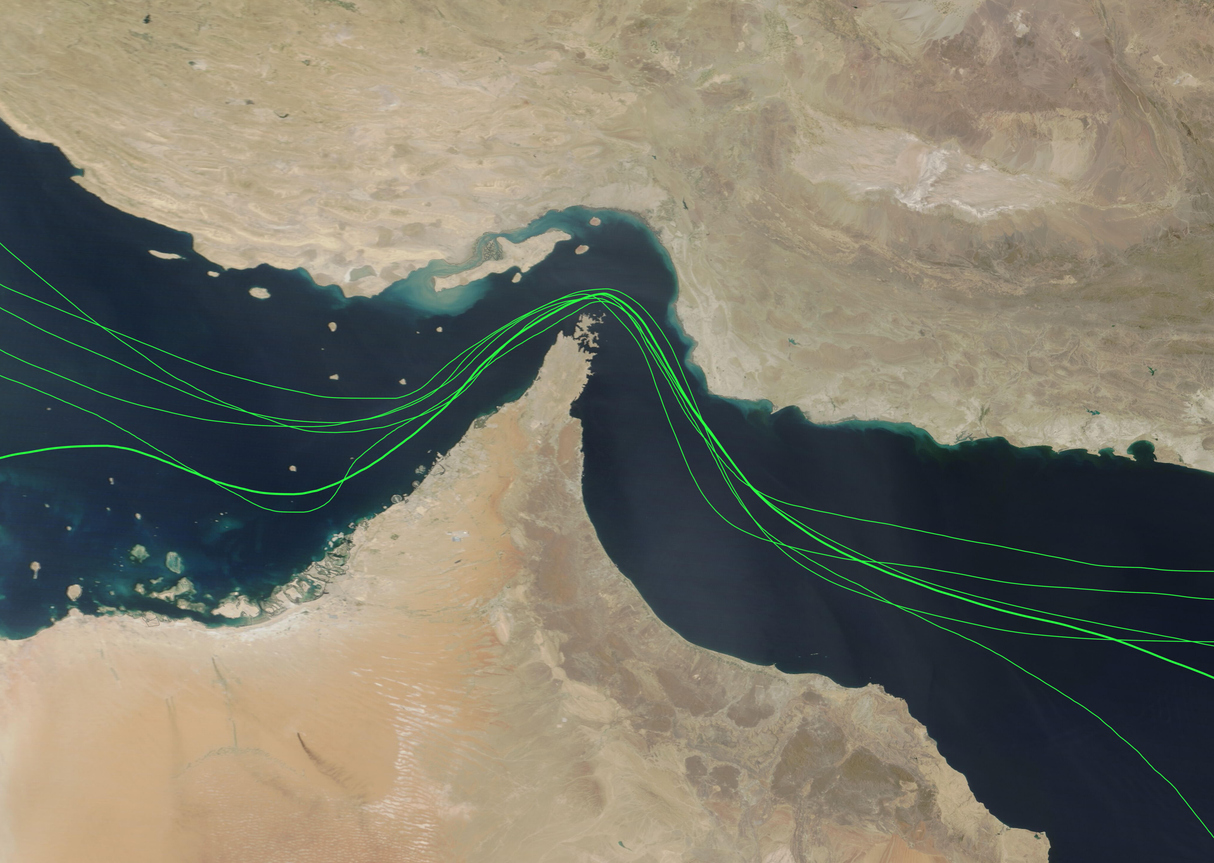
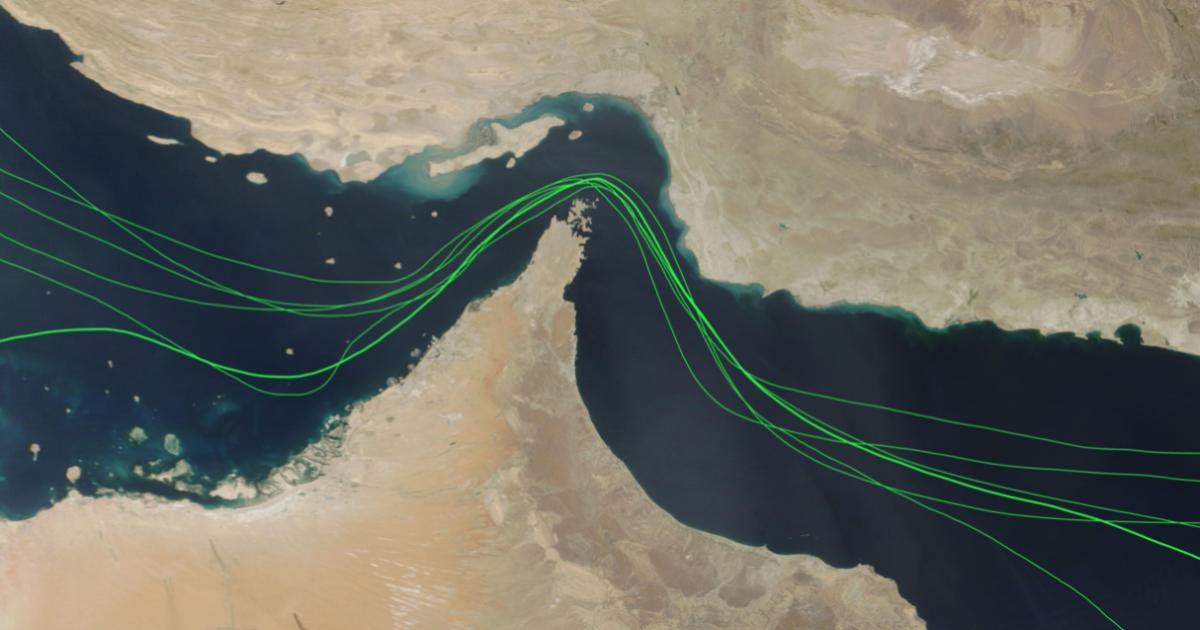
On February 28, 2026, the United States and Israel launched coordinated airstrikes against Iran, killing Supreme Leader Ali Khamenei and destroying military and nuclear sites across the country. Iran responded with missile and drone barrages against Israel, American bases in the Gulf, and allied states. Within hours, the Islamic Revolutionary Guard Corps declared the Strait of Hormuz closed to international shipping.
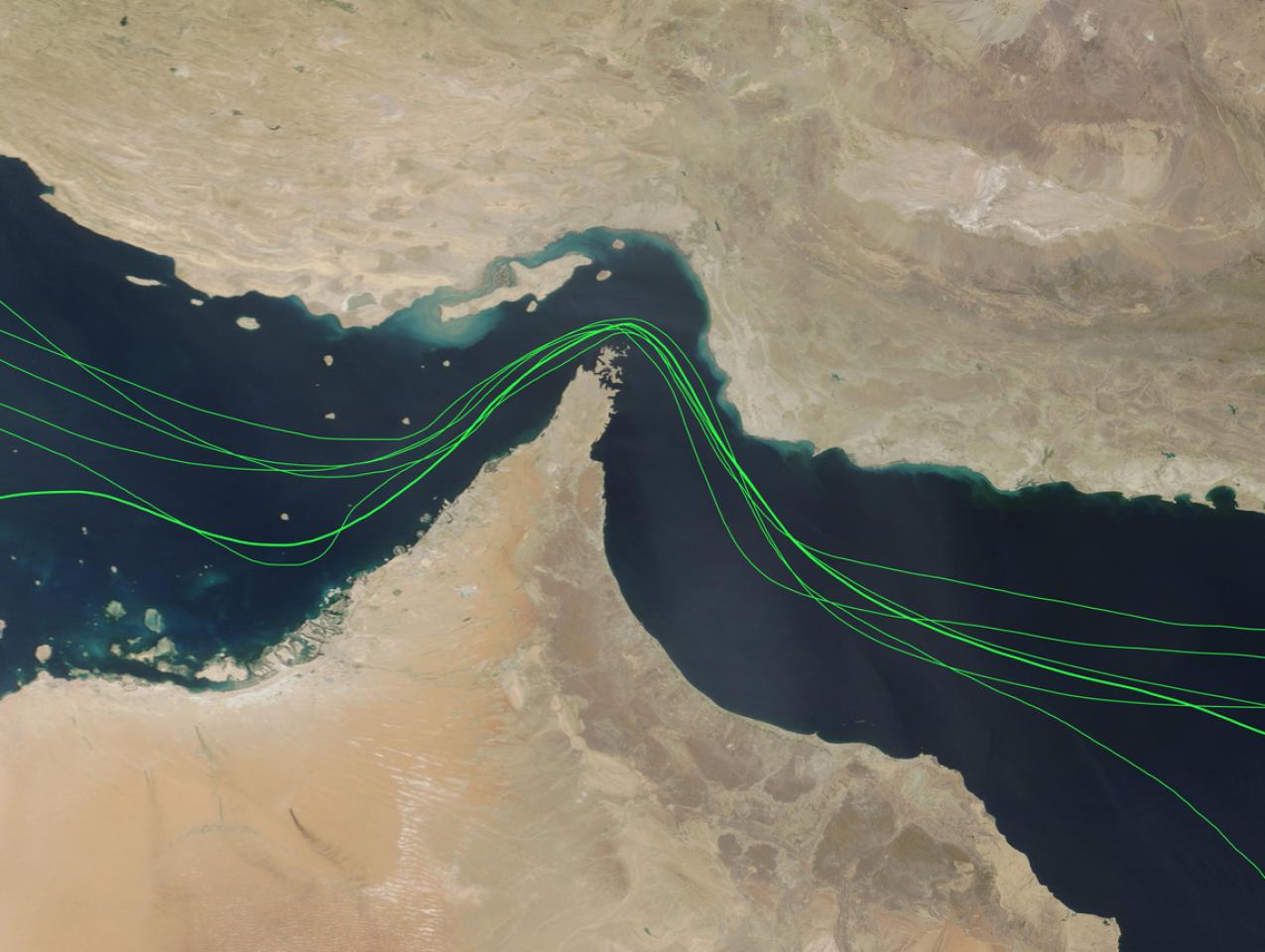
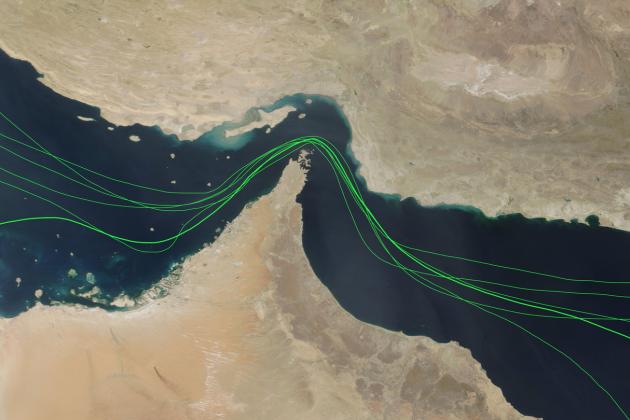
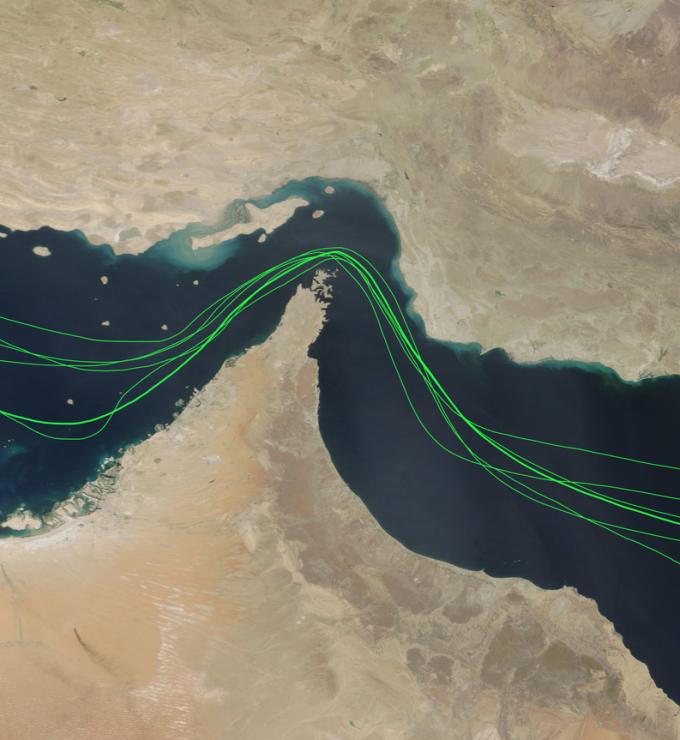
A Pakistan brokered ceasefire announced in early April halted the strikes, and Iran signaled conditional openness to resuming transit through Hormuz. But the strait remains functionally closed. Ship tracking data shows single digit vessel movements per day through a waterway that normally handles more than a hundred. Hundreds of ships remain stranded in the Persian Gulf. Iran has published naval maps suggesting mined waters, designated new shipping lanes closer to its coastline, and reportedly demanded transit fees exceeding one million dollars per vessel. The CEO of Abu Dhabi’s national oil company put it bluntly: “The Strait of Hormuz is not open. Access is being restricted, conditioned and controlled. That is not freedom of navigation. That is coercion.” He is right. And the implications extend far beyond the Gulf.
What Hormuz Reveals About the Pacific
The Strait of Hormuz and the South China Sea involve different powers and different military balances. But the coercive logic points in the same direction. Iran has demonstrated that a determined state can shut down a critical artery of global commerce, impose conditions on its reopening, and extract concessions without ever winning a naval battle. The weapons were sea mines, shore-based missiles, drone attacks on merchant vessels, and the fear those created in insurance markets and shipping boardrooms.
Beijing will study this closely. China has spent decades building artificial islands, deploying coast guard forces, and pressing expansive territorial claims against the Philippines, Vietnam, and others. The method is different. It relies on gray zone pressure rather than overt military action. But the strategic aim converges: make freedom of navigation feel conditional and shift the burden of maintaining open seas onto smaller nations and commercial operators until acquiescence becomes the default.
Every time a state demonstrates that maritime coercion works without triggering a decisive response, the threshold for the next attempt drops. The Houthis proved it in the Red Sea beginning in late 2023, when a militia armed with Iranian weapons disrupted one of the world’s busiest shipping lanes and killed merchant sailors aboard the True Confidence in March 2024. Iran scaled the concept upward at Hormuz. The question now is whether that playbook migrates east before democracies build an answer.
Why Presence Alone No Longer Works
American maritime strategy has long assumed that enough warships in contested waters equals deterrence. The Iran war has exposed the limits of that assumption. The Fifth Fleet could not prevent Hormuz from closing. The broader Navy cannot simultaneously sustain commitments across the Gulf, the Western Pacific, and the Indian Ocean. The shipbuilding pipeline is not producing hulls fast enough to replace aging vessels, and each new guided missile destroyer costs north of two billion dollars. The threat side has moved in the opposite direction. Iran shut down twenty percent of global seaborne oil trade using mines that cost a few thousand dollars apiece and shore launched anti-ship missiles. The Houthis accomplished something comparable in the Red Sea with equipment that barely registers on a defense budget.
What the moment demands is persistent, autonomous maritime awareness. Long endurance unmanned aerial systems can maintain surveillance over chokepoints for days rather than the hours a manned patrol sustains. Unmanned surface vessels can hold sensor picket lines without risking crews. Autonomous underwater platforms can detect mine laying activity that manned patrols routinely miss. None of this replaces the carrier strike group. But it fills the gaps between manned platforms, and those gaps are precisely where coercion operates.
Proliferated unmanned systems can also help create a wider deterrent network among allies and partners. The value is not only in the individual platform, but in the shared operating picture it enables. When nations see the same maritime activity, understand the same threat environment, and plan from the same data, deterrence becomes more collaborative and therefore more credible.
The Target Is Confidence
The Hormuz crisis has confirmed a deeper shift in how maritime coercion works. The target is no longer the ship. It is the commercial ecosystem that makes trade possible: the insurance underwriting, the port schedules, and the expectations of predictability on which supply chains depend.
Consider what Iran achieved. Before a single tanker was struck, insurance premiums for Hormuz transit had already surged. After the closure, war risk rates became prohibitive. Shipping firms suspended operations entirely. Oil prices rose past one hundred dollars a barrel. Gulf fertilizer exports, which account for roughly thirty percent of internationally traded supply, were disrupted. The coercive effect was accomplished not by sinking a fleet but by making commercial operators conclude that the risk of transit exceeded the cost of avoidance.
That is why military and intelligence overmatch, by itself, cannot guarantee access through a narrow waterway bordered by hostile shore-based weapons. If a state is willing to absorb risk and impose costs on commercial traffic, even advanced militaries face limits in preventing disruption entirely. Keeping sea routes open over time requires more than force protection. It requires economic arrangements, political understandings, and incentive structures that make closure less attractive than continued access. Those arrangements take far longer to build than they take to break.
Defending against this requires hardening critical energy infrastructure in the Gulf and building rapid repair capability so that strikes on facilities do not translate into months of lost capacity. Strategic redundancy matters too. The UAE’s Habshan to Fujairah pipeline provides some bypass capacity, but it handles only a fraction of total Gulf exports. Over time, diversification of energy routes and expanded strategic reserves can reduce the coercive leverage of any single chokepoint, even if they cannot eliminate it entirely.
The Test That Is Already Here
As talks involving Washington and Tehran continue without a durable settlement, and as U.S. efforts to escort stranded vessels have produced only limited relief amid renewed military incidents near the strait, the deeper contest remains unresolved. The question is not whether this particular crisis can be managed for another day or another week. It is whether the global maritime order will continue to function on the principle that international straits remain open to all nations under international law, or whether passage will increasingly depend on permission, payment, and political alignment.
Iran is not a party to the UN Convention on the Law of the Sea. But transit passage through straits used for international navigation is widely understood as customary international law, binding regardless of treaty membership. What Iran has done at Hormuz is not a wartime expedient. It is a challenge to the legal and practical foundations of the system that has underpinned global trade since 1945. As of May 11, 2026, developments in the strait remain fast moving and unpredictable. Diplomatic efforts have not produced a durable settlement, the strait remains effectively closed to normal commercial traffic, and the situation may continue to evolve materially before this piece reaches publication.
If that challenge succeeds, the precedent will travel. It will reach the South China Sea, the Taiwan Strait, and every contested waterway where a state with shore based missiles calculates that closing a chokepoint is cheaper than confronting a navy. The democratic world has the tools, the partnerships, and the economic weight to prevent that outcome. What it has lacked is the discipline to build the architecture before the crisis forces improvisation.
Hormuz has delivered that lesson in the most expensive way possible. The next exam will not come with a six-week warning.
Vivek Lall is Chief Executive of General Atomics Global Corporation and a Distinguished Visiting Fellow at Stanford University’s Hoover Institution, where his work focuses on national security, defense technology, and democratic governance.

