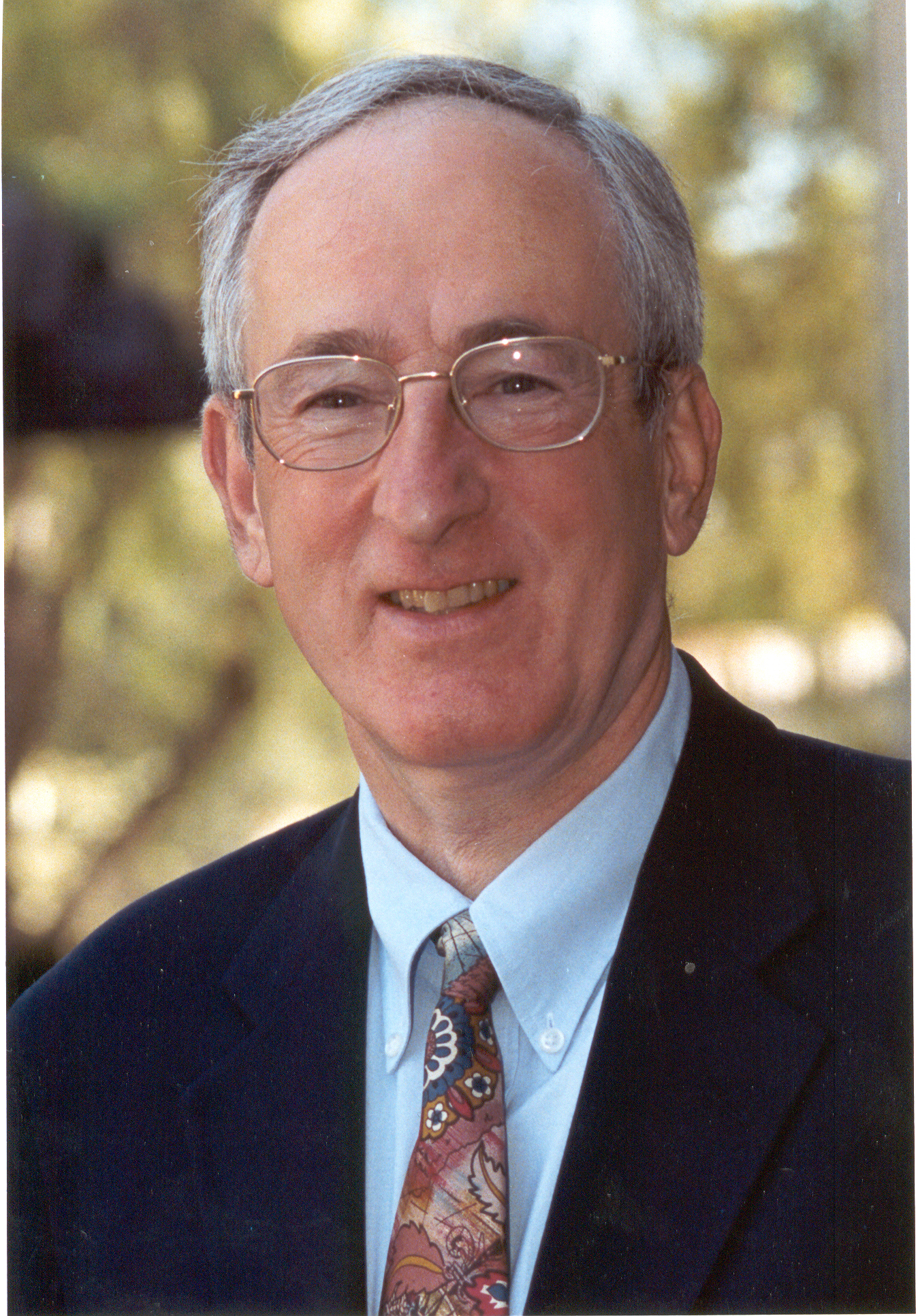
Alvin Rabushka

David and Joan Traitel Senior Fellow, Emeritus
Biography: 

Alvin Rabushka is the David and Joan Traitel Senior Fellow, Emeritus at the Hoover Institution.

He is the author or coauthor of numerous books in the areas of race and ethnicity, aging, taxation, state and local government finances, and economic development. His books include Politics in Plural Societies (originally published in 1972 and reissued in 2008 with a foreword and epilogue); A Theory of Racial Harmony; The Urban Elderly Poor; Old Folks at Home; The Tax Revolt; The Flat Tax; From Adam Smith to the Wealth of America; Hong Kong: A Study in Economic Freedom; and the New China. Rabushka’s most recent publication is Taxation in Colonial America, which received Special Recognition as a 2009 Fraunces Tavern Museum Book Award.

He has published numerous articles in scholarly journals and in national newspapers. He has consulted for, and testified before, a number of congressional committees. In 1980, he served on President Ronald Reagan's Tax Policy Task Force.

Rabushka's books and articles on the flat tax (with Robert E. Hall) provided the intellectual foundation for numerous flat tax bills that were introduced in Congress during the 1980s and 1990s and the proposals of several presidential candidates in 1996 and 2000. He was recognized in Money magazine's twentieth-anniversary issue "Money Hall of Fame" for the importance of his flat tax proposal in bringing about passage of the Tax Reform Act of 1986. His pioneering work on the flat tax contributed to the adoption of the flat tax in Jamaica, Estonia, Latvia, Lithuania, Russia, Ukraine, Serbia, Romania, Bulgaria, Slovakia, the Czech Republic, Georgia, Mongolia, Mauritius, Montenegro, Macedonia, Albania, Kygyzstan, Kazakhstan, Belarus, Trinidad and Tobago, Pridnestrovie (Transdniestra), several Swiss Cantons, and the Federation of Bosnia and Herzegovina. He has also drafted flat tax plans for Austria, El Salvador, Guatemala, Mexico, Argentina, Chile, Canada, and Slovenia.

Rabushka received his AB in Far Eastern studies from Washington University (St. Louis) in 1962, followed by his MA and PhD degrees in political science from Washington University in 1966 and 1968. In 2007, he was honored as a distinguished alumnus of the School of Arts and Sciences at Washington University.

Filter By:

Topic

Type

Recent Commentary

Analysis and Commentary

Lincoln was Wrong, and Other Thoughts

by Alvin Rabushkavia Thoughtful Ideas
Wednesday, May 19, 2010

Lincoln was wrong. You can no longer fool even some of the people all the time. The people have wised up to the pronouncements of politicians, especially on matters of money...

Analysis and Commentary

Political Pugilism

by Alvin Rabushkavia Thoughtful Ideas
Tuesday, May 18, 2010

The political silly season is upon us...

Analysis and Commentary

China’s Elusive Crash

by Alvin Rabushkavia Thoughtful Ideas
Friday, May 14, 2010

China seems oblivious to these warnings and refuses to crash. Instead, it grows at sustained high levels, doubling national output every 7-8 years, quadrupling in 14-15 years, and so on...

Analysis and Commentary

C-Cubed: Cameron-Clegg-Coalition

by Alvin Rabushkavia Thoughtful Ideas
Thursday, May 13, 2010

David Cameron’s Conservatives and Nick Clegg’s Liberal Democrats have set forth a seven-page outline agreement on policies that will be fleshed out in the days ahead...

Analysis and Commentary

China’s Currency Quandary

by Alvin Rabushkavia Thoughtful Ideas
Wednesday, May 12, 2010

U.S. government officials, backed by members of the business community and labor unions, have repeatedly called for China to revalue its currency, the yuan, against the dollar...

Analysis and Commentary

Prospects for Stable Democracy in Iraq, Postscript

by Alvin Rabushkavia Thoughtful Ideas
Monday, May 10, 2010

A potentially new transformation is gradually taking place in the United States. It has been revealed in the debate over extremely contentious immigration bills to deal with millions of undocumented immigrants...

Analysis and Commentary

Prospects for Stable Democracy in Iraq: Concluding Thoughts

by Alvin Rabushkavia Thoughtful Ideas
Sunday, May 9, 2010

Conflict and separation are far more prominent than peaceful, stable democracy in multi-ethnic countries. For Iraq to hold together when most or all of the remaining U.S. troops have been withdrawn in 2011 will take heroic efforts of compromise and conciliation...

Analysis and Commentary

Prospects for Stable Democracy in Iraq, Part VI

by Alvin Rabushkavia Thoughtful Ideas
Saturday, May 8, 2010

Lebanese democracy has been extremely fragile since France granted independence in 1943...

Analysis and Commentary

Prospects for Stable Democracy in Iraq, Part V

by Alvin Rabushkavia Thoughtful Ideas
Friday, May 7, 2010

Yugoslavia was created as a new state in 1918, composed of areas that had never been under a common unified government, and which for centuries had been under the domination of foreign powers...

Analysis and Commentary

Prospects for Stable Democracy in Iraq, Part IV

by Alvin Rabushkavia Thoughtful Ideas
Thursday, May 6, 2010

Belgium granted independence to Burundi in 1962. The Tutsi king (Tutsi made up 15 percent and Hutus 85 percent of the population, similar to Rwanda) established a constitutional monarchy comprising equal numbers of Hutus and Tutsis...

Pages

Featured:

The Russian Economy