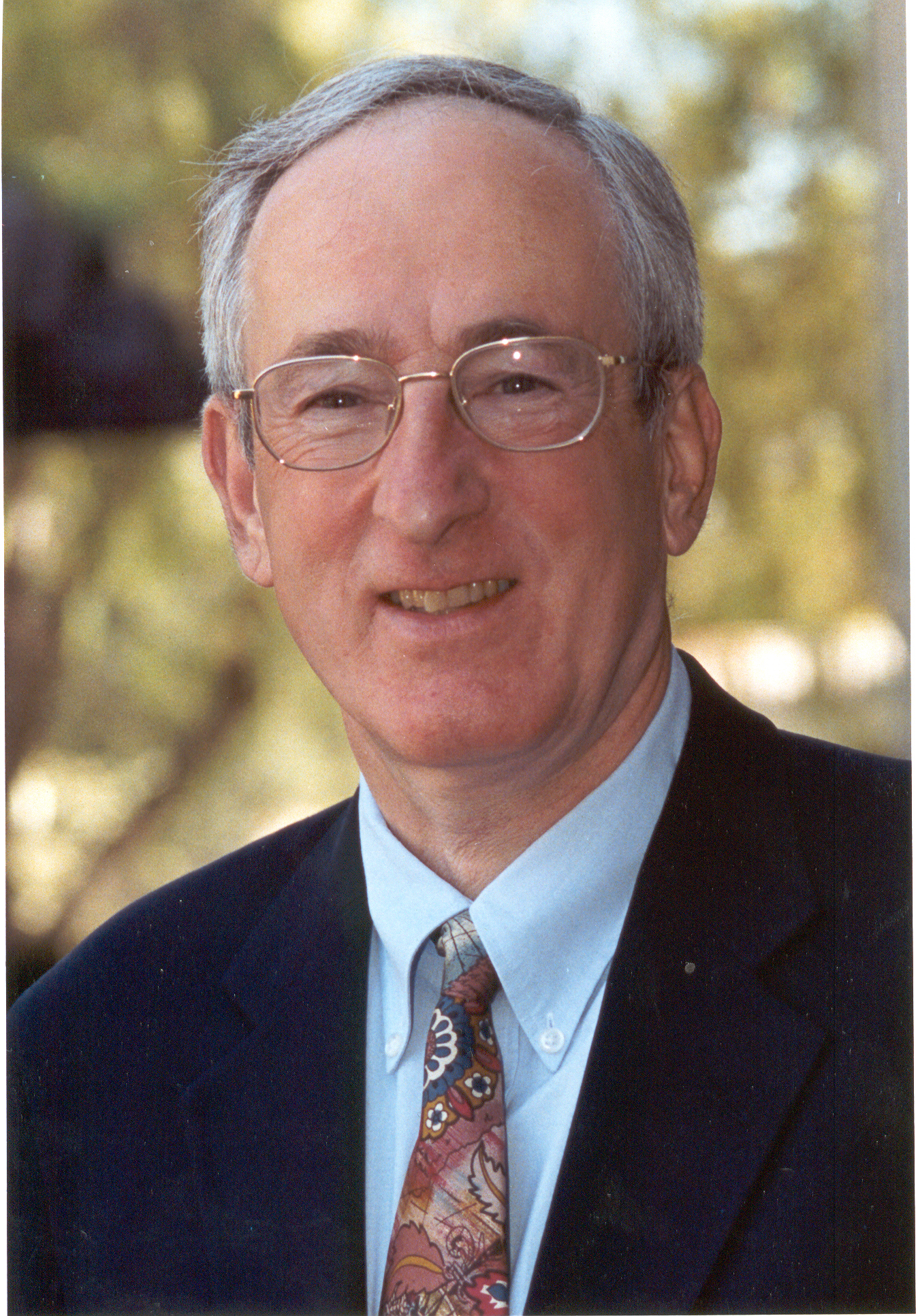
Alvin Rabushka

David and Joan Traitel Senior Fellow, Emeritus
Biography: 

Alvin Rabushka is the David and Joan Traitel Senior Fellow, Emeritus at the Hoover Institution.

He is the author or coauthor of numerous books in the areas of race and ethnicity, aging, taxation, state and local government finances, and economic development. His books include Politics in Plural Societies (originally published in 1972 and reissued in 2008 with a foreword and epilogue); A Theory of Racial Harmony; The Urban Elderly Poor; Old Folks at Home; The Tax Revolt; The Flat Tax; From Adam Smith to the Wealth of America; Hong Kong: A Study in Economic Freedom; and the New China. Rabushka’s most recent publication is Taxation in Colonial America, which received Special Recognition as a 2009 Fraunces Tavern Museum Book Award.

He has published numerous articles in scholarly journals and in national newspapers. He has consulted for, and testified before, a number of congressional committees. In 1980, he served on President Ronald Reagan's Tax Policy Task Force.

Rabushka's books and articles on the flat tax (with Robert E. Hall) provided the intellectual foundation for numerous flat tax bills that were introduced in Congress during the 1980s and 1990s and the proposals of several presidential candidates in 1996 and 2000. He was recognized in Money magazine's twentieth-anniversary issue "Money Hall of Fame" for the importance of his flat tax proposal in bringing about passage of the Tax Reform Act of 1986. His pioneering work on the flat tax contributed to the adoption of the flat tax in Jamaica, Estonia, Latvia, Lithuania, Russia, Ukraine, Serbia, Romania, Bulgaria, Slovakia, the Czech Republic, Georgia, Mongolia, Mauritius, Montenegro, Macedonia, Albania, Kygyzstan, Kazakhstan, Belarus, Trinidad and Tobago, Pridnestrovie (Transdniestra), several Swiss Cantons, and the Federation of Bosnia and Herzegovina. He has also drafted flat tax plans for Austria, El Salvador, Guatemala, Mexico, Argentina, Chile, Canada, and Slovenia.

Rabushka received his AB in Far Eastern studies from Washington University (St. Louis) in 1962, followed by his MA and PhD degrees in political science from Washington University in 1966 and 1968. In 2007, he was honored as a distinguished alumnus of the School of Arts and Sciences at Washington University.

Filter By:

Topic

Type

Recent Commentary

Analysis and Commentary

The Flat Tax in Iraq: Much Ado About Nothing—So Far

by Alvin Rabushkavia russianeconomy.org
Thursday, May 6, 2004

Supporters and opponents of the flat tax have spilled considerable ink debating the merits of a 15% flat tax on personal income in Iraq that was implemented on January 1, 2004.

Analysis and Commentary

Nothing New about Outsourcing

by Alvin Rabushkavia Hoover Daily Report
Wednesday, April 28, 2004

Outsourcing—the subject of intense controversy this election year—is blamed for the loss of jobs in the United States, but outsourcing should be nothing new to Americans. The founding and development of America is the result of English outsourcing in the seventeenth and eighteenth centuries.

The Flat Tax at Work in Russia: Year Three

by Alvin Rabushka
Monday, April 26, 2004

On January 1, 2001, a 13% flat-rate tax on personal income took effect in Russia. (The general principles and beneficial economic effects of the flat tax appear in The Flat Tax.)

Analysis and Commentary

The Flat Tax at Work in Russia: Year Three

by Alvin Rabushkavia russianeconomy.org
Monday, April 26, 2004

The flat tax has been remarkably successful by every conceivable measure, and has encouraged such other countries as Serbia (2003), Ukraine (2004), and Slovakia (2004) to implement flat taxes of their own.

Analysis and Commentary

The Flat Tax Spreads to Serbia

by Alvin Rabushkavia russianeconomy.org
Tuesday, March 23, 2004

On January 1, 2003, the government of Serbia implemented a comprehensive 14% flat-tax reform.

Analysis and Commentary

The Flat Tax Might Spread to Georgia

by Alvin Rabushkavia russianeconomy.org
Tuesday, February 3, 2004

Georgia's new president, Mikhail Saakashvili, stated his new government's top two economic priorities. The first is to introduce a new flat-rate tax system. The second is to create incentives for foreign investors.

Analysis and Commentary

Shorting Russia's Banks

by Alvin Rabushka, Michael S. Bernstamvia russianeconomy.org
Thursday, January 22, 2004

Like all business decisions, the wisdom or miscalculation of the purchase of Bank One by J.P. Morgan Chase will be evaluated by future returns and share prices. How does this story compare with Russia?

Representation Without Representation

by Alvin Rabushkavia Policy Review
Monday, December 1, 2003

The colonial roots of American taxation, 1700–1754

Analysis and Commentary

The Flat Tax Spreads to Slovakia

by Alvin Rabushkavia russianeconomy.org
Monday, November 3, 2003

On October 28, 2003, Slovakia's parliament enacted a 19% flat tax on both individual and corporate income to take effect on January 1, 2004.

Analysis and Commentary

Could a Degressive Tax Be Better Than a Flat Tax?

by Alvin Rabushkavia Hoover Daily Report
Monday, October 20, 2003

I have argued that disincentives to work, save, and invest should be removed via a flat tax. But why not go a step further and improve incentives across the board by creating a degressive tax? Such an experiment is about to take place in Switzerland.

Pages

Featured:

The Russian Economy