Expertise: 

Michael J. Petrilli

Visiting Fellow
Biography: 

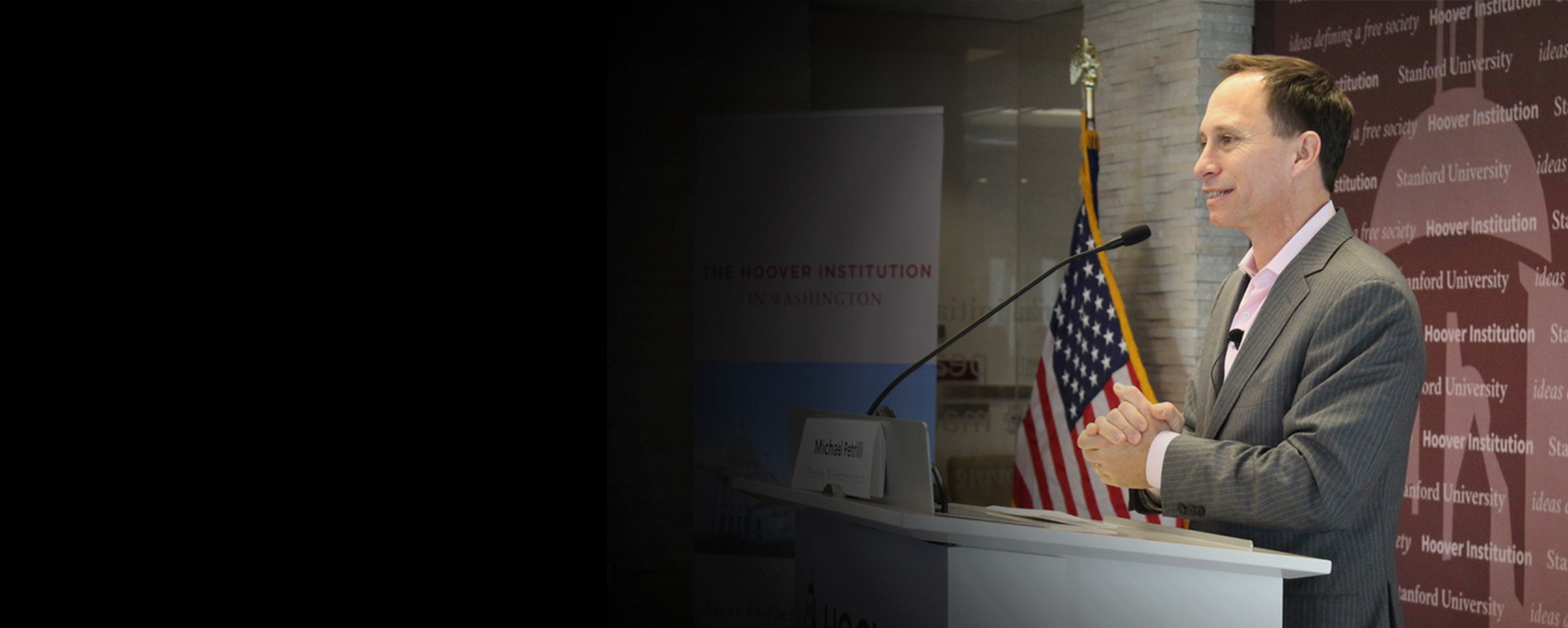
Mike Petrilli is an award-winning writer and president of the Thomas B. Fordham Institute, one of the country’s most influential education policy think tanks. He is the author of The Diverse Schools’ Dilemma: A Parent's Guide to Socioeconomically Mixed Public Schools and coeditor of Knowledge at the Core: Don Hirsch, Core Knowledge, and the Future of the Common Core. Petrilli is also a visiting fellow at Stanford University's Hoover Institution and executive editor of Education Next. Petrilli has published opinion pieces in the New York Times, Washington Post Bloomberg View, Slate, and Wall Street Journal and has been a guest on NBC Nightly News,, ABC World News Tonight, CNN, and Fox, as well as several National Public Radio programs, including All Things Considered, On Point, and the Diane Rehm Show. Petrilli helped create the US Department of Education’s Office of Innovation and Improvement, the Policy Innovators in Education Network, and Young Education Professionals. He lives with his family in Bethesda, Maryland.

Filter By:

Topic

Type

Recent Commentary

Analysis and Commentary

What The 2018 Elections Mean For American Education

by Michael J. Petrillivia Flypaper (Fordham Education Blog)
Monday, December 3, 2018

On Tuesday, November 27, the Albert Shanker Institute and the American Federation of Teachers co-sponsored an event called “The 2018 Elections: What Do They Mean for American Education?” Moderated by Michelle Ringuette, assistant to the president for labor, government & political affairs at the American Federation of Teachers, the panel featured Domingo Morel, assistant professor of political science at Rutgers University, Randi Weingarten, president of the American Federation of Teachers and the Albert Shanker Institute, and Fordham Insitute president Michael Petrilli.

Analysis and Commentary

The Way To Improve Educational Practice At Scale Is To Invest In R&D

by Michael J. Petrillivia Ed Excellence
Tuesday, November 20, 2018

Last week, I argued that the education-policy field has reached a state of homeostasis, “characterized by clearer and fairer but lighter touch accountability systems; the incremental growth of school choice options for families; but no appetite for big and bold new initiatives.” 

Education Image
Analysis and Commentary

The End Of Education Policy

by Michael J. Petrillivia Flypaper (Fordham Education Blog)
Wednesday, November 14, 2018

Almost thirty years ago, in February 1989, the political scientist Francis Fukuyama gave a talk that was later turned into an article that was later turned into a book, with the provocative title, “The End of History?” With the collapse of the Soviet Union and the end of the Cold War, western-style liberalism had triumphed over Communism, and had already fended off Fascism.

Analysis and Commentary

The Concern About Subgroups In ESSA Accountability Systems May Be Overblown

by Michael J. Petrillivia Education Next
Thursday, October 25, 2018
A recent analysis by uber-wonk Anne Hyslop and her colleagues at the Alliance for Excellent Education adds to a long list of reports expressing concern that many states’ accountability systems are turning a blind eye to the performance of disadvantaged students and students of color.
Analysis and Commentary

Parental Engagement: A Promise, Not A Program

by Michael J. Petrillivia Flypaper (Fordham Education Blog)
Wednesday, October 24, 2018

“Parental engagement” is one of those self-evidently appealing ideas for improving education. Who doesn’t want to engage parents? What child isn’t well served by more of it? Yet doing it well is hard, because it means shooting straight with parents about how their daughters and sons are performing, and committing to making hard changes and expending real resources to help those children do better. It’s not a program. It’s a promise: to be honest and do right by all kids.

Analysis and Commentary

The Concern About Subgroups In ESSA Accountability Systems May Be Overblown

by Michael J. Petrillivia Flypaper (Fordham Education Blog)
Friday, October 19, 2018

A recent analysis by uber-wonk Anne Hyslop and her colleagues at the Alliance for Excellent Education adds to a long list of reports expressing concern that many states’ accountability systems are turning a blind eye to the performance of disadvantaged students and students of color. The analysis finds that, under the Every Student Succeeds Act, “Many states fail to include student subgroups meaningfully across two of the law’s most important accountability provisions: (1) school ratings and (2) the definitions used to identify schools for targeted support and improvement.”

Analysis and Commentary

From Report Cards To Parent-Teacher Conferences, Schools Must Do A Better Job Of Telling Families How Their Kids Are Doing

by Michael J. Petrillivia The 74 Million
Friday, October 19, 2018

“Parental engagement” is one of those self-evidently appealing ideas for improving education. Who doesn’t want to engage parents? What child isn’t well served by more of it? Yet doing it well is hard, because it means shooting straight with parents about how their daughters and sons are performing, and committing to making hard changes and expending real resources to help those children do better. It’s not a program. It’s a promise: to be honest and do right by all kids.

Analysis and Commentary

From Cat Videos And Cooking Tips To The History Of The Punic Wars

by Michael J. Petrillivia Education Next
Wednesday, October 3, 2018

Extra History is one of a growing number of YouTube channels providing engaging educational videos for free.

Analysis and Commentary

Opening Remarks For The Inaugural Event Of The Education 20/20 Speaker Series: Heather Mac Donald On Double Standards In School Discipline

by Michael J. Petrillivia Thomas B. Fordham Institute
Friday, September 28, 2018
Over the course of the 2018–19 school year, the Education 20/20 speaker series, sponsored by the Thomas B. Fordham Institute and the Hoover Institution, will prod prominent conservative writers, intellectuals, and policymakers to provide compelling answers to the age-old question, “What's the purpose of school?”
Analysis and Commentary

The Case For Adding A Second 2nd Grade To High-Poverty Elementary Schools

by Michael J. Petrillivia Flypaper (Fordham Education Blog)
Wednesday, September 26, 2018

Veteran education analyst Marc Tucker wrote something the other day that stopped me cold. Describing some of the highest performing education systems in the world, he said, “Students do not routinely arrive at middle school from elementary school two or even three years behind. It simply does not happen.”

Pages