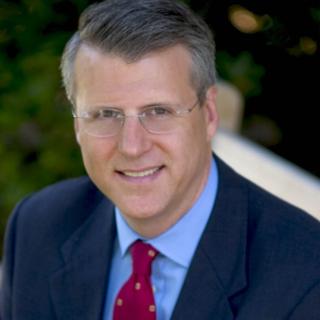
Peter M. Robinson

Murdoch Distinguished Policy Fellow
Biography: 

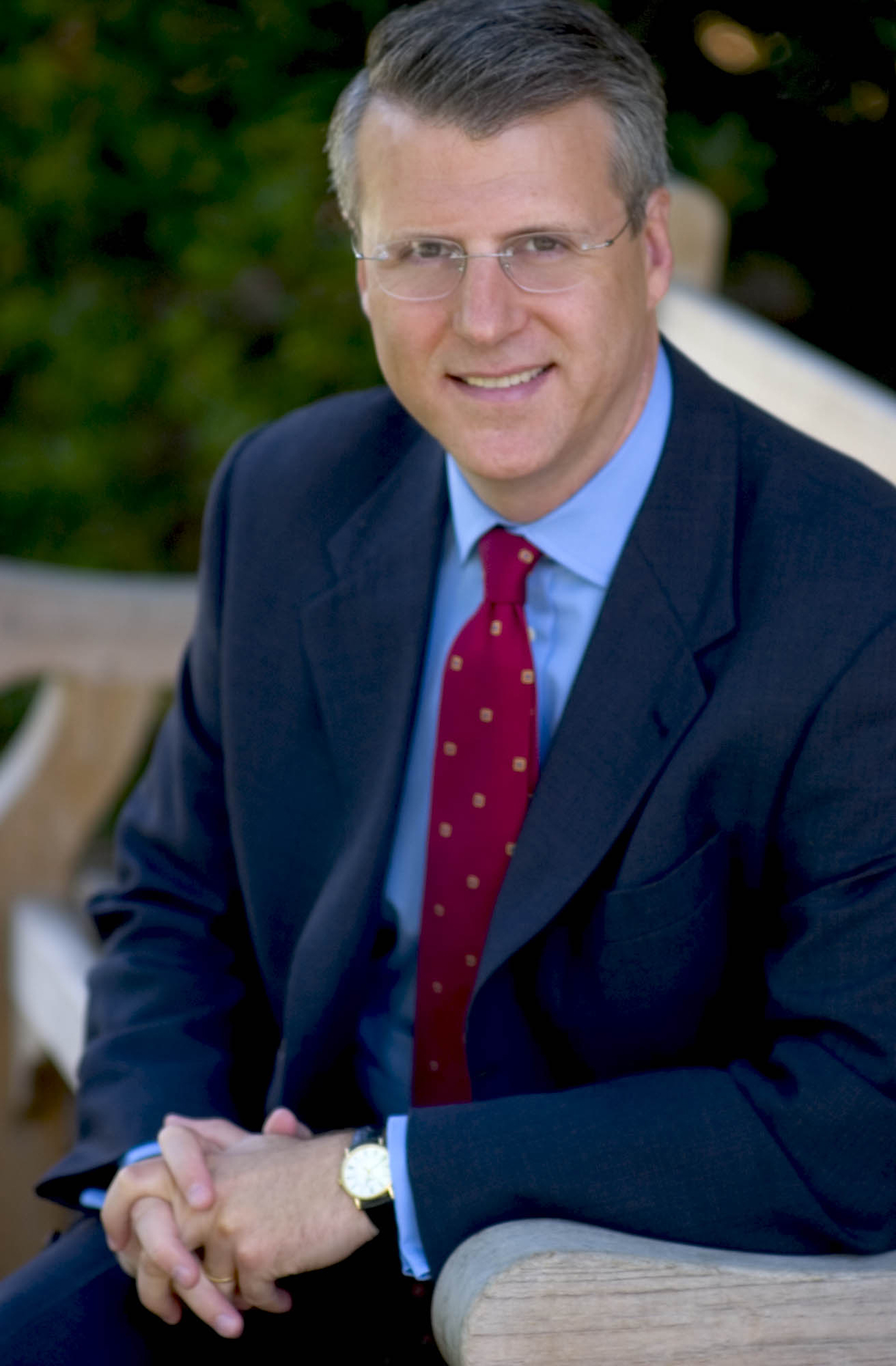
Peter M. Robinson is the Murdoch Distinguished Policy Fellow at the Hoover Institution, where he writes about business and politics, edits Hoover's quarterly journal, the Hoover Digest, and hosts Hoover's video series program, Uncommon Knowledge™.

Robinson is also the author of three books: How Ronald Reagan Changed My Life (Regan Books, 2003); It's My Party: A Republican's Messy Love Affair with the GOP, (Warner Books, 2000); and the best-selling business book Snapshots from Hell: The Making of an MBA (Warner Books, 1994; still available in paperback).

In 1979, he graduated summa cum laude from Dartmouth College, where he majored in English. He went on to study politics, philosophy, and economics at Oxford University, from which he graduated in 1982.

Robinson spent six years in the White House, serving from 1982 to 1983 as chief speechwriter to Vice President George Bush and from 1983 to 1988 as special assistant and speechwriter to President Ronald Reagan. He wrote the historic Berlin Wall address in which President Reagan called on General Secretary Mikhail Gorbachev to "tear down this wall!"

After the White House, Robinson attended the Stanford University Graduate School of Business. (The journal he kept formed the basis for Snapshots from Hell.) He graduated with an MBA in 1990.

Robinson then spent a year in New York City with Fox Television, reporting to the owner of the company, Rupert Murdoch. He spent a second year in Washington, D.C., with the Securities and Exchange Commission, where he served as the director of the Office of Public Affairs, Policy Evaluation, and Research. Robinson joined the Hoover Institution in 1993.

The author of numerous essays and interviews, Robinson has published in the New York Times, Red Herring, and Forbes ASAP, the Wall Street Journal, and National Review Online. He is the editor of Can Congress Be Fixed?: Five Essays on Congressional Reform (Hoover Institution Press, 1995).

In 2005, Robinson was elected to serve as a Trustee of Dartmouth College.

Robinson lives in northern California with his wife, their children and their dog, Crusoe.

His research papers are available at the Hoover Institution Archives.

Filter By:

Topic

Type

Recent Commentary

Hoover senior fellow Richard Epstein considers the soundness of contracts and the constitutionality of taxing bonuses at a rate of 90 percent.

Crisis and the Law with Richard Epstein

by Peter M. Robinsonwith Richard A. Epsteinvia Uncommon Knowledge
Monday, March 30, 2009

Considered one if the most influential legal thinkers of modern times, Richard Epstein, the Peter and Kirsten Bedford Senior Fellow at the Hoover Institution, brings his libertarian views to bear on the current financial crisis—“government incentives were perverse, so the actions of the private parties were perverse”—and rates the performances of George Bush and Barack Obama in their responses to the crisis. He speaks to the importance of contracts and the constitutionality of the “expo facto” taxation on AIG executives and the Employee Free Choice Act embraced by President Obama. Finally he speaks of his personal and professional dealings with Barack Obama when they were law school faculty mates at the University of Chicago. (38:22 ) Video transcript

Analysis and Commentary

Little Brown Jug

by Peter M. Robinsonvia Forbes
Friday, March 27, 2009

Looking over the Internet this past week, I noticed that Christopher Buckley had expressed his disapproval of President Obama yet again, this time chiding the chief executive for his television appearance with Jay Leno...

In the News

Law and Justice with Antonin Scalia: Chapter 5 of 5

by Peter M. Robinsonvia Uncommon Knowledge
Friday, March 20, 2009

Justice Antonin Scalia fields questions about his career, his family, his opinions, his faith, his colleagues, his legacy, and the fate of the Constitution...

Analysis and Commentary

Milton Friedman Vs. David Brooks

by Peter M. Robinsonvia Forbes
Friday, March 20, 2009

This past week, New York Times columnist David Brooks climbed unwittingly into the ring to go a couple of rounds with Milton Friedman--or rather, since Friedman died just over two years ago, with the ghost of Milton Friedman...

In the News

Law and Justice with Antonin Scalia: Chapter 4 of 5

by Peter M. Robinsonvia Uncommon Knowledge
Thursday, March 19, 2009

Justice Antonin Scalia talks about Roe v. Wade — and other mistakes of the past 50 years...

In the News

Law and Justice with Antonin Scalia: Chapter 3 of 5

by Peter M. Robinsonvia Uncommon Knowledge
Wednesday, March 18, 2009

Justice Antonin Scalia discusses why the originalists have lost so much ground to the devotees of a living Constitution...

In the News

Law and Justice with Antonin Scalia: Chapter 2 of 5

by Peter M. Robinsonvia Uncommon Knowledge
Tuesday, March 17, 2009

Justice Antonin Scalia explains why he believes the Constitution that he interprets “is not living, but dead.”...

Justice Antonin Scalia discusses the premise of his book, Making Your Case: The Art of Persuading Judges.

Law and Justice with Antonin Scalia

by Peter M. Robinsonwith Antonin Scaliavia Uncommon Knowledge
Monday, March 16, 2009

The Constitution “is not living, but dead.” With these words Associate Justice Scalia sums up how he believes we should think about the Constitution – a way of thinking that underpins the theory of “originalism” which guides his approach to cases that come before the Supreme Court. In expounding on originalism, Scalia takes the Court to task on past decisions, including Roe v. Wade, and measures just how far the Court can and should go in reversing these mistakes. (37:24 ) Video transcript

In the News

Law and Justice with Antonin Scalia: Chapter 1 of 5

by Peter M. Robinsonvia Uncommon Knowledge
Monday, March 16, 2009

Justice Antonin Scalia discusses the premise of his book, Making Your Case: The Art of Persuading Judges...

Analysis and Commentary

As It Is Written

by Peter M. Robinsonvia Forbes
Friday, March 13, 2009

With virtually the entire legal profession arrayed against him, with the press eager to deride or misrepresent him and with Hollywood intent upon mocking him (see, for example, the way actor Jack Shearer portrayed him last season on Boston Legal), Justice Antonin Scalia...

Pages