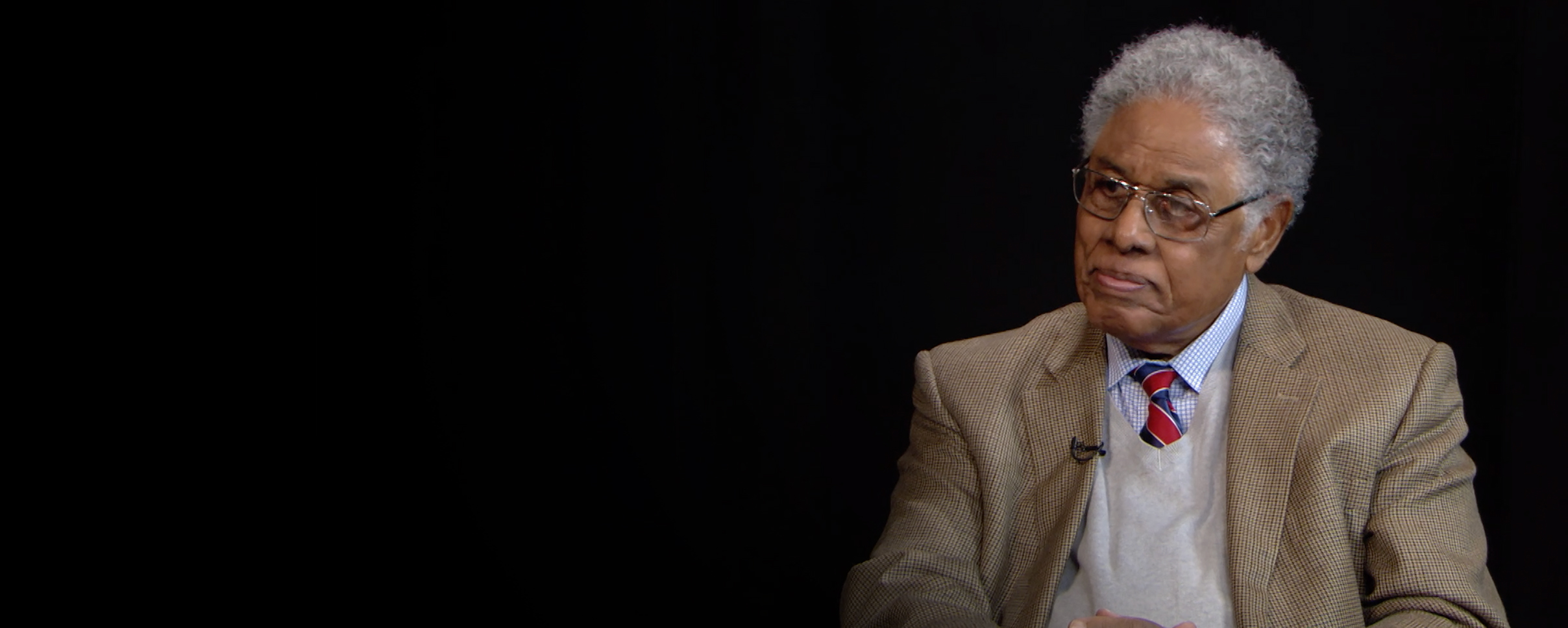
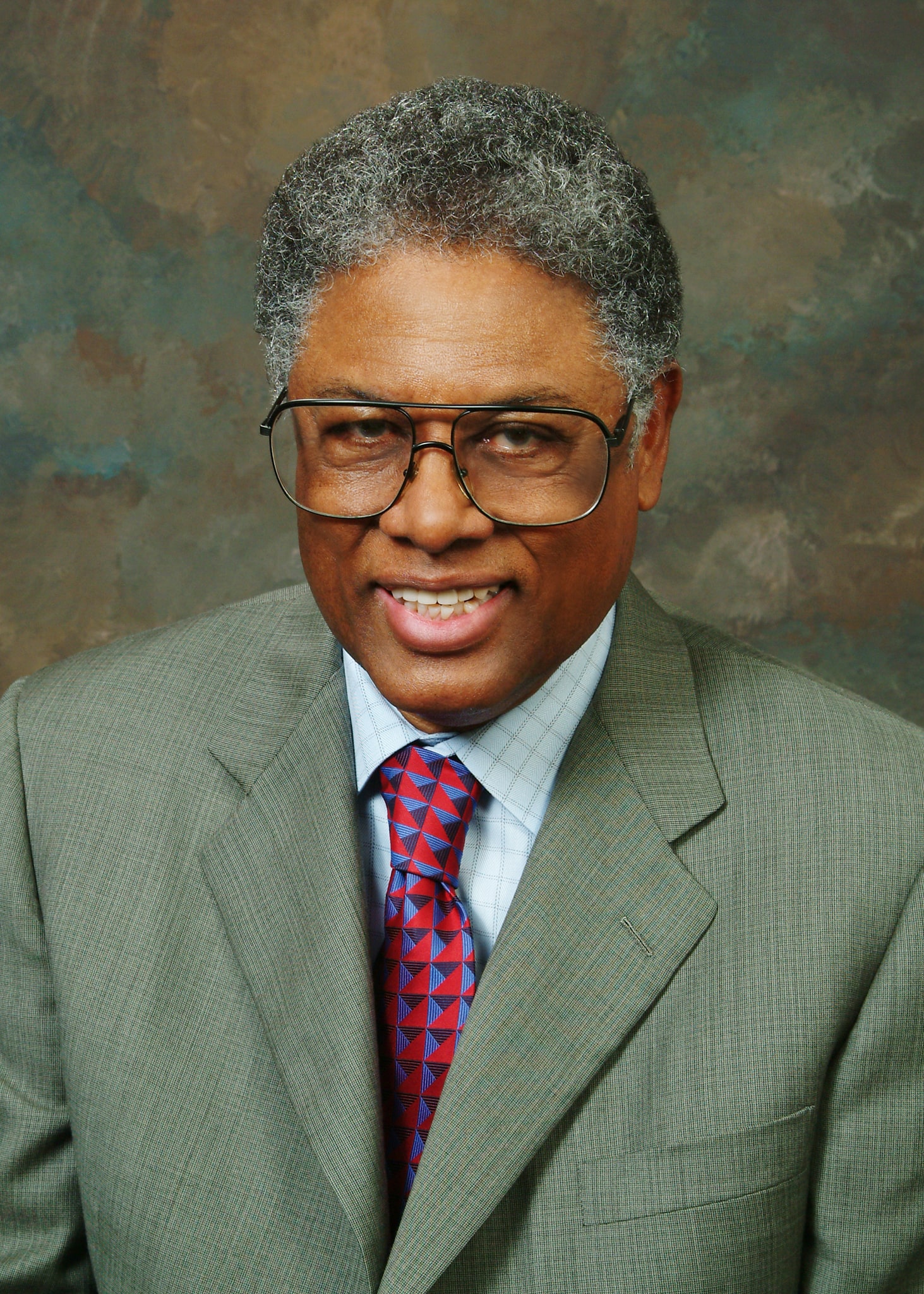
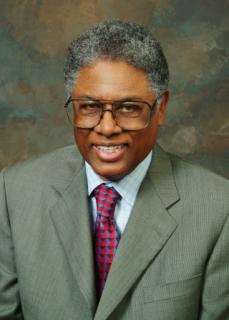
Thomas Sowell

Rose and Milton Friedman Senior Fellow on Public Policy
Awards and Honors:
American Philosophical Society
National Academy of Education
Biography: 

Thomas Sowell is the Rose and Milton Friedman Senior Fellow on Public Policy at the Hoover Institution.

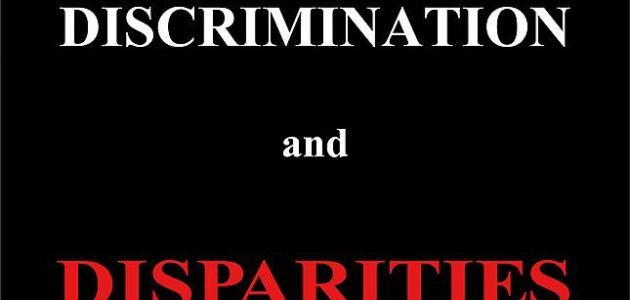
He writes on economics, history, social policy, ethnicity, and the history of ideas. His most recent book, Discrimination and Disparities (2018), gathers a wide array of empirical evidence to challenge the idea that different economic outcomes can be explained by any one factor, be it discrimination, exploitation or genetics. His books on economics include Housing Boom and Bust (2009), Intellectuals and Society (2009), Applied Economics (2009), Economic Facts and Fallacies (2008), Basic Economics (2007), and Affirmative Action Around the World (2004). Other books on economics he has written include Classical Economics Reconsidered (1974), Say’s Law (1972), and Economics: Analysis and Issues (1971). On social policy, he has written Knowledge and Decisions (1980), Preferential Policies (1989), Inside American Education (1993), The Vision of the Anointed (1995), Barbarians Inside the Gates (1999), and The Quest for Cosmic Justice (1999). On the history of ideas he has written Marxism (1985) and Conflict of Vision (1987). Sowell also wrote Late-Talking Children (1997). He has also written a monograph on law titled Judicial Activism Reconsidered, published by the Hoover Institution Press in 1989. His writings have also appeared in scholarly journals in economics, law, and other fields.

Sowell’s current research focuses on cultural history in a world perspective, a subject on which he began to write a trilogy in 1982. The trilogy includes Race and Culture (1994), Migrations and Cultures (1996), and Conquests and Cultures (1998).

Sowell's journalistic writings include a nationally syndicated column that appears in more than 150 newspapers from Boston to Honolulu. Some of these essays have been collected in book form, most recently in Ever Wonder Why? and Other Controversial Essays published by the Hoover Institution Press in 2006.

Over the past three decades, Sowell has taught economics at various colleges and universities, including Cornell, Amherst, and the University of California at Los Angeles, as well as the history of ideas at Brandeis University. He has also been associated with three other research centers, in addition to the Hoover Institution. He was project director at the Urban Institute, 1972-1974, a fellow at the Center for Advanced Study in the Behavioral Sciences at Stanford University, 1976–77, and was an adjunct scholar of the American Enterprise Institute, 1975-76.

Sowell was awarded the National Humanities Medal in 2002. In 2003, Sowell received the Bradley Prize for intellectual achievement. Sowell received his bachelor’s degree in economics (magna cum laude) from Harvard in 1958, his master’s degree in economics from Columbia University in 1959, and his PhD in economics from the University of Chicago in 1968.

Filter By:

Topic

Type

Recent Commentary

Analysis and Commentary

Misleading Words

by Thomas Sowellvia Creators Syndicate
Tuesday, August 2, 2011

Recent statistics on the average wealth or net worth of blacks are a painful reminder that rhetoric favoring blacks does not mean that politicians using such rhetoric are actually helping blacks...

Analysis and Commentary

Misleading Words: Part II

by Thomas Sowellvia Creators Syndicate
Tuesday, August 2, 2011

If there were a contest for the most misleading words used in politics, "poverty" should be one of the leading contenders for that title...

Obama’s “Balanced” Approach

by Thomas Sowellvia Advancing a Free Society
Friday, July 29, 2011

Barack Obama's political genius is his ability to say things that will sound good to people who have not followed the issues in any detail — regardless of how obviously fraudulent what he says may be to those who have.

Analysis and Commentary

Ideals Versus Realities

by Thomas Sowellvia Creators Syndicate
Wednesday, July 27, 2011

It is not idealism to ignore the limits of one's power. Nor is it selling out one's principles to recognize those limits at a given time and place, and get the best deal possible under those conditions...

Analysis and Commentary

Obama's 'Balanced' Approach

by Thomas Sowellvia Creators Syndicate
Wednesday, July 27, 2011

Barack Obama's political genius is his ability to say things that will sound good to people who have not followed the issues in any detail — regardless of how obviously fraudulent what he says may be to those who have...

Analysis and Commentary

Debt-Ceiling Chicken

by Thomas Sowellvia Creators Syndicate
Tuesday, July 26, 2011

The national debt-ceiling law should be judged by what it actually does, not by how good an idea it seems to be...

Analysis and Commentary

Good Things

by Thomas Sowellvia Creators Syndicate
Tuesday, July 19, 2011

Life has many good things. The problem is that most of these good things can be gotten only by sacrificing other good things...It is only in politics that this simple, common sense fact is routinely ignored...

Analysis and Commentary

Forgotten Stars

by Thomas Sowellvia Creators Syndicate
Tuesday, July 12, 2011

Three recent sports biographies — two about baseball stars Stan Musial and Hank Greenberg, and another about boxing great Joe Louis — are not only interesting in themselves, but also recall an era that now seems as irretrievably past as the Roman Empire...

Analysis and Commentary

Politics Versus Reality

by Thomas Sowellvia Creators Syndicate
Tuesday, July 5, 2011

Politicians leave reality to others. What matters in politics is what you can get the voters to believe, whether it bears any resemblance to reality or not...

Analysis and Commentary

Politics Versus Reality: Part II

by Thomas Sowellvia Creators Syndicate
Tuesday, July 5, 2011

No one is more of a master of political talking points than President Barack Obama...

Pages