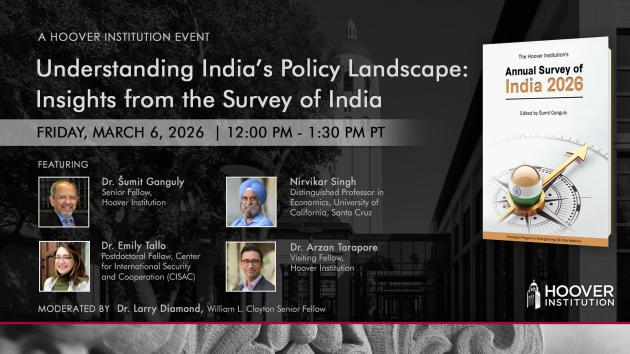
The partnership between the United States and India will define freedom, security, and prosperity in the twenty-first century. The goal of the Huntington Program on Strengthening US-India Relations at Hoover is to generate, identify, and advance policy-relevant scholarship and connections that will further this critical partnership.

Featured Event
India's Geostrategic Position

India's Geostrategic Position

The Hoover Institution’s India Economic Policy Conference brings together leading experts, policymakers, and scholars to explore India’s evolving economic landscape. This full-day event provides a platform for invited participants to share their latest research and engage in focused, solution-oriented discussions.

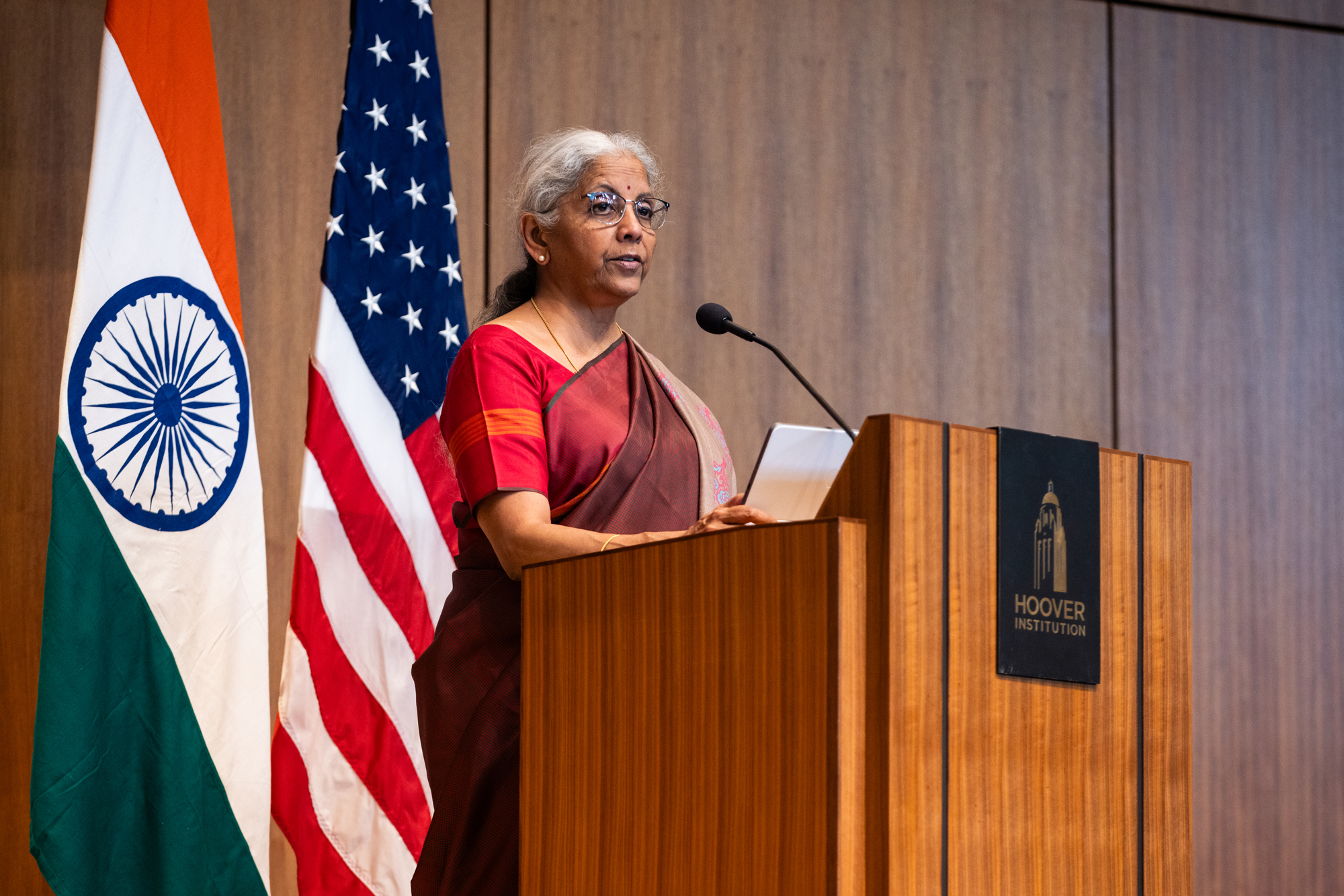
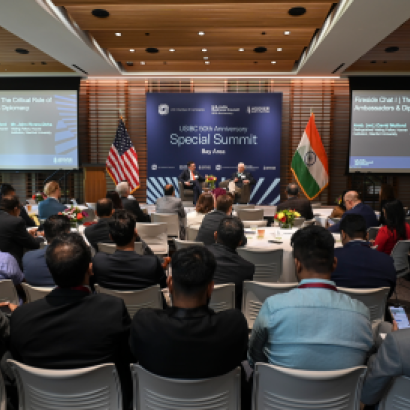
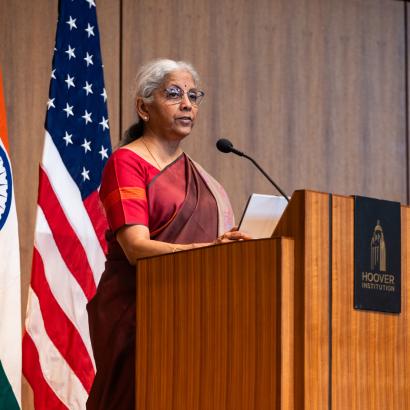
Fireside Chat with Venkatraman Anantha Nageswaran

Fireside Chat with Venkatraman Anantha Nageswaran

The Hoover Institution’s India Economic Policy Conference brings together leading experts, policymakers, and scholars to explore India’s evolving economic landscape. This full-day event provides a platform for invited participants to share their latest research and engage in focused, solution-oriented discussions.

Featured

Explore

Edit Filters

Refine Results

BY CONTENT TYPE
BY TOPIC
Date Range
BY KEY FOCUS AREAS
BY REGION
BY PUBLICATION
BY RESEARCH TEAM
Additional Filters

Filtering By:

Showing

Sort by Date

LEADERSHIP

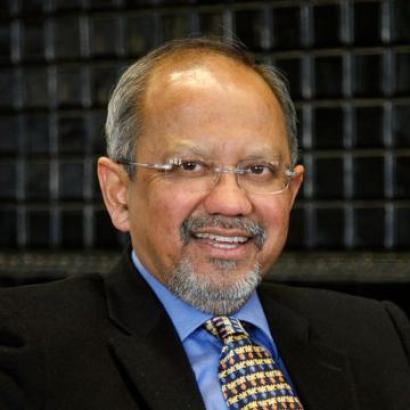
Šumit Ganguly

Senior Fellow

Šumit Ganguly is a senior fellow at the Hoover Institution and director of its Huntington Program on Strengthening US-India Relations. He is also the Rabindranath Tagore Professor in Indian Cultures and Civilizations, Emeritus, at Indiana University in Bloomington, where he served as distinguished professor and professor of political science and directed programs on India studies and on American and global security. He was previously on the faculty of the University of Texas at Austin, Hunter College, the Graduate Center of the City University of New York, and James Madison College of Michigan State University. He has also taught at Columbia University, Sciences Po (Paris, France), the US Army War College, the University of Heidelberg (Germany), Northwestern University, and the Rajaratnam School of International Studies at Nanyang Technological University (Singapore). He serves on the board of directors of the American Friends of the Alexander von Humboldt Foundation.

His honors include a Humboldt Research Fellowship (Alexander von Humboldt Foundation, Germany), the Pravasi Bharatiya Samman award (government of India), the Medal of the Chamber of Deputies (Italy), distinguished alumnus of Berea College, and distinguished alumnus of the Department of Political Science at the University of Illinois-Urbana/Champaign. He is also an elected member of the American Academy of Arts and Sciences and a life member of the Council on Foreign Relations. He has been a fellow and a guest scholar at the Woodrow Wilson International Center for Scholars (Washington, DC); a senior fellow at the Foreign Policy Research Institute; a visiting fellow at the Center for International Security and Cooperation and at the Center for Democracy, Development, and the Rule of Law (both at Stanford University); a visiting fellow at the German Institute of International and Area Studies (Hamburg); a distinguished visiting fellow at the Institute for Defense Studies and Analysis (New Delhi); the Asia Chair (research) at Sciences Po (Paris); and a visiting fellow at the Cooperative Monitoring Center (Sandia National Laboratory, Albuquerque, New Mexico). His research and writing focused on South Asia have been supported by grants from the Asia Foundation, the Smith Richardson Foundation, the Ford Foundation, the Carnegie Corporation of New York, the American Institute of Indian Studies, the W. Alton Jones Foundation, the US departments of State and Defense, and the United States Institute of Peace.

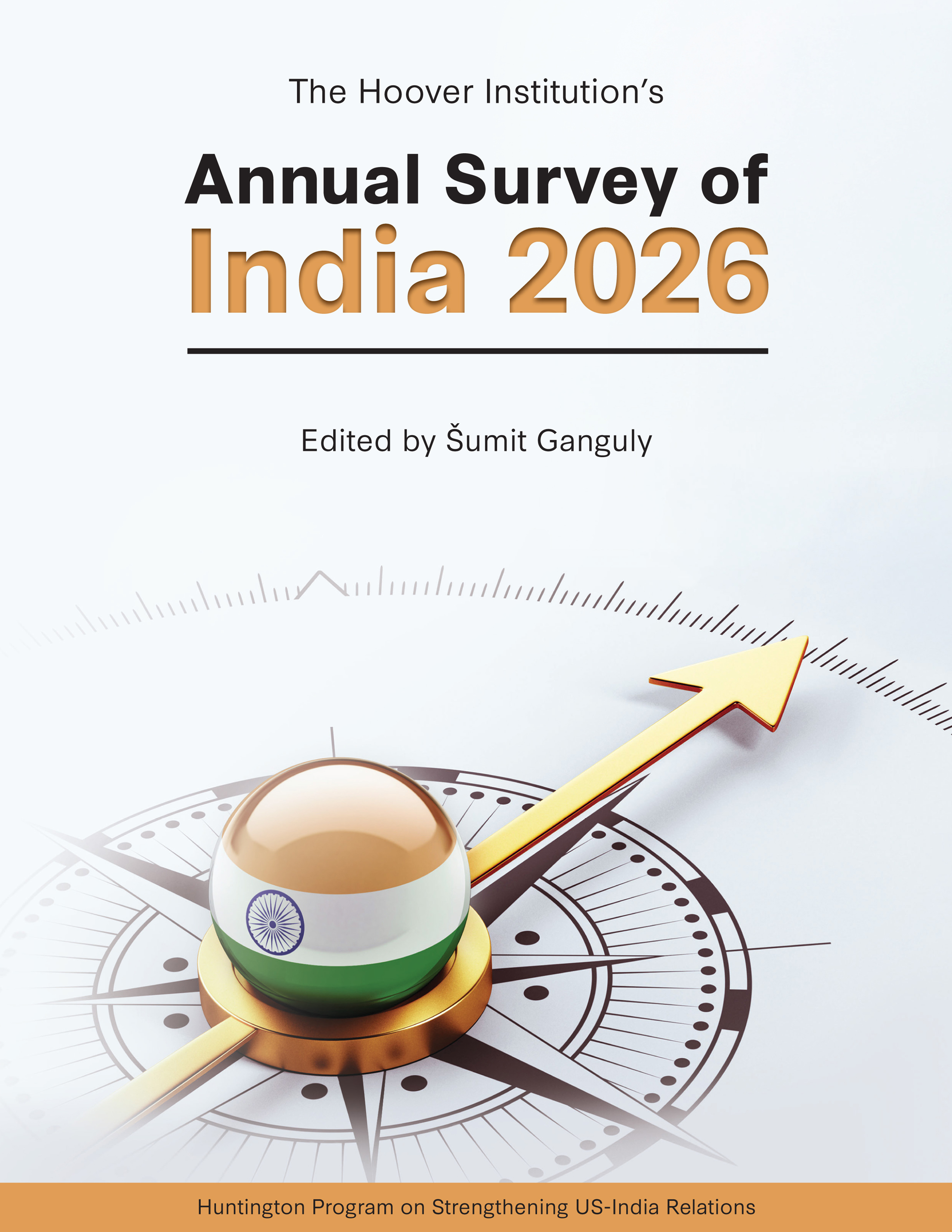
Dr. Ganguly is co-editor in chief of the International Studies Review and serves on the editorial boards of International Security, the Journal of Democracy, Foreign Policy Analysis, Asian Security, Small Wars and Insurgencies, Pacific Affairs, Modern Asian Studies, the International Journal of Development and Conflict, the India Review, the Nonproliferation Review, the Washington Quarterly, and Current History. He is a columnist for Foreign Policy and the founding editor of the India Review, Asian Security, and Indian Politics and Policy. Previously, he has been an associate editor at International Security and International Studies Quarterly and a contributing editor at Asian Affairs. Ganguly is the author or editor of more than twenty books, including Deadly Impasse: Indo-Pakistani Relations at the Dawn of a New Century (2016); The Oxford Short Introduction to Indian Foreign Policy (2018, 2015); How Rivalries End (2013, coauthored with William R. Thompson and Karen Rasler), which won the J. David Singer Award from the International Studies Association; The Crisis in Kashmir (1999, 1997); Fearful Symmetry: India and Pakistan under the Shadow of Nuclear Weapons (2005, coauthored with Devin Hagerty); The Sino-Indian Rivalry (2023, co-edited with Manjeet S. Pardesi and William R. Thompson); Understanding Contemporary India (3rd edition 2021, co-edited with Neil Devotta); The Oxford Handbook of Indian Politics (2024, co-edited with Eswaran Sridharan); and, most recently, The Troubling State of India’s Democracy (2024, co-edited with Larry Diamond and Dinsha Mistree).

Read Full Bio

David C. Mulford

Distinguished Visiting Fellow

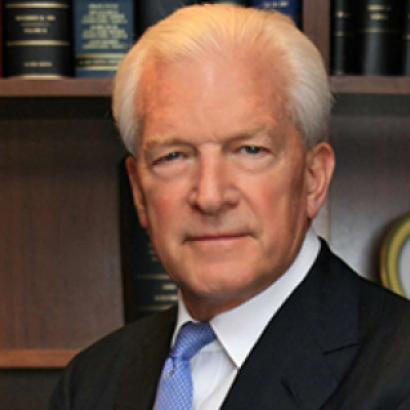
Ambassador David Mulford is a distinguished visiting fellow at the Hoover Institution at Stanford University. In this role, Ambassador Mulford focuses on research, writing, and activities related to global economic integration, including the legal and political environments of trade agreements and their management. He concentrates his efforts on economic growth in the Indian subcontinent and the trend of receding globalization in developed economies.

Before joining the Hoover Institution, Ambassador Mulford served as the vice chairman international at Credit Suisse from 2009 to 2016. In this role, Ambassador Mulford worked with a range of clients across the integrated bank with a particular focus on governments, as well as corporate clients, across the globe.

Ambassador Mulford rejoined Credit Suisse in March 2009 after spending five years as the US ambassador to India. Ambassador Mulford came to India in early 2004, at a time when India-US relations were undergoing a dramatic shift and the strategic partnership between New Delhi and Washington was gaining momentum as the two sides began working closely together on an unprecedented range of issues. Ambassador Mulford was a major player for five years building a strong partnership between the United States and India, the world’s two largest multicultural democracies.

During his tenure, India and the United States achieved unprecedented economic cooperation and exponential expansion in business, health, finance, science, agriculture, education, and military cooperation. Ambassador Mulford negotiated the US-India Civil Nuclear Initiative from March 2005 through its final agreement as the United States–India Nuclear Cooperation Approval and Nonproliferation Enhancement Act in October 2008. Following the Mumbai terror attacks, Ambassador Mulford facilitated Washington’s offer to collaborate with New Delhi by way of information sharing, investigative collaboration, and cooperation, strengthening both countries’ pledge in the war against international terrorism. Ambassador Mulford was also the founder of the US-India CEO Forum.

Before being nominated as the US ambassador to India, Mulford served as chairman international and member of the Executive Board of Credit Suisse, based in London. From 1992 to 2003, Mulford was responsible for leading Credit Suisse’s worldwide, large-scale privatization business and other corporate and government advisory assignments.

Mulford was undersecretary and assistant secretary of the US Treasury for International Affairs from 1984 to 1992. He served as the senior international economic policy official at the Treasury under Secretaries Regan, Baker, and Brady. the highlights of Mulford’s responsibilities and accomplishments at the Treasury Department include US deputy for coordination of economic policies with other G-7 industrial nations; head of the administration’s yen/dollar negotiations with Japan; the administration’s senior adviser on financial assistance to Russia and other states of the former Soviet Union; leadership of the administration’s international debt strategy, and the development and implementation of the Baker / Brady Plans and President Bush’s Enterprise Initiative for the Americas.

Mulford also led both the US delegation to negotiate the establishment of the European Bank for Reconstruction and Development, as well as the G-7 negotiations to reduce Poland’s official bilateral debt in 1991.

Before his government service, Mulford was a managing director and head of International Finance at White, Weld & Co., with responsibility for coordinating efforts with Credit Suisse on international financial business from 1966 to 1974. He was then seconded to the Saudi Arabian Monetary Agency (SAMA), where he served as a senior investment adviser from 1974 to 1983. His responsibilities included managing the investment of Saudi oil revenues and developing a comprehensive investment program for SAMA. He also served as a special assistant to the secretary and deputy secretary of the Treasury as a White House Fellow during 1965 to 1966, in the first year of the White House Fellowship Program.

Mulford received a doctor of philosophy degree from Oxford University, an MA in political science from Boston University, and a BA in economics, cum laude, from Lawrence University in Appleton, Wisconsin. He did graduate studies at the University of Cape Town, South Africa, in 1960 and has published two books on Zambia. He received an honorary doctor of laws degree from Lawrence University, the Legion d’Honneur from the president of France, the Distinguished Alumni Award from Boston University, the Alexander Hamilton Award, the highest honor bestowed by the secretary of the Treasury for extraordinary service and benefit to the Treasury Department and the nation, the Order of May for Merit from the President of Argentina, and the Officer’s Cross of the Medal of Merit from the President of Poland.

Read Full Bio

Dinsha Mistree

Research Fellow

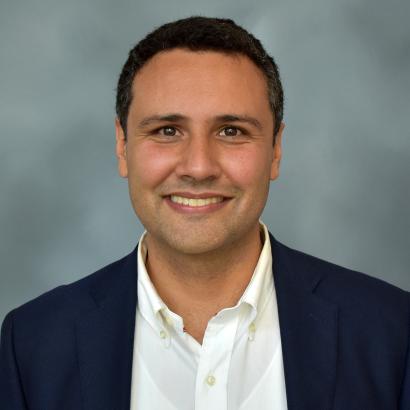
Dinsha Mistree is a research fellow at the Hoover Institution, a research affiliate at Stanford’s Freeman Spogli Institute for International Studies, and a research affiliate at the Neukom Center for the Rule of Law at Stanford Law School, where he teaches courses on state building and global poverty.

Mistree works on issues related to the US-India relationship. Recent and forthcoming scholarship includes a book project on the performance of the Indian diaspora in the United States and a forthcoming study on the history of the US-India Civil Nuclear Agreement. He also studies governance and economic growth in developing countries, with a special focus on India. To this end, Mistree is working on a comparison of India's computer hardware and software industries as well as a project on the regulation of food adulteration across South Asia. Additionally, he has conducted one of the largest quantitative studies of management practices in Indian higher education as well as a series of education-focused experiments with Indian job seekers. These experiments include measuring the employment returns of learning English, how to effectively teach digital literacy, and how to minimize interpersonal conflict. Apart from his scholarly work, Mistree publishes in a range of policy outlets.

Mistree holds a PhD and MA in politics from Princeton University, along with an SM and SB from the Massachusetts Institute of Technology. He previously held a postdoctoral fellowship at Stanford’s Center on Democracy, Development, and the Rule of Law and was a visiting scholar at the Indian Institute of Management-Ahmedabad.

Read Full Bio
overlay image