







- Economic
- Economics
- Political Philosophy
- Answering Challenges to Advanced Economies
- Revitalizing History
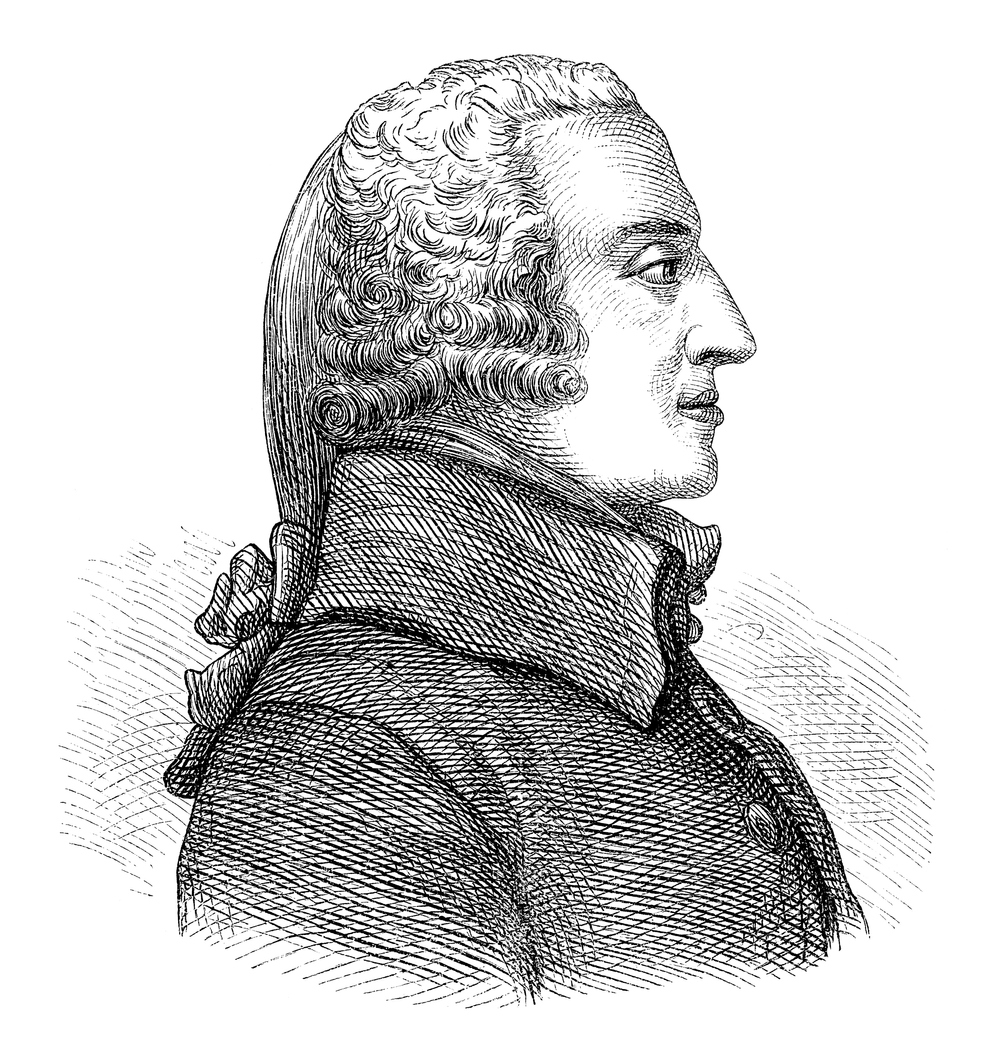
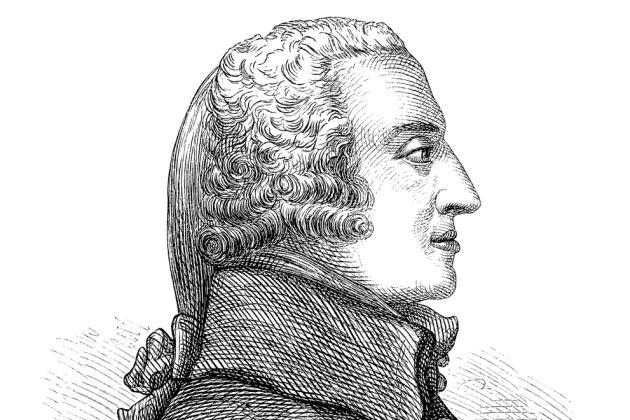
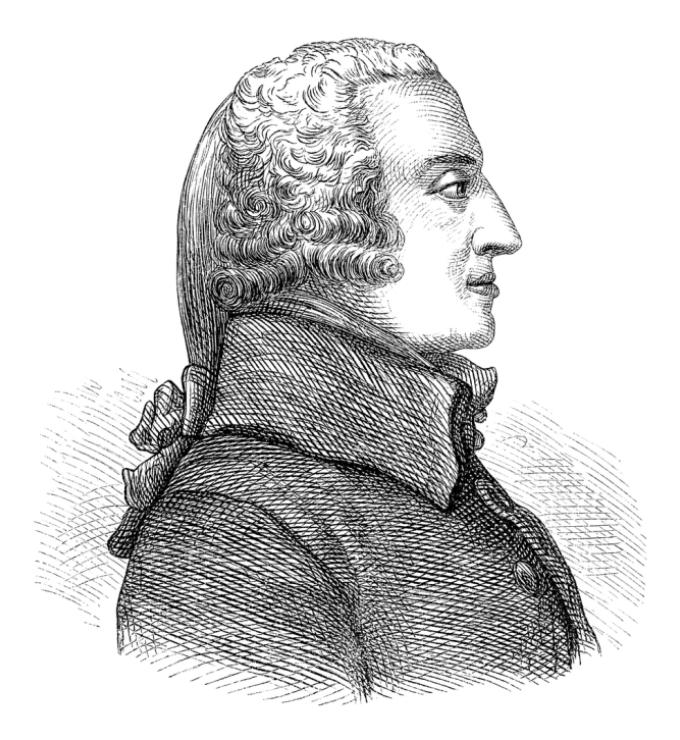
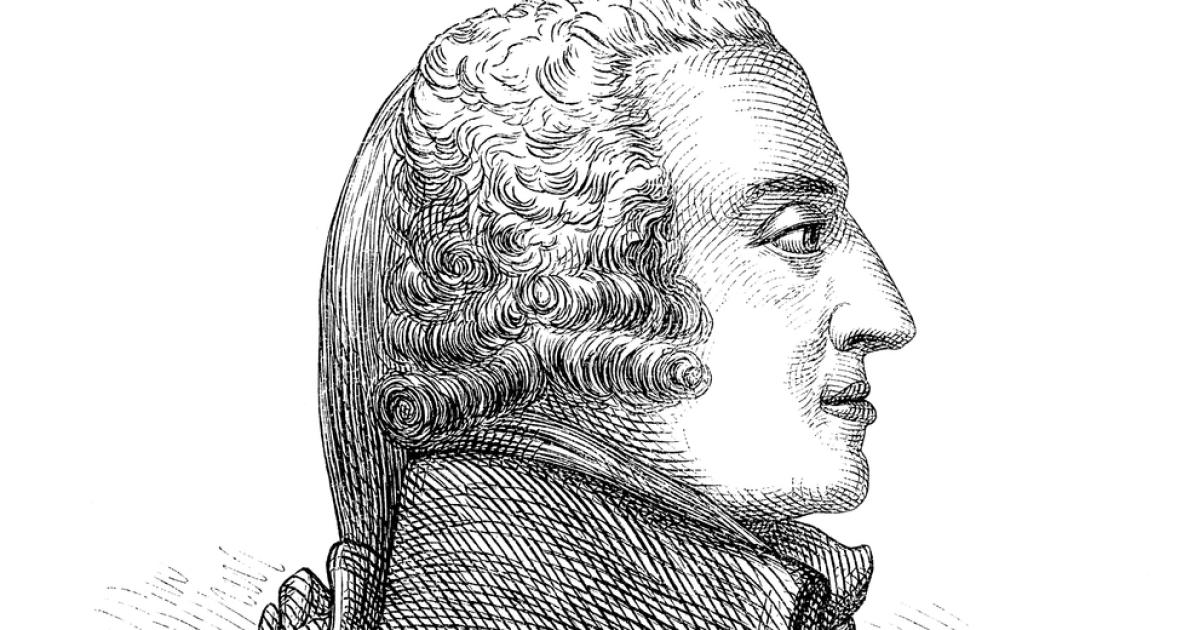
March 9 marked the 250th anniversary of the publication of Adam Smith’s classic economics book, An Inquiry into the Nature and Causes of the Wealth of Nations. While some people might be tempted to dismiss Smith’s book as “so eighteenth century,” it is still highly relevant today. His big-picture insights—on the division of labor, on why markets work, on gains from trade, including trade across borders, and on central planning—still hold up. Moreover, some leftist attempts to recruit Smith for their own causes—progressive taxation and antitrust, for example—fail, as a careful reading of his book shows. Also worth noting: while some books are regarded as important only long after the author’s death, The Wealth of Nations was regarded as important by major intellectuals at the time.
The division of labor
In the book’s first sentence, Adam Smith cut to the chase, writing:
The greatest improvement in the productive powers of labour, and the greater part of skill, dexterity and judgement with which it is anywhere directed, or applied, seem to have been the effects of the division of labour.
Notice the word “seem.” This reminds the reader that the title’s words “An Inquiry into the Nature and Causes” are not just window dressing. Smith really did inquire and the tone of the book throughout shows that he was open to being proved wrong. Fortunately, on almost all of the book’s major findings he was right.
Smith was an empiricist; he learned from careful observation. His empiricism showed early in the first chapter when he examined the working of a pin factory. He noticed that there were eighteen steps in producing pins and that each of ten men was involved in at most three of these steps. The result, Smith noted, was that these ten could produce 48,000 pins per day. Smith speculated that if each of them tried to carry out all the steps on his own, each would produce no more than twenty pins in a day.
But why does the division of labor work so well? Smith theorized from the data. He noted three factors. First, by sticking to one or two steps, workers developed dexterity. Second, workers didn’t lose time by shifting from one task to another. Third, specialization facilitated the introduction of machinery.
What were the overall results of an extensive division of labor? Smith moved seamlessly from division of labor to large gains from trade, writing:
It is the great multiplication of the productions of all the different arts, in consequence of the division of labour, which occasions, in a well-governed society, that universal opulence which extends itself to the lowest ranks of the people. Every workman has a great quantity of his own work to dispose of beyond what he himself has occasion for; and every other workman being exactly in the same situation, he is enabled to exchange a great quantity of his own goods for a great quantity, or, what comes to the same thing, for the price of a great quantity of theirs. He supplies them abundantly with what they have occasion for, and they accommodate him as amply with what he has occasion for, and a general plenty diffuses itself through all the different ranks of the society. (Italics added)
Smith speculated that the wealth of a European prince exceeded the wealth of an industrious and frugal peasant by less than the latter’s wealth exceeded that of an African king.
Why markets work: gains from trade
How do we get what we want from strangers? We could threaten them with force, but then we might be attacked by those we threatened, and we would certainly find people avoiding us. We could beg them to give us things. But Smith pointed out that we need so many things from so many people that it just wouldn’t work to depend on their benevolence. Smith noticed a third way: trade. Offer someone something you have produced in exchange for something he or she has produced. If the person says yes, then both sides gain and wealth is created.
In the most famous passage of The Wealth of Nations, Smith made the point eloquently:
It is not from the benevolence of the butcher, the brewer, or the baker that we expect our dinner, but from their regard to their own self-interest. We address ourselves not to their humanity but to their self-love, and never talk to them of our own necessities, but of their advantages.
International trade and the problem with mercantilism
While it seems fairly obvious that trade works within a country, many people at the time Smith was writing were skeptical about trade across borders. Sadly, many people today share that skepticism.
One of Smith’s motives in writing The Wealth of Nations was to slay mercantilism. Mercantilists believed that national governments should set policy to maximize the amount of specie—gold and silver—in a country. To achieve that goal, they advocated increasing a country’s exports and limiting its imports.
What’s wrong with mercantilism? Smith said it well:
To attempt to increase the wealth of any country, either by introducing or by detaining in it an unnecessary quantity of gold and silver, is as absurd as it would be to attempt to increase the good cheer of private families by obliging them to keep an unnecessary number of kitchen utensils.
Smith’s insight is relevant to current issues. On April 2, 2025, which President Trump called “Liberation Day,” Trump introduced his high tariffs on imports from various countries and seemingly based his proposed tariff rates on whether there was a balance of trade with each country. If the US trade deficit with another country was large, Trump wanted a high tariff rate against that country’s imports. What if the United States had a large trade surplus with another country, as it does with the United Kingdom and the Netherlands? Trump did not want to offset this “imbalance” by subsidizing imports from those countries. Logical consistency was never Trump’s strong suit.
What would Smith have said about Trump’s goal of a trade balance? Actually, he addressed the issue succinctly, writing, “Nothing, however, can be more absurd than this whole doctrine of the balance of trade.” Smith explained:
When two places trade with one another, this doctrine supposes that, if the balance be even, neither of them either loses or gains; but if it leans in any degree to one side, that one of them loses and the other gains in proportion to its declension from the exact equilibrium.
What mercantilists ignore is that people gain from trade, period. If the balance is even, both sides gain, or else they wouldn’t trade. But even a country that gets more in imports from another country, measured in money, than it exports to that country, measured in money, gains also. Otherwise, the people in that country would not have bought those imports.
Smith made the case for free trade with much reasoning and many examples. In one famous passage, he analogized trade with another country to trade within a country:
What is prudence in the conduct of every private family can scarce be folly in that of a great kingdom. If a foreign country can supply us with a commodity cheaper than we ourselves can make it, better buy it of them with some part of the produce of our own industry employed in a way in which we have some advantage.
Smith also used a beautiful reductio ad absurdum to make the case against tariffs and for free trade, writing:
By means of glasses, hotbeds, and hot walls, very good grapes can be raised in Scotland, and very good wine too can be made of them at about thirty times the expense for which at least equally good can be brought from foreign countries. Would it be a reasonable law to prohibit the importation of all foreign wines merely to encourage the making of claret and burgundy in Scotland?
Central planning
Although the biggest breakthroughs on understanding the problems with centrally planning an economy occurred in the first half of the twentieth century with work by Ludwig von Mises and Friedrich Hayek, Smith had his own insight, one that holds up nicely to this day:
What is the species of domestic industry which his capital can employ, and of which the produce is likely to be of the greatest value, every individual, it is evident, can, in his local situation, judge much better than any statesman or lawgiver can do for him. The statesman who should attempt to direct private people in what manner they ought to employ their capitals would not only load himself with a most unnecessary attention, but assume an authority which could safely be trusted, not only to no single person, but to no council or senate whatever, and which would nowhere be so dangerous as in the hands of a man who had folly and presumption enough to fancy himself fit to exercise it.
Did Smith favor progressive income taxes and antitrust laws?
Various economists have argued that Adam Smith favored a progressive income tax. But that’s not true. As economist David Friedman noted in “Adam Smith Wasn’t a Progressive,” (Reason, July 2023), Smith opposed any income tax. Moreover, Smith’s first maxim of taxation was this:
The subjects of every state ought to contribute towards the support of the government, as nearly as possible, in proportion to their respective abilities; that is, in proportion to the revenue which they respectively enjoy under the protection of the state.
We would now call such a proportional tax a flat tax rate, whether it’s on income or is based on some other variable.
What about the idea that Smith would favor antitrust laws? To make that claim, modern advocates of antitrust often quote this passage from Smith:
People of the same trade seldom meet together, even for merriment and diversion, but the conversation ends in a conspiracy against the public, or in some contrivance to raise prices.
That sounds like an implicit endorsement of, at a minimum, laws against collusion, right?
But what proponents of antitrust invariably omit is his next three sentences. Smith continued:
It is impossible indeed to prevent such meetings, by any law which either could be executed, or would be consistent with liberty and justice. But though the law cannot hinder people of the same trade from sometimes assembling together, it ought to do nothing to facilitate such assemblies; much less to render them necessary.
A regulation which obliges all those of the same trade in a particular town to enter their names and places of abode in a public register, facilitates such assemblies. (Italics added)
Praise
How was Adam Smith’s Wealth of Nations received at the time? Prominent philosopher David Hume, who was also Smith’s close friend, wrote Smith just three weeks after the book’s publication:
Dear Mr. Smith,
I am much pleased with your performance, and the perusal of it has taken me from a state of anxiety. It was a work of so much expectation, by yourself, by your friends, and by the public, that I trembled for its appearance, but am now much relieved.
Economist Thomas Robert Malthus wrote that The Wealth of Nations “has done for political economy, what the Principia of [Isaac] Newton has done for physics.”
Both statements are high praise indeed. They were, and are, well deserved. Let’s thank our lucky stars both for Smith’s tremendous contribution and for the fact that, two hundred and fifty years later, An Inquiry into the Nature and Causes of the Wealth of Nations is still celebrated.

