







- International Affairs
- Middle East
- US Foreign Policy
- US Defense
- Determining America's Role in the World
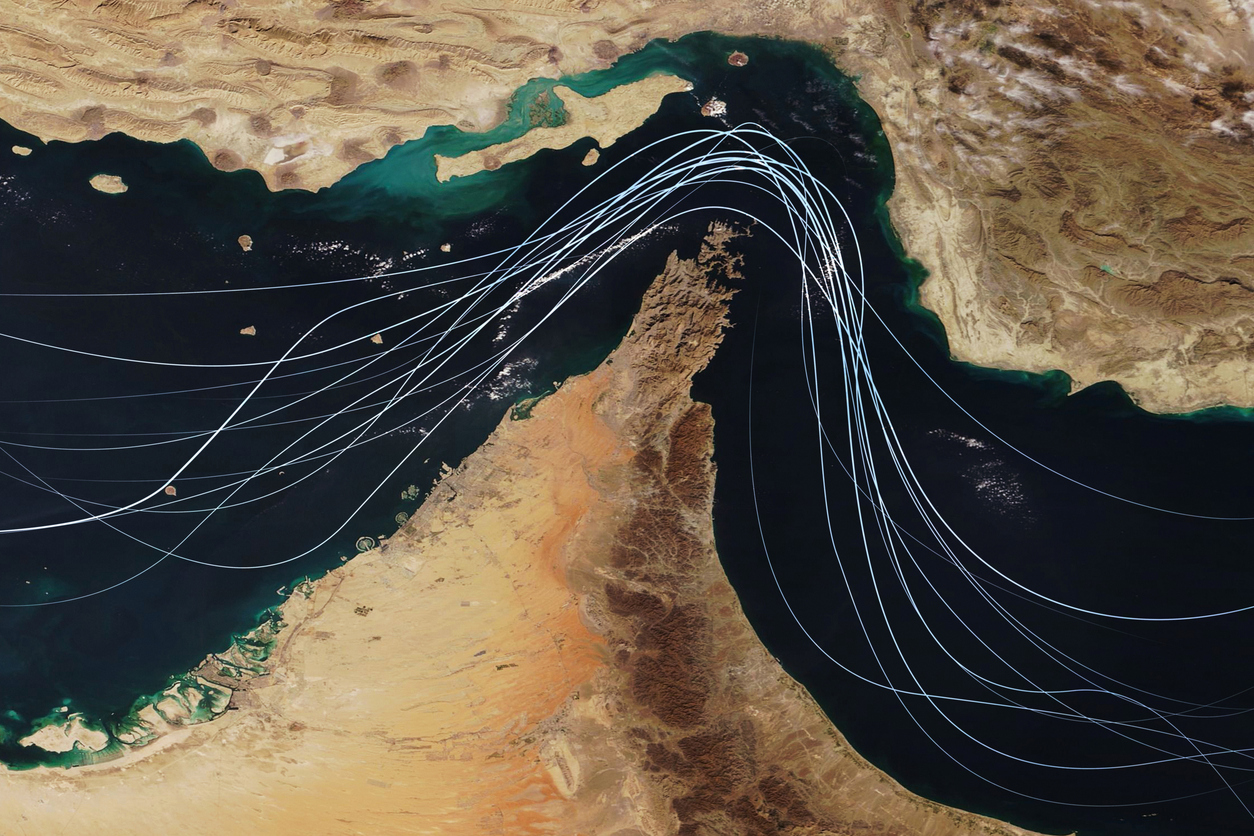
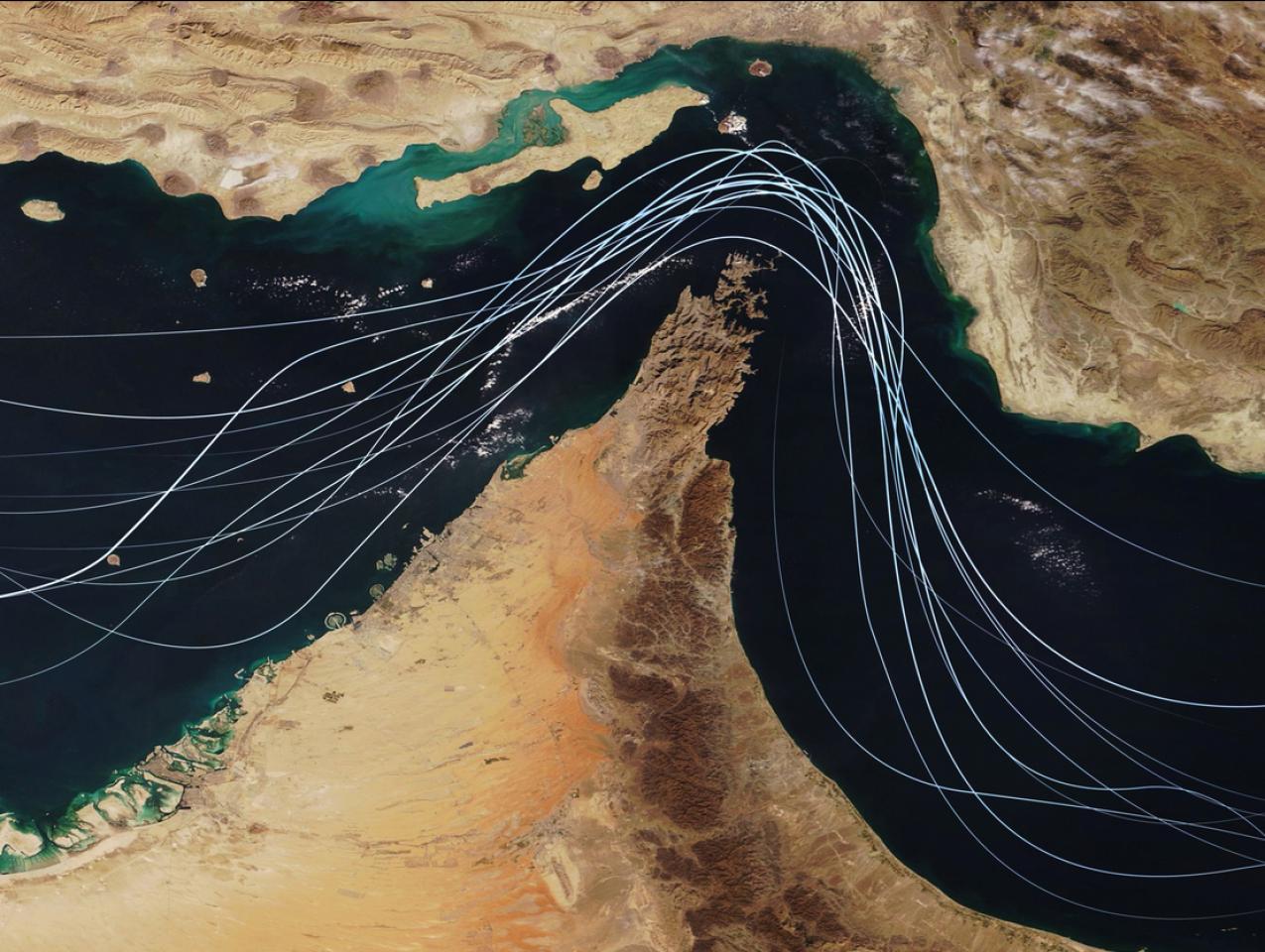
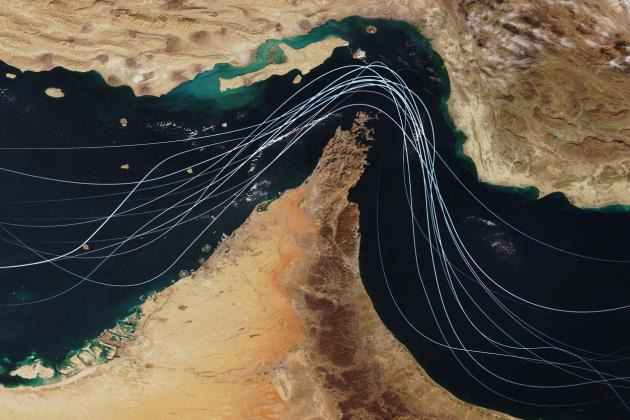
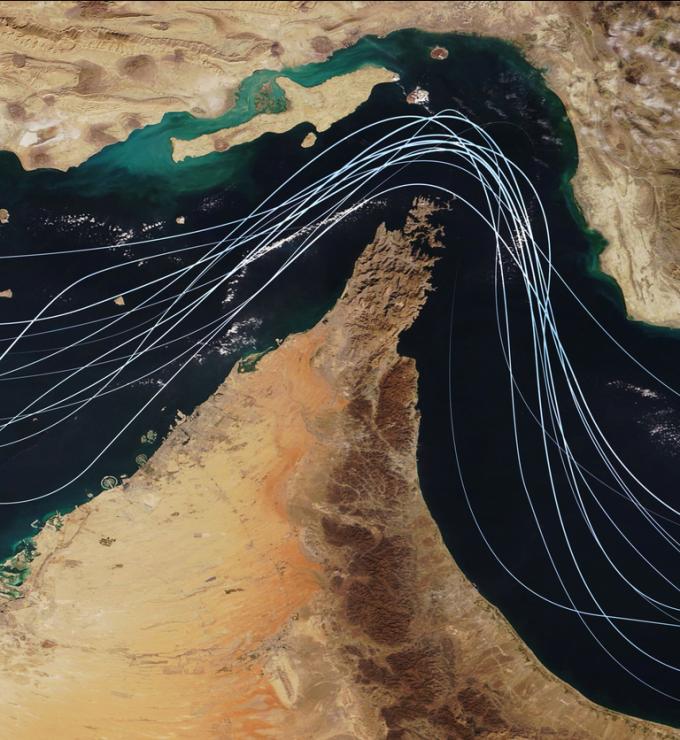
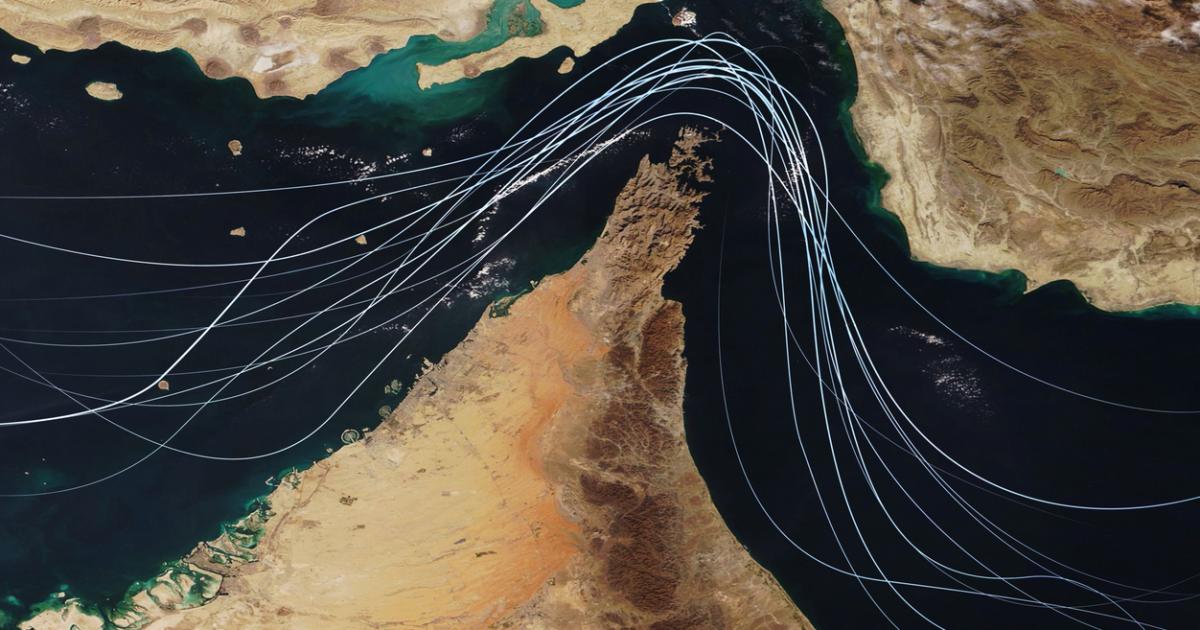
The United States has the most powerful navy in the world. It can dominate the Persian Gulf and adjacent waters militarily. Yet Iran has effectively shut down the Strait of Hormuz at the mouth of the Gulf and in doing so cut off around one fifth of global oil trade. If the United States really commands the seas, why can a second-rate maritime power like Iran threaten global commerce? The answer lies in an often forgotten distinction between naval power and sea power. The former is a subset of the latter rather than a synonym for it.
Policy makers and strategists in the United States have been wringing their hands for decades about a shrinking U.S. Navy, but that is not the only problem Americans face in the Strait of Hormuz. Americans need U.S.-flagged ships to carry goods through hostile waters, but the U.S. has allowed its Merchant Marine to dwindle to the point that it can no longer play that role. Moreover, the United States lacks the maritime infrastructure and know-how to reconstitute its merchant fleet. If Americans want to dictate events in locations like the Persian Gulf and protect the strategic commodities that billow out from it, the United States must rebuild its sea power, not just its naval power.
In classic maritime strategies, thinkers like the 19th century American naval officer, Alfred Thayer Mahan, outlined the importance of sea power in global politics. In short, commanding the seas puts states on the fast track to wealth and power. Doing so requires a strong navy, but it also demands “national shipping.” In fact, as Mahan wrote, sea power is “commercial before it is military.” Contemporary theorists are rediscovering this axiom. “For the past five hundred years,” the Brookings Institution’s Bruce Jones has argued, “no state or empire has succeeded in sustaining a position as a leading world power without fielding a navy and merchant fleet capable of dominating the high seas.”
The United States followed Mahan’s formula to superpower status in the 20th century. It grew its Navy to be the most powerful in the world. But it also built an expansive Merchant Marine of U.S.-flagged ships crewed with American sailors. The U.S. Merchant Marine expanded dramatically over the first half of the 20th century, especially during the two world wars. After World War I, a federal shipbuilding program produced 2,312 ships, making the U.S. fleet “among the largest and most modern in the world.” Wartime mobilization in World War II transformed this base into a global logistics powerhouse. Between 1939 and 1945, the U.S. built an extraordinary fleet of over 3,600 cargo ships accounting for nearly 40 million tons of merchant shipping. It expanded the workforce from about 55,000 mariners to more than 215,000. By the end of the war, the United States operated over 5,500 merchant ships totaling roughly 40 million tons. In total, the United States controlled about 60 percent of global shipping capacity, underscoring the central role of commercial shipping in American sea power.
The strategic utility of this merchant fleet was obvious to American leaders during the mid-20th century. While the sailors on U.S.-flagged merchant ships are civilians, the Merchant Marine Act of 1936 allows for the “requisition or purchase of vessels in time of emergency.” In short, if the U.S. government deems it necessary, it can direct the Merchant Marine to sail, even through hostile waters.
Such authorities were vital for allied success in World War II. In the first six months of 1942, for example, German U-boats sank 506 merchant vessels and tankers totaling 2.8 million gross tons. Then from July 1942 to May 1943, they sank another 780 merchant ships totaling 4.5 million gross tons. Despite these extraordinary losses, Washington continued to press U.S. Merchant Marine vessels into service, and they kept sailing. These were civilian vessels carrying American troops and goods bound for Europe, without which the war could not have been fought. As the Supreme Allied Commander, General David Eisenhower stated during the conflict, “When victory is ours, there is no organization that will share its credit more deservedly than the Merchant Marine.”
Despite the Merchant Marine’s strategic utility, the United States allowed it to stagnate and then dwindle in the second half of the 20th century. For U.S. businesses, it became cheaper to outsource shipping. First, American-owned ships began to rely on flags of convenience from places like Panama and Liberia so that ships did not have to employ expensive American crews or meet American labor standards. Some policy makers and strategists attempted to mitigate these losses by arguing that the U.S. government could still press American-owned ships into service even if they sailed under a foreign flag, but a U.S. federal court disagreed. Then, deregulation in the 1980s led to the outsourcing not only of flags but of ownership of the shipping companies. In the 1990s, the two largest American shipping firms, American President Lines and SeaLand, were bought by foreign companies.
The U.S. shipping industry withered. In 1955, the U.S. merchant fleet totaled 1,075 ships. By 1980, that number had fallen to 580. In 1995 it was 316, and by 2010 there were only 210 U.S.-flagged ships. As of 2025, the U.S. Maritime Administration reported that the United States had only 188 commercial ships of 1,000 gross tons or more. That meant U.S. ships carried 0.55 percent of global shipping by gross ton.
The weakness extends beyond shipping into shipbuilding. At the end of 2025, the United Nations Conference on Trade and Development’s “Maritime Profile” of the United States listed its commercial shipbuilding as “No value reported or collected.” By comparison China accounts for 54.57 percent of shipbuilding, South Korea 28.02 percent, and Japan 12.56 percent. Together, these numbers put the American economy at the mercy of foreign states.
As the demand from U.S. shipping companies dried up, so did the infrastructure and skills that supported it. Shipyards closed and the labor necessary to build and then man ships evaporated. Today, according to one recent report, only a single shipyard in Philadelphia is currently building large, ocean-going ships for the U.S. Merchant Marine.
That this problem has come to a head in the Middle East should not come as a surprise. The region’s combination of volatile politics and strategic geography has caused headaches for American maritime strategists for half a century. As American shipping shifted to flags of convenience, U.S. policy makers argued that doing so was mostly a technicality and that states offering those flags would not attempt to exercise sovereignty over American-owned shipping. Yet, in the 1973 Arab-Israeli war, Liberia called the American bluff and refused to let American ships flying its flag deliver goods to Israel. In the 1980s, the United States faced a crisis in the Persian Gulf when Iran began attacking Kuwaiti shipping. To solve the crisis, the U.S. Navy deployed to the Gulf to escort ships, but it also had to reflag the Kuwaiti ships as American, essentially making them part of the U.S. Merchant Marine. A few years later, the United States faced another conflict in the Gulf, this time against Iraq in Operation Desert Storm. A study by the U.S. Transportation Command following the conflict lamented that, “for a variety of reasons – political, religious, pay disputes and, most commonly, fear of entering a combat zone – crews on at least 13 foreign flag ships carrying U.S. cargo hesitated or refused to enter the area of operations.” In each of these cases, commanding the sea was linked not only to naval power, but also to national shipping.
The current crisis in the Strait of Hormuz is likewise not only a naval problem. Eliminating Iran’s ability to target shipping through the strait is incredibly difficult, and even that might not be enough. Iranian threats, even if they are not backed by substance, might still give civilian mariners pause. In the 1973 Arab-Israeli war, the Egyptians blockaded Israeli shipping at the Bab-el-Mandeb simply by saying they were doing so. They had no military capability to shut the strait, but the Israelis were adamant that an undeclared paper blockade that was backed by no military power was still a threat to their shipping. They demanded that it be lifted in cease-fire negotiations. As such, Iran’s declaring the Strait of Hormuz closed could be enough in some cases for merchant sailors to balk. If the United States had a robust Merchant Marine, it would be far better positioned to compel or incentivize them to transit the strait, even in high-risk conditions, but the United States no longer has that capacity. It is a naval power but not a sea power.
The loss of American sea power was a choice. It is cheaper to use flags of convenience and a foreign crew rather than the merchant fleet of an industrialized, Western power like the United States. However, states like Greece, Japan, South Korea, Germany, and the United Kingdom have all maintained their shipping industries. And the United States has retained other strategic industries, like aviation, through support and regulation. It could have done so in the maritime industry as well.
Rebuilding American sea power will not be easy. The maritime industry requires an entire ecosystem of ports, shipyards, engineers, and architects before one even gets to the sailors and officers who man the ships. Sea power needs more than just economic and financial interests. Typically, as the naval historian Andrew Lambert points out, it requires significant social and political commitments, as well as “actively constructing a cultural identity focused on the sea.”
Nevertheless, it is vital that the United States do so. In addition to the necessity of a Merchant Marine for any state that wants to control shipping, a robust maritime industry also creates economies of scale that make a navy affordable. It is no coincidence that the United States has been having trouble designing and building new ships over the past few decades. Throughout history, powers like Peter the Great’s Russia, Germany of Wilhelm II, Nazi Germany, and the Soviet Union during the Cold War have attempted to be naval powers without the full backing of sea power. All of them have failed. As Mahan argued, “The necessity of a navy, in the restricted sense of the word, springs … from the existence of a peaceful shipping, and disappears with it, except in the case of a nation which has aggressive tendencies, and keeps up a navy merely as a branch of the military establishment.” Mahan is, unfortunately, describing the American predicament today.
These issues are clearly evident in the current crisis in the Strait of Hormuz. At least part of the issue restricting shipping through the strait is tied to insurance. Standard insurance packages for shipping do not cover acts of war, and taking out additional war risk coverage was too costly for most firms. The rates for shipping insurance are set at Lloyd’s of London. The Trump administration attempted to mitigate this problem by announcing that the United States Development Finance Corporation would step in to offer shipping insurance to ships transiting to and from the Persian Gulf. In essence, it would have tried to replace Lloyd’s. This was a powerful statement, but ultimately it was unworkable. As one commentator noted, Lloyd’s relies on a “well-established global network of producing brokers feeding an industry of placing brokers in London, who submit risks to the thousands of underwriters writing business for about a hundred different syndicates.” That type of maritime network and the corporate knowledge that comes with it is used for “predicting the kind of weather events or mechanical failures that Lloyd’s marine policy holders typically seek protection against.” It cannot be recreated with an executive order.
The failure of the United States to heed lessons from its great maritime thinkers like Mahan will continue to restrict its influence in the Middle East. Americans have become accustomed to seeing the region through the lens of the War on Terrorism, but at its heart, the region is maritime. The term Middle East itself was popularized by Mahan as a maritime region between the Far East of the Indo-Pacific and the Near East of the Eastern Mediterranean. The region consists of some of the world’s most important maritime choke points at the Strait of Hormuz, the Bab-el-Mandeb, and the Suez Canal. And its primary importance to the rest of the world is its oil, which travels to global markets by sea. It is not a coincidence that as the Global War on Terrorism wound down, the U.S. military placed a naval officer, Admiral Brad Cooper, who was a former commander of U.S. Fifth Fleet in Bahrain, at the helm of CENTCOM.
When the Trump administration came to office, it seemed determined to address the crisis of American sea power. However, that momentum has stalled. If the United States wants to influence events in the Middle East, as it is attempting in the current war with Iran, it will need to reinvigorate these initiatives. In short, it will need to become a sea power again, not merely remain a naval one.
“The views expressed in this article are the author’s alone and not those of the U.S. Naval War College or any other part of the U.S. government.”

