Articles
A Headstrong (And Effective) Green Mountain Boy
Ethan Allen, at times “imprudent,” was a timely leader for a country of action.
October 15, 2026
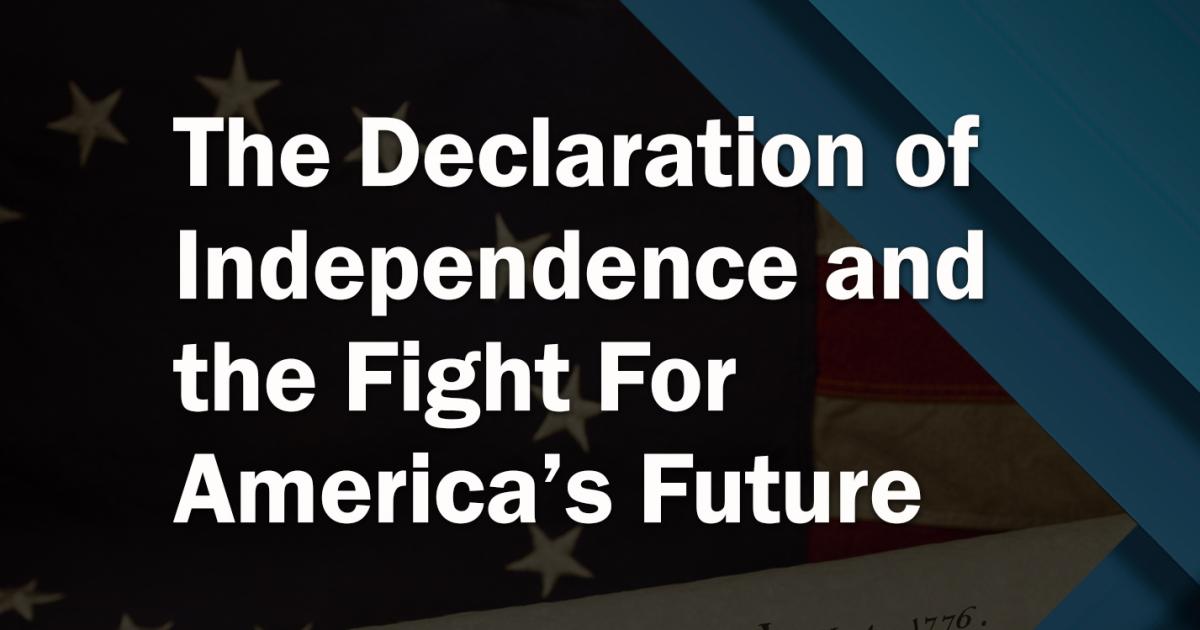
Victor Davis Hanson—fifth-generation rancher in California’s San Joaquin Valley, classicist, military historian, Hoover Institution senior fellow, and author of more than two dozen books, including The Case For Trump, The Second World Wars, and The Dying Citizen—joins Peter Robinson to discuss the American founding and its critics.
Drawing on ancient Greece and Rome, Magna Carta, the French Revolution, the Civil War, Woodrow Wilson’s administrative state, and the Trump era, Hanson argues that the genius of the American system lies in its difficult but durable structure: checks and balances, ordered liberty, and a Constitution built for flawed human beings.
- He's a fifth-generation rancher in California's San Joaquin Valley, one of the country's most esteemed historians of the ancient world, and a pundit on contemporary affairs, the remarkable Victor Davis Hanson on "Uncommon Knowledge" now. Welcome to "Uncommon Knowledge." I'm Peter Robinson. A Senior Fellow at the Hoover Institution, Victor Davis Hanson is the author of more than two dozen books, including his classic study of the Peloponnesian War, "A War Like No Other", his history of World War II, which is titled "The Second World Wars", and his book on Contemporary America, "The Dying Citizen." In 2020 and 2021, Dr. Hanson, who holds his Doctorate in Classics from Stanford, right here, in 2020 and 2021, he served on the President's Advisory 1776 Commission. Victor, thank you for driving down from the Valley.
- Thank you.
- July 4th, 1776. "We hold these truths to be self-evident that all men are created equal, that they are endowed by their Creator with certain unalienable rights, that among these are life, liberty, and the pursuit of happiness." First question to you as a historian, the flourishing of democracy in Athens in the 5th century BC, the rule of law as enshrined in Justinian's Code in the 6th century, Magna Carta in 1215. Where does the Declaration of Independence stand? Is it a world historical event like those?
- It is. They were a little different in that if you look at Athenian democracy, they were talking about a equitable system among citizens, and they said things like, "We enshrine isegoria", the ability to speak in the assembly, "regardless of your status", meaning if you were a free person.
- If you were a free male.
- Yes, a free person. And Magna Carta was about nobles and people like that that had property rights, and they were exempt from arbitrary search, all these were compounded and absorbed by our Constitution. But the idea that innately every single person, even though it wasn't true in America at the fact was born equal, that's a radical concept. And the only thing I can think of in the entire corpus of antiquity was someone like the order, Alcodemus said, "No man is born a slave." That's about as close as it comes. Aristotle, "Slavery is okay if you get the right people with slaves, natural slaves." Slavery wasn't based on race in the ancient world, it was by misadventure, you were in a city that was captured or you were born. But this is the first document. And that was very important, because where the Constitution's Bill of Rights did not include that all people, regardless of race shall be treated, there was no amendment to that extent. The declaration statement by the time of the abolitionist and Frederick Douglass, they had an argument that said, "We are not thinking of anything new. We're just asking you people to abide by your declaration, not ours, you were the ones that said that. So please just honor it." And it was very powerful argument.
- Two quotations. Here's the late Bernard Bailyn of Harvard, quote, "The primary goal of the American Revolution was the preservation of political liberty that was threatened by the apparent corruption of the Constitution", that is of the British Constitution, "and the establishment in principle of the existing conditions of liberty." Here's historian Philip Deloria also of Harvard as quoted in the Ken Burns documentary, "The American Revolution", quote, "I think the American Revolution was all about land. It's easy to make the political kinds of arguments, but I think underpinning all of that was the possibility of expansion." The Founders really and truly believed in liberty, or all they wanted was a land grab.
- Well, to address the latter point, I think he's taken a truth and made it the truth. So when you read letters that Thomas Jefferson wrote, he said things like, "This country will not work unless we have enough land for an independent agrarian", not an agriculturalist or a farmer, an agrarian, that word goes back to Greece, which means people had roughly equal plots in a middle class. And then you had people, like Washington was one of the biggest landowners, and they understood already the immense potential of the Ohio Valley, and they understood they were going to do this. So yes, but it wasn't quite, "We're gonna go create agribusiness", if you read what the founder said, and particularly Jefferson, and you read contemporary literature about them, like John de Crevecoeur "Letters from an American Farmer", or Alexis de Tocqueville writing, you know, in 1831 or two, they said things like, "It's been a miracle that the United States avoided the two class system of Europe, of masters and peasants, or owners and serfs, or indentured people, in the United States", because they had such available land, they created the first autonomous agrarian class. And when you look at people like John Adams, in classical references, they went back to classical Athens and said that the meso or the middle people, the hoplites, the men in the assembly, they had the right to speak as anybody else in the assembly, they had the right to fight in the hoplite filings, equal distance to each other, and their parcels were roughly the same size. So that was a deep Western idea, an idealism that "The ideal democracy", Aristotle said "was one of agrarians." And he said, "They combined muscle with brain, they're completely independent, they're not --"
- They had property.
- They had property, they wanted to pass it on, and improve it to their children, it was protected. You could argue that property was probably one of the driving influences or catalysts for the beginning of democracy in Greece. But an American, I think Bernard Bailyn is absolutely right. What he was talking about was liberty, and that word really doesn't have an equivalent in the Greek language. Libertas, Greek closest is "eleutheria", and that means "freedom." But ...
- So Roman concept --
- Yeah.
- Romans are the ones who work it out.
- It's a Roman concept, and it means that you are free regardless, and there's people who talked about Rome. He said, "Well, you know, the Germans are free, because they have such long, they do whatever they want. The American Indians were free, but liberty is a different idea. Liberty means that you're free within the confines of a sophisticated society and competing interest." But there was a natural freedom that was very attractive to Tacitus all the way to Rousseau and Voltaire, that the noble savage were free, they didn't have any encumbrances upon them, they just roamed, they were transient, nomadic, but liberty, to Romans, and they knew this, they said, "But liberty is a sophisticated civilization, where a person has, you know, the rights of habeas corpus, or the rights to vote, or the right to speak."
- So liberty exists only within a system of law.
- Yes, and and civilization --
- Property and law.
- Yes.
- All right.
- And then the other thing, very quickly, when they talk about liberty, it had become an antithetical in some ways to not just freedom in the classicals, but equality. So people were saying they understood that once you gave people liberty, you gave people liberty to be better than somebody, to make more money than somebody, and to be protected from acquisition or confiscation. 10 years later after the -- In France, it was notice it was egalitarianism and fraternity. And that was a quality of result movement. So that we're going to remake the world at year zero. We're gonna rename the days of the week, the days of the month, get rid of the church, we're gonna worship ... It was a holistic, cultural, social, military, political, economic revolution, this wasn't, ours wasn't.
- It's fair to understand the American Revolution, this is a paradox, but it's right at the heart of things. The American Revolution is a conservative revolution.
- It is.
- The Founders wanted to defend the rights at freedom of assembly, the property they had already developed, the legal systems that existed in the colonies, they wanted to defend the rights that had already developed in the colonies, as opposed to the French Revolution, which wanted to wipe everything away and start anew.
- Yes. And that's why we avoided, what's remarkable about the American Revolution is there were only about, I mean, there was seven or 8,000 deaths in the Revolutionary War, but even after people had driven the loyalists up to Canada, there was very little killing, it wasn't like the French reign of terror of 1793. There was no person, maybe Tom Paine at the most radical, and when he went over to France to see if they would welcome him as a Jacobin, they almost killed him. They were so much more radical, the Robespierre's brother.
- I'm always puzzled by this, the first American victory, the first major American victory in the war is when Washington puts up, they bring down the guns, the British guns from Fort Ticonderoga, was it?
- Yes. Yes.
- And Washington then places these things on the heights overlooking Boston, and General Howell wakes up, and sees that Washington, and Washington permits the British to withdraw peacefully. He does not open fire on them, as I recall, the argument is that even some large British ships were within range. He could have opened fires, sunk some ships, caused devastation among the Red Coats on the ground, that news would've gone back to Parliament, and rattled Britain. But Washington doesn't do that. Why?
- Well ...
- Washington lets them go.
- Yeah. He thought that the British were mistaken. He did not think they were evil. He thought that they were misplaced. He thought that they would learn from what they were doing in the United States. People in the Revolution, and the Founders thought that they would make a city up on a hill, and that people in England would see that the parliamentary system, which was fair within the confines of Britain compared to the alternative in Europe, that maybe they would learn from them. They really did believe that they were creating a superior system, but not antithetical necessarily, but derivative from the part. And they, at that time, contrary to a lot of the woke ideologies today, about 90% of the people in the Colonial were from Scotland, or England, or Wales.
- Right.
- 90% white, 10% probably African slaves. But there were very few other people yet, that didn't come for another 30 years with, and 40 years, 50, the German --
- Right up until the Declaration, they thought of themselves as British.
- They did.
- They had the rights of Britons.
- They did. There was very little diversity, and it was a derivative of the British system, and you can see that after the war of 1812, and a little bit of a flirtation with Britain during the Civil War that, for mercantile reasons, flirted with the South.
- Right.
- We were pretty much bound by tradition and history, the British and the Americans, as we are today.
- Mm. The Constitution, from the Declaration to the Constitution. Drafted in Philadelphia from late spring to early autumn of 1797, that is just an amazing fact to me. These guys got together, and put together the Constitution of the United States over a summer.
- Yep.
- On break, so to speak. It's ratified in 1788, the first 10 Amendments, which we now call the "Bill of Rights", are in turn, ratified four years, three years later in 1791. The Late Justice Antonin Scalia quote, "Every tinhorn dictator in the world today has a bill of rights. It isn't our Bill of Rights that produces freedom, it's the structure of our government." You'd agree with that?
- Yeah, I think, they started with, unlike the French, that was influenced by Voltaire or Rousseau, that "Man was created as a wonderful creature", and then I think Rousseau said, "Man was born in shackle, and we remove the shackles." He was born in shackles. So they felt that religion, that government, that all of these civilized encumbrances had warped people. The Founders felt that we were flawed in the Christian sense, and therefore, I think it was Madison or Adams, both of them in different variations said, "If man was perfect, we wouldn't need this Constitution." But they believed he was flawed. And inevitably, what they were most worried about was somebody who was very gifted rhetorically, wealthy, powerful, magnetic, would abuse the system and take power. So they deliberately did this derivative of Montesquieu, and Montesquieu really got the idea from the Spartan Constitution.
- Oh really?
- Yeah, Spartan Constitution --
- There were two kings.
- Yes.
- Go ahead, go ahead.
- That was, that came into the two Councils at Rome. And the Romans got, the Romans said the Cretan and the Spartan Constitution were superior to the Athenian. So basically in Sparta, you had executive, the kings, you had judicial oversight from 'em, the Ephors, and then you had a lower House, the people, the Ecclesia, and then you had an Upper House of the boule, and these were the spartiate. And the idea was to check power, and that came to Rome, with the two councils, two, to check each other --
- Got it.
- And then you had the tribal assemblies, and then you had praetors and people in the judicial branch. And so that came into the front, and Montesquieu was, you know, the spirit of laws, and so that was very influential on our Founders, and they felt that if there was a powerful executive, he could be checked by the Supreme Court, he could be checked by the legislature, he could check the legislature, he could veto, he could check the Supreme Court by nominating, and back and forth, it would be impossible for someone. And I think to take control over the government. And the only time I think came close was somebody who was a brilliant politician, magnetic, Franklin Delano Roosevelt, and he was the first and only person to be elected three and four times.
- And yet even he, when he attempted to pack the Supreme Court --
- Yes.
- There was an uproar.
- They checked him, yeah, absolutely.
- Right.
- And you can see this today is when people want to have aggrandizement of power, what do they do if, so right now the Democratic Party is in flux, I don't wanna be too political, but they're looking at the system, and they're thinking, "This system is not conducive to our agenda. Given our agenda, we can't win 51. So what do we do? Let's change the system."
- Let's eliminate these checks and balances --
- Yes.
- On us.
- Yes. So we want to get rid of the electoral college. And they didn't read any of the arguments in the Federalist papers, why we had an electoral college. And they were numerous, and the voting, national voting compact, they're pushing said that late, any legislature that with a majority vote can accept the federal ballot count, not their own state. And they will vote according to the federal. And if they get, they're only about two states away from, I think it's unconstitutional, but they wanna get rid of the electoral college. 237 years. They wanna get rid of the 169-year nine justice court. They want to get rid of, and you can argue how old, 183, 220-years filibuster in the Senate. They wanna bring in two states, make Washington DC a state, and Puerto Rico, and get four senators. So anytime you see a party that wants to change the system, and kind of get out of this checks and balances, and get out of the sidelines, and play out the bleachers, then you've gotta be, they either have an agenda that won't appeal to 51% of the people, or they want to change the system. It's kind of ironic, 'cause they accuse the right of doing that. But when the right, they could do it right now, they could get rid of the filibuster. They're the majority, and they won't do it.
- From a column you wrote a few years ago, quote, I'm quoting you, "Other republics", that is outside the United States, "Other republics birthed parliamentary systems." That is not a system like ours, where you've got a president and legislature, but the parliamentary system, the prime minister is part of the legislature. So you've got a single body that combines the executive and legislative, but I'm going to continue to quote you. "They're usually characterized by sudden creations and collapses of ruling governments, depending on volatile public mood swings. Few consensual governments have ever emulated the more difficult American model, and thus so far never achieved a 247-year continuity of a single republican system." Close quote. What intrigues me there is that phrase, "The more difficult American model."
- Yeah, it is, because when you have an unpopular government, you have a timeline when they can schedule elections, and then if the government is doing bad in their version of the midterms, or regional elections, they can assuage the problem by just having the person step down. So as we are speaking, Starmer in Britain hasn't scheduled election, but he's been wiped out at the polls regionally.
- Prime Minister.
- Yes. So they can do what they did to Margaret Thatcher. They can just remove him. That would be --
- His own party in the Parliament, right.
- Yeah. That's absurd, I mean, when the closest we've ever come really in the modern period was when Joe Biden had a bad debate, and the politicals of the party decided to remove him from what would've been an automatic nomination on the ticket.
- Right.
- And then substitute. So he was forced to announce that he was not going to run for reelection, and then they didn't have an open election. They kind of coordinated Kamala Harris, even though she had been a candidate in 2020, and had not won a single delegate. And that therefore they nullified the 14 million votes that had voted for Biden in the primaries. And that was a big crisis that helped the opposition, 'cause we don't do that. So it's impossible in the United States, unless there's a death of a president for a president to be Commander-in-Chief without having been voted in that office. That's not true in Britain. So it's more ideas and parties. And the other thing is their system, because of the parliamentary way it works, they have all these multiple parties, and we have a third party kind of a safety valve for, you know, people, but it's never been successful. So we have a very steady two-party system, we have regularly scheduled elections, we have a House and Senate that have very clear rules about you have to live in the state if you're a senator, you can live out of your district, and how old, you're 26 or 30, it's all there, and you know, and there's so many checks and balances that this came up during the Iraq flirtation with nation building, and people wanted to know, "Should we imprint our system?" And they very quickly said, "No."
- Ours is too hard.
- The Iraqis are not up to it. Just have a parliament, and just have, let 'em just fight, and get a bunch of sections and factions, and then they'll get a prime minister, and then just give him a general view that maybe in the next five years, he has to call an election."
- Victor, you are many things, as I indicated in our, that when I introduced you, a farmer, a pundit, but you're a classist.
- Yes.
- And again, I'm struck, these men, and they were all men, put together the Constitution of the United States over one summer. And instead of simply copying the British system, what we had established was that we were independent. It would've been very easy, far the easiest thing to do, we had someone, everyone agreed, should be the executive, it would've been very easy to make George Washington king, start a line, and simply reproduce the British system, and say, "We're a different country, we now have our own king and our own parliament." And instead, they came up with these checks and balances of president, a bicameral legislature, and a judiciary, and again and again, as one hears you talk about it, it comes through Montesquieu, back to Rome, back to Greece.
- Yeah. There were two instrumental books that they read. One was Cicero's philosophical works, "De re publica", where he outlined different types of government, and there had been, since the Renaissance, Latin Translations of Aristotle's politics. And he gives you a typology of "This is democracy, type one, two, three, four, this is oligarchy", and he critiques the advantages and disadvantages in a very disinterested and empirical way. And he's very critical of Athenian democracy.
- The Founders had read that.
- What? Yes. Well, they, not all of 'em read Greek, although there was in motion, as you remember, that some people thought the national official language of the United States should be classical Greek. But we know that Jefferson did, he claimed, I'm not sure he did it, he said he read a page or two of Thucydides every morning. John Adams knew Greek. I don't think Washington did. Hamilton did. But the point I'm making is that they would've been familiar with Cicero's more abstract about, and then they would've read Plutarch's life probably in Latin, that had been translated. And that gave them actual examples of Caesar, Cicero, Alexander the Great, all these different people, Aristides the Just, Epaminondas, and from what we can tell, a lot of the people that in the "Parallel Lives", they're not just --
- Of Plutarch.
- Yeah, they're not just -- Every Greek is compared to a Roman.
- Yes.
- Alexander and Caesar, Demosthenes, Cicero, things like that. And they could get examples of what made people fail, and what made people succeed. And it had a profound --
- So these men were not only literate, they were not only literate, they took history seriously.
- Yeah, I think more so --
- Something from which they could learn practical lessons. They understood, to varying extents, but they were all, they took a degree of classical knowledge among each other for granted.
- And it's very different than today, we read history books to be entertained, or be educated, but we don't do it for emulation. We don't say, "I wanna read about William Tecumseh Sherman's memoir. I wanna read his memoir so I can see if I could be like him."
- Or wanna be.
- Or what he did wrong, or what he did right. Well, that was, didactic literature is classical literature. So people wrote things like Plutarch, or Caesar's "Gallic Wars", "Here's how you deal with tribal people', or Cicero, "Here's how you can do ..." It was very practical, and --
- History in the ancient world were how-to manuals.
- Yes, and inspirational. And so, I mean, there were things that were written in poetry and novels that were entertaining, but the Founders took it very seriously that they were models of the ancient world of both bad and good. And they tried to avoid the latter, and I mean, emulate the latter, and avoid the former. And they were very successful at it.
- All right, the objections to the founding. Slavery, at the time of the Declaration, Americans owned half a million slaves. Jefferson himself owned about 200. Nikole Hannah-Jones, quote. "Some might argue that this nation was founded not as a democracy, but as a slavocracy", close quote. So we have the Declaration and the Constitution. These documents and this nation were compromised from the get-go by hypocrisy on race. How do you handle that argument?
- There's something to it, but ... We gotta ... First of all, when Jefferson wrote the Declaration, he wanted an insertion in it about the equality of people regardless of their status. And --
- We have that. He drafted.
- Yes, he drafted. And he was very upset that they --
- A very explicit anti-slavery state.
- Yes.
- And they excised it, right. In fact, the only reference in either of those two documents is probably one of the most misunderstood about the three-fifths clause, about how congressional districts should use the census, and the South wanted this ridiculous position that they didn't want any rights at all to slaves, but they wanted to count them, so they could get increased Congressional districts, of which the slaves would have no vote over. And that was a deadlock. And so the compromise, the Northerners said, "Well, you're hypocrites, but we're not gonna let you do that, but you can count them three-fifths." And then after that, it came, "Well, you're only about valuing people three-fifths." But it was a Northern argument to give them full value.
- To contain the institution, To contain the power itself.
- To contain, and so the problem was with Hannah-Jones is if you put in the Declaration of Independence, and you, it was signed, and it says, "All men are created equal", and that was the basis for your rebellion against Britain, of course, Britain used this argument that they had abolished slavery and we hadn't. But when you put that in, then it's an evolutionary idea, and so everybody looks back at the declaration. It was Frederick Douglass who said to Lincoln, you know, "A Black man didn't write that. You did, so obviously you wanna give us slaves, you just haven't, we've heard for, we've heard for 50, 60, 80 years, where you can't do it now, because of compromises, what he would do to the South", I think one of the things that's never discussed is when they started the idea of the United States, they were very aware of the 30 Years War, the Seven Years War, the 100 Years War of a continent in Europe that was roughly the same size. They talked about it, and they said, "If we have 30 or 40 countries, it's going to be constant warfare, religious warfare, racial war, everything. So we need ..." There was a manifest destiny, they didn't know how far they would be able to consolidate one country, but they were already worried about Mexico, the Spanish Empire, and Canada, the people who'd went up. So all of their private correspondence said, "We've got to compromise compromise." And because of the nature of tobacco, and cotton, and the proximity of the South to the Caribbean, there were slaves there. And this was antithetical both to the sensibilities of the North who came not from the Scottish Irish tradition as much, but more from England and Wales, and then more importantly, they had a different type of agriculture that was smaller, and didn't have the plantation system, and it was a, you couldn't reconcile those two positions, and still have a United States without tabling that question for another generation.
- Right.
- And that was basically the story of the Missouri compromise, the great compromise, every compromise in the Senate, and the House was trying to --
- Kick that can down the road.
- Kick that can --
- To hold it all together.
- Yes.
- So despite this clarion statement, "We hold these truths to be self-evident", the Declaration, and even more so, in some ways, the Constitution were practical documents. The first imperative was to hold this new thing, this new country together.
- Solidify it, and then work internally to eliminate slavery. But remember the people in the South, by 1840 and 50, 1850 and 60s, people like John Breckenridge, the Vice President, or John C. Calhoun, they were making the argument that they were the followers of the Declaration, because they said, "God made all people, I mean, we declare all people are equal, but they're not all equal. They're just, white people are equal." So they use, people forget that the Confederate separatists were using the Declaration to say that the North had betrayed that, because it said "All men are created equal in the United States", but everybody knew that they weren't equal.
- It wasn't true.
- And they were trying to make people equal who weren't.
- Victor, let me ...
- Very sick argument, but they tried to do that.
- I have a longish question here. I wanna set it up, and see how you respond to this. We've talked about the issue of race at the founding itself. Here's Frederick Douglass in 1860. The Civil War is just about to break out, quote, "If in its origin, slavery had any relation to the government, it was only as the scaffolding to the magnificent structure to be removed as soon as the building was completed." So there we have just the idea that you've been outlining that what was bad in the founding is temporary and contingent, and what was good about the founding, this recognition of human dignity is inherent in all people is permanent.
- Yes.
- Okay. Now, as best I understand it, for at least a century after Douglass, that remains the dominant view, Martin Luther King Jr, here he is in the "I Have a Dream" speech.
- When the architects of our Republic wrote the magnificent words of the Constitution and the Declaration of Independence, they were signing a promissory note to which every American was to fall heir.
- How did we go from Frederick Douglass and Martin Luther King Jr. to Nikole Hannah-Jones?
- Because Martin Luther King said that one day, he wanted his children to be adjudicated by the content of their character ---
- Not the color.
- Not the color of their skin.
- Of their skin.
- So that generation, Ralph Abernathy, all of them had come out of the 50s, and they were very, they had their first great victory was integration during the Korean War. And then it was voting in the North without poll taxes. And basically they saw that the North was their model for the South, the Northern states. And they wanted to work within the system, and there wasn't a repertory idea that they owe us something. Just, King said, "Just give us an equal playing field, equality of opportunity." That morphed under Lyndon Johnson, "The Great Society." And that said, "Once we had the Civil Rights Act of '64 and '65, there were people who were naive enough, who said, 'Now we're not gonna have to worry about race anymore.'" But because, and Tom Sowell's written very eloquently of this, that the way that those programs of the Great Society were implemented, they staggered or slowed down what had been a pretty parallel course, even given the evils of Jim Crow and segregation, because of the adversity factor. And that people in the Black communities' rates of abortion, divorce, single parenthood was not that much different than poor whites of the same economic. But everything changed when human nature, what it is, people changed that, and they said, "You have been wrong forever, and we are sorry, and we want to do this for you and do this for you, and we know we're not supposed to make Congressional districts by race, but we're going to do it just for you. And we know that we don't identify primarily by our superficial appearance, but we're gonna do it to you." And so all of a sudden, the idea that people were saying, "I'm white", and that was bad, because they were racially essential, racial essentialism, now it was, "I'm Black and that's good." And so we veered off that, and now we institutionalized it for 60 years. So if you suggest to somebody, and a good example of this is the recent Supreme Court ruling say "You cannot redistrict a congressional seat or a district on the basis purely of race." Well, everybody would agree with that, but we've created this huge 50-person Black caucus, and they can't believe that anybody would ever question that they were elected, even when you make the argument to them, well, if you're a Tim Scott or somebody who's --
- Tim Scott?
- Tim Scott, right. Blacks have been successful, going back to Senator Brook in Massachusetts, the worst thing you can do for a particular group is to create a congressional district of everybody who looks alike or thinks alike, and then have two candidates that just try to be more extreme than the other, and then they never are able to evolve out of that seat, because if they get into a statewide race, they lose. And that was what was so unique about Barack Obama. He lost, I think it was to Bobby Rush in a congressional district, and he was, I guess you would say out-radicalized, even Obama. But then he appealed to, you know, his eloquence, and he didn't govern that way, but he ran statewide as a healer.
- In Illinois.
- There is no red state, there is no blue state, there's just the united, and what I'm getting at is, if you looked at it empirically, it would be the best thing for the African-American community, because then they could have all sorts of candidates that appeal to diverse people, and they wouldn't be fighting in these districts that make them so radical, they're out of the mainstream. And so I think there'll be some, there'll be good of it, because there'll be candidates that will win, I mean, after all, in 2008, Barack Obama got more white votes than John Kerry got in 2004. So --
- And Tim Scott, you mentioned Tim Scott.
- Yes, yes. Three times --
- Black Republican who represents South Carolina, which is a white majority state, he beat Strom Thurmond's son in the primary during his first campaign, as I recall.
- All right.
- And the irony of Tennessee is that the single Black, their Black specially district ...
- In Memphis?
- Yes, it's a white representative that holds it. So, one last, a very quick thing about slavery. One of the things I think also retarded the elimination of slavery in the United States is that, and to a certain extent in the West that when you look for great books, discussions of it, even in early Christian fathers, or you look in the classical world, you don't see it very often, if at all. And one of the reasons you don't was this, we in the United States always associated slavery with race.
- Yes.
- Slavery, race, race, race, white, but that was not true until about the 15th or 16th century. In the ancient world, people were slaves all the time. So if you were Euclid, you know, let's say you had a mine like Euclid, and you were born a slave, and you said to your master, "I can do better, I teach your son, I can do math better, I deserve to be free." He would just said, "Whoever says slavery's based on merit?"
- Right.
- It's based on your bad luck. Get back to work. And because people looked alike, and the word slave comes from Slav, so the Ottomans, you know, would, there was a sense, even as in the Byzantine Empire, that the Arabs brought Black slaves from Europe after the 15th or 16th century, but in the West, there had not been this great outrage about slavery, 'cause it was an equal opportunity. Anybody could be enslaved, and there was no particular race that was identified.
- But ours became the first society that was color-coded, so to speak.
- Yes. And that was because of the age of exploration. When the Portuguese, and the Spanish, and the British started to go around the Horn of Africa, and they saw this huge continent, heavily populated, and they equated the idea that they don't have cities, they don't have sewage, they don't have all this, and so they said that they're inferior people, this is what Aristotle was talking about all along, that there are people that are natural slaves, and then because of the new world and the climate, they said we can use, and that's how it all started. And so when you're trying to eliminate it, and you think you're gonna go to Aristotle or Plato, or there's not, it's not gonna be there, because they never had the concept that it was a particular person. When Aristotle said, "There should be natural slaves", that's an admission that there weren't. A lot of people said, "Well, the Thracians nation should be slaves, or the Galls should be slave, they're inferior", but it didn't work that way.
- It never took.
- Yeah.
- The Progressive critique, give me a moment to set this up.
- Yeah.
- From the 2021 report of the President's 1776 Advisory Commission on which you served, quote, "Instead of securing fundamental rights grounded in nature, the Progressives at the turn of the last century held, government should constantly evolve to secure evolving rights. Government would be run more and more by credentialed managers who would direct society through rules and regulations that molded to the currents of the time." Before he became President, Woodrow Wilson laid out this new system, whereby, quoting Wilson, "The functions of government are in a very real sense independent of legislation and even constitutions." Close quote. That was Woodrow Wilson more than a century ago, here's the statement by the Center for Progressive Reform, just a couple of years ago, quote, "Our Constitution not only permits the administrative state, it affirmatively requires it." Close quote. So we have this progressive view developing around the turn of the last century that we're in a modern society, we've industrialized, we have people coming from all, in those days, largely European, although the Asian immigration to the West Coast had begun. This is new, this is different, we cannot be bound by the strictures of an 18th century document, which sounds plausible.
- It does, if you, to make that progressive project work, you have to postulate that human nature is fluid and mutable. And therefore when the physical circumstances change, people change themselves, and then you need a board of experts. And the idea came from 1870s and 1880s in France, with the bureau, and the directories, and all of this heavy government, and all of these papers about industrialization, and the science of it, and man was changing. So if you believe that because nutrition, it would get better food, we have better health, then you say, "If you just give me enough power and money, I can make a directorate, and I can make a new man." That's the Soviet idea of a new man, that's a progressive thought. And the Conservative says, "Man is innately flawed. He's never going to change. And because he's never going to change, he's gonna be inquisitive, he's gonna be tyrannical. And we're gonna set up a system that allows people to be free, but protects the weak from the strong. And there's always gonna be strong, and they're always gonna be expo, but we can mitigate that, with these checks and balances, and then give people free initiative to create, and make ...
- The administrative or the Conservative immediately spots the problem, and says, "The administrative state is going to turn into a new form of tyranny."
- Yes, he says, he thinks if you just get, the administrator says, "If you just give me enough power and money, and all this new science that I know, I can do things." So COVID comes along, and say, "No, no, I'm the expert. I can tell you that this was created by a Pangolin, and it's very infectious, and it's not like anything we've ever seen before, and you've gotta give me the power to shut down the entire economy, put people in isolation for two years." And ...
- As you say, Anthony Fauci and Francis Collins were public, unelected public health officials.
- Yes. And then you give me the power, and we can get through this, and people were saying, "We have had plagues throughout history. Mass quarantines has never happened. You know what will happen. There will be people who cheat that have exemptions. There will be Gavin Newsom in the French Laundry. There'll be Nancy Pelosi getting her hair done. That's one thing. The second thing is you'll rob people of, it was the practical argument. And we have confidence in our system of health care of 2,500 years, we know about quarantines. We'll find the data, see if children are susceptible as adults, if they're not, let the schools be open, 'cause they, and a cost to benefit analysis will do more damage. So there were these rational, and they would not do it. And then they, anytime --
- Right, you understand has pulled it off in Florida, he did one of the rare examples.
- He did, right. And whenever this happens, the Progressive administrator always resides on credentials, not on science, or not, they say that, "I am the science."
- Fauci.
- Fauci.
- Right.
- We gotta do this. And they always want more, more and more, more power. And it leads to a diminishing of liberty, because what you want in a society that Conservative wants, the protection of liberty, and have all these different voices. So somebody comes up, and he says, "Well, I'm sorry, I think Tom Cotton wrote an op-ed, they tried to sign him. Here's the Wuhan lab, and here's the first case", and all of a sudden, the PLA is running the Wuhan lab, and they're stopping all flights out of Wuhan to China, while they're letting flights go to SFO in LA, this is very similar that they've never found a case over here with bats 100 miles away, they're right there. And it was obviously true, and they wanted to suppress it. We had all these different views that were critiquing the monolithic Progressive view, and they couldn't, and finally it just exploded.
- So you are arguing that the 18th century document, those checks and balances are even more important --
- Absolutely.
- In this modern time than they were originally.
- Well, I believe that --
- Stick with the 18th century document.
- Yes. I think when you look at the history of America, that Constitution's what saved us. If I look at the people who drew it up, and I compare them to a Tim Waltz, or a Nancy Pelosi, or any of these people, on either party, I don't see anybody with that much intellect.
- Tim Waltz is no James Madison.
- No. And Anthony Fauci is no Ben Franklin.
- Victor, one more attack on the Constitution. An attack that has developed in recent years on the founding, I should say, that has developed in recent years, and it come from an unexpected quarter, the right. So we have a school of thought that has developed, that rejects the notion of individual rights, or it rejects the idea of putting them at the center of government, and rejects the idea that government should derive legitimacy from the consent of the governed, those ideas get dismissed as mere Declarationism. And this school of thought wants a new revolution to establish a strong state determined to pursue a particular moral and religious vision. Less emphasis on individual rights, more emphasis on the "common good", that's the phrase often used. Patrick Deneen of Notre Dame, quote, "I increasingly fear that Americans will have to break with America, and seek to refound the nation on better truths", close quote. You are identified as a man of the right. Do you buy this?
- Are those called netcons?
- Netcons. Do you buy this?
- No, not at all. I don't, I have, there's certain, I buy their critiques about the excess, but I do it from a classical point of view. I can't think of a classical author, say in the first century AD, whether it's Suetonius' life, of the 12 Caesars, or Tacitus' "Annals", or Catullus' poems, or Salus' history, or Petronius' novel, or all its boom, where they were saying that affluence and leisure have corrupted Rome, and it was gonna fall, and they had to do something, but in the West, it stayed for another 500 years. What I'm getting at is those arguments that he's making now were made in the roaring 20s, that women were doing the Charleston, and people were not going to church. They were made by the North, and said, "We've gotta change the system, because these people in the South are not, are just different people." Every time we've had that argument, the flexibility, and the rigidity, that's kind of a oxymoron, but the ability to, we have an amendment system, we can add amendments to it, and we've done it often, and we have a supreme court that tries to, on the right, at least, reflect the original intention, not so much on the left, but the system is capable of handling radical changes in technology. What they're saying is, "Well, the Founders weren't alive when you could get on the internet and look at pornography. They weren't alive with the internet, social media, they weren't alive, and all of these things are so disruptive that we're now agnostic atheists, secular, and we've got all these people who are completely decadent, and we've gotta have a national religious, you know, the Founders didn't certify a national religion, but they implied one, Christianity. They were mostly deist. So we've got to emphasize that national collective religion, but it --
- What was implicit must now be made explicit.
- Explicit. And they think they're in a time warp that this only happened now. There were people who said, if we don't round up everybody, from 1860 and 1870 from Eastern Europe and Italy, we're going to have Rome, rebellion, and you know, and anarchism, and that was a big fear, there was legit, and this is all based on legitimate fears, but the the anecdote is wrong. The system is anytime somebody offers a complete redirection of the Constitution, or traditions, whether it's on the left or right, it's actually an indication or symptom of a lack of logic or poor thinking, because they should be thinking, "What are the drivers of people walking into the subway, and knocking somebody into a rail, and killing them? What are the drivers of people looting? What are the drivers of people spending $50,000 a year on a student and they can't read?" All of those can be done without altering any of our national --
- Oh, they can all be addressed.
- Yes, yes. And they can be addressed by advocacy. Advocacy. If you think, well, we have to change everything about the border, because we let 12,000 people come in a day under Biden.
- Oh, I see, 12,000 a day.
- And it's impossible. It wasn't, Trump came in, and he followed the law, and now there's zero coming in. So you can solve these gigantic problems if you use the existing jurisprudence, the legal system, the Congress, the executive, the Supreme Court, it works.
- Victor, the notion of American Empire. How we're do, last few questions on how we're doing today. So we have John Quincy Adams, you know where I'm going with this, I'm sure, in 1821, Quincy Adams, John Quincy Adams is, "The United States --
- That's right.
- "Is the well-wisher to the freedom of independence in all. She's the champion and vindicator only of her own. The United States goes not abroad in search of monsters to destroy", close quote. George Washington warns against foreign entanglements, we have this notion the Founders seemed to ... It's hard to argue, but you could argue, Pat Buchanan makes the argument. He wrote a book called "A Republic, Not an Empire." On the other hand, you have Thomas Jefferson tangling with the barbary pirates, it's clear on the other side of the world, very early in the history of this country, still, how can the American founding be reconciled with a state that now has 800 military facilities scattered around the world, a virtual protectorate in Venezuela, a hot war in Iran, and on and on and on?
- Well, I think Donald Trump got elected, because he said there would no forever wars. And that was a direct reference really to two wars, the 20-year misadventure in Afghanistan, and Iraq, where we spent aggregately $2 trillion, and we lost seven to 8,000 soldiers, and probably 50 to 80,000 wounded. And the results were not in a cost-benefit analysis. It ended up with, you know, $50 billion of sophisticated hardware in the hands of the Taliban --
- In Afghanistan.
- A billion-dollar embassy sacrifice, a big new air base at Bagram, refitted, given away, it was a disaster. So he said, "We're not an empire." And then he came in and he said, "These are people who are trying to either destroy us, or are allies, and they project power." And it was post 9/11. So he looked at Soleimani, and people said, "He had killed all these people in Afghanistan and Iraq with shaped charges. And he's now plotting to raise, he's creating a Tehran, Damascus, Beirut, Gaza, Houthi axis, and it's going to be someday cut off the Red Sea, cut off the, so they took him out very quickly, and then they came to him, and said --
- They, the Trump Administration.
- Yes. And then they came and said, "Oh, Baghdadi is killing people and he's gonna destroy whatever chance that Iraq has, he's gobbled, so they bombed ISIS out. No Americans killed, nothing. And he didn't reply, they, you know, the Iranians sent a little missile over, he said, they needed to get out of their system. And then he, the Wagner group, the Russians, the Russian tried to storm a group of us, our soldiers in Syria, and he wiped them out, one day. And then he, next time he came around, Maduro, he kidnapped him, extradited him, one day. So then everybody was fine with that. He's not after an empire, he's just selectively as an Andrew Jacksonian using American power to eliminate the possibility of war. He's not bombing nine months, seven months in Libya for nothing. He's not like Bill Clinton taking all the bridges out of the Danube, and taking the power grid out of Belgrade -- Because the French in Bosnia.
- And Britain, yeah, that they wanted him to do that. And then this happened. He takes out --
- Iran.
- Yes, June of last year, he takes out the nuclear facilities in one day. And then he's done. All of his current critics today, Tucker Carlson was, you know, temporarily critical, World War III, he said, but I think when it didn't happen, he reconciled. And then Megan Kelly was big for it, you didn't have that. And then he went back, and now, he bombed for 32 days, and now there's been 40 days of something like that of off-on negotiations, and that now has, we've lost 13 people, probably spent 40 billion, but this, what I'm getting at is, he thought, and I'm not trying to say that I agree or disagree, but I do agree with him, but he's saying that this was an existential threat, and in a cost-benefit analysis, we can neutralize it without the cost of an Afghanistan or Iraq that did not work, we have no nation, we're not gonna nation build, we're not gonna have ground troops, we're gonna eliminate their ability to make war. And then when he says he does that, the Middle East, for the first time in a very different way, has a chance. So if somebody said, "The UAA is asking Israel to help it provide missile defense against another Muslim country", nobody would've believed that. And so the installations all over the world, if you talk to people in the military, they will say, "Go look at where they are, there are places in the Red Sea, there are places near Gibraltar and Morocco, there are places, Panama Canal, there are places near the Bosporus, there's places where there's choke points all over the world, and our job, because nobody else will do it is to keep the waterways open." And that's what the Strait of Hormuz controversy is about. But without, I don't think people realize that after World War II, the US Navy was larger than all the other navies of the world put together. And we inherited this role from the British Empire, and we kept the commerce, it was very expensive, and Trump is now saying, "We're not gonna do it anymore, unless we get help." But the reason that Europe spent 1.3% on defense, 550 million people, the greater Europe for 40 years was the United States. And so everybody got accustomed to this role that we were playing, and then when it went South, Vietnam, or Afghanistan, or Iraq, people started to question that. And so Trump was trying to say, "How can you be a Jacksonian and not a, how can you look at problems that are gonna hurt us down the road, and deal with 'em in their infancy before they mature without being an interventionist, and a nation-builder. And that's very hard to do.
- Trump, Donald Trump himself, second term, he has a little less than three years left to run.
- Yes.
- Two quotations. Former President Joe Biden, quote, "Donald Trump is the greatest threat to our democracy in history", close quote. And here's the late Vice President, Richard Cheney, a Republican, and by all accounts, a Conservative, quote, "There has never been an individual who is a greater threat to our republic than Donald Trump", close quote. I don't wanna go into, Lord knows, this is ... I wanna ask about the founding, but yeah, is Trump an instrument of the Republic's decline, or is there in some way a revival taking place?
- Well ...
- You referred to Andrew Jackson, his early 19th century, Trump though, you go back to our own history from my year --
- Andrew Jackson, I mean, he said that if South Carolina opposed the tariff, he was gonna invade it. And he said that the chief justice, he didn't, he was gonna ignore what, we've had this before, but what I don't mind people saying that at all, but I do mind when they don't give you an example. So when I hear he's a tyrant, or a dictator, I say, "Here's the classical definition of a tyrant. Let me go down checks and balances." Okay. Has he weaponized the FBI to try to destroy a presidential candidate? We know that happened in 2000. No. Is he galvanizing, say, in the White House, in one day, in a 24-hour period, is a prosecutor coming from Georgia, indicting Barack Obama, and he's in the White House. This is Nathan Wade. And then the third member of the DOJ is leaving that day to go work with Alvin Bragg to go get another political person, and then that same day, Merrick Garland is appointed a special prosecutor to conduct a raid, you know, the raid, and then the same day, for some reason, Letitia James is in there, all in the same day, or is he saying, "I think we've got to change the system. I think we've gotta pack the court, I think gotta get rid of the electoral college, I think we've gotta get a bigger court now that I'm in power, we need more Conservative judges, we own the Senate, let's get rid of the filibuster." He's not doing that. You could argue that maybe --
- He is, he does, he has said that he wants them to get rid of the filibuster.
- Yeah, he says this, that he doesn't call 'em up and say, "Do it", and they wouldn't do it anyway if he did.
- Right.
- And then the recalibration, the redistricting, he said in Texas, he'd do that, but that was a reply of the, for years, you know, that people have been saying, New Hampshire, Delaware, Massachusetts, there's not one Republican Congressional seat, and I think --
- It hasn't been for a quarter of a century.
- Yeah, and yet, the Republicans vote 40, 45% in every election. So that was a reaction against it. But I can't see, you know, people just the other day said, "Well, he's controlling the ..." I think it was Barack Obama said, "He's controlling the DOJ", and we don't really know who the DOJ to, and I don't know who he was, but I do remember that Eric Holder said to the country.
- Barack Obama's Attorney General.
- Yes, Eric Holder.
- He said, "I am the President's wingman, and I gotta take care of my boy." I thought that was kind of a condescending term. And so when they say this, I say, "Well, is he refusing Congressional subpoena?" No, I mean, when Steve Bannon did, they put him in jail and prosecuted him. When Eric Holder did, they did nothing. When Merrick Garland said, "I'm not gonna go to Congress", they did nothing. So I'd just like to see some evidence, not the rhetoric, 'cause Trump does, has all this excessive rhetoric, but just see, compared to the last oppositional party's administration, and then, because they're the ones who were saying this, just show me examples where he said, "I might want a third term." Well, he's not gonna have a third term, and there's no way in the world he's gonna have a third term. He's baiting and trolling people. But I don't see anything there that would suggest, if he said tomorrow, I think that, I think Joe Biden might wanna run again, or Bill Clinton, I don't know, I'm gonna have a raid on his house." Or "Joe Biden had documents he never really explained, let's go to his house, and raid them", as they did Mar-a-Lago, I would be upset, or there's a new thing that he's guilty of Chinese collusion, and let's investigate Kamala Harris, or somebody. I don't see that. If they say he is going after his enemies --
- Donald Trump, may I sum this up?
- Yeah.
- If it's fair. I mean, you correct me. Donald Trump has a big mouth.
- Yes.
- But he is not behaving like a tyrant.
- No, he's not.
- All right.
- He's, I guess what you say, what he says is rambling, confused, contradictory, it's showmanship. And they look at one word, and they say, "He's a tyrant", but if you look at what the Founders wrote, or what classical literature says about a tyrant, the tyrant is not a bombastic person who's transparent, he's someone who's very quiet, and read Machiavelli, and he knows exactly what he is gonna do, he is more like a Barack Obama, or someone who is careful, charismatic, says he is not a tyrant, he loves democracy, and then starts to do. Donald Trump hasn't surveyed the Associated Press reporters like Obama did. He didn't bring in people into his office, and say, "I know there's no evidence for collusion, but you Brennan, you Comey, you Clapper, go back and find, and bring back a report that shows that this man is colluding with the Russians."
- From Trump and Barack Obama to the rest of us. This is you in your book, Victor Davis Hanson and "The Dying Citizen", and you're writing about a survey that was conducted in 2017. "Most Americans appeared ignorant of the fundamentals of the US Constitution. 37% could not name a single right protected by the First Amendment. Only one out of four Americans could name all three branches of government, one in three could not name any branch of government." All right. Since 2017, one of the striking changes in the United States, although it hasn't happened at the federal-level, so it tends to be underreported in my opinion, is the growth in charter schools, and voucher programs. In Florida today, more than half of students attend schools other than the public schools in their own districts. Are you optimistic?
- Yes.
- You are.
- I am, very optimistic. I'm a little worried that that model you're talking about, and we can say, we could even say the public schools in Mississippi have higher test scores than California. But this reaction to go back to traditional education, civic education is being --
- Yes, it's real. It's happening across the country.
- And then you have the headquarters of places, like Hillsdale College, it has all of these paradigms, and it's really, it's devoting a lot of its resources for K-12, and there's a lot of people like Hillsdale, and it's working so well that when you talk to people, and we're having the greatest migration in the history of the United States, internal migration. We've never seen anything like it. It makes the Oklahoma diaspora look small of the 1930s.
- People are headed to Texas and Florida and Tennessee.
- Yes, it's now three --
- To red states.
- 300,000 from California around. They used to be a, it's about one to three million every year now, and they are leaving what was the most sophisticated, if we had this discussion in 1920 or 30, it was the Northern industrial States, New England, and by 1940, the West was where the industry was, the universities were, and they're abandoning that area, that whole area and region, and they're going, why? They want strict constitutional government, they want crime stopped, and people jail after trial, and fair trials and then jail, they want a school that you mentioned, and they want physical sobriety, and they're doing it in such --
- And they want lower taxes.
- Yes. Yes, the problem is that we've never really seen the United States so sectarian based on geography since 1850 when you have North-South slavery. But what you do now, and why go to a red state, it's completely antithetical to Portland, or Seattle, or Minneapolis. And the Blue State Model, if you look at just empirically, they have large deficits, they have higher taxes, their infrastructure is declining, because they're spending an enormous amount of money that's very poorly audited, and overseen on social programs. They have more homeless, they have more people, illegal aliens, they have more crime, and it's equally amazing, because many of these places have so much more natural bounty than the places they're going to. Why would a person in California that used to have the fifth largest oil and gas in the United States, still does, the second greatest timber industry, still has the greatest farming industry, why would they leave to a place with -- I love Nevada, but I mean, it's not very rich, and the answer is that people feel that the blue paradigm, not the Democratic Party of old, this isn't John Kennedy.
- No.
- It's not Bill Clinton either. Bill Clinton balanced the budget for four years. Bill Clinton said, "If a juvenile commits a felony, a murder, he should be tried by a --" And he said, "We're all for immigration if it's legal, measured and diverse, we do not want to", that was this campaign that I think was written by Mr. Penn, his Advisor, and a couple of other, Mark Halburn, I think, they helped draft the '92 and '96 convention, and if you read that today ---
- The platform, the Democratic --
- Yes.
- Bill Clinton's platform --
- It almost is, there's a lot of Trump similarities. So this is a new Jacobin Party, and it's doing things to these areas that are going way beyond the norms of most people. And they haven't got their hands around three genders. They haven't got their hands around open borders. They haven't got their hands around 12 million people entering in four years, 10,000 a day, they haven't got their hands around, a guy goes, tries to chop somebody in the subway, and he's out the next day to push somebody in. They can't process that. They pay all this taxes, and then they don't see superior roads, or schools. And so I pay 13% taxes to California, and it's harder for me to drive 50 years later from my farm to here, even the infrastructure hasn't changed a bit.
- But what you're saying is that what it's what's likely to save the country is an aspect of the Constitution itself. This 18th century Federalism.
- Federalism, exactly.
- State's rights have been eroded in all kinds of ways over these centuries, but there's still enough there for Texas, and Florida, and Tennessee.
- And the Founders said that --
- To demonstrate a very different model --
- And the federals said that in the Federalist Papers, they said, "The wonderful thing about the Federalism, it let each people, each of these states compete without federal, you know, strangulation, and they can, along the lines of the Constitution, which is predominantly, at least it was until recently, versus states' rights, but they would have a unique culture, and then people could pick and choose which paradigm would work, and they were free to migrate back and forth", and they did so, but now, there's been a consensus, it's not left or right, because when I go to red states, and I see people from California, half of them left and they're leaving for basic reasons, "I can't afford it, I can't buy a house, I can't afford insurance."
- Right.
- And so that's gonna be dangerous because that red state, and with it's gonna be very interesting, because with the Supreme Court on the taboo on racial segregation, and I think that Democrats may have miscalculated to get into a redistricting war, because the majority of the states have Republican legislatures, and people have suggested that they go full nuclear, and each side goes full nuclear on redistricting to the ultimate degree that the Republicans will pick up 10 seats. And if the Census goes as it is, they're gonna pick up another 10 or 15 seats. So you could see --
- From the 2030 Census.
- Yes, from the Census and the redistricting because of race --
- Because everybody's moving to Texas and Florida.
- Yeah. Well, yeah, you could see a 40-seat change. And that would make the Democratic Party sort of the Republican minority party of the 50s, 60s, 70s. And I don't think people understand what's going on there.
- Victor, last question. You and I are talking today, just a couple of days before President Trump is to leave for a summit meeting in China. And this July, we celebrate the 250th anniversary of the Declaration of Independence. So it's a question about where we stand right now. And here's a story from today's, this morning's "New York Times" on the way China looks at the United States. "For decades, many Chinese viewed the United States with a mix of admiration, envy, and resentment. President Trump's volatile second term shattered that image. China increasingly views America as in decline." Are the Chinese right?
- No, it's just the opposite. I mean, if you look at the world right now, under, I would say, the last 13 or 14 years, China's Belt and Road, they thought that pretty soon the Western Hemisphere was going to be theirs. They had economic outpost in Venezuela, in Columbia, in Bolivia, Peru, they had entry and exit points at the Panama Canal, and they've been thrown out now of Venezuela, there's a conservative government in Argentina, there's one in Chile, there's starting to reappear, and the Monroe Doctrine is starting to be reapplied. And they are out --
- The Monroe Doctrine says, "This hemisphere belongs to the United States."
- Yes. And China is not buying sanctioned oil at a discount from a Western hemisphere. If you look at the Middle East, they had the same type of agenda, and they were buying sanctions. They have no toehold, nor does Russia, Russia doesn't have a toll, they lost Syria, they lost Iran, so, and then you look at militarily, you look at their weapons that were supposed to be ironclad in Iraq, they were incompetent. They didn't work. This has enormous consequences for Taiwan. They look at the Russians, who have similar weapons as their own, and they can't take Ukraine. They look at what the United States did against their air defenses, and that shocked them. They look at drones, and this new technology, and say, "How are we gonna get 110 miles from the mainland to Taiwan with a sea and air of drones?" So, and then you look at their economy, we were told they were gonna surpass us now. Their GDP is about 21 trillion, and we're about 30. So if you do just by the population, they have 1.4 billion people. We have 340. So roughly one American, I'm talking about all ages, just roughly, one American produces 30% more goods and services than China, than his Chinese counterpart, economically. If you look at the system politically, he just, here we're having really a lot of anger that Pete Hegseth can three or four iconic generals that for different reasons. Xi just went in without any discussion, wiped out the whole class.
- Right.
- Of his military and fired them, and they're probably not gonna be heard from. And when you look at immigration, nobody wants to go to China. There's no immigration. Nobody's saying, "I gotta get into China", and they still want to get into the United States. If you look at the top 10 countries, corporations in the world, based on market capitalization, eight of 10 are American, if you look at chief fields of chief technological or scientific fields, cryptocurrency, robotics, genetic engineering, AI, the United States is either leading all of them, or at one, if you look at how China is achieving near parity in some, it's because they have 300,000 students here, and when you, and I've taught them at Pepperdine and other places,
- Chinese nationals.
- Yes.
- Studying in this country.
- And they're here to appropriate American technology, science, STEM courses, and go back, and replicate it in China. So it's a derivative culture, and they're never going to be able to catch up, because they have a closed system. And how you will advance as a surgeon or as a scientist, will be based on ideology, it's sort of like the Islamic world. Whereas here, I think four out of the top companies by market capitalization are foreigners and foreign-born, I mean, there's a problem with that, if they're not fully acclimatized, acculturated, integrated, and assimilated, and their first loyalty, we had a mayor today, and I think it was in Orange County that was working for the Chinese, but we had a member of the Stanford faculty lecture, I think that was a member of the People's Liberation Army yearly appointment, neuroscientist, as I remember, but by and large, we're an open, free society, and we've got talent all over the world, and we're ahead of them, and I mean, they don't have anything like Elon Musk, his rockets, one man in the United States is making more sophisticated rockets than their whole country. And so I don't see that.
- And it's because it traces right back to the founding --
- It does.
- 250 years ago.
- They created the system --
- The reason that we can maintain our dominance, even today, there's no notion of decline, there's no way in which this country is spent and simply sinking in some way, it remains vibrant, because, I'm asking, this is, I'm putting this in the form of a question, because of the liberty, that notion of liberty, that you already quite carefully defined, that sophisticated but basic notion of liberty that the Declaration and the Constitution enshrined.
- It has. And people have a good idea, they're free to go pursue it, if they want to go to a different state, they go. If they want to change, you look at "The Times" educational supplement of the top 50 universities, and believe me, they're not fans of America. Of course, they have the people put together Cambridge, but I mean it's always Caltech, or MIT, and then they'll put, they'll sneak in Cambridge or Oxford, but then it's Harvard, Yale, Princeton or Stanford, California alone has five universities in their top 50. Stanford, Caltech, USC, UCLA, and UC Berkeley. And I think of the top 50, 40 of them are American. There's two Chinese. So we are educating the elite of the world, and about a quarter of them don't leave. And so I don't see, and I just, and I look at every little aspect, agriculture, we have the most sophisticated food producing sector in the world, and we have a fraction of the acreage of China, and in the value of our food, it's more valuable.
- Yes.
- We look at oil, we're the greatest oil and gas exporter and producer in history. We're exporting more oil than China, than Russia, and Saudi Arabia combined. And we were supposed to have reached peak oil. So then fuel, food, defense, or if we spend more, not that it's always well-spent, but we spend more than the next 20 countries put together. And when you look at the quality of weapons, and the people in the military, and they did in Venezuela, it's just a ... It's just mind-boggling if there's good strategic and tactical leadership. So, and I'm not a big fan of the universities, but the universities in math, and science, and medicine, not law, but the rest of them, they're the best in the world, and recognizes that. And when you look at technology, where do the iPhone, where do the computer, where do the electric car really take? It's almost every single thing comes from America.
- So Victor, last question. 250 years after the Declaration of Independence, you still like our chances?
- Yes. I'm very, I think I'm very happy that I have two children, I think they're gonna live in a much better life than I had, and I had a much better life as far as ordeal than my parents, I think we're all worried of the Roman and Greek warning that the more affluent and leisure a person becomes, the more prone they are to satisfy their appetites in destructive ways, as if it's legally sanctioned, that means you should do it, where it'd be morally not sanctioned.
- Right.
- And so with, and the Founders were very clear about that in peripheral writings, that religion, community, popular morality, these were all very necessary in a country that could become so wealthy, and so free to restrict people from doing what was legal, but ...
- But bad for them.
- Yeah, bad for them and bad for the country. That's our biggest problem right now, that we have so many opportunities, because of our wealth, and our leisure, and our empathy, that people act out things that are destructive to themselves because there's no moral guidance. But that's, I mean, you don't want a national religion. You want religion to step up. And I think, we're starting to see there too, Peter, that a young generation is starting to be more religiously observant than my generation was. And so I'm very confident, I'm not just Pollyanna, there's a lot of things wrong that are going on, but I think they're being addressed.
- Victor Davis Hanson, thank you.
- Thank you for having me.
- For "Uncommon Knowledge", the Hoover Institution, and Fox Nation, I'm Peter Robinson.
Articles
Ethan Allen, at times “imprudent,” was a timely leader for a country of action.
October 15, 2026
Videos
How did Donald Trump go from political defeat and the aftermath of January 6 to a second term in the White House?
October 19, 2026
Videos
From politics and economics to journalism and culture, leading voices reflect on how Thomas Sowell’s ideas shaped their thinking and continue to inspire new generations.
October 15, 2026