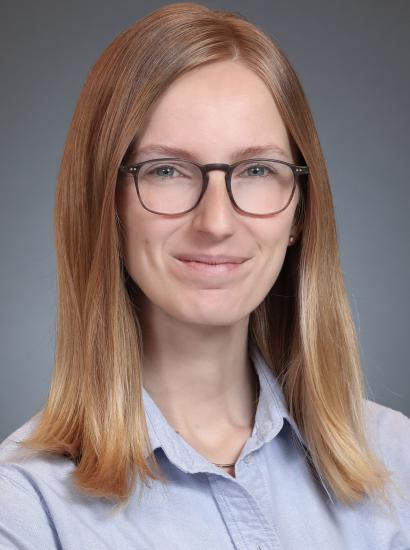
- Maybe you hail from what we in America call a company town. That's where a single industry dominates a community. What happens when a company leaves said town? In doing so devastating an economy and fostering a culture of bad government and dissolution voters. We're gonna talk to Hoover Institution fellow and Stanford University of Political Scientist whose new book Chronicles What happened to such single industry communities, mining towns in particular, coal country in America, the way of life may be gone, but is there a way to reverse this culture of distrusted institutions and elections? It's coming up next on a new edition of Matters of Policy and Politics. It's Monday, May 4th, 2026, and you're listening to Matters of Policy and Politics. A podcast devoted to discussion of Hoover Institution policy research as well as issues of local, national and geopolitical concern. I'm Bill Whalen. I'm the Hoover Institution's, Virginia Hobbs Carpenter distinguished policy fellow in journalism. I'm not the only Hoover fellow who's engaging in this opaque world that we call podcast. You should check it out yourself. Go to our website, hoover.org/podcast and there you'll see just a whole smattering of podcast that either who fellows do or participate in. A shameless plug here for the Goodfellows program that had the great honor moderating the audio version of that is available as well. Now to understand the rise of Donald Trump and politics is to understand various veins of voter sentiment that he tapped into over a decade ago and continuing, one being what the president likes to call a forgotten American. These are men and women living in so-called flyover country. Their towns alter, the industry's gone as the world's economy has changed. There's a phrase for such communities, company towns meaning one line of work making not only for employment but local identity. I know this personally. My father grew up in a steel town outside Pittsburgh, Pennsylvania. My mother came from a coal town in West Virginia. Today we're gonna talk to about, talk about what happens when the company's in charge of company towns exited community, the effect it has on self-governing and locals trust in institutions. And joining me with this conversation, Dr. Elizabeth Mitchell, elder, a Hoover Fellow and political scientist, Dr. Elder studies, how and when Americans get the resources they need to demand better outcomes from their elected officials. She's particularly interested in knowledge, efficacy, trust, and the role of place in social context and political attitudes. She joins us today to discuss her new book, company Town's Industry Power and the Historical Foundation of Public Mistrust. Dr. Elder, thanks for coming on the podcast.
- Thanks so much for having me.
- Now, speaking of trusted institutions, let's spend a minute talking about tech and ai in particular, my dedicated research to this podcast, Dr. Elder took me to the LinkedIn account of a gentleman named Aaron Elder, who I believe is your husband, correct? That's correct. What does Mr. Elder have on his LinkedIn account? It's an image of you, Elizabeth Mitchell Elder, the Hoover. The Hoover Tower is behind you, surrounding you penance from Cal, Berkeley, Princeton, Indiana University. And there you're sitting atop a throne of copies of your book company towns. How long did it take for you to build that throne?
- He's gonna be in big trouble for getting that, getting that brought up on the podcast.
- It's a great image though. So explain a little about the significance, obviously the book we get, but give us the significance of the Carol Berkeley, Princeton and IU pennants that are surrounding you.
- Yeah, absolutely. So Indiana University is my alma mater for my, my undergrad. So therefore the, the sports teams that I'm most attached to Indiana National Championships and football, football this year, Cal Berkeley is where I got my PhD, which is, you know, less attachment to to the sports teams, but much more attachment to the kind of intellectual history. That's my, the department that trained me in, in in political science and Princeton is where I did a postdoc before arriving here at the Hoover Institution in 2021.
- Okay. Where's the Stanford flag?
- It's
- Implicit though.
- That's on my LinkedIn is the Stanford, so he, he got the other ones covered.
- Okay. Well played. So you received your PhD from Berkeley about five years ago. Correct. This would be during the first Trump presidency. How many of your peers were studying political dysfunction at this time?
- Plenty. I think that was a time when the focus was still on kind of polarization and the notion that Democrats and Republicans can't get along with one another, don't like one another very well. I think over the course of my PhD between 2016 and 2021, that focus shifted a little bit more to questions of kind of democracy, democratic backsliding and, and away from questions of polarization. So both incredibly important topics, but a sign of a sign of changing times that that focus shifted.
- If you'd been at Berkeley 20 years earlier, do you think you had been studying the same topic? Would you have been looking at dysfunction or maybe something different?
- That's a great question. I think this, this project is really very historical. It comes out of the kinds of places I grew up around places with declining industry towns and steel cars and, and some coal as well. I think that was already true 20 years ago. And so I think it's, it's very likely my research would've brought, brought me back there either way.
- Okay, we'll get into the book in a second, Elizabeth, but first let's talk a little bit about local government, if you will. I've always been curious about the fact that there's not much of a pipeline from mayor of a town to president of the United States. In fact, if you look it up, I think three presidents actually can claim or could have claimed to have been a mayor one time. One was Calvin Coolidge, who was the mayor of Northampton, Massachusetts. Grover Cleveland was the mayor of Buffalo for only one year, I believe, and he wanted to become governor of New York. And then of all people, Andrew Johnson, who was the mayor of the town, Greenville, Tennessee back in the 1830s, it would be obviously well before he became a national politician. But you fast forward from Coolidge and you don't have bears who serving in the White House. I'm kind of curious because one thing that we like to talk about in America is how voters have very special faith in local government.
- Yeah, that, that's absolutely right. I think this, this has something to do with the, the notion that everyone hates Congress but loves their congressmen. Yes, people love their mayor, but that mayor represents the, the preferences of a relatively small community of people that are probably not shared very broadly by America at, at, at large. And especially over the second half of the 20th century. Cities have come to be, you know, I guess I'm talking about major cities here where you think maybe the job is a little bit more similar to being president than, than being mayor of a smaller town. Cities have become much more liberal than the United States as a whole. And so there might be a bigger mismatch in policy preferences between the mayors of large cities today than there was in the, in the time of Calvin Coolidge.
- Now there is a guy who may run again in 2028, but he ran in 2020 and he was trying to break this jinx, if you wanna call it that. And I'm talking about a fellow Indianan by the name of Pete Buttigieg. And Elizabeth in 2019, he would've been 37 years older I think at the time. So obviously very young by presidential standards. He called himself a quote laid back, intellectual young gay mayor from the Midwest. But South Bend, Indiana was his city. Now you're a Hoosier, lemme put you on the spot. How large were a city of South Bend.
- Well, I don't wanna get myself in trouble here, but it's more of a city than Bloomington. Yes. So there's, 'cause there is really kind of an industrial base and more of a, more of an independent city going on there. And that's certainly unusual path I'll, I'll power to him if he, if he's able to succeed.
- Right. So Seth Bin's population's about a hundred thousand and this became a talking point for Buttigieg because what did he talk about? He talked about how under his watch on employment fell, the downtown was developed, the population stopped shrinking. Newsweek had once called South Bend a dying city, but booted bench could talk about bringing it to life. So here was a guy talking about his Merrill record and trying to put it in national terms just as maybe Rudy Giuliani could have tried this if he'd run for president in say 2004 when he was at Peak Giuliani. But otherwise you don't see city mayors going straight from the mayoral shop all the way to, to the top of the pyramid.
- Yeah, that's true. I think part of what's going on there is that, you know, mayors are, are, have a lot in common with presidents in terms of executive, executive capacities, managing coalitions, you know, being really on top of all levels of government, but they don't have the same responsibilities of national politicians or even state level politicians in terms of kinda building up support within their parties. Building support within a, the South Bend Democratic party is pretty different than the Indiana Democratic Party or I guess the Michigan Democratic parties where he lives now. And I, I think maybe part of what's going on there is that getting ingratiated in the, in the state and national party networks takes a totally different kind of investment than the those city level, city level institutions.
- Yeah, it's now if you look at the mayors of the three largest cities, you look at New York City, it's run by Han Ani, Los Angeles, Karen Bash, Chicago as Brenton Johnson. Each one has a challenge. Madami has to make good on the democratic socialist agenda. Mayor Bass is running for reelection this year and she is up against it. Her poll numbers are not strong. She may win that race if far betting, I bet she'll win the race, but it's not gonna be an easy campaign. Brenda Johnson is up next year in 2027 and he too has an uphill climb as well. So these are not great springboard jobs necessarily, are they?
- No, not at all. There are a lot of problems of urban governance that are resistant to quick solutions and so I think even after two mayoral terms, it's hard to look back and say that you've really fixed all of the problems that you were hoping to when you started out. So that's another thing ha to have on one's track record that might be difficult in launching a a national political career.
- Alright, let's talk about the book, full title company Towns Industry Power and the Historical Foundation of Public Mistrust. There are single industry towns across America, steel towns, lumber towns, auto towns. You look at, you look in California here, for example, Sacramento, we could call a government town. San Diego was once a navy town, LA you might have at one time called an entertainment town. I'm not sure what we'd call San Francisco today. Maybe it's a finance trade hybrid, if you will. And then in this great state of California, Elizabeth, there are countless smaller towns which are dependent upon one industry, but you landed on coal towns and you looked at the Midwest Appalachia. Why did you choose this?
- Sure. Well, at the, as the examples that you laid out there illustrate nicely what a company town looks like on the ground. Varies a lot depending on what the industry wants the world to look like. If, if the industry has a lot of power to shape what life looks like in the place it dominates, then, you know, a, a town that looks like the movie industry wants it too is gonna look very different than a town that looks like the coal industry wants it too. And so part of what's interesting to me about coal towns is that the interest of coal companies for, for what their ideal town would look like, are pretty at odds to what we might think of as things that encourage human flourishing. Things like, you know, people staying in, staying in and finishing high school, people being going to get higher education and coming back. People investing in, in building skills. And you know, other things like health and, and a safe environment are not totally consistent with maximizing a coal company's bottom line. So in, in some ways coal towns are the worst case scenario. What's kind of the worst industry that you could expect, you know, if they got their way on every policy issue, you know, coal is, coal is in some ways the the bottom of the bottom of the list.
- Right. Would the antithesis of this be say Bentonville, Arkansas?
- Sure, I think that's a, a, a great one. I think the notion that Walmart has incentives to make that a really wonderful place to live so that they can attract highly skilled talent from away from other companies to live in a place that's not particularly accessible is, you know, a great part of the explanation for why it's Bentonville is from what I hear, such a wonderful place to live. So the skill of the talent they're trying to attract is a big factor here in determining, you know, what kinds of amenities you need to offer and therefore how, how good of a place it is to live.
- Now one thing I liked about the book, Elizabeth, is you just didn't pause it theories. You actually went out in the field and you surveyed and you polled residents. You did this in 2023. Let's talk a bit about what the residents gave you in terms of feedback. What, what were you looking for? What surprised you?
- So I, I'm really ultimately interested in voters, understandings of government. You know, do they think of, you know, if they see major problems in the way that their community is running, do they think that government is potentially a place that could organize to solve those problems? Or do they see government as something kind of predatory or even just irrelevant? So what I was looking for in the survey was a sense of do people have any level of trust that their governments, their local governments in particular are competent, able to exercise their duties, are honest in their communications and are fair in their dealings with citizens of different, different backgrounds or more or less means. So that's kind of a bucket of things I think of as trust in government. And the other thing I was interested in looking at is this idea of democratic accountability. So that is, do people think that elections work? And by work I mean do they think that if you have a bad elected official, you can vote them out of office and they'll be replaced by someone better? This is kinda the foundation of, of what we think of is that the democratic system works. But you know, what I has had seen in some of the qualitative accounts is that people in areas that have experienced really bad governance over a long period of time don't really believe that voting in a different elected official is gonna change anything. And so that's a really fundamental undermining of, of faith in the democratic process. So those two kind of pillars of trust in government and belief in electoral democracy are the two things I really, really wanted to measure. And on both fronts, people who live in former coal mining areas are less trusting of government and believe less in democratic institutions as a, as a way to hold their officials accountable than people in other parts of Appalachian and, and Midwestern states.
- Did you look outside of government in terms of institutional confidence, Elizabeth? Did you ask people about their schools, about their church, about their business leaders?
- I did. I asked about a variety of institutions, schools, the military, churches, nonprofits, business communities, police, a variety of other kind of local and national institutions. And something that I found really interesting in these patterns is that, and so coal mining areas are, are pretty former coal mining areas are quite Republican these days. And in some ways coal mining areas, patterns of institutional trust line up with what we might more broadly think of rep as more republican patterns of institutional trust. People in, in mining areas trust less in in the press and in higher education and things like this. But in other ways coal mining areas look really distinct. Coal mining areas trust less in big business and more in unions, which I think is, you know, not, not in line with the traditional Republican pattern and is more in line with their, their past. And you know, what I found really striking is that people in complimenting areas trust lust in the police than people in other places, which is again, inconsistent with a broader Republican pattern, but consistent with a lot of the evidence I talk about in the book of local police being really one of the main faces of company power and a lot of company towns, which I think led to a lot of distrust.
- Right. You look at the Gallup and Pew surveys on institutional trust, it's usually the military police small business, they tend to, they tend to get the confidence.
- Yes. Yeah, that's right. And the, the lowest declines in confidence over the past 30 years or so. Yeah,
- Right. So you mentioned Republicans on the rise in coal country and I went and did a little homework on the Republican trending in West Virginia. And here's what I found. In 2024, Donald Trump gets 70% of the statewide vote. It's one of the rent estate of America. He wins every county in West Virginia. This is not a surprise Mitt Ronnie got 62% of the statewide vote in 2012 and something even more jarring in 2012, Elizabeth Barack Obama got only 59% of the primary vote in West Virginia. The other 41% went to a felon in a Texas prisoner, a guy named Keith Judge who's gone to a political gad fly. He's always running for an office, but here's a guy convicted of extortion, but he is getting 41% of the, of the vote against Obama. But lest you think this is something unique to Trump or unique to Barack Obama, let's go back to 2008, Elizabeth, here's John McCain. You look at the, the, the parts of the country where McCain did better than George W. Bush and where do you find it? Appalachia, but you look a map, you look a map of the country. There are really two red blots. One is the Gulf coast and the other one is Appalachia.
- Yeah, that's right. Appalachia has been on a kind of bumpy but inevitable path towards support for the Republican party since about 1980. So the book is about coal mining areas in particular. That movement has come more since the two thousands as the coal industry finally kind of left. And the mining unions along with it, mining areas have been really plunging towards the Republican party. And the biggest movement, I think started in around 2008 but has really solidified in in 2016 and onwards. But the movement really started, started much earlier than that. So this isn't just a story of, of Donald Trump.
- Alright, so the book, you talk about large coal companies arriving in Appalachia and the Illinois basin after the Civil War, and then you talk about their impact on local governance and your contention is it is elastic impact. What, what is that legacy exactly?
- So the, the initial part of this story has to do with coal companies arriving in places that had very little local government to speak of. You know, this is after the Civil War. We government is not really the presence in, in most places at that point as it is today. Governments consisted of a handful of people, right? And between, you know, the end of the Civil War and the 1920s, local government really kind of came into its own a lot of places. This is an area of professionalization, things like sanitation programs, building streets and transportation systems, hiring competent professionals to positions of, of local governance. And I argue that coal companies really kept this from happening. Coal towns were, you know, there were, there were cities during this time, the coal industry was thriving during this period. There was a real potential for places that were coal towns to look more like some of the industrial cities of the mid 20th century. But I argue that coal companies had various reasons to oppose the development of local government capacity. And so kept governments from really developing into kind of competent professional modern local governments in these places. So the coal companies, the places where coal companies were larger kept governments smaller and you know, mining area governments are still smaller today. They remained so throughout the 20th century and are still today.
- Ed, when you're talking about how they would shape local government, are you talking about how the governments actually run or are coal companies involved in the purchasing of candidates or is it a little bit of both?
- A little bit of both. I would say the, the first best option to any coal company is to locate in a place where there is no municipal government. So just kinda avoid, avoid dealing with a local government at all. Barring that there is a fair amount of both what we might think of as conventional political operation by a business donating to candidates and encouraging coal supervisors to run for office and things like this. And also a fair amount of straightforward corruption, buying votes, telling people their, their employment was conditional and voting a particular way, bribing candidates and then some of some stuff that's in between. You know, there it's not uncommon for local officials to hold like, you know, for example, hold county court within a coal company store, these kind of blur blurring of the line between public and private authority that make it difficult for anyone to really tell where the local government stops and the coal company begins.
- And is this unique to coal companies, Elizabeth? Could we look at say Texas and find cases where oral companies, you know, big footed local government as well?
- I think that's certainly possible, but one of the unique things about coal is that at least for mo most of the 20th, you know, 19th and 20th centuries, it required a really big labor force. Yes. So, you know, an oil town especially today might consist of a, you know, kind of a handful of engineers and you know, people who live in, in trailers, parachute in to get things started and then, you know, there's not really durable population there once the, once the well closes up. But coal mining was present for more than a century and employed tens of thousands of people who really lived in places and developed a kind of persistent relationships with their government and with these companies and populations that outlasted the coal, the coal mines closing down, which is not often the case with oil and, and also with other forms of mining, like more like what we see out here in California.
- I'm curious as to why locals would go along with his arrangement. Is this because Elizabeth, that Cole is just king and coal just controls pretty much every facet of your life from where you're employed. Maybe they build a local hospital, maybe they build a local skill school, they just run everything.
- Yeah, that's, that's exactly right. There wasn't in, in these places that are, you know, relatively remote, did not have any industry really before the coal companies arrived. There are not other employment options you could leave entirely, often leave the family, the land your family's been on for generations or you can stay and work for the, for the coal company. So it's not, it's not easy to leave. And there's also some evidence of coal companies trying to limit mobility of workers creating blacklists for organizers and, and izer and things like this. So even if you were willing to move away to work for a different coal company, often that wasn't a possibility. So the only realistic option to avoid coal company pressure would be to leave the region entirely, which is an exercise a lot of people took once the coal jobs started drying up. But people were reluctant understandably to do so before that.
- Right Now coal is not a complicated operation in this regard. You wanna find seams in the ground and you wanna extract the coal from the ground. It's obviously dangerous, not healthy as well, but it's a very simple business proposition. We will extract the coal until set time that it's not profitable to extract the coal. And when it's not profitable, what happens is we shut down. Let's talk about what happens though when a company shuts down. Take a city in West Virginia, if you want to particulate with this, talk about how the wheels go into motion.
- So I guess maybe I'll, I'll just start a little bit before, before the company leaves and, and say that, you know, it, it was not, I I maybe I've been being a little bit negative here. The relationship between the company and the government was not all bad. It's helpful if you're a local government that the company's willing to build you a school or build you a fire department, right? But in, put in a light system, this is, this is great if you're an elected official and no, nobody has to pressure you to accept that. But then once the company leaves, you know, nobody knows how to put in a light system because the company did it before the company left. You have to build a new school because the company put one in before they left. And maybe you don't have the money to build one in the way that they they previously did because now the coal company's gone and the tax revenue is gone, is gone with it. So, you know, the, the ways in which coal companies were actually helpful in creating some of the things that made it possible to live a decent life in mining towns made it harder to, to maintain that life once the companies had left. There are obvious economic impacts in a town where 40% of the adult population works in the mines. If everybody loses their jobs, there's a really kind of catastrophic community level economic situation. A town can't really survive that. And you know, beyond the people that are immediately employed in mines, you know, all the towns, lawyers, accountants, doctors are, are indirectly employed by the mines too. So in a lot of cases the towns simply, simply didn't survive or they came places where people left only because they couldn't afford to live somewhere else. So there's some amount of leaving to other areas and, and towns entirely being destroyed and there's some amount of kind of people being left behind who have few other economic options. And so both of those dynamics leave places worse, soft than they were before the companies had left.
- And let's talk a bit about local government. Let's call self-sufficiency once the coal companies leave. Now local government's on its own, tell us what happened in West Virginia.
- Sure. Well one thing that happened is that, so I mentioned that coal companies preferred to keep local governments small, right? Once coal companies left, governments didn't get any bigger. There wasn't suddenly some rush to kind of recapture the capacity that, that these places would have developed if they hadn't been kept from doing so by the company towns. They stayed small, they remained small.
- Is that a function Elizabeth of attitude or lack of available money?
- Almost certainly both. Yeah, there are obviously as the coal companies left, there's not money to to do much. There are public opinion surveys suggesting that people also did not particularly support raising more money to spend on things like education and infrastructure. Whether that's because they didn't think it would do much good or because they didn't feel there was any available money to, to be taxed. It's pretty hard to say, but the notion that the finding later on that people really mistrust government and don't trust it to spend their money suggests perhaps that even if the money had been available, people would not have been clamoring for government to, to grow, especially if they'd been experiencing it as they did often during the coal mining era as a force that was relatively oppositional to their interests.
- And did you find these communities had good leadership or bad leadership?
- Well, it's hard to paint with a broad brush. I will say that often what we find is that institutions change slowly. So institutions like mining area, local governments that had experienced decades of corruption did not suddenly stop being corrupt. When the mining companies that were had originated, the corruption left. So just as the governments didn't get any bigger, they didn't get any less corrupt. There were various kind of local powerful families, people like, like store owners and administrators of government benefits who often took over some of the same tactics that coal companies had used to keep people politically in line doing things like offering patronage jobs or withholding welfare benefits in order to get people to vote for their preferred candidates in elections. So, you know, even as the economic underpinnings of these places changed, a lot of the patterns of political life remained the same and were just kind of taken over by new power holders once the companies had left.
- Now we are recording this. So the campus of Stanford University and next door to Stanford University is the town of Menlow Park, California. Elizabeth. Two interesting stories outta Menlo Park of late one is a mixed use development project that meta formerly Facebook now meta has been trying to do for years, about 60 acres of land it owns, it wants to redevelop, that includes sorely needed below market housing. Meta has now put that plan on hold. Meanwhile, there's news that the primary school, this is something created by Mark Zuckerberg and his wife, they founded it provides tuition free school education for low income kids. It's been around for about a decade. They're pulling the plug on that and the kids are gonna have to go back in the public of school. And it gets very complicated. I mentioned this because if meta would to fall off the face of the earth tomorrow, Menlo Park I think would still survive. In fact, if you look at the meta building, it's formerly the Sun Microsystems building. In fact, they used to call the headquarters Sun Quentin because it was formerly the Sun building says if you go to the Google main campus is over a mountain view. That used to be the home of silicon graphics by point here is that there's kind of evolution here in Silicon Valley. And that's probably a combination of two things. One is it is ultimately at the end of the day a creative society not to knock the colon the street, but that's not necessarily, that is mechanical physical work. It's not intellectual creative. But then secondly, it's also close to a world class university as well. Two advantages. And so you look at mining towns in America, the ones you looked at, these seem to be two things solely lacking. Number one, they don't have a university nearby. And secondly is not necessarily a creative society.
- I think you've, you've, you've nailed it. So one thing is that there are some university towns in, in Eastern Kentucky and in West Virginia and they have had some, have had some economic advantages from being able to have those local centers of, of productivity, productivity and knowledge generation, even in a region that's broadly not as, as you say, not as not as creative class as we are in now. And I also think it's, it's certainly true that as I mentioned before, the kind of town, the kind of company town that a company creates depends on what the company wants. And so the kind of company town that Google creates is one that has a lot of highly educated professionals that can attract a new industry, a new, a new company to come employ them because it's a, you know, a desirable place for employers of, of highly skilled people to be. And a coal company just doesn't have that same set of incentives. Their incentive is to keep their workers low skilled and to keep them where they are. And unless another coal company comes along, there's not really another, another great candidate to take over those, those employments. And you know, I I guess one, just one layer I'd add to that is that kind of remoteness or, or connectivity is also to some extent a product of these choices. You know, Palo Alto companies, Menlo Park companies want their workers to be able to fly anywhere and to get there from anywhere and to, you know, change jobs at least somewhat without that much friction. They want people to start startups that they can then buy. Coal companies did not want their workers to be able to leave and they in some cases actively opposed connections to tra transportation infrastructure that would've more easily let their workers move from company to company. So the fact that these mining towns are remote is to some extent a product of those companies not wanting them to be less remote.
- Talk a bit about the culture of these towns. There's a running joke in eastern Kentucky for decades now. It's a hillbilly joke if you will, that whoever's gonna, the election is gonna be that person who could buy the most votes with a pin of moonshine and a $50 bill. So that would suggest that there's kind of a way of life that's been baked in the cake for a long time.
- That's, that's the case, yes. Buying of votes was, well it used to be very common around a lot of places in the United States, you know, circa 1900. It's not at all uncommon in big cities throughout
- Walking around. Money is EU for this. I think the use in New Jersey for this, that it used to be so walking around, money used to be in the purest sense. Elders running for office. I'm gonna give her some cash on election day where she could walk around. But walking around money New Jersey is, hey buddy, here's $20.
- Exactly. This is, this is certainly not an unusual thing in in American political culture, but you know, a lot of these places got reformed one or another over the course of the 20th century. Mining areas are some of the last holdouts, some of the last vote buying prosecutions have been in the, in the course of the two thousands and Eastern Kentucky and West Virginia. Other coal mining areas. You know, I think part of that is, is a legacy of mining companies. This is a place where politics was a lot, a lot based on things like family ties and, and business ties and patronage and coal companies brought vote buying into that equation. They brought currency into the occasion and that's a, a habit that proved hard to break over time. But it's also a, a product, I think to some degree of a broader political environment at the, at the state level that coal companies cultivated of, leave us to our business state politicians and, and state law enforcement and we'll, we'll provide support when needed in state government, but don't interfere with how we do things around here. I think this is an ethos that exists in a lot of mining areas compared to their state governments and let these kinds of corruption flourish longer than they otherwise might have.
- Years ago, Elizabeth, I took my father back to his hometown, which was McKeesport, Pennsylvania, a steel town just outside of Pittsburgh. And he showed me something that made, made me wanna cry. He showed me his childhood home and he showed me his childhood neighborhood. And a lot of the homes, Elizabeth had been burnt, they had been set on fire and they'd been set on fire on purpose, why people were trying to get outta McKeesport. And they came to the conclusion since they could not sell their house, there was on one way to get out and that was the torture their house to try to collect on insurance, if you will. I'm curious if you look at the culture of the coal towns, you did these surveys, you talked to people, how many people had come back to coal country, for example, if you, let's say you did well in high school, in coal country and you managed to go off to college, would you come back to coal country or are these people who are just their lifers, they're they were living there, they're born there, they live there, they're gonna die there.
- I would say more of the latter. Yeah. The, the age distribution in former mining areas has been shifting older steadily over the past 20 years or so, and especially since 2010, which was the last kind of coal, coal mining peak in, in Appalachia. Yet since the 1950s it's been the case that people who leave to get a college degree are almost certainly not gonna come back. And that's a, a pattern that's true of, I guess it was true of coal mining first. And it's increasingly true of other kind of former industrial places throughout the Rust Belt over this period. It's simply the case that there aren't a lot of financial returns to a college education. There aren't jobs that you can get in these places where it would be any help or at least any help to your earnings to have a college degree. And, and I think this is, this is something that places in these areas are trying to change. There's a lot of natural beauty in former mining areas. There's a lot of focus on, especially by Kentucky and building broadband infrastructure, infrastructure so people can work remotely from these places and take advantage of that natural beauty while not needing for there to be actually jobs for, for college educated people in those places. But it's an uphill battle as you say, if you're, if you don't have a creative industry, if you don't have a, an industry that employs high skilled workers, it's hard to build one from scratch and without jobs that make it worth it to, to have a college degree, it's hard to get people who have one to move back. So this is a, a challenge both economically and also I think for political leadership in these places as, as a lot of high skilled and educated people move away.
- I wanna mention for this reason, you don't feel trapped living here in California. You may complain about certain things about California affordability being probably one of your principal gripes, but you're not trapped. You, you and your husband could just move elsewhere in California to find a place that's affordable. But if you live in some of these coal towns, Elizabeth, I imagine you do feel trapped, especially if you can't sell your home and you can't get out. And so I wonder how much that feeling of being trapped plays into institutional confidence. I have not seen any surveys of how prisoners feel about institutions, but I imagine if you're serving time in jail, you're not too jacked up about how the world, how the world is doing. And so I wonder if you're in a similar situation where you feel like a prisoner of your community if that plays into the cynicism.
- I think that's a great point. I think there's a growing work in, in political science on this idea of being stuck, of being unable to, to move away from the place that you live and how that affects your relationship with your institutions. I think people often go in one of two directions, some people who can't who, who kind of are physically or economically trapped somewhere that makes them resentful, that makes them feel like, you know, it's unfair that they've been trapped here. They are distrustful of any institution that has potentially contributed to putting them in this position, but other people feel even more attached than they otherwise would. You know, if you're gonna be stuck somewhere for your whole life, you can never see a way out of it. Maybe more of your identity becomes tied up in being in that place and from that place and you become even more invested in defending it and making it a better place to live. So these are kind of two sides of this stuckness stuckness dynamic that I think you see both of an Appalachia, there are a lot of people who couldn't leave but also don't want to, that you know, the fact that this is a place where people's families have lived since, you know, the 18 hundreds. The 17 hundreds in some cases makes it so that even if you're stuck there, that's the land of your people, that's the land of your family. That's not a place that you would necessarily feel happy to leave, even if you're up economically able to do so. And a lot of Appalachian culture and kind of music and heritage is based on this notion of really close family ties, really close knit communities and, and the fact that these families have had relationships with the land going back a long time. So there's a negative that the angle of that. But there's also, I, I think a positive one.
- This is the second straight podcast now that I've referenced. The movie October Sky, the previous one was with a colleague of Oz Rose g Muer, who fell in love with, with space of all things. And the movie October Sky captures that. It's about life in West Virginia in a coal town, coal wood, West Virginia, a real town written by a gentleman in Homer Hickum who grew up in that town and actually managed to get out. I got a scholarship to Virginia Tech, ended up becoming a NASA engineer. I dunno if you've seen the movie though, but if you have, you're shaking your head you haven't seen it was gonna ask you if it got, oh
- Sorry, I haven't,
- You should get it because I think you'll find it's gonna just really touch a lot of things. What it talks about. You see the movie and it becomes very apparent that the company that runs coal wood just really controls the way of life. And even though the workers do, you know, do you know threaten a strike, it's the Olga Coal company that really just calls the shots and everything. And so when you see that movie, you do become just how aware of how much a company runs the company talent.
- Yeah, I think that's a, a common dynamic. I think these are places where union organizing was as bloody and and violent as it got in at any time or place in the US history, but it's still often the case, especially in the long run that companies are calling the shots and especially after the 1950s as things are getting automated, it's difficult to see any way that the companies are are really being, being pushed back on.
- Yeah, and Cold Wood West Virginia, which is the town and the movie in real life, it's no more, I mean it's still there, but it's just, it's now an overgrown town in terms of just, just nothing there. Industry is gone.
- Yeah, I think that's, that's not an uncommon experience. That's part of the, part of the difficult thing about a company town is that no matter how reciprocal the relationship can feel, and there can be some give and take between the government, the union, the the company, while they're still there, the company can leave and there's nothing that anyone can do about that. And the, the people remaining and and the government's remaining are left to pick up the pieces.
- Are there any success stories you can point to in terms of coal company towns that managed to turn around their fortunes? Do they, do they find a second act?
- That's something I've been, I've been keeping an eye out for and don't have a lot of great stories about. I think the area around Berea College in Kentucky is the, the best example that comes to mind. Like I mentioned, places that have colleges and universities tend to be doing a little bit better and I think Berea does a lot to, you know, engage, its, engage its students, engage its graduates and make its community a better place to live than otherwise would be. But I, I think that really large scale policy change is really what's needed to make a difference. There's not that much that individual places can do and, and things like broadband, things like roads and roads and, and other infrastructure are really what's gonna be needed to make these places run. You know, if there's only so much a locality can do, especially one that's as cash dropped as former coal towns often are.
- You might go to Spring Bay, Greenville, South Carolina, which is where one of my nieces lives and I mentioned Greenville because it's in the western upstate as they call it in South Carolina. But Elizabeth, it used to be a textile town and if you now go to Greenville, it's a town built on new economy. There's a BMW plant nearby in Spartanburg. A lot of young people moving in. Greenville housing is very affordable and the textile mills are still there, Elizabeth, but either they're just kind of there as sort of like empty temples or they've been repurposed into condos and things like that. So there are, so there's the town of the second act.
- Yeah, absolutely. I think there's a lot of hope for that kind of thing in, in former mining areas and I think especially tourism is something, something, as I mentioned, there is a lot of natural beauty in these places. I think there's hope that tourism can bring some life back to these places, especially as some of the environmental cleanup is making them more, more habitable and more enjoyable for recreation again. So there are second acts on the, on the horizon I think even if they're not quite realized yet.
- Okay. So having read your book, let's now put this in the, along the lines of America two 50, which in case you're not aware of America turns 250 on July 4th. It's a good time to look at our government and how we're governing America, Elizabeth. So I wanna run three things by you having read the book. Number one, what should we think about terms of democratic health?
- I think a big takeaway of the book is that democratic health is not just something we should measure at the national level, right? No matter what's going on at the national level, there's a huge amount of variation within the United States in the health of people's relationships with their local governments. And the extent to which people feel like they can trust their local governments to do basic things like, you know, collect the trash and, and, and keep the lights on, but also to the extent to which they feel like they can contact their local elected officials, like, you know, going to a city council meeting is gonna get anything done. These kind of broader senses of efficacy that go along with Bill Ke have a good relationship with the government. I think, you know, if people think about actually being in touch with elected officials, often it's the local level at which that happens. So, you know, when we're talking more broadly about, about democratic health, people's abilities, knowledge of sense of efficacy at the local level is, is something we should really be keeping in mind,
- Right? Are you suggesting that that what you see in the company towns is a symptom of a larger disease?
- Absolutely, but also that there are shining examples of places where people do feel really connected with and their local governments and feel that they're really responsive. So there are positive examples and negative examples and just a huge amount of variation in the United States. Both of them are important even as we're thinking of our, our national environment.
- Okay. My second takeaway, Elizabeth, you suggest that anti-government sentiment that you discovered is not really faint. It's not performative. I remember back in 2010, I think it was when the tea party movement started, Nancy Pelosi had a term finish, she called it what? AstroTurf because she's saying it wasn't really grassroots, but you suggested anti-government sentiment is real.
- Absolutely. I, I can't speak for every region or every person, but in Appalachia at least, there's a very real history here of people being mistreated by, ignored by their governments. And that's, you know, an anti-government s sentiment is coming from real experience and often generations of experience. You can't really fix that by trying to convince people that their mistaken or that they're, they've learned something wrong from, from school or from the media. This is, this is a lived experience with bad government and I think the only way to fix that is with better government
- And the attitude toward Donald Trump. Is Donald Trump just seen as the vessel of anti-government sentiment?
- Well, I think there is a, there is a piece of it that is specific to coal mining towns. Donald Trump has made particular promises about the coal industry and I think that's very attractive to people. You know, these are places where people felt very negatively about the coal industry when it was there. Or at least the, the union battle suggested there was a lot of antagonism, but over the past 50 years or so, people have come to feel very positively towards the coal companies and that as their kinda potential only economic future. So promises to coal companies or to coal, the coal industry in particular, I think are very attractive. But there is also a very real sense, I think anti-institutional sentiment and you know, like I said, I don't wanna overstate the Trump appeal. Appalachia has been trending Republican for, for many, many years, right? But the sense that institutions have not worked for people in these areas and that they might be happy about for a candidate who also doesn't feel those institutions have worked is I, I think part of the appeal.
- Yeah, and that's a third point here that this is a just about call that's a larger sentiment here. California, for example, which is a progressive state. Democrats ought number Republic is about two to one, but people get statewide polling, Elizabeth, the public's about split in terms of confidence in government. Now you'd think that a progressive institution press, progressive electorate, I should say would be a little more trusting, but that's not the case. So there's cynicism even here in sunny shiny California.
- Yeah, absolutely not everything comes down to partisan politics. I think that's part of what I'm saying here. You have to look at what people's experiences with government are actually like. They're not just listening to the news, they're also looking at what's happening in their cities and their towns and, and part of people's sense of what government is and can do come from those really local experiences.
- Alright, so your mission is the Hoover fellow, if it has not been explained to you, is that you have to identify problems, Elizabeth, and then you have to solve the problems. So we've identified the problem here nicely for company towns and coal towns. How do we solve things? How do we make life better for these people?
- Well, I think there are two, two ways to look at this. One is to make life better for people who live in what used to be company towns. Yeah, as you just said, As I've alluded to a couple times, local governments in these places are, don't have the resources of the capacity to make a lot of policy, a policy change themselves and think higher levels of government can do a lot in terms of infrastructure, in terms of connectivity, and in terms of kind of making it easier for local governments to access the resources that already exist. Things like things like connecting governments to, to grant programs and requirements of, you know, writing grants and matching loans. These are things that are really tough for local government that has been low in capacity for generations to do. And so I think, you know, in places that have a real kind of regional lack of local capacity, more investment from higher levels of government and making sure that they can actually do things like collect the trash and keep the lights on is part of what's necessary to make people feel, again, like their governments are competent, can be trusted and, and or potentially worth investing. In The other side of this is to prevent future company towns from coming into existence. I think, you know, once a single company controls most of the employment in a place, it's quite difficult to disrupt the fact that the company's gonna have a lot of influence on government. That's just a, a tough thing to interrupt. So I think governments can also do more in terms of policy to prevent company towns from arising. I think the current, current model of trying to attract a large employer to come to a remote place and provide a lot of jobs through, through tax incentives or, or others government programs is a, is a mistake. That's a, that's a recipe for creating a company town where there wasn't one before. And there are gonna be a lot of, I think, bad downstream consequences for not only governments, but also people, you know, people who live in newly founded company towns are gonna have poor relationships with their governments if, if what I'm seeing here generalizes. And so, you know, maybe if those tax incentives pay off in the near term, are they really worth it in the long term? If you're creating a new town of people who doesn't believe that their government is worth trusting.
- So question Elizabeth, if you were to create a company town from scratch, what would you choose as your driver of industry and employment? I, I'm gonna give you two suggestions here. One is education universities. You name a college town in America and they usually are pretty nice places to live because why the university is there. The university is a steady source of employment and the university brings with it things like good healthcare, intellectual outreach, things like that. So I'd say education might be one. The second one, Elizabeth I might choose is government. I'm a native of Northern Virginia and I remember a time when you could drive out into Northern Virginia and really kind of be back out in the old south. It just, accents were thick and life was slow. Northern Virginia, thanks to the government, it's just become a vast, vast wealthy operation. So the joke is, as long as you're tied into the government, you're not recession proof. So my choices would be universities and followed by government, but what would you choose?
- I think those are great choices. I I think a big benefit of both of them that I would add is that they're pretty durable. You're probably not gonna wake up next year and realize that the college is gone or the government is gone. So you don't really have that constant looming threat of things evaporating once the company leaves. You know, the downside of those is that they don't generally pay taxes. You know, you need some economic activity going on to generate the revenue for your government to use. And often universities are not big taxpayers and certainly governments aren't. Wait,
- Wait a second, Dr. Elder, you're not paying taxes. Hold the phone.
- Sorry. Of, of course, you know, I'm, I am of course paying taxes, but I, I think Stanford gets a deal. I, you know, and public universities in particular have different,
- What you're saying is you want something with a good, generous revenue base.
- I would love, I would love a, I would love a revenue base. I think universities are great drivers of, you know, attracting employers to, to come to town. Failing those, I think, you know, any industry that wants to attract people and in doing so has to make it a great place to live. Is a, is a great option. I think Bentonville is a great example. I wouldn't have picked Walmart if I didn't know about Bentonville already. But, you know, the idea that this is, that Bentonville has become a wonderful place because that it's their incentive to, to be able to attract great talent, I think suggests that, you know, any company whose incentives are aligned with making it a great place to live are, are companies that are, are more likely to lead to an outcome where the com the town is able to persist and attract more employers even after the, the original company has moved on.
- Have you looked at a town like Cupertino, California, which is heavily dependent upon Apple. So you could argue that Apple is the company and the company town of Cupertino. Obviously Apple has more money than got it seems, but is that a healthy relationship between Apple and Cupertino? Are they building a society that's gonna last? Or if Apple pulled the plug and moved outta Cupertino, would Cupertino become the equivalent of a early 20th century coal town?
- Well, I think there are, I would say it's not a healthy relationship by, by my standards, but nevertheless, I don't think Cupertino would seek cease to exist if Apple left. Yeah, I I just say that it's not a healthy relationship because I think there are still consequences for, for democratic accountability. I, I think people, there's often, when I, when you talk to people in, in mining towns, but also even when you talk to people around here, people have some sense that things are rigged. That there, you know, people with a lot of money, companies with a lot of money are getting their way while regular people are not. And I think any kind of relationship where a company has a huge amount of say over what a, what a town does can help people ha see, see, cultivate this feeling that I, I see in mining towns too, that they're not really having their say that there's something else getting in the way of government officials listening to them. And I think that's not healthy, even if the outcomes are, are in a sense, good. But I also think that, you know, as I said, companies can provide things that governments otherwise might, you know, and they can build schools and, and roads and this is nice, but it also potentially can depress demand for governments to do those things themselves. I, this is not about Apple, but I, I think sometimes about the Google buses and would there be more demand for, for better public transit between San Francisco and, and Silicon Valley if tech companies weren't creating their own kind of substitutes for public transit that, that serve their workers' needs instead. So even if companies are doing nice things for the people they employ and for the cities in which they work, there's still kind of crowding out the public sector in a way that I think can make it a little harder for people to feel like governments are, are a force for good in their lives because, you know, they're not
- Well now you raised an interesting question. That's what is a company, if a company is the company in a company town, what is the company's moral obligation to that, to that town and that society? Is it to build hospitals, to build better roads, to make sure kids are educated? What exactly is the company on the hook for?
- Well, I think from a certain perspective, the company is on the hook for returning it to its shareholders and, and nothing more. And when, you know, even when we look at company towns that are good places to live, it's not because it's not out of the goodness of their hearts. It's because that's the level of amenities they need to provide to attract the kind of workers they need to attract. It's all, it's all, no, no one is doing anything out of their self-interest here. You could argue about different models that, that one might adopt and which companies have some obligation to take into account the needs of their needs of the places they operate above and beyond the people that immediately work for them. I think this could potentially be a, a growing concern as we move into a world potentially of AI where just because a huge company is located in a place that doesn't mean they actually employ many people. So I, I think part of the balance between providing for one's employees and providing for one's broader community can, can shift as as time goes on. And that might raise some, some broader questions.
- Very good questions. Alright, final question is a tough one. What's the future look like for Fernando Mendoza?
- Great success. He's got a, he's got a, you know, he's got a great mentor over there in Tom Brady. As much as, I hate to admit it as a Colts fan, I think he's, I think he's got a bright future out of him.
- This incredibly polite, grounded young man moving to Las Vegas. Is it, is it a reality show to happen or a situation comedy? I can't quite get my head around it, but
- I think he might be a fish outta water, but hopefully he'll keep his head on his shoulders.
- Very good. Alright, final question, Elizabeth, this election year, what are you up to this year?
- Oh, sure. So I, I actually am in the spirit of focusing also on local elections. I'm working on building a, a database of local elections, in particular in places that are not, not big cities or most of our election data exists. So hopefully after, after elections this year, we'll we'll be able to say something conclusive about the differences in between larger and smaller cities in the way elections are, are conducted and things like how many people are running for office and how many incumbents when, just basic things that, you know, in studying coal towns. I've gotten an appreciation for how much we know about big city America and how little we know about small town America when it comes to politics. So that's, that's gonna be my focus this election year.
- Are you looking at a block of states like swing states or a region in particular? And when you say local elections, how local are you getting?
- I, you know, I would love to get all the township elections in the country, but that's a little bit above, above my, my threshold of
- A lot of data.
- Yes. So we're just, we're just focus focusing on focusing on places where it's more possible than, than others to, to get elections on everything from the largest city to the smallest borough and we'll see what we find.
- Sounds good. Well, the city code election integrity, it's a real thing out there apparently.
- It certainly is.
- Okay, Elizabeth, I enjoyed the conversation.
- Thank you so much. I enjoyed it too.
- Okay, go. Hoosiers, you've been listening to matters of policy and politics, the podcast devoted to the discussion of policy research from the Hoover Institution, as well as issues of local, national and geopolitical concern. If you enjoyed this podcast, please don't forget to break, review, and subscribe to our show. And if you wouldn't mind, spread the word, tell your friends about us. The Hoover Institution has Facebook, Instagram, and x speeds. Rx handle is at Hoover nta, spelled H-O-O-V-E-R-I-N-S-T. And I also recommend you go to our website, which I mentioned before, that's hoover.org. And while you're there, sun up for the Hoover Taylor report, which keeps you updated on what Dr. Elizabeth Mitchell, elder and her Hoover colleagues are up to. And that's delivered to your inbox weekdays. The book we've been referencing throughout the podcast, it's taught a once again company, town's, industry power, and the historical foundation of public mistrust. It's available. Go get it now. It's a good read. Well, the Hoover Institution, this is Bill Whalen. Till next time, take care. Thanks for listening.
- This podcast is a production of the Hoover Institution, where we generate and promote ideas advancing freedom. For more information about our work, to hear more of our podcasts or view our video content, please visit hoover.org.