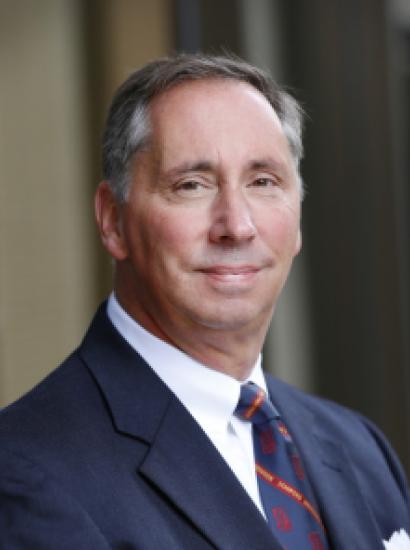
- This once said, in America, the President reigns for four years. And journalism governs forever and ever. But what is the state of the fourth estate these days? Why is it seen as steep decline in public confidence as it struggles to adapt to changing taste? And where we look for news and information Coming up next on matters of policy and politics. A Pulitzer Prize winning journalist and veteran political scribe joins us to discuss the health of his industry and ways to reinstill trust in the important institution that is journalism. It's Thursday, March 12th, 2026. You listening to matters of policy and politics, a podcast devoted to the discussion of Hoover Institution, policy, research, and issues of local, national and geopolitical concern. I'm Bill Whalen. I'm the Hoover Institution's, Virginia Hobbs Carpenter distinguished policy fellow in journalism. I'm not the only Hoover fellow who's doing podcasts these days. I recommend you go to our website and check it out. That is hoover.org/podcast scenario. You'll find just a whole slew of good stuff to listen to, including if I may shamelessly brag the audio version of the Goodfellow Show that I have the honor of moderating. So today we're gonna take a bit of a detour from our usual programming and we're gonna talk about journalism. Something which I care about quite personally. Journalism is in my job title. It is in the degree of of of my, from my university. I have a ba in journalism. It's also the first job of any real responsibility I had as a kid growing up. I delivered the Washington Post seven days a week, come rain, shine, rain, snow, whatever the Washington DC climate had to offer to me. So when I see that journalism is struggling in America, it makes me sad. So today we're gonna talk about why exactly journalism has struggled. The changes in how we obtain information, how news organizations can make a profit, and something that's very germane to the Hoover Institution as we study these institutions here. Public trust. Why is it that many institute, like many institutions today, the public just doesn't trust journalists as he did back in the day when Balter Cronkite wasn't merely a journalist. He was to America, uncle Walter. So joining me to unpack all of this and talking about the state of the journalism is Davidman Davidman is Executive editor emeritus of the Pittsburgh Post Gazette. His remarkable career includes stints at the Wall Street Journal, the New York Times, the Washington Star, and the Boston Globe. He was assistant managing editor columnist and Washington Bureau chief for the Boston Globe when he was awarded the 1995 Pulitzer Prize for his analytical reporting on Washington developments and the national scene. He served as executive editor of the Pittsburgh Post Gazette for 16 years, had led the coverage of the attack of the Tree of Life synagogue for which the newspaper was awarded the 2019 Pulitzer Prize for breaking news reporting. Today. David Truman is a syndicated columnist and also serves as a scholar in residence at Carnegie Mellon. He also teaches at McGill Co. McGill College or McGill University McGill University. And he's a columnist for the Globe and Mail. David, welcome to the podcast.
- Well, thanks. But you left something very important out, which was I was a paper boy also.
- You were,
- And I would walk around and read the paper as I delivered the paper, and some of the people I read LA later became my colleagues. It was a great start in the newspaper business and I loved every minute of it and I, I decided in, in some way that I wanted to do that sort of thing.
- What paper was it and what time in the morning did you have to get up?
- Well, no, it was an afternoon paper. Oh, an afternoon in the years of afternoon papers.
- So after school.
- And it was the Lynn item in Lynn Massachusetts and the, the afternoon delivery of the Morning New York Times. 'cause it didn't get to, to the North Shore of Boston until mid-afternoon. And also the Boston Evening Globe.
- Okay. So question David, we are sitting here at Stanford, California, not Pittsburgh, Pennsylvania. What brings you here?
- Well, I'm here to talk to a couple of colleagues of mine on a, on a Zoom that we have sometimes weekly, sometimes, sometimes less than that. Many of them are here at Hoover. Some are more, more broadly at Stanford. And we talk about politics and tell lies to each other.
- Okay. Is it a happy con happy conversation or a sad
- Conversation? It's, it's a, it's a, it's a provocative and always entertaining. An informative one. I've learned a lot. I'm the only nons scholar on the pro, on the, on the Zoom. And I've enjoyed learning a lot from David Brady and from and from Doug Rivers and from many, many others.
- Right. We've had Dave Brady on the, we had him on a podcast a couple months ago. He just has a, he had a book out recently talking about polarization.
- Yep.
- Doug Rivers has been on the podcast. He is of course one of the truly great pollsters in America, I think. So we have a lot of great treasures here at Hoover.
- Yeah. And I, I really enjoyed being, having an association with all of them and with Stanford, where my daughter got an MBA and I've great fondness for this place and I'm glad to be here.
- Good. Well, great to have you David. So let's talk about journalism. Let me direct your attention to Gallup, which studies the health of journalism. Oh, I know where we're going here, but you know where we're going here, here we go. Brace yourself. So Gallup crunched the numbers came out last fall. 28% of the public expressed a quote, great deal or fair amount of trust in newspapers. That's a bad number. And it's, it's bad concerning where it's come from. It was 31% David back in 20, 24, 5 years ago, David. It was at 40%. If we want to go way, way back to Walter Cronkite that I mentioned, I think journalism was at about 70% back in the early seventies. So 28%. David, what happened?
- Well, I can apologize for that a little bit by saying all institutions
- Right,
- Are, are down, except for the military. The, the ratings for the military remain high, but even clergy are down. It's an era of disrespect. I think generally an era of, of, in a way of insurrection. In one of the, in one of the targets of insurrection usually are established institutions. We have our own peculiar problems quite apart from those broader social trends. I think there's a a sense that, that journalism that journalists aren't straight anymore the way they once were or the way people thought they might have been. I think there's a, a whole other set of, of factors that have eroded the importance of journalism in Americans' lives. One of them, oddly enough is afternoon traffic and no afternoon newspapers because nobody can deliver a newspaper in the afternoon. 'cause there's so much traffic. I probably hadn't thought of that. 1, 2, 2 career families. There's not as much time to read a newspaper when, when I, when we talk about journalism, I think I'm using newspaper as a, as a term of art. But I think it's more generally established mainstream journalism. I think that's what you're talking about, right?
- We were talking about this before we came on the air. People just don't seem to read in the great depth that they used to. I mentioned David, my father, may he rest in peace. He passed away 10 years ago. He'd be in his nineties now. That man would sit on the couch and he'd be happy to spend his whole day devouring the Washington Post or the New York Times, or the Wall Street Journal, whatever he put in front of him. He just wanted to absorb information. But I think people today, David, I don't know if they're in a hurry, maybe we just, it's a short attention span society. People just seem to kind of take news and sort of small little sips, if you will. They don't really
- Want, I think they're exposed to it in an ambient way as they look for other things on their phone. My father-in-law and mother-in-law, neither of whom went to college, or I don't think even graduated from high school, would read every single word of the Buffalo Evening news when, when I was there in Buffalo with them. They were credible consumers of news. They basically trusted what they read. And I think what they read was trustworthy. They didn't, there were no other kinds of, of people saying, well, these guys are liars, et cetera, et cetera. But that's, that's gone. And we were saying in the, as we were walking over here, bill, that you don't see newspapers where you used to. People don't get them. My my own children whose every, I tell them that every molecule of food they ever consumed. My, my wife was a journalist at the Washington Post and elsewhere, every molecule of food, they cons consume every threat of clothing they ever wore. Every breath of air conditioning they ever breathed came from newspapering. Why don't you get one? And well, I don't know. And they have in different kinds of fields, they do read a lot, but I think there's less reading of serious material. And I don't only mean newspapers, I mean also books. Although, you know, there's a healthy go to a bookstore, a lot of people there. But fewer people, fewer, I think fewer people read books the way they used to. And if you don't believe me, go to go to a, a number of syllabi on this campus and see how many books are cons are assigned. I just looked at a syllabus from a distinguished scholar here who has, has had tenure on two of the, two of the 10 greatest universities in the history of civilization. And there wasn't one book on the syllabus. Oh my goodness. I thought, and you know who this person is?
- I think I do,
- Yes.
- A thought exercise for our, our listeners. Next time you are on a bus or a subway train, look around and see how many people are reading a newspaper versus how many people have their faces and their screens.
- Well actually, you know, I I as a, as a New Englander and, and a known cheap skate, I used to travel a lot. I would travel some years, you know, an awful lot in campaign years and being cheap, I would get on the airplane and walk up and down the aisles and borrow people's newspapers so I wouldn't have to buy my own. And you can't do that anymore because there isn't a soul on the news on the plane who's reading a newspaper. They, they are consuming news produced by people who work for newspapers. But that's a little different. And I was, the other day, I was at the gym on a Sunday and I was on the way driving there and it was snowy in Pittsburgh, so you could see the green bags on the lawns. And I noticed that there were two on a very long street that I live on Beachwood Boulevard, very Long Street. And there were only two, one of them was mine and there was enough, some other one. And I ran into a colleague of mine there at the gym and I mentioned that and she said, well, that was mine. So the only two newspapers consumed on this very important street on the biggest newspaper day where we used to make the most money were people who were over six, over 65. And who worked on the paper.
- Let's talk a bit about how journalism's evolved, David, and let's do it through the prism of your career. So I mentioned in the beginning you wrote for the Washington Star at one point.
- Well, I actually started as a young person, very young, 16 and a half at the Salem Evening News in Massachusetts. Now the Salem News would have on its masthead a witch for obvious reasons. And my job was to co in early and get huge pieces, huge roles of, of newsprint and to write the headlines. And I could handwriting to write the headlines and to, and these huge strips and to hang the tho those huge strips with my writing of what the leading stories locally and nationally were in the window of the newspaper office. And people would wander by and read the news that way. Now that's kind of like a scene out of Weinsberg Ohio, you know, the novel. And then I of course started to write stories myself. So through my own life I've seen journalism go from writing stories on, on royal typewriters and handing it and walking over to the news desk and handing it to a bunch of guys. Mostly drunk only guys who edit it with a pen or a pen actually with a grease pencil and putting it in a pneumatic tool. Many of your listeners won't even know what I'm talking about. They would take the paper, the, the actual paper that was written on and that they would paste it together with a from glue. From a glue pot.
- Right. - I used to call that the tools of ignorance and you would slap it together and put it in the pneumatic tube. And then you then, if you were curious about what your story would look like, you would walk up the stairs and down a long corridor to the composing room where there were a bunch of people who on, on Linotype machines were retyping what you had already typed. And they often caught errors, by the way. And if you could read backwards and upside down, you could see what the paper would look like. I don't think the reading upside down and backwards no longer is a skill at the teach in journalism school.
- No, it's not. What years were you at the Washington store?
- I was there for the last year and a half. I, I wrote the story saying Star to close. And as part of your, your chronology you're developing Bill, you might be enjoy knowing that I dictated that story from a phone booth to the paper.
- Right. Why can't Washington DC have two viable newspapers?
- It's a question we asked in 1981 and there's still no answer.
- You have multiple newspapers in New York. Boston has multiple newspapers. Yeah, there are multiple newspapers in Washington. There's the Washington Time, there's the free beacon, but there's always been one, you know, king of the Jungle. And that's the post.
- Well it used to be the Star,
- Right?
- Yeah, yeah. And, and when the two were going, going together in the fifties and sixties and seventies, it was a great, great feast really. And then the star became the feisty upstart even though it was older and more established. And that was still great fun to work on The Star and it produced great journalism and many of the names of of some of the great journalists of our day worked on The Star. Yeah.
- And then during your career you see cable news come along, cable TV news.
- Right.
- Did you think it was here to stand when you first saw it?
- Yeah, I thought it was a pretty good idea. And, you know, it, it was kind of a, was kind of a saturation. People had it at the, when I was at the Globe, which would've been 1993 to oh three. You would have it on all the time in your office. I would turn it off 'cause I couldn't stand it any longer 'cause it was just too, just too much of muchness. But it was, it was an interesting innovation.
- And now we have cable news, but now we have this thing called social media.
- We do. And I'm, I portray my age when I say I understand it's very important.
- Okay. Is it a friend or ce to the profession?
- Well, it can be. It's, it's, it's both. I mean is, you know, automobiles are a friend of menace who's a wonderful soliloquy. And the play inherit the wind in which somebody says, I think it's a Clarence Darrow figure, says, you know, progress has never been a bargain. If you want to have the telephone, you give up the silence and serenity of your home if you want to, to fly. This is a wonderful line. If you want to find an airplane, the birds lose their mystery.
- Right. So glass half full, half full on social media, the glass half full, you get information quicker than you
- Can Well I would say 40%
- Full. 40% full. Okay. The full side is you get information quicker than you could ever imagine.
- But the other side is, some of it is total bull.
- And the other side is you don't know if what you're looking at is true or not.
- Oh, it's evil.
- Yeah. Yeah. Okay. So how, how to correct that,
- You know, the market's got to speak at the Wall Street Journal, and I know here at Hoover people believe in the market, the market is not behaving, the market of ideas is not behaving the way it might it we might have hoped there's a lot of garbage out there. Some of it's amusing, but still garbage.
- David, let's look at your old rival, the Washington Post and what they've been going through in the past few months.
- Well, my wife, my wife worked there, so I couldn't root too hard against them.
- What did she do at the Post?
- She was a business columnist.
- Okay, very good. So the post is the list here at the Post that if you're sent to billionaire, like Jeff Bezos go by a sports team, don't deal with newspapers.
- Well, a billionaire bought a sports team and a newspaper in Boston and they're both doing pretty well. The Boston Globe is as strong as it ever was. Its editor Brian Mcg is as good editor has ever walked the face of the earth. And the Boston Red Sox, for whom I wrote, I root to Devotedly, you know, do pretty well most years. So that couldn't work. But I think if you are a billionaire and you say you want to play a public, a positive public role, and you're willing to lose money to do so, then you should play a pop public role that's positive and lose money. Now, I don't think, I'm not urging people to go lose money. I believe in in profit also. But if you say you are willing to do this in service of a greater good, then you should serve the greater good. And so that's why people in my tribe, though maybe not of yours, feel that this is a, let's just say it's a heartbreaking disappointment.
- So Bezos comes in in 2013, I think it is, David.
- That's right. It was 13
- Years. Buys the poster, I believe $250 million
- Bargain at the time,
- Walking around money for him, I guess. And $250 million. And things go well for a while.
- They go swimming swimmingly. Although, you know, even as an outsider, as someone who rooted for the post, you know, part of our family income, half of our family income came from the Post. I thought there was some extravagance there. I went to, and I'm very, very fond of Marty Barron, who was the editor and I went to a,
- Well, he's a Boston guy.
- Yeah, he was, I worked for him in Boston. And then he became the editor in, in Washington. And actually it was here and at Stanford, we had a big editors meeting and some question came in and Marty said, well, we'll have a team of our engineers look at how to do that. And I sat beside sitting beside Margaret Sullivan, who later became quite famous and as a media critic, critic and quite a terrific editor of the Buffalo News herself. And I said, what is he talking about team of engineers? We have one. And so it seemed extravagant to me, and the hiring was extravagant. I mean, I loved that idea that journalists have jobs, but really, do you, did you need, you know, I don't know how many they had. I remember an episode slightly related bill when I was editor of the Post Gazette and my friend Jim Warren was the managing editor of the, of the Chicago Tribune. And he was complaining that the travel section of the LA Times, which was then owned by the Chicago Tribune, had like 12 people and he only had four. And I said to myself, I have six tenths of an employee doing our travel section. And so I did wonder whether there's a little bit of extravagance going on and all that. Love to have journalists have jobs. I just wondered if you look at the bottom line,
- Right,
- Sometimes that
- And the business model of the post David Marty Baron didn't call it a newspaper. He said it is quote, a way to join the Democracy Club.
- Well, that's good if you have an owner like that. I, I had in Pittsburgh owners who were extremely willing to spend their money and to lose money, but they didn't wanna lose unlimited amount. You know, the old line from the owner of the, of the Washington Redskins, you probably remember this. I gave them a unlimited budget and they exceeded it. And so we were very careful in Pittsburgh. I mean, we still lost tens of millions of dollars. I think the black family lost half a billion dollars in the last two decades. But the, the, the, the business model doesn't work. We haven't figured out how to make it work. And, and it's that's a good part of the crisis.
- Yeah. But some of these business model who does work, David, the New York Times and New York Times stock is up more than 175% since it hit a low in 2022, it is close to 13 million total subscribers. Right now it makes about 2.9 in annual revenue. It has about 550 million David in free cash flow as a $12 million market cap. But what's interesting, David, if you look inside those numbers, those of subscription numbers, 10.8 million people subscribed to the New York Times on a bundle single product plan versus 1.5 million who subscribe only for news. And one of those people is yours, truly. And what I do is every morning I get up and to kind of wake up my slow adult brain. I play word puzzles on the New York Times. And so that's why I'm in there. I log on every day, every day they ask me if I wanna upgrade for more, but I don't. But I'm taking full advantage of the New York Times. So is the New York Times unique though in being able to do this? In other words, kin, couldn't a hundred other newspapers get whi and get Word games?
- Had we had, we only thought of that at the Pittsburgh Post Gazette. I always say that, you know, that's not so new at the times in the late seventies, early eighties, the Times was in a trough. Right. And a Rosenthal who later fired me. But I have great admiration for him. Not, not for everything, of course, but a great admiration for him because he decided to broaden what the newspaper offered beyond the foreign report, which was formidable. And the national report in the Washington Bureau, which I was in the, in the, in the Less Good, but still important metro and sports offerings to include living and science and style and journalists inside the Times who were very, very serious and very self-important to the point of arrogance, I would say, having been one of them looked down their noses at this says, this is not what we, you know, the, the First Amendment was not written for a debate over whether, how, how big heels should be or the length of, of, of skirts or what kind of cravats ties people should wear. And they were disdainful of that. And it saved a newspaper. I mean, ales Andal saved the New York Times with those sections that they, that the journalist described as the having sections, you know, you know, conspicuous consumption in a way. And so this is just a mere extension of it, but it is a brilliant extension of it. And it's, can anybody else do it? Well, no one else thought of it. And now everybody's catching up because the, the everybody has cooking sections now, et cetera, et cetera. We all had a food section because we got food ads and we understood that people really wanted to read about food. But the Times did it in a huge way and now has a cooking thing and didn't get a special newsletter every day, et cetera, et cetera. And then there's all these other things that the Times offers. Now the Wall Street Journal, I think is doing very, very well. And the Wall Street Journal was and remains one of the great newspapers in the history of civilization. And it's as strong today as ever. And I say that as someone who worked in a period when I thought, and I think it was regarded as a very strong newspaper, this would've been 84 to 93. And it was a fabulous place to work. And they do very, very well because they offer a very, very fair-minded news report and a and a true page and appeals to an important segment of the, and wealthy segment of the economy. And so the Wall Street Journal has, has remained one of the great newspapers in America, excuse me. And I'm proud to have worked there and I loved every minute there. And so, you know, there's, there's, there is a formulas, the Boston Globe, which has a air trail position that couldn't be more different from the Wall Street Journal has a very, very good news staff. And I went from the most conservative newspaper, so-called in the, in the country to the most liberal, so-called in the country without changing anything in the way I did. And without any change in the standards of, of editing and the, and the, and the dedication to Fairness. The Globe does very, very well. And it will survive, I think for a long, long time, in part because of the Red Sox and the Patriots and this she, the Celtics and the Bruins. And I think in part because the Globe has a readership that were early adapters to technology that you didn't have to explain to many Globe readers what, what the web was and why it was important. And it's extremely literate group of, of readers. You know, you have all those, you have all those universities there, one that compares itself to Stanford. Two that do actually, and three third Tufts or Bu would've been the leading university in any other city in America. So you do have a group of natural readers there,
- Right? Well, the Wall Street Journal I'd point out does tremendous investigative reporting.
- Excellent.
- Thanks to the Wall Street Journal. You get stories like Theranos, thanks to the Wall Street Journal, you get things like Jeffrey Epstein's birthday card. I mean, that's the result of just digging and digging and digging till you hit Pager The Globe. I find fascinating, David, because if you go on the website and read the Globe, sorry I don't read the paper version, I read the website version. It's a great mix of news. It's national news, international news, but a lot of Massachusetts news as well. That's why I haven't forgotten their backyard
- And not increasingly Rhode Island news.
- Yeah.
- And New Hampshire and Maine News, which is very, you know, it always was a regional paper in my time. We had a bureau of five or six people in New Hampshire, you know, now the Rhode Island is a, has been a target area. They've done very, very well there. You know, the, as a journalist in the Washington Bureau, we feasted on two things. One that in Democratic administrations and sometimes in Republican ones, there were many members of the Harvard faculty in the White House, right? So they were natural, they wanted to get their names in the paper, you could call them up easily, but people, Republicans and Democrats understood that the globe circulated in New Hampshire. And so for I would say 18 months before the New Hampshire primary, you were the most important big newspaper in the United States. And so we could get anybody on the line and they would ask to come over to sit and have breakfast with us. And so that was a huge advantage being, you know, a news executive of the Globe and being a columnist of the Globe is that you could get pretty much anybody.
- Let's talk about political journalism for a minute. David. You're watching the walk up the lead up to 2028. Here we are in California our go.
- Oh, it's awfully it's gonna be a long walk, but go ahead.
- It, it actually began a year ago, but no, here in California our governor is expected to run, or former vice president may run as well. Long list of Democrats could be in the race, the Republican
- Side, you could have one of the congressmen
- Running, could have one of the congressmen running the Republican. The Republican side is interesting. Marco Rubio appears to be having a moment right now. He and JD Vance who make in instant competition in the primaries. In terms of how it's covered today versus back in your day, what, what are the big differences?
- Well, I I have a lot of admiration for the way today's, today's journalists cover things. They're multitaskers. They can, they're working, they're work. They're doing audio video, taking notes, writing stories and running, running on the, putting things on the web. What's different on a positive side, they're much more intimately involved with the public and they're, they, their, their work is available to more people On the negative side, I don't think journalists today have the source development skills that the last generation did. They, you know, they would get their quotes from people through email. You know, I, we always felt that it was important that people knew us and trusted us. I think that's, it's easier to make trust through personal contact. I think there's less personal contact, although I don't know, I mean, I'm not on the campaign planes anymore. I'm not, don't live in Washington.
- What about field reporting? You wrote a really good column about Ron DeSantis recently and I joined it because it was apparent Dave Riman actually went to Florida.
- Yeah.
- And he actually,
- Well, Dave Shipman actually was in Florida.
- He was in Florida, yeah, Dave. But Dave Schreibman actually was on the ground riding from on the ground as opposed to city in your office in Washington DC or Pittsburgh or Boston where you happened to be and writing about something 800 miles away.
- I, I like to go to places, right? I happen to be going on holiday with my wife, but, you know, but whenever I go anywhere I like to do a piece of work. I like to, you know, I always did that. I go to visit my daughter in Michigan and I always write a piece about Michigan and there's so much to do about Michigan. You know, you've got a very interesting governor who herself may run for president. You've got all these kind of issues that are alive there. So when I go someplace, I always write something and I used to, when I had a expense account, I'm gonna, I'm semi-retired now, so I can't give the bills to anyone. I would go every place I could go just to, to to see it and to be there and to, and to understand what was going on. And I had a great, great advantage before the 1992 election when I was pretty much the Prime Wall Street Journal. I was pretty much the Prime Wall Street Journal political writer. My boss, Al Hunt, who was the Washington Bureau chief, called me in and told me that he wanted me to spend 1991 the year before the election, as he said, getting to know everybody who matters in the United States. And he said, you can spend as much money as you want and you should get fat with the lunches you have, but fly around and get to know everybody. Like I would, I once flew to Phoenix for lunch with Jack Kemp, you know, and, and so that was a great advantage, you know, I like to go places and to see what's going on the ground.
- When did you first meet Bill Clinton?
- I first met Bill Clinton in Little Rock. I used to try to get to know the next guy, if you know what I mean. The next, the next phenom. So I went to spend a fair amount of time in Little, little Rock, did the same thing with George WI knew Jack Kemp quite well 'cause I had worked at the Buffalo Evening News. So I knew Jack Kemp quite well. I knew, I knew Bob Dill quite well 'cause I covered the Senate for many years. And, but I would go, I spent a lot of time in Kansas, went to his hometown and I went to his sister's house, put a note to him underneath his pillow. 'cause I knew he was coming visit his sister later. So I felt it was important to get to know people. And I, it led me to a very peculiar thing that people don't really believe that I have voted more than once for members, for president, for members of both parties. And I don't vote on issues. I vote on character and I have twice voted for, for people whose I delore or delo or not delo opposed or didn't embrace over, over candidates whom I did because I felt the character of that person was better.
- I want your take on media bias because we have a president, David, who was twice managed to get elected under the mantra of fake news.
- Well, I used to, you know,
- I, I mean, look at going, you mentioned the 1992 campaign. Thank you for traumatizing me. I worked on the Bush campaign that year. I've got the l on my forehead to show for it. But I remember toward the end we printed bumper stickers saying annoy the media, vote for Bush. But so we were, we were playing the media bias button back then.
- Oh, and, but, and, and do Dole did that even right. With even more Right. Vi vigor, but not more.
- Whereas back in 1992, it had a certain kind of futile, you know, nature to it, doing that saying vote, you know, the media bad
- Donald Donald both futile and Udall. Right?
- But Donald, but Donald Trump has struck a nerve. So how, what is that?
- Yeah, I think people run against the, have run against the press for a long time. I don't mean to, I I, I'm not gonna try to weasel out of this question, but I'll remind you that Thomas Jefferson is known to American school children for saying, if he had a choice between a government and a newspaper, choose a newspaper. Right. He's less well known for saying that the only thing you can believe in the newspapers are the ads. You know?
- Well, he was a fascinating study. He, he did not like the idea of the State of the Union, for example, cared, cared little for that tradition. No.
- Right, right. And people didn't deliver that in person until century later.
- Media bias. What's, what's your, okay,
- So yeah, I, I I think it's incontrovertible that, that there is a bias in that. That the people who produce news have biases. I also think that in the, in the experience I've had in the mainstream press, most journalists are more professional than they are ideological. I don't think the public and politicians believe that. But I know people who are pro, pro-choice, who have been, I don't like that phrase, who are supporters of abortion rights, who have been very fair-minded covering opponents of abortion rights. I'm a kind of a revolutionary in this. I don't vote in primaries, not a member of either party. When I became editor of the Post Gazette, I, on my first several hours disavowed the editorial page of my newspaper, gave up the power to run it, vow. And then I went one further step and I said I would, well I was editor of the paper, 16 years. I would never once read an editorial in my own newspaper. Now my friends at the Boston Globe, one of them said, well, how, how can you, how can you defend knowing less about your own paper than somebody and who buys it for a dollar? But I wanted to be able to say, and it was true that I was not assigning stories or editing the paper or laying out pages or choosing stories based on what the publisher thought was right and wrong. I once ran into somebody on the street who said, Hey, I can't believe you guys endorsed our inspector for pr, for whatever it was, the Senate. And I said, when do we do that? I, I truly, not, not a soul, believe me. But I didn't once read an editorial in my own newspaper. I I feel that, I actually think the news newspapers should not have editorial pages. They should not endorse candidates. I think it all, it contributes to the notion that news reporters are biased when most of us have nothing to do with the inner editorial page. And I, I would say, and Bill Clinton would affirm this, that it's equal opportunity pugilism. I mean, I think Bill Clinton felt hounded by the press. And during the Monica thing, he was of course guilty, but he was, he felt totally hounded by the press, not unlike the way Nixon was.
- Right. - And I actually thought on that first weekend after the, the story broke that, that I thought he would be forced to resign. He didn't, but I think he was under the same kind of pressure Nixon was. So, yeah, I mean, I, I I know some journalists who are biased and they tend to be biased in one direction, but not many. I think most, most journalists that I have known on mainstream papers are, are pro are pros. True. Now. And one more thing I wanted to add. And it's, it's a little bit of a joke, but it's not entirely, people ask me this and I speak, we used to speak a lot. People would say, aren't you guys all liberal rules? And I say, well, I don't know. Different definition of a liberal is someone who's congenial to change, come in my newsroom and and wa and see the reaction if I change the notebooks that they use. I think in some ways journalists are very conservative. They, they believe in the system, they believe in the constitution, they believe in the American idea. And so I think that's a, in some ways a very conservative notion. I know what you're getting at. I know you're at, you're trying to get me to say whether, I'm not trying to get me to say we're having a congenial conversation, but whether journalists are all Democrats or they're liberals and they, they all hate conservatives and they think Republicans are the Republican party is a criminal conspiracy. I just don't think that's true.
- Actually, what I'm curious about David, is if you think that the profession itself, especially political journalism is more attractive to progressives than conservatives.
- Gosh, I think, I think we've seen the, the refutation of that idea, right? For our very eyes right now, I i I, you know, political journalists, I hate to say this, but it's true, we're just basically sports reporters and ties and we we're there for the game. And I, and I, I can't say that that's such a great thing. Okay? But we are there because it's okay. Let me tell you the truth. We are there 'cause it's fun. 'cause we get to have nice dinners when we travel and we get to see, we get to see what others can't see. And I used to use this phrase that, that journalism practice best is like making love to your times. Okay? It's having an intimate relationship with, with what's going on in, in the world. And you know, people used to say to me, when I would flying around and what's so and so, like, what's Pete DuPont like? Yeah. Who am I loved? I thought he was wonderful. What's Bob Dole like? And even a contrary, a a thing that may surprise you if you asked in my time, of course I'm now an old timer though. I don't think I think of myself that way. But I am, if you would asked in my time, who was the most, who, which figure on Capitol Hill did we not only have the greatest admiration for, but actually loved? Who do you think we'd say McCain? Bob Dole.
- Bob Dole More than McCain.
- It's a, a photo finish. Okay. We love Bob Dole. Do you know why? He always returned our phone calls. He treated us with, treated us with respect. And he was serious about his job. And he, he, he was the portrayal of excellence as a legislature le legislator. And we bo we, we were, we were, I don't know, maybe still are, we were part sports reporters and spart part art critics.
- Right? - And we, we wrote not only about what we, not what we liked, but what we saw that was well done. And Bob Dole did not, not as a presidential candidate, but as a, as a senate majority leader, as just as a, as a senate finance committee chairman. He was excellence personified. And we admired that.
- And if you caught him on the right day in the right mood, he was always good copy. I remember one time I was in a gaggle and he was asked about, about accepting money from somebody. And he looked at the report and he goes, you know, I've got a Washington Post standard for, for taking money. And the report go. What goes? It's very simple. He goes, I'll take money from anybody as long as I'm not ashamed of seeing that name in the Washington Post the next
- Day. Boy, there you go. But you know, here's a personal experience. And I'm not the only one who had this experience. It was actually my birthday in 1987. So I was, what, 43 years old. And I flew with him to Dayton, Columbus, I forget where to do a profile of him. He was getting ready to run in 88. Right. We went to a Republican dinner and I sat beside him and he asked me to cut his stake for him. Okay, now how can you not admire a man who was running for president of, of the country? He defended and was blown apart on the side of an Italian mo mountain in Italy. And who, who couldn't cut his own stake.
- I would encourage our listeners to actually go on a media and look up Bob Dole's stories and look up specifically how he would get dressed every day. Because he had use of only one arm. It was incredibly complicated in terms of, in terms of how he would button buttons,
- You know, I was fascinated with Dole and did a long, long magazine piece and went and spent a lot of time with Bob, with Bob Dole's family and friends in Russell, Kansas, which all by the way, was the hometown of Spectrum, Val Specter as well. And there's a great story where Mrs. Dole, her name was Bina, I think went
- To That's the first Mrs. Dole?
- No, his mother.
- Oh, the other mother, okay.
- Yeah,
- Because there's first Mrs. Dole, then Liddy. Yeah.
- Right, right. Went to the station to pick up her son who had been sent back from the war right on a train and saw all the, this the cigarette stains on his arms. And she said, they used my boy as an ashtray. He was so banged up and it's a milk and amazing. So he sent to a, here we are dog stories to each other. He was sent to a military hospital in Michigan, right. Where on his floor was Dan and away. And I forget another, another senator, another person who later became a senator from Michigan. The three of them banged up in, in World War II then, anyway, lost an arm, of course. And so three of them on one floor of a military hospital. Now I get chills telling that story. This kind story about a Republican who're supposed to be big liberals. Come on, we worship that man.
- Okay, one more question about political journalism. Sure. Then I want to get your thoughts on how to revitalize this institute. Sure. The very Hoover approach to take to this. So 20, 28 approaches, I assume Donald Trump is not running again, though I know there are people convinced he's gonna try to do this somehow, but Donald Trump is not running against,
- And more and more he's talking about who the next guy
- Is. Exactly. The next guy is. So what is journalism gonna do without Donald Trump to kick her out, to paraphrase?
- Well, I think especially in post the New York Times are gonna have fewer subscribers because as they once said in, you know, Trump has been very, very good to the Washington Post than the New York Times. Right. So I think the country's ready for a different debate and a different tone of things. So I think there'll be enormous interest among the public. You know, I think the public can't, can't take its eyes off of JD Vance, whether in, in wonder or or de state the Democrats, the public has any interest in any of them right now. Who knows who they'll be. Can you imagine if Bernie runs again? I mean, he'd be a methuselah on the campaign trail. So I, I think there'll be an openness, I think when you have both parties open. It's so much fun. And it's so interesting. And I think journalists will really wanna do a good job there. And to be fair minded. I hope so.
- But can you see JD Vance shouting fake news, fake news, fake news, and it having the same potency is when
- Trump, he would be, if he did that, he'd be yesterday's band.
- Yeah,
- I mean you, I mean, you didn't have f Roosevelt didn't run as Al Smith. Okay. And, and Richard Wilson didn't run as William Jennings Bryan. And so he's, he's gotta be different. And, and I think he, he needs to, first of all, he needs to be different. And second of all, you know, he doesn't want to have the situation where that Mondale had, where he was hectored by. Was there ever anything that Jimmy Carter did that you didn't agree with? And I went for months before he ever came up with an answer to that. And so I think he has to be different.
- So here we're, we're sitting at the Hoover Institution, we are just a few footsteps away from the Stanford classrooms as well, David. And there are young men and women here being taught journalism. So my question to you, David, is what should these kids be taught?
- Well, even though the, I I believe the dean of the journalism school is a former globe reporter, I would say that they should be taught that they should not take any courses in journalism. And that they should go to the history department and the English department and, and the religion department and the philosophy department and take courses there instead.
- Hmm. That's
- Interesting. And Ill, I'll hear from her. I know
- That's interesting. 'cause when my ba in journalism, David was a largely mechanical, it was taking reporting classes, it was learning how to write. It was about the, about the art of journalism itself. The history of journalism. Yeah. We, we were not encouraged to go in those different directions. Well, you know,
- I'm gonna hear from Quida or not, isn't it? Yeah. I'm gonna hear from Gita 'cause we're both Dartmouth graduates and she's gonna be upset with me, with me. 'cause I have no idea what they teach
- There. Right.
- But I do know that at Kent State, for example, where I hired a lot of people, they taught a lot of technical skills that we need in journalism. But if you wanna be a writer, get a summer internship in a newspaper and steep yourself in history and, and read as much as you can, not only in the classroom, take a, make sure you have mastered the Bible and Shakespeare. Make sure you take courses in both of those. My daughter was a religion studies major. That's a great, great area, very important area right now she takes some economics. I'm sure that, again, I'm sure that the Stanford's curriculum in journalism's great. And I'm sure that they encourage you to take courses across the street, as I say around here. But, you know, I never took a single journalism course in my life, but I read everything I could find.
- Okay. Should I head off then and get a master's from Columbia or Missouri or Northwestern or North Carolina?
- Well, I think so. I think so. But after you,
- You like a master's of journalism,
- I don't mind that I say I liked it. I said I don't mind it. Okay. But I think you've got a good, good education in English literature and literature. Not only English literature in literature and history and economics. And you can figure out the rest in the first 90 days at your first job.
- I think this is great advice because especially if you're doing political journalism these days, we're in very volatile political times. It is very good for a political journalist today to understand American history and understand the volatility of, say the 1840s, the 1850s, eighties.
- No, we, we had a civil, we had a real civil war in this country.
- Right.
- We had in our lifetime huge debates about, about war and peace and about national purpose and national responsibility. I mean, that was, I mean, this is not new. It's different but not new. And so I think it's important to, you know, I I have been, I wrote a column this morning and my cited Richard Nixon's opens with Richard Nixon giving his, his silent majority speech, 1969. Right. And he stands there and he says what President Trump has not said, he says, the American people deserve to know why there are men and women or there men at the time are being sent into battle. And he went on to explain it. And I went and found, and it wasn't going on a Republican tear here, it just happened to be, and I went and found what George w said for the Iraq war, gave a speech and George hws months of, of setting out what the goals of the first Gulf War were.
- So this column is saying, as opposed to what Donald Trump has tried to do now in terms of communicating, here's how other presidents have communicated in the past.
- Well, yeah, but it's not only about that, but I mean, I open with that. Right. And so AI and social media didn't tell me to go look for a Nixon speech. Okay. I know it, I knew it was there. Yeah. Or I, I surmised that it was there. You, you could take introduction to American history 19th century and you can surmise that Lincoln in his first inaugural and then set out what the Civil War was gonna be about. And then he changed his mind by November 19th, 1863 in the Garysburg address when he changed the, he changed the purpose of the war from maintaining the union to ending slavery. And so he did that. And so AI didn't tell you, tell me to do that. Tell me that. I I knew I knew it. And so I used to say, when I hired people or people asked, I don't care what, you know, when you come to work with 'em for me. But know something, know something know, just know how to do something. Know something.
- Right. So David, if you had the pleasure of talking to our director, Conis Rice, and you asked her what she's particularly proud of here at the Hoover Institution right now, she might point you to an initiative that she started, it's called Revitalizing American Institutions. Right. I know. RAI as opposed to R-E-I-R-A-I. Yes. Right, right. Get that clear. But what she has done is she has quite cleverly found a lot of problems in American society. All of which tie to this issue of institutional confidence and journalism, which is why we're having this podcast today falls into that category. So my question to you, my friend, is how do we revitalize journalism in America? How do we reinstill confidence?
- Well, I think we, I think people like who are editors of newspapers or of other things have to be evangelists for their crafts. They have to believe in it and, and to say they believe in it, to give lots of speeches to go out into the community and talk to people. I would do a lot, did a lot of that. I, at one point read every letter that came into the post cassette's office till it became too cumbersome. I would call back everybody who called me, I would, from time to time, go to their homes. Now, that was illuminating, let me tell you. So I get, I get a, a woman, well I get a guy. No, I'll tell you about this woman. So she's a Jewish woman who lived in my neighborhood. I could tell by the telephone number who the same exchange as mine. And she said, w how dare you, how dare you do what you did today? And I said, what sin did we commit, commit today? And she said, well, you ran a New York story that took out, that kept all of the screaming Palestinian women who lost their children in there. And you cut out every reference to the, to the Israeli children and their parents who also lied, died me. Right. Said, said, what are you talking about? She said, well, that's what you did today. And I said, so I looked at the New York Times and our own story 'cause we ran New York Times stories. And I said, this is ridiculous. And so I went to her house, I said, I'm gonna come to your house and I'm gonna show you that we didn't do that. And she said, I didn't read the paper. I said, well, why don't you call me and complain about that? They said, well, someone told me that.
- Someone told me that.
- Yeah. So I mean, I went to her house. I did that a lot. I had one guy who was a Navy veteran who was viciously against the post za. He thought it was a liberal rag. I said, let's go to lunch. So we finally went to lunch and he was the meekest guy you ever see after these vicious, vicious letters? And he said, well, I'm just so glad you, so glad you engaged me. And so I, I think editors even at the big places, and especially at the big places, have to engage the readers in an intimate, personal way. And it doesn't take that much time. And I can tell you there's a hundred percent correlation between people who are loyal to your paper or your institution and people and the leaders who go out and explain what they're doing. I just think that's something we need to do. It is time consuming and it's cumbersome. But first of all, you get to know your community so well. And I can't tell you people are, people are so easy to win over if you tell them what you're doing and why you're doing it.
- Okay, David, I think we'll leave it there. Anything else you wanna add before we sign off?
- No, no. Nothing else. I enjoy, always enjoy coming here. I had a daughter who went to business school here. She offered Mightly Mightly from it. We have great loyalty and affection for Stanford except when they play Dartmouth in basketball
- And Pitt as well, because Stanford is now part of the, oddly named Atlantic Coast cont
- Well, Pitt Pitt is playing baseball against Stanford for the next three days.
- I'm going on Sunday.
- Okay, very good. Well root for the Panthers
- And
- Therefore we know. Okay,
- Dave Sherman, enjoyed the conversation.
- Thank you so much. I enjoyed it as well.
- You've been listening to matters of Policy and Politics, a podcast devoted to the discussion of policy research from the Hoover Institution, as well as issues of local, national, and geopolitical concern. If you enjoy this podcast, please don't forget to rate review as subscribed to our show. And if you wouldn't mind, please spread the word, tell your friends about us. The Hoover Institution is Facebook, Instagram, and X feeds. RX handle is at Hoover. Its, that's spelled H-O-O-V-E-R-I-N-S-T. I also should encourage you to sign up for the Hoover Daily report, which keeps you updated on what the Hoover Fellowship is up to, and that's a delivered to your inbox, weekdays. You can find that by going to hoover.org. Dave sch shrimp andmore, do we find you online?
- Well@globemail.com and Pittsburgh and, and post gaz Post gazette.com.
- Great. For the Hoover Institution, this is Bill Whalen. We'll be back soon with a new episode of Matters of Policy and Politics. Till next time, take care next for listing and for goodness sakes, go buy a newspaper. Support your local.
- Yeah, do that.