series_item_video
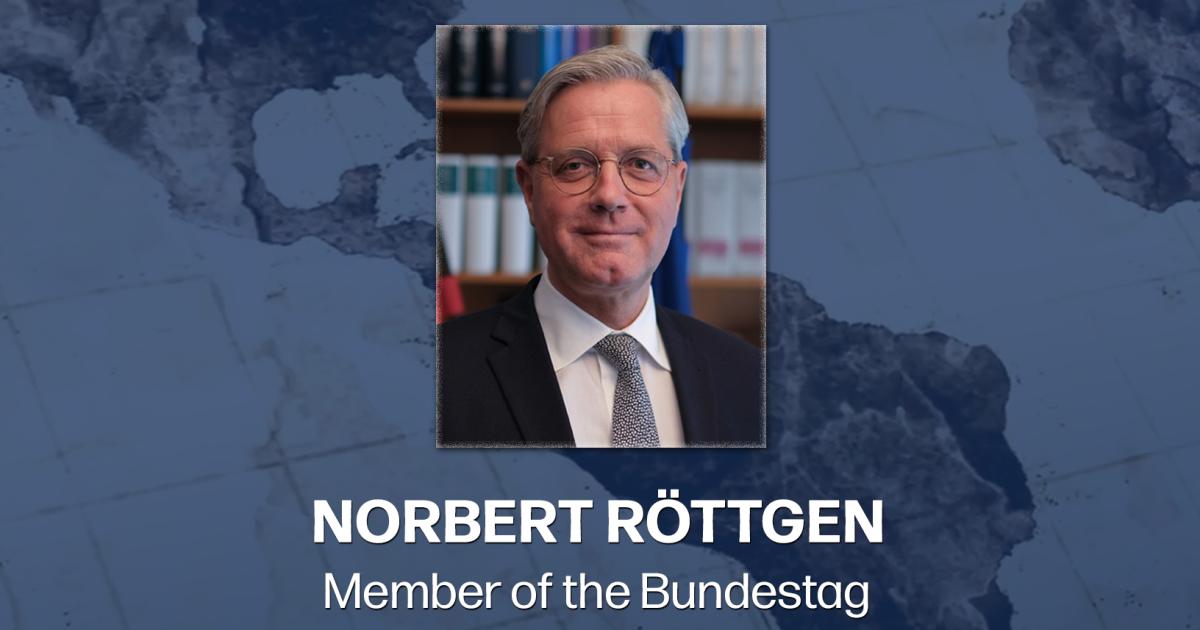
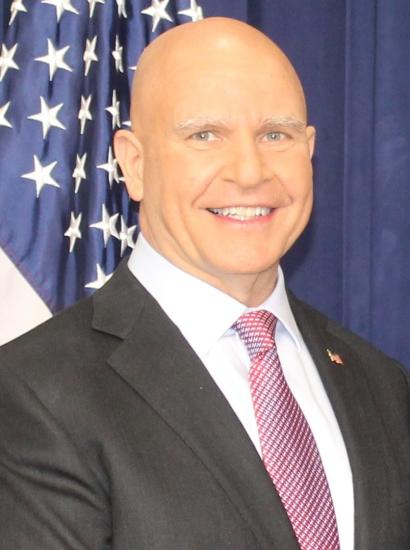
Join Norbert Röttgen, deputy chairman of the Christian Democratic Union of Germany (CDU) and Christian Social Union in Bavaria (CSU) Parliamentary Group in the German Bundestag, and Hoover senior fellow, H.R. McMaster, as they discuss US-German relations; Germany’s defense, economic, and foreign policy priorities; strains in transatlantic relations; and the future of NATO and the European Union.
The conversation examines Germany’s evolving approach to security and defense in the wake of Russia’s invasion of Ukraine, the changing balance of responsibilities within NATO, and the challenges posed by Russia, China, and Iran. Röttgen and McMaster also discuss economic competitiveness, energy security, transatlantic cooperation, democratic resilience, and the political and social forces reshaping Western democracies, as well as the future of the US-German partnership amid a changing international order.
Recorded on May 20, 2026.
- War is happening, the battlefield is Ukraine. But if war were to succeed, we would have a different, fundamentally different Europe, Germany would not be the same, and war would come closer also to us. This is today's battlegrounds. Our discussions with leaders from around the world consider how history produced the present, and how we can work together to overcome obstacles, to progress, seize opportunities, and build a better tomorrow. On this episode of Today's Battlegrounds, our focus is on Germany. Our guest is Norbert Rutkin, deputy chairman of the Christian Democratic Union of Germany, CDU, and Christian Social Union in Bavaria, CSU Parliamentary Group. In the German Bundestag, Dr. Rakin oversees foreign affairs, defense, European security and human rights. He has served in the Bundestag since 1994 and chaired its foreign affairs committee from 2014 to 2021. From 2009 to 2012, he served as Federal Minister for the Environment, nature Conservation and nuclear safety. A lawyer with a doctorate from the University of Bon. He is co-chair of the European Council on Foreign Relations and serves on the boards of institutions focused on European transatlantic and global affairs. Germany emerged from the Second World War, devastated, occupied, and partitioned. The United States rebuilt West Germany through the Marshall Plan and integrated it into NATO to contain Soviet expansion. East Germany became a frontline state under communist rule backed by Moscow, where a police state stifled freedom and a command economy delivered shortages and stagnation as East Germany founded and became isolated from nations. Other than those in the Soviet dominated Warsaw Pact, west Germany built one of the world's leading industrial economies and helped construct the European Union. The fall of the Berlin Wall and parting of the Iron Curtain in 1989 brought the German people back together. Germany reunified in 1990 as a democratic state at the heart of Europe. Since reunification, Germany has grown into Europe's largest economy and one of the United States closest allies in NATO and the European Union. Alongside those western commitments, Berlin championed economic engagement with Russia and China under a doctrine called vandal shandal, or changed through trade. German leaders believed commerce would moderate Moscow's and beijing's hostile behavior over time. Instead, Moscow and Beijing turned economic interdependence into weapons for rather than an impetus for change. Germany grew dependent on Russian natural gas and Chinese commerce. Even as Russia seized Crimea, while China militarized the South China Sea and threatened Taiwan, Russia's full scale invasion of Ukraine in 2022, made the failure of the Reproachment policy. Unmistakable Chancellor Olaf Schultz declared a venda or historic turning point, committing 100 billion euros to rebuild the German armed forces. In 2025, Schultz's Coalition gave way to Germany's current CDU led government under Chancellor of Friedrich Mertz, who inherited bureaucratic inertia and unresolved questions about military readiness, industrial competitiveness, energy security, migration, and Europe's response to deepening cooperation among an access of aggressors, including Russia, China, Iran, and North Korea. In April, 2026, Berlin issued Germany's first standalone military strategy since the second World War for Europa or responsibility for Europe. The strategy names Russia as the principal threat and commits Germany to lead Europe's defense by building the continent's largest army by 2039. We welcome Dr. Rakin to discuss US German relations, Germany's defense, economic and foreign policy priorities, strains in the transatlantic relations, and the future of NATO and the European Union, Dr. Norbert Kin. Welcome to Battlegrounds. It is so wonderful to have you. Thank you have for spending your time. Thank you for making your time. I mean, I know you're extremely busy with many, many things, but I think we, maybe we can talk about history first before we talk about the present and to use, you know, the, the subtitle of your book, the, the global crises that, that we co that we're coping with. So I you, you've been a big champion of German US relations over many, many years. And during the Cold War period and the post Cold War period, could you maybe just share with our viewers your view of, of why that relationship is important and how it's been important to the, to advancing security and prosperity of both of our countries? It has been fundamental for the entire post-war history of my country. So after the catastrophe of the second World War, after the, after the failure of the first democracy in Germany, the so-called Weimar Republic, Right? We have now seen the, the first successful democracy in Germany. We have, we have become prosperous, we have a liberal social oriented economy. We have had peace since the end of the World War. All this, so the, the democracy, the rule of law, prosperity, a liberal economy, peace, freedom, unification. It would not have happened without America, without the United States of America. Their wisdom, their long-term orientation, the the state craft of America, the support, the commitment to, to security of Germany. And so this has been fundamental for post-war Germany, for my nation, for my country. And I'm totally convinced it's not a matter of the past. It remains true for the present and for the future. Because we are seeing now the end of this historic period, the post-war period, it has come to an end. A new international order has not yet emerged. We are in a very dangerous in-between time. And now we are in a struggle with aggressive actors who do not believe in our values, and they want to have a bigger state in the new international order. And the defense of freedom and peace is as paramount as it was in the past. And so this relationship, this partnership, this alliance matters and will matter for the future as well. Dr. Ruan, you know, you, you, you, that's a, a I think a wonderful summary of the history we've been through for the last 85 years. I mean, yeah, absolutely. Our previous generations of German leaders, American leaders, recognized the lessons of the, the two most destructive wars in history, world War I, war, war ii, and we're determined not to allow that again. And that was the foundation, I think, of our relationship. I shared with you that, that our old cavalry troop, my, our troop, my troop, Eagle troop of the second United States cavalry was patrolling the border near Coburg Germany, west Germany when, when East Germany lifted travel restrictions to the West. And we went from one moment staring down East German nagars to the next moment seeing tens, hundreds, thousands, tens of thousands people coming across Yes. With bouquets of flowers and bottles of wine. And there were hugs and tears of jewelry. Yeah, it was fantastic. What a moment. Yeah. And that ushered in I think, a period of optimism. I think we could, would both agree based on your recent book Yeah. Appeared of be Overoptimism. Could you maybe share a little bit more about how you've seen the Post Cold War order evolve? What assumptions we may have made or some people may have made after the, the end of the Cold War and, and the fall of the Wall, which was right here as we sit next to Brandenburg Gate and what, what we got wrong about the post Cold War world. I would say the, the Post Cold War period stunted, of course with a great victory. So our values and our political systems have won because the people who were in the east, in the east of Germany, in the east of Europe, who were not allowed to live in peace and freedom, they did not longer accept to be deprived of a democracy of the right of self-determination and to cross borders and meet friends and, and, and express their voices and their opinions. So it started really with a failure of communism, of authoritarianism, of dictatorship. And we got reunified in peace and in freedom. And this was a great, great achievement. And I would say after that, the early nineties and further, there was a period of optimism and everybody thought, now we have achieved, we have learned the lessons from two catastrophic world wars. We have achieved a European peace order. And I admit, I was among those members of parliament of the German Bundestag in 2001 when Vladimir Putin then already president of Russia After, after year's day on, two in Yes. 2000. Yes. And Ga gave, gave his speech and offered that we built together a European house with Russia being a member of this European community. So we thought really in the sense of the great German philosopher, Emmanuel Kant. Sure. We had achieved eternal peace, but perpetual, We were treaty man as an ends. Yeah. A absolutely. Yeah. Absolutely. Yes. We, and the, the saying then was we, in Germany, we are encircled of France, so we really discharged and disregard to some degree the military capacity, the military itself, the bundes, because we thought it's, it's, it's over. And we, we became quite pacifist after this period. And this perhaps made, now, now, I wouldn't say it made us blind, but it was so comfortable. It was so comfortable that, and, and as a consequence of that, over time, we did not, we were not ready. The majority and the leading governments were not ready to realize that things have changed. The latest point in after this glorious optimistic time after 1990 was in 2014, the latest point when Russia under Putin annex premier, this was, and because Ukraine had decided to go west, it was not the expansion of the West. Right. But it was the, it was A sovereign decision. It was the aspiration of the Ukrainian people to get rid of dictatorship, of a corrupt leadership. Right. And becoming a part of u of the European Democratic family. And this was, and could not be accepted by Putin because he knew very well if Ukraine, this powerful, large, great neighbor of Russia were to go, were to become European, it would become a success story as Poland, like Poland, like the Baltic countries and all the others. And then only Russia under a remaining authoritarian regime were clear that it would not prosper, that it would not grant democratic rights to their citizens. And this was a turning point when Russia left the autumn, the peace order and became aggressive, violent, illegal and imperialistic over time. And there was a rejection of reality, including the German government. There was outcry and we imposed sanctions. But after one year, only also the German government and German business came back to business as usual. Right. We were not realistic about what had happened, but we stuck. We governments, not all of them, I have been a, a, a vocal critic critique of this, of, of this policy and others, I was not alone, of course. And, and they, they, they did not face, they, they, the changes with sufficient realism, but stuck to the comfortable world where we did not need to defend ourselves. And so we really missed a, a lot of time to react and to build up our defenses in and our, our deterrence in order to avoid a violent escalation, basically to avoid war. War was not within the imagination of politicians at that time. So an underestimation of the new reality In your book democracy and war, you, you are very critical about the failure to, to wake up to, to the, to the new reality and to reject kind of some of these assumptions about the post Cold War period that in, in our history, it guaranteed the privacy of our free and open societies over closed authoritarian systems. A great power rivalry was a relic of the past. Yeah. And that our technological prowess, our economic prosperity, we guarantee our security wall into the future. And of course, latter of Putin from the very beginning, I I would argue, gave us some evidence that that was not gonna be the case. You mentioned many of these instances, including the 24 14 illegal annexation of Crimea, the first invasion of Ukraine, but a poisoning a, a presidential candidate in Ukraine, 2003, you know, the Yeah. The Mdic speech he gave in 20 2007 with the denial service attacks on Estonia. Yeah, yeah. The inva the the invasion of Georgia. Yeah. Right. 2008. Absolutely. But I think all this were complacent in, in this period of time, not recognizing these shifts. And would you share maybe a little bit more of your view about the reluctance to, to act on it, even in your book, your, your critical chancellor Schultz for, you know, he, to his credit, he, he declared a Zain vendor had a change in, in the nature of the environment, but, but didn't really act aggressively to, you know, to, to rebuild German defense, for example, and and to restore deterrence of, of, you know, of a, of a, of a Russian regime utter Putin that was increasingly aggressive. Yeah. So I, I would separate two periods of time, the period from before the start of Russia's war against Ukraine in February, 2022 to The invasion and bad resay. And, And then the period after that, the so-called site vendor in Germany. So in the run up to this escalation to the war, it was, as you mentioned, it was complacency. I would say it was a lack of leadership because it was a lack of readiness to talk. What, what you could see what was going on. So the increasing aggression by Vladimir Putin, his more and more imperialistic rhetoric, and that he would not allow Ukraine to become a sovereign free democratic country. This was ample evidence for a new policy. And Putin was quite clear about it. He didn't announce I'm going to war, but his, his actions, his speeches, they were quite clear, he was quite clear about his new policy, and there was a complacency. We stick to what has been so comfortable, Right. Using cheap Russian gas. The German industry likes it a lot. Also, of course, consumers like it a lot because it, it supplied us with cheap energy. But we, we, we did not, we, there was another price, not only the euros we had to pay, but we paid by increasing dependency, Right? And we, we, we paid by not building up our defense forces in as a security force to avoid war. So, and then it happened, and I recall the, the Munich security Conference only a few days before the, the, the, the war started. And I recall United States officials not talking to our officials, also talking to me. And it was quite clear to me, they had real evidence that it was a, a matter of a days or weeks Right When Putin would go to war, and they earned disbelief in what, in the, to the evidence they were, were giving to the German officials. So this was really a major political failure in leadership and responsibility for peace and freedom, I have to say, after the war broke out, after Putin went to war, the first thing I really want to convey is there has, there has been a, a paradigm shift in Germany, including our citizens, the population, how we see today, military security, defense capabilities, readiness to defend has fundamentally changed. Now we see this is, has to be an integral element of our foreign policy in order to deter war, in order to defend our security. And we have now a buildup in our defense spending that is really impressive. So before the war, we were, were about at 50 billion annual German defense budget. We are now in 26 and have a defense budget of 108 billion euros. And we have a financial budget planning that goes to 150 and 170 billion euros defense spending annually. And it is accepted. Yes, It is accepted. And because the majority of the German people see that peace is a danger, that not peace is in danger. That war is happening, the battlefield is Ukraine. But if war were to succeed, we would have a different, fundamentally different Europe, Germany would not be the same and war would come closer also to us. What we are seeing is, and what we have is a really a, a, a real paradigm shift how we see security defense. And we have understood it, and we have understood the lesson, which we were forced to understood that it's also a different America. So Europe understands there will be no other country beyond Europe that is, that will, that will defend Europe if the Europeans are not ready to contribute to that. So it's our responsibility and we know it, we have understood it. We are working for that. Well, I want to go to the, to the US German relationship, but before I do, I'd like to just talk a bit more about the continuing threat from not only Russia, but also maybe what we might call an axis of aggressors that includes China as maybe the, the senior partner as we're meeting Vladimir Putin is meeting Xi Jinping for I think the 25th time. And they're declaring they're aduring love for one another. And of course, right before the mass of invasion of Ukraine, they declared a, a new era and international relations. And the message was to, to us, you know, to to to, to German leaders, US leaders or citizens. Hey, we're in charge now. You're finished. Yeah. Get used to it. A lot of this was based on, I think on the belief of their, of, of that we were weak or weak, decadent and divided, I think is the way that they, they see us. But Russia has been increasingly aggressive, obviously with the continuing onslaught against Ukraine, but in a broader, what we might call a shadow war, I guess, against Europe. I mean, cutting undersea cables, I mean an assassination contract on the head of your largest defense s firm blowing up warehouses, bombs on DHL aircraft, and now these drone incursions. And so could you maybe share with our viewers your assessment of what Russia is trying to achieve with the shadow war, which I would say includes cognitive warfare Yeah. As well. Yeah. And in your book you talk about like the rise of identity politics and how destructive that is, but could you maybe share, you know, your assessment of this broader shadow war? Yeah, yeah. And, and, and Yes. And your concern. So we have to be realistic. Russia is waging, already waging two wars in Europe, the one, the traditional warfare against Ukraine and the so-called hybrid war against the rest of Europe. And I would say particularly against Germany and other countries. The Baltic countries are a target of, of Russia's hybrid warfare. They have clear goals to try to destabilize our democratic systems to, to weaken the confidence and trust of our citizens into the working and functioning of the democratic state and governments. So by attacking the infrastructure, they want to create a, a sentiment of insecurity. The western countries are not longer in control about their countries. So for example, in in that respect, also migration is weaponized by Russia, by, by bringing in illegal migrants in order to try to demonstrate that the, the, these western weak states are not able to control their borders, right? They are manipulating, trying to manipulate the public democratic discourse by spreading lies and disinformation in order to undermine the credibility and reliability o of, of the public debate, which is essential to a democracy. And they are doing this on a daily basis. One consequence of the, of the, the German, of the German parliament and and German policy will be that we will pass in this year, in a few months time, a new bill that will constitute a much more effective foreign intelligence service in a way we have not seen since this service was founded. And this is also an expression that we have understood that on all levels and layers, we have to be defensive, have to sharpen our instruments, have to prop up the instrument, and in order to be, to be resilient and defensive against all the threats and attacks we are receiving. Yeah. And I think one of Putin's dreams is to break apart nato Yeah. To run the transatlantic relationship. And he uses this disinformation campaign, this campaign to polarize as an issue itself. Yeah. Because this is where you see some US leaders, the, the vice president when he came to speak at Munich, saying that the, this is a freedom of speech issue, trying to combat disinformation and propaganda. And of course, Putin poses as kind of the shirtless anti woke warrior on horseback. Yeah. You know, and, and, and as a champion of, yeah. You know, western, you know, traditional Values. Traditional values. So what can you tell our viewers about, about this? You know, first of all, how to balance, you know, freedom of speech with these, these, these genuine legitimate concerns about sustained campaign at disinformation and propaganda in an effort to, to crush confidence in institutions and processes. And, and then also, you know, how, what is the, the counter argument, you know, to to, to this Putin's, you know, Potemkin sort of portrayal of himself as a, as a savior of western civilization? Okay, so, so the latter, I would say is really not something that is really a, a serious threat to us. I would say in Germany, there is a, an overwhelming majority that has a, a completely full realistic idea about who Vladimir Putin is. So there is not any doubt among the vast majority, he is an aggressor. He's a war mongerer, he's a, a, a political figure who attacks any kind of traditional value, the dignity of people. So I would say there is a clear under understanding of who he is and what is, what his intentions are. However, of course, in the digital world, with the new possibility of artificial intelligence, we are facing a real challenge in our democracies that the undermining of truth. Yeah. And credibility is a serious problem because on the face of it, it's hard to discern is this a lie or is it reality? And the truth, it seems to be the same outwardly, but of course the one is the truth. The other is the lie. And of course, the authoritarian adversaries of the idea of democracy and freedom, and of states run by these ideas, they are attacking us also by using these new instruments of artificial intelligence and by undermining the integrity of our public communication. And this on the means that on the one side, it's absolutely clear freedom is what our societies and states are built upon. So freedom of speech is absolutely inte integral, and we can have the self-confidence not to be lectured by authoritarian dictators about the value of freedom of speech, and by not anybody else. So we are granting it, it is in our constitution, and it is in our, in our, it is a, it's, it's our foundation of a democracy and a society. And on the other side, we know that there are also the enemies from within that are this try to destroy and to attack the foundations of a free society. Because there are preconditions of freedom that cannot be granted by the state, but it has to be granted and supplied by citizens. And for that we have to do what a democratic state can do to pre, to, to, to protect the integrity of the functioning of our free societies and democratic systems. And those who actively violently attack and want to destroy the, the, the democratic and freedom principles and the rule of law in our societies, they will be persecuted because we do not allow the destruction and the threats to our democracy from inside as we don't do it from outside. Well, here, this is, this was an area of tension has been with the, the us you know, German relationship. But really the, the, the tensions in the relationship grew against the backdrop of what you already described, right? This, this failure to recognize the changing threat environment, Germany pursuing policies that that, that were associated with economizing on defense, prioritizing cheap energy, you know, from Russia. And, and, and of course this predates President Trump. I mean, I remember Secretary Bob Gates, you know, when he gave a speech of Munich right before he was leaving the Obama administration, he had served the Bush and Obama administration say, Hey, you've gotta spend more on defense, you know? Yeah. And Abso and of course, president Trump brought that to the next level in, in terms of being direct about that. Yeah. In his meetings with Chancellor Merkel, who used to say, Angela Angelo, you know, if, if you care about NATOs so much, why aren't you paying your dues? That's how we think about it. Yeah. You know, he was right with that. He was right with That. He was right with that. We did not be promised 2% in Wales and did not, did not live up to it. And it, it was really a lack of responsibility. And so, and, and if Obama made the, the claim and you, you have to do more. And we were really hesitant. We were reluctant, we were resistant. And now we have to do a race against time. Sure. Yeah. So this is where it ended. We have understood it, but belatedly, we are late because of too little leadership of our government. You know, George Marshall said before World War ii, he said, when you have the time, you don't have the money, and when you have the money, you don't have the time yet. You know, and, and so we are at a race, and I, what I'm hoping is that, you know, the President Trump and those around him will declare victory, you know, because as you mentioned, you just came out with the first really military strategy. If you, I'd like to maybe share a little bit about that and the big ideas in that military strategy. But as you mentioned, you're ramping up very rapidly to, by 2029, you'll be spending 3.5% GDP on hard defense, but also even more on critical infrastructure. So can you maybe talk more about, you know, to President Trump, maybe about how he should take credit, you know, for this and, and recognize that the biggest issue that he's had for many years Yeah. A burden sharing I is being addressed in a very aggressive way at this point. Yes, that's, that's right. So I have to say, I'm, I am a regular visitor to Washington, and particularly talking to congress and Congress members, of course with my colleagues. And it's just a week ago that I was in Washington. And I have to say it's generally appreciated. It's seen what Germany is doing. Unfortunately, I have to say, it's also seen what others don't do, even in the sight of Russia's, Russia's aggression and, and, and war and their intentions beyond Ukraine. So it's seen, and I would, I would even say President Trump could claim, could claim that, that his, his, his, his portion in, in this change, and that he really, by being very insistent, to put it mildly and diplomatically, is, is one major reason for why and how Germany changed to the better. And it should be seen because of course we have to, we have to make the case to our voters. It's such an amount of money we are discussing cuts to the welfare system in Germany. On the one side, we have to do it, we have to, to better match our economic potential with the size of the welfare state. On the one side, this is a debate. And the other debate is that we will see, and I have decided to have rapidly, significantly increasing a defense budget. We are doing that because we know it's security is the number one piece, is the first priority and imperative of a state. Because if you don't have peace, even your welfare state will not feed citizens. And I would say it speaks about the maturity of the, of the German people and the majority of citizens, that they fully accept this principle. And we would wish that it would also be appreciated and seen in the White House because it is a major contribution. And it is not only rhetoric and word, but it's our deeds and action that we know now and act adequately that we contribute to the alliance, to the military capability of the alliance. That by, that, by also European contribution, will be able and empowered to uphold peace and bring back peace in Europe. Nor this is, I think, immensely important to build up the, the physical strength of the alliance. What I've been concerned about is, is the emotional, the strength of the alliance, the, the, the, the importance of trust in, in across the alliance. And, and all that's been placed under great strain. I think by, I think unfortunate Ill-advised comments by President Trump that we're seeing as, as deeply insulting in particular, you know, Americans who are used to President Trump talking out loud, you know, the, the, the threat to invade Greenland, they think might be, you know, trite, you know, threat or comment. But it, it really landed hard in, in Europe as, as well as some of the insults about, about, about nato, you know, not, not being there for us. When of course as our, and our viewers will know this, that the only time NATO invoked Article five an attack was attack on all, was after the mass murder attacks of, of September 11th, 2001 to come to the aid of the United States. And of course I fought a little longside German soldiers in Afghanistan. And the communists about Denmark I think were particularly stinging to the Danes who had, who had suffered more casuals per capita than another NATO nation. So now there's a lot of tension about the, the Iran war, you know, and, and ISTs that the chancellor made about, about it. And now response by President Trump, which seems to be withholding maybe some long race precision strike capabilities as well as withdrawing troops from, from southern Germany. My old regiment, actually the second cavalry. Could you maybe give us your assessment of, of, of us German relations at this point and what your prognosis is for the future? Let me start by giving my view on this by making one separation of, of levels or layers. I would say there's the one layer and level of public rhetoric and communication, which is very much unfortunately the way you described. And it comes at a cost, a cost of trust, of respect of strength even. But there's also a second layer, and this is the ongoing and the continuity of normality. We have in our, in our relationship, I would say for example, nato, na, NATO is functioning as well as it has done in the past. We have a little bit less than 40,000 American troops in Germany, round about 80,000 troops in Europe. So we are closely interlinked. We have strong economic relationships, companies that are working as well in, in America and in Germany. And so the cultural links, friendship groups in, in all of all sorts. So there is a normality that is ongoing. However, we have also the, the public communication that from time to time is not only critical, but it has an element of hostility, which is something we deeply delore, I would say a, a a, a majority of our country. And the fellow citizens deeply delo that because we want and need a and, and we wish to see this friendship and partnership. Sure. The emotional element included to, to be continued. So this is one element on the one side, there are also on this, on the rhetoric side, the announcements, and then comes the implementation. So I always say we have the announcement of immediate new and higher tariffs on cars. These have been delayed, and I think we can sort it out. We have the troop withdrawal announcement of 5,000 troops. I would say I have not seen a plan so far, so let's wait and see the cancellation of the deployment of the tomahawk missiles or Christmas hides. Yeah. Yes. If that were to happen, it would create a hole in our deterrence against Russian threats. They have the missiles stationed, deploy, deployed in, in, in, in, in kaing grad, and they can reach any European capital. And so we need to be our, our in to, for our deterrence to be credible, we need to have an equivalent. And the tomahawks were, was this weather response. So let's wait and see whether in a one, one or two months time, we can have an agreement on that. I don't know that the Iran war, I have been a, I am I'm known in Germany as a, as a Iran hawk. Right, right. As I'm known as a China hawk and As er, your chancellor has been too. Absolutely, yes. Yeah, absolutely. And we, we, we are on the same side in, in all these questions. And so it's not only the suppression, the brutality against the, the, the, the, the more than 90 million Iranians by this horrible regime for decades now Murdering 40,000 people in January, you know, a 48 hour period. So there would have not been seven October seven without Iran. Ama would not be exact. So the, the, the entire terror organization within the regime. So this is a regime, Scores of assassinations in Europe, India, the assassinations in Europe, and they, they supply Russia in its war of attrition against Ukraine with Jones and weapons and technology. So they are really active supporters of war and terror in the region and beyond, including Europe. So the destabilization of this regime is, is a legitimate goal, both in moral and political terms. The decision to go to war, of course depends on the knowledge of the facts. Is it, is it really, are the consequences probably weight against each other? Where are the risks? Is it a, is it a sensible rational strategy? I would say what, and I would not dismiss this as an option really to go to war against Iran. I don't have the necessary informational base for that, but I would not beforehand dismiss this as, as an option. What unfortunately one has to say is that obviously the dimension of an economic war by the Iranian regime was underestimated, which is hard to understand because you know much better than I do. But I, I even know a little bit about it, that the straight of hamos has been a subject of strategic debate over, over years, perhaps debate. We Do an annual exercise To so, So, So that, that America seemed to be not prepared, that Iran and the Iranian regime, of course would attack the neighbors, but then would very quickly switch to the economic and energy war by closing the strai. Now, I would say with a delay of several weeks, the American administration has now decided upon a strategy, they have a strategy with, which is the blockade for this blockade. They need time, which is the problem with it, right. However, I think now having started the war, there is no option to lose the war. And what I want to underline is that the, this war goal that the nuclear, that the Iranian regime must not get into, possess possession of a nuclear bomb, and that the strait has to be open. These two goals are fully shared by the German government and by European governments. Because we can't accept, as the Arabian neighbors of Iran can never accept 20% of the world economy in the hands of this regime and the permanent threat, we can close the straight and put really a burden and a constraint on, on the international economy. So we are now aligned in the goals of this war, and we should fully and and publicly express this also as a German government. Well, Norbert, this is a great bridge into talking about the future of US German relations. What we've been talking about, I think is largely a common agenda between the United States and Germany. I was talking about the importance of, you know, of restoring deterrence, of restoring peace. We, we've been talking about energy security, for example, the need to invigorate our industrial base, our defense industrial base. I know that one of your priorities is to, to reduce China's ability to coerce our nations, you know, through economic warfare and so forth there. And so, you know, i I just take, there's just such a natural alignment. Of course, Putin's hoping to break us apart. Yeah. I mean, what he really wants, I think is a, is is terms for a cease bar in Ukraine that are unacceptable to Ukraine and to Europe as a way to drive a wedgie even further. I can't let that happen. But what was your agenda be? I mean, I look at Trump, president Trump's agenda, it looks like the Draghi report to me in terms of, you know, what, what Europe needs to do to, to compete effectively. And so would you maybe share your vision for the future of, of us German re relations? Yes, I would like, I love to do so, but, and, and perhaps I would, I would say what, what are the German priorities? German European priorities we would put into Yeah, the working of this relationship, right. To perfect. Give it a future. I would say the first priority of Germany and German foreign policy is, is that Europe has to become the guer of peace and security in Europe. So we have to assume this responsibility with the backup of America. But there has to be a division of labor and conventional defense of Europe and conventional and, and the, and Europe and European security has to become a European responsibility. This is the overwhelming goal we have to achieve. And this means that we have to do everything that Putin's war against Ukraine must become a failure. So this is number one. If we were not to succeed on that, I would not be positive and optimistic on the future of nato. So this is priority number one. Priority number two is we have to, I don't know, retain or perhaps even more regain our ability and capability to pursue a policy that serves our own interests to assert ourselves. And for Germany, this means, and for Europe, we have, we have accepted too much of economic dependency from China, and we would see such a retaliation power against Germany, Right? If China were to fundamentally disagree with the political decision we are making, and we have some experience already in that, right? That our ability to decide in a sovereign way and pursue our own interest is in jeopardy. And we have to restore that and we have to restore it together with America. I wish to have a transatlantic China strategy Yes. Because It's about our common interests and values, Right. And the third and last I would say priority is for, from our perspective, preserve the west. Yeah. I still believe in the concept of the west, not as a geography, Right, But as a normative concept, the dignity of man freedom Liberally So, so preserve the wa the the west is not outdated. The west is absolutely indispensable for the security and freedom also in the future. Okay. So we're almost, we're almost outta time, but I do, I do want to talk to you about German politics. You, in the subtitle of your book, you talk about the danger of identity politics. Yeah. We've just seen for the first time the, the alliance for dorsal a FD ex ex have the highest polling numbers in, in the, in the country. You have some, some state elections coming up that, that could, you know, put people from that party in. You have parties on the far left as well. We could also, yeah. Could you maybe explain to our viewers how they should understand international viewers, how they should understand kind of the evolution of, of German politics these days? What you're concerned about, what you're not concerned about, how you see, you know, the, the strength of, of your democracy here in Germany. Yeah, I, my analysis is yes, that this is also now a German phenomenon, what you are describing, it's true the a FD is rising, traditional parties are shrinking one traditional party. The liberals has not made it to jump over the threshold last time to be even a part of parliament. Yeah. The liberals, I would say, to understand this phenomenon is to see that it is unfortunately shared and the common problem of any western democracy, of course the, the phenomena might be different, Right? I could you to history In America, you have people sorting themselves out of the two established parties and to the independent category, right? So yes, but this dynamic is present In United States and, and to say, is it, so you have, we have different political systems in the, in, in the parliament, in the systems with the, as in Germany, you, you have the fragmentation of the landscape. Yeah. And so the new parties entering parliament, and this is also the case in other countries, in, in, in the, in the, in the countries where you have the first pass, the post system as in America and also in, in Britain for example, you see, you can also see the radicalization of traditional parties. So I dare to say that the Republican party of today under Donald Trump is a different Republican party than we have seen under the Bushes, or even under Ronald Reagan. So Reagan Republicans, they are not the, they are not in command of shaping foreign policy today in the Republican party. So what, so what do we have in common that our political landscapes have got gotten so much under pressure and are, are, are different and are under pressure and are take on a different shape? I would say these, there are two things, and one is that we are seeing and experiencing so many such multiplicity of fundamental changes in technology, in democracy. The geopolitics that affect the individual, the lives of individual people, of individual persons. They feel insecure. They feel let down. They, they, they, they are not confident that their lives are on a solid basis. Lives have become more expansive. We have globalization. We, we have the transfer of traditional industries to, to Asia, to China and other Asian countries. So workers to former tradit, industrial areas are now poor areas where people, where, where, where people have lost their jobs. So there's so much revolutionary change in so different ways that, that in, that makes people feel in jeopardy, let alone and let down left behind that. Left behind. Yeah. And they, they perceive more and more the, the traditional establishment as an, as a self-serving elite. Right? And the truth is, we are not a self-serving elite, but the traditional parties don't respond adequately, sufficiently to the challenges that we are facing. So this is a truth and reality. We have not been prepared. We are too slow and we are not up to the new level of quality of challenges. And so it's quite natural that people say, you are not sufficient for me. You are not solving my problems. And these problems exist, and our deficiencies and our shortcomings and the political traditional systems, they are real. And this, this creates the opportunity for the populists who say, who don't have any solution to only one problem. But they, they of course offer the simple solution. And we have some history in Germany with this simple solution. They have regularly the scapegoats, the foreigners, the aliens, the immigrants, these are the scapegoats. And then there is only, there is a simple solution to everything may be the strongman, the leader, not the democratic processes that are so slow and so on. And so we have the, the populist offer to people who feel insecure, insecure and let down. And this gives rise to these parties or this causes the change of character of traditional parties like the Republican party in America. And so our democracies under pressure, and my conclusion is that Democrats in the respective countries have to see what is at stake. It's really our democracy that is attacked from outside and coincidentally, and at the same time from inside. Yes. And we have to, yes, we ha we have to, to really face the seriousness of the challenge, have to focus on proposals to solve and contribute to the resolution of daily life problem of ordinary people. And this is by which we get measured by voters. Are you able to, to contribute to the betterment of my life, to security, to prosperity and the problem solving capacity. This is what we have to increase. Otherwise we will see new parties, of which I highly doubt that they are really acting for the betterment of the people, but much more for gaining power for themselves. So it's a serious, a serious situation. We the Democrats and the Western democracies are in. Right. And I'll tell you, I'm, despite all that, I'm still confident because we do have a say in how we're governed, right? And we have leaders like you who are gonna do their best reform and strengthen institutions and deliver for the people. This has been a fantastic session. Okay. We're both, we're both students of history. And so reading Democracy of War, it reminded me of, of the work of the late historian, Fritz Stern, you know, who was a Yeah. Historian of the, of the Weimar Republic and the, and the Weimar's Ball. He was really a, he was, he was An immigrant from country, an Immigrant from Germany to the United States. Yes. And his, the main theme through his work was cultural pessimism as a political danger. Right. You're an optimist. I think I'm an optimist. I think. Yeah. And we have to, but we have to take these dangers seriously. And, and I love this one quotation from Fritz Stern. He said, interest and sentiment should tell us that there is no escape from our friendship. And he was talking about the US German friendship. So That's a great line. So I I, I would like to thank you and give you the last word for, for our viewers. Thank you. I, I want to say a word of thanks to you for having me, for having this conversation. And I think this is really what is essential. It gives expression to our emotional attachment. We are friends and want to stay friends. We are tied, not primarily and only by interests, but by values. And this is why we have to stick together because we want so as human beings, as societies. And because we need to stick together because we are living in dangerous times. But if we stay together, we will prevail. Norbert Kin, thank you so much for being with us, viol and Don. Thank you. Battlegrounds is a production of the Hoover Institution where we generate and promote ideas advancing freedom. For more information about our work, to hear more of our podcasts or view our video content, please visit hoover.org.
Related
series_item_video
Can American-Russian Cooperation Be Renewed?
Essays
Indo-Pacific Maritime Security Cooperation
This essay explores Southeast Asian perspectives on Quad-driven maritime security cooperation in the Indo-Pacific. Through expert analyses from Indonesia, Singapore, and Vietnam, it evaluates regional perceptions of Quad initiatives based on three primary variables: initiative leadership, the character of the activity, and geographic location. It emphasizes the importance of balancing distinct national interests with Association of Southeast Asian Nations (ASEAN) alignment.
October 13, 2026