







- Middle East
- International Affairs
- US Foreign Policy
- US Defense
- Determining America's Role in the World
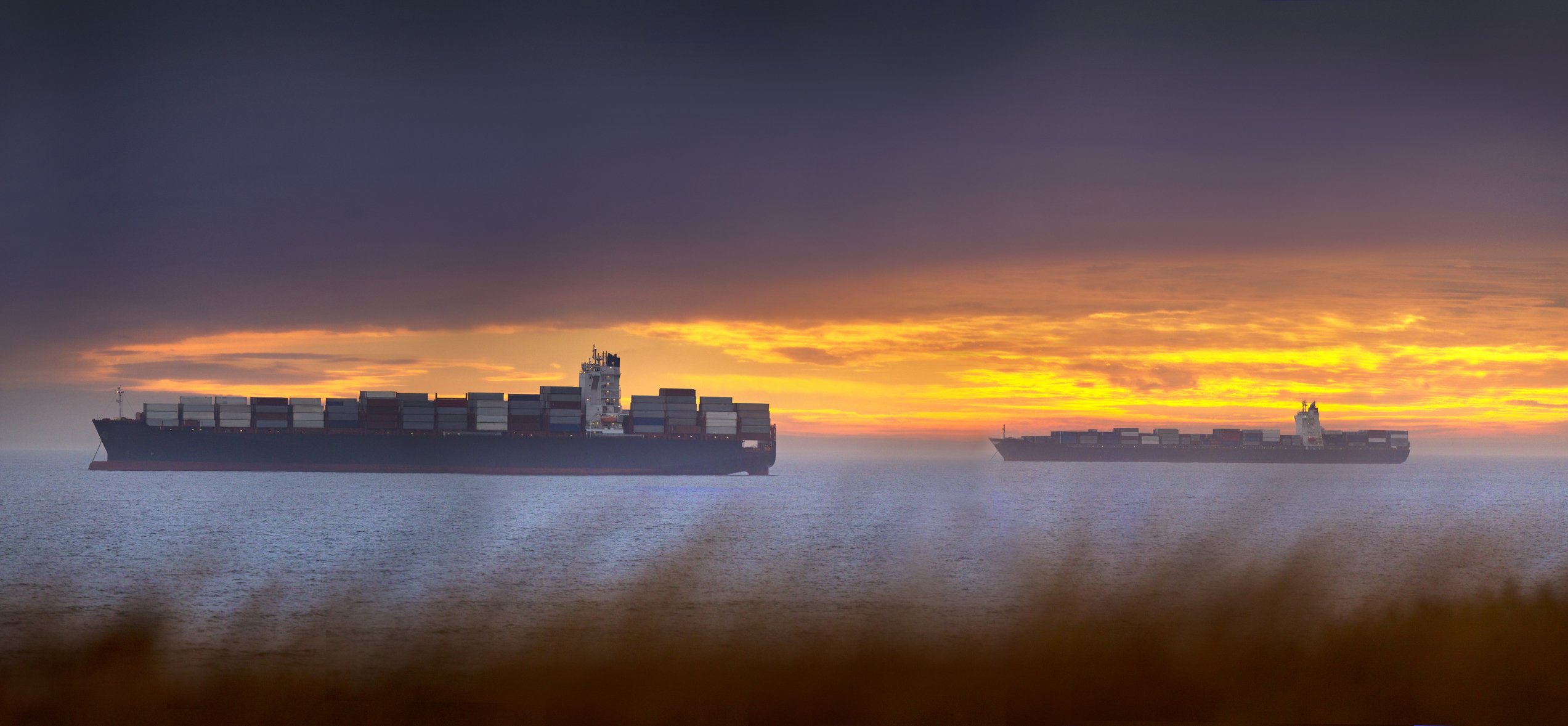
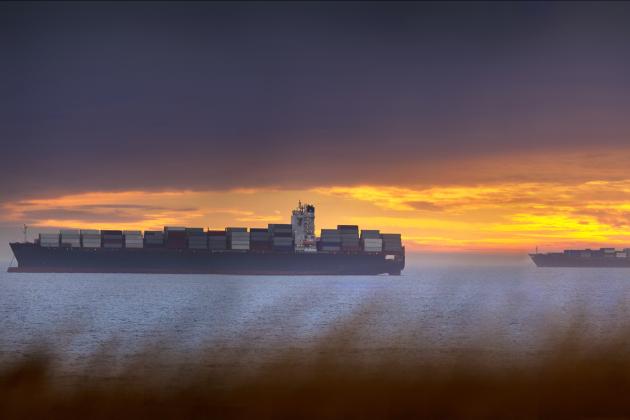
On a daily basis, commercial vessels move food, energy, raw materials, and manufactured goods across interconnected network of oceans / seas. The flows are regularly scheduled, contracted, insured, and executed in real time. When they function, global trade operates seamlessly. However, when they are disrupted, the impacts are immediate, measurable, newsworthy, and global in scale.
From an ocean carrier’s perspective, the Asia to Eastern Mediterranean corridor is best understood not as a map, but as a continuous waterway system, structured around a few critical chokepoints. These include the Strait of Hormuz, the Bab-el-Mandeb, the Suez Canal, and the Strait of Malacca each representing both a conduit of global trade and a point of risk.
The defining question for this emerging mega-area is therefore not simply which countries hold influence, but rather who ensures the uninterrupted movement of trade through these chokepoints, and under what conditions, as we have seen with recent events in the Strait of Hormuz and Bab-el-Mandeb.
A System Built on Precision with Vulnerability
Ocean shipping is a system built on interconnectivity. Container vessel networks are designed around fixed weekly schedules, port rotations, and tightly calibrated transit times. A vessel departing Asia bound for Europe is not simply moving cargo, it is part of a synchronized global system that connects factories, distribution centers, and end consumers across continents. The efficiency of this system depends heavily on the ability to transit key chokepoints without delay.
The Suez Canal serves as the central artery linking Asia and Europe. Under normal conditions, it reduces transit time by 10 to 15 days compared to routing around the Cape of Good Hope. For carriers, that difference translates directly into vessel utilization, available capacity/capability, fuel consumption, schedule integrity, and ultimately cost.
However, this efficiency comes with inherent vulnerability. The system is highly optimized, but not highly redundant. When access to Suez is constrained whether by physical blockage, as seen in 2021, or by security concerns in the Red Sea carriers must rapidly reconfigure networks. Rerouting vessels around southern Africa adds significant distance, increases fuel expense, and effectively removes capacity from the global system. The consequences cascade across nations and industries with higher freight rates, longer transit times, and disruption across supply chains.
From an operational standpoint, chokepoints are therefore not just geographic but they are system-critical nodes whose disruption forces immediate, large-scale adjustments.
Interdependence Across Regions
The Strait of Hormuz remains the primary gateway for global energy exports. The Bab-el-Mandeb connects those flows into the Red Sea. The Suez Canal then provides onward access to European markets. Meanwhile, the Strait of Malacca anchors the eastern end of the system, linking the Indian Ocean to East Asia.
One of the defining characteristics of this mega-area is that its chokepoints are not isolated, they are interdependent. A vessel transiting between Asia and Europe, for example, will pass through the Strait of Malacca, the Bab-el-Mandeb, the Suez Canal, and into the Mediterranean. Each segment is connected and disruption in one location reverberates across the entire chain.
For an ocean carrier, this creates a constant need to assess not just isolated risks identified by these specific chokepoints, but systemic risk across multiple regions simultaneously. Recent security developments in the Red Sea illustrate this clearly. Increased threat levels around the Bab-el-Mandeb have forced carriers to make decisions on whether to continue transiting Suez or to reroute vessels. These decisions are not taken lightly as they involve trade-offs among various factors, to include safety, cost, time, energy consumption and broader network stability. The result is a system where localized instability can have global consequences, not over months, but within days.
The Suez Canal
Within this network, the Suez Canal occupies a uniquely critical position. It is not only a chokepoint, it is a strategic compression point that underpins the economic logic of Asia–Europe trade. For container shipping the Suez Canal makes viable large-scale, high-frequency services linking major factories in Asia with distribution centers and end consumers in Europe. The predictability of transit through Suez allows carriers to maintain weekly schedules that support global supply chains.
When that predictability is lost, the interconnected network must adapt quickly. The decision to reroute around the Cape of Good Hope is not simply a matter of distance. It alters vessel deployment, disrupts port schedules, and creates imbalances in equipment availability. When containers arrive later than expected, inland logistics are affected and inventory planning becomes more complex.
The Expanding Scope of Maritime Trade
Energy remains central to the strategic importance of the mega-area. A significant share of global oil and Liquified Natural Gas exports originates in the Gulf and moves eastward toward Asian markets, while also supplying European demand via Suez. These flows are highly dependent on maritime routes and chokepoints. Any disruption in the Strait of Hormuz, Bab-el-Mandeb, or Suez has immediate implications for energy markets.
The global energy transition is introducing new categories of cargo that will further tie the system together. Liquified Natural Gas is expanding as a flexible energy source. Supply chains for critical “rare earth” minerals are essential for batteries and renewable technologies, and as a result are becoming increasingly important. Future fuels such as hydrogen and ammonia may create entirely new trade patterns.
For carriers, this means an expansion of the range of strategically significant cargo moving through these chokepoints. The system is not becoming less important - it is becoming more complex and more consequential.
The Role of Major Powers
Within this system, the roles of major powers are best understood through their relationship to maritime flows. The United States continues to serve as the primary guarantor of ‘freedom of navigation’ with its naval presence across the Gulf, the Red Sea, and the broader Asia-Pacific area. In this way, the U.S. provides a foundational layer of security that enables commercial shipping to operate.
As for India, its position at the center of the Indian Ocean has increased its importance in the global trade context as a regional stabilizer. Its geographic location places it along the main east-west trade routes, and its growing naval capabilities enhance its ability to influence maritime security dynamics.
At the same time, other actors are shaping the system in different ways. We have seen China’s investments in ports and logistics infrastructure extend across key nodes in the maritime network. The Gulf countries continue to emerge as critical logistics hubs, leveraging their position between Asia, Africa, and Europe. The Eastern Mediterranean is gaining importance as the western anchor of the Suez corridor. The result is not a simple balance of power, but a layered system of influence, where security, infrastructure, and commercial operations intersect.
Commercial Decision-Making as Strategic Signal
From the perspective of an ocean carrier, one of the most immediate indicators of system stress is commercial behavior. Shipping companies continuously assess risk based on security conditions, insurance premiums and other costs, as well as operational feasibility. When conditions deteriorate, carriers adjust routes, introduce surcharges, or suspend services. These decisions are often made before formal policy responses are visible.
For example, the choice to divert vessels away from the Bab-el-Mandeb / Suez Canal reflects a direct assessment of risk by operators. Such decisions have broader implications as they affect transit times, freight rates, and the availability of shipping capacity. The commercial shipping sector acts as a real-time signal of geopolitical conditions where changes in routing patterns or cost structures can provide early insight into emerging instability. Incorporating these signals into strategic planning could enhance the ability of policymakers to anticipate and respond to disruptions.
Toward a More Resilient System
The interconnected nature of the mega-area means that resilience cannot be achieved through isolated actions. It requires coordinated approaches across geopolitical, infrastructure, and commercial domains.
Several priorities stand out:
- Enhanced maritime domain awareness, enabling better visibility across key routes and faster response to emerging threats;
- Coordinated security efforts around chokepoints, particularly in high-risk areas;
- Stronger public-private collaboration, recognizing the role of commercial operators in identifying and responding to risk; and
- Investment in infrastructure resilience and redundancy, to reduce dependence on any single chokepoint.
These measures are not theoretical as they reflect practical requirements for maintaining the continuity of global trade.
Conclusion: Control is the New Measure of Power
The Asia–Eastern Mediterranean mega-area challenges traditional notions of power based on territory and borders. From the perspective of an ocean carrier, the defining feature of the region is the movement of goods across an interconnected maritime network. The ability to ensure that these flows remain uninterrupted is what ultimately determines stability and influence.
Chokepoints such as the Strait of Hormuz, Bab-el-Mandeb, Suez Canal, and Strait of Malacca are not just geographic features, they are the control points of the global economy. When they function, they enable efficiency, growth, and integration. When they are disrupted, the effects are immediate and far-reaching. The question, therefore, is not simply who controls territory within the region, but who can secure and sustain the flows that connect it within an increasingly interconnected world. This may prove to be the more decisive measure of power.
Torben Svenningsen is the Chief Commercial Officer of Maersk Line, Limited (MLL)

