series_item_video
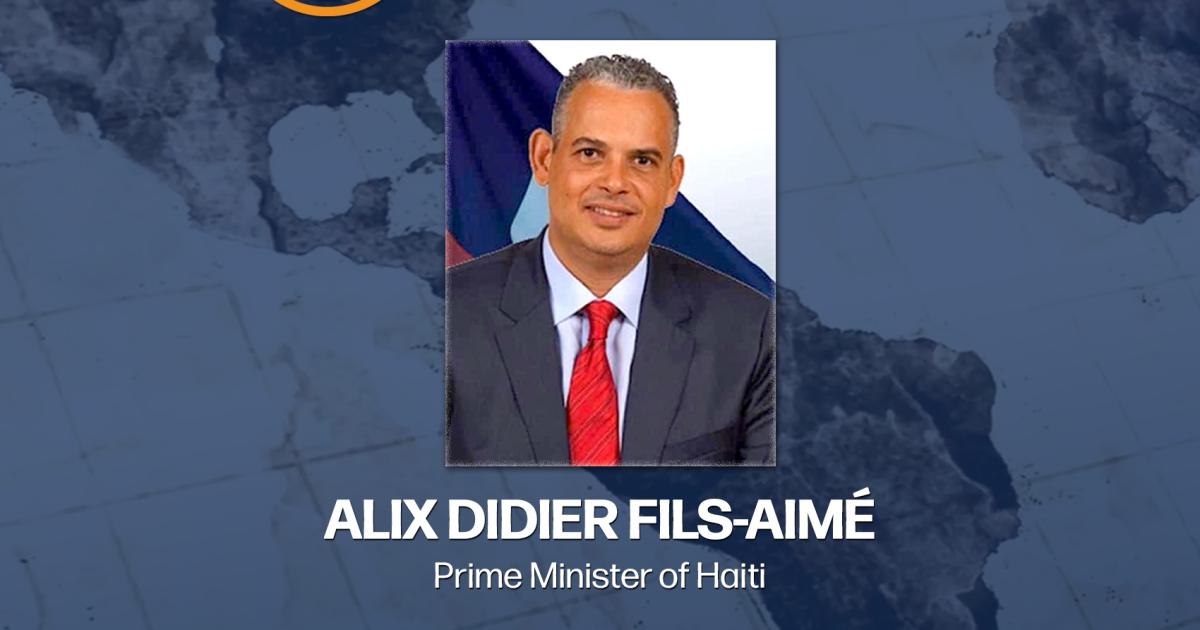
Join Alix Didier Fils-Aimé, prime minister of Haiti, and Hoover senior fellow, H.R. McMaster, as they discuss Haiti’s escalating security crisis, efforts to dismantle gang control, and the role of the UN-backed Gang Suppression Force in restoring order. Fils-Aimé outlines how his government is working to reclaim territory, strengthen police capacity, and restore security to enable long-delayed elections.
Reflecting on Haiti’s governance challenges, Fils-Aimé examines how corruption, weak institutions, and lost public trust have fueled instability. He emphasizes efforts to combat impunity and target financial crime by disrupting the money flows behind gang activity, while expanding opportunities for youth through education and employment. Addressing broader regional and economic pressures, he outlines a vision for long-term stability rooted in opportunity, effective governance, and renewed confidence in the Haitian state.
Recorded on March 23, 2026.
- The most important thing is that since 2021, this is the first time that the gangs are on the defensive. They are not on the offensive, and that has been accomplished with dedication from the police, the army, and with the help of a friend from the international community and the GSF front. So we are moving forward.
- This is today's battlegrounds. Our discussions with leaders from around the world consider how history produced the present, and how we can work together to overcome obstacles, to progress, seize opportunities, and build a better tomorrow.
- On this episode of Today's Battlegrounds, our focus is Haiti. Our guest is Prime Minister Alix Didier Fils-Aimé, a businessman and economist educated at Boston University, who built his career in private industry and previously served as president of the Chamber of Commerce and Industry of Haiti. In November, 2024, he was selected as Prime Minister by Haiti's Transitional Presidential Council. And when that body's mandate expired in February, 2026, he became Haiti's defacto executive focused on defeating gang coalitions and restoring democratic governance. Haiti shares the island of his ola with the Dominican Republic once home to the Taino people whose annihilation under Spanish rule left a territory. Spain saw little reason to keep seeding it to France, which established Ming, the wealthiest colony in the world. The brutality of its plantation system generated immense riches for France while producing an average life expectancy of around 21 years. With deaths outpacing births so severely that up to 40,000 enslaved people had to be trafficked from Africa yearly. Those conditions ignited the Haitian Revolution culminating in 1804 as the only uprising in history where enslaved people won their independence. But foreign powers and democratic elites reproduced the extractive patterns of colonial rule. France sent warships in 1825 to demand reparations for the loss of its enslaved population. Under the threat of reconquest Haiti capitulated, assuming a debt that took over a century to repay the United States. Fearing Haiti's revolutionary precedent, refused recognition for decades, then occupied the country from 1915 to 1934. Citing economic insecurity interests French and American extraction combined with a domestic political class that plundered the state, created the conditions for Papadak Valier rise to power in 1957. To sustain his power, Papadak built a militia to silence political opposition, and terrorize the population When Valier fell. Haiti established a constitutional democracy in 1987, but the pattern of unaccountable armed force persisted. A coup ousted the democratically elected president, Jean Bertran Risid in 1991, prompting us intervention to restore him In 1994. Once back in power, Ari Steed turned to the same playbook, building his own militia, the Shemas, until his presidency ended amid a third US intervention. In 2004, the un stabilization mission that followed Mansa made progress rebuilding state capacity. But a catastrophic 2010 earthquake killed over 200,000 people and gutted the Haitian state. The international response, though lifesaving built parallel organizations that bypassed weak and corrupt government institutions. President Joe Vanel Moise took office in 2017 and presided over a state in deep decline, compounded by the Petro Kabase scandal, which revealed that billions in Venezuelan oil aid had been misappropriated by his administration and prior governments. His assassination in 2021 left no constitutional path for succession. Haiti has since been governed through negotiated political pacts. The culture of armed proxies has metastasized into gain coalitions that have broken free of their political patrons. Criminal organizations now hold roughly 75% of portal prints displacing 1.3 million people and pushing half of Haiti's population into acute food insecurity. In October, 2025, the UN Security Council authorized a gang suppression force to replace the 2023 cannulate. Multinational mission security is a necessary first step, but Haitians have long been fighting for something more fundamental, a government that answers to its people. We welcome Prime Minister FISA may to discuss how Haiti can seize this moment to finally build security and stability for the long suffering. Haitian people,
- Prime Minister Alis Didier Fiza may welcome to today's battle grass. What an honor it is to host you.
- Thank you, sir. The honor is all mine. And thank you general for taking the time to have this conversation with me. I'm very happy and hopefully we'll get a chance to have your origins understand what's going on in Haiti, what we're doing, and what the future is gonna look like.
- Well, hey, thank you for your courage and, and your leadership and stepping up, I guess what some people would say, maybe some of the most daunting circumstances in in the world, you know, and, and of course Haiti's been in, in a state of, of, of violence since President MO'S assassination in July, 2021. A as you know, much better than I do, gangs control about 90% of Port out prince. But you've introduced something new here, a new international gang suppression force. It's been authorized, it's developing, it's not fully developed. Could you explain to our viewers what you're doing to reestablish security and how confident you are that, that this force will, will turn the tide and, and which, what timeline are, are you, do you have in mind for if we're suppressing the gangs and the violence and getting on the path to improve security?
- Thank you, sir. I think the, the most important thing I should start by saying is that with the help of the GSF, which is already there with the Kenyans, we have been able to take back some of the, of the administrative center of AU-prince. So the number, the 90% number is down to 75% according to my police reports and to my security forces, we are now 75% control. But the most important thing is that since 2021, this is the first time that the gangs are on the defensive. They are not on the offensive. And that has been accomplished with dedication from the police, the army, and with the help of our friend from the international community on the GSF front. So we are moving forward, the paradigm has changed. We are not, the state is no longer running. It's the, it's the bad guys that are now on the run and with the international forthcoming, and that was the direct question. What has happened is that we have, we, we sat down with our international, international partners, and this is a Haitian LED solution. This is not a solution that is built to replace the state, to replace the Haitian police. On the contrary, this is something that's here to help. And on our side, we have been doing steps to prepare for this, for the coming of the GSF, for example, we have what we call the P 4,000 program, which is a program that's creating 4,000 new police officers within 12 months. Within the next four months, we will have an additional 1200 coming out of the academy. That will be able to be a whole force. So the GSF compared to what has been done before is a force that's here to help us clear hold and move to the economic part, to to, to change the, the paradigm of what Haiti was about. The big differences, the way it's built, it's built with the Haitian partners and it's not there to replace Haiti. The, the, the reality of it is the GSF is not built to be there forever. It's built to be there until we build enough capacity for them to leave.
- So I think you're already alluding to the answer to my next question, which is what's different about Yeah. About this mission, this effort that you're putting together from the previous multiple international security missions over the years, you're, you're saying, hey, there, there are Haitians at the center of this, that you're, you're engaged in a, a very important element of security sector reform, bringing these young, these young police, but of course, previous efforts, right? A lot of people say, well, gosh, Haiti, how could it ever get any better? Because they've seen these multiple failed previous examples of international security missions. Could you maybe highlight for our leaders, you've already started this, but what's different between what you're doing now and what's been done in the past?
- The real difference is that the mandate, the mandate that the UN Security Council gave that mission is fundamentally different as far as the clear, we need to clear, they have the mandate to help us clear, take the gangs out, then we hold. And before they've always been holding forces where they came, the, the, the, were in lieu of the Haitian pop of the Haitian Security forces. Now this force will help us clear, help us hold and help us build capacity. And this is the big difference. Building the building of the capacity is the most important component because no country will resolve any problem, only if they have help. We need to build up our security forces. And it is part of this mandate of, of this mission.
- You know, prime Minister, of course, you're not, Haiti's not the only country that has had really a loss of control associated with organized crime networks and these gangs that engage in a, a whole range of activity, including taking over whole sectors of the economy, rent seeking behavior, instilling fear, dissolving any kind of element of, of, you know, of rule of law attacking the judges and the police or, or co-opting them and creating sort of a culture of impunity. Do you see what you're doing as maybe a model for other places? O other countries that have ha have lost control of territory and populations? I'm thinking of, you know, gosh, I think something like 60% of Mexico, for example, now is controlled by cartels. How's, what, how's, do you think what you're doing might be applied elsewhere?
- The most important thing in what we're doing is the strategy, the holding strategy. Because once we, once we finish clearing the gangs, and I believe this would be probably what I would consider the easiest part, because this is brute force. Then after that we need to hold the, the areas and after the holding, it's the building point. The, the real solution is gonna be in the building point. How are we going to give the ute an alternative to joining the gangs? And I think around the world, the problem with the gangs, and they call them in Mexico, for example, pan, all those, all those association, the strengths national crime is taking, is taking root. And the fact that there is a lack of opportunity for the youth, and this is what needs to address when the guns go silent, we will make, we will need to hear the noises of the shovel, the noises of the, of the machinery and the factories. Jobs need to be created. And this is, this is gonna be the reality of it. Stability in the region will come with economic opportunity for the youth. And you alluded to Mexico, and the Mexican problem, I believe is interrelated to the Haitian problem. Transnational crime is a problem throughout Latin America, throughout the Caribbean. And it's a problem for the stability of the region, the stability of Haiti, which is a weak state, I must admit. And the stability of our number one trading partner, the United States, we are 700 miles away from the us. An unstable Haiti means there is potentially instability in the us
- You know, as, as you go after these criminal gangs and you lift the poll of fear of the population, you create security space for, you know, for security sector reform, for building of institutions that are critical to stability. I'm thinking in particular insulated investigative and adjudicated bodies to reestablish law and order. Of course what the, what the what the, what the organized crime networks will do is try to use corruption, try to use people within these institutions to undermine them, to hollow them out, because that's how they get impunity, right? That's how they are able to escape any kind of consequences. Can you talk about your struggle? What your against corruption. Corruption and, and the, the penetration of institutions that are critical to the future of your country?
- And this is an excellent question because corruption has been plaguing a ED and I think it's corruption is everywhere. And that's, that's the way I like to look at it. And there's a word you use and that's the word I use. Corruption is not the problem, it's the impunity. That's the problem. If people know that they will get away with it, they will continue to act in a certain way. What we've been doing is one, reinforcing the ministers. We have, we have created two judiciary poll specializing in financial crimes because the biggest issue is the financial crime in Haiti. They are able to have money come to the country, send it back to whatever country without any control. So we put that ju judiciary poll that is going to be in charge of controlling the money flow. And if you know where the money goes, you know where the bad guys are going. That's one part. The second part is we also putting together the C-N-D-D-R, which is the DDRA disarmament and reinsertion. And my father in 2006 was the one who created the first one. So I'm taking over is legacy. What's the most important thing is for the kids that are in the gangs. And about 50% from the numbers we have of the gang members are, are youth between 13 and 80. We need to make sure that those people are reinserted into society. We need to make sure that they can get, they can go to school, they can learn, and those that are a little bit older can go to technical schools, they can get a job at the end. Security for me has three prongs. The first prong of security is the brute force. The first prong of security is, is the force. The second problem of security is gonna be the judiciary system, meaning we need to arrest the people that are financing those gangs. And the US has really helped with the sanctions and, and naming the gangs in Haiti as terrorist organization, which has slowed down the help they were getting from expats. So it's brute force, judiciary system and the C-N-D-D-R where we bring those kids back into society. Those three elements compose the strategy that we have for bringing security back to Haiti.
- You know, I I see tremendous parallels, prime minister between your experience there and fighting jihadist terrorists, when they take over big areas of territory and populations and cities, you know, one of the first things that they do is establish this Paul of fear o over the population. You can only lift that Paul of fear through force. They co-opt all the institutions through judiciary healthcare. No, what it is, they, they, they take control of it and then they recruit the youth. They go to people's homes and say, give us your son or we'll kill your whole family. And they, and then they, they they show them this kind of life of only criminal activity. They systematically dehumanize them. It's a tall task to do this, but your focus on the youth I think is extremely important because you can't break the cycle unless you break that cycle of, of really fostering kind of, you know, loyalty to these gangs instead of loyalty to their family into their country. Could you talk a little bit more about how you're doing it? How you, how are you trying to break that cycle by, by focusing on the youth?
- Listen, the youth, the, the, the biggest thing is the youth is that they need opportunities. Nobody joins the gang because they, they they want to get shot at by the police. It's a question of opportunities. And with our partners, especially the us which is our number one partner in Ally, we've been discussing we need to go from aid to trade. Aid to trade is the solution aid is great. We do have humanitarian issues, but when you give people the opportunity to work and to take care of the family with dignity, there is the sense of belonging into the society. Today, there are areas where the youth are only part of the gangs because that is the only available job and the youth needs to find an opportunity. And the only way for that to happen is through trade. We are 700 miles away from the US like I said, and the opportunities are endless for Nearshoring. We have a population, 65% of our population is between the age of 18 and 30 years old. We have the opportunity to be a manufacturing hub for the region. We have an, that will lead to one of the points and the Help HOPE act that the US has passed. Unfortunately, it was passed for one year and one year is not enough to create the stability for the, even for the US investors. We need that law. And we are lobbying Congress to get that law passed for at least 10 years. 10 years gives the, the businesses in the US the opportunity to see, okay, now we have a certain amount of time we can invest and that investment will have many returns. It will have returns for Haiti. The fact that we're gonna be creating jobs and we will have returns for the US also, not only returns financial returns, but returns in the sense of stability in the region.
- Yeah, I think this is a really important point and just for our viewers, this hope help legislation, it, it supports tens of thousands of Haitian jobs in the textile sector. In particular, it expires on December 31st of this year. And I think the point you're making is, hey, once you lift that Paul fear off the population, once these gangs are are under control and, and there's improved security, what you need is you need people to see hope again or, or re or, or rekindle their hope and see a stark difference between life under the gangs and life under, under law and order. And, and so I too hope that that legislation is, is renewed and that that can, I, I'm sure help, help you as along with the other initiatives you have for economic development and, and jump starting the economy.
- We have, we have it, it's been renewed for one year, but we need it renewed for a longer period of time because there needs to be clarity for investments to happen. And I am convinced, I'm convinced that the actions we are taking, we're also taking actions on the border to protect our borders so we can get the revenues and that's our land border and our maritime borders. So we can get the revenues to help our population once we have the borders control. That would also create opportunities for business to, to, to fill the gap of those products that were coming without paying any taxes. And again, this is all opportunities and I'm a firm, firm believer that the only way you can pacify any country is by job creation and is by allowing people to take care of their family and dignity through a decent job.
- And Prime minister, would you talk a little bit about education as well as youth initiative? You know, of course in this, these conditions of lawlessness where the s are in charge, you know, people aren't getting educated and that's, that's, you know, it's a real danger because if people aren't educated, you know, they, they don't have as much of an opportunity to participate in, in legitimate economies and they could slip back in, into going into criminality. Could you talk a little bit about what you're doing with the support of others in the education sector
- And the education sector? I must tell you that we have a lot of internally displaced people and they have moved to other areas, especially in the south and in the north where we don't have the gang problem. And those schools have been, how would I say, over the, they've been used over their capacity and through the minister of education we've been trying to move teachers as well because like you said, if they don't get the education, they will not be able to benefit from the opportunities that we will create after the gangs move away. It is extremely important for us to be ready when the gangs, when the gangs problem diminishes. And I don't, I don't, I don't believe that it will be completely finished under my tenure and the next government, and we should talk about the elections after the next government will still have some work to do. But under my tenure, I plan on bringing the gang problem where it is bearable where we can have elections and where the population can freely move from one area to another.
- And I do want to talk to you about the, the political situation and political transition, but it sounds to me like you're working on this problem from inside out of Port Al Prince. And as you mentioned now, now I think it's 60, 65 to 75% of the population is outside port out prints. So you're working on it from the outside in as well, from the borders in and from port out prints out. And I think there are lots of opportunities to support your efforts that way, whether it's performing, you know, customs and so forth, activities at, at ports, but then also as you're mentioning, providing services, education among them to those who've had to flee the violence and, and have kind of outrun any kind of state institutions of, of course, which were under duress a as well. But there's international dimension as you mentioned, the international financial dimension. So do you have a, a good, a good feeling about the degree to which the strategies coming together where you can, you know, inventory all the actors, you know, your, you know, your Haitian leadership, international support, the international, you know, peace enforcement effort. How well do you feel it's coming together with each member of the team contributing what they contribute in kind of a synchronized manner?
- I, I think, I think we've had, we've had a good collaboration with the international partners and especially the us like I said, which is our number one partner. The thing is, we have defined the direction in which we are going, and I think that's what was lacking in the past, that there was a clear Haitian led direction. This is where Haiti wants to go, and we need our partners to help us where they can. And that endeavor, and I think it is been well received from our partners. The the message is clear. The direction is clear, we know where we are going, we know what we need to do, and we asking our partners to support us where they can and to help us get better. For example, when we talk about elections, we're getting ready for the elections. Our partners have helped us with a election monitoring. And this is one of the most important things because one of the things that the population have lost over the years and is the trust in the state, they do not believe in the states. And I can understand why, because most of our gang problem is related to the political situation. It's pol it's the political class that has created that problem because they needed those men, those young kids to help them with elections. This problem needs to be resolved. We need to make sure that the political class that was ruling is replaced by youth educated and people that have Haiti in mind.
- And how do you think of the, the political transition in sequence? Of course, you know, Haiti hasn't had a national election in, in a decade. How are you setting the conditions for the election? Do you believe that improved security is a precondition? Because as you mentioned, those who, who, you know, were trying to get elected oftentimes rely on the gangs, you know, for support in the areas that the gangs control. This is a problem in Mexico to, to go back to Mexico again, where you've had so much of the territory now controlled by the cartels, the judiciary, now they're controlled by the cartels. And so it's difficult to affect change through a political process because you know, the, the criminals own it. Are are, can you talk about the sequencing of security, your institution building and, and political transition?
- No security. If we don't have security, we cannot have economic development. We cannot have reinsertion of the youth. And of course there's no way we'll be able to have free and fair elections, which is the end goal. The goal is to bring the country to elections where people can go vote and not have to worry in the neighborhood they're voting that they will be influenced by any gangs. Security is the number one issue. And like I said, at at the onset, we have been doing very, very well considering the assets that we have in hand, the assets the police have, the, the amount of people we had with the GSF, we are waiting for the force that should be coming one April 5,500 person force. And one of the big difference in that force too is that it's not only a police force, it's a military force mixed with the police force, which means we will be going after the gangs and with the military force and with the police force, we will be holding those territories. Once we get that done, we will be able to transition to constitutional change because there are things and our constitutional that we need to change. We are a poor country and we've, we, the way it's set up, we have elections every two years. It's impossible. One, we cannot afford it. Two, it creates instability. So we need to address those issues and have elections at the end of the year. Me, my assessment is by, by midsummer we will, with the help of the GSF, we will have retaken enough territory and pushed the gangs far enough that the population will be able to move freely from north to south now south to north. And to be able to control polling station at the end of the year, I'm expecting to have elections, eh, end of November, beginning of December.
- It, there have been so many in the past, you know, multinational efforts to support, to, to support Haiti's path toward greater security and, and they failed. So, so you've, you're doing things in a fundamentally different way as you described, you know, this is a Haitian plan, this is based on a common vision, things got really bad, which that might be a change condition as well because when they get so bad, people are, you know, they're ready, you know, for, for, for the alternative. But in terms of outside support, what do you think has to be done differently, differently from the GSF perspective, the role of the United States, others, you know, how, what kind of support do you need? How do you need that support delivered and across what kind of time duration?
- Good. That's an excellent question. I think the, the biggest support that we need, and I'm, I'm never gonna stop saying it. We need to move from aid to trade, create opportunity for people. And this is what countries like the us this is what the European community can do because they have needs, they have need to produce to produce goods. We have the people, we have the capacity to do them. This is where they can help. And on the security front, what the US has been doing with naming the gangs upstairs, and there have been a couple people in the US that have been charged with terrorism because they have been sending, sending containers with bullets and guns to Haiti. This is the type of things that help, we don't produce guns, we don't produce bullets, but when the country, where they're coming from is also helping us from, from letting them leave and come to Haiti, this is the real, real help. And I must say one thing that's important, and I think our partners, especially the US, understands that this mission is not about staying in Haiti forever. This mission, the goal, we will know that we succeed the shortest time that the GSF spends in Haiti. That will be the key performance indicator. That's how we will know that we push the gang back, we hold the territory and we build the forces of Haiti so that we can take care of our own people, so we can take care of our own security.
- Prime Minister, I, I hope you don't mind if I ask you a personal question. Of course. If most people, if they're asked, Hey, how would you like to be the prime minister of Haiti? I don't think a lot of people would say, oh yeah, I, I that's my dream job. You know, given the circumstances you're under, can you maybe share with our viewers what, what is it, what is it in your background that biases you to see what some people would say intractable problem and say, well, hey, sign me up for that. I'm gonna take this on. What prepared you for, for this, this position that you're in, you know, and, and, and, and your, I think your courage and your determination to take on an extraordinarily difficult problem.
- That, that's a good question too. And that's the first question I asked. My wife asked me, she goes, what's wrong with you? Well, lemme tell you general, this is, this is my country, this is my country. This is where I, that was raised, this is where I was born. And I believe that there is an opportunity, the opportunity to do things differently. The problem has been mostly with a political class. The problem of the Haitian society has come from the people which were met to lead them and to bring them to a better state. And I believe that coming out from outside that political sector, coming from the private sector, I would be looking at things with more pragmatism than they've been looking at it. I, I've been looking at things with, okay, we we need to do this. What's, when will we have the results? What's the timeframe? We are looking at this with a different, with a different vision. And like I said, the success of this is not that The GS step says forever. And this my success. I, I will judge myself by how fast can I get myself out of a job? And that means giving the security and bringing Haiti to elections. The new government will take over power. So my success depends for myself on the time it takes me to have the security to bring the population to, to, to where the youth can start working. They can start having opportunity and I can have free and fair elections. Then I go home. What, what prepared me for this? I don't know. I guess I'm a patriot. I love my country.
- Oh, oh prime, prime minister. It, it is been a real privilege to host you here. I'd like to ask you, do you have any last words for our viewers, for our us audience, our international audience, and on now what I'm sure will be a much larger Haitian audience as well.
- Well, the message I'd like to, to send to everybody is that, you know, I understand that we've been talking about Haiti for a long, long time and everybody's been like, you know, nothing has changed. That's the third mission. That's the fourth mission. And you know, we are taking our taxpayers money and sending it to Haiti. Well, I want to tell people that we appreciate the help that all the foreign countries has given us, but today we are doing a Haitian LED transition. This transition is about Haiti. This transition is not about any foreign country. This transition is about Haitian taking their responsibilities and bringing their country to the next step. And this goes, this can only happen through security, through justice and to creating opportunities for the country. What I would like to say is that this government only focus is to bring this country to elections. And to do so, we need security. No security. We will not have election
- Prime Minister Fiza may what a, what a privilege it is to host you here on behalf of the Hoover Institution. Thank you for helping us learn more about your battleground at Haiti and the importance of, of building a future peace and prosperity for your country and, and, and for all of us. And I really admire your leadership and it's been a real privilege to be with you. Thank you so much.
- Thank you very much. Thank you. General, thank you for taking the time to talk to me. And if I could have a last word, what I want people to think when we're talking about Haiti now is that whenever anybody's thinking about Haiti, let's think about moving from aid to trade. Haiti is a country of opportunity. We have a young population, we are close to the US and we are probably nearshoring heaven for the us.
- Well, prime Minister, thank you so much and best of luck to you and all who have joined you in this fight for, for the future of your country.
- Thank you. General. Thank you for thinking the Time.
- Battlegrounds is a production of the Hoover Institution, where we generate and promote ideas advancing freedom. For more information about our work, to hear more of our podcasts or view our video content, please visit hoover.org.
Related
Essays
Indo-Pacific Maritime Security Cooperation
This essay explores Southeast Asian perspectives on Quad-driven maritime security cooperation in the Indo-Pacific. Through expert analyses from Indonesia, Singapore, and Vietnam, it evaluates regional perceptions of Quad initiatives based on three primary variables: initiative leadership, the character of the activity, and geographic location. It emphasizes the importance of balancing distinct national interests with Association of Southeast Asian Nations (ASEAN) alignment.
October 13, 2026
Videos
H.R. McMaster On Trump's Iran War Ahead Of The Midterms, Murphy's Claims About US Base Access
Hoover Institution fellow H.R. McMaster discusses the state of the Iran war ahead of the midterms.
October 10, 2026