







- Economics
- California
- State & Local
- Answering Challenges to Advanced Economies
Hoover visiting fellow Matthew E. Kahn is the Provost Professor of Economics at the University of Southern California and the author of seven books, including Climatapolis: How Our Cities Will Thrive in the Hotter Future (Basic Books, 2010) and Adapting to Climate Change: Markets and the Management of an Uncertain Future (Yale University Press, 2021).
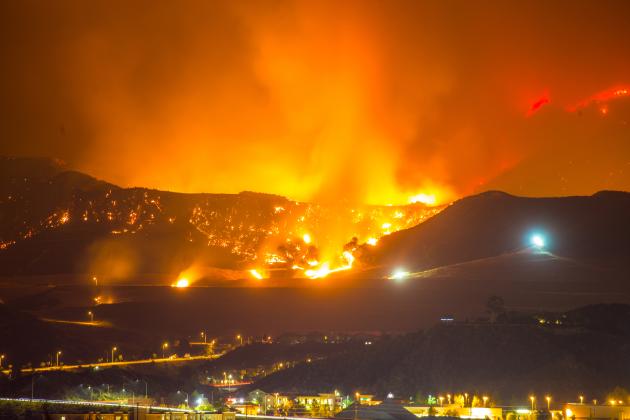
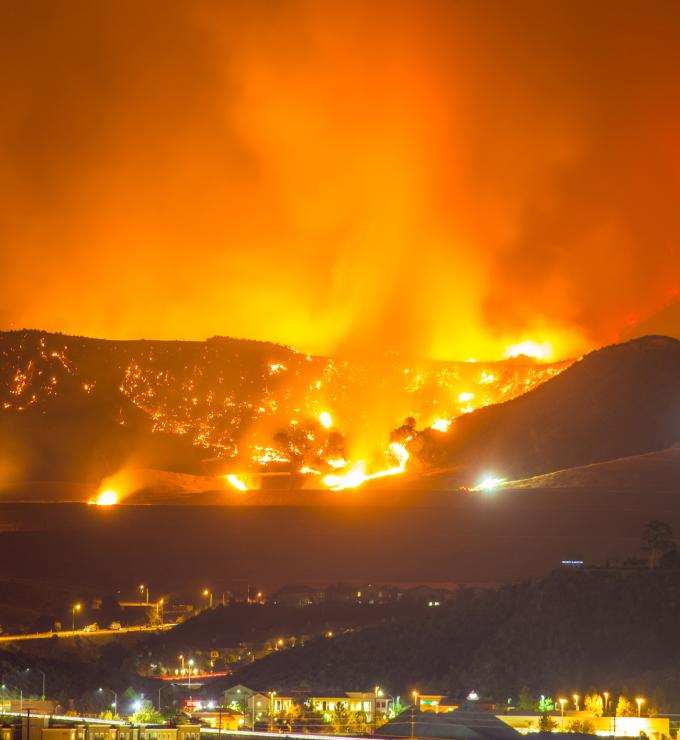
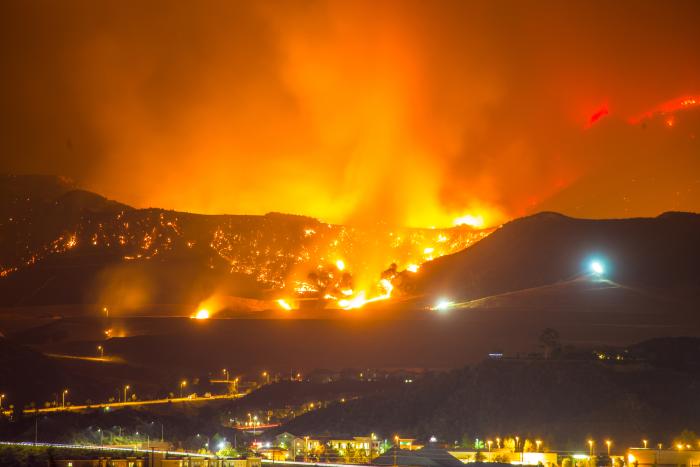
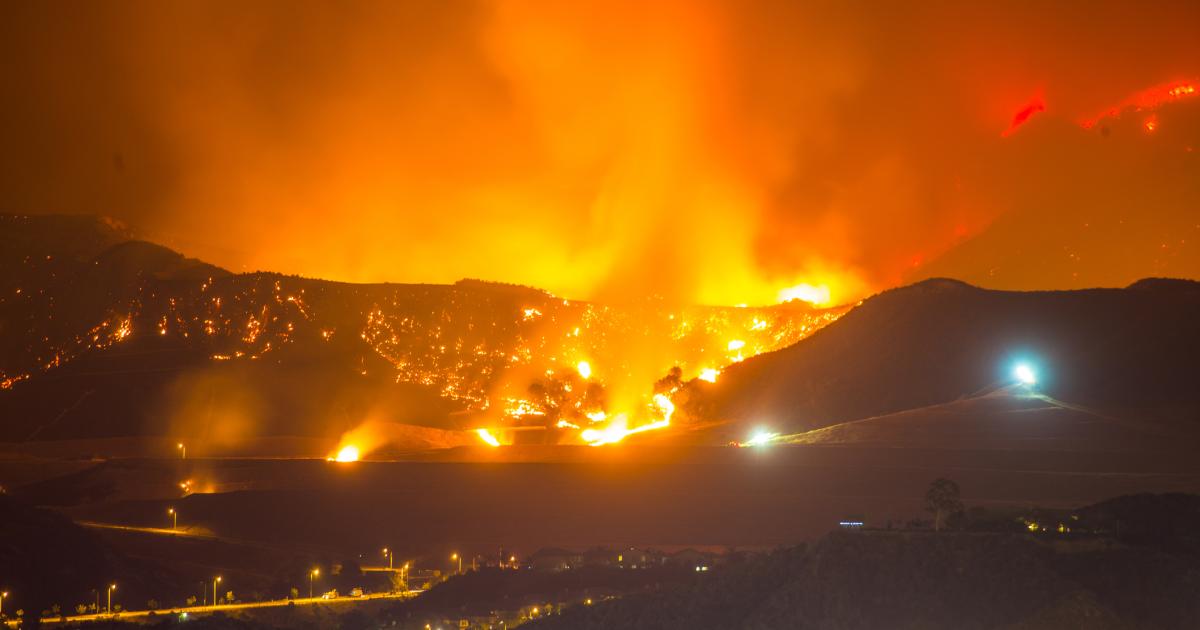
California faces a serious and growing wildfire risk, made worse by climate change and continued development in the wildland-urban interface. The central economic question is straightforward: do we rely on markets or government mandates to reduce this risk? I argue that markets, when allowed to work, deliver far greater bang for the buck under real budget constraints. They create ongoing incentives for discovering what actually works, for adapting to changing conditions, and for cost-effective self-protection. Mandates and broad taxpayer subsidies, by contrast, tend to lag behind science, distort incentives, and produce unintended consequences.
While I share the urgent goal of protecting California homeowners—especially after the devastating 2025 Los Angeles fires—I highlight eight structural realities that shape any realistic policy response and explain why market mechanisms are essential for genuine progress.
Property rights
The state’s legal authority is sharply limited. It can enforce defensible space codes only on landscaping and non-structural features. It cannot compel private property owners to modify structures that were built to code at the time of construction or major renovation. This is not a technicality; it reflects core property rights. The state therefore cannot simply order retrofits. It can only offer incentives financed through subsidies.
Yet the proposed subsidies—sometimes up to $40,000 per household—to harden structures or create ember-resistant zones implicitly assign homeowners in high-fire-hazard zones a property right to forgo basic precautions. By using public funds, the state signals that property owners are not ultimately responsible for protecting their homes from foreseeable natural hazards. Without confronting this question of responsibility, we risk setting a precedent in which taxpayers subsidize locational choices that raise risks for everyone.
The lag in regulatory responses
State regulatory agencies respond slowly to new science. Wildfire risk is dynamic and non-stationary—it changes with climate, vegetation, and human activity. Updating codes and enforcement can take three to ten years, and even then it depends on legislative funding for inspectors and program staff. The state’s fire hazard severity zone maps, first put in place in 2008 and revised only once in 2022, already embed political considerations and are not updated frequently.
A centralized rule-making process assumes the state can wisely set a single clear standard that everyone should follow. In reality, this one-size-fits-all approach is highly unlikely to be cost-effective. Different neighborhoods, different slopes, different vegetation types, and different building materials all require different custom strategies. We still have a lot to learn about what works best where. Centralized government codes cannot keep pace with that learning process, as we’ve seen with the Insurance Commissioner’s Safer from Wildfires regulation.
Insurers’ unique role in risk assessment
Insurers are uniquely well placed to analyze wildfire risk and communicate it to property owners. For-profit companies have billions of dollars of their own capital at stake. They therefore invest heavily in the most current data, actuarial modeling, and parcel-level analysis. Through price signals, education, and underwriting standards, they can price coverage on verifiable mitigation steps that cover both landscaping and structural features.
Unlike regulators, insurers face immediate financial consequences for getting the risk wrong. This creates powerful incentives to stay ahead of the science rather than waiting years for official code updates.
Even in the 2026 California gubernatorial debate, multiple candidates across the ideological spectrum acknowledged that attempts to freeze insurance rates or block insurers from using modern climate and parcel-level risk data would only accelerate the exit of carriers from the state. Several explicitly called for restoring genuine competition by allowing premiums to reflect verifiable mitigation efforts and for faster regulatory approval of rate changes—precisely the market mechanisms that align private incentives with risk reduction.
Network effects and the tragedy of the commons
Wildfire risk has strong network effects that create a classic tragedy of the commons. If even a few neighboring owners fail to mitigate, the effectiveness of everyone else’s efforts is sharply reduced. Embers and radiant heat do not respect property lines. Insurers understand this spatial correlation: they may not lower premiums for an entire community unless the weakest links are addressed to a verifiable standard, and they are well placed to identify where best to apply stricter underwriting standards and higher premiums to incentivize actions.
Markets can solve this coordination problem more effectively than top-down mandates. Homeowners share a direct financial interest because unprotected properties depress collective resale values. Real estate economics shows that “location, location, location” determines asset prices; homes lacking defensible space or modern hardening sell at a discount. Owners planning to sell therefore have strong private incentives to invest in visible, credible risk reduction. Communities can use social pressure, homeowner associations, or targeted neighbor initiatives—without taxpayer money—to identify and fix the holdouts.
Property values, taxation, and cross-subsidization
Property values accrue primarily to private owners and to the counties that collect most property tax revenue based on those values. In California, Proposition 13 limits annual increases, so assessed values rise meaningfully only when a home is sold. This mutes some price signals for long-term owners, but it does not eliminate the incentive structure. Counties, too, have an interest in maintaining high valuations.
The larger fiscal problem, however, is how mitigation is funded. Sales and income taxes—paid by all Californians, including urban renters and low-risk property owners—fund most statewide programs. State- or federally funded subsidies therefore transfer wealth from low-risk taxpayers (often minorities and renters in cities) to higher-risk homeowners. This cross-subsidization is both regressive and inefficient. Localized externalities like wildfire risk are best addressed at the property and community level through private financing, local assessments, or private coordination, not distant taxpayers.
The real-world effectiveness of incentives
Incentives themselves must be judged by how they actually work. Subsidies can be powerful for driving down the cost of new technologies through learning-by-doing and scale—what economists call Wright’s Law. But when mitigation consists primarily of services—vegetation clearance, retrofits, inspections—larger subsidies often simply raise the prices charged by providers, especially when state contractor licensing rules limit new entrants.
Markets generate genuine demand: homeowners facing actuarially fair insurance premiums shop carefully, seek cost-effective solutions, and attract entrepreneurs who compete to supply better and cheaper services. When taxpayers foot the bill, homeowners have weaker incentives for due diligence, cost control, or quality oversight. Public programs routinely spend far more per home hardened than is needed to meet independent performance-based standards such as the IBHS Wildfire Prepared Home base-level criteria.
The equivalent of a clinical-drug trial
The current regulatory framework—a complex mix of slow-moving mandates, rate controls, and costly taxpayer subsidies—frustrates free market economists because it wastes money and represents a regressive tax on California’s non-rich. The transition to a free market approach will require political courage for state leaders.
Just as we rigorously evaluate promising new medical treatments through controlled clinical trials before adopting them broadly, California should conduct a carefully designed pilot in one or two high-fire-hazard communities. By suspending insurance rate restrictions and one-size-fits-all mandates in the pilot zone, and instead allowing insurers to price coverage according to the latest science and verifiable mitigation efforts, we can generate real-world evidence about what actually works. In an age of tight budgets and dynamic climate risks, such pragmatic experimentation is not ideological speculation. It is the responsible way to discover more effective strategies for building a more resilient California housing stock.

