






- History
- US
- Revitalizing History
Michael Auslin is the Payson J. Treat Distinguished Research Fellow at Hoover and the author of the new book National Treasure: How the Declaration of Independence Made America. He spoke to Hoover’s Chris Herhalt about how his study of the history of the Declaration came to be, the original document’s unique past, and what the declaration has meant to Americans throughout history.
Chris Herhalt: I’ve been to Washington, DC, as a tourist three times, and reading your Substack, The Patowmack Packet, I realized I could go thirty more times and there would still be something I’d miss. I think any American should realize there’s an infinite amount of history you could explore in DC and the surrounding area.
Michael Auslin: A lot of people don’t think of DC as a particularly historical city, oddly. They think of it as a monumental city. They think of it as a government city. But in general, it’s one of the oldest American cities: 1800. It’s not as old as New York or Boston or Charleston, but it’s pretty up there. And of course, being the capital since 1800, it has an endless amount of history that I didn’t know, either. In one of my very first posts, I was trying to describe why I was doing the Substack, and I recounted that I’d been a college student here and I’d never gone around the city. I never saw anything! I didn’t know anything about it.
What I find interesting is Washington as an intellectual center—sort of ironic when you talk about government—but an intellectual center in ways people don’t usually appreciate. You go back to the first learned societies, the Smithsonian, the Library of Congress, the National Institutes of Health. It’s so easy to focus on the president and Congress, the Supreme Court, and all of the infighting and the grasping, ambitious people. But what I find endlessly interesting about DC is that it is filled with some of the most impressive experts on almost any possible subject you can think about, and who are never heralded. If you get past the money, the power, the so-called DC glamour, you find an absolutely unparalleled reservoir of human capital.
Chris Herhalt: How did the idea come about to write a book about the history of the Declaration of Independence on the 250th anniversary of its signing?
Michael Auslin: It was pure accident. I’m not trained as an urban historian, but the urban history of Washington’s quite interesting because it is an imperial capital and it didn’t just become that overnight. I was interested in understanding the built city because in order to run an empire, you have to have the infrastructure, you have to have the buildings because you need the people.
The center of Washington is what’s called Federal Triangle, and sitting right in the middle is the National Archives. The Archives is a beautiful building. People go into it, obviously, to see the Declaration and the Constitution, but the building itself is fabulous. So, I went there to learn a little bit about the role of the Archives as an intellectual endeavor.
I knew the then-archivist, and we were having coffee, and she started telling me stories about the Declaration. I didn’t know any of them. When she said, “Well, when the Library of Congress wouldn’t give the Declaration to the Archives . . . ” I thought, “What is she talking about? When was it in the Library of Congress?” That’s how ignorant I was. So, I decided to get a book on the history of the Declaration. But when I went to the bookstore, they didn’t have one. They said they don’t really carry one, which I thought was just inexplicable because a million people a year come through the Archives. I checked around and saw there were books, but most were pretty academic or were all about the thought of the Declaration. I thought, “Well, this might be a great potential story.”
I called back to the archivist and asked how many people were working on histories of the Declaration at the Archives, and she said, “None.” Then I went to the Library of Congress and I asked them and they also said, “None.” And I thought, wow, is it possible that there’s not going to be a general history of the Declaration for the 250th?
And that’s when I started. I didn’t even make a conscious choice. Before I knew it, this is what I was doing and it carried me along and was totally fortuitous, totally unexpected, and became an incredible passion project. I wanted to write a book because I wanted to read a book on our history with the Declaration, our life story through it and with it, how it inspired us, how we reverenced it, how we protected it, and how we commoditized it. It’s really a history of America through the Declaration.
Chris Herhalt: There seem to be a whole lot of things not a lot of people know about. Which ones stand out to you?
Michael Auslin: Most people know that it was saved from the British in 1814, but the rest of the incredible history, the material history of the official parchment that’s in the National Archives, is relatively little known. The 1814 chapter has been told, but I think I tell it in more detail. It was barely saved from incineration, and by many accounts, it shouldn’t have survived.
When you go to the National Archives and see it there in its case, that’s just the latest of the ways in which the Declaration was displayed. It had been in the Library of Congress for twenty-seven years, displayed in a different marble shrine. And before that, it had been in the State Department on a sort of quasi-private display. Then before that, it spent decades in the old US Patent Office, what is now the National Portrait Gallery.
When the Declaration was put into the old Patent Office, in what was called the National Museum, in 1841, it was the first time a document like that had ever been displayed. They didn’t know what they were doing. They didn’t even know how to display it. They had it in a museum that had five thousand other objects. On the one hand, it was great because Americans could for the first time see the signed parchment; on the other hand, there were five thousand other things to go look at.
Today it’s treated as our most revered relic. Imagine when it had been rolled up and kept in the State Department, and they said, “All right, let’s just put it in a frame and hang it on a wall.” I love telling all of that. It gives a human scale to the Declaration, I think, along with the miraculous story of its survival in 1814, or being whisked away in secret to Fort Knox in World War II, or being lowered into the atomic-bombproof vault every night at the National Archives during the Cold War.
Chris Herhalt: I don’t think the average American knows it was in a bombproof vault throughout the Cold War.
Michael Auslin: I think if you’re in Washington, a lot of people know that every night it’s lowered down. But I love that as a Cold War anecdote. It’s almost perfect. We’re using the Declaration as an icon, as I call it, in the Cold War. We are engaged in this global struggle for the hearts and minds of the world and freedom and liberty and capitalism versus Soviet communist totalitarianism. At any moment, they figured, the whole world could go up in flames. And so, they create this incredible bombproof vault and every night it just goes down into it and then comes back up. It’s such a perfect metaphor for the Cold War.
Chris Herhalt: There have been other uses of the Declaration. It’s been used in ads, it’s been used to sell people things that you wouldn’t even associate with the significance of the Declaration, and it’s been used to inspire, obviously.
Michael Auslin: I structure the book into three Declarations. The first is the relic, the parchment, and how it survived, everything we’ve been talking about.
The second is as the great symbol of the American ideal and the ethos: why it went from being a statement in essence of grievances in 1776 to being the central rallying point for abolition of slavery or for women’s rights or for making immigrants into Americans, the symbolism of the Declaration as it expanded in meaning over time, while at the same time keeping its core meanings. The document, really, is the great statement of what it means to be American. And everybody puts their ideas into that.
And the third is this one you’ve mentioned, the Declaration as what I call the cultural object. In a way it serves as a bridge between the relic that’s in the National Archives and the symbol that’s in our heads. It’s a perfect marriage of civics and commerce that we sell reproductions of the Declaration, and you can buy dozens of different types.
They could also use it to sell a product. One of the better-known examples—let’s say “Declaration adjacent”—would be the John Hancock Mutual Life Insurance Company, which uses Hancock’s signature. They used to send out thousands and thousands of copies of the Declaration. Why? But why not? Because it is this very American mix of commerce and civics. We have it today on baseball caps and T-shirts. Back in the day, they had it on handkerchiefs and scarves. We have stamped medallions and painted plates, all these different ways that people have brought it into their homes and thereby I think brought it into their hearts.
And we don’t do that with any other document. We don’t do it with the Constitution nearly in the same way. I mean, “We the People” is an awesome preamble, but we don’t do the rest of the Constitution.
I hung the Declaration in my bedroom as a kid, and you had it in schools and city halls. I’ve been watching some old television from the 1950s and invariably there’s a Declaration hanging in the background. It’s just there. It’s part of this sort of furniture of American life.
Chris Herhalt: Why do you think it’s important for people to get near it, see things, touch things this year?
Michael Auslin: I think this has to do with how we celebrate being American, which is not just fireworks and parades, but celebrating the ideals that made us the most exceptional nation. Not a perfect nation, but I would argue the most exceptional nation in history and a creedal nation. To be an American, you have to believe all people are created equal. You have to believe in representative democracy. You have to believe that there is always going to be a better future. These concepts are woven into our DNA. And one of the ways that we share them is through these civic rites of passage such as going to see the Declaration.
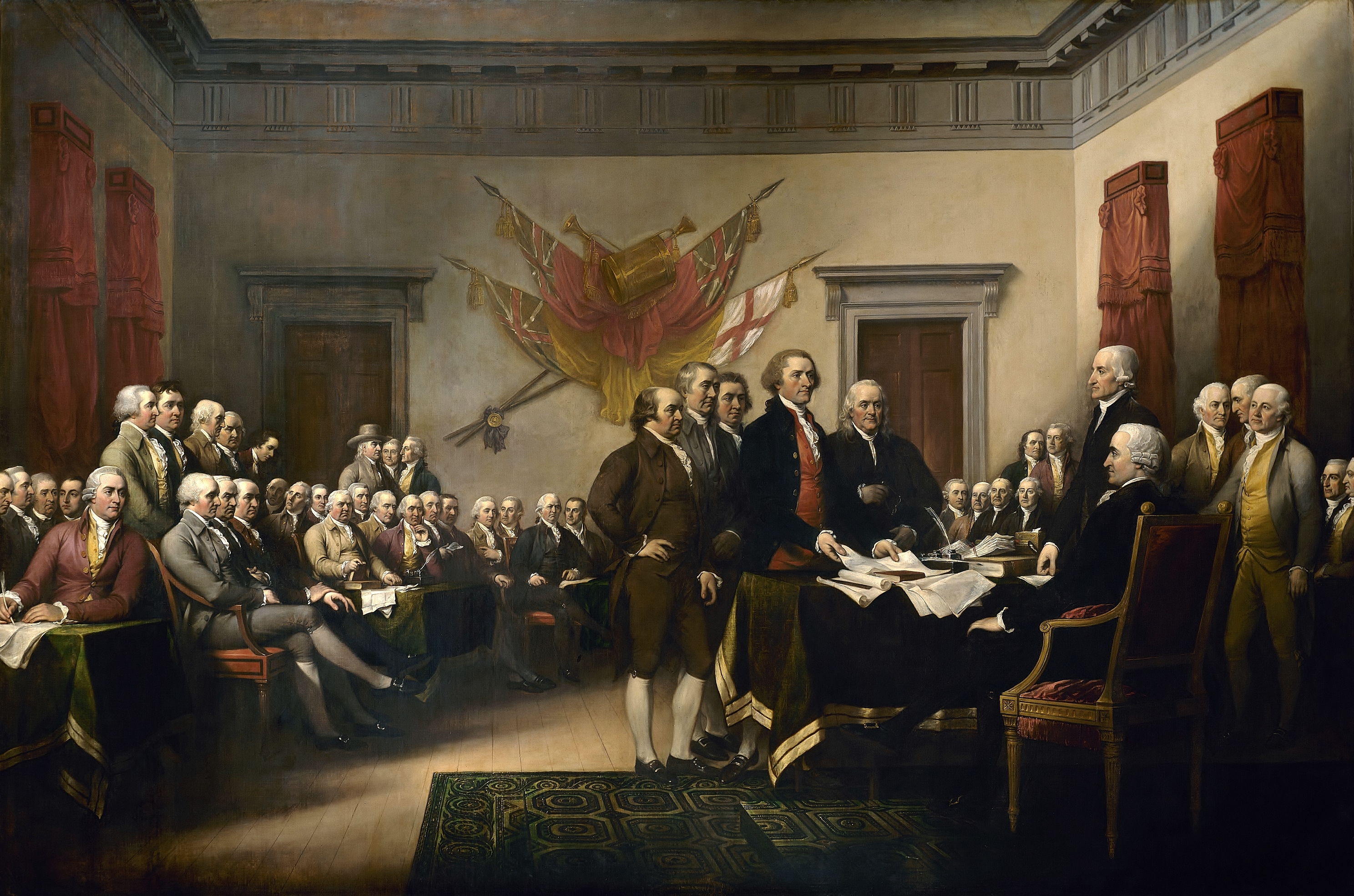
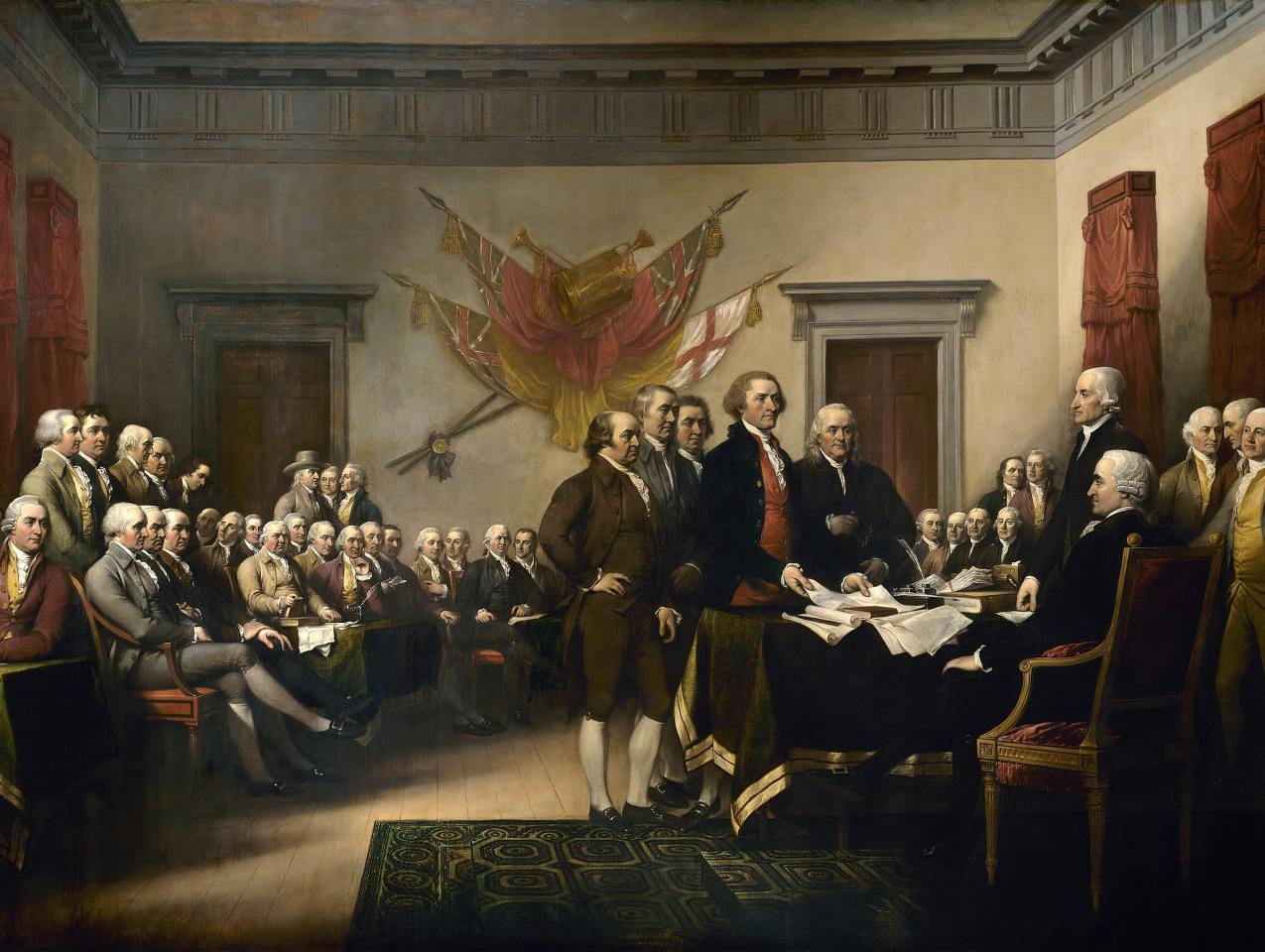
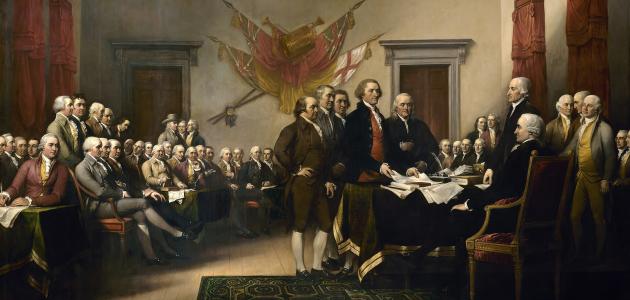
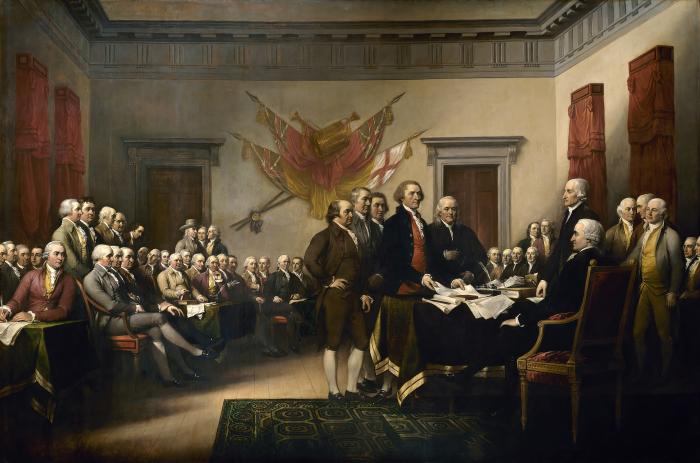
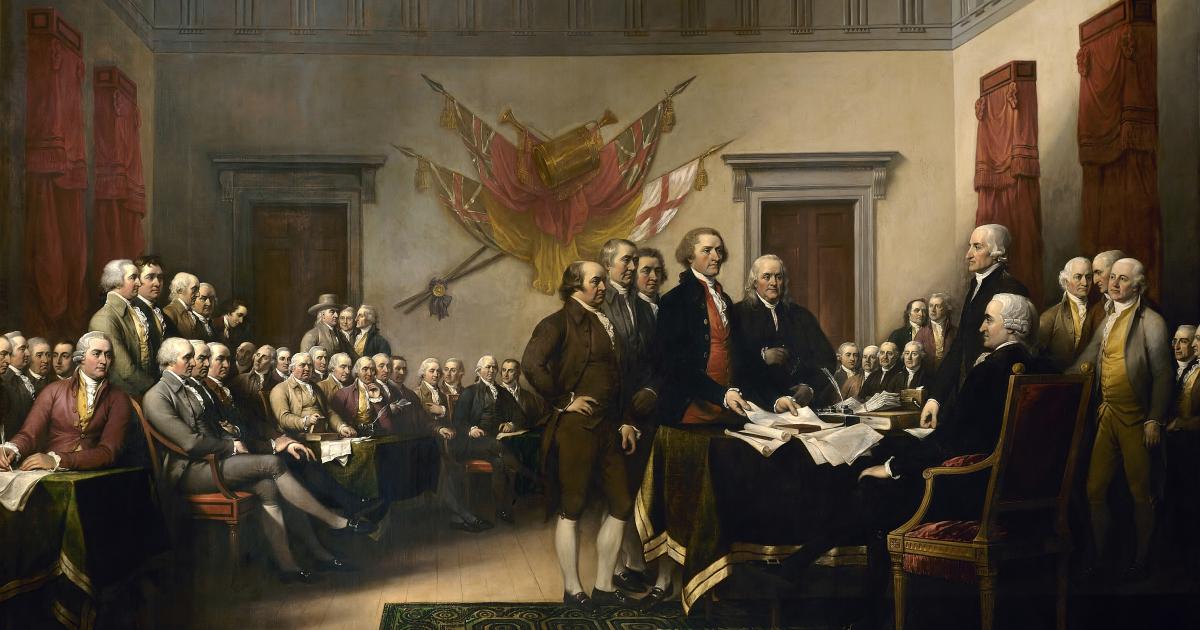
I think that’s why it’s so important that it survived. I mean, if it had been destroyed in 1814, we all knew what it said. It had been printed thousands of times. We would not have lost the text, but we would have lost the time machine that takes us back to the Continental Congress and Philadelphia in the summer of 1776 and the very piece of parchment that John Hancock and John Adams and Thomas Jefferson and Benjamin Franklin signed.
That’s why I think that in the 250th it’s not enough just to have a parade, though that’s good, but we need to recommit, as previous presidents called for. We need to recommit to the ideals and the principles of the Declaration, maybe more so right now than at a lot of other times because of all the anger and the civil discord that we have in the country, especially with angry young people who have been radicalized by social media and radicalized to hear only the worst about America and not understand the historical perspective in which this country has achieved so much. And behind all that, at every moment, has been the aura of the Declaration.
This interview was edited for length and clarity.

