







- Middle East
- International Affairs
- US Foreign Policy
- Determining America's Role in the World
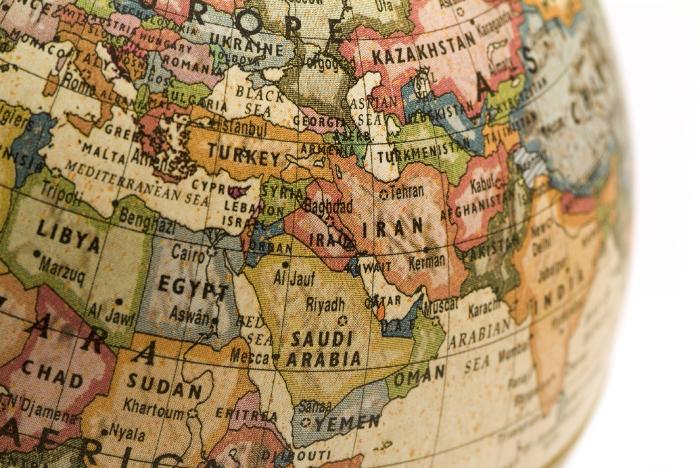
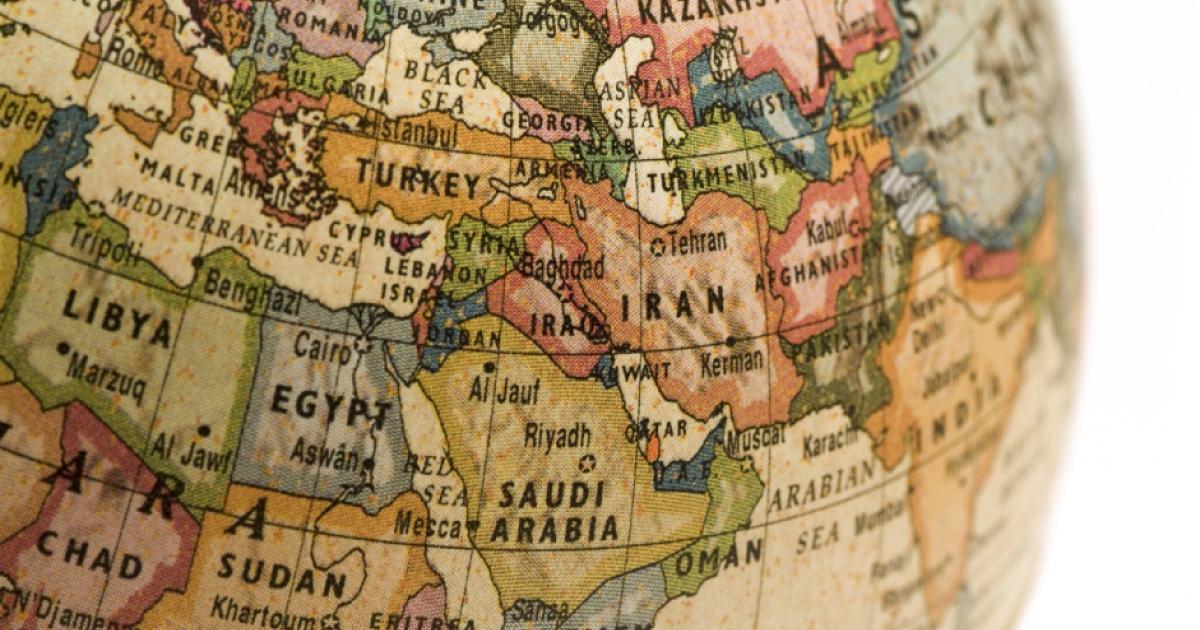
As will be shown below, the term “order” is ill-suited for depicting and analyzing the geopolitics of the Levant - the area comprising the states of Syria, Jordan, Lebanon, and Israel, the Palestinian Authority and the Gaza Strip. For the past few decades, the geopolitics of this region has not been shaped by a balance of power or a set of mutually accepted rules, but by strife and conflict.
During the two decades preceding the October War, the main conflict in the region was waged between Iran and Israel. Iran managed to build a system of proxies surrounding Israel consisting of Hezbollah in Lebanon, the Assad regime in Syria, and Hamas and Islamic Jihad in the Gaza Strip (as well as the Shiite militias in Iraq and the Houthis in Yemen). Israel conducted several limited military campaigns in the Gaza Strip against Hamas and Islamic Jihad. In the aftermath of the 2006 war in Lebanon, it tried to limit its confrontations with Hezbollah. In fact, the Netanyahu government sought to avoid conflict both in Lebanon and the Gaza Strip. It was willing to ignore increasingly bold provocations by Hezbollah and tried to buy calm in the Gaza Strip by facilitating the transfer of subsidies from Qatar to Gaza. Both Iran and Hezbollah and Hamas prepared for a showdown with Israel, encouraged by the 2021 ‘Guardian of the Walls’ Israeli operation in Gaza during which Israel had to contend with the violence perpetrated by members of its Arab minority. By that time, Iran and Hezbollah reached the conclusion that the time was ripe for launching a full-fledged campaign against Israel. Hamas under the leadership of Yahya Sinwar (elected in February 2017), prepared its own plan of attack which it finally launched in October 2023. An egregious intelligence failure by Israel enabled Hamas to inflict massive damage on Israel, to kill a large number of Israeli civilians and soldiers, and to abduct more than 250 Israelis. Hezbollah, in coordination with Iran, did not join the attack and limited its support for Hamas by launching a war of attrition along Israel’s northern frontier. Iran and Hezbollah’s decision not to join the fray fully was motivated by Iran’s conviction that it would be premature by their refusal to be drawn to war by Sinwar’s eagerness to go to war as well as by President Biden’s warning (don’t). In the Gaza Strip, Israel launched a full-fledged war in an effort to destroy Hamas militarily and politically. Inevitably, a full-fledged war in a densely populated area resulted in a huge number of civilian casualties and produced massive international criticism of Israel and the legitimacy of its action.
The war launched by Hamas in October 2023 spread as far as the Houthi held area of Yemen and lasted two years until it was brought to an end by President Donald Trump's 20-point plan of September 2025. The course of the Gaza War, which began very badly for Israel, was reversed in September 2024 when Israel launched the “Beepers attack” and subsequently eliminated Hezbollah's leader, Hassan Nasrallah. In April 2024, a shift occurred when Iran attacked Israel with ballistic missiles and drones, thus deviating from a policy of attacking Israel indirectly through proxies and avoiding a direct clash. A second Iranian-Israeli confrontation occurred in October 2024, during which Israel destroyed Iran’s aerial defense. In June 2025, Israel launched a 12- day war with Iran culminating with U.S. bombing of Iran’s nuclear installations. A weakened Iran and Hezbollah at the hands of Israel led directly to the toppling of Bashar al-Assad’s regime in Syria by Ahmed al-Sharaa and his HTS (Hay’at Tahrir al-Sham, the Authority for Liberating Greater Syria). Al-Sharaa and his organization launched an assault from their base in the province of Idlib, and meeting almost no resistance, captured Damascus and toppled the Assad dynasty.
Ahmed al-Sharaa began his career as a Jihadi member of al-Qaeda in Iraq, founded his own organization (Jabhat al-Nusra) in Syria and ended up building an autonomous government in the province of Idlib. He was supported throughout by Turkey surviving several attempts by the Assad regime and its Russian patrons to conquer the province. Al-Sharaa’s regime in Syria has been in power for more than a year now. Some of his critics in and out of Syria argue that he remains a Jihadi and that his apparent pragmatism is a disguise. In my view, he adopted a pragmatic track in 2016 and has by now become a pragmatic Islamist. This assumption will have to be monitored and tested in the coming years. He faces significant domestic challenges, first and foremost, the need to accommodate three minorities: The Kurds who controlled a large swath of land in northeastern Syria, the Alawites who lost their grip of power in northwestern Syria, and the Druze in the southern part of the country. Al-Sharaa is trying to rebuild the Syrian state and has yet to find a balance between his quest to centralize the government and the demands of the minorities to enjoy at least a measure of autonomy. In January 2026, Al Sharaa inflicted a blow on the Kurdish militia in northeastern Syria and forced it to sign a new agreement bringing the region under the central government’s control. His hold on power has been cemented by the support of the conservative Sunni states (Saudi Arabia and the UAE) as well as by the Trump administration. Now he needs to limit the embrace offered to him by Turkey, and to settle his relationship with Israel. Israel captured additional territories beyond the Golan, and al-Sharaa with U.S. support seeks to sign a security agreement that would push Israel back to the lines of June 1974 and consolidate the relationship between the two countries. Netanyahu’s government and its radical right-wing components are reluctant to withdraw from any territory, and thus the issue of the Israeli-Syrian relationship has yet to be resolved.
Turkey’s enhanced role in Syria is part of its quest to establish hegemony in the Middle East. Turkey is present in Syria (where it virtually annexed 8 percent of the territory), in the Gulf, and in the Horn of Africa. The geopolitics of the larger Middle East has been transformed by Iran’s and Turkey’s (two former imperial powers in the region) resumption of an active role in the politics of the region. Iran’s quest for hegemony rested on building its axis of proxies in the region. Its weakening by the Gaza war created an opportunity for Turkey to step into the void. Turkey also seeks, in coordination with the Trump administration, to play a role in the governance of the Gaza Strip. Given Erdogan’s hostility to Israel and to PM Netanyahu in particular, Israel is opposed to a Turkish military presence in the Gaza Strip and is trying to limit Turkey’s influence in Syria.
Yet another outcome of the October war and the weakening of Hezbollah has been the opportunity given to mainstream Lebanese politicians to rebuild the Lebanese political system. After years of paralysis, Lebanon with U.S., French, and Sunni Arab support has been able to elect a president (Joseph Aoun) and government (headed by Nawaf Salam). The Aoun-Salam administration would like to disarm Hezbollah but doesn’t quite have the power to enforce it. Iran and Hezbollah are trying to recover from the blows they sustained - it remains to be seen if the legitimate forces in the region can capitalize on their vulnerable state. Iran is trying to rebuild its air defenses, to expand its ballistic missiles’ arsenal, and to rebuild its axis. It is constrained by U.S. and Israeli resistance, by Syria’s hostility, and first and foremost by its own economic weakness and domestic unrest.
The future of the Gaza Strip has yet to be settled. The first phase of Donald Trump’s plan has been successfully implemented, but the transition to a second phase consisting of the construction of a governing authority, the disarming of Hamas, and the reconstruction of Gaza, has still to be accomplished. In fact, most of the issues described and analyzed above are yet open: The reconsolidation of Lebanon, the political future of Syria, the larger Palestinian issue (against the backdrop of the Israeli right-wing quest to annex the West Bank), and the future of Israeli politics given the unfolding conflict between an extreme right-wing government and a centrist opposition.
The U.S. has played a major role in the events of the past two years. The bombing of the Iranian nuclear installations and the active involvement in the war in Gaza were the manifestation of an unusually activist U.S. policy in the Middle East. Significantly, Israel’s special relationship with Washington, a hallmark of U.S. policy in the region in earlier years, has been weakened. The Trump administration tends to rely on the wealthy countries of the Gulf and on Turkey. The U.S. faces several ongoing challenges. In fact, the issues faced by the U.S. during the Gaza War all remain open: The need to transition to phase 2 in the Gaza strip, the need to consolidate the al-Sharaa regime in Syria and the Aoun-Salam administration in Lebanon, and the prospect of an Iranian return to nuclear enrichment. In January 2026, against the backdrop of massive popular demonstrations in Iran, the Trump Administration was drawn to the brink of a military confrontation with Iran. On February 6, a U.S. Iran negotiation was launched. Iran insists that the negotiations will deal only with its nuclear program while the U.S. is likely to insist on a larger agenda which includes the issue of Iran’s proxies.
This is a rich agenda and the administration’s ability to deal with it is clearly curtailed by the abduction of Venezuela's president, Maduro, the decision to take an active role and administer Venezuela and its oil industry, the Russian invasion of Ukraine and Trump’s preoccupation with Greenland. It will be a test of Washington’s resolve if it can manage all of these challenges.

