







- Middle East
- International Affairs
- US Foreign Policy
- US Defense
- Determining America's Role in the World
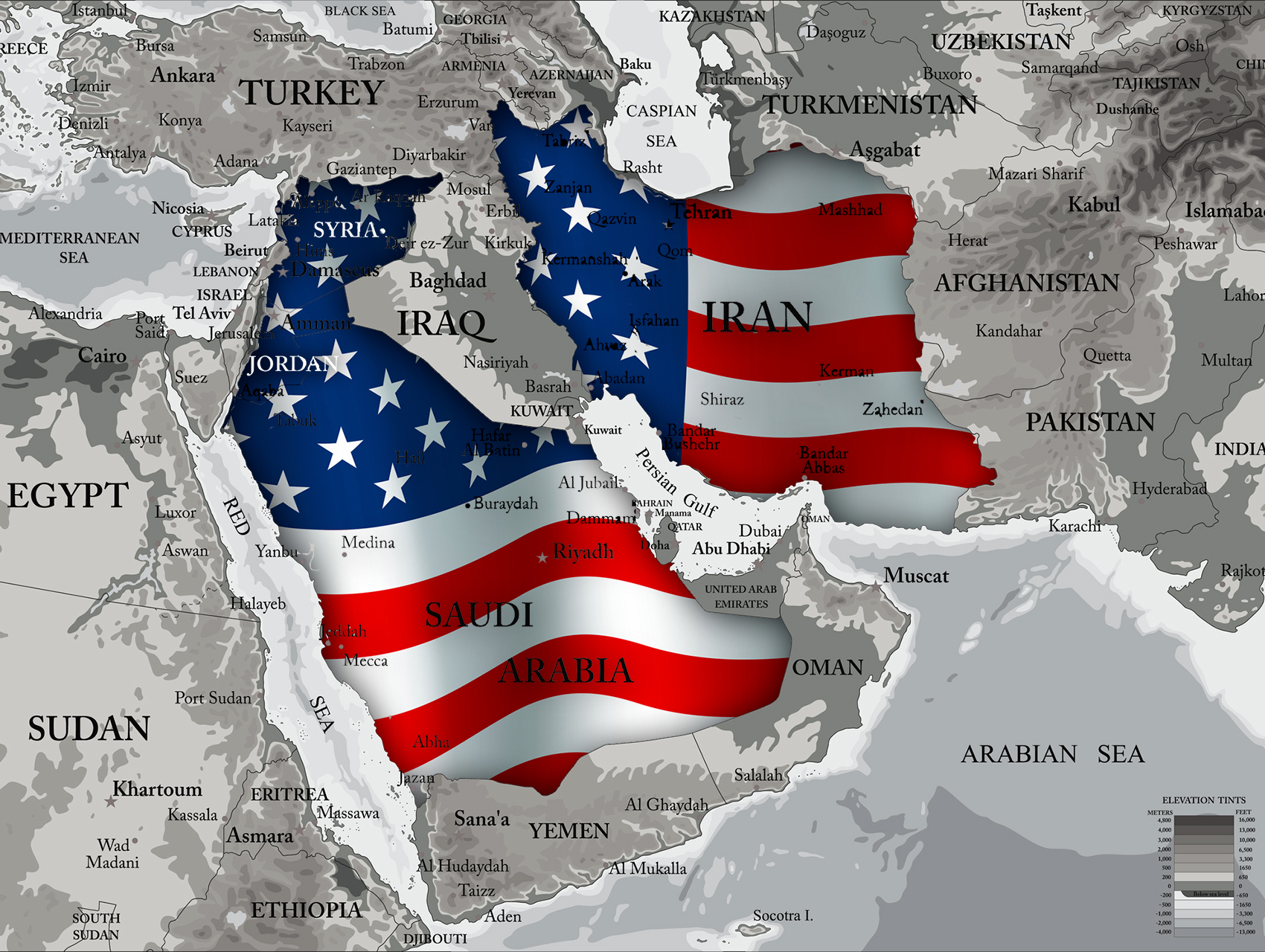
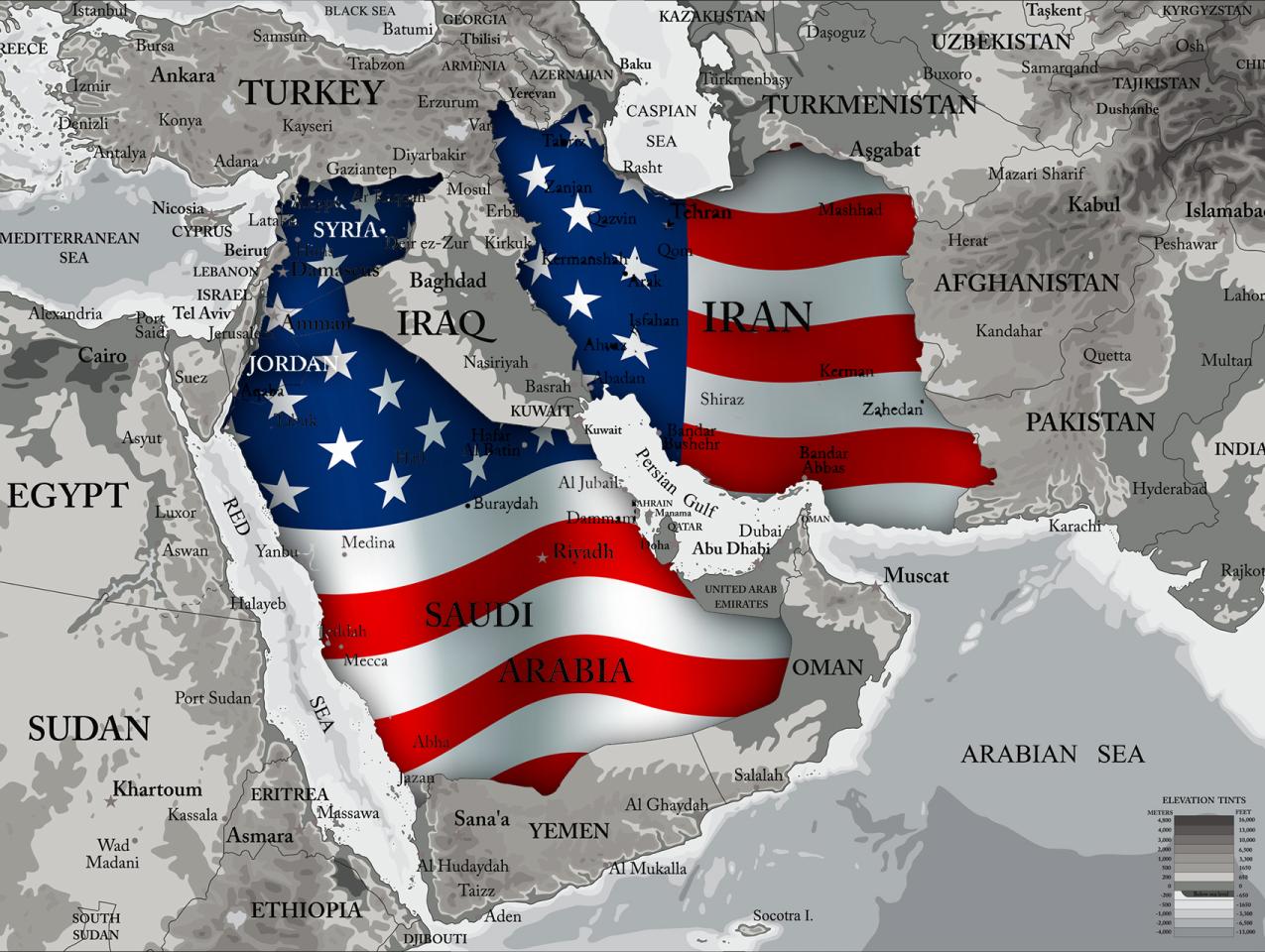
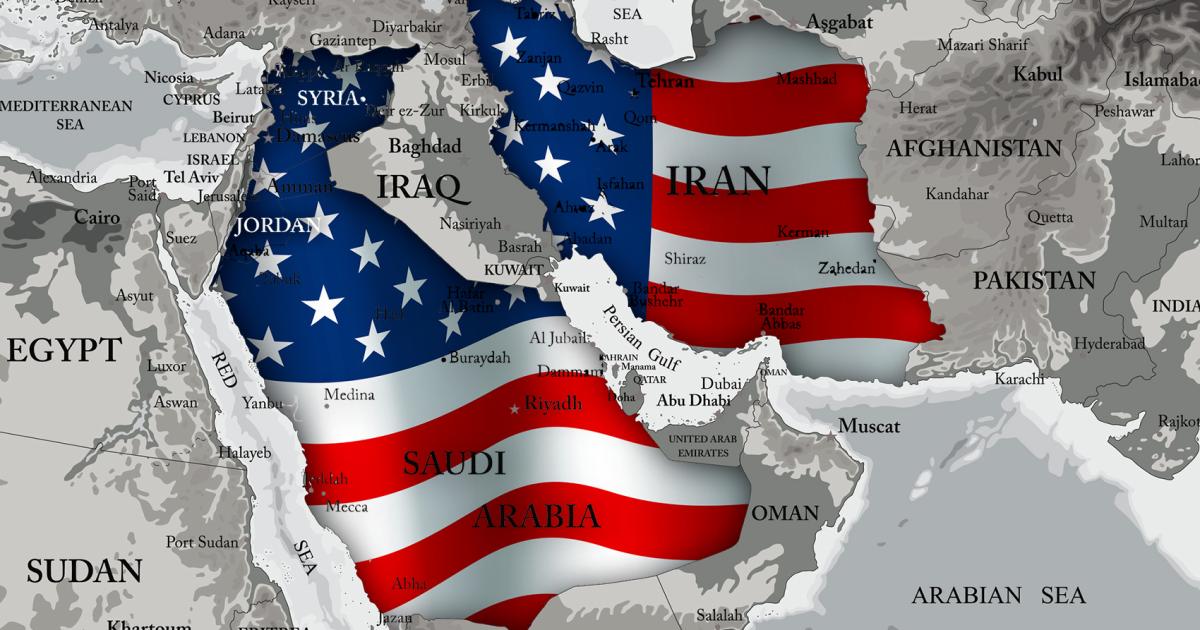
As of this writing in mid-February 2026, talks between the United States and Iran are underway, even as American naval forces gather nearby. Whether the talks will succeed or an attack will take place is unpredictable in this volatile region. The future of the Iranian regime, which has been facing unprecedented levels of domestic protest, is up in the air. It is, however, important to remember that Iran has been the culprit behind the instability in the Levant where, during the past few years, so much has changed. It is fair to ask how close we are to a new regional order there and the significance for the U.S.
The Middle East has long figured high on the list of American foreign policy concerns, although the rationales have varied over the years. The region’s importance for the world’s oil economy has never ceased to be a major factor, although this applies primarily to the Gulf and not significantly to the Levant. Furthermore, given the challenging geography of the shipping lanes that pass through vulnerable choke points at the Straits of Hormuz, Bab al Mandab and Suez, control of those points–or at least preventing their falling to hostile forces–remains a strategic goal. In addition, the U.S. has geostrategic interests in the region: the Middle East was a key terrain in which the U.S. and Russia competed for influence during the Cold War, and that phenomenon has returned in the current age of “Great Power Competition,” now with both Russia and China opposing American influence. A third dimension involves Iran: the programmatic animosity of its post-1979 regime toward the U.S., its efforts at regional destabilization and the pursuit of nuclear weaponry. Finally, since President Truman’s decision to support the establishment of the Jewish state in 1948, there have been multiple strands of domestic American public support for Israel, whether based in Zionism, Christian Zionism, or a perception of shared democratic values in a region where democracy is rare.
Despite these many factors pulling the U.S. toward the Middle East, in current U.S. policy discussions, not a few voices–including inside the Trump administration–argue for reducing commitments in the region in order to free up resources to redeploy them to where they are allegedly more necessary, i.e. the Western Pacific to ward off an expected Chinese effort to seize Taiwan. Nonetheless, the Trump administration has in fact remained very engaged in efforts to reshape the region. One should note of course that no matter how distinctive this administration’s style may be–the reliance on special envoys, the President’s rhetorical style, or the content of particular proposals–the focus on the Middle East is quite conventional. President after president has tried to “solve” the Middle East, and in this, President Trump is no different. He has expended political capital there, and he has brought his influence to bear on the component problems. With what results? Since his reelection in November 2024, a lot has changed in the Middle East, but it is important to ask why. How much of the changing Levant is due to administration policies? How much can be attributed to other factors?
This question of historical interpretation is akin to the debate over the end of the Cold War in Europe, the opening of the Berlin Wall and the collapse of the Soviet Union. For some American viewers, those dramatic changes were primarily a result of the Reagan administration’s policies, especially the arms build-up that bankrupted the Russian defense budget. Moscow had to face the fact that it could just not keep up. In contrast, a common German view is that it was not American weapons but rather West German Ostpolitik, a sort of detente outreach, that corroded the iron curtain. A further version focuses on the dramatic and often heroic opposition movements, especially in Poland, that hollowed out the Warsaw Pact from within. This range of interpretive paradigms points to the possibility of similar debates over the transitions in the Middle East: how much credit is owed to specific American policy decisions, for example, the choice to strike the Iranian nuclear sites? How much impact should be attributed to the wider power projection by the administration? Alternatively: how much has resulted from various endogenous factors, such as the Syrian uprising? The answer is likely a mix of these and more.
First consider some of the local factors which have reshaped the region. Foremost among them has been the transformative deployment of Israeli power: Israel has emerged as a force not only capable of defending itself–despite the tragic failure on October 7, 2023–but as a major regional actor. Its assault on Hezbollah, including the famous “beeper attack” of September 17, 2024, significantly degraded one of Iran’s key proxy forces, reestablished security in Israel’s own “North,” and laid the groundwork for political processes in Lebanon which were unthinkable only a few years ago: more on Lebanon in a moment. In addition, Israel has been willing to risk considerable international criticism in order to degrade Hamas and change the calculus in its “South” in Gaza. Some of these initiatives were taken despite opposition from the Biden administration and not always with concurrence from Trump’s Washington. It would be foolish to argue that Israel has eliminated threats in these neighboring countries completely, and there are still violent insurgents in the West Bank, nor have the Houthis in distant Yemen been dismantled. Nonetheless, Israel has reshaped its immediate neighborhood considerably. Its capacity and will to act have not been lost on the leaders in surrounding states.
Israel’s damage to Hezbollah, combined with admirably activist American diplomatic efforts, has enabled the formation of a government in Lebanon. Here a further local factor came into play: the willingness of parts of the Lebanese political class to begin to assert itself, if cautiously, against Hezbollah. After the previous Lebanese President Michel Aoun’s term ended on October 31, 2022, the parliament, split between supporters and opponents of Hezbollah, had not been able to elect a successor. The caretaker government that followed had limited powers. The U.S. as well as France, the former mandate power in Lebanon, pushed for a resolution to the political deadlock. It was, however, only in the wake of the beeper attack and especially the death of the charismatic Hezbollah leader, Hasan Nasrallah in an Israeli air strike on September 27, 2024, that the political landscape shifted. Not only did Hezbollah prove to be weak; larger parts of the Lebanese public became more resentful that this sectarian militia continued to draw the country into conflict with Israel. On November 27, Israel and Lebanon signed a cease fire agreement obligating the Lebanese Armed Forces (LAF) to disarm Hezbollah. On January 9, 2025, the parliament elected Joseph Aoun, former commander of the LAF, as President, and a government could be formed. The terms of the ceasefire have not yet been fully implemented; Hezbollah is not fully disarmed, but it has apparently ceded power at least in southern Lebanon, south of the Litani river, to the LAF. It has not disappeared, but it is severely reduced.
During the dictatorship of Bashar al Assad, Syria was an important lynchpin in Iran’s strategy of regional destabilization. It provided a land bridge from Shia dominated Iraq into Lebanon for the transport of arms and for the lucrative drug trade in Captagon, an illegal amphetamine produced mainly in Syria and sold abroad, especially in the Gulf, with devastating health consequences. However, since the Arab Spring and the outbreak of the revolution in Syria in March 2011 in the southern city of Daraa, the central regime in Damascus never controlled all the national territory. Northwest Syria, around Idlib and Aleppo, fell under the control of the Islamist forces of the Hayat Tahrir al-Sham (HTS), whose roots can be traced back to Al Qaeda. Especially in Idlib, HTS instituted a draconian Islamist regime; for example, the local Druze, a non-Muslim minority, were forced to hide their identity or to convert to Islam.
In late November 2024, HTS forces began to move south, and the Syrian National Army offered little resistance. On December 8, Damascus fell, Assad fled to Moscow, and fifty years of Baathist rule came to an end: that change is surely irreversible, truly a new political order in the Levant. But what sort of order? In his effort to gain international support and see sanctions on Syria lifted, the interim president, Ahmed al Sharaa has presented himself as a modernizer, even though his previous career has been as an Islamist and violent terrorist. Will he really be able to change? On his watch, minority communities have faced brutal assaults–the Druze of Suweda in the South, the Alawites on the coast and the Kurds in the North. Trump administration policy has largely leaned into supporting al Sharaa and his goal of a unified and centralized Syria. Yet the attacks on the minorities, especially the Kurds, have rankled members of Congress who saw the Kurdish Syrian Democratic Forces as U.S. allies in the anti-ISIS campaign.
A further dimension pertinent to U.S. interests involves the extent to which the regime change will diminish Russian influence in Syria. Al Sharaa recently visited Moscow where he called Russia–which had bombed Syrian civilians extensively during the war in order to shore up the Assad government–a “blessed country.” It would be clearly in American interest to see a diminishment, not an increase of Russian presence in Syria.
In Lebanon, Hezbollah has been taken down, but it has not disappeared, and it may be rebuilding. In Syria, Assad is definitely gone, but the successor regime of al Sharaa still has to show its true colors. In both cases there have been big changes, due in part to endogenous processes and in part to American pressure. Yet in neither have we reached an equilibrium. Neither story is over yet–and that work-in-progress character holds in spades for Gaza.
No part of American Middle East policy bears President Trump’s personal mark more than Gaza. It was early in 2025, soon after his return to the White House, that he remarked on Gaza as a “future Riviera of the Middle East,” predicting massive development and transformation into a tourist economy. The comment elicited vocal protests, especially concerning the potential of population displacement, but it set a political process in motion leading to the announcement of a 20-point peace plan on September 29, an agreement on a cease fire between Israel and Hamas on October 8, and a peace summit in Sharm el Sheikh on October 13, after which the U.N. Security Council endorsed the peace plan in Resolution 2803. A “Board of Peace,” chaired by Trump, has been formed and the remains of the final Israeli hostage have been repatriated. The framework for an international stabilization force, reconstruction and investment has been set up. What remains, however, is completion of the Hamas disarmament. As in Lebanon with Hezbollah, Hamas too, significantly diminished, has not disappeared and is resisting giving up its weaponry completely.
To sum up: measured against the chaotic situation in the Levant at the end of the Biden administration, the map of the balance of forces is radically different, even if a definitively stable order has not yet been finalized. The erstwhile axis of resistance, the proxies that carried out destabilization in the interests of Iran, has been shattered: in Gaza and in Lebanon, Hamas and Hezbollah have been defeated (if not fully eliminated) thanks to Israeli power and American diplomacy. In Syria, Iran’s ally, Assad, has been toppled by Islamist forces that have brought al-Sharaa to power. In Gaza, Trump’s policies have at least opened a pathway forward that has even received U.N. approval, although many questions remain unresolved. In Lebanon, the marginalization of Hamas may allow for political revival, as a precondition for economic growth. In Syria, however, the centralization of a likely authoritarian state may produce a degree of stability, but certainly not a liberal democratic regime: the minorities will continue to have plenty to fear.
In the best of circumstances, the vestigial militia, especially Hamas and Hezbollah, will be genuinely pacified, and similarly al-Sharaa, turning into the modernizer he claims to be, will control the extremists who brought him to power and welcome minorities into the government. Yet even if such auspicious developments take place, the region will still face two dovetailing challenges. Nearby powers, like Turkey and Israel, as well as the Gulf states further away, like the UAE, Saudi Arabia, and Qatar, will continue to project their own interests and competition into the region: Will Israel and Turkey pull Syria apart with their conflicting ambitions? Will the Gulf States develop antagonistic clients in Lebanon or in Gaza? These external forces could upset the move toward regional peace. That peace, however, was significantly, if not completely, a result of American diplomacy. That same American diplomacy ought to be managing these wider regional interests, preventing them from upsetting the fragile peace. The U.S. could mediate the tensions between Turkey and Israel as well as the conflicting interests in the Gulf. These opportunities bring me, however, to the second danger to the region. If a neo-isolationist America were to decide that the Levant is just not worth the expenditure of diplomatic efforts, entropy is likely to set in, tearing apart what has been achieved through extensive efforts by the U.S. and its friends in the region.
In sum, the fragile Levantine order emerging now might be threatened by a resurgence of the defeated militias or a revanchist Iran, but it could also be undermined by a decision by the U.S. to walk away. The President himself has not signaled that he will choose the isolationist path here; indeed, he has himself signed on to lead the Board of Peace in Gaza. However, not everyone in the administration or in Washington has the same commitment.

