Working Papers
A Network Approach to Geopolitics
Economics Working Paper 26127
October 16, 2026
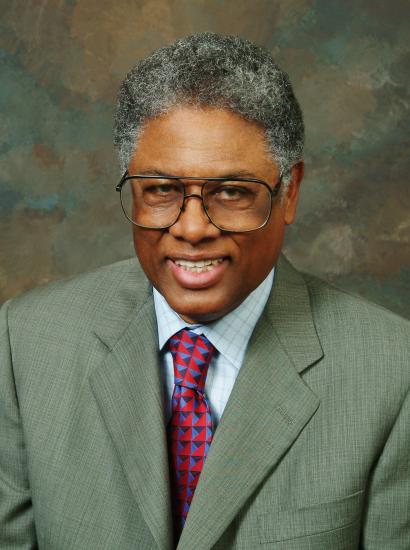
This week on Uncommon Knowledge, Hoover fellow and author Thomas Sowell discusses his essay “‘Trickle Down Theory’ and ‘Tax Cuts for the Rich.’” (39:52)
“Now anyone who studied history knows that for the first 150 years of this country the federal government did not intervene when the economy turned down. And all that time the downturns all corrected themselves; one of the most classic examples was under Warren G. Harding when, during his first year in office, he found the unemployment rate at 11.7 percent. He did absolutely nothing; he did not spend more government money, he cut back on spending. The Federal Reserve had the interest rates up at 6 or 7 percent, not down at 1 percent, where they are now. The next year unemployment was at 6.7 percent; the year after that it was 2.4 percent. So the economy has recuperative powers. I mean employers have an incentive to hire people. Workers have an incentive to get jobs. Lenders have incentives to lend.”
Working Papers
Economics Working Paper 26127
October 16, 2026
Videos
How did Donald Trump go from political defeat and the aftermath of January 6 to a second term in the White House?
October 19, 2026
Videos
Mickey Levy on his early career working with Alice Rivlin at the Congressional Budget Office and with Arthur Burns at AEI, as well as being part of the Shadow Open Markets Committee from its early days in the 1970s.
October 16, 2026