







- Middle East
- International Affairs
- US Foreign Policy
- Determining America's Role in the World
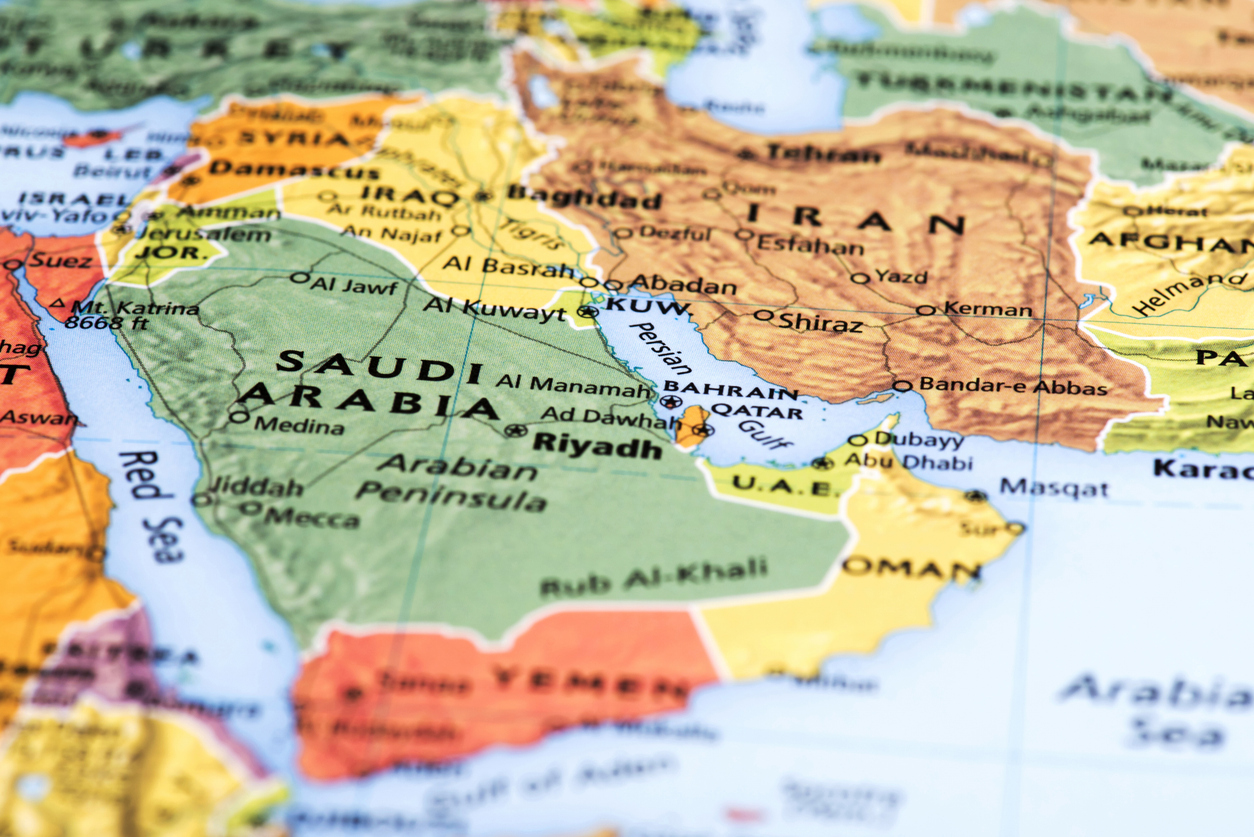
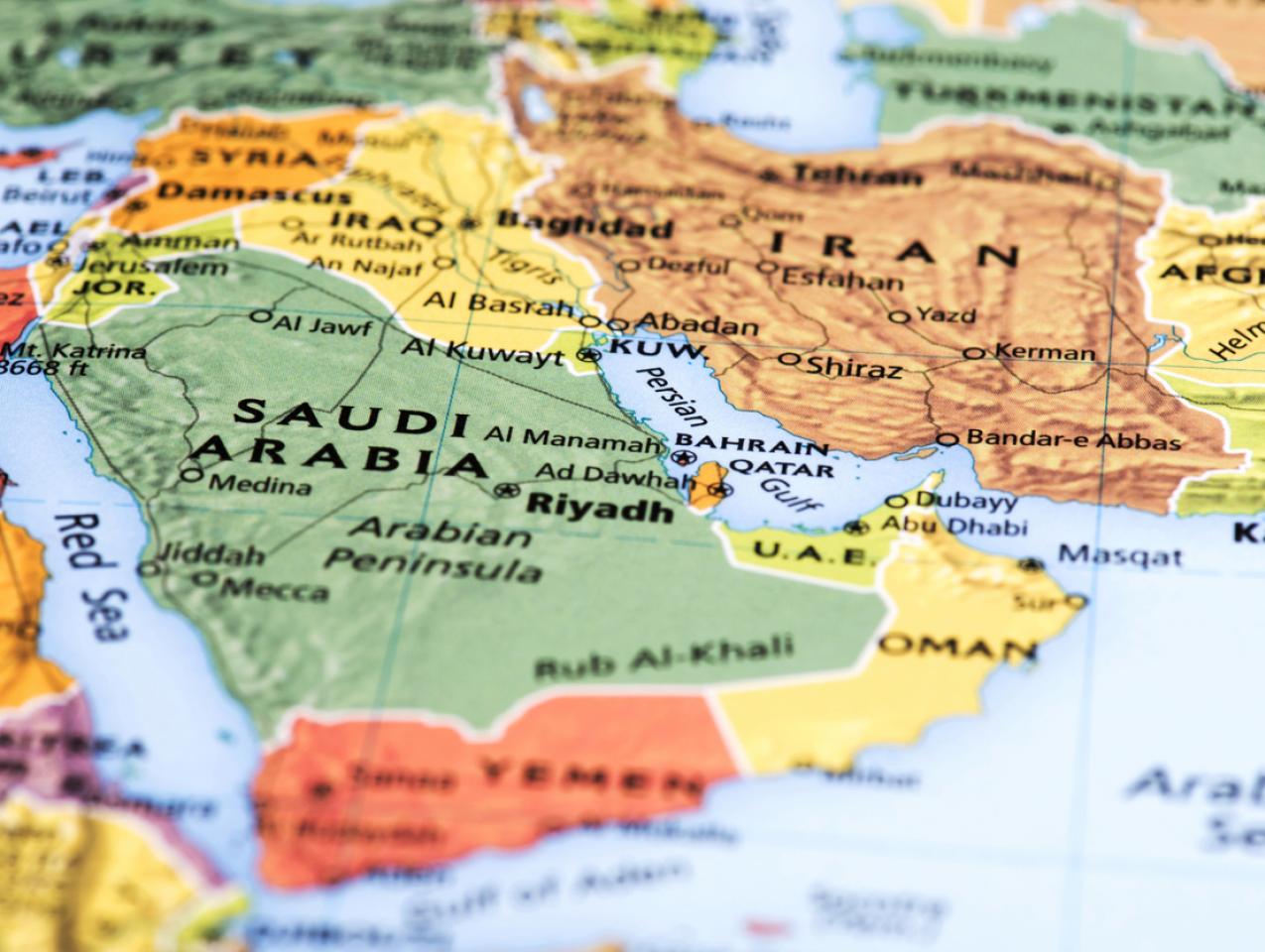
From January 2025 and through February 2026, the Gulf Cooperation Council (GCC), largely Saudi Arabia, the United Arab Emirates (UAE), and Qatar, used a calibrated program of financial and political support that helped stabilize the Levant while building their political influence in Syria and, to a lesser extent, in Lebanon. The three countries deployed liquidity, infrastructure projects, and diplomatic legitimation to shape sovereignty outcomes, constrain Iranian power, and balance Turkey’s growing leverage while avoiding the failed state scenario that some feared might follow the collapse of the Asad regime. Saudi Arabia actively shaped the political and economic architecture of Syria’s reintegration into the Arab world; the UAE’s investment will enhance the Levant’s future as a strategic shipping center; Qatar combined solvency support with energy-centric statecraft. Progress proved greater in Syria than in Lebanon. The latter’s inability to disarm Hezbollah shows that whereas Gulf countries are willing to make a strategic investment in Syria, a country with multiple domestic and external security challenges, Beirut has yet to demonstrate that it has the national willpower to merit the risk of political and financial capital. Gulf support to Lebanon continued during this period but will not reach the scale and pace required to transform Lebanon’s future until Hezbollah no longer represents a military and political challenge to state sovereignty.
The leaders of the GCC immediately recognized the historic opportunity presented by Bashar al-Asad’s December 8, 2024, flight to Moscow. Gulf leaders quickly established connections with Syria’s new leaders, and commercial and diplomatic gears began to move throughout the region. On January 3, 2025, Qatar Airways restored flights to Damascus. Syria’s new foreign minister, Asaad al Shaibani, made his first official trip to Doha the following day. Within weeks, Qatar’s emir became the first head of state to visit Damascus, and Doha provided natural gas to ease Syria’s power crisis.[1] Soon after, Syria’s transitional president, Ahmad al-Sharaa arrived in Riyadh. His meeting with Crown Prince Mohammed bin Salman initiated a relationship that would eventually become one of Syria's most important and impactful in the region.
For the Gulf States, a raft of strategic drivers compelled their rapid outreach out to Damascus. First and foremost, they needed to ensure that the new Syrian regime survived to prevent the appearance of a failed state already choked with militants, narcotics traffickers, and remnants of Iranian militias so close to their borders and Jordan. Success was far from guaranteed in a region where failure had been the most common historical outcome. The catastrophes of Iraq, Libya, and Yemen had cost the region dearly in blood, treasure, and generations of development. The demand would be enormous. Decades of civil war, corruption, and mismanagement, left many experts predicting that Syria would need as much as $216 billion to recover.[2] This meant that any regional strategy required that Washington supported an early easing of United Nations sanctions and lifted its own sanctions on Syrian actors and institutions.
Asad’s departure coincided with Israel’s destruction of much of Hezbollah’s leadership, thus offering the opportunity of healing the Levant as a whole. American engagement in Lebanon offered hope for change, but Hezbollah’s persistent refusal to disarm, and Lebanon’s frustrating history of official corruption and ineffective political institutions limited the prospect for substantial regional progress. The threat of further Israeli military action and communal violence hovered as a constant over Syria and Lebanon, periodically complicating but not halting the Gulf approach.
With limited coordination, the GCC engagement with the Levant swiftly converged around a distinct strategy: transactional stabilization. Riyadh, Abu Dhabi, and Doha employed a blend of diplomatic recognition, macroeconomic and financial support, and flagship infrastructure deals to gradually build leverage over fragile states , block Iran, act as a counterweight to Turkey, and position their firms for a postwar commercial landscape.
Gulf leaders rapidly judged that the Syrian transitional President Ahmed al-Sharaa could be trusted sufficiently to become a reliable partner, or at least one to be tested with substantial investments. Even though al-Sharaa could not control all the events or forces in his country, they assessed that his ultimate goals matched their own. Gulf states expanded assistance in areas which would overcome the bottlenecks to sovereignty, e.g., inability to pay salaries, electricity shortages, ensuring port and airport operations, telecommunications improvements, and support for further sanctions relief from Washington. These achievements would nurture stability, encourage the return of refugees, and test the Syrian government’s commitment to building an inclusive society that would allow Syria to return to the Arab world.
Some Western and Israeli voices worried that al-Sharaa was being trusted too quickly, but it was clear the GCC approach won favor with a Washington increasingly inclined to allow the region to shoulder more responsibility for challenges once left to Western diplomats to resolve – and worse to fund. President Trump’s May 2025 decision to lift sanctions on Syria unsettled some, but the decision not only reflected his trust in the Saudi Crown Prince who encouraged the move, but almost certainly the President’s belief that doing so would accelerate regional involvement in Syrian rehabilitation.[3]
Since that time, Gulf engagement in Syria has followed four intertwined tracks.
- Political legitimation: Numerous indications of the acceptance of Syria's new regime: the Qatari Emir's travels to Damascus, Al-Sharaa’s meeting with the Saudi Crown Prince, ministerial visits, flight resumptions, Saudi mediation of Syria-Lebanon border demarcation agreement, diplomatic lobbying for removal of United Nations sanctions against al-Sharaa, etc. Together, these actions made it possible for other countries and organizations to routinely work with Damascus.
- From the earliest days of the Al-Sharaa government, GCC engagement included an important security component. Gulf states needed to confirm that Damascus would be a reliable partner against ISIS, Iran, Iranian proxies, and narcotics traffickers. Saudi Arabia used its convening power to develop support for Syria’s evolution into regional security architectures. The Riyadh Meeting on Syria on January 12, 2025, explicitly tied Gulf and regional security to Syria’s internal consolidation, stressing the need to prevent Syria from becoming “a source of threat to the security and stability of the countries of the region.”[4] On March 6, 2025, this GCC-wide position was further formalized through the first GCC–Syria joint ministerial meeting in Makkah. At this meeting, GCC Secretary-General Jasim al-Budaiwi emphasized that disarming militias and armed factions, concentrating weapons in the state’s hands, and combating terrorism and extremism” would be an important part of Syria’s reintegration into the Gulf’s security architecture. The progress that followed was encouraging and ranged from bilateral counterterrorism cooperation to Syria’s frequent participation in GCC senior political meetings focused on regional security.[5] On February 9, 2026, Syria joined the Saudi-hosted Global Coalition to Defeat ISIS small‑group talks on Iraq and Syria (February 9, 2026), which explicitly welcomed Syria’s national leadership of counter-ISIS efforts. This statement formalizes Syria’s role in regional counterterrorism efforts while also enhancing reinforcing its recognition as member of the international community.[6]
- Macro-economic stabilization: With Washington’s support, Saudi Arabia and Qatar funded Syrian public-sector salaries, followed by a joint $89 million pledge to cover vital services and state payroll. This was transactional stabilization in pure form: a short-term liquidity bridge intended to prevent administrative collapse, reduce incentives for predation by armed actors, and establish Gulf leverage within the new bureaucracy. Riyadh and Doha also settled Syria’s $15.5 million World Bank debt, enabling renewed international lending. Despite the modest size of this payment, resolving the debt enabled Syria to join multilateral institutions and access their aid programs.
- Investment in Critical Infrastructure: A series of highly publicized investments provided badly needed support for the Syrian economy and also demonstrated Gulf confidence in the al-Sharaa government.
- Beginning in July 2025, Riyadh initiated hundreds of infrastructure and telecommunications projects worth more than $6.4 billion. In September, the Kingdom announced more than 450 additional humanitarian projects, totaling $1.4 billion. In February 2026, Saudi Arabia pledged an additional $800 million to build a 4,500 km fiber-optic network through Syria, a $2 billion fund to develop airports in Aleppo, and support for a new Syrian state-owned airline.[7] These last projects will also integrate seamlessly into the Kingdom’s regional tourism and telecommunications architecture.
- Focusing on its logistics and transportation advantage, Abu Dhabi announced in July 2025 that it would invest $800 million to develop a multi-purpose terminal at Tartous and establish industrial free zones in the eastern Mediterranean, where it already had important interests.[8] The U.S. also announced plans for high-profile investments in real estate, transportation, and urban infrastructure in Damascus
- Drawing on its energy expertise, Qatar’s support for power generation and a preliminary offshore oil and gas exploration agreement between Qatar’s Power International and Chevron signaled that Syria’s recovery would be tied to Western-facing energy structures.[9] Saudi Arabia and the UAE also joined in efforts to improve Syrian oil and natural gas production.[10] [11]
But if Syria’s new government offered strong potential for Gulf patronage, Lebanon in 2025–26 failed to earn similar confidence. Despite promising steps by President Joseph Aoun and steady engagement by Washington, Beirut continues to struggle with the question of which internal entity would hold the monopoly of force. Riyadh and Abu Dhabi became increasingly cautious as the months passed. Each was willing to support the Aoun government with limited financial assistance but was unwilling to fund a system they believed had long ago surrendered to corruption and Hezbollah.[12] [13] Each sought evidence of reforms. Qatar proved more willing to provide funding for key state institutions and the energy sector, a robust commitment that Doha continued into 2026[14]. Ultimately, the result has been a situation in which the Gulf has provided sufficient support to enable Lebanese institutions to function during a period of extreme financial difficulty, but transformational support awaits the disarmament of Hezbollah.
Absent a major regional conflict, the trend points to further evolution along the lines described above. Saudi Arabia is likely to remain in the forefront of GCC integration efforts. For Washington, this means a Syria that despite its domestic problems appears on the path to stability. Its future looks to be one based on deep political and economic ties to the Gulf Arabs as well as Turkey. Iran will have great difficulty competing against these actors in Damascus. Further, Gulf states are increasingly insistent that their investments must be well-managed and profitable for both sides. Syria’s rampant corruption will not be tolerated. If this course can be sustained, a more economically viable Syria will be better able to withstand the security shocks from any communal violence, and the return of refugees will be a relief to Syria’s neighbors. Progress in Lebanon appears likely to remain elusive, at least in the near term. There seem to be few inducements that Gulf states can offer to accelerate Lebanon’s reforms.
However, in the medium term, we should be alert to the potential that the Levant becomes one more arena where the major regional actors seek dominance. Riyadh has historically had strong relations with Damascus and will likely seek to ensure that Syrian policies closely match its own. Fortunately, the Levant remains a region in which Saudi Arabia, the United Arab Emirates, Turkey, Qatar, and others invest with little friction. The Trump administration should do what it can to maintain equilibrium among all those engaged in rebuilding. Failure to do so could slow Syrian stabilization or at least discourage investment in Syria and compel Washington to expend precious diplomatic bandwidth on this complicated issue. China, Russia, and even Iran would seek to exploit any political disputes among those involved in Syria’s recovery.
The diplomats of the GCC have achieved significant results in the Levant over the past year. The coming year is already laden with heavy challenges regarding Iran, Yemen, and the refusal of Hamas and Hezbollah to disarm. We need to ensure that the momentum behind Gulf success in the Levant continues.
[1] Eva Levesque, Qatar to supply Syria with natural gas to ease power crisis, March 14, 2025, Arabian Gulf Business Insight. https://www.agbi.com/oil-and-gas/2025/03/qatar-to-supply-syria-with-natural-gas-to-ease-power-crisis/
[2] Press release: Syria’s Post-Conflict Reconstruction Costs Estimated at $216 billion, https://www.worldbank.org/en/news/press-release/2025/10/21/syria-s-post-conflict-reconstruction-costs-estimated-at-216-billion. World Bank Group. https://www.worldbank.org/en/news/press-release/2025/10/21/syria-s-post-conflict-reconstruction-costs-estimated-at-216-billion
[3] Gram Slattery, Pesha Magid, Nafisa Eltahir and Timour Azhari, Trump to remove US sanctions on Syria in major policy shift, May 14, 2025. https://www.reuters.com/world/trump-says-will-remove-us-sanctions-syria-2025-05-13/
[4] Chair's Statement of the Riyadh Meetings on Syria, Saudi Ministry of Foreign Affairs, January 1, 2025, https://www.mofa.gov.sa/en/ministry/statements/Pages/N122.aspx
[5] GCC officials discuss Syria, Kuwait Times, August 21, 2025. GCC officials discuss Syria | Kuwait Times Newspaper
[6] Joint Statement on the Global Coalition to Defeat ISIS Meeting on Iraq and Syria, Joint Statement on the Global Coalition to Defeat ISIS Meeting on Iraq and Syria, US Department of State, Media Note, Office of the Spokesperson, February 9, 2026, https://www.globalsecurity.org/military/library/news/2026/02/mil-260209-state01.htm
[7] Parmod Kumar, Saudi Arabia to help build airports in Syria, February 9, 2026, Arabian Gulf Business Insight. https://www.agbi.com/infrastructure/2026/02/saudi-arabia-to-help-build-airports-in-syria/?utm_campaign=253056212-AGBI%20Daily%20Newsletters&utm_medium=email&_hsenc=p2ANqtz--eRB4GLkJlKHSfrIerGgtd3VYP0QDJpN6Zy5itX8l_xnmM_9SEeqPw6wSGvZ2T1FcNFHeXqxD9_Of1E8xTOO-baICWTQ&_hsmi=128098692&utm_content=128098692&utm_source=hs_email.
[8] Syria and DP World ink $800 million deal for port development, Reuters, May 15, 2025.
https://www.reuters.com/world/middle-east/syria-dp-world-ink-800-million-deal-port-development-2025-05-16/
[9] Pramod Kumar, Chevron-Qatar venture to search for offshore oil and gas in Syria, February 5, 2026, Arabian Gulf Business Insight. https://www.agbi.com/oil-and-gas/2026/02/chevron-qatar-venture-to-search-for-offshore-oil-and-gas-in-syria/
[10] Pramod Kumar, UAE’s Dana to redevelop Syrian gas fields, November 13, 2025, Arabian Gulf Business Insight, https://www.agbi.com/oil-and-gas/2025/11/uaes-dana-to-redevelop-syrian-gas-fields/.
[11] Pramod Kumar, UAE’s Dana to redevelop Syrian gas fields, November 13, 2025, Arabian Gulf Business Insight, https://www.agbi.com/oil-and-gas/2025/11/uaes-dana-to-redevelop-syrian-gas-fields/.
[12] Kareem Chehayeb, Lebanese president hopes to mend ties with Saudi Arabia in first visit in years, March 3, 2025, https://apnews.com/article/lebanon-saudi-arabia-aoun-hezbollah-919e4f6f6b7cecbb4698c1d04a09ca97
[13] Jean-Loup Samaan, Landmark UAE visit highlights President Aoun’s catch twenty-two.
, May 12, 2025. The Atlantic Council, https://www.atlanticcouncil.org/blogs/menasource/landmark-uae-visit-highlights-president-aouns-catch-twenty-two/
[14] Qatar says it will provide Lebanon with $430 million in financial support, Reuters, January 26, 2026. https://www.reuters.com/world/middle-east/qatar-says-it-will-provide-lebanon-with-430-million-financial-support-2026-01-26/

