Articles
Who Needs The Bomb?
The Purpose of Nuclear Deterrence.
October 20, 2026
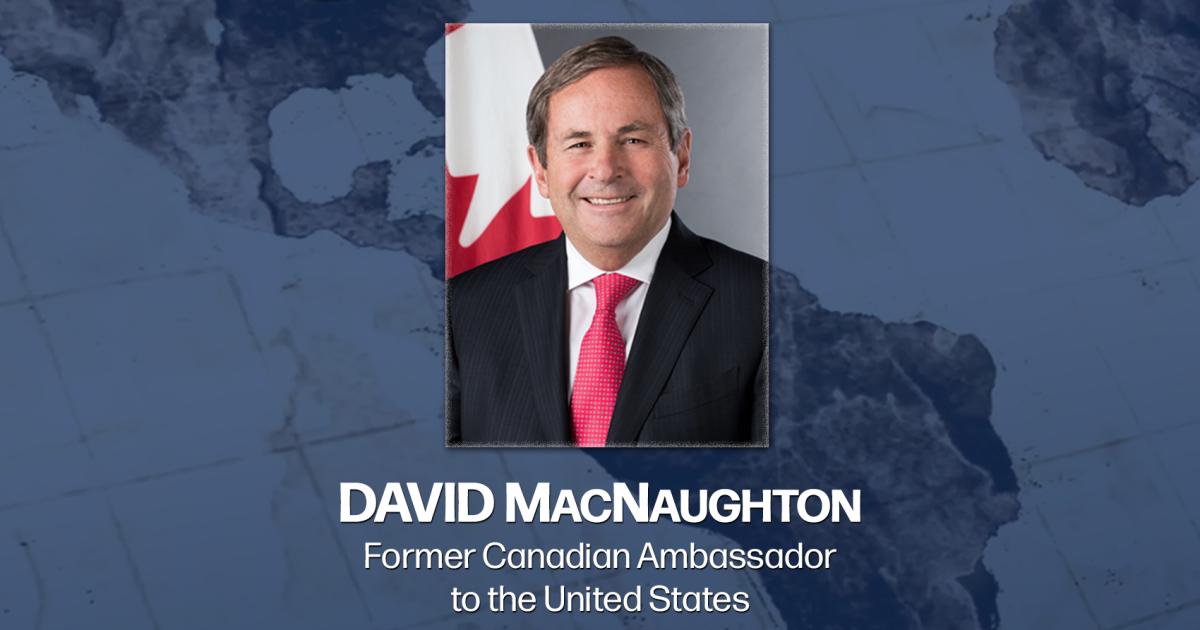
Join former Canadian Ambassador to the United States, David MacNaughton and Hoover Senior Fellow, H.R. McMaster as they discuss Canada and US cooperation on Arctic and North American security, prospects for deepening economic cooperation after the 2026 review of the USMCA trade agreement, and opportunities to turn recent tensions into opportunities for both nations.
Reflecting on current geopolitical forces shaping North America and the Western Hemisphere, MacNaughton provides his insight on shifting dynamics in Venezuela, China’s expanding economic and strategic footprint in Latin America, and the implications of political rhetoric and rising tensions on the US–Canada relationship. Exploring a forward-looking agenda centered on continental defense and resilience, including the modernization of NORAD, missile defense, and the protection of critical infrastructure, McMaster and MacNaughton highlight the growing importance of energy security, critical minerals, and resilient supply chains as pillars of economic and national security.
Recorded on March 19, 2026.
- I don't blame the president for saying Canada needed to step up and spend more money on defense and other countries did too. He was right about that. We should have been doing it. And, you know, somewhat to his credit, we were actually stepping up and doing something. But the continuous, you know, insults and, you know, nasty rhetoric just makes it really, really hard for, for, for the leadership of our country and, and, and others to, to come to partner with the United States, which is what we should be doing.
- This is today's battlegrounds. Our discussions with leaders from around the world. Consider how history produced the present, and how we can work together to overcome obstacles, to progress, seize opportunities, and build a better tomorrow.
- On this episode of Today's Battlegrounds, our focus is on Canada. Our guest is Ambassador David MacNaughton, a veteran Canadian diplomat, business leader and public affairs strategist who served as Canada's ambassador to the United States from 2016 to 2019. Over a career spanning more than four decades, McNaughton has been a essential figure in Canadian public policy and cross-border economic relations. Prior to his diplomatic service, McNaughton led strategy in Canadian public affairs and investment banking. Following his tenure in Washington, he served as president of Palantir Canada. From 2019 to 2025, the Canada US Alliance rests on a foundation of geography, shared institutions, and deep economic integration. For more than a century, the two nations have deepened cooperation across defense, law enforcement, trade, and diplomacy. During the Cold War, the creation of the North American Aerospace Defense Command, institutionalized joint defense of the continent against Soviet threats, the 1988 Canada United States Free Trade Agreement, and the 1994 North American Free Trade Agreement. NAFTA transformed the economic relationship and deepened both economies. Integration. After the terrorist attacks of September 11th, 2001, the two countries aligned border policies to foster security and commerce across the world's longest defended border, the US Mexico Canada Agreement, U-S-M-C-A substituted NAFTA in 2020, and today, Canada and the United States exchanged nearly a trillion dollars in goods and services each year, making the partnership one of the most consequential economic relationships in the world. The security relationship continues through the modernization of the bilateral North American aerospace defense command, norad, and growing coordination to secure the Arctic and defend North America against emerging threats, including hypersonic weapons and advanced drones. Yet what President Ronald Reagan described in 1985 as the most productive relationship between any two countries in the world, has entered a period of tension and uncertainty. But US Canada cooperation is as important as ever. The melting arctic ice cap has opened new ceilings and intensified strategic competition in the high North where Russia has expanded its military footprint, and China has declared itself a near Arctic state, increasing demand for critical minerals, the need for energy security, and the growing importance of continental defense against missiles and other emerging threats, all militate in favor of greater US Canada cooperation. However, trade disputes and political rhetoric have strained diplomatic relations. Even as leaders of both nations remain concerned about common threats to security and prosperity. We welcome Ambassador David McNaughton back to today's battlegrounds to discuss Canada and US cooperation on Arctic and North American security prospects for deepening economic cooperation after the 2026 review of the USMC, A trade agreement and opportunities to turn recent tensions into opportunities for both nations
- Ambassador David McNaughton, welcome back to today's Battlegrounds. It's great to have you here to talk about you hemispheric relations, US Canada relations at a critical time when there's a lot going on in the world. Thank you for joining us.
- Oh, it's a pleasure. Always a pleasure to discuss what's going on in the hemisphere and the world. So,
- Well, David, I I'm gonna ask you just a really general question. First, we're gonna get more into US Canada relations because there's a lot going on there as well. But, you know, it's been an eventful, you know, 2026, right? We had at the beginning of the year, the, the arrest of Maduro during a, a US military Special Operations Maduro is now in a New York jail. So there's a fundamental shift, I think, going on within Venezuela and maybe some ripple effects in the hemisphere. So I would like to talk with you about that first, what's the view from, you know, from from Canada, from your perspective on dynamics within the hemisphere associated with that operation to, to ro?
- Well, I don't think anybody, you know, feels any particular sympathy to Maduro. I mean, you know, he was not a good guy and was treating people badly and all that kind of thing. So I think, you know, one can perhaps talk about the, the rhetoric surrounding it all and everything else, but it, it was a, it was a good, you know, effort that fortunately didn't cost American lives and, and, you know, got rid of a bad guy. So I think the result was good. As I say, some of the, the rhetoric around it may not have been exactly what, what we would've liked, but, you know, such, you know, you, you and I had discussions about that situation when I was in Washington and you were a national security advisor and, and, you know, trying to figure out what, what we could do and how to, how to get that situation under control. So I think it's a good thing he's gone. Anyway,
- You know, Dave, we also were working quite a bit on, on the Cuba problem set at the time. And remember we had that issue where a a lot of Canadian and, and American officials were affected by this kind of high frequency device and what we think it was, and maybe tied to the Russians. It's still sort of still open to a couple of possibilities, but, but we were also working on the Venezuela Cuban Nexus and the degree to which Venezuela was providing a lot of support for kind of these progressive far left dictatorships, you know, as well
- As, - As anti-American, anti Canadian, you know, anti democratic kind of movements in, in, in the hemisphere. So what do you think is the second, third order of facts analysis? You see what's happened in Cuba. We've also saw the arrest of a major drug kingpin in Mexico. When, when, you know, when we worked together. I think the hemisphere was a kind of a, a good place in terms of alignment with most of the countries that, that we've seen in recent years. Is that kind of pink wave kind of flowed across across the, the, the southern, the, you know, the southern hemisphere? What, what's, what's your view of, of the situation today from Mexico and North America, through Central America and South America?
- Yeah, I think that the thing that a lot of people didn't realize also was that China was making sort of incursions, if you will, into Central America and, and parts of South America. And they were doing things like, you know, it wasn't just economic influence, it was also doing things like building social infrastructure. And, you know, they were really, you know, establishing a pretty significant foothold in, in, in the hemisphere. And I think that probably has, has ceased a bit now, we've still got some real issues around, you know, trade and the dominance of Chinese, you know, and their critical minerals and, you know, some of the key components of technology at the present moment. But, but I'm glad to see that we've kind of ceased their, at least stop them a bit in terms of what they were doing in terms of our hemisphere, and that we included Panama, it included Venezuela, and even parts of the ca the Caribbean, you know, some of the, the, the islands that, you know, we think of as being very friendly countries.
- You know, David, I I think the winning argument for us, you know, when we were working on this together was for the United States and Canada to be in favor of sovereignty, right? And, and we could portray, you know, what China was doing with these predatory loans, with, you know, forcing countries to, to, to no longer recognize Taiwan, for example, to support their foreign policies, to indebt these countries, you know, and under these agreements that were far from transparent. And so the, the, the winning argument and what we had in President Trump's speech at the time was the United States is in favor of sovereignty. Unfortunately, president Trump is engaged in rhetoric that has, has been not respectful of sovereignty, of even, you know, our closest allies, closest in our heart and proximity Canada, for example. Yeah. Can you maybe discuss kind of what effect the president's comments that he's made early in his administration has kind of continued to make, you know, with this disparagement of Canada as like 51st state, that sort of thing. Because I think a lot of Americans look at President Trump, they're used to kind of, you know, bombastic rhetoric and so forth, and they think, oh, you know, it's just President Trump. But my sense is, you know, from discussions well with you and others, that it's actually more serious than that. Could you maybe describe the consequences of that rhetoric?
- Yeah, I don't think there's any question that it's more serious than that. I mean, I think, you know, you know, we can, I, I could always say to myself, oh, well, that's just President Trump being President Trump, right? But, you know, when you've got a, a, a democratic country like Canada where people have to get elected, and when that kind of rhetoric, you know, kind of rubs their noses in it, it, it, it, it, it, it causes our politicians to have to respond. And then he responds in kind, and then it just escalates. And it makes it much, much more difficult to find common sense solutions because, you know, I've, I've been, you know, urging for Canada and the United States to come together on a, not just an economic arrangement, but also a defense and security arrangement, you know, for our hemisphere, for the Arctic. And, and, you know, it's just, it makes it much, much more difficult when, you know, there are insults being hurled. I mean, look at, look at what's happened with the Iran stuff where, you know, the, the, the first comment was, I don't need anybody's help. And then, oh, I do need their help, but they didn't come to the, and now I'm gonna make them pay for it. I'm gonna get out of nato, or whatever. None of that is particularly helpful, and everybody kind of agrees. It's, it's like the Venezuela situation. Iran is a terrible, you know, that's an awful place. And, and, and the leadership has been terrible. And, you know, you have to go back and think about, you know, Canada's reaction, the la you know, in 1980 when American diplomats were where, where, where we protected them for nine months, when Ken Taylor was our ambassador, not withstanding the risks that the Canadians took, it was just, you know, we, we've had this relationship of, you know, we'll, we'll look after you, you look after us, you know, in Afghanistan, we were there notwithstanding the fact that it wasn't our war, but on the other hand, it was yours and we wanted to help you. This kind of rhetoric just sets that whole, you know, psychology back a lot. And, and I don't, I don't blame the president for saying Canada needed to step up and spend more money on defense and other countries did too. He was right about that. We should have been doing it. And, you know, somewhat to his credit, we were actually stepping up and doing something. But the continuous, you know, insults and, you know, nasty rhetoric just makes it really, really hard for, for, for the leadership of our country and, and, and others to, to come to partner with the United States, which is what we should be doing.
- Yeah. David, there's so much to pick up on there. You know, one of the things I wanna talk to you about though is, is, is the relationship itself, obviously, and I I think both of us are optimistic. Both of us understand, you know, the importance of, of the, the, you know, US Canada relations and, you know, I, I guess maybe we took it for granted for so long. I, I, you know, you mentioned the domestic political ramifications of these kind of insults in many, in many ways. I think Prime Minister Kearney was elected because of, you know, or at least in, in so, in, so after, because of Trump's insults prior to the Canadian election. But of course, prime Minister Carney reacted, you know, to a lot of this rhetoric and Davos, you know, he talked about this not just being attention period of tension or distrust. He said it's a rupture, a rupture, not a transition. And, and, and, and it was a breakdown essentially. And, and the American led rules-based order and so forth. What, what, what is your assessment? Like, how, how do, how do we, how do we get back on a path, obviously of, of, of, of higher co greater cooperation? First of all, I ask you that question, and then maybe we could talk about the specific agenda. You mentioned part of this already in terms of hemispheric and Arctic security and so forth. But how do we get past this? And, you know, what's your general sense? Are you optimistic about our ability to do so?
- Well, you know, I'm, I'm, as you know, I'm, I'm an eternal optimist, and I try to find ways to solve problems rather than to, you know, wr my hands and worry about them. I think, you know, part of what Prime Minister Kearney said at Davos is, is just a reflection of, of the reality of where we're at in the world right now. And that is that a lot of the institutions that were created after the Second World War that have served us well in terms of both prosperity and security are broken. And, and, and we're probably not gonna go back to where we were before. And whether that be, you know, the United Nations, or whether that be the World Trade Organization or, you know, there are a whole host of those multilateral organizations that, you know, have been, have been not working the way they were intended to work for some considerable period of time. You know, we let China into the WTO on the belief that, you know, if we brought them into the tent, they'd behave like everybody else, and everything would be fine. Of course, they got in the tent, and then they just behaved in the same way as they always did, and they didn't play according to the rules. And that's caused the United States not to wanna play by the rules of the WTO. So there's a lot of things that are broken, but, you know, we do need to, and, and I don't know whether it's, you know, a series of coalitions of the willing or, you know, looking at how do we, how do we build new organizations or, or, or al alliances that are gonna work. But, but, but I'm not, I'm not, I'm pessimistic about trying to go back to where we were before, but I'm not pessimistic about, you know, collaboration and partnerships and alliances, because I think they really are important. I mean, not withstanding how, you know, how, how strong the American economy is and how strong the American military is. I mean, no country can stand all by itself to solve all of the challenges we face at the present moment. And as you say, you know, I mean, you know, Canada is way more dependent on exports the United States than the United States is, and exports to Canada, but there's still an awful lot of American companies and American communities that benefit substantially from trade with Canada. And I think it, it is a bit of what you just said, which is that we've taken things for granted. And I found out when I was in Washington, and I would go to, you know, talk to governors or to business people and say, do you realize, you know, you've got 200 Canadian firms that are invested in your state. And they'd say, oh, really? Seriously? And, you know, it was just like, I, I don't think we did as good a job of, you know, talking about those kinds of things. Canadians know exactly, you know, how dependent we are in the United States. The United States hasn't really felt, you know, that, that that Canada's all that important in terms of trade. But we are, so we just have to do a better job.
- And, you know, of course we have, you know, a deep cultural affinity. We've got really, you know, we, we compete with each other and, and, and sports, but you've got Canadians on us, hockey teams, us players on Canadian hockey teams. You know, there are all these, these cultural connections as well. But I wanna talk first about defense. And, you know, I, I really, one of the reasons I'm optimistic is, I mean, just gravity. I mean, really what the President wants to achieve in the area of defense when he talks about missile defense and arctic defense and hemispheric defense. I mean, how do you do that without Canada, you can't do it without Canada. Recently the pr your Prime Minister Kearney suggested that Canada should, Hey, we just need to go it alone. I don't think that's, that's really a good course either. It, you've got some ideas about how to align defense agendas. Could you share those with our, with our viewers and listeners?
- Sure. I mean, you know, just, it, it's ironic. Like one of my first jobs when I graduated from university and went to work in Ottawa for a federal cabinet minister, it was to figure out what to do with the American bases in Newfoundland that had been, were no longer useful to the United States. So they had three military bases in Newfoundland, in Argentia, and in Stephenville and in Goose Bay that were really important during the Second World War. But then afterwards, the Americans left and went back and, you know, there was no, and as we had to figure out big infrastructure there, we had to get businesses to come in and do it and everything else. And I hadn't really realized that there were actually American military bases in Canada. And there's still a lot of Americans in Canada at, at, you know, at our basis. And we have an awful lot of Canadians in Colorado Springs. So, you know, we've had this kind of, you know, and, and as you know, we, we used to have the event every year at the embassy, the partners in defense where our military came down and we got together with yours and everything else. So, so this, that relationship goes back a long, long way. And it needed refreshment because, you know, the, the Arctic is a, is a different challenge. And it both, both because the waterways are opening up a now because there's not as much ice for as long of, of the year. But also you've got Russia, which has done a huge amount to have incursions into the Arctic in terms of military bases. And now you've got China actually sending vessels out to the Arctic. So, so we, we really need to focus in on how are we going to make sure that we have the adequate protections for any kind of eventuality? And, and what we've seen in Ukraine is the, the, you know, warfare has changed a lot since, you know, since the last major war. But the, the, the, the degree to which Canada and the United States needs to need to collaborate on that has not changed at all. We need to, we need to reinforce that, that, that kind of thing. And you know, like everybody talks about the U-S-M-C-A or Kuzma or whatever one wants to call it, on which side of the border. But we also have a thing that's called norad, which is a bilateral arrangement between Canada and the United States. It's been going on for quite a long time, and we need to refresh that arrangement and, and, and, and make it more than simply missile defense and, and bring it into, okay, how are we going to make sure that we can, you know, maintain the sovereignty over the Arctic? And when you think about how close Alaska is to Russia, you know, it's, you know, it, it's something we need to pay attention to. And I remember being in Colorado Springs and they did a, a mock demonstration of a missile coming out of North Korea and how long it would take to get to the west coast of North America, and it was like eight minutes. So, you know, this, this serious stuff. And, you know, we just need to, we need to, you know, put a lot of the rhetoric aside and figure out, you know, if, if, if, if, if we have our military personnel working together to come up with what is the ideal way in which we could collaborate to protect our continent, I think would they'd come up with some pretty good ideas. So
- Yeah, AB absolutely. And I would add to that, you know, the electromagnetic spectrum, low earth orbit satellite communications, and of course, all of our infrastructure, which we've seen subjected to Chinese attacks where they're developing this latent capability to take down transportation, communication, financial infrastructure. And, and, and I think in a way that's preparing, you know, for, for a conflict along with, you know, gosh, 400% buildup of their missile capability. And, and you know, of course if Arctic security support, Canada's gotta be part of it. You mentioned the future of NORAD and, and the ability to work together, you know, within and to collaboratively within the northern command, the US combatant command, you know, focused on, on the hemispheric defense. But what, what other ideas do you have for, for, you know, integrating defense and, and like, what are your, what do you think the needs are and what's being talked about in Canada about building defense new capabilities and, and deepening capacity within the Canadian armed forces a as well as the defense industrial base?
- Yeah, well, I think, I think, you know, we have neglected that for quite a long time, and we were kind of sort of both resting on our laurels and also, you know, being way too, too dependent on, on, on the United States. So what's happening now is that, you know, on, on some of the things, some of the things that we've got is assets that are gonna be needed. I mean, if you look at, you know, rare earth and critical minerals, which we have lots of the, the, you know, the problem that we faced up until now was, yeah, we theoretically had lots of them, but it took us, you know, decades to get 'em outta the ground. And therefore they weren't particularly useful, you know, to, to our allies like the United States. Well, I think what, what the Prime Minister said, and our, our natural resource minister said is, that's not gonna be the case anymore. We're actually gonna get, get things moving. We're developing partnerships with the indigenous communities in the North and so that they can participate in the prosperity that'll come from that. You know, we've got some technology that's, that has been, you know, come up with, in Canada, there's a, an organization in Saskatchewan, one called the Saskatchewan Research Council, which has developed a way to take rare earth down to magnet, you know, right through processing to magnets that rivals the Chinese technology. And, you know, those kinds of things are going to be where we're, we're going to find a way to make ourselves much less vulnerable. And I think what you, you identified in terms of critical infrastructure is absolutely true. I mean, you know, if you, if you took down the grid, we could end up being in a situation where, where we, we kinda like, like cube ball all of a sudden without any electricity, and everybody would be panicking and we wouldn't be able to do what we need to do and, and, and leave our enemies in a position where they could, you know, invade whatever country they wanted to. So, so I, I think those kinds of things, and we've got, you know, we've got, we're graduating from universities, some really, really bright, you know, young people who've got, you know, who, who are up to date with the newest technology and everything else. And that will help us to build our defense industrial base in Canada and, and work very closely with you in terms of your, you know, the, the enormous capabilities of the United States have got, and the kind of really advanced, you know, capabilities that come out of your, you know, your universities and the young people that are graduating and, and, and how, how, how savvy they are about new technology. So we've just, we've let, we've let the Chinese dominate and get ahead of us on that. And we need, we, we, we've gotta, we gotta catch up and we gotta catch up quickly. So,
- So, you know, this sounds like it's shaping up to be a pretty darn positive agenda, right? You know, defense cooperation, missile defense, arctic security, defense, industrial base, infrastructure protection and resilience and cyber defense. Okay. I mean, I, enough, you know, enough with the negativity. Let's get after this. Hey, what I, what I, what I really wanna talk to you about too is, is really a bridge maybe into the trade negotiations that are come renegotiations that are gonna be coming up this in a couple months and are already beginning bilateral talks, beginning trilateral talks, beginning on the revision of U-S-M-C-A, but before that, you know, the whole idea of you economic security being national security and energy security being national security, of course, we're seeing the interruption of, of one fifth of the world's oil flows right now in the straits of, for news, the US and Canada. Tremendous energy producers, right? And, and, and a lot of potential, I would say in, in, in the North American continent, if you include Mexico in the area of energy security, not only for the United States, but for the world, you know, as an alternative to develop kind of the swing capacity in oil and gas exports. What, what would your agenda be for energy security for the North American continent?
- Well, you know, I think that, you know, we've got two, two things that we've got. We, you know, we can, you know, the, you know, the Canada already ships a fair bit of oil into the United States. United States has, has shipped natural gas into Canada. Some of, a lot of our East coast, you know, provinces rely on natural gas from Pennsylvania. And, and, and so I think that that needs to be, you know, reinforced. And I think it is being, and there's a lot of conversations going on with, you know, between our two countries. We've got a number of Canadian companies that operate in Canada and the United States and Mexico, TC Energy Enbridge are, are in Canada and the United States, and making a real contribution, not just to Canadian oil and gas development, but, but, but in the US and in Mexico, Mexico's obviously much less reliant than it was on imported oil from, from other countries. And they're depending on a lot from, from what, what we're providing them. And now they're actually gonna be exporting some LNG from Mexico too. And, and, you know, when you look at it, you know, we've got, whether it be Alaska or the west coast of Canada, it's not that far to Japan and to Korea and to India. And we can both help provide them with energy security, but also get them off of some of the dirtier, you know,
- Fossil, the Russian, the Russian and the Russian gas and oil and Yeah.
- Yeah, exactly. I mean, you know, it, it, it, when you look at what happened with, with, with, when Germany decided whether, when the greens in Germany decided that nuclear was really bad, and they were gonna shut down all of the nuclear plants, and what do they do? They depended on Russian natural gas. Well, that was really,
- And they, and they restarted coalfire plants too.
- Yeah, exactly. You know, it's just, it, it's just like, it, it doesn't, No sense. And we had, you know, the, the, the reason that we were able to get off of coal in, in a significant part of Central Canada was because 50% of our baseload power came from nuclear. And yet a lot of the environmental radicals said, oh no, we should close all our nuclear. Well, yeah, that would've been a really good idea. So I think, you know, what I like, I like to say, and when I make presentations about energy is I like to refer to the, you know, the Swiss historian of the 19th, the 19th century Yakka Burkhart who said that the, the essence of tyranny is the denial of complexity. And you know, when you look at energy policy, it is extraordinarily complex. And those who try to, you know, make it real, real simple, just, you know, that is the essence of tyranny because it's way more complex than that. And you gotta think outside of the box and, and realize that it's interrelated. And, and Canada and the United States have got a huge opportunity, opportunity to not just prosper, but also to, to help the rest of the world in terms of, its, as you say, you know, it's, you know, their own prosperity and their security. And, and I think, I think we're, we're getting there, but we're not there yet.
- I love that about the denial of complexity, because I think one of the other aspects of that was when we, you know, when the Biden restriction canceled a US Canada pipeline, you know, and then Greenlighted a Russia one, of course, when you cancel a pipeline that compels you to continue moving, you know, oil, for example, and, and, and gas through less secure means more polluting means trains and so forth. And we've created these kind of strange incentives in the United States where we have got, like, the state of Massachusetts still imports Russian oil, you know, because, because they've canceled the pipelines that could easily move US oil there. Or, you know, as you mentioned in Canada, the same thing in California, like where I live, Diablo Canyon, which provides a significant amount of, of the state's electricity, they're gonna close it. I mean, come on guys. So I think, you know, how about just being rational human beings, you know, and recognizing that we need kind of all the above solutions with, you know, I, David, are you thinking about this increased demand associated with data centers and
- Being
- Able to maintain competitive advantage? What's going on in Canada on that? How do we work together on vastly increasing, you know, our, our our ability to produce and transmit energy and, and, and, and to be able to do so in a sensible way that maybe even, you know, reduces costs? How, how, how are you, how do you think about the problem? Well, I,
- You know, what's happening is in Alberta and in Saskatchewan, they are trying to attract data centers. They've got the energy and, and everything to be able to do that. In Ontario, the premier has announced significant increase in nuclear power. We've got, you know, we've got some approved sites that can, can handle some new smaller reactors, modular reactors that, that's going ahead. So, you know, there's, there's, there's a huge amount that's going on. But, you know, you, you talk about things that are kind of silly, the province of New Brunswick, and in our east or in the east north of Maine, there, they, they, they banned fracking and, and now they import natural gas from Pennsylvania. Guess how Pennsylvania gets its gas, it fracks it, you know, so you kind, it's, I, I mean, I don't wanna, I don't wanna cut off Pennsylvania, but it just, it, it just, like these, these kinds of things, you know, what, what, what on earth were we thinking, you know? And yet we've gone through, we've gone through years of, of that kind of, you know, stupidity. And, and, and, you know, particularly when I look at our country, it's, it, it was an unlikely entity in the first place. I mean, you know, 4,000 miles wide with a very small population at the beginning. And how did we actually sort of make it a country that was viable and, and, and could get things done by thinking big. We built two national railways right across the country. We kind of, we, we, we, we went ahead and built the St. Lawrence Seaway. When we couldn't get the US full US cooperation, we just went ahead and said, okay, well, we're gonna do it. You guys can be part of it too. We, you know, the Trans Canada pipeline was done because one of the federal cabinet ministers brought two pipeline companies in, said, here's the route you guys get together and do it, or else I'm gonna find somebody else to do it. Got done. And we, we kinda lost that, you know, that ambition and got into, you know, handwritten
- Reg regulation instead, regulation focus, regulation replaced ambition, right?
- Focus on process with V versus outcomes. And now, now I think, you know, it's just, it takes time to turn a super tanker around, and you've still got a lot of the bureaucracy, which is very focused on box checking and that kind of thing. But I, but I, but I, but, but I think the prime minister's trying to get it done, and hopefully, you know, we can come to some kind of a, you know, some kind of a situation where we can bury the hatchet between Canada, the United States, and, you know, allow the president to say, you know, I've been trying to get Canada to do this for a long time. They're finally doing it. Great, let's get on, you know, I I I don't care if he wants to declare victory, go ahead. Let's just do things that are sensible for both countries,
- Right? Right. Having created a hundred percent of the problem, take credit for solving 80% of that problem you created. Right? The other, the other. But, but you know, actually there, there are, I think, so many positive opportunities, right? So, so now let's add energy security. We've added supply chain resilience in the area of critical minerals. Now let's talk about trade and economic growth and the synergy of our economies. This is when we, you know, when we first met and began to work together, our, you know, this is when I was every week jumping on on hand grenades rolled into the Oval Office by Peter Navarro, you know, on on, we're getting, we're getting out of NAFTA today, you know, which, which of course, you know, the argument that I would make along with others like Gary Cohen say, Hey, Mr. President, right? We, we are, you got a great trade rep with Bob Lighthizer, who you know well, is a great guy. I'm sure you guys disagreed on a lot, but he is very competent, honest, good person, you know, as a US trade rep. Hey, let, let him, let him do his job renegotiate. And it turned out really well. I mean, the president's concerns were addressed, you know, rules of origin, labor standards, you know, all the, you know, certain reciprocity and key areas. I remember, you know, it was dairy and timber and all these issues. So it gets resolved, right? And so, but now, you know, we have this latest kerfuffle, you know, associated with, with the IEPA, the, the International Emergency Economic Powers Act that the president used to impose tariffs, which the Supreme Court has ruled against. But then a resurrection of kind of the 2 32 national security rationale for tariffs, which I know tends to be offensive to Canadians. We're like, are you kidding me? Like, we're national security risk. Do you guys, so, so could you, Ravi, talk about the extent to which Canada's preparing for the renegotiation of, of U-S-M-C-A, what the big issues you think are gonna be, and then of course, how you think it's gonna turn out. What's your prediction on, on how this renegotiated is gonna turn out, you know, across really the course of a year between July 26th and going into 2027?
- Yeah, look, I, I mean, I remember the first time I met Bob Lighthizer and he said, you realize that I think the, the NAFTA deals the second worst trade deal the United States has ever made. And I said, oh, really? What's the, what's the worst? And he said, the Canada US Auto pac, right? So that was, that was his sort of introduction to, to our, our relationship. Anyway, Bob was, Bob was really tough. There's no question. He's smart guy, but he was also sensible and reasonable and, and, and kept the, the big picture in mind and didn't get dragged down into it. I did have,
- I I would say, I would say David Jameson careers that way too. The current UT
- Yeah, no, no, I, no question. I mean, I, I got Jameson was, Jameson was there during the whole thing. And I think he's a pretty sensible guy. Navarro, I had had my dining room table at the residence for two hours, and I had to restrain myself physically from, you know, when I was listening to some of that stuff. And, and you know, like one of, one of the things that happened in the first go around was you did, you had Bob, you had, you know, some sensible people around and also, you know, there were people like the Ag secretary, Sonny Perdue Yeah. Who, you know, was able to say to the president, look, here's, here's, here's how our agricultural community benefits from the relationship, the trade relationship with Canada and everything. I think what's what's happening right now is that, you know, the president's just getting, you know, the Navarro yapping in his ear. And I'm not sure, you know, there's a couple others that are not much better, but, but I, I, I think I hopefully, you know, we can come to some kind of a, a resolution, you know, I I, I, I think, I think it could be done by the fall. I, I do, I think if we, I I, what I have urged our people to do is not just to talk to, you know, Howard Lutnick and Jameson Greer, but also to engage with American businesses that are doing business in Canada and get them engaged in it too. You know, because I think if the president hears from American interests that say, you know, be careful because, you know, we, we, we, we depend a lot on, on, you know, this, this integrated supply chain and everything else, it will help. I do think that in order for him to be able to declare some sort of win, we're gonna have to have the defense and security as part of, part, part of a, a, a ribbon cutting announcement, whatever you want to call it. And, and I think that's an important part of it. But, but, you know, and I think there are some aspects of what Canada does that are, you know, not unreasonable for the US to be asking for us to modify some of our, of our restrictive trade policies. You know, most of them right now are being done voluntarily. I mean, you know, it's Canadians saying, no, I'm not gonna, I'm not gonna drink, you know, bourbon, or I'm not gonna do this, or I'm not gonna do that. You know, we, we need that, that needs to, to, to stop. But I think, I think hopefully the president comes to the realization that, you know, it's not a good idea for the US to have to alienate everybody. And it's particularly not a good idea to alienate Canada. We, we do, you know, our pension funds have over a trillion dollars invested in the United States of America. You know, you know, he's, he's out there asking for other countries to invest. We are the biggest investor in the United States. And so, you know, hopefully, you know, sanity will prevail and as long as I, I prefer negotiations to take place, not through the media, but quietly. And, and, you know, hopefully he can get somewhere with that. I know Jared Kushner's otherwise occupied, but Jared was helpful in terms of getting to a resolution in our first go round. Anyway, it's, it's gonna be tough. But, you know, the other thing is, I think Prime Minister Carine is not an ideologue. He's a very smart guy. He's got some smart people around him. We've been able to bring into our government a lot of people from the private sector who, you know, are focused on outcomes. I mean, I, I don't, I I I have not seen the kind of patriotism in our country for a long, long time. And, you know, people are saying, what can I do to help? And, and, and they're not talking about what can I do to help to be nasty to the United States? How can I help to be, to resolve this? And I do think, you know, it's also, we do need to diversify our trade, you know, also, but, but even, even after,
- Maybe not, maybe not with China though, you know, I mean, that's, that's what they about. No, but
- No, but
- It bothers me is like, if, if people dislike Donald Trump so much, they begin to like, get a warm spot, you know, in their, in their heart for
- No, but we don't, we don't, we we're not, we're not kidding. We're not kidding about that. What what happened with that was that the US put tariffs on electric, ve Chinese electric vehicles. We followed suit the next day, put them on same, same level, same thing. We got no credit, no recognition, no nothing. So as a result of that, when, and, and then, and then the people in western, western Canada had to pay the price because China put on tariffs on canola coming out of, out of Western Canada. And so you kind of go, well, wha why, why did we bother matching what the US was doing if we're gonna just get, you know, more rhetoric and getting, you know,
- But of course, you still remember, you still remember, you know, Michael Kore, and, and you know, the
- Oh
- Yeah, nature, nature of the party. This, these are the, for our viewers, these are the Canadians that, that Canada took hostage, you know, essentially several years ago. And in response to the arrest of the, of the Wal Ray, you know, executive and, and member of the family. So, gosh, you know, I, I think that, I think we are gonna get over this, David, I just want to say, like, I, I think, you know, the, the tension in the relationship caused by these insults caused by the, you know, the, the, the row here is, is could result as missing. So all these opportunities we're talking about, you know, so, so Minister Carney recently said, Hey, we can no longer rely on another country for our security and prosperity. And you could look at that and say, oh gosh, it's even worse than I think. But I mean, don't you think there's a possibility now that Canada with, you know, with renewed patriotism with recognizing, Hey, there's a lot more we need to do on defense. There's a lot more we need to do on energy security, A lot more we need to do on industrial base supply chain resilience that we can, you can have that and, and, and sort of a, a, you know, a, a healing of the relationship between the US and Canada that allows us to see kind of a bright future, you know, in the area of, of, of North American defense and in energy security and industrial production and economic growth. I mean, that's how I'm thinking about it, that we, we gotta get beyond this, you know? And yeah,
- I, I, I agree. I just, you know, I just, I just hope, I hope we can help that come to pass. I, you know, maybe, maybe what should happen is, you know, we should suggest that you and I be appointed as, you know, special negotiators to solve this problem. We could do it very quickly. I'm not sure that, you know, the president would wanna have you, and I'm not sure the Prime Minister would wanna have, you know, whatever that No, but, but, but the, the, the, the problem is, it, it is, it is so logical and sensible and in both countries' interests to do it. And, you know, we just shouldn't, shouldn't allow rhetoric and ego and all the rest of it get in the way of what is just been, been one of the great partnerships in, in, in history. So,
- Well, hey, David, I, we started with this, and maybe we can end with this. So I, I, I mentioned jokingly in the beginning that President Trump really, he got Prime Minister car, you know, elected with these insults. You know, he really gave tremendous popularity after that. But would you mind kind of explaining to our viewers in the US but really internationally, what, what, you know, what are the, the domestic political dynamics these days within Canada? You know, what's the relationship between the parties, the relative popularity? What are their agendas? What are the differences? You know, we're coming up on midterm elections here in the United States this year, but what should we know about Canadian internal politics and how they're interacting with kind of these issues that we just discussed on?
- Well, I, yeah. You know, it's, it's funny, I, I, I was asked to speak to the federal cabinet when they had a cabinet retreat before, before the past election when, when Prime Minister Trudeau was still there. And I had a one-on-one with him afterwards. And I said, you know, I, I, there's no such thing as never in politics, but your reelection is as close to impossible as I've ever seen. And, and even, even when he left, I thought that the prospects of the liberal party winning another election was just, you know, I thought, I thought they would do better without, you know, with a new leader. But I didn't, I didn't think for a moment that they would win, which they did. And the most recent polls have Prime Minister Kearney's government, 15 points ahead of the conservatives, which would quite now produce a massive majority. And that personally, he, he is viewed as the best prime Minister by almost 60% of the population. So, so what this has done, at least for the time being, is created, you know, made him a very popular Prime Minister. Now, part of that also is not just, it's not just due to Donald Trump, it's also that he is a much more pragmatic person then Prime Minister Trudeau was. And that he has been able to identify things that need to get done and focus in on them. And you know, like when you ask Canadians, you know, should we build a new pipeline to export natural gas? It's over 70%. You know, it's just like, like we, all of the, you know, people are much more aligned with let's get things done than I think even the politicians understand. I, I believe that much, much more dramatic action could be taken and, and the government would be rewarded for it, because people are just, you know, they're, they're, they're, they realize we need to get on with it. And when you look at, at the world that, and you, you know, again, it is just one of those things where you look at it and you say, oh, yeah, there's problems, there's problems, there's problems. And, and it, you know, I I I think to myself, okay, we've got some issues in Canada, but if I listed them all out, all of the things that are problematic, and I say, okay, let every other country list their problems. Would I trade ours? For anybody else's answer is not a chance. Right? We are very, very fortunate, and we need to realize that and capitalize on it. And, and the other thing is, you know, we live, we live next to, you know, the, the, the biggest market in the world. We have a lot of, you know, family and friend friendly ties, and we need to get back to the kind of relationship that has made both our countries stronger because of how we've been able to partner together. And I think that that's, that's what I'd like to see happen. And I think it needs the president to tone it down and to actually get engaged in trying to find something to happen. And I think it takes our people, you know, turn down the, turn down the temperature a bit too. And, you know, I won't even, I won't even mention in this conversation the fact that Venezuela beat the United States in the World Baseball class, but, you know,
- Hey, you know, I think that's, I mean, it was fair. I mean, the bats were silent except for my man Harper from the Phillies.
- I know.
- And I, and I will, and I will not even mention the outcome of the men's and women's Olympic hockey matches hockey. No,
- I know, I know, I knew you were gonna go there. So I thought I, Jeff out
- Polite, David polite, you know, but hey, let's get back to that being the biggest element of contention. Right. You know, and, and, or, or Blue Jays dodgers or whatever it is, you know? Yeah, yeah,
- Yeah.
- So, so yeah, I mean, I, I'll tell you, I, I, I can't thank you enough for being with us. I just to ask you like, what, what final words you might have for, you know, for our, for our audience. David, what else would you like to say?
- Well, I, I, I think the, the only the thing I would like to, to pass on is let's, let's not take things for granted. Let's not leave it to, to others. If, if, if you've anybody's got a relationship with a office holder, wherever, you know, encourage them to be sensible and pragmatic. And let's get back to a, you know, having a Canada US relationship, which is the kind of a warm and productive relationship that we've had for so long. And it's just, it's just gonna be much better for both of us. And everybody's got a role to play. We shouldn't just say, oh, well, it's, it's, it's up to them. Well, no, I think, I think all of us can play a role, and I think it's important that we do. So speak up and you don't have to speak up, speak up privately, urge people to, to come to some resolution. You know, I know the last go round, you know, one day, one one day I was sitting in the office at the embassy and I got a call from a Democratic senator and she said, you know, can, can we come over and have dinner with you tonight at the embassy? 'cause we wanna talk about what's going on. 'cause it was at a tough time in the negotiations. There were seven Republicans and seven Democrats came over and we talked about, you know, the, the tone, the specifics every, and they all said, okay, we'll, we'll do what we can to move things along. You do what you can to move things along. It was that kind of, you know, it wasn't, it wasn't, you know, it wasn't partisan, it was collaboration, Canadians and Americans working together to try and find a solution. That's what we need to do.
- Oh, absolutely. What, what great words. And we, and we owe it to our, you know, children and grandchildren, not to miss these opportunities to work together, you know, and we have this fantastic history, you know, of us, of us working together to prosper, but then also defending our nations together, whether it's World War ii, all the way to Afghanistan and, and that courageous Canadian task force that fought in Kandahar province. And gosh, you know, so many of my friends are in, were in Canadian regiments, the, the P-P-C-L-I, where some of my favorite guys in the world, you know, so we have all these bonds, you know, but hey, Dave Augh, what, what, what a, a great opportunity for me to be with you and for our, our, our audience to hear from you about how we can work together to, to build a, a better future for Canadians, Americans, and, and, and the world. So on the path of, of the Hoover Institution. Tha thanks for being with us.
- Well, thank you. It's always a pleasure. And anytime happy to do it.
- Thank you. David
- Battlegrounds is a production of the Hoover Institution, where we generate and promote ideas advancing for, for more information about our work, to hear more of our podcasts or view our video content, please visit hoover.org.
Articles
The Purpose of Nuclear Deterrence.
October 20, 2026
Videos
Elizabeth Economy and Bonnie Glaser discuss Beijing’s pressure on Taiwan and the risk of a crisis.
October 22, 2026
Articles
In the span of a few years, China and the United States have each assembled something future historians might recognize as a new kind of empire. Their dominions extend not merely over territory, trade routes, and airspace but over knowledge itself.
October 20, 2026