







- International Affairs
- US Foreign Policy
- US Defense
- Determining America's Role in the World
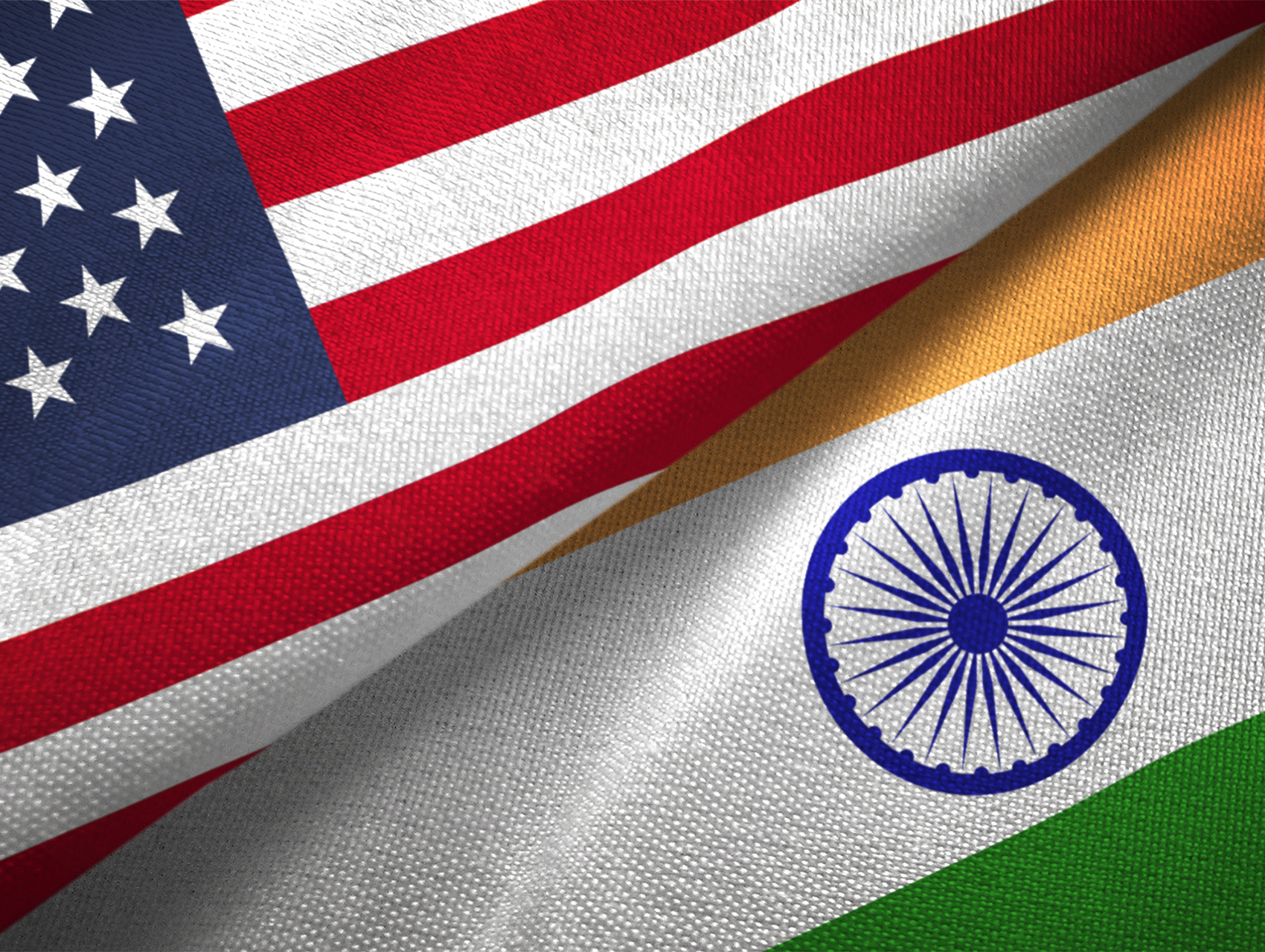
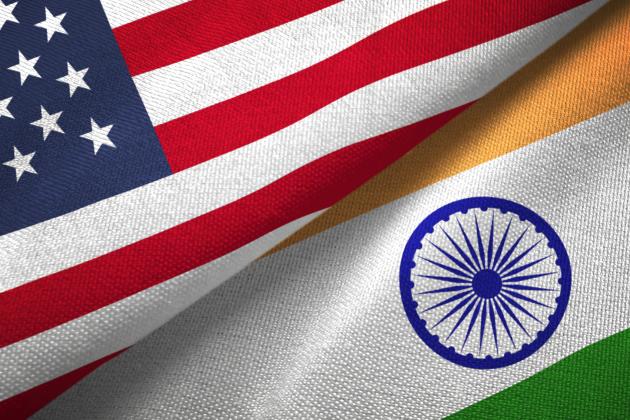
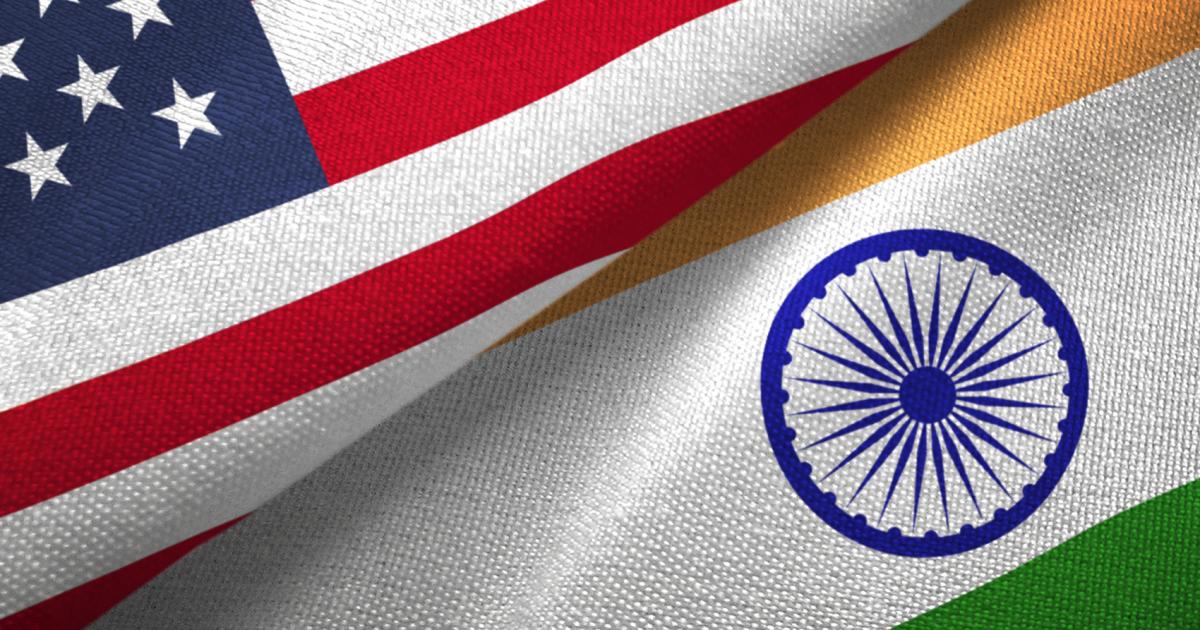
US-India relations are at a pivotal moment. After nearly two and a half decades of a steady deepening of the partnership, initiated in the waning days of the Clinton Administration, and subsequently sustained on a bipartisan basis, it is now facing multiple challenges. The most obvious issue involves reaching a trade accord even after the US Supreme Court and subsequently, the US International Court of Trade, struck down all the tariffs that the Trump administration had imposed on India.
Apart from this contentious issue, New Delhi is concerned about the renewed American dalliance with its long-standing adversary, Pakistan. Even before it offered its good offices to try and defuse the US-Iran crisis, the Trump administration had hosted the Chief of Staff of the Pakistan Army, Field Marshal Asim Munir, at a lunch at the White House.[1] (This invitation had been extended to him in the wake of the brief, intense militarized crisis between India and Pakistan in May of last year following a Pakistan-based terrorist attack in the Indian-controlled portion of the disputed state of Jammu and Kashmir.)[2] He had been invited largely because Islamabad had lauded Trump’s ostensible role in ending the India-Pakistan crisis and New Delhi had not.
These choices on the part of the Trump administration are, no doubt, galling to the decision-makers in New Delhi. Yet, despite these apparent tensions in the relationship there is reason to believe that the partnership remains on a firm footing. Indeed, it is worth underscoring that Democratic and Republican administrations alike have sought to bolster this relationship for a host of compelling reasons. Most of them remain viable and relevant.
Regardless of what transpired during President Trump’s visit to the People’s Republic of China (PRC) in mid-May, the Sino-American relationship will remain competitive. Simultaneously, despite a recent easing of tensions with the PRC, India still views Beijing as its principal, long-term adversary. Consequently, there is considerable strategic convergence between New Delhi and Washington, DC.
Apart from this shared sense of threat from a revanchist PRC, the two countries since the Cold War’s end have made considerable headway in several other areas. Today, the differences over trade notwithstanding, the United States is India’s leading trading partner. India, in turn, is the US’s tenth largest trading partner. This trade relationship is a far cry from the Cold War years when bilateral trade between the two countries was negligible. The current trade differences will be resolved before long.
Beyond shared security concerns about the PRC’s role in Asia and a significant trade relationship, the two parties have other reasons to sustain their partnership. Unlike during the Cold War India has now become a major purchaser of US weaponry. In turn, it has sought, albeit fitfully, to reduce its dependence on Russia for arms acquisitions. [3] And, despite it stated goal of forging a viable defense industrial base, that objective remains some distance away.[4] Consequently, after its economy recovers from the exogenous shock of the war against Iran, and if other contentious issues in the US-India can be either resolved or set aside, India is likely to consider other arms acquisitions from the United States.
The fundamentals of the relationship, in effect, remain sound. However, to borrow a metaphor from the work of an eminent historian, Roberta Wohlstetter, the noise in the relationship, at least for now, is drowning out the signals. [5] What remains unknown is whether any lasting damage has been done to the trust that had been so carefully nurtured over the past two decades. Certainly, some important former Indian policymakers, reacting to the now-defunct high tariffs, have argued that returning to the earlier equilibrium will not be easy.[6] The key question then is whether India’s present foreign policy establishment shares that view or if it’s willing to set aside its pique and focus on the benefits that a strategic partnership with the United States can bring.
Unfortunately, given the uncertainties that the Trump administration has introduced into the global order through its policy choices, other key former members of India’s foreign policy elite, without explicitly stating as much, are counseling a strategy that does not involve excessive reliance on the United States. Instead, they are suggesting that India increasingly focus on its own neighborhood until there is some glimpse of a new, emerging world order. [7] Even if the country shifts its gaze to its immediate neighbors for a host of reasons ranging from access to markets to defense technology, New Delhi will be reluctant to walk away from or abandon the partnership that it has so carefully forged in recent decades with Washington, DC.
There is little or no question that at this historical juncture the Indo-US relationship is in flux. Until the recent upheavals that have characterized the relationship, India’s policymakers had two strikingly different fears: those of entrapment and abandonment. [8] The first is the fear that the United States could not be relied upon in the event of a crisis with an adversary and especially one involving the PRC. The second was the concern that the United States would drag India into a conflict which could prove costly for New Delhi and in which it had little stake. Today, ironically, owing to the Trump administration’s propensity for unpredictability, it has, for all practical purposes, given up on American support in the event of a crisis with a hostile power. By the same token, it sees little danger of being dragged into a conflict not of its own making.
Despite a respite from these misgivings, New Delhi faces a new dilemma: the problem of uncertainty in the relationship. At best, at this juncture, depending on what transpires during Secretary Rubio’s visit to India in late May, policymakers in New Delhi will do their utmost to ensure that they can build upon any agreements that are reached. Fortunately, for all the recent turbulence that has characterized the relationship, today it rests on solid foundations.
[1] https://theconversation.com/how-pakistan-became-the-primary-mediator-between-the-us-and-iran-282342
[2] https://foreignpolicy.com/2025/04/28/kashmir-attack-pahalgam-india-pakistan-security/
[3] https://nationalinterest.org/blog/buzz/india-gradually-weaning-itself-off-russian-arms-kremlin-worried-ps-031326
[4] https://www.scmp.com/week-asia/politics/article/3314215/india-path-weapons-self-sufficiency-still-lags-behind-china-experts
[5] https://archive.org/details/pearlharborwarni0000wohl/page/n5/mode/2up
[6] https://www.telegraphindia.com/world/india-us-ties-unlikely-to-regain-past-strength-even-with-trade-deal-says-ex-foreign-secretary-shyam-saran-prnt/cid/2129575
[7] https://foreignpolicy.com/2026/05/13/indias-role-disordered-world-diplomacy/?tpcc=recirc_latest062921
[8] https://onlinelibrary.wiley.com/doi/abs/10.1111/0020-8833.00158?msockid=383b7ab48247677405786f15830d66b3

