

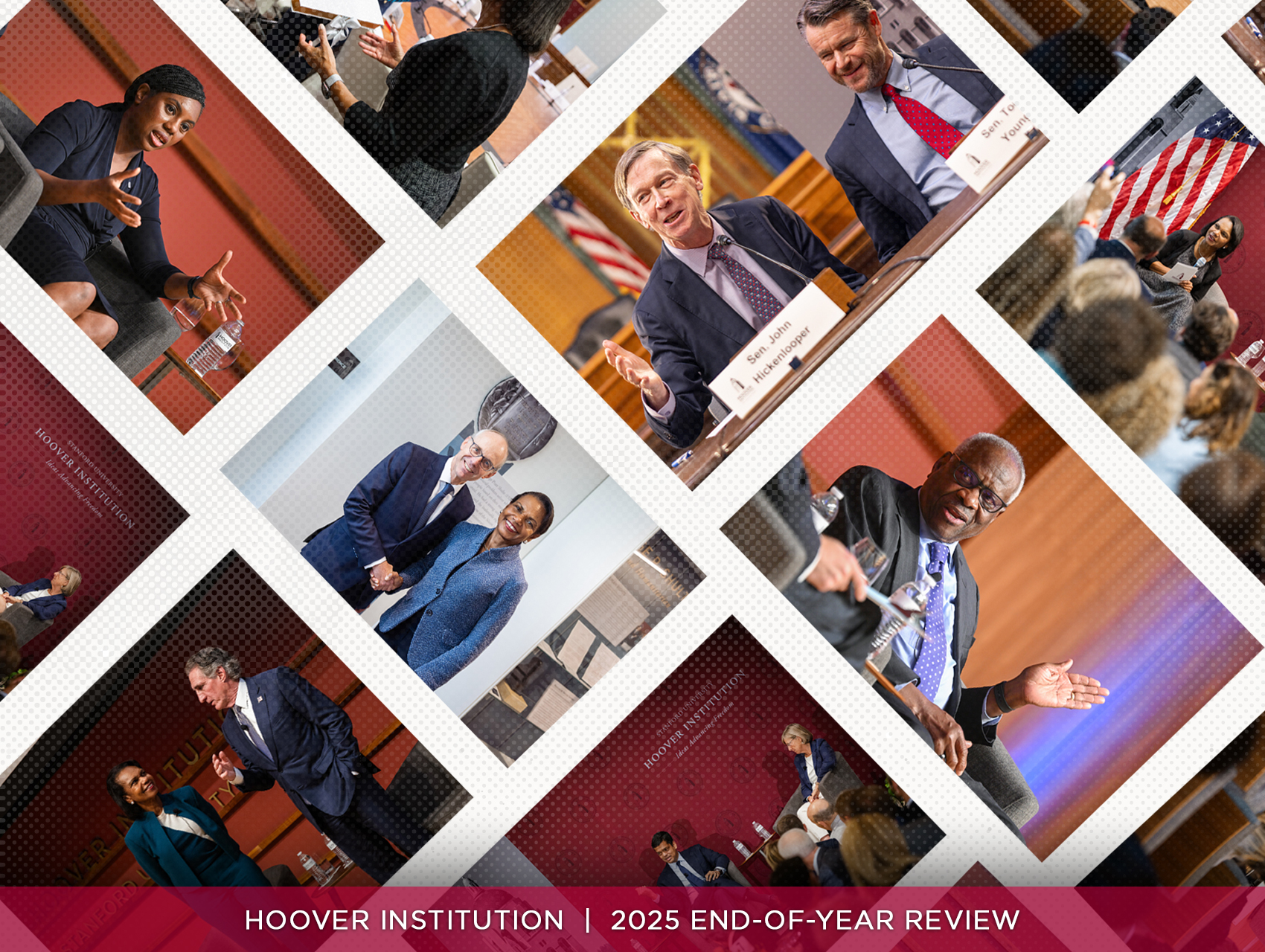
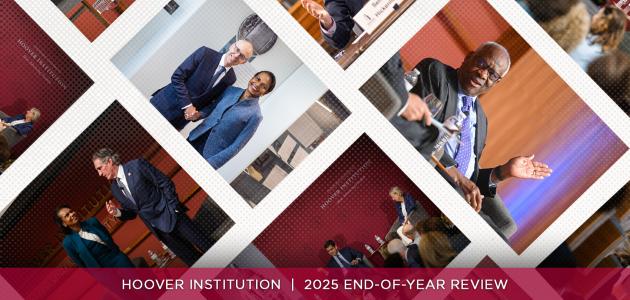
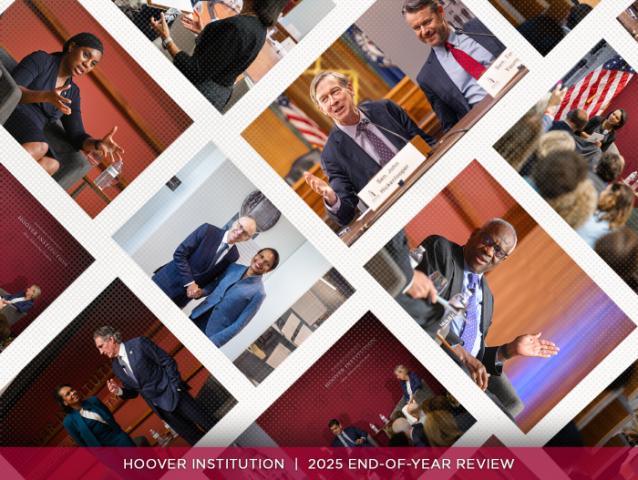
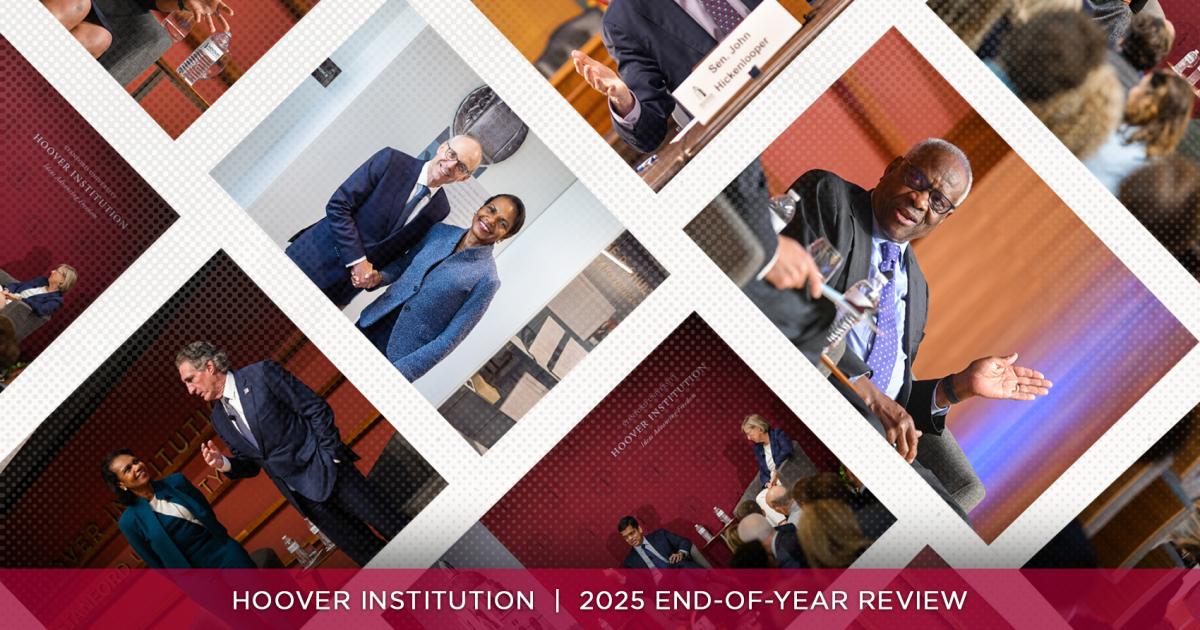
Hoover Institution (Stanford, CA) — The Hoover Institution hosted national policymakers and foreign dignitaries and produced a wide range of insightful content in 2025, enabling it to stay at the heart of an evolving national conversation.
The Institution’s activities this year also saw it connect with four of the nine Supreme Court justices in the form of live, in-person discussions or podcasts.
In addition, Hoover launched a host of new research initiatives and communications programming throughout the year.
Taken together, 2025 saw Hoover bring experts, policymakers, and its own scholars right into the center of pressing national debates on issues ranging from frontier technology to defense, economics, foreign affairs, and the future of K–12 education.
Convening with Policymakers
In October, Florida Gov. Ron DeSantis sat down with Hoover Institution Director Condoleezza Rice for a discussion broadcast live online about his record as governor, his view of challenges facing the nation such as immigration and healthcare reform, and what the country means to him as it approaches its 250th birthday.
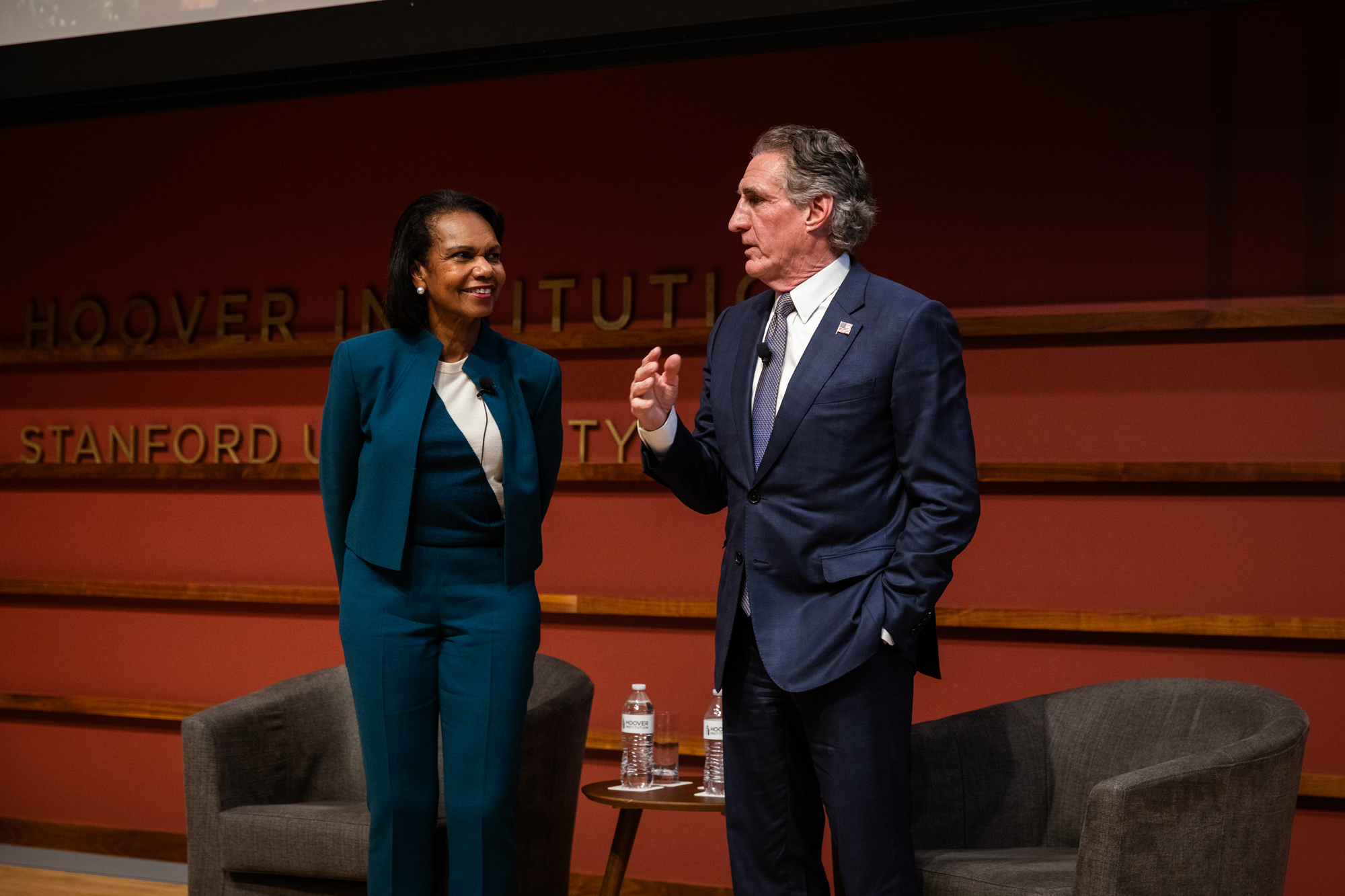
The 2025 Fall Retreat saw a key member of the Trump administration appear at Hoover. Interior Secretary Doug Burgum spoke to Hoover supporters about his priorities for the term, including streamlining his department’s back-of-office functions, realizing the economic potential of federal lands, and cultivating new sources of rare earth minerals to reduce dependence on China.
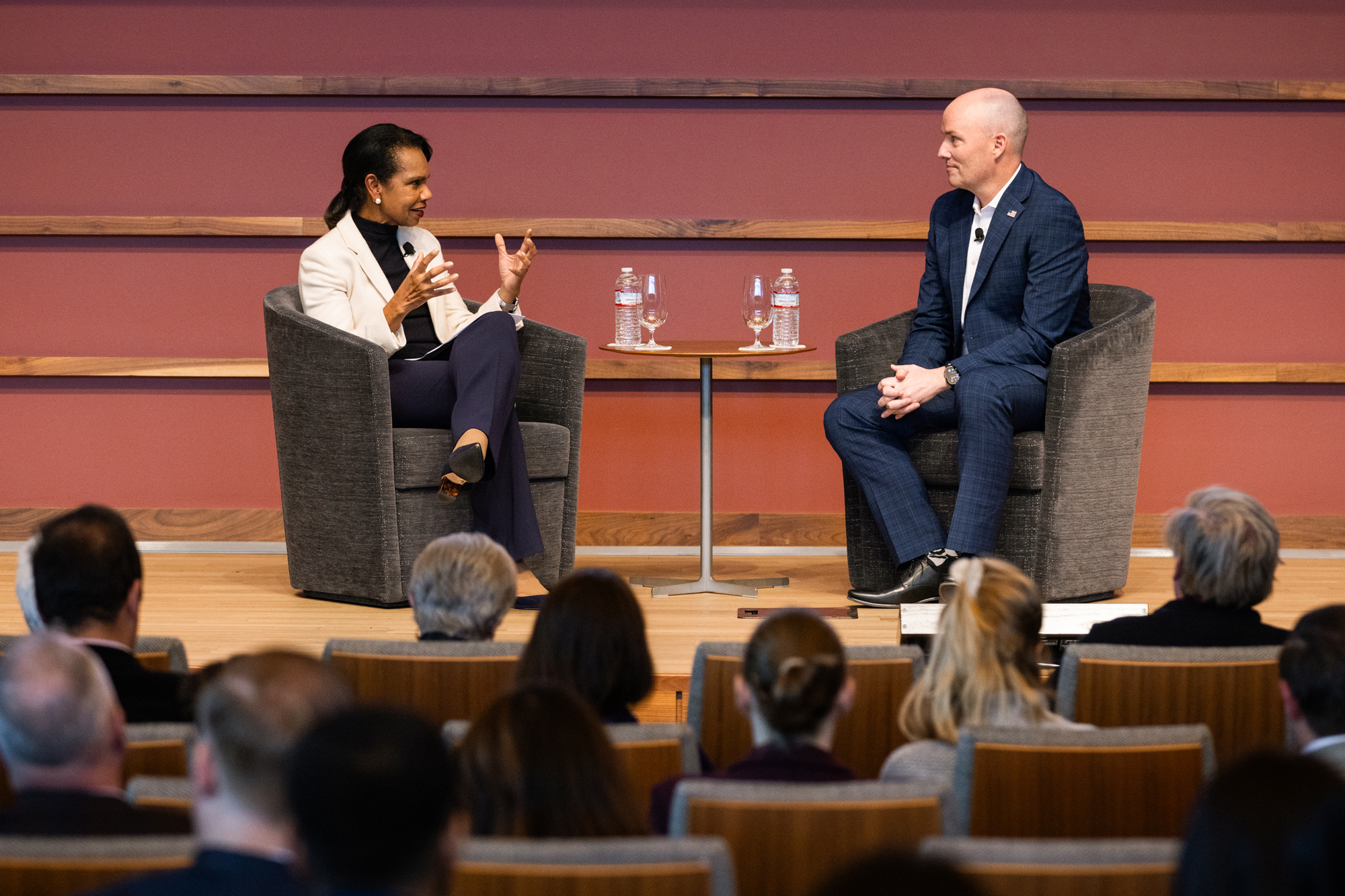
At the iCivics National Forum in March, Rice spoke with Utah Governor Spencer Cox, who has long been involved in efforts to foster rational, amiable civic dialogue between national leaders with opposing viewpoints.
In the summer, Director Rice joined Sriram Krishnan, senior White House policy advisor on artificial intelligence, to discuss the unprecedented rate of adoption and pace of change of AI, the Trump administration's policy toward AI, and how best to manage the challenges that come with this new technology.
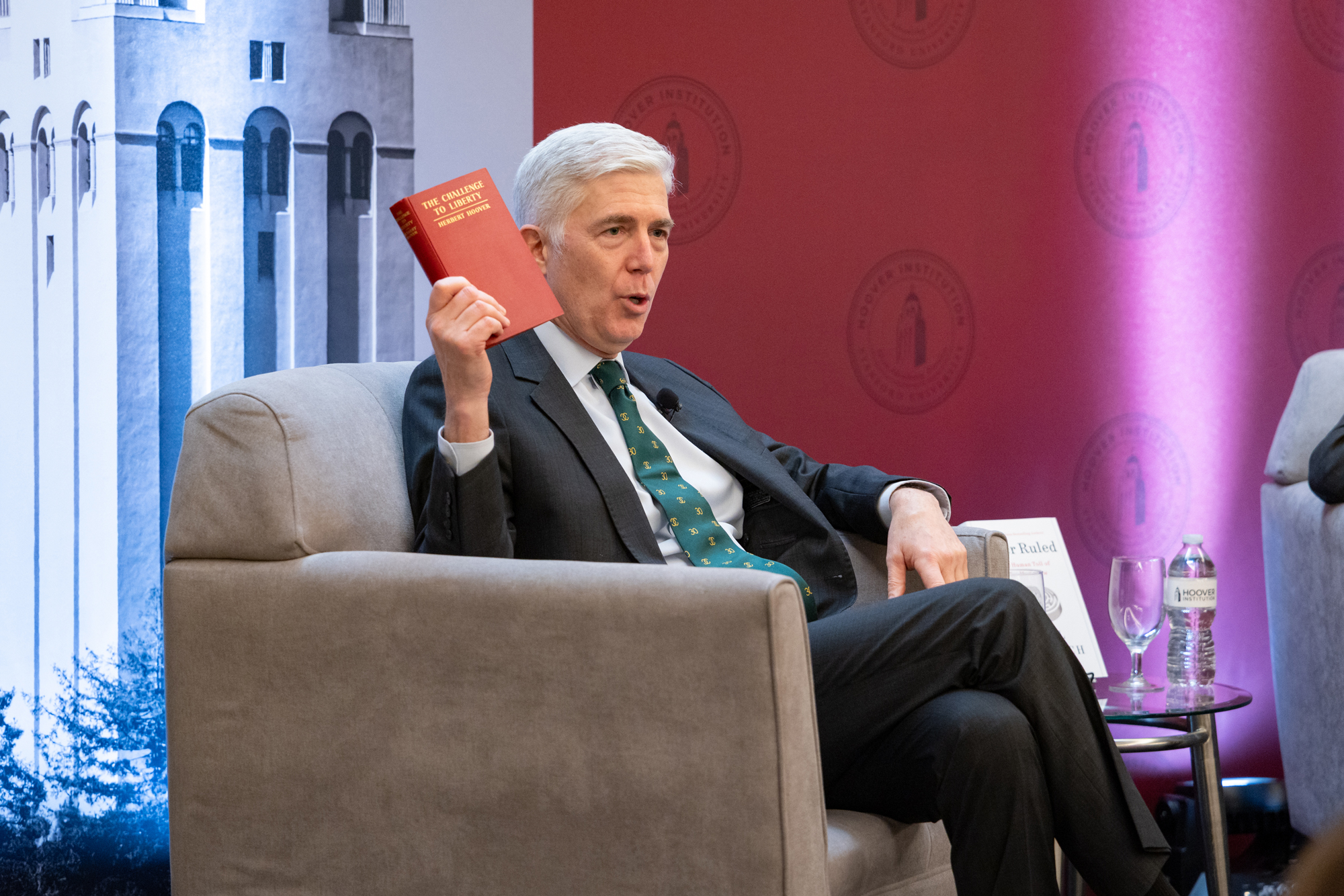
Marking the start of Hoover’s interaction with justices of the Supreme Court this year was Neil Gorsuch, appearing at Hoover’s Winter Board of Overseers meeting in February.
Honoring Leading Voices
Marking the 95th birthday of Thomas Sowell, Hoover brought together a host of speakers to reflect on the prolific author and economist’s impact, starting with associate Supreme Court Justice Clarence Thomas.
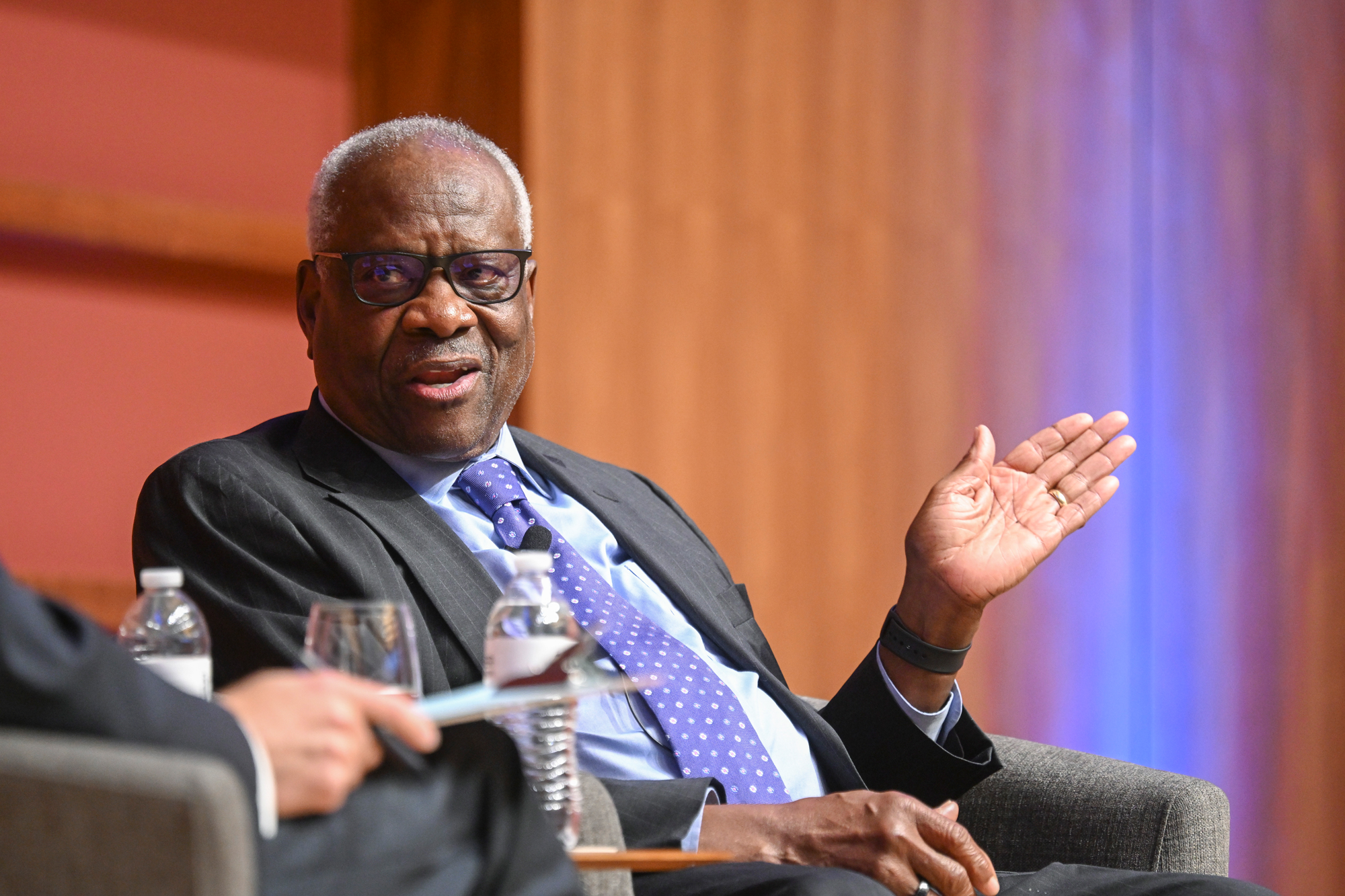
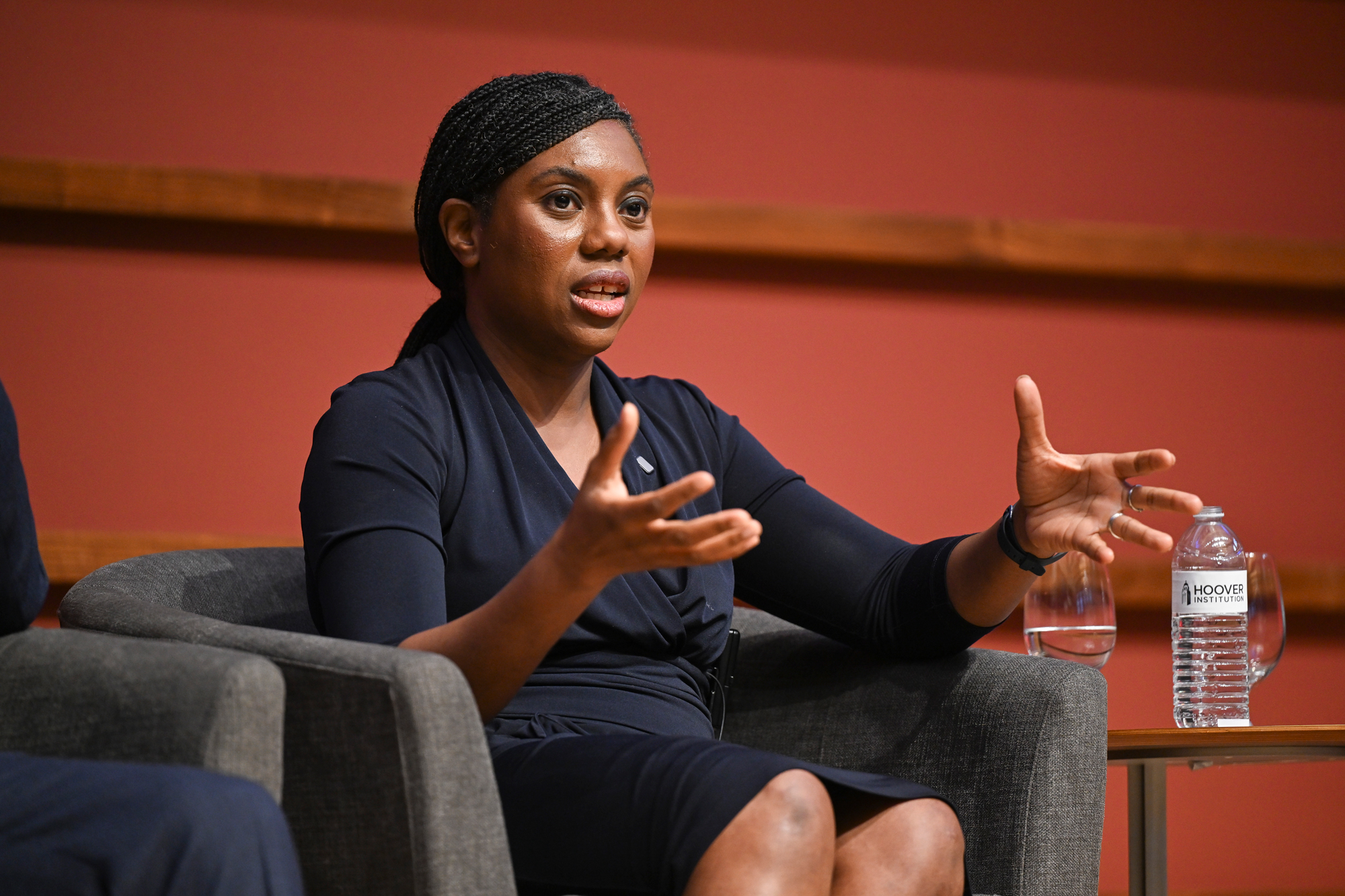
The gathering saw Thomas reflect on Sowell’s impact on his life and career as a lawyer and jurist. He was joined by a number of leading academics and cultural commentators, including Roland Fryer, Coleman Hughes, Steven Pinker, and UK Conservative Party Leader Kemi Badenoch.
This year also saw Hoover celebrate the life and work of now-senior fellow emeritus John B. Taylor, with his tribute and the annual monetary policy conference on the following day seeing Federal Reserve governors including Christopher Waller visit Hoover. Waller spoke about Taylor’s contributions to the field of monetary policy and the urgent need to evaluate the mandate of the Federal Reserve in a period characterized by stubbornly high inflation and worries about fiscal overreach.
Also, retired Supreme Court Justice Anthony Kennedy visited Hoover to talk with Secretary Rice about his life and career, which is documented in his new book, Life, Law and Liberty (Simon & Schuster).
The Power of Hoover’s Media Reach
The year 2025 saw Hoover’s Marketing and Communications team develop and release more than 100 videos and several regular and limited-series podcasts. They collectively generated 51 million views in the first nine months of 2025, a 40 percent increase over 2024.
Compounding the growing reach of these products was their ability to offer timely, in-depth analysis of events, sometimes with global implications.
As the Trump administration pondered whether to use its unique capabilities to strike Iran’s nuclear enrichment facilities during the short conflict between Iran and Israel in June, the GoodFellows regulars Sir Niall Ferguson and H.R. McMaster discussed the pros and cons of such a strike days before on an episode of the podcast. And less than five days after the strikes, the group was back on another episode, assessing reports of damage and charting what the strikes would mean for the balance of power in the region.
Across Hoover’s other podcasts, hosts Peter Robinson and H.R. McMaster welcomed a number of distinguished guests to their shows: Uncommon Knowledge and Today’s Battlegrounds, respectively. On Uncommon Knowledge, Robinson interviewed Supreme Court justices Samuel Alito and Amy Coney Barrett and secured a 45-minute interview with Speaker of the House Mike Johnson in June.
On Today’s Battlegrounds, McMaster spoke with the serving president of Czechia, Petr Pavel, in May, when they spoke about Czechia’s commitment to supporting Ukraine and the changing nature of the transatlantic relationship.
Moving outside Hoover’s stable of podcasts, fellows made their way onto a number of prominent media properties this year, from the nation’s most watched 24-hour news channel to its leading national newspaper.
In the wake of America’s air strikes on Iranian nuclear facilities, Hoover Institution Director Condoleezza Rice appeared on prime time with Fox News chief political anchor Bret Baier, telling him that after Israeli and US strikes on Iran’s nuclear facilities, it was time for the Islamic Republic to make some hard choices. She added that the strikes restored American credibility in the region.
Rice also joined the Big Technology podcast to discuss whether the United States can hold its technological edge as China races ahead in AI, batteries, and advanced manufacturing. Rice shares her candid assessments of America’s tech arms race with China, the ripple effects of chip export controls, and why she believes democracies are safer stewards of frontier technologies than authoritarian states.
Senior Fellow Stephen Kotkin sat down with podcaster Dwarkesh Patel for a more than two-hour long conversation to discuss Kotkin’s two published biographic volumes on Soviet dictator Joseph Stalin. The conversation touches on the nature of the Russian Revolution, the details of Stalin’s tyrannical reign, and the importance of well-framed counterfactuals in the study of history.
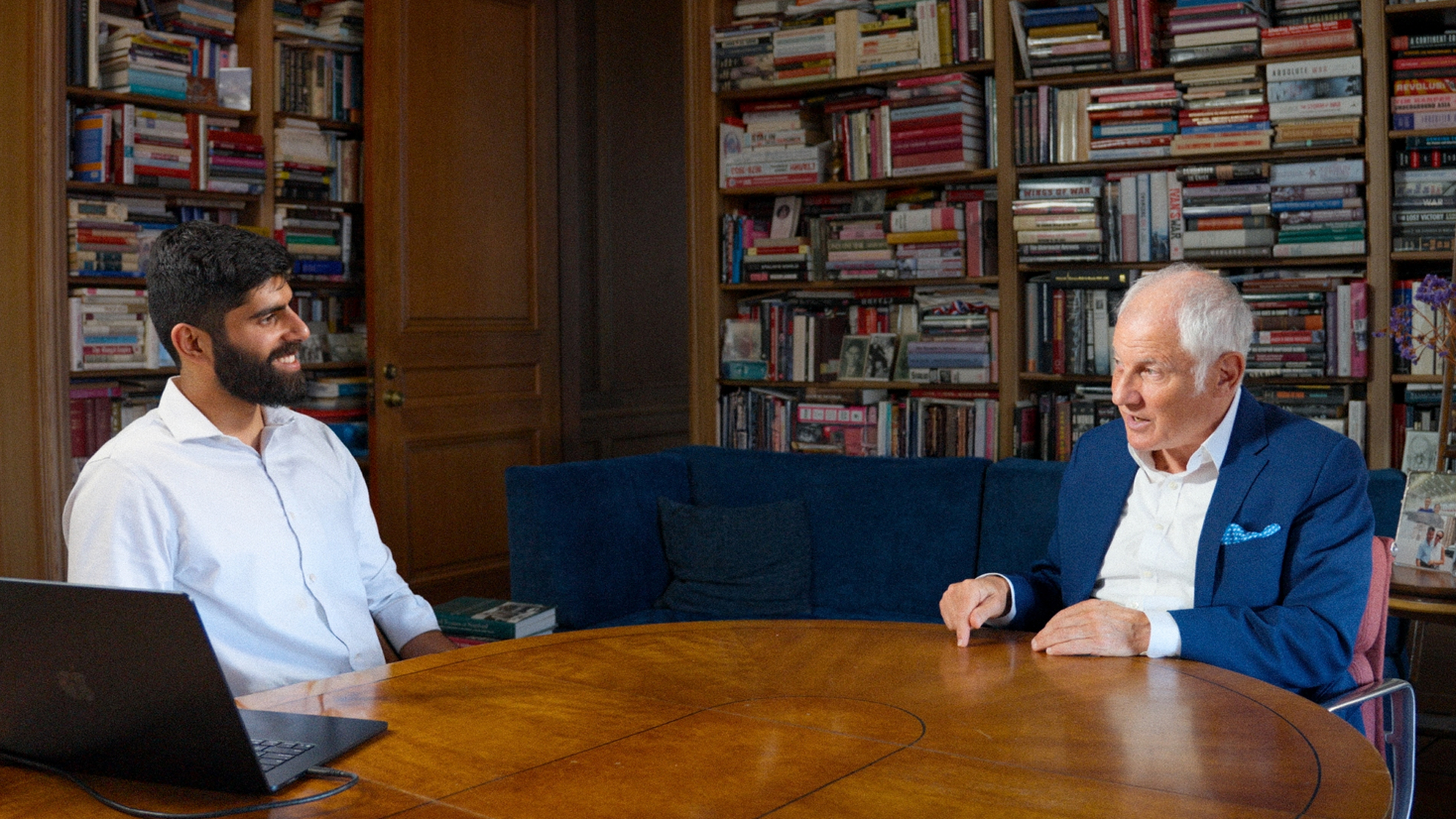
In The New York Times, Research Fellow Dan Wang appeared on the popular Interesting Times with Ross Douthat podcast in September, where they spoke about Wang’s contention that the Chinese are waiting for the United States to degrade itself before asserting their own dominance.
In January 2025, Research Fellow Jennifer Burns appeared on Lex Fridman’s podcast for a nearly four-hour-long conversation about her award-winning biographies of Milton Friedman and Ayn Rand, as well as the evolution of social and political movements over the 20th century.
Senior Fellow Steven J. Davis attended the Jackson Hole Economic Policy Symposium in August 2025 and recorded two episodes of his podcast there. In one, he spoke with Claudia Goldin of Harvard University about her research into the decline of fertility among households when women begin incorporating themselves into the labor force. In a second episode, he speaks with San Francisco Fed President and CEO Mary C. Daly about the efficacy of the central bank’s communications to the marketplace and the broader public.
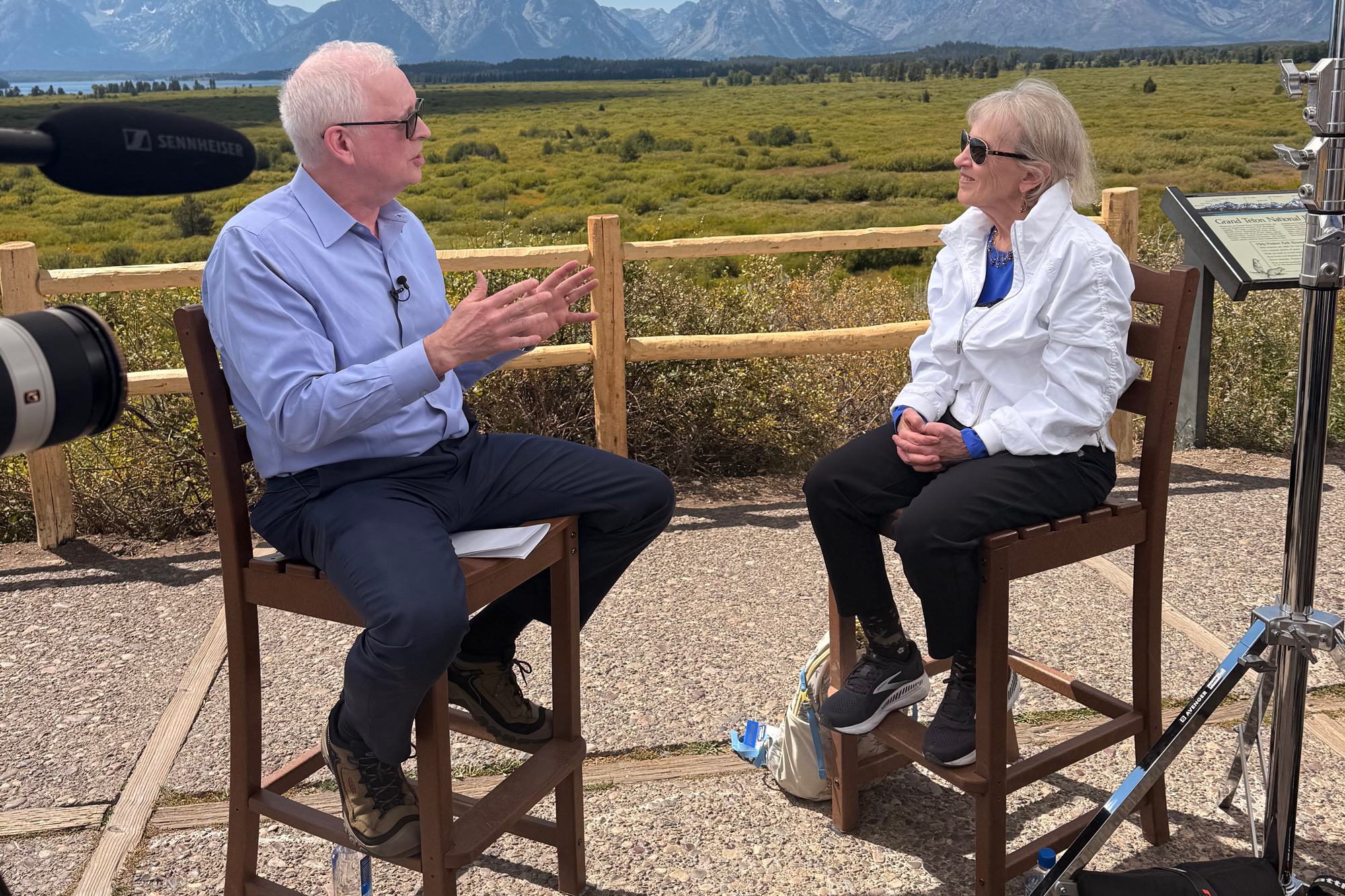
Senior Fellow Steven J. Davis speaks with Harvard’s Claudia Goldin for an episode of his podcast recorded at Jackson Hole, Wyoming in August 2025. (Florent Vial)
Maintaining Ties with World Leaders
Throughout the year, Hoover played host to a number of foreign leaders seeking Hoover’s insights to understand how to position their nations in a time of immense global uncertainty.
The year saw cabinet-level officials from Belgium, Greece, and India visit Hoover, along with Luxembourg’s prime minister, Luc Frieden.
The gatherings served as opportunities for Hoover scholars to share insights about the evolving nature of US foreign relations and trade and to hear from foreign policymakers about the global response to shifting US policy priorities.
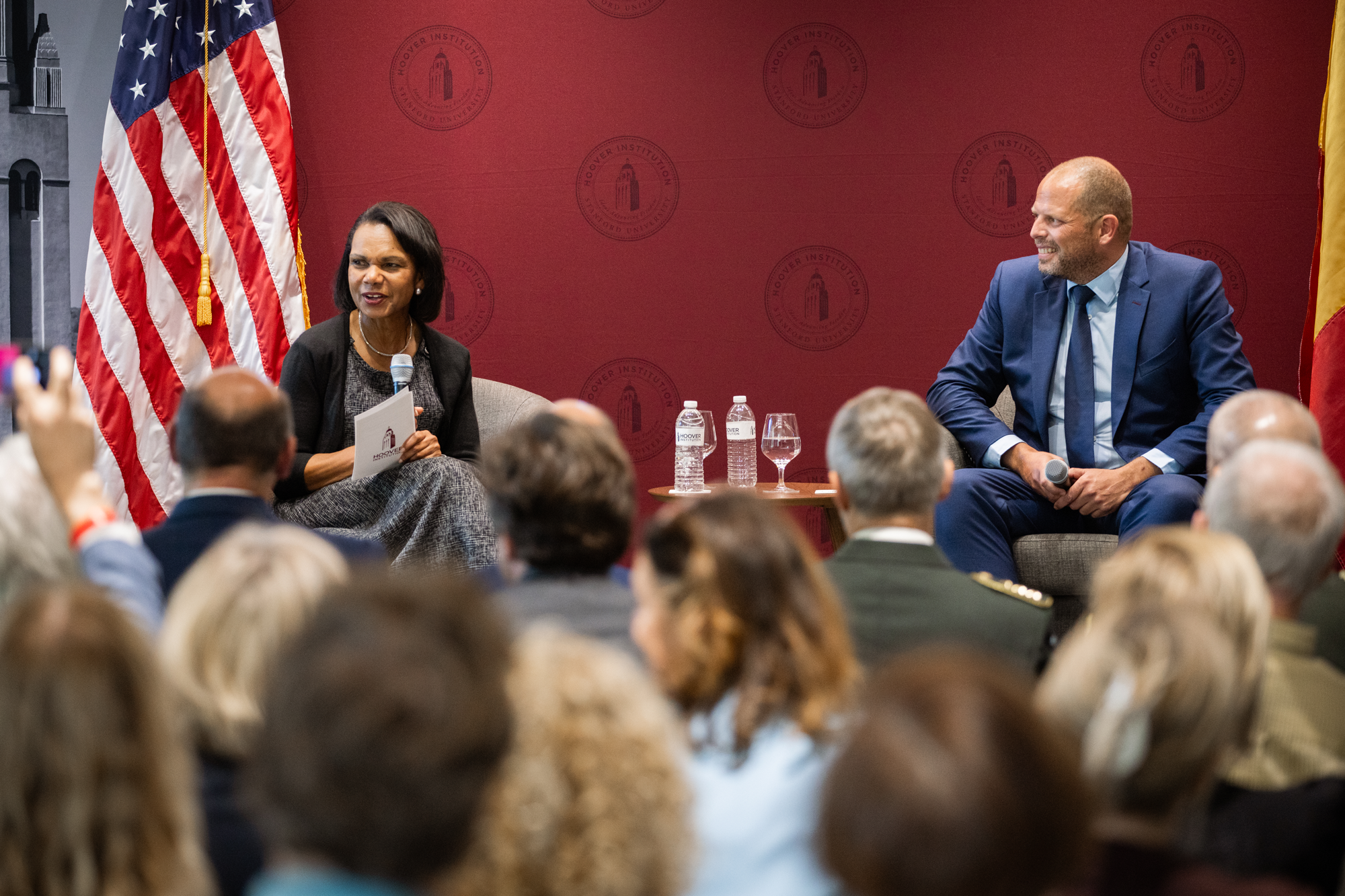
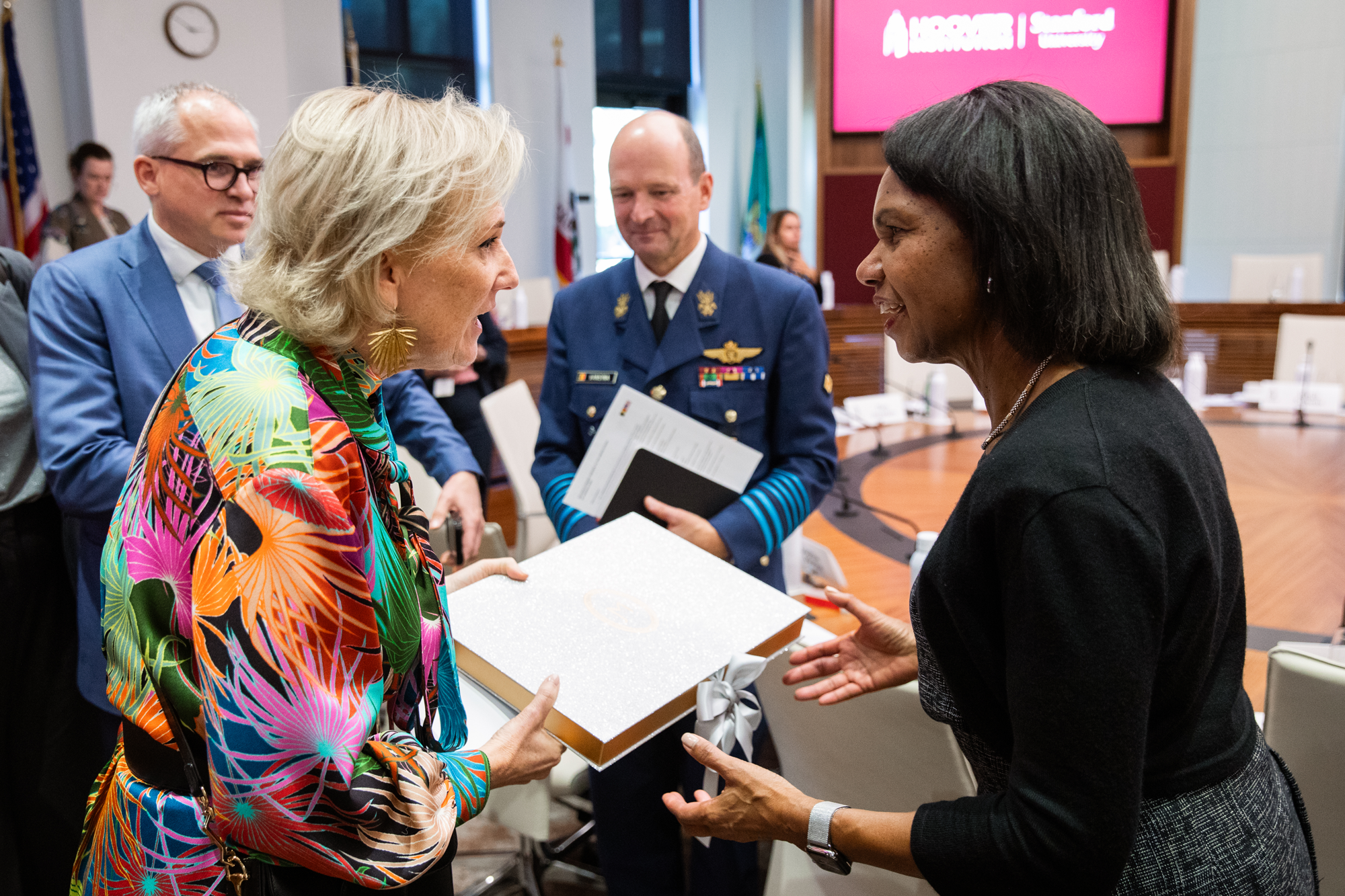
Indian Finance Minister Nirmala Sitharaman spoke to a packed Hauck Auditorium about securing a new trade pact with the United States and about the value of the Indian diaspora in America to both nations.
Launching New Programs and Media Properties
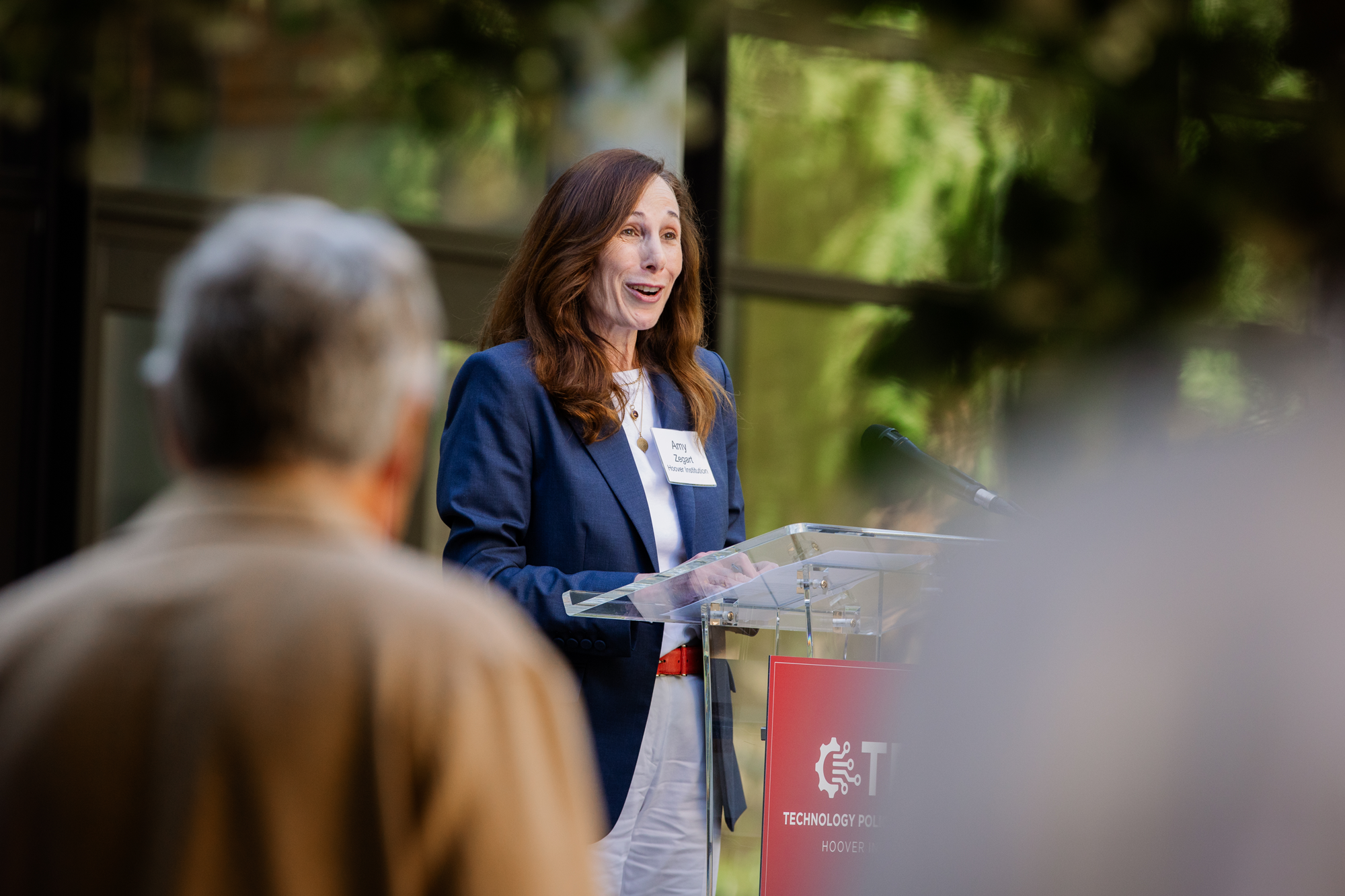
Growing the stable of research programs underway at Hoover, the year 2025 saw the launch of the Technology Policy Accelerator (TPA), which houses a host of new tech policy initiatives focused on making sure America can strengthen its technological competitiveness in critical fields ranging from space to defense and synthetic biology.
The program launched with an event in June 2025. TPA Director and Senior Fellow Amy Zegart expressed hope that the initiative could serve to guide policymakers in an age increasingly concerned with emerging technology.
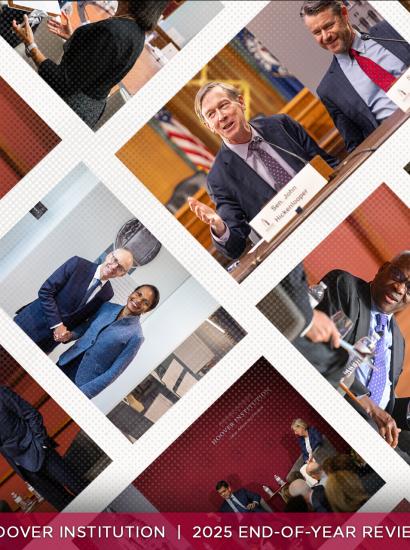
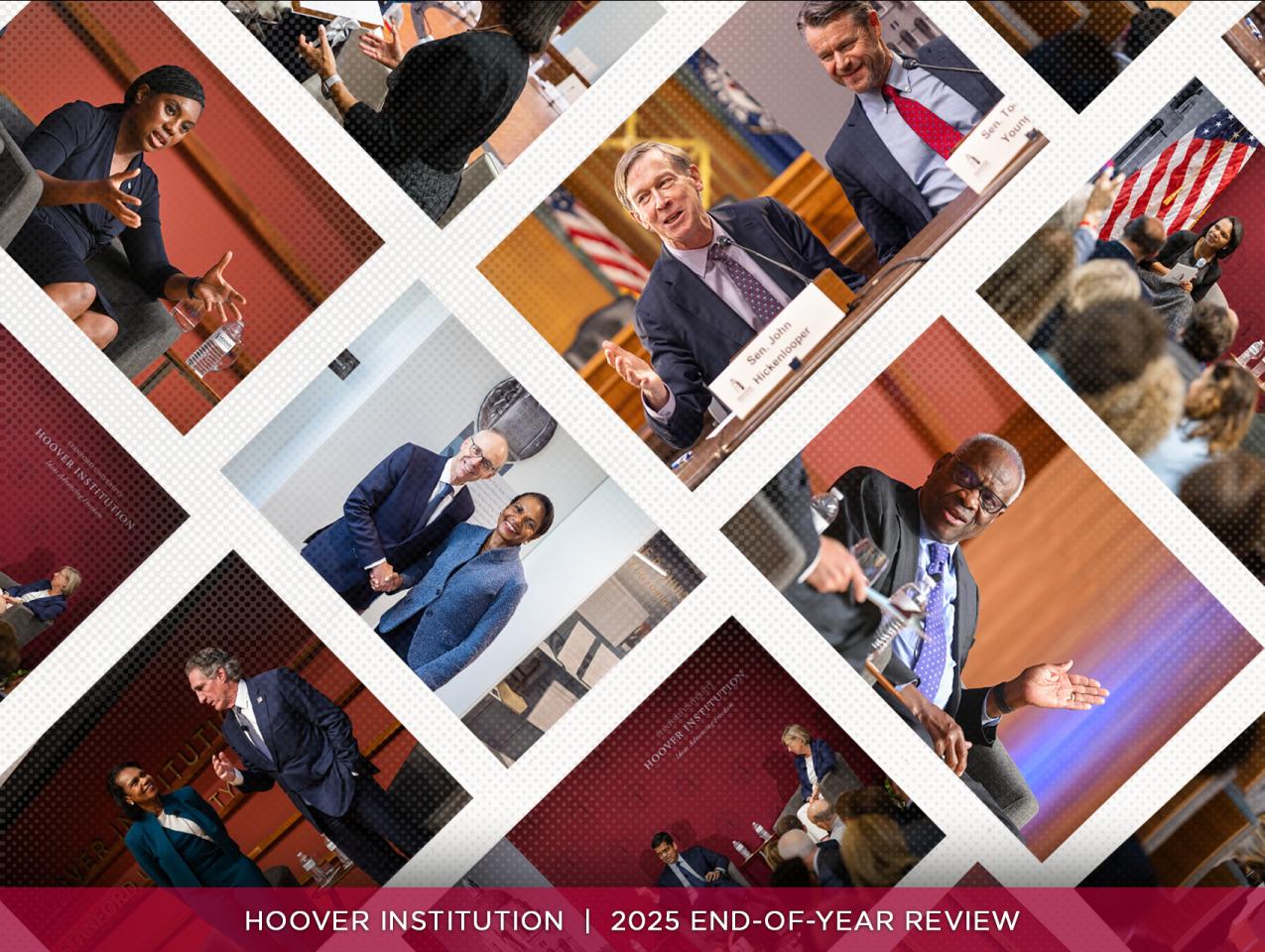
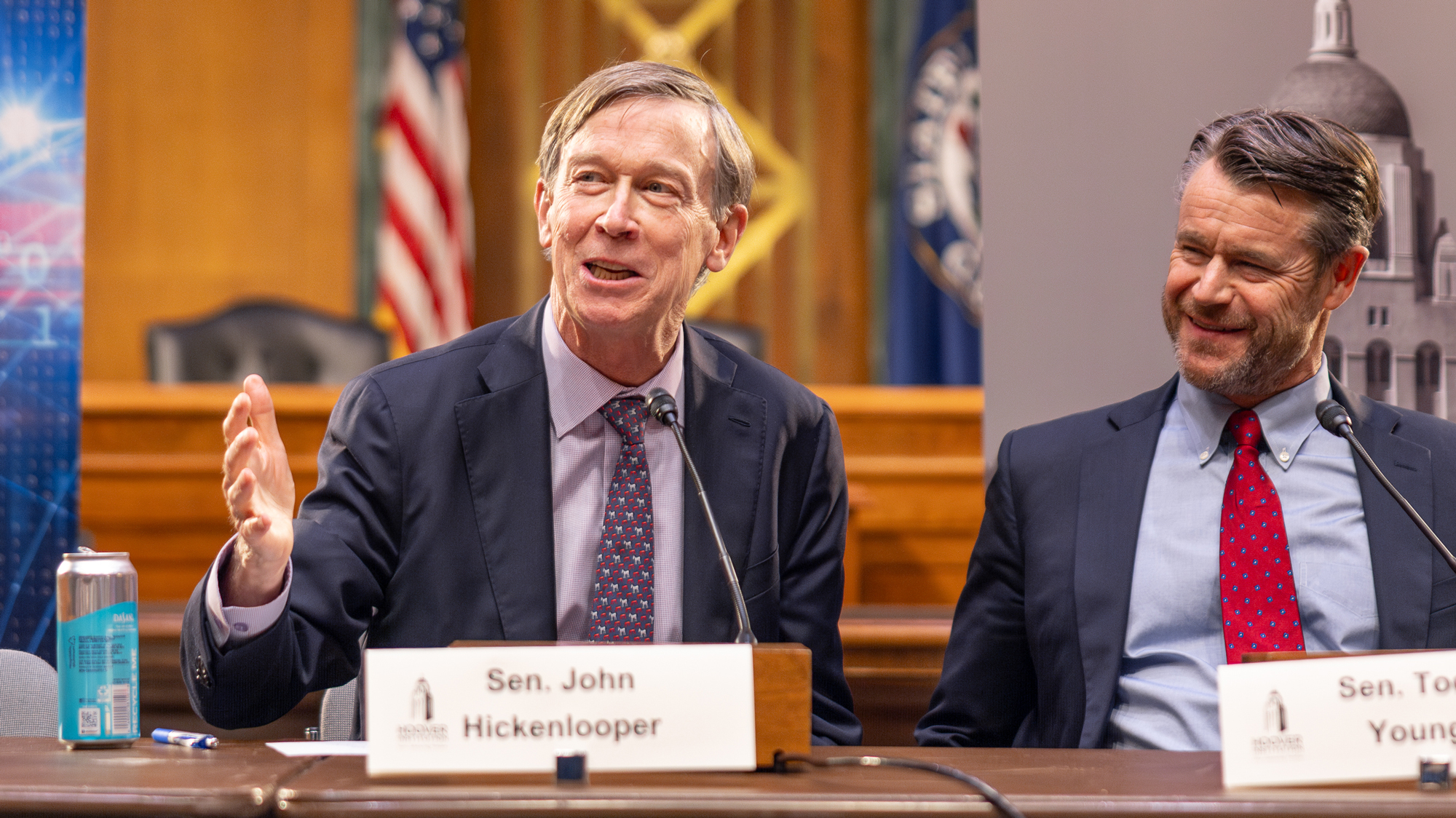
Furthering this aim, Hoover worked to publish the 2025 edition of the Stanford Emerging Technology Review. Its launch saw senior Hoover scholars visit Washington, DC, and discuss the findings of the review with a public event featuring US senators Todd Young (R-IN) and John Hickenlooper (D-CO).
Bringing Hoover’s Message to Congress
This year, Senior Fellow Joshua D. Rauh, Science Fellow/Senior Fellow Drew Endy, Hoover Fellow Joseph Ledford, and Research Fellow Patrick A. McLaughlin testified before Congress on a variety of pressing challenges. They included President Trump’s “One Big Beautiful Bill,” government support of synthetic biology, US foreign policy in the Americas, and how to ease bottlenecks in America’s military supply chains.
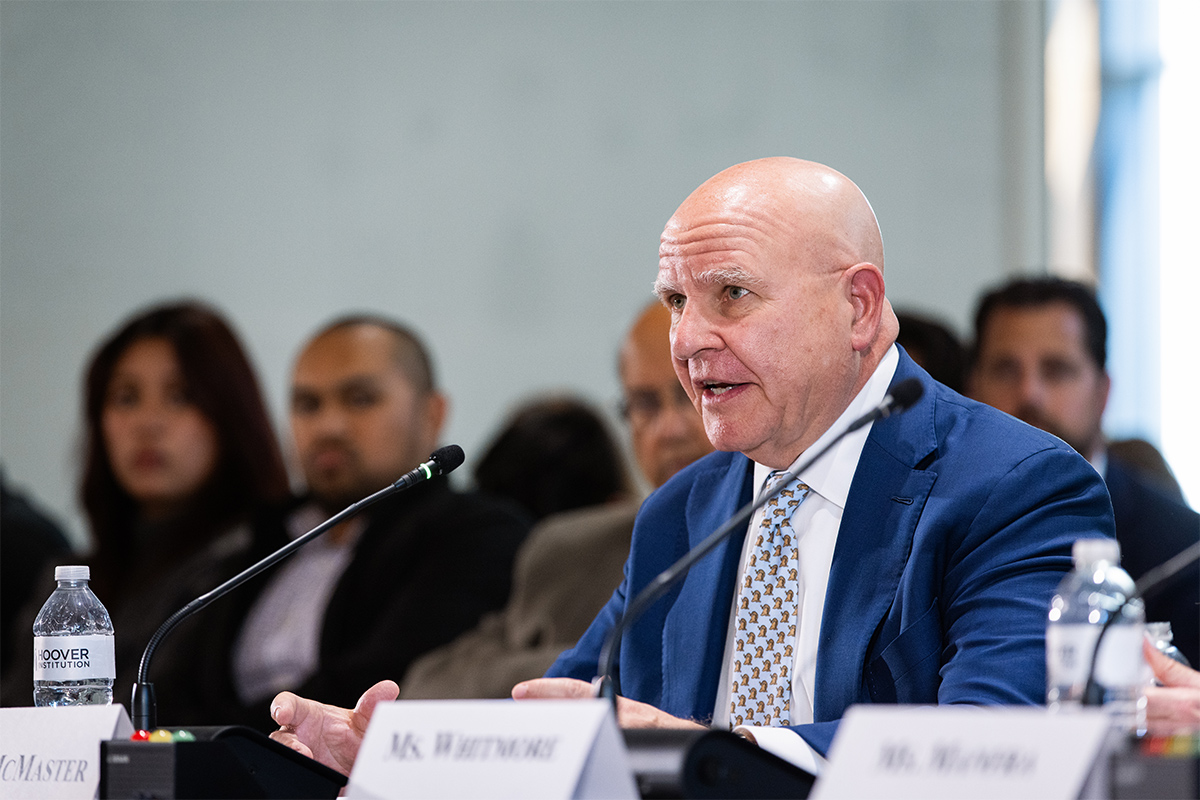
In addition, Hoover even brought Congress to California, hosting a subcommittee hearing on cybersecurity in Shultz Auditorium in May. McMaster and a panel of distinguished cybersecurity experts from Silicon Valley spoke about the explosive growth in cyberattack activity and how firms and individuals can counter those attacks, alongside the growing threat posed by China. McMaster told House members they need to do more to prepare the US electorate to respond to the increasing capability of the Chinese Communist Party to generate unconventional threats to the US homeland.
Throughout the year, Hoover’s Marketing and Communications team launched new products aimed at bringing the scholarship and viewpoints of the Hoover fellowship to a wider audience. In August 2024, the team increased the output of the Hoover Daily Report newsletter to five times per week, contributing to a massive and continually expanding subscriber base.
The Institution also launched its own Substack publication, Freedom Frequency, in fall 2025. Substack offers Hoover a direct line to its more than 35 million highly engaged, idea-hungry users already on the platform—which has become the go-to destination for serious, long-form thought leadership. Freedom Frequency is Hoover’s definitive voice in that space, alongside today’s most influential voices in long-form policy journalism and idea-driven storytelling.
The launch marks a pivotal evolution in how Hoover delivers its ideas to the world.
Subscribe to the HDR here and visit Freedom Frequency here.
Throughout the year, Hoover also convened conferences exploring a variety of topics ranging from the future of global jihadism, to the unfolding societal phenomenon that is remote work, to how America’s allies are responding to the changing nature of American leadership in the world.