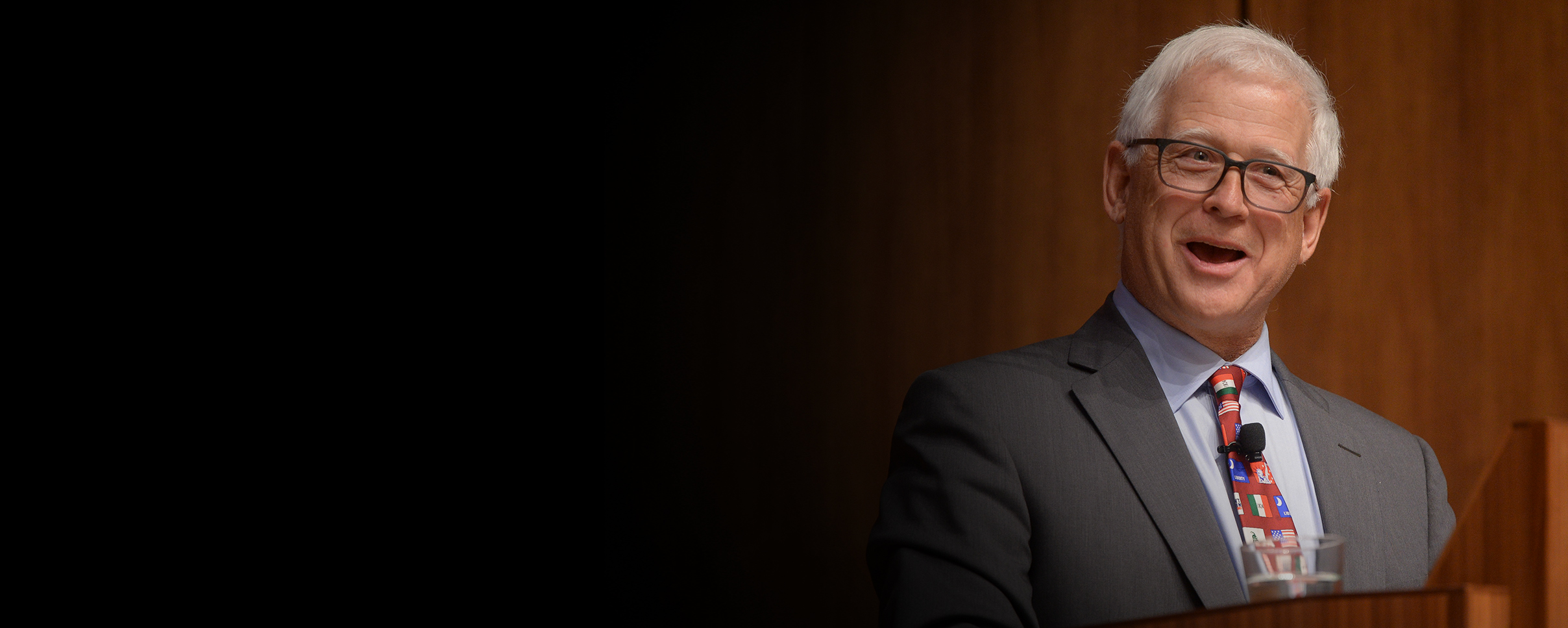
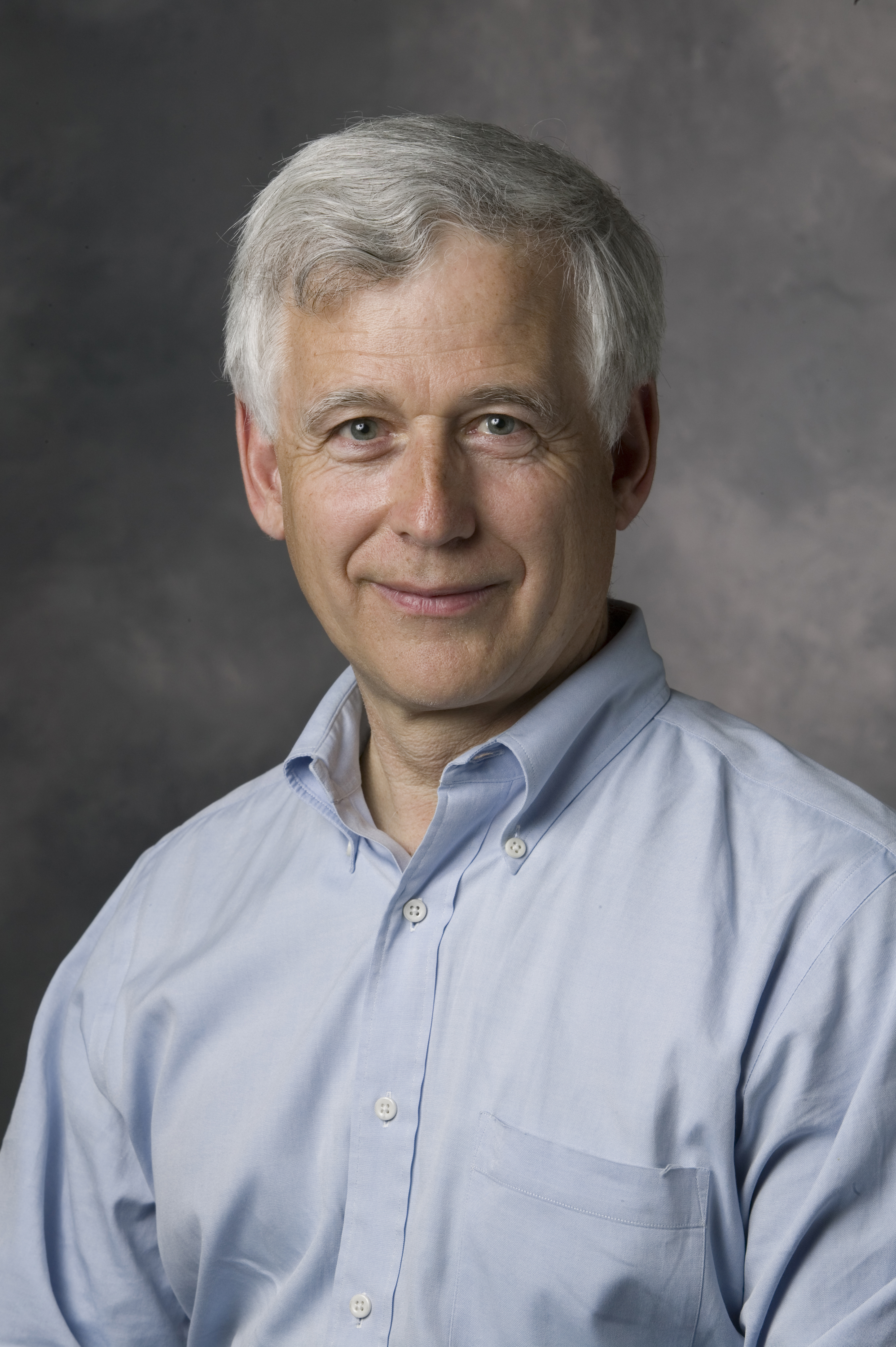
David R. Henderson

Research Fellow
Biography: 

David R. Henderson is a research fellow with the Hoover Institution. He is also a professor of economics at the Naval Postgraduate School in Monterey, California.

Henderson's writing focuses on public policy. His specialty is in making economic issues and analyses clear and interesting to general audiences. Two themes emerge from his writing: (1) that the unintended consequences of government regulation and spending are usually worse than the problems they are supposed to solve and (2) that freedom and free markets work to solve people's problems.

David Henderson is the editor of The Concise Encyclopedia of Economics (Warner Books, 2007), a book that communicates to a general audience what and how economists think. The Wall Street Journal commented, "His brainchild is a tribute to the power of the short, declarative sentence." The encyclopedia went through three printings and was translated into Spanish and Portuguese. It is now online at the Library of Economics and Liberty. He coauthored Making Great Decisions in Business and Life (2006). Henderson's book, The Joy of Freedom: An Economist's Odyssey (Financial Times Prentice Hall, 2001), has been translated into Russian. Henderson also writes frequently for the Wall Street Journal and Fortune and, from 1997 to 2000, was a monthly columnist with Red Herring, an information technology magazine. He currently serves as an adviser to LifeSharers, a nonprofit network of organ and tissue donors.

Henderson has been on the faculty of the Naval Postgraduate School since 1984 and a research fellow with Hoover since 1990. He was the John M. Olin Visiting Professor with the Center for the Study of American Business at Washington University in St. Louis in 1994; a senior economist for energy and health policy with the President's Council of Economic Advisers from 1982 to 1984; a visiting professor at the University of Santa Clara from 1980 to 1981; a senior policy analyst with the Cato Institute from 1979 to 1980; and an assistant professor at the University of Rochester's Graduate School of Management from 1975 to 1979.

In 1997, he received the Rear Admiral John Jay Schieffelin Award for excellence in teaching from the Naval Postgraduate School. In 1984, he won the Mencken Award for best investigative journalism article for his Fortune article "The Myth of MITI."

Henderson has written for the New York Times, Barron's, Fortune, the Los Angeles Times, the Chicago Tribune, Public Interest, the Christian Science Monitor, National Review, the New York Daily News, the Dallas Morning News, and Reason. He has also written scholarly articles for the Journal of Policy Analysis and Management, the Journal of Monetary Economics, Cato Journal, Regulation, Contemporary Policy Issues, and Energy Journal.

Henderson has spoken before a wide variety of audiences, including the American Farm Bureau Federation, the Chicago Council on Foreign Relations, the St. Louis Discussion Club, the Commonwealth Club of California (National Defense and Business Economics Section), the Cato Institute, and the Heritage Foundation. He has also spoken to economists and general audiences at many universities around the country, including Carnegie-Mellon, Brown, the University of California, Berkeley, the University of California, Davis, the University of Rochester, the University of Chicago, Harvard University's John F. Kennedy School, and the Hoover Institution. He has given papers at annual conferences held by the American Economics Association, the Western Economics Association, and the Association of Public Policy and Management. He has testified before the House Ways and Means Committee, the Senate Armed Services Committee, and the Senate Committee on Labor and Human Resources. He has also appeared on the O'Reilly Factor (Fox News), C-SPAN, CNN, the Newshour with Jim Lehrer, CNBC Squawk Box, MSNBC, BBC, CBC, the Fox News Channel, RT, and regional talk shows.

Born and raised in Canada, Henderson earned his bachelor of science degree in mathematics from the University of Winnipeg in 1970 and his Ph.D. in economics from the University of California, Los Angeles, in 1976.

Filter By:

Topic

Type

Recent Commentary

Coffee
Analysis and Commentary

A Rare Disagreement With Bryan Caplan

by David R. Hendersonvia EconLog
Sunday, March 22, 2015

Last week I highlighted Bryan Caplan's comprehensive notes, homework sets, and keys to homework for the courses he teaches.

David R. Henderson
Analysis and Commentary

The Boys In The Boat

by David R. Hendersonvia EconLog
Saturday, March 21, 2015

On my flight from Chicago to Phoenix on Thursday, I finished The Boys in the Boat. It's subtitled "Nine Americans and Their Epic Quest for Gold at the 1936 Berlin Olympics." I highly recommend it.

Analysis and Commentary

A Partial Defense Of David Friedman

by David R. Hendersonvia EconLog
Friday, March 20, 2015

Scott Alexander, about whom both David Friedman and co-blogger Bryan Caplan have raved, has a lengthy book review of David's The Machinery of Freedom. As I write this, there are 479 comments on his post and I looked only at about the first 100 or so to see if anyone was making the point I want to make. I didn't find it, so I'll make it here.

Poverty in the US
Analysis and Commentary

Gerson's Confusion About Inequality

by David R. Hendersonvia EconLog
Wednesday, March 18, 2015

"Putnam's goal is to reveal the consequences of inequality on kids. This unfairness is rooted in various, interrelated trends: family instability, community dysfunction and the collapse of the blue-collar economy."

Analysis and Commentary

The Ides Of March: Gordon Tullock Strikes Again

by David R. Hendersonvia EconLog
Tuesday, March 17, 2015

Phil Edwards over at Vox has written a fun piece on the assassination of Julius Caesar on the Ides of March. Most of us know what we "know" about it from Shakespeare. Bad idea, says Edwards, and he shows why. His piece is appropriately titled "6 myths about the Ides of March and killing Caesar."

Analysis and Commentary

Bryan Caplan's Notes

by David R. Hendersonvia EconLog
Monday, March 16, 2015

In a post this morning, co-blogger Bryan Caplan made the following statement:
Furthermore, when there's a surplus of workers, the cost of outright bigotry sharply falls.

Analysis and Commentary

A Gap In Public Choice?

by David R. Hendersonvia EconLog
Sunday, March 15, 2015

Sometimes Politicians' Own Thoughts and Interests Matter for Understanding Policy

Analysis and Commentary

On Fringe Benefits I Blew The Equilibrium

by David R. Hendersonvia EconLog
Friday, March 13, 2015

Three commenters whom I respect and whose work I respect--John Goodman, Tim Worstall, and Scott Sumner--made critical comments on my most recent blog post, "Fringe Benefits and Stagnating Wages." My basic point is right, but I blew the equilibrium.

Global Puzzle Pieces
Analysis and Commentary

Krugman And Netanyahu

by David R. Hendersonvia EconLog
Friday, March 13, 2015

Reading Paul Krugman's latest post on Greece motivated me to go back and reread an earlier post by Tyler Cowen at Marginal Revolution. And that got me thinking about Bibi Netanyahu's recent speech to Congress and an analytic piece by Steve Chapman on that speech. The bottom line: Krugman's thinking on Greece is a lot like Netanyahu's thinking on Iran.

Analysis and Commentary

Fringe Benefits And Stagnating Wages

by David R. Hendersonvia EconLog
Thursday, March 12, 2015

Former co-blogger Arnold Kling has an excellent post this morning on measurement of worker compensation. He quotes a question from one of his readers. I'll let you read it for yourself.

Pages