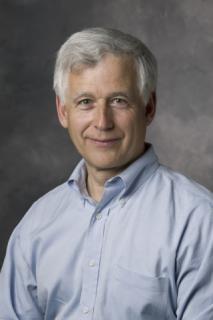
David R. Henderson

Research Fellow
Biography: 

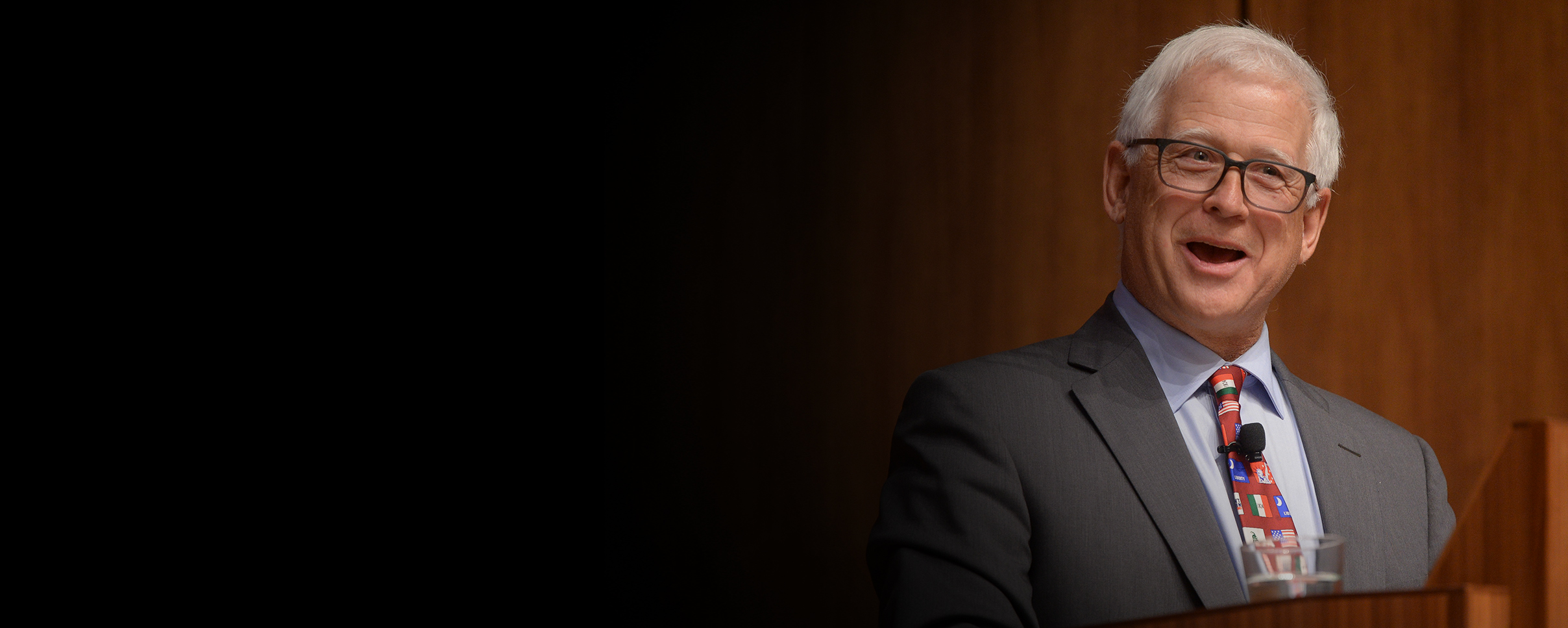
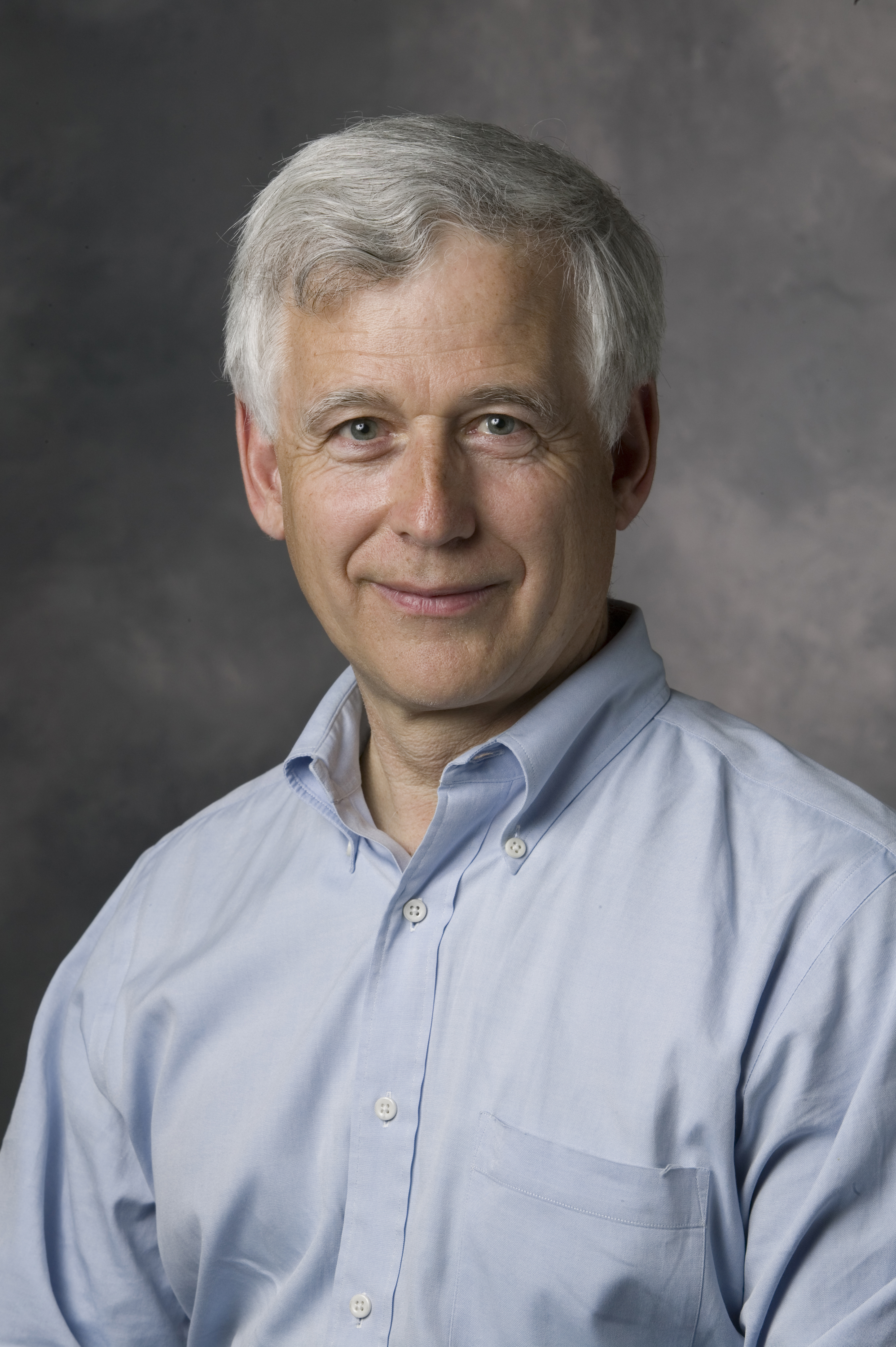
David R. Henderson is a research fellow with the Hoover Institution. He is also a professor of economics at the Naval Postgraduate School in Monterey, California.

Henderson's writing focuses on public policy. His specialty is in making economic issues and analyses clear and interesting to general audiences. Two themes emerge from his writing: (1) that the unintended consequences of government regulation and spending are usually worse than the problems they are supposed to solve and (2) that freedom and free markets work to solve people's problems.

David Henderson is the editor of The Concise Encyclopedia of Economics (Warner Books, 2007), a book that communicates to a general audience what and how economists think. The Wall Street Journal commented, "His brainchild is a tribute to the power of the short, declarative sentence." The encyclopedia went through three printings and was translated into Spanish and Portuguese. It is now online at the Library of Economics and Liberty. He coauthored Making Great Decisions in Business and Life (2006). Henderson's book, The Joy of Freedom: An Economist's Odyssey (Financial Times Prentice Hall, 2001), has been translated into Russian. Henderson also writes frequently for the Wall Street Journal and Fortune and, from 1997 to 2000, was a monthly columnist with Red Herring, an information technology magazine. He currently serves as an adviser to LifeSharers, a nonprofit network of organ and tissue donors.

Henderson has been on the faculty of the Naval Postgraduate School since 1984 and a research fellow with Hoover since 1990. He was the John M. Olin Visiting Professor with the Center for the Study of American Business at Washington University in St. Louis in 1994; a senior economist for energy and health policy with the President's Council of Economic Advisers from 1982 to 1984; a visiting professor at the University of Santa Clara from 1980 to 1981; a senior policy analyst with the Cato Institute from 1979 to 1980; and an assistant professor at the University of Rochester's Graduate School of Management from 1975 to 1979.

In 1997, he received the Rear Admiral John Jay Schieffelin Award for excellence in teaching from the Naval Postgraduate School. In 1984, he won the Mencken Award for best investigative journalism article for his Fortune article "The Myth of MITI."

Henderson has written for the New York Times, Barron's, Fortune, the Los Angeles Times, the Chicago Tribune, Public Interest, the Christian Science Monitor, National Review, the New York Daily News, the Dallas Morning News, and Reason. He has also written scholarly articles for the Journal of Policy Analysis and Management, the Journal of Monetary Economics, Cato Journal, Regulation, Contemporary Policy Issues, and Energy Journal.

Henderson has spoken before a wide variety of audiences, including the American Farm Bureau Federation, the Chicago Council on Foreign Relations, the St. Louis Discussion Club, the Commonwealth Club of California (National Defense and Business Economics Section), the Cato Institute, and the Heritage Foundation. He has also spoken to economists and general audiences at many universities around the country, including Carnegie-Mellon, Brown, the University of California, Berkeley, the University of California, Davis, the University of Rochester, the University of Chicago, Harvard University's John F. Kennedy School, and the Hoover Institution. He has given papers at annual conferences held by the American Economics Association, the Western Economics Association, and the Association of Public Policy and Management. He has testified before the House Ways and Means Committee, the Senate Armed Services Committee, and the Senate Committee on Labor and Human Resources. He has also appeared on the O'Reilly Factor (Fox News), C-SPAN, CNN, the Newshour with Jim Lehrer, CNBC Squawk Box, MSNBC, BBC, CBC, the Fox News Channel, RT, and regional talk shows.

Born and raised in Canada, Henderson earned his bachelor of science degree in mathematics from the University of Winnipeg in 1970 and his Ph.D. in economics from the University of California, Los Angeles, in 1976.

Filter By:

Topic

Type

Recent Commentary

Crowd at New York's American Union Bank during a bank run early in the Great Depression.
Analysis and Commentary

Paul Samuelson's Take On The Great Depression

by David R. Hendersonvia EconLog
Wednesday, March 11, 2015

In jumping around through the blogosphere last night, I came across this quote from Paul Samuelson, in an interview he did in 2009 with Conor Clarke.

Interest Rates
Analysis and Commentary

The Henderson Misery Index

by David R. Henderson quoting Robert J. Barrovia EconLog
Tuesday, March 10, 2015

During the 1976 campaign for U.S. president, candidate Jimmy Carter popularized the "Misery Index" as a way of criticizing his opponent, Jerry Ford. The misery index--equal to the sum of the inflation rate and the unemployment rate--was devised by the late Arthur Okun, who was second chairman of the Council of Economic Advisers under President Lyndon Johnson. 

Analysis and Commentary

Distorted Incentives For Prosecutors

by David R. Hendersonvia EconLog
Monday, March 9, 2015

You get (more of) what you (don't) pay for.

Analysis and Commentary

Rubio-Lee Isn't Great

by David R. Hendersonvia EconLog
Sunday, March 8, 2015

Co-blogger Scott Sumner, over at his TheMoneyIllusion blog, has a post titled "Rubio-Lee is great, so why not make it even greater?"

Analysis and Commentary

The Minimum Wage Harm That Few Are Talking About

by David R. Hendersonvia EconLog
Saturday, March 7, 2015

Ball State University economists Philip R.P. Coelho and James E. McClure wrote a short piece recently that makes an obvious and telling point. But even though it's obvious, few people who discuss the minimum wage are talking about it. And that's tragic.

Analysis and Commentary

Dom Armentano

by David R. Hendersonvia EconLog
Friday, March 6, 2015

Following a few of links in Bryan Caplan's latest post, I came across this book (zero-price as a pdf) edited by Walter Block. Titled I Chose Liberty, it's a series of essays on how various libertarians or close-to libertarians came to their views.

Analysis and Commentary

Krugman Versus Krugman On Labor Versus Butter

by David R. Hendersonvia EconLog
Thursday, March 5, 2015

"But labor economists have long questioned this view. Soylent Green -- I mean, the labor force -- is people. And because workers are people, wages are not, in fact, like the price of butter, and how much workers are paid depends as much on social forces and political power as it does on simple supply and demand."

Analysis and Commentary

Can One Conduct Cost-Benefit Analysis Of A Policy?

by David R. Hendersonvia EconLog
Wednesday, March 4, 2015

The answer to the question I asked in the title seems as if it should be "Yes." And not just "yes," but "Obviously yes."

David R. Henderson is a research fellow with the Hoover Institution.
Analysis and Commentary

Illegal Means Illegal

by David R. Hendersonvia EconLog
Wednesday, March 4, 2015

George Washington University political science professor Henry Farrell recently wrote a piece titled "Dark Leviathan." He states his case so well that I won't try to paraphrase it. Instead, I'll quote one of the opening paragraphs

Analysis and Commentary

Krugman's Priceless Economics

by David R. Hendersonvia EconLog
Tuesday, March 3, 2015

As regular readers of my posts on Econlog know, although I am often critical of Paul Krugman, I defend him when he's doing good economics (here, for example). His New York Times column yesterday, though, "Walmart's Visible Hand," essentially throws out basic price theory. Thus the title of this post.

Pages