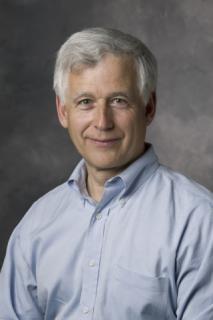
David R. Henderson

Research Fellow
Biography: 

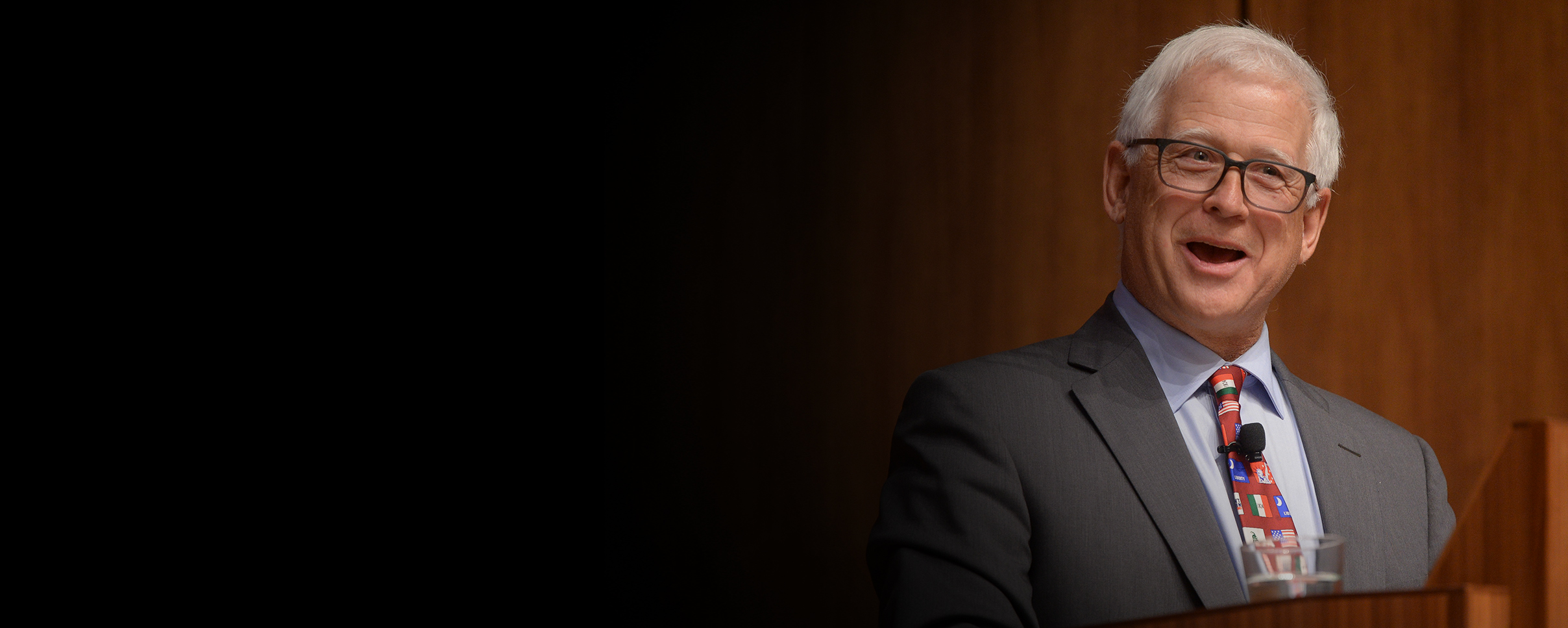
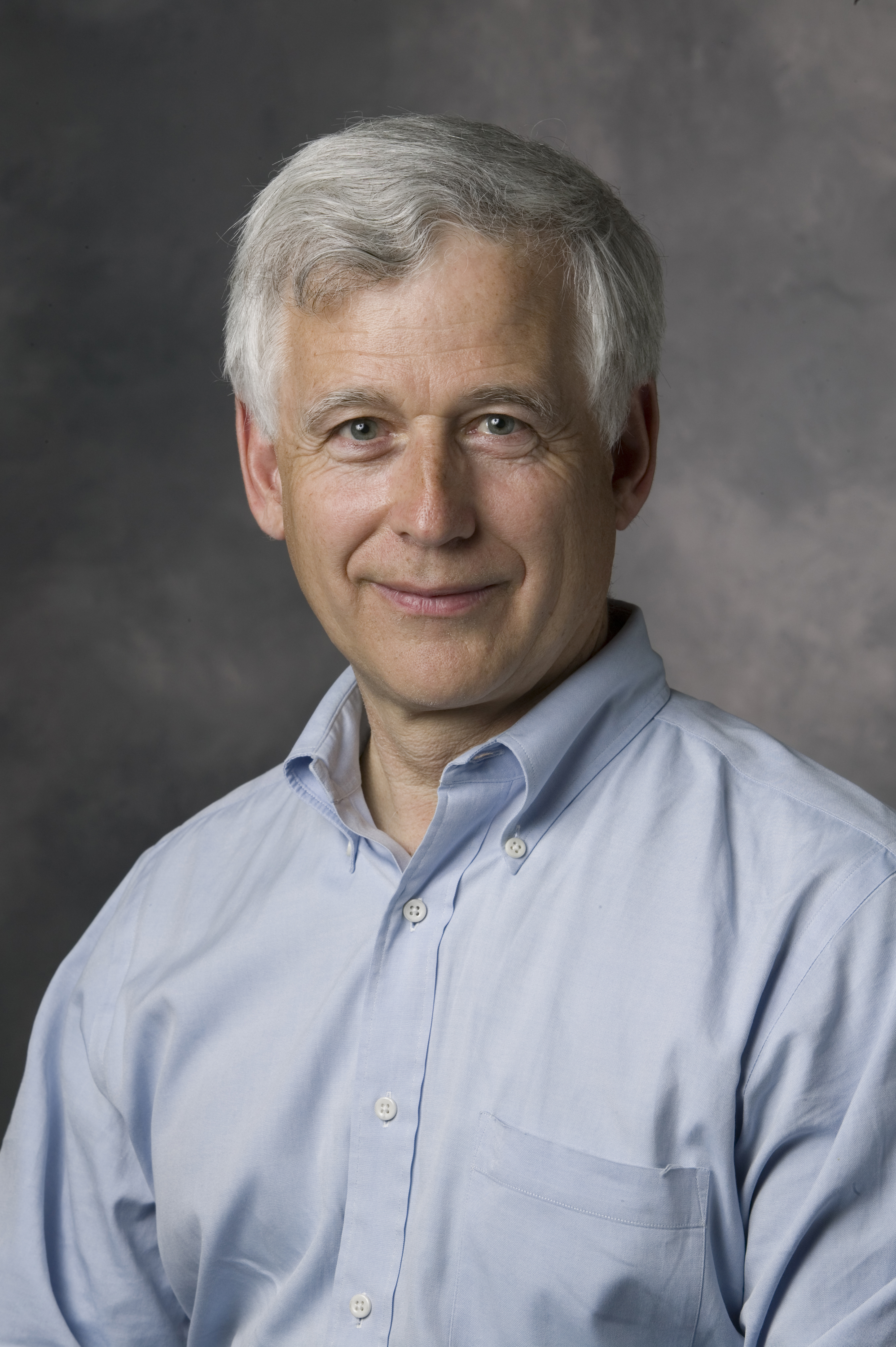
David R. Henderson is a research fellow with the Hoover Institution. He is also a professor of economics at the Naval Postgraduate School in Monterey, California.

Henderson's writing focuses on public policy. His specialty is in making economic issues and analyses clear and interesting to general audiences. Two themes emerge from his writing: (1) that the unintended consequences of government regulation and spending are usually worse than the problems they are supposed to solve and (2) that freedom and free markets work to solve people's problems.

David Henderson is the editor of The Concise Encyclopedia of Economics (Warner Books, 2007), a book that communicates to a general audience what and how economists think. The Wall Street Journal commented, "His brainchild is a tribute to the power of the short, declarative sentence." The encyclopedia went through three printings and was translated into Spanish and Portuguese. It is now online at the Library of Economics and Liberty. He coauthored Making Great Decisions in Business and Life (2006). Henderson's book, The Joy of Freedom: An Economist's Odyssey (Financial Times Prentice Hall, 2001), has been translated into Russian. Henderson also writes frequently for the Wall Street Journal and Fortune and, from 1997 to 2000, was a monthly columnist with Red Herring, an information technology magazine. He currently serves as an adviser to LifeSharers, a nonprofit network of organ and tissue donors.

Henderson has been on the faculty of the Naval Postgraduate School since 1984 and a research fellow with Hoover since 1990. He was the John M. Olin Visiting Professor with the Center for the Study of American Business at Washington University in St. Louis in 1994; a senior economist for energy and health policy with the President's Council of Economic Advisers from 1982 to 1984; a visiting professor at the University of Santa Clara from 1980 to 1981; a senior policy analyst with the Cato Institute from 1979 to 1980; and an assistant professor at the University of Rochester's Graduate School of Management from 1975 to 1979.

In 1997, he received the Rear Admiral John Jay Schieffelin Award for excellence in teaching from the Naval Postgraduate School. In 1984, he won the Mencken Award for best investigative journalism article for his Fortune article "The Myth of MITI."

Henderson has written for the New York Times, Barron's, Fortune, the Los Angeles Times, the Chicago Tribune, Public Interest, the Christian Science Monitor, National Review, the New York Daily News, the Dallas Morning News, and Reason. He has also written scholarly articles for the Journal of Policy Analysis and Management, the Journal of Monetary Economics, Cato Journal, Regulation, Contemporary Policy Issues, and Energy Journal.

Henderson has spoken before a wide variety of audiences, including the American Farm Bureau Federation, the Chicago Council on Foreign Relations, the St. Louis Discussion Club, the Commonwealth Club of California (National Defense and Business Economics Section), the Cato Institute, and the Heritage Foundation. He has also spoken to economists and general audiences at many universities around the country, including Carnegie-Mellon, Brown, the University of California, Berkeley, the University of California, Davis, the University of Rochester, the University of Chicago, Harvard University's John F. Kennedy School, and the Hoover Institution. He has given papers at annual conferences held by the American Economics Association, the Western Economics Association, and the Association of Public Policy and Management. He has testified before the House Ways and Means Committee, the Senate Armed Services Committee, and the Senate Committee on Labor and Human Resources. He has also appeared on the O'Reilly Factor (Fox News), C-SPAN, CNN, the Newshour with Jim Lehrer, CNBC Squawk Box, MSNBC, BBC, CBC, the Fox News Channel, RT, and regional talk shows.

Born and raised in Canada, Henderson earned his bachelor of science degree in mathematics from the University of Winnipeg in 1970 and his Ph.D. in economics from the University of California, Los Angeles, in 1976.

Filter By:

Topic

Type

Recent Commentary

Analysis and Commentary

Paul Krugman: David Henderson Was Right

by David R. Hendersonvia EconLog
Saturday, November 22, 2014

Ok, Krugman didn't say that; he didn't mention my name. But that's Krugman's MO. He has stated explicitly before--I can't find the link quickly--that he doesn't want to mention the names of people he takes issue with because that would give us too much publicity.

Analysis and Commentary

Two Cheers At Least For Some Politicians

by David R. Hendersonvia EconLog
Thursday, November 20, 2014

I rarely disagree with Don Boudreaux about any economic, political, or moral issue and so in those rare cases where I do disagree, it's probably worth noting. Here's one.

Immigration
Analysis and Commentary

The New Brownsville U-Turn

by David R. Hendersonvia EconLog
Wednesday, November 19, 2014

I flew into the Corpus Christi airport late last night and waited in line for my rental car. Behind me was a young dark-skinned man who appeared to be from India and he was shouting in a foreign language--Hindi, I think--to another young dark-skinned man who was picking up their bags from the carousel.

Analysis and Commentary

Congressional Consumers Uber Alles

by David R. Hendersonvia EconLog
Sunday, November 16, 2014

Usually in every microeconomics course I teach, there comes a time when I make the point that there is a fundamental difference between taxicab regulation in Washington, D.C. and taxicab regulation in virtually every other American city. In the latter, local governments restrict the number of taxicabs, creating rents for those who have the permits.

Analysis and Commentary

Jonathan Gruber's Economics

by David R. Hendersonvia EconLog
Thursday, November 13, 2014

"Why, Sir, if the fellow does not think as he speaks, he is lying; and I see not what honour he can propose to himself from having the character of a lyar. But if he does really think that there is no distinction between virtue and vice, why, Sir, when he leaves our houses let us count our spoons."

Analysis and Commentary

Goodman On Firms As A Vehicle For Regulation

by David R. Hendersonvia EconLog
Wednesday, November 12, 2014

So how many Californians have been arrested for eating the wrong kind of egg? Zero. Not even one? Not one. Actually, the law doesn't take effect until January, but even then egg eaters will have nothing to fear. The reason: the law doesn't apply to people who eat eggs. It only applies to people who sell eggs.

Analysis and Commentary

Henderson on Piketty, Part 6

by David R. Hendersonvia EconLog
Sunday, November 9, 2014

This is my final installment from "The Unintended Case for More Capitalism," my review of Capital in the Twenty-First Century by Thomas Piketty.

The Taylor Rule and the Transformation of Monetary Policy
Analysis and Commentary

What's Wrong with the Taylor Rule?

by David R. Hendersonvia EconLog
Monday, November 3, 2014

This is the opening paragraph of "What's Wrong with the Taylor Rule?" by San Jose State University economics professor Jeffrey Rogers Hummel. It's one of the two Featured Articles for November's Econlib.

Analysis and Commentary

You Should Compromise With Me

by David R. Hendersonvia EconLog
Sunday, November 2, 2014

Cleaning out my office on Friday, I came across an interesting piece by Gerald F. Seib. He's a Wall Street Journal reporter who covers Washington politics.

Analysis and Commentary

What's The Right Minimum Wage?

by David R. Hendersonvia Prager U
Monday, October 27, 2014

What's the perfect minimum wage: is it $10 an hour? $15? $20? How about zero? That's right. Zero. While Congress discusses a minimum wage hike, economist David Henderson shows that any minimum wage makes it harder for unemployed people (particularly young people) to find work, and forces business owners to cut the hours of lower-skilled employees.

Pages