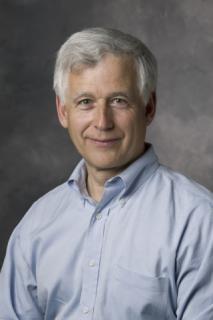
David R. Henderson

Research Fellow
Biography: 

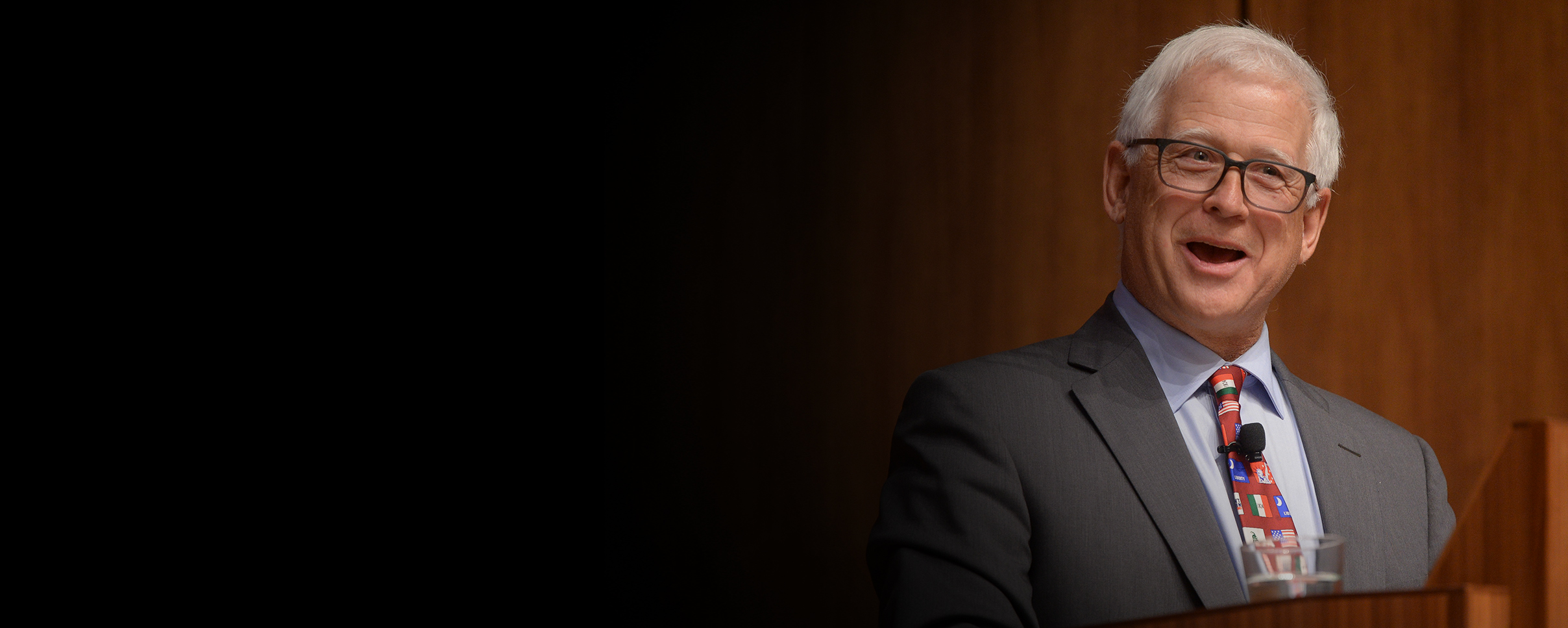
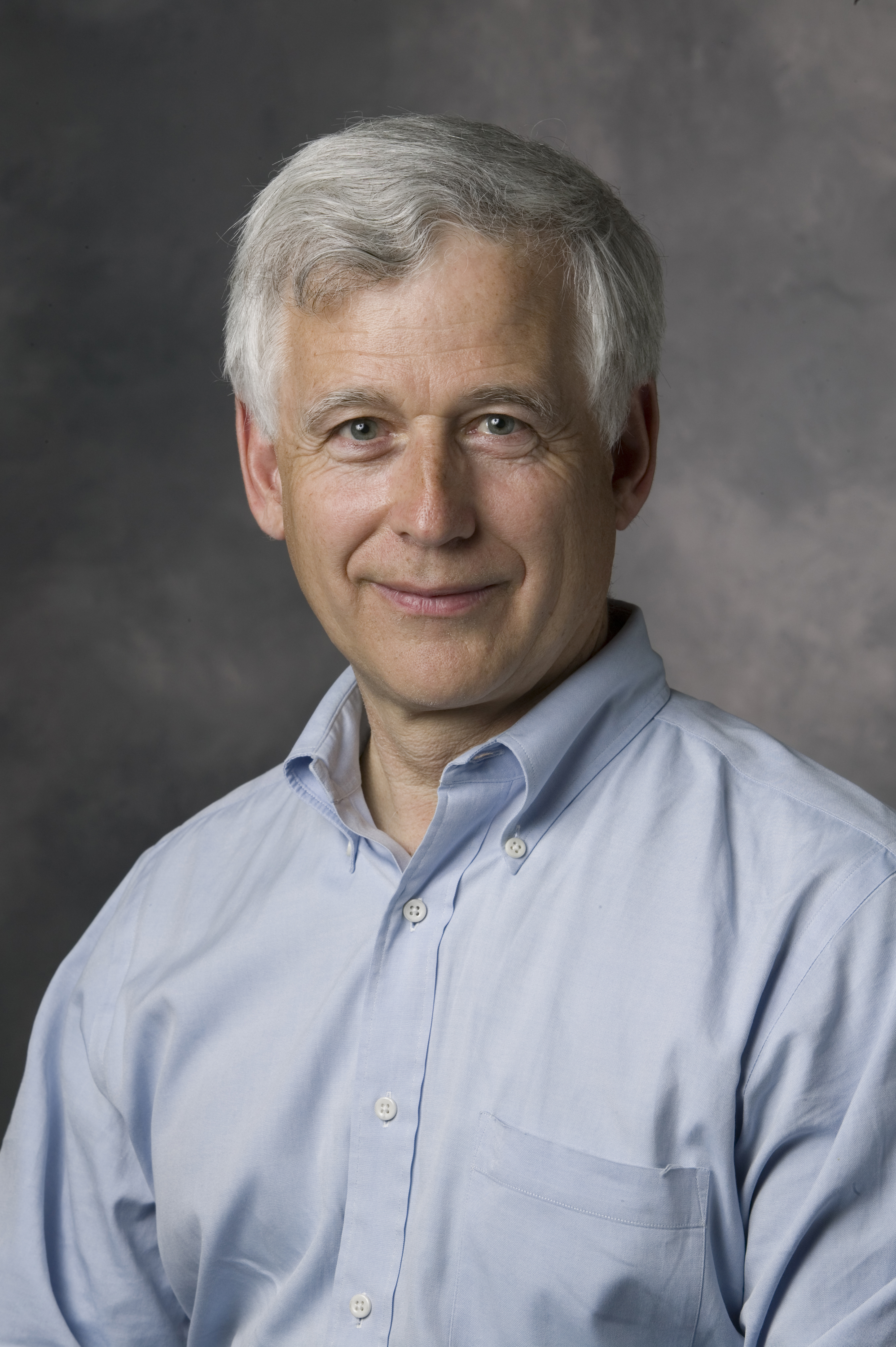
David R. Henderson is a research fellow with the Hoover Institution. He is also a professor of economics at the Naval Postgraduate School in Monterey, California.

Henderson's writing focuses on public policy. His specialty is in making economic issues and analyses clear and interesting to general audiences. Two themes emerge from his writing: (1) that the unintended consequences of government regulation and spending are usually worse than the problems they are supposed to solve and (2) that freedom and free markets work to solve people's problems.

David Henderson is the editor of The Concise Encyclopedia of Economics (Warner Books, 2007), a book that communicates to a general audience what and how economists think. The Wall Street Journal commented, "His brainchild is a tribute to the power of the short, declarative sentence." The encyclopedia went through three printings and was translated into Spanish and Portuguese. It is now online at the Library of Economics and Liberty. He coauthored Making Great Decisions in Business and Life (2006). Henderson's book, The Joy of Freedom: An Economist's Odyssey (Financial Times Prentice Hall, 2001), has been translated into Russian. Henderson also writes frequently for the Wall Street Journal and Fortune and, from 1997 to 2000, was a monthly columnist with Red Herring, an information technology magazine. He currently serves as an adviser to LifeSharers, a nonprofit network of organ and tissue donors.

Henderson has been on the faculty of the Naval Postgraduate School since 1984 and a research fellow with Hoover since 1990. He was the John M. Olin Visiting Professor with the Center for the Study of American Business at Washington University in St. Louis in 1994; a senior economist for energy and health policy with the President's Council of Economic Advisers from 1982 to 1984; a visiting professor at the University of Santa Clara from 1980 to 1981; a senior policy analyst with the Cato Institute from 1979 to 1980; and an assistant professor at the University of Rochester's Graduate School of Management from 1975 to 1979.

In 1997, he received the Rear Admiral John Jay Schieffelin Award for excellence in teaching from the Naval Postgraduate School. In 1984, he won the Mencken Award for best investigative journalism article for his Fortune article "The Myth of MITI."

Henderson has written for the New York Times, Barron's, Fortune, the Los Angeles Times, the Chicago Tribune, Public Interest, the Christian Science Monitor, National Review, the New York Daily News, the Dallas Morning News, and Reason. He has also written scholarly articles for the Journal of Policy Analysis and Management, the Journal of Monetary Economics, Cato Journal, Regulation, Contemporary Policy Issues, and Energy Journal.

Henderson has spoken before a wide variety of audiences, including the American Farm Bureau Federation, the Chicago Council on Foreign Relations, the St. Louis Discussion Club, the Commonwealth Club of California (National Defense and Business Economics Section), the Cato Institute, and the Heritage Foundation. He has also spoken to economists and general audiences at many universities around the country, including Carnegie-Mellon, Brown, the University of California, Berkeley, the University of California, Davis, the University of Rochester, the University of Chicago, Harvard University's John F. Kennedy School, and the Hoover Institution. He has given papers at annual conferences held by the American Economics Association, the Western Economics Association, and the Association of Public Policy and Management. He has testified before the House Ways and Means Committee, the Senate Armed Services Committee, and the Senate Committee on Labor and Human Resources. He has also appeared on the O'Reilly Factor (Fox News), C-SPAN, CNN, the Newshour with Jim Lehrer, CNBC Squawk Box, MSNBC, BBC, CBC, the Fox News Channel, RT, and regional talk shows.

Born and raised in Canada, Henderson earned his bachelor of science degree in mathematics from the University of Winnipeg in 1970 and his Ph.D. in economics from the University of California, Los Angeles, in 1976.

Filter By:

Topic

Type

Recent Commentary

Analysis and Commentary

Krugman and Blinder: Welcome to the Supply Side

by David R. Hendersonvia EconLog
Tuesday, February 11, 2014

Obamacare defenders and Princeton University economists Paul Krugman and Alan Blinder have granted that the Congressional Budget Office is making a reasonable claim in saying that by 2024, Obamacare, if not repealed or delayed, will reduce the number of hours...

Analysis and Commentary

Why Income Mobility is Larger in the Middle

by David R. Hendersonvia EconLog
Monday, February 10, 2014

Whenever we talk about income mobility, we should never forget that we're talking about mobility in each direction. One can move down the income scale as well as up. Indeed, if we measure income mobility of households by movement from...

Analysis and Commentary

Robert Murphy on the Minimum Wage

by David R. Hendersonvia EconLog
Monday, February 3, 2014

In this article, I explain why, even if the revisionist empirical studies are accurate, it still does not follow that the proposed hike in the minimum wage will be a boon for low-skilled workers. I also argue that, because critics...

Analysis and Commentary

Confusion About Income Inequality

by David R. Hendersonvia EconLog
Friday, January 31, 2014

My Econlog co-blogger, Scott Sumner, on his own blog, The Money Illusion, writes that G.I.'s (he thinks this is Greg Ip) post on The Economist blog is a

Analysis and Commentary

Marginal Tax Rates: Singing Taxman to My Class

by David R. Hendersonvia Econlib
Wednesday, January 29, 2014

UPDATE BELOW: Often, when I teach my classes about marginal tax rates, I give them a little history about such rates. They're shocked when I tell them that the top U.S. federal marginal tax rate on individual income in the...

Analysis and Commentary

If Obama's Worried About Poverty, He Should Focus On It, Not Income Inequality

by David R. Hendersonvia FoxNews.com
Friday, January 24, 2014

Income inequality in the United States today cannot be explained by rich people exploiting poor people.

Analysis and Commentary

Minimum Wage Increase Will Reduce Poverty Even Less than I Thought

by David R. Hendersonvia EconLog
Tuesday, January 21, 2014
Analysis and Commentary

John Cochrane Views the World

by David R. Henderson with John H. Cochranevia EconLog
Wednesday, January 15, 2014
Analysis and Commentary

Minimum Wage Not Well Targeted at Reducing Poverty

by David R. Hendersonvia EconLog
Monday, January 13, 2014
Analysis and Commentary

Debate Over Minimum Wage Hike Is Obscured By Myths

by David R. Hendersonvia Investor's Business Daily
Friday, January 10, 2014

Raising the minimum wage won't help the poor. Why? It's a myth that most minimum wage earners are the sole breadwinners in their household. They aren't.

Pages