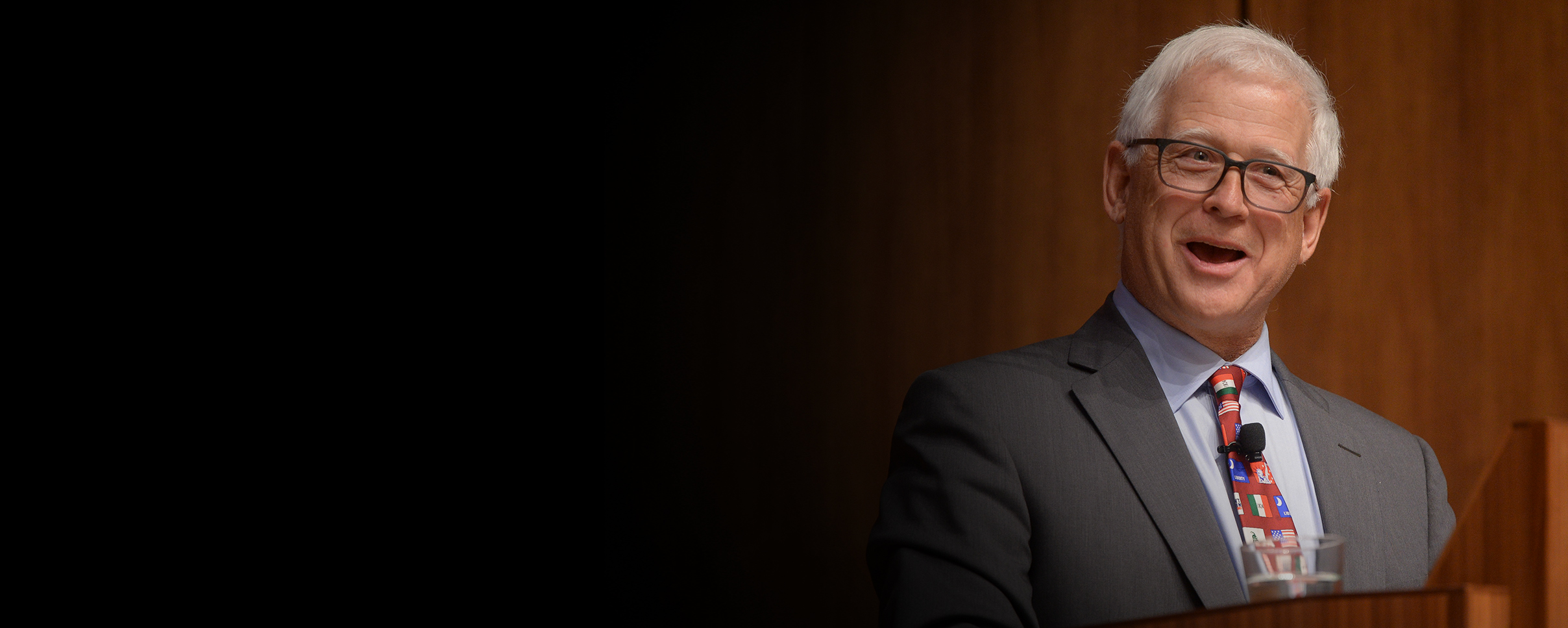
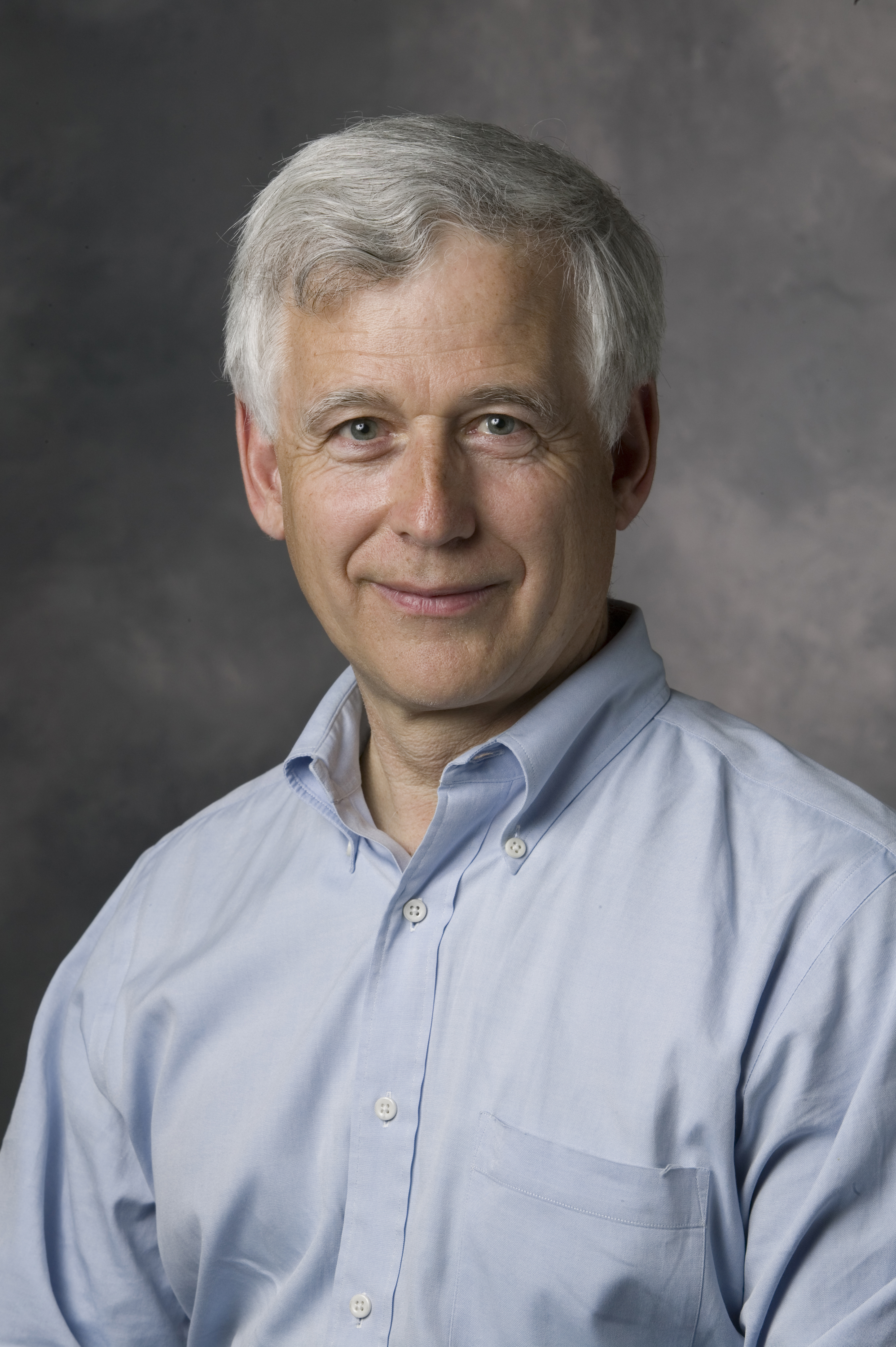
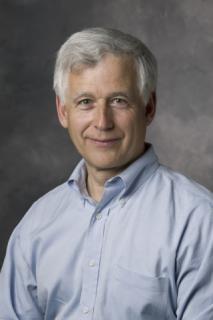
David R. Henderson

Research Fellow
Biography: 

David R. Henderson is a research fellow with the Hoover Institution. He is also a professor of economics at the Naval Postgraduate School in Monterey, California.

Henderson's writing focuses on public policy. His specialty is in making economic issues and analyses clear and interesting to general audiences. Two themes emerge from his writing: (1) that the unintended consequences of government regulation and spending are usually worse than the problems they are supposed to solve and (2) that freedom and free markets work to solve people's problems.

David Henderson is the editor of The Concise Encyclopedia of Economics (Warner Books, 2007), a book that communicates to a general audience what and how economists think. The Wall Street Journal commented, "His brainchild is a tribute to the power of the short, declarative sentence." The encyclopedia went through three printings and was translated into Spanish and Portuguese. It is now online at the Library of Economics and Liberty. He coauthored Making Great Decisions in Business and Life (2006). Henderson's book, The Joy of Freedom: An Economist's Odyssey (Financial Times Prentice Hall, 2001), has been translated into Russian. Henderson also writes frequently for the Wall Street Journal and Fortune and, from 1997 to 2000, was a monthly columnist with Red Herring, an information technology magazine. He currently serves as an adviser to LifeSharers, a nonprofit network of organ and tissue donors.

Henderson has been on the faculty of the Naval Postgraduate School since 1984 and a research fellow with Hoover since 1990. He was the John M. Olin Visiting Professor with the Center for the Study of American Business at Washington University in St. Louis in 1994; a senior economist for energy and health policy with the President's Council of Economic Advisers from 1982 to 1984; a visiting professor at the University of Santa Clara from 1980 to 1981; a senior policy analyst with the Cato Institute from 1979 to 1980; and an assistant professor at the University of Rochester's Graduate School of Management from 1975 to 1979.

In 1997, he received the Rear Admiral John Jay Schieffelin Award for excellence in teaching from the Naval Postgraduate School. In 1984, he won the Mencken Award for best investigative journalism article for his Fortune article "The Myth of MITI."

Henderson has written for the New York Times, Barron's, Fortune, the Los Angeles Times, the Chicago Tribune, Public Interest, the Christian Science Monitor, National Review, the New York Daily News, the Dallas Morning News, and Reason. He has also written scholarly articles for the Journal of Policy Analysis and Management, the Journal of Monetary Economics, Cato Journal, Regulation, Contemporary Policy Issues, and Energy Journal.

Henderson has spoken before a wide variety of audiences, including the American Farm Bureau Federation, the Chicago Council on Foreign Relations, the St. Louis Discussion Club, the Commonwealth Club of California (National Defense and Business Economics Section), the Cato Institute, and the Heritage Foundation. He has also spoken to economists and general audiences at many universities around the country, including Carnegie-Mellon, Brown, the University of California, Berkeley, the University of California, Davis, the University of Rochester, the University of Chicago, Harvard University's John F. Kennedy School, and the Hoover Institution. He has given papers at annual conferences held by the American Economics Association, the Western Economics Association, and the Association of Public Policy and Management. He has testified before the House Ways and Means Committee, the Senate Armed Services Committee, and the Senate Committee on Labor and Human Resources. He has also appeared on the O'Reilly Factor (Fox News), C-SPAN, CNN, the Newshour with Jim Lehrer, CNBC Squawk Box, MSNBC, BBC, CBC, the Fox News Channel, RT, and regional talk shows.

Born and raised in Canada, Henderson earned his bachelor of science degree in mathematics from the University of Winnipeg in 1970 and his Ph.D. in economics from the University of California, Los Angeles, in 1976.

Filter By:

Topic

Type

Recent Commentary

Analysis and Commentary

Jeremy Arkes On COVID Externalities And Governor Newsom

by David R. Hendersonvia EconLog
Wednesday, November 25, 2020

Jeremy Arkes, one of my friends and Navy School colleagues, who is also a friend and colleague of Judith Hermis, submitted the letter he would have sent to Governor Newsom. I did some edits, all of which he accepted, and here is the result.

Analysis and Commentary

End The School Shutdown

by David R. Hendersonvia EconLog
Monday, November 23, 2020

As promised, this is the full op/ed that Ryan Sullivan and I had published in the print edition of the Wall Street Journal on October 21. Because today (Saturday) is my 70th birthday, I will not be working. So I might not reply to comments until Sunday or Monday.


Analysis and Commentary

Sullivan And Henderson Talk On School Shutdowns

by David R. Hendersonvia EconLog
Monday, November 23, 2020

Last Thursday, my Naval Postgraduate School colleague Ryan Sullivan and I made a case against school shutdowns in a Zoom talk to a local Monterey group called The Old Capitol Club. It’s an actual physical location in downtown Monterey and I’ve given 2 talks there in person in the last 20 years, something I refer to right at the end of this talk. This, of course, was remote.

Teachers picket in La Habra last December
Analysis and Commentary

Warren Coats's Experience With Unions

by David R. Hendersonvia EconLog
Sunday, November 22, 2020

My experiences with unions have not been good. My father was a Shell Oil union member. His union went on strike long ago when my mother was pregnant with my younger brother. After a few months on strike it was growing obvious (according to my father) that it would end soon in failure from the union perspective. The union bosses feared that my father and others would return to work before the union had formally given up. 

Analysis and Commentary

Dogs, Mountain Lions, And COVID-19

by David R. Hendersonvia EconLog
Wednesday, November 18, 2020

How dangerous are mountain lions? The data tell an interesting story. Since 1980, there have been only 13 attacks in all of California (where David and Charley live) and three people have died as a result. Compare this with attacks by dogs. Each year in California, about 100,000 dog attacks cause their victims to get medical attention. This means that California residents are approximately 180,000 times as likely to be seriously attacked by a dog as by a mountain lion. 

Analysis and Commentary

Jean-Baptiste Say And Henry Brougham, M.P. Discover The Laffer Curve

by David R. Hendersonvia EconLog
Sunday, November 15, 2020

In 1804, the English government raised the duties on sugar 20 per cent. It might have been expected, that their average product to the public exchequer would have been advanced in the same ratio; i. e. from 2,778,000l. the former amount, to 3,330,000l.: instead of which the increased duties produced but 2,537,000l.; exhibiting an absolute deficit. Speech of Henry Brougham, Esq., M. P., March 13, 1817.

Analysis and Commentary

Jean-Baptiste Say On The Millionaire Next Door

by David R. Hendersonvia EconLog
Saturday, November 14, 2020

A man is not rich because he pays largely; but he is able to pay largely because he is rich. It would not be a little ridiculous, if a man should think to enrich himself by spending largely, because he sees a rich neighbor doing so. It must be clear, that the rich man spends, because he is rich; but never can enrich himself by the act of spending.”

Analysis and Commentary

The Anti-Capitalist Dilemma

by David R. Hendersonvia EconLog
Friday, November 13, 2020

How do you make a case against capitalism while appearing to defend consumers’ rights and values? You make a movie called The Social Dilemma.

Blank Section (Placeholder)Featured

No Fair Trial For Big Tech

by David R. Hendersonvia Defining Ideas
Thursday, November 12, 2020

The Social Dilemma, a movie that accuses the social media giants of manipulation, freely indulges its own kind of manipulation.

Analysis and Commentary

Is The Absolute Number Of Deaths The Only Thing That Matters?

by David R. Hendersonvia EconLog
Thursday, November 12, 2020

Answer: It depends on the question we’re trying to answer.

Pages