David R. Henderson

Research Fellow
Biography: 

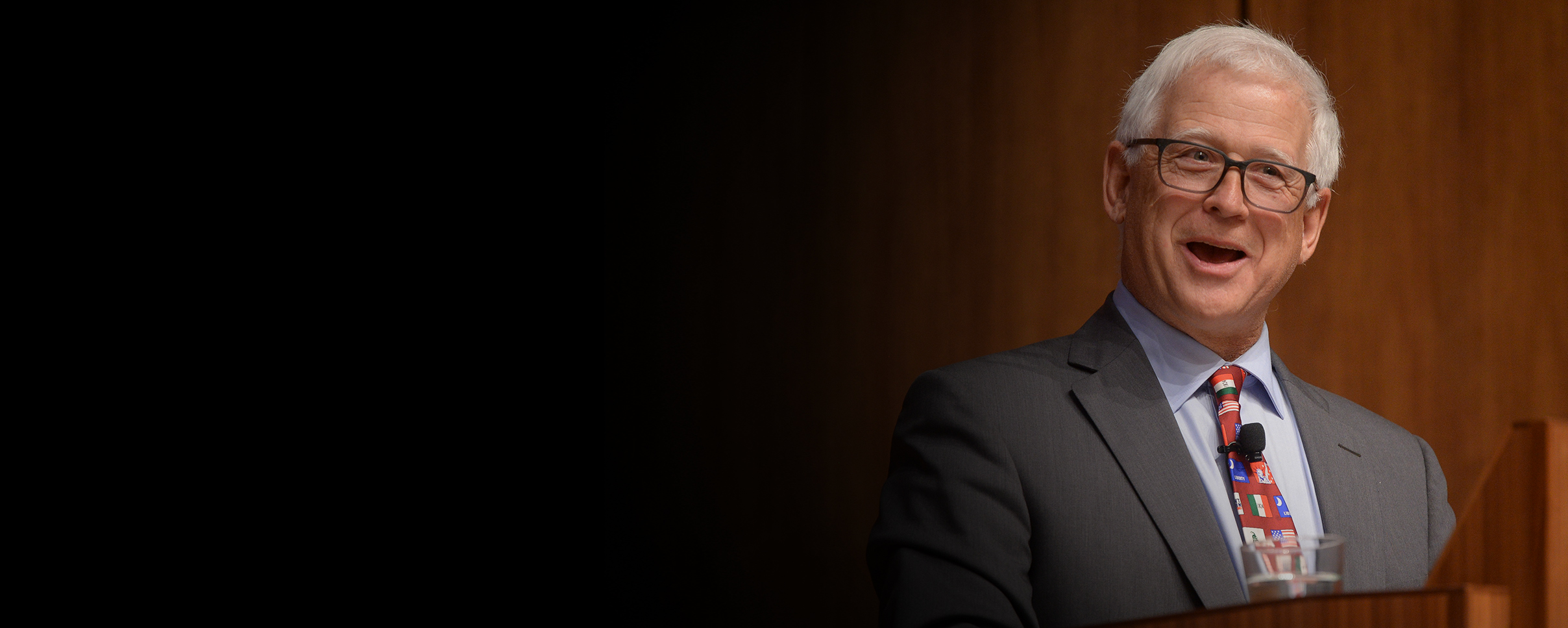
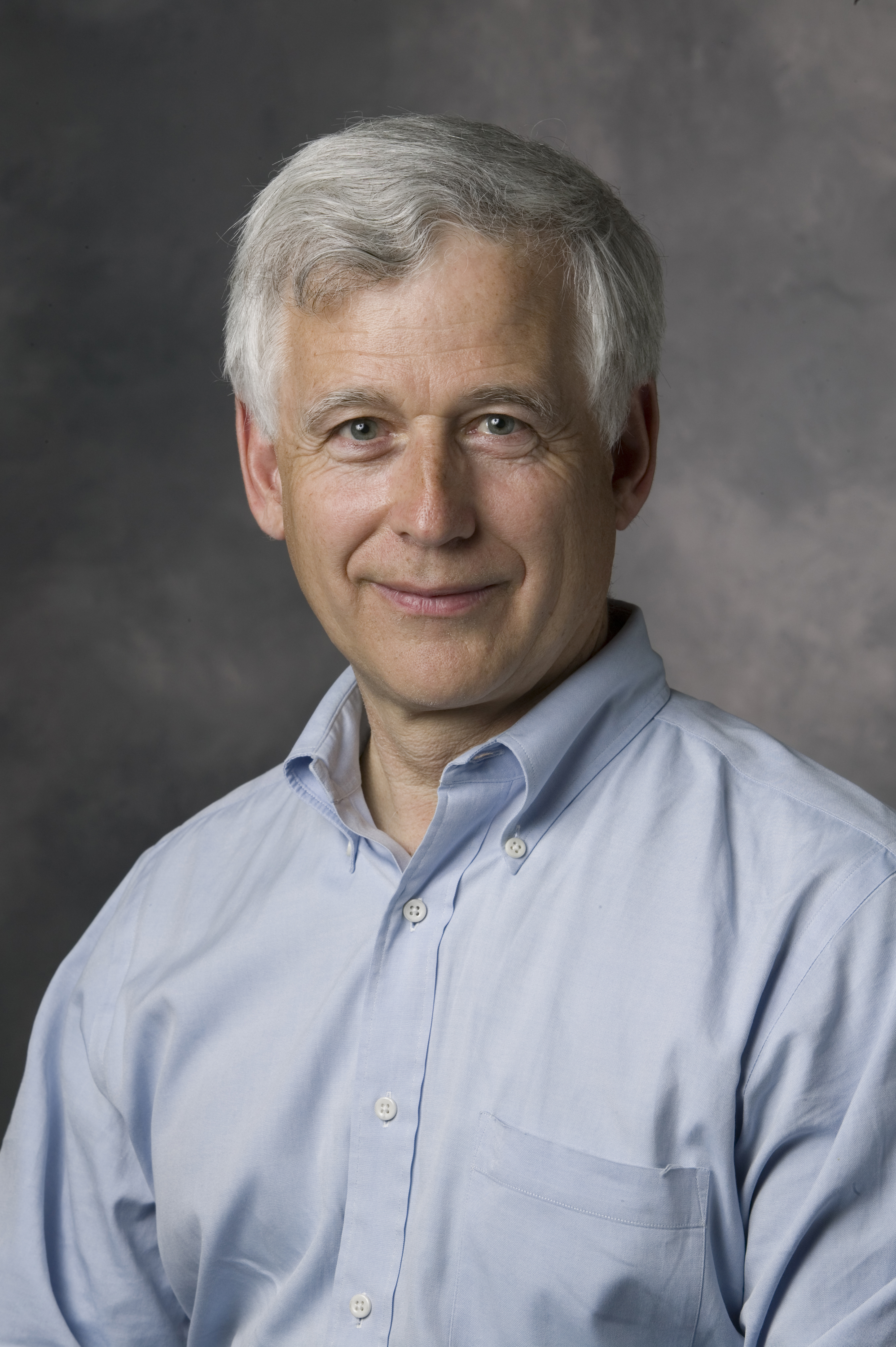
David R. Henderson is a research fellow with the Hoover Institution. He is also a professor of economics at the Naval Postgraduate School in Monterey, California.

Henderson's writing focuses on public policy. His specialty is in making economic issues and analyses clear and interesting to general audiences. Two themes emerge from his writing: (1) that the unintended consequences of government regulation and spending are usually worse than the problems they are supposed to solve and (2) that freedom and free markets work to solve people's problems.

David Henderson is the editor of The Concise Encyclopedia of Economics (Warner Books, 2007), a book that communicates to a general audience what and how economists think. The Wall Street Journal commented, "His brainchild is a tribute to the power of the short, declarative sentence." The encyclopedia went through three printings and was translated into Spanish and Portuguese. It is now online at the Library of Economics and Liberty. He coauthored Making Great Decisions in Business and Life (2006). Henderson's book, The Joy of Freedom: An Economist's Odyssey (Financial Times Prentice Hall, 2001), has been translated into Russian. Henderson also writes frequently for the Wall Street Journal and Fortune and, from 1997 to 2000, was a monthly columnist with Red Herring, an information technology magazine. He currently serves as an adviser to LifeSharers, a nonprofit network of organ and tissue donors.

Henderson has been on the faculty of the Naval Postgraduate School since 1984 and a research fellow with Hoover since 1990. He was the John M. Olin Visiting Professor with the Center for the Study of American Business at Washington University in St. Louis in 1994; a senior economist for energy and health policy with the President's Council of Economic Advisers from 1982 to 1984; a visiting professor at the University of Santa Clara from 1980 to 1981; a senior policy analyst with the Cato Institute from 1979 to 1980; and an assistant professor at the University of Rochester's Graduate School of Management from 1975 to 1979.

In 1997, he received the Rear Admiral John Jay Schieffelin Award for excellence in teaching from the Naval Postgraduate School. In 1984, he won the Mencken Award for best investigative journalism article for his Fortune article "The Myth of MITI."

Henderson has written for the New York Times, Barron's, Fortune, the Los Angeles Times, the Chicago Tribune, Public Interest, the Christian Science Monitor, National Review, the New York Daily News, the Dallas Morning News, and Reason. He has also written scholarly articles for the Journal of Policy Analysis and Management, the Journal of Monetary Economics, Cato Journal, Regulation, Contemporary Policy Issues, and Energy Journal.

Henderson has spoken before a wide variety of audiences, including the American Farm Bureau Federation, the Chicago Council on Foreign Relations, the St. Louis Discussion Club, the Commonwealth Club of California (National Defense and Business Economics Section), the Cato Institute, and the Heritage Foundation. He has also spoken to economists and general audiences at many universities around the country, including Carnegie-Mellon, Brown, the University of California, Berkeley, the University of California, Davis, the University of Rochester, the University of Chicago, Harvard University's John F. Kennedy School, and the Hoover Institution. He has given papers at annual conferences held by the American Economics Association, the Western Economics Association, and the Association of Public Policy and Management. He has testified before the House Ways and Means Committee, the Senate Armed Services Committee, and the Senate Committee on Labor and Human Resources. He has also appeared on the O'Reilly Factor (Fox News), C-SPAN, CNN, the Newshour with Jim Lehrer, CNBC Squawk Box, MSNBC, BBC, CBC, the Fox News Channel, RT, and regional talk shows.

Born and raised in Canada, Henderson earned his bachelor of science degree in mathematics from the University of Winnipeg in 1970 and his Ph.D. in economics from the University of California, Los Angeles, in 1976.

Filter By:

Topic

Type

Recent Commentary

Analysis and Commentary

Hirshleifer On Regression To Savagery

by David R. Hendersonvia EconLog
Monday, October 19, 2020

In researching my latest Defining Ideas article due tomorrow, I came across this paragraph from UCLA economics professor Jack Hirshleifer. One thing to know about Jack was how incredibly careful a scholar he was.


Black Livelihoods Matter

by David R. Hendersonvia Hoover Digest
Monday, October 19, 2020

Rigid regulations still deny low-income African-Americans the upward mobility they need.

Analysis and Commentary

Is Cowen Right About The Great Barrington Declaration? Part 2

by David R. Hendersonvia EconLog
Saturday, October 17, 2020

Yesterday, I reviewed the first half of Tyler Cowen’s critique of the Great Barrington Declaration. This is the last half. As before, quotes from him are highlighted and my responses are not.

Analysis and Commentary

Is Cowen Right About The Great Barrington Declaration? Part 1

by David R. Hendersonvia EconLog
Friday, October 16, 2020

In an article yesterday, “A Dangerous Libertarian Strategy for Herd Immunity,” Bloomberg, October 15, George Mason University economist Tyler Cowen criticizes the now-famous Great Barrington Declaration.

Analysis and Commentary

Reply To Paul Romer

by David R. Hendersonvia EconLog
Wednesday, October 14, 2020

Economist Paul Romer tweeted today: Doesn’t sound like China is going to sign up for the “Great Barrington” plan for surrendering to the virus. Wouldn’t it be refreshing to live in a country where everybody understands that it is the government’s job to do whatever it takes to protect public health?

Analysis and Commentary

How Does Big Tech Cheat And Steal?

by David R. Hendersonvia EconLog
Wednesday, October 14, 2020

Last night on his show on Fox News Channel, host Tucker Carlson interviewed Colorado Congressman Ken Buck. Buck was critical of high-tech companies, as is Carlson, and was pushing for new antitrust legislation.

Analysis and Commentary

Jagdish Bhagwati For Nobel Prize

by David R. Hendersonvia EconLog
Wednesday, October 14, 2020

Starting in 1996, I woke up early on an October morning and saw who won the Nobel Prize in economics. I had a deal with the Wall Street Journal that I would tell one of the editors within an hour so whether I knew enough about the winner(s) to write an op/ed that morning for the next day’s print edition.

Analysis and Commentary

Sir Samuel Brittan RIP

by David R. Hendersonvia EconLog
Tuesday, October 13, 2020

Tyler Cowen, over at Marginal Revolution, quite rightly laments the death of British economic journalist, the aptly named Samuel Brittan.

Analysis and Commentary

Henderson On Nobel Winners In Wall Street Journal

by David R. Hendersonvia EconLog
Tuesday, October 13, 2020

In its technical paper justifying the awards, the Nobel Committee points out a major problem with using taxes to fund government programs: taxation distorts. The term economists use is “deadweight loss,” a loss that is not offset by a gain to anyone. Economists have estimated that raising $1 in taxes doesn’t cost society only $1; it costs somewhere between $1.17 and $1.56. The extra 17 to 56 cents is deadweight loss. 

Featured

Thank These Nobel Laureates For Your Cellphone

by David R. Hendersonvia The Wall Street Journal
Monday, October 12, 2020

Economists Paul Milgrom and Richard Wilson get the prize for devising spectrum auctions.

Pages