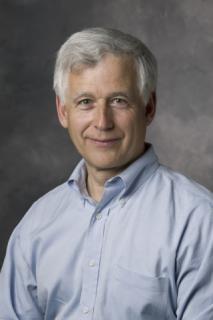
David R. Henderson

Research Fellow
Biography: 

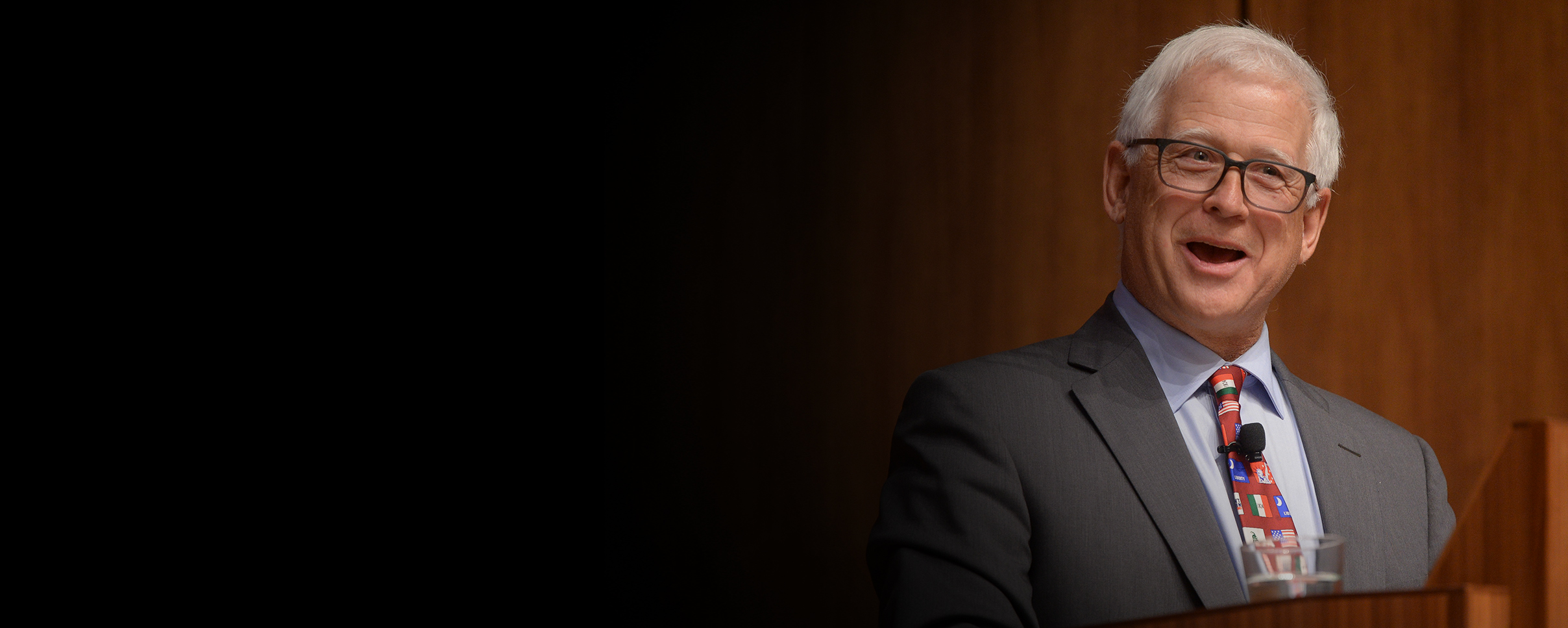
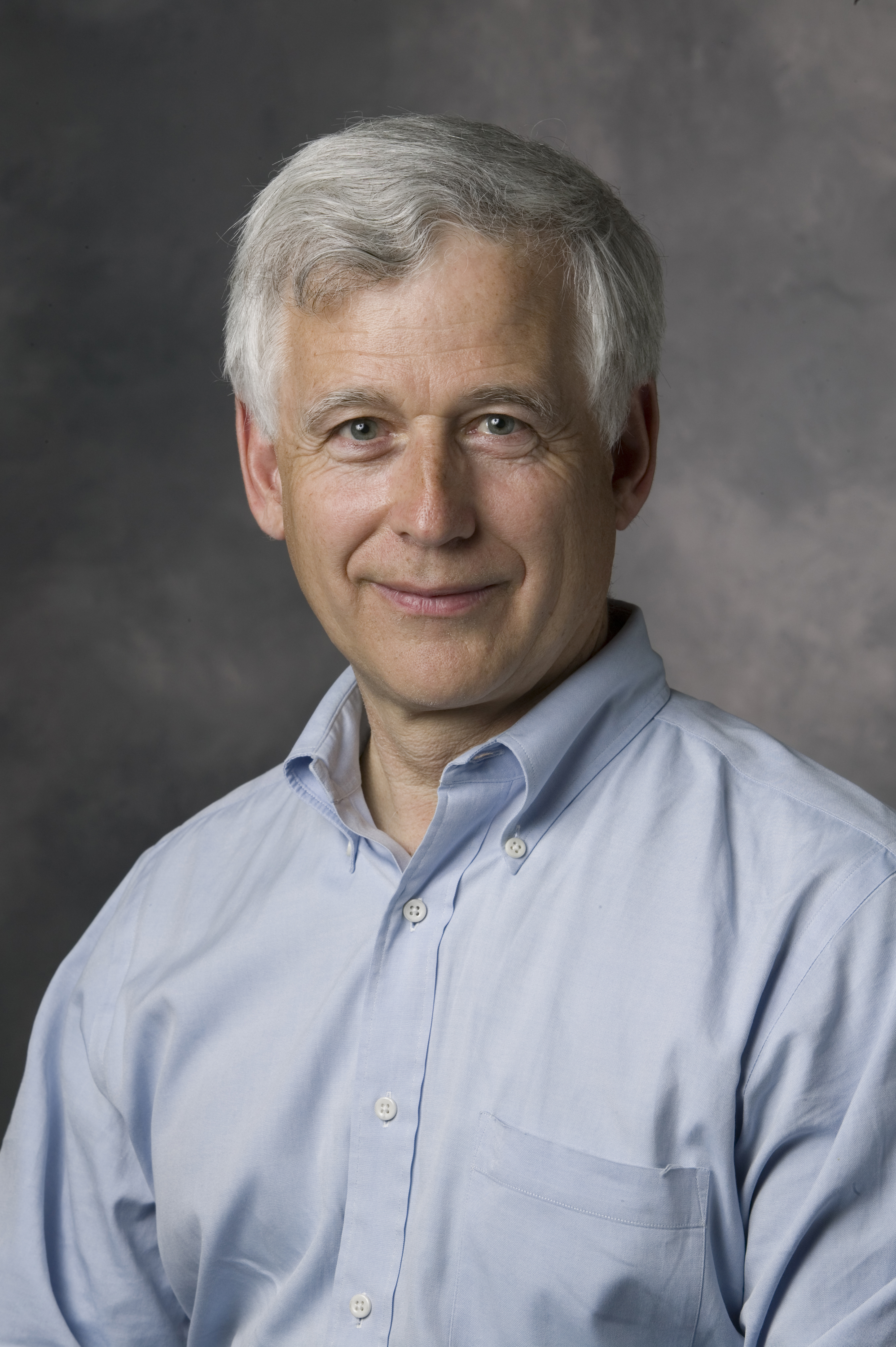
David R. Henderson is a research fellow with the Hoover Institution. He is also a professor of economics at the Naval Postgraduate School in Monterey, California.

Henderson's writing focuses on public policy. His specialty is in making economic issues and analyses clear and interesting to general audiences. Two themes emerge from his writing: (1) that the unintended consequences of government regulation and spending are usually worse than the problems they are supposed to solve and (2) that freedom and free markets work to solve people's problems.

David Henderson is the editor of The Concise Encyclopedia of Economics (Warner Books, 2007), a book that communicates to a general audience what and how economists think. The Wall Street Journal commented, "His brainchild is a tribute to the power of the short, declarative sentence." The encyclopedia went through three printings and was translated into Spanish and Portuguese. It is now online at the Library of Economics and Liberty. He coauthored Making Great Decisions in Business and Life (2006). Henderson's book, The Joy of Freedom: An Economist's Odyssey (Financial Times Prentice Hall, 2001), has been translated into Russian. Henderson also writes frequently for the Wall Street Journal and Fortune and, from 1997 to 2000, was a monthly columnist with Red Herring, an information technology magazine. He currently serves as an adviser to LifeSharers, a nonprofit network of organ and tissue donors.

Henderson has been on the faculty of the Naval Postgraduate School since 1984 and a research fellow with Hoover since 1990. He was the John M. Olin Visiting Professor with the Center for the Study of American Business at Washington University in St. Louis in 1994; a senior economist for energy and health policy with the President's Council of Economic Advisers from 1982 to 1984; a visiting professor at the University of Santa Clara from 1980 to 1981; a senior policy analyst with the Cato Institute from 1979 to 1980; and an assistant professor at the University of Rochester's Graduate School of Management from 1975 to 1979.

In 1997, he received the Rear Admiral John Jay Schieffelin Award for excellence in teaching from the Naval Postgraduate School. In 1984, he won the Mencken Award for best investigative journalism article for his Fortune article "The Myth of MITI."

Henderson has written for the New York Times, Barron's, Fortune, the Los Angeles Times, the Chicago Tribune, Public Interest, the Christian Science Monitor, National Review, the New York Daily News, the Dallas Morning News, and Reason. He has also written scholarly articles for the Journal of Policy Analysis and Management, the Journal of Monetary Economics, Cato Journal, Regulation, Contemporary Policy Issues, and Energy Journal.

Henderson has spoken before a wide variety of audiences, including the American Farm Bureau Federation, the Chicago Council on Foreign Relations, the St. Louis Discussion Club, the Commonwealth Club of California (National Defense and Business Economics Section), the Cato Institute, and the Heritage Foundation. He has also spoken to economists and general audiences at many universities around the country, including Carnegie-Mellon, Brown, the University of California, Berkeley, the University of California, Davis, the University of Rochester, the University of Chicago, Harvard University's John F. Kennedy School, and the Hoover Institution. He has given papers at annual conferences held by the American Economics Association, the Western Economics Association, and the Association of Public Policy and Management. He has testified before the House Ways and Means Committee, the Senate Armed Services Committee, and the Senate Committee on Labor and Human Resources. He has also appeared on the O'Reilly Factor (Fox News), C-SPAN, CNN, the Newshour with Jim Lehrer, CNBC Squawk Box, MSNBC, BBC, CBC, the Fox News Channel, RT, and regional talk shows.

Born and raised in Canada, Henderson earned his bachelor of science degree in mathematics from the University of Winnipeg in 1970 and his Ph.D. in economics from the University of California, Los Angeles, in 1976.

Filter By:

Topic

Type

Recent Commentary

Blank Section (Placeholder)FeaturedImmigration

A Graphic Case For Open Borders

by David R. Hendersonvia Defining Ideas
Wednesday, November 13, 2019

Brian Caplan makes muscular arguments for immigration. 

Analysis and Commentary

Gordon Tullock's Generosity

by David R. Hendersonvia EconLog
Tuesday, November 12, 2019

One of the delights I had on my trip to Boise State University last week was getting to know my host Allen Dalton, an adjunct economics professor at BSU. Besides having great economics discussions, we had good discussions, mainly positive, about various economists we know in common.

Analysis and Commentary

Duflo And Banerjee's Deficient Thinking On Incentives, Part II

by David R. Hendersonvia EconLog
Tuesday, November 12, 2019

Last week, I wrote Part I of my critique of a recent long article in the New York Times by new Nobel Prize in economics winners Esther Duflo and Abhijit Banerjee of MIT. The op/ed is titled “Economic Incentives Don’t Always Do What We Want Them To,” New York Times, October 26, 2019. This is Part II of the critique.

Analysis and Commentary

Civil Discussion At My Boise State University Talk

by David R. Hendersonvia EconLog
Sunday, November 10, 2019

Based on my sample size, civility is alive and well at Boise State. There has been so much discussion on line in the last few years about how hostile, and even, sometimes, violent U.S. college students have been to speakers who favor freedom. I think it’s important to right the balance by pointing out when that doesn’t happen.

Analysis and Commentary

My Vivid Memories Of The Fall Of The Berlin Wall

by David R. Hendersonvia EconLog
Saturday, November 9, 2019

On this 30th anniversary of the fall of the Berlin Wall, I’m posting a section from Chapter 3 of my book The Joy of Freedom: An Economist’s Odyssey. The chapter is titled “We Won, But...”

Analysis and Commentary

Duflo And Banerjee's Deficient Thinking On Incentives, Part I

by David R. Hendersonvia EconLog
Friday, November 8, 2019

Within 2 weeks of sharing the 2019 Nobel Prize in economics with Michael Kremer, MIT economists Esther Duflo and Abhijit Banerjee wrote a long piece for the Sunday New York Times in which they argued that financial incentives are not as important as many economists think.

Analysis and Commentary

The Journal's Muddled Reasoning On Illegal Drugs

by David R. Hendersonvia EconLog
Wednesday, November 6, 2019

In today’s Wall Street Journal, the editors address the recent murder of some Americans in Mexico by a gang. Although the reports I’ve read (here’s one example) claim that it was a drug gang (everyone misuses the word “cartel”), I haven’t seen enough evidence that it was. I suspect, though, that the odds are high that the murderers were part of a drug gang.

Analysis and Commentary

Randal O'Toole's Slam Dunk

by David R. Hendersonvia EconLog
Monday, November 4, 2019

Randal O’Toole’s recent book, Romance of the Rails, is a slam-dunk. Actually, that is an understatement. The book is full of slam-dunks. In chapter after chapter, O’Toole, a long-time fan of railroads, puts his fandom aside and shows what a disaster government subsidies to, and regulations of, rail transportation have been.

Analysis and Commentary

Reminder About My Monday Talk At Boise State

by David R. Hendersonvia EconLog
Sunday, November 3, 2019

On Monday, November 4, I’ll be giving the Brandt Foundation Lecture at Boise State University in Boise, Idaho. It will be the first time I’ve been in Boise since I stayed overnight there in April 1971.

Analysis and CommentaryEconomy

Trump's Economic Policies: An Assessment, Part II

by David R. Hendersonvia EconLog
Saturday, November 2, 2019

In Part I, I covered the “very good indeed” parts of President Donald Trump’s economic policies: the 2017 tax cut and the deregulation and slowing of new regulation. Here I turn to the “horrid:” his attacks on free trade, his hostility to immigration, and his failure to do anything to rein in federal spending. As in Part I, I wear two hats in judging him: (1) as a believer in economic freedom and (2) as an economist who cares about people’s economic wellbeing.

Pages