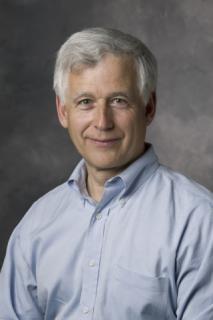
David R. Henderson

Research Fellow
Biography: 

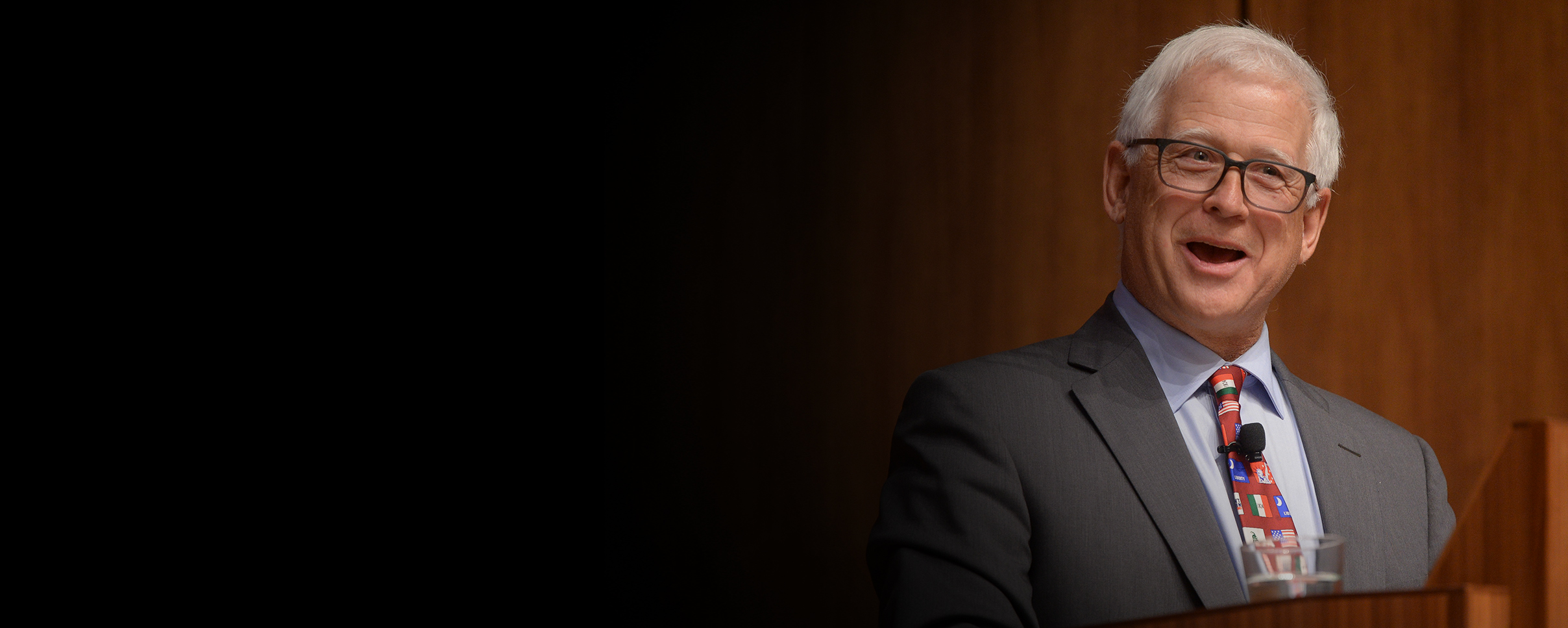
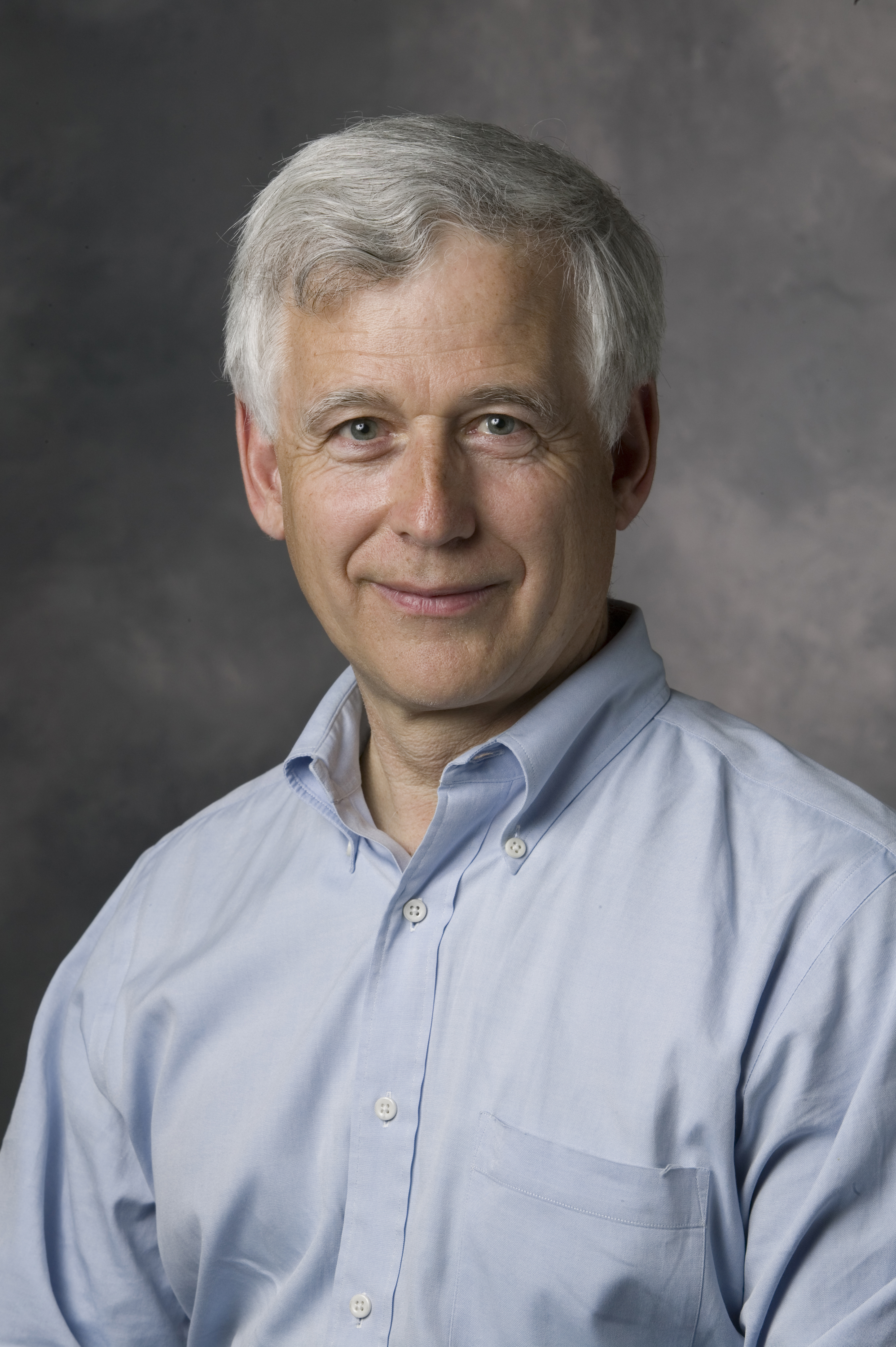
David R. Henderson is a research fellow with the Hoover Institution. He is also a professor of economics at the Naval Postgraduate School in Monterey, California.

Henderson's writing focuses on public policy. His specialty is in making economic issues and analyses clear and interesting to general audiences. Two themes emerge from his writing: (1) that the unintended consequences of government regulation and spending are usually worse than the problems they are supposed to solve and (2) that freedom and free markets work to solve people's problems.

David Henderson is the editor of The Concise Encyclopedia of Economics (Warner Books, 2007), a book that communicates to a general audience what and how economists think. The Wall Street Journal commented, "His brainchild is a tribute to the power of the short, declarative sentence." The encyclopedia went through three printings and was translated into Spanish and Portuguese. It is now online at the Library of Economics and Liberty. He coauthored Making Great Decisions in Business and Life (2006). Henderson's book, The Joy of Freedom: An Economist's Odyssey (Financial Times Prentice Hall, 2001), has been translated into Russian. Henderson also writes frequently for the Wall Street Journal and Fortune and, from 1997 to 2000, was a monthly columnist with Red Herring, an information technology magazine. He currently serves as an adviser to LifeSharers, a nonprofit network of organ and tissue donors.

Henderson has been on the faculty of the Naval Postgraduate School since 1984 and a research fellow with Hoover since 1990. He was the John M. Olin Visiting Professor with the Center for the Study of American Business at Washington University in St. Louis in 1994; a senior economist for energy and health policy with the President's Council of Economic Advisers from 1982 to 1984; a visiting professor at the University of Santa Clara from 1980 to 1981; a senior policy analyst with the Cato Institute from 1979 to 1980; and an assistant professor at the University of Rochester's Graduate School of Management from 1975 to 1979.

In 1997, he received the Rear Admiral John Jay Schieffelin Award for excellence in teaching from the Naval Postgraduate School. In 1984, he won the Mencken Award for best investigative journalism article for his Fortune article "The Myth of MITI."

Henderson has written for the New York Times, Barron's, Fortune, the Los Angeles Times, the Chicago Tribune, Public Interest, the Christian Science Monitor, National Review, the New York Daily News, the Dallas Morning News, and Reason. He has also written scholarly articles for the Journal of Policy Analysis and Management, the Journal of Monetary Economics, Cato Journal, Regulation, Contemporary Policy Issues, and Energy Journal.

Henderson has spoken before a wide variety of audiences, including the American Farm Bureau Federation, the Chicago Council on Foreign Relations, the St. Louis Discussion Club, the Commonwealth Club of California (National Defense and Business Economics Section), the Cato Institute, and the Heritage Foundation. He has also spoken to economists and general audiences at many universities around the country, including Carnegie-Mellon, Brown, the University of California, Berkeley, the University of California, Davis, the University of Rochester, the University of Chicago, Harvard University's John F. Kennedy School, and the Hoover Institution. He has given papers at annual conferences held by the American Economics Association, the Western Economics Association, and the Association of Public Policy and Management. He has testified before the House Ways and Means Committee, the Senate Armed Services Committee, and the Senate Committee on Labor and Human Resources. He has also appeared on the O'Reilly Factor (Fox News), C-SPAN, CNN, the Newshour with Jim Lehrer, CNBC Squawk Box, MSNBC, BBC, CBC, the Fox News Channel, RT, and regional talk shows.

Born and raised in Canada, Henderson earned his bachelor of science degree in mathematics from the University of Winnipeg in 1970 and his Ph.D. in economics from the University of California, Los Angeles, in 1976.

Filter By:

Topic

Type

Recent Commentary

Analysis and Commentary

An Economist Buys Lunch On The Margin

by David R. Hendersonvia EconLog
Thursday, October 10, 2019

Herewith a relatively trivial but, I hope, fun application of marginal thinking. Actually two applications: a subtler one by my non-economist wife (who has lived with an economist for 37 years) and an obvious one by me.

Blank Section (Placeholder)

Universal Income: How to Bust the Bank

by David R. Hendersonvia Hoover Digest
Wednesday, October 9, 2019

This utopian scheme would create the mother of all welfare states.

Analysis and Commentary

Residential Versus Commuter Colleges And Intersectionality

by David R. Hendersonvia EconLog
Tuesday, October 8, 2019

In a comment on Arnold Kling’s post on intersectionality today, John Alcorn writes: "A hypothesis: Ideology of intersectionality will flourish more at (residential) colleges than at the workplace, because residential colleges are structurally totalitarian institutions."

Blank Section (Placeholder)Featured

How The Jones Act Harms America

by David R. Hendersonvia Defining Ideas
Monday, October 7, 2019

A century-old protectionist law that inflicts economic harm.

Milton Friedman, recipient of the 1976 Nobel Memorial Prize for economic science
Analysis and Commentary

Defending Milton Friedman From James Buchanan And Peter Boettke

by David R. Hendersonvia EconLog
Monday, October 7, 2019

In his recent Econlib article, “The Role of the Economist in a Free Society: The Art of Political Economy,” George Mason University economics professor Peter Boettke writes: After [James] Buchanan left the University of Virginia, he wrote in a letter to [Rutledge] Vining: “My own worry, which you do not express so directly as I do, stems from the step taken by such an idealized professional assistant when he takes it on himself to propose changes in structure, as if he has a direct line to God.

Analysis and Commentary

Mood Affiliation Or Confirming Evidence?

by David R. Hendersonvia EconLog
Saturday, October 5, 2019

Tyler Cowen introduced an important new idea in 2011 and gave it a name: the fallacy of mood affiliation. His idea is sound and important; the name he gives and even the way he defines it is faulty. Here’s Tyler’s original statement.

Analysis and Commentary

Matt Stoller Responds

by David R. Hendersonvia EconLog
Thursday, October 3, 2019

Recently I posted a critique of Matt Stoller’s nasty attack on the late Aaron Director. Stoller didn’t just challenge Director’s views; he suggested not too subtly that Director changed his views because he was paid to do so.

Analysis and Commentary

A Fair Amount Of Freedom For Everyone: Aaron Director Did Have Ideals

by David R. Hendersonvia ProMarket
Tuesday, October 1, 2019

Aaron Director was one of the founders of law and economics: the application of economic reasoning to understand the effects of law and, in some cases, to recommend particular laws. He wrote very little, but his influence was immense.

Analysis and Commentary

The Essence Of Lenin

by David R. Hendersonvia EconLog
Saturday, September 28, 2019

Lenin did more than anyone else to shape the last hundred years. He invented a form of government we have come to call totalitarian, which rejected in principle the idea of any private sphere outside of state control. To establish this power, he invented the one-party state, a term that would previously have seemed self-contradictory since a party was, by definition, a part. An admirer of the French Jacobins, Lenin believed that state power had to be based on sheer terror, and so he also created the terrorist state.

Analysis and Commentary

Quiggin Needs A Third Lesson

by David R. Hendersonvia EconLog
Thursday, September 26, 2019

I don’t know if Hazlitt would ever have said that all the economics you need to know is in his book. But in Economics in Two Lessons, University of Queensland economist John Quiggin writes as if he thinks that was Hazlitt’s thinking. Because Quiggin sees it that way, he decides to give two lessons.

Pages