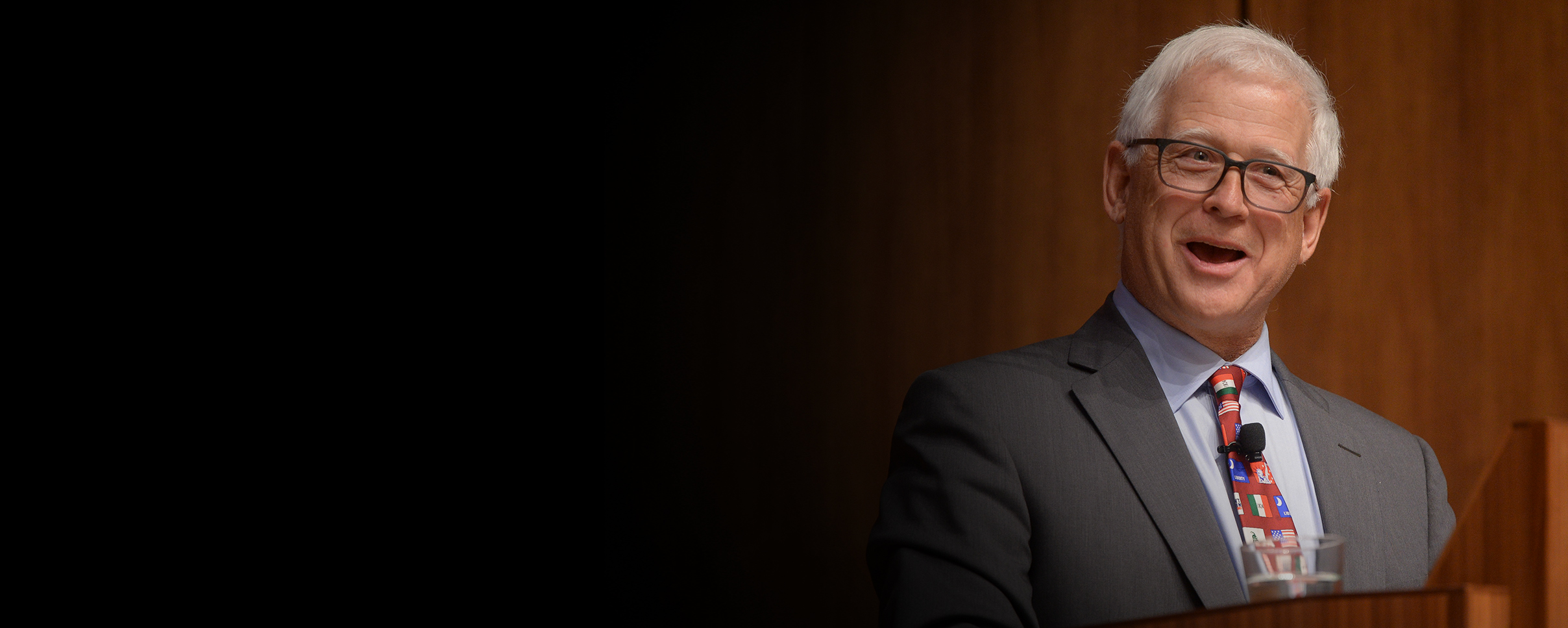
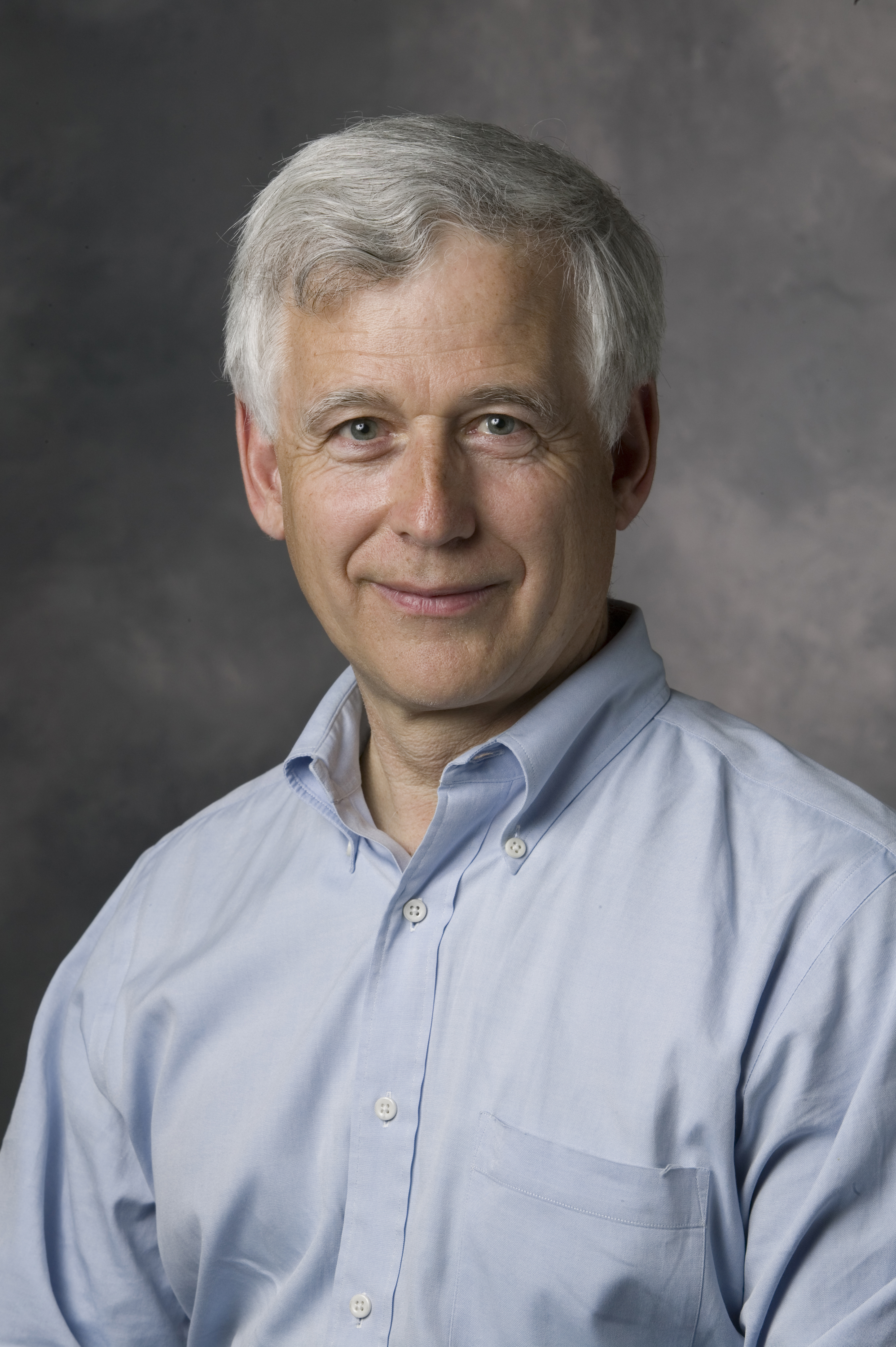
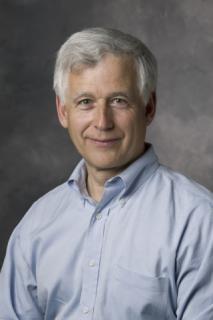
David R. Henderson

Research Fellow
Biography: 

David R. Henderson is a research fellow with the Hoover Institution. He is also a professor of economics at the Naval Postgraduate School in Monterey, California.

Henderson's writing focuses on public policy. His specialty is in making economic issues and analyses clear and interesting to general audiences. Two themes emerge from his writing: (1) that the unintended consequences of government regulation and spending are usually worse than the problems they are supposed to solve and (2) that freedom and free markets work to solve people's problems.

David Henderson is the editor of The Concise Encyclopedia of Economics (Warner Books, 2007), a book that communicates to a general audience what and how economists think. The Wall Street Journal commented, "His brainchild is a tribute to the power of the short, declarative sentence." The encyclopedia went through three printings and was translated into Spanish and Portuguese. It is now online at the Library of Economics and Liberty. He coauthored Making Great Decisions in Business and Life (2006). Henderson's book, The Joy of Freedom: An Economist's Odyssey (Financial Times Prentice Hall, 2001), has been translated into Russian. Henderson also writes frequently for the Wall Street Journal and Fortune and, from 1997 to 2000, was a monthly columnist with Red Herring, an information technology magazine. He currently serves as an adviser to LifeSharers, a nonprofit network of organ and tissue donors.

Henderson has been on the faculty of the Naval Postgraduate School since 1984 and a research fellow with Hoover since 1990. He was the John M. Olin Visiting Professor with the Center for the Study of American Business at Washington University in St. Louis in 1994; a senior economist for energy and health policy with the President's Council of Economic Advisers from 1982 to 1984; a visiting professor at the University of Santa Clara from 1980 to 1981; a senior policy analyst with the Cato Institute from 1979 to 1980; and an assistant professor at the University of Rochester's Graduate School of Management from 1975 to 1979.

In 1997, he received the Rear Admiral John Jay Schieffelin Award for excellence in teaching from the Naval Postgraduate School. In 1984, he won the Mencken Award for best investigative journalism article for his Fortune article "The Myth of MITI."

Henderson has written for the New York Times, Barron's, Fortune, the Los Angeles Times, the Chicago Tribune, Public Interest, the Christian Science Monitor, National Review, the New York Daily News, the Dallas Morning News, and Reason. He has also written scholarly articles for the Journal of Policy Analysis and Management, the Journal of Monetary Economics, Cato Journal, Regulation, Contemporary Policy Issues, and Energy Journal.

Henderson has spoken before a wide variety of audiences, including the American Farm Bureau Federation, the Chicago Council on Foreign Relations, the St. Louis Discussion Club, the Commonwealth Club of California (National Defense and Business Economics Section), the Cato Institute, and the Heritage Foundation. He has also spoken to economists and general audiences at many universities around the country, including Carnegie-Mellon, Brown, the University of California, Berkeley, the University of California, Davis, the University of Rochester, the University of Chicago, Harvard University's John F. Kennedy School, and the Hoover Institution. He has given papers at annual conferences held by the American Economics Association, the Western Economics Association, and the Association of Public Policy and Management. He has testified before the House Ways and Means Committee, the Senate Armed Services Committee, and the Senate Committee on Labor and Human Resources. He has also appeared on the O'Reilly Factor (Fox News), C-SPAN, CNN, the Newshour with Jim Lehrer, CNBC Squawk Box, MSNBC, BBC, CBC, the Fox News Channel, RT, and regional talk shows.

Born and raised in Canada, Henderson earned his bachelor of science degree in mathematics from the University of Winnipeg in 1970 and his Ph.D. in economics from the University of California, Los Angeles, in 1976.

Filter By:

Topic

Type

Recent Commentary

Analysis and Commentary

Armen Alchian's Economic Forces At Work

by David R. Hendersonvia The Library of Economics and Liberty
Thursday, May 9, 2019

Alchian’s work spanned a number of disciplines within economics. Though generally thought of as a microeconomist—using economics to explain and predict behavior in individual markets—he also wrote or co-authored important articles on macroeconomics, especially in the areas of inflation and unemployment.

Analysis and Commentary

Robert Pear RIP

by David R. Hendersonvia EconLog
Wednesday, May 8, 2019

Robert Pear, a reporter whose understated demeanor belied a tenacious pursuit of sources and scoops during his 40 years at The New York Times covering health care and other critical national issues, died on Tuesday in Rockville, Md. 

Analysis and Commentary

The Power Of Bastiat's Unseen

by David R. Hendersonvia EconLog
Tuesday, May 7, 2019

In the economic sphere an act, a habit, an institution, a law produces not only one effect, but a series of effects.

Federal Reserve
Analysis and Commentary

Alan Reynolds Catches Shoddy Reporting About Federal Reserve Survey

by David R. Hendersonvia EconLog
Monday, May 6, 2019

My guess is that you’ve heard that famous result from a recent Federal Reserve survey of Americans: Four in 10 adults in 2017 would either borrow, sell something, or not be able pay if faced with a $400 emergency expense. That’s the exact wording of the Federal Reserve Board’s report of the results of its survey.

Analysis and Commentary

Have Coase - Will Travel

by David R. Hendersonvia EconLog
Monday, May 6, 2019

Coase’s paper “The Problem of Social Cost” appeared in the October 1960 volume of the Journal of Law and Economics. This brings us, for reasons that we will explain, to the television show Have Gun – Will Travel, which aired from 1957 to 1963. A particular 1958 episode, called “Bitter Wine,” is likely the most Coasean episode of television ever made. Every element of the “Problem of Social Cost” makes an appearance in the episode: the reciprocal nature of externalities, how the initial allocation of property rights matters in a world with transaction costs, and how the legal system can overcome transaction costs to allow for an efficient allocation of rights.

Analysis and Commentary

Symmetric Non-Discrimination

by David R. Hendersonvia EconLog
Sunday, May 5, 2019

I visited the American Institute for Economic Research (AIER) in Great Barrington, MA a little over a week ago and met Jeffrey Tucker for my first time. He’s the editorial director there. We got talking about his early life in Lubbock, TX and he told me an interesting story about how his grandfather, to avoid discrimination against himself for a physical problem, started serving an underserved and probably discriminated-against community whose members didn’t care about this physical problem. So each sided acted to deal with people who were discriminated against (assuming his grandfather’s fear of discrimination was justified.)

Analysis and Commentary

A Question On Victims Of Communism Day 2019

by David R. Hendersonvia EconLog
Wednesday, May 1, 2019

George Mason University law professor Ilya Somin, over at The Volokh Conspiracy, makes the point that May 1 should be a day to honor victims of Communism. I agree.

Blank Section (Placeholder)Analysis and Commentary

Furman, Summers And Taxes

by David R. Hendersonvia Defining Ideas
Wednesday, May 1, 2019

Our goal should be a less intrusive, less oppressive government.

Analysis and Commentary

Update Of Carl Menger Bio

by David R. Hendersonvia EconLog
Tuesday, April 30, 2019

A reader of The Concise Encyclopedia of Economics contacted me recently to point out the following.

moral compass
Analysis and Commentary

The Art Of Moral Self-Defense

by David R. Hendersonvia EconLog
Sunday, April 28, 2019

I’m going with a friend to see Jordan Peterson speak in San Francisco on Thursday. This morning when I was surfing YouTube, I found a 4-minute segment in which he had an interaction with an audience member in Australia.

Pages