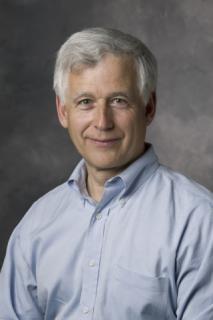
David R. Henderson

Research Fellow
Biography: 

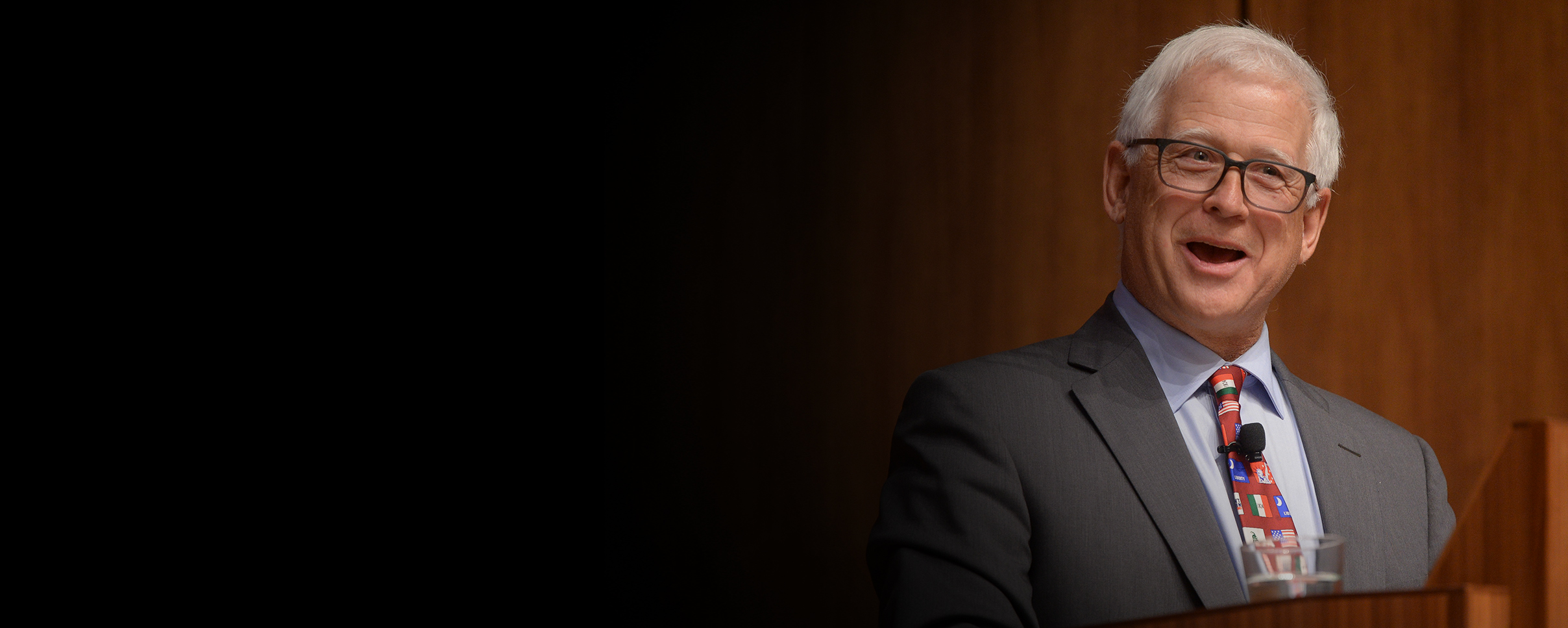
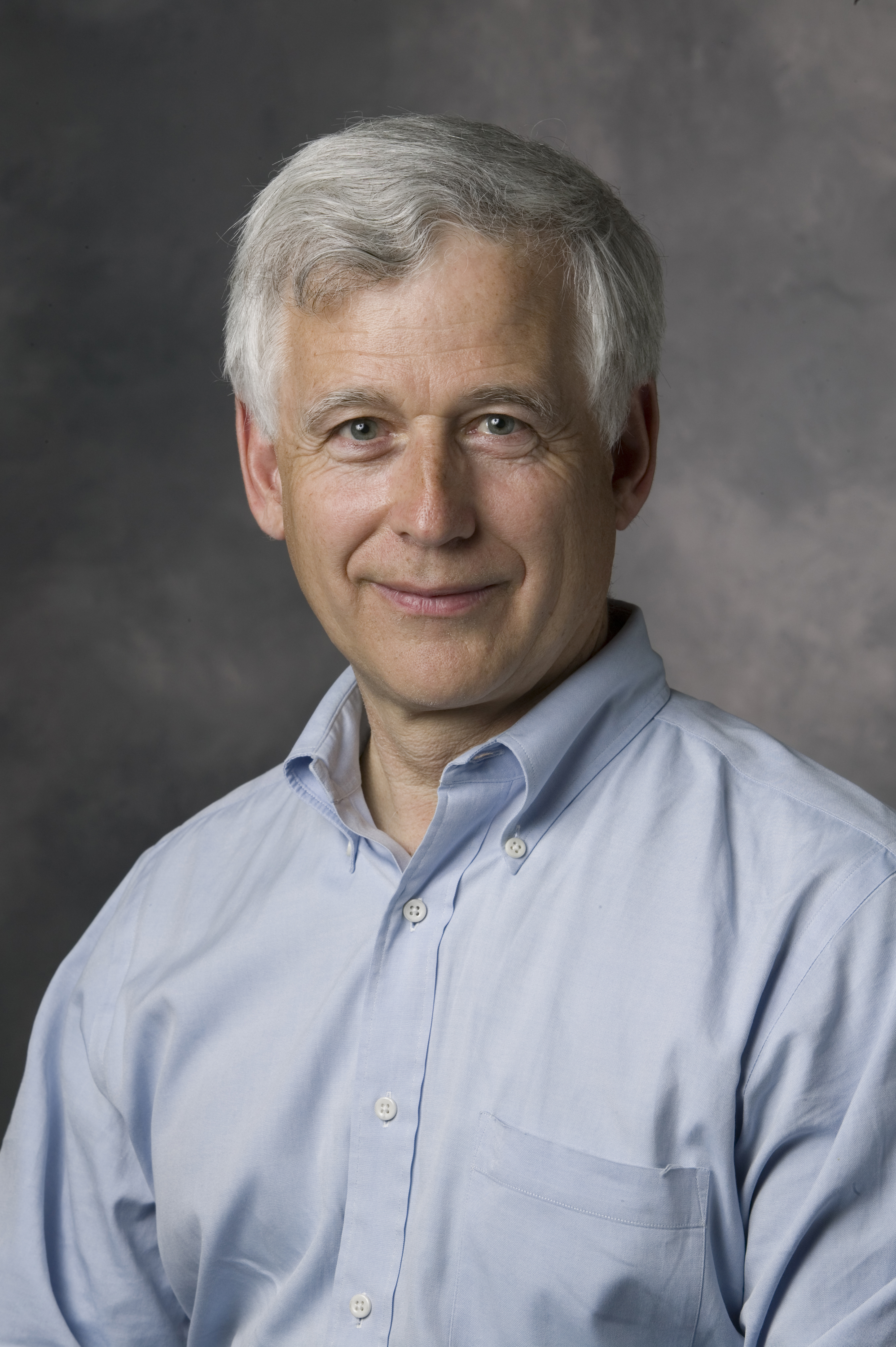
David R. Henderson is a research fellow with the Hoover Institution. He is also a professor of economics at the Naval Postgraduate School in Monterey, California.

Henderson's writing focuses on public policy. His specialty is in making economic issues and analyses clear and interesting to general audiences. Two themes emerge from his writing: (1) that the unintended consequences of government regulation and spending are usually worse than the problems they are supposed to solve and (2) that freedom and free markets work to solve people's problems.

David Henderson is the editor of The Concise Encyclopedia of Economics (Warner Books, 2007), a book that communicates to a general audience what and how economists think. The Wall Street Journal commented, "His brainchild is a tribute to the power of the short, declarative sentence." The encyclopedia went through three printings and was translated into Spanish and Portuguese. It is now online at the Library of Economics and Liberty. He coauthored Making Great Decisions in Business and Life (2006). Henderson's book, The Joy of Freedom: An Economist's Odyssey (Financial Times Prentice Hall, 2001), has been translated into Russian. Henderson also writes frequently for the Wall Street Journal and Fortune and, from 1997 to 2000, was a monthly columnist with Red Herring, an information technology magazine. He currently serves as an adviser to LifeSharers, a nonprofit network of organ and tissue donors.

Henderson has been on the faculty of the Naval Postgraduate School since 1984 and a research fellow with Hoover since 1990. He was the John M. Olin Visiting Professor with the Center for the Study of American Business at Washington University in St. Louis in 1994; a senior economist for energy and health policy with the President's Council of Economic Advisers from 1982 to 1984; a visiting professor at the University of Santa Clara from 1980 to 1981; a senior policy analyst with the Cato Institute from 1979 to 1980; and an assistant professor at the University of Rochester's Graduate School of Management from 1975 to 1979.

In 1997, he received the Rear Admiral John Jay Schieffelin Award for excellence in teaching from the Naval Postgraduate School. In 1984, he won the Mencken Award for best investigative journalism article for his Fortune article "The Myth of MITI."

Henderson has written for the New York Times, Barron's, Fortune, the Los Angeles Times, the Chicago Tribune, Public Interest, the Christian Science Monitor, National Review, the New York Daily News, the Dallas Morning News, and Reason. He has also written scholarly articles for the Journal of Policy Analysis and Management, the Journal of Monetary Economics, Cato Journal, Regulation, Contemporary Policy Issues, and Energy Journal.

Henderson has spoken before a wide variety of audiences, including the American Farm Bureau Federation, the Chicago Council on Foreign Relations, the St. Louis Discussion Club, the Commonwealth Club of California (National Defense and Business Economics Section), the Cato Institute, and the Heritage Foundation. He has also spoken to economists and general audiences at many universities around the country, including Carnegie-Mellon, Brown, the University of California, Berkeley, the University of California, Davis, the University of Rochester, the University of Chicago, Harvard University's John F. Kennedy School, and the Hoover Institution. He has given papers at annual conferences held by the American Economics Association, the Western Economics Association, and the Association of Public Policy and Management. He has testified before the House Ways and Means Committee, the Senate Armed Services Committee, and the Senate Committee on Labor and Human Resources. He has also appeared on the O'Reilly Factor (Fox News), C-SPAN, CNN, the Newshour with Jim Lehrer, CNBC Squawk Box, MSNBC, BBC, CBC, the Fox News Channel, RT, and regional talk shows.

Born and raised in Canada, Henderson earned his bachelor of science degree in mathematics from the University of Winnipeg in 1970 and his Ph.D. in economics from the University of California, Los Angeles, in 1976.

Filter By:

Topic

Type

Recent Commentary

Blank Section (Placeholder)Featured

The Case For More Immigration

by David R. Hendersonvia Defining Ideas
Wednesday, March 6, 2019

A discussion on immigration. 

Henderson Versus Kristol On Iraq War In 2002

by David R. Hendersonvia EconLog
Wednesday, March 6, 2019

In August 2002 Neal Conan on NPR’s “Talk of the Nation” interviewed Bill Kristol and me on the Iraq war. I was against; Kristol was in favor. This is the short piece for Hoover that led NPR to contact me and argue with Kristol.

Immigration Reform
Analysis and Commentary

The Case For More Immigration

by David R. Hendersonvia EconLog
Wednesday, March 6, 2019

Fortunately, we can handle his concern. The reason is that most of the U.S. welfare state is aimed at the elderly, not the poor, and most immigrants are young. Expenditures on Social Security, Medicare, and the nursing home component of Medicaid vastly exceed expenditures on narrowly defined welfare, food stamps, housing subsidies, and the part of Medicaid aimed at the non-elderly poor. 

Analysis and Commentary

Rent Control Is Worse Than Bombing

by David R. Hendersonvia EconLog
Tuesday, March 5, 2019

[Gunnar] Myrdal stated, “Rent control has in certain Western countries constituted, maybe, the worst example of poor planning by governments lacking courage and vision.” His fellow Swedish economist (and socialist) Assar Lindbeck asserted, “In many cases rent control appears to be the most efficient technique presently known to destroy a city—except for bombing.”

Analysis and Commentary

Davis On Saez And Zucman

by David R. Hendersonvia EconLog
Monday, March 4, 2019

We can only hope that in their forthcoming book on tax justice, Saez and Zucman will say the things they didn’t say in their op-ed. We can hope that they’ll help us with two empirical questions. First, what was really happening in the era of high rates? Second, why don’t they think we should worry about how taxes will affect growth? Furthermore, we can hope that they will explain their underlying philosophical position—what do they mean by “justice,” and why do they think we should share their views?

US Air Force Thunderbirds flying in formation
Analysis and Commentary

Air Force Enlistee Schools Mark Cuban

by David R. Hendersonvia EconLog
Saturday, March 2, 2019

Mark Cuban tries to get back to his point, but he misses the point. The inventor, Staff Sergeant Travis Alton, has presumably already shown that his device is better and cheaper than the one the U.S. Air Force has adopted.  Cuban asks him why the military has adopted the much more expensive one.

Analysis and Commentary

Dean Baker At Middlebury Institute Of International Studies I

by David R. Hendersonvia EconLog
Friday, March 1, 2019

On Wednesday evening I attended a talk given by Dean Baker at the Middlebury Institute of International Studies (MIIS). You might think it’s in Middlebury, Vermont. It’s not. It’s in Monterey, California. Dean is co-founder of the Center for Economic Policy Research. His topic was “Health Care and the Future of the National Deficit.” In his talk he showed that if we had German-level per capita spending on health care, our federal budget in the future would move from deficit to surplus over a number of years. 

Analysis and Commentary

A Missed Opportunity For Dianne Feinstein

by David R. Hendersonvia EconLog
Wednesday, February 27, 2019

Presumably some of you have seen the video of the group of children, and an adult or two, having a conversation with Dianne Feinstein. I never thought I would say anything nice about her but I do appreciate two things.

Analysis and Commentary

Green Airbnb

by David R. Hendersonvia EconLog
Monday, February 25, 2019

I’m not giving anything away in saying that the winner of best picture in last night’s Oscars, Green Book, was about a white driver driving a black musician around the southern United States and that there really was a Green Book, published annually, that told black people where they go in various states (not just in the South) to eat a meal or stay overnight. It sold millions of copies. 

Analysis and Commentary

A Modest Proposal For Prosecutors Who Lie

by David R. Hendersonvia EconLog
Friday, February 22, 2019

The title is a little simplified because this post is not just about prosecutors who lie. It’s also about those who hide exculpatory evidence and get witnesses to lie. The proposal is this: Any prosecutor who does this should be charged with a crime and the penalty should be equal to the penalty that the judge has imposed on the defendant. The one exception is when the judge has imposed capital punishment. 

Pages