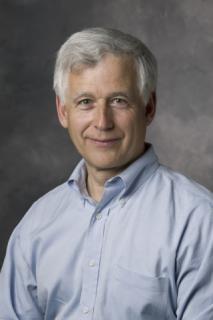
David R. Henderson

Research Fellow
Biography: 

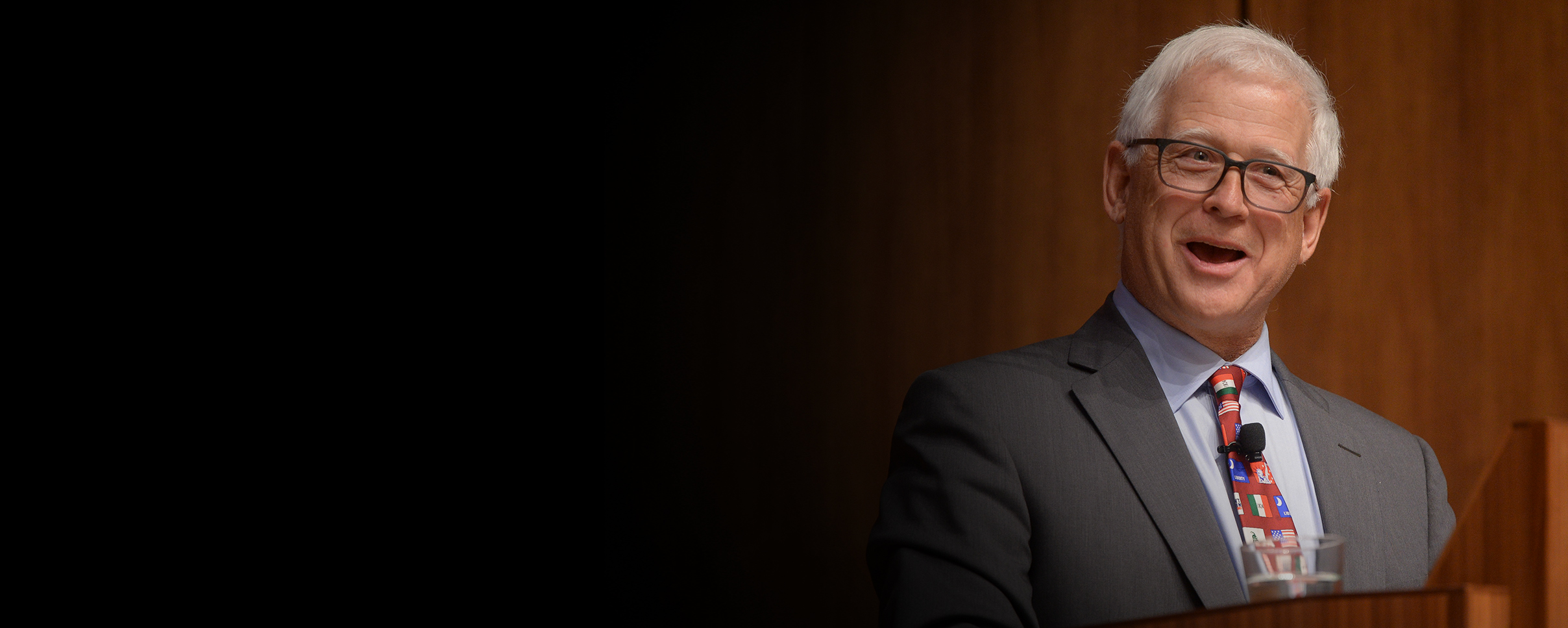
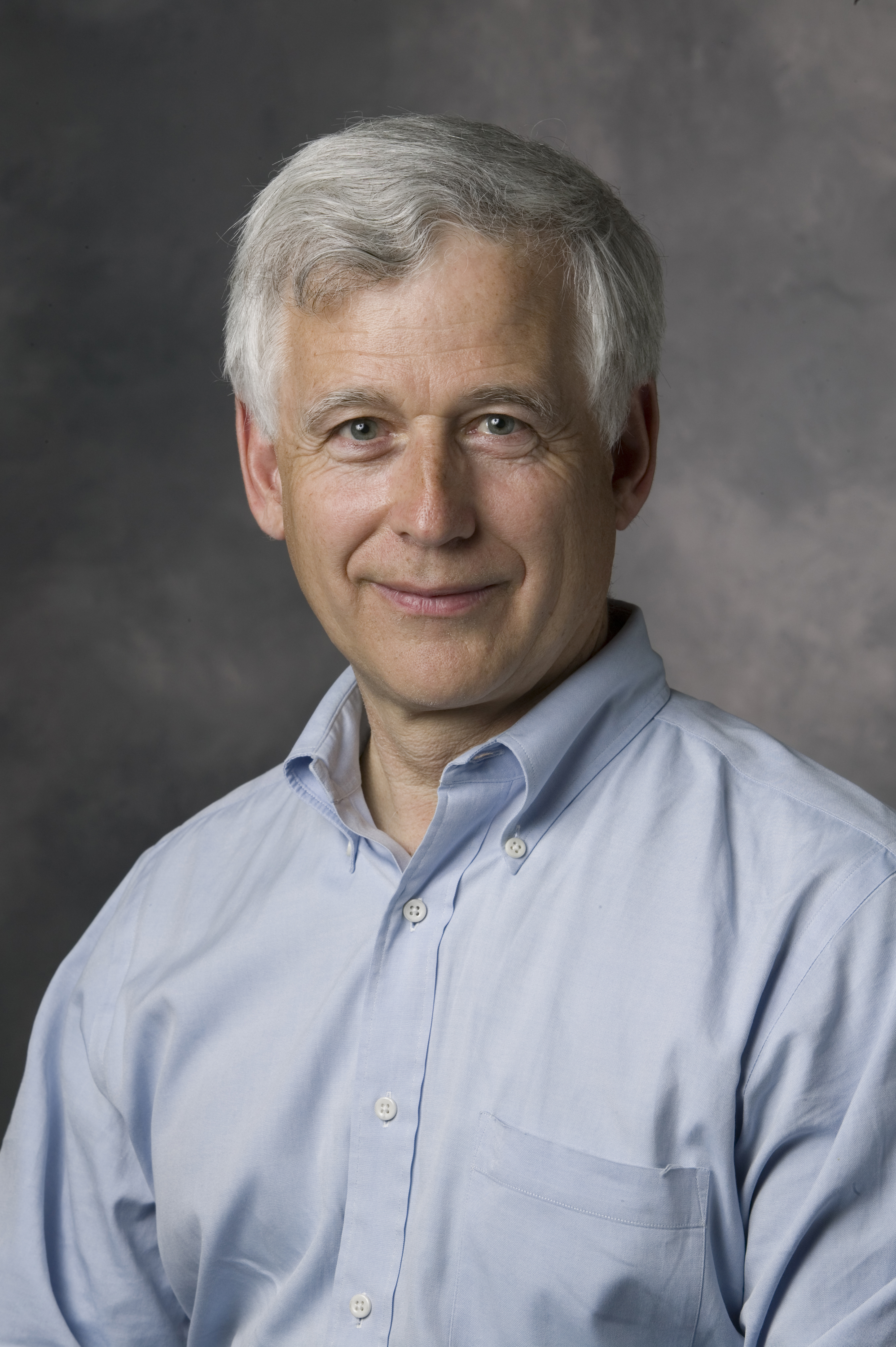
David R. Henderson is a research fellow with the Hoover Institution. He is also a professor of economics at the Naval Postgraduate School in Monterey, California.

Henderson's writing focuses on public policy. His specialty is in making economic issues and analyses clear and interesting to general audiences. Two themes emerge from his writing: (1) that the unintended consequences of government regulation and spending are usually worse than the problems they are supposed to solve and (2) that freedom and free markets work to solve people's problems.

David Henderson is the editor of The Concise Encyclopedia of Economics (Warner Books, 2007), a book that communicates to a general audience what and how economists think. The Wall Street Journal commented, "His brainchild is a tribute to the power of the short, declarative sentence." The encyclopedia went through three printings and was translated into Spanish and Portuguese. It is now online at the Library of Economics and Liberty. He coauthored Making Great Decisions in Business and Life (2006). Henderson's book, The Joy of Freedom: An Economist's Odyssey (Financial Times Prentice Hall, 2001), has been translated into Russian. Henderson also writes frequently for the Wall Street Journal and Fortune and, from 1997 to 2000, was a monthly columnist with Red Herring, an information technology magazine. He currently serves as an adviser to LifeSharers, a nonprofit network of organ and tissue donors.

Henderson has been on the faculty of the Naval Postgraduate School since 1984 and a research fellow with Hoover since 1990. He was the John M. Olin Visiting Professor with the Center for the Study of American Business at Washington University in St. Louis in 1994; a senior economist for energy and health policy with the President's Council of Economic Advisers from 1982 to 1984; a visiting professor at the University of Santa Clara from 1980 to 1981; a senior policy analyst with the Cato Institute from 1979 to 1980; and an assistant professor at the University of Rochester's Graduate School of Management from 1975 to 1979.

In 1997, he received the Rear Admiral John Jay Schieffelin Award for excellence in teaching from the Naval Postgraduate School. In 1984, he won the Mencken Award for best investigative journalism article for his Fortune article "The Myth of MITI."

Henderson has written for the New York Times, Barron's, Fortune, the Los Angeles Times, the Chicago Tribune, Public Interest, the Christian Science Monitor, National Review, the New York Daily News, the Dallas Morning News, and Reason. He has also written scholarly articles for the Journal of Policy Analysis and Management, the Journal of Monetary Economics, Cato Journal, Regulation, Contemporary Policy Issues, and Energy Journal.

Henderson has spoken before a wide variety of audiences, including the American Farm Bureau Federation, the Chicago Council on Foreign Relations, the St. Louis Discussion Club, the Commonwealth Club of California (National Defense and Business Economics Section), the Cato Institute, and the Heritage Foundation. He has also spoken to economists and general audiences at many universities around the country, including Carnegie-Mellon, Brown, the University of California, Berkeley, the University of California, Davis, the University of Rochester, the University of Chicago, Harvard University's John F. Kennedy School, and the Hoover Institution. He has given papers at annual conferences held by the American Economics Association, the Western Economics Association, and the Association of Public Policy and Management. He has testified before the House Ways and Means Committee, the Senate Armed Services Committee, and the Senate Committee on Labor and Human Resources. He has also appeared on the O'Reilly Factor (Fox News), C-SPAN, CNN, the Newshour with Jim Lehrer, CNBC Squawk Box, MSNBC, BBC, CBC, the Fox News Channel, RT, and regional talk shows.

Born and raised in Canada, Henderson earned his bachelor of science degree in mathematics from the University of Winnipeg in 1970 and his Ph.D. in economics from the University of California, Los Angeles, in 1976.

Filter By:

Topic

Type

Recent Commentary

Analysis and Commentary

Who's Afraid Of Budget Deficits?

by David R. Hendersonvia EconLog
Thursday, February 21, 2019

In a provocative article in Foreign Affairs titled “Who’s Afraid of Budget Deficits?” Jason Furman and Lawrence H. Summers argue that we should not worry much about the federal government’s large and growing budget deficits. While they admit that politicians and policymakers “shouldn’t ignore fiscal constraints entirely,” they say that they “should focus on urgent social problems, not deficits.”

Analysis and Commentary

Wilbur Hamilton Ross

by David R. Hendersonvia EconLog
Wednesday, February 20, 2019

What’s interesting, beyond their assertion that consumers won’t notice the slightly higher prices, is that both Hamilton and Ross use this an an argument for tariffs. We economists who apply Public Choice to understand government policy often point out that one reason tariffs are so popular is that they benefit a concentrated group (domestic producers) at the expense of a dispersed group (consumers.)

taxes
Blank Section (Placeholder)Featured

Who’s Afraid Of Budget Deficits? I Am.

by David R. Hendersonvia Defining Ideas
Wednesday, February 20, 2019

Taking issue with Jason Furman and Larry Summers

Analysis and Commentary

Van Doren On Payday Loans

by David R. Hendersonvia EconLog
Tuesday, February 19, 2019

The Consumer Financial Protection Bureau (CFPB) recently proposed the elimination of new payday lending rules created under the Obama Administration and imposed in 2017.

Analysis and Commentary

Cowen Interview With Jordan Peterson

by David R. Hendersonvia EconLog
Sunday, February 17, 2019

Economist Tyler Cowen recently interviewed Canadian psychologist Jordan Peterson. The audio and transcript are here. My three favorite highlights follow. After that, I’ll say what I wish Tyler had asked about.

Analysis and Commentary

Wisdom From Tony Lip

by David R. Hendersonvia EconLog
Saturday, February 16, 2019

My wife and I went to see the movie Green Book and thoroughly enjoyed it. I highly recommend it. I won’t bother recounting the story; that’s easy to find on line. Instead I want to remark on a line in the movie.

Analysis and Commentary

McCloskey On Liberalism

by David R. Hendersonvia EconLog
Friday, February 15, 2019

Concretely I mean that the bizarre 18th-century idea of liberalism—which is the theory of a society composed entirely of free people, liberi, and no slaves—gave ordinary people the notion that they could have a go. And go they did. In the earliest if hesitatingly liberal societies such as Britain and France, and among the liberi in societies still fully dominated by traditional hierarchies such as Russia and much of Italy, or the slave states of the United States, the turn of the 19th century saw a sharp rise of innovation.

Analysis and Commentary

Should Blackmail Be Legal?

by David R. Hendersonvia The Library of Economics and Liberty
Thursday, February 14, 2019

In his latest column for Bloomberg, “Seven Lessons About Blackmail,” economist Tyler Cowen takes up the issue of blackmail. What motivated it, of course, as he makes clear, is the recent controversy involving Amazon’s Jeff Bezos’s allegation that the National Enquirer has blackmailed him.

Analysis and Commentary

Cowen On The Egalitarianism Of The Economics Profession

by David R. Hendersonvia EconLog
Monday, February 11, 2019

Economic analysis is itself value-free, but in practice it encourages a cosmopolitan interest in natural equality. Many economic models, of course, assume that all individuals are motivated by rational self-interest or some variant thereof; even the so-called behavioral theories tweak only the fringes of a basically common, rational understanding of people. The crucial implication is this: If you treat all individuals as fundamentally the same in your theoretical constructs, it would be odd to insist that the law should suddenly start treating them differently.

Analysis and Commentary

Adam Smith's Beautiful Reductio Ad Absurdum

by David R. Hendersonvia EconLog
Sunday, February 10, 2019

I’m about to leave for home from an excellent Liberty Fund colloquium on “Free Trade and Liberty” in La Jolla. Thanks to Liberty Fund, discussion leader Sandra Peart, organizers Pierre Lemieux and Liberty Fund’s Hans Eicholz, and the other participants.

Pages