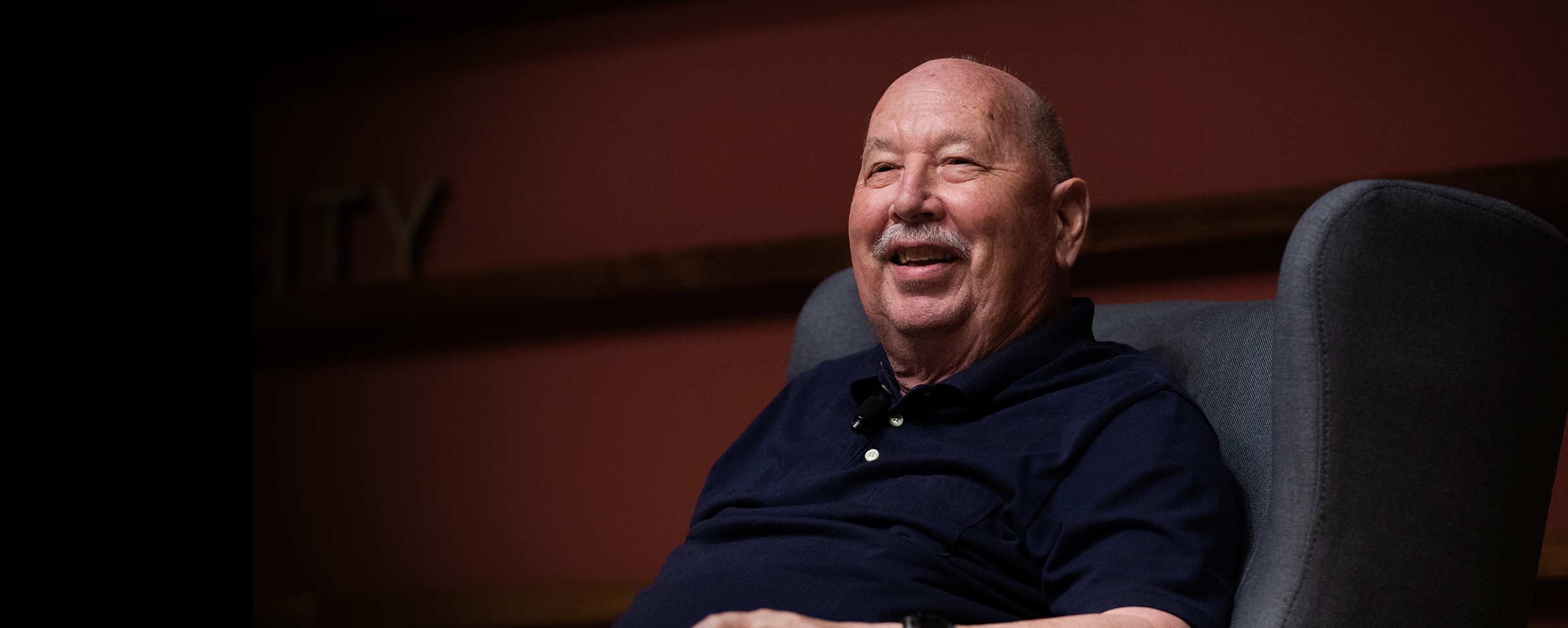
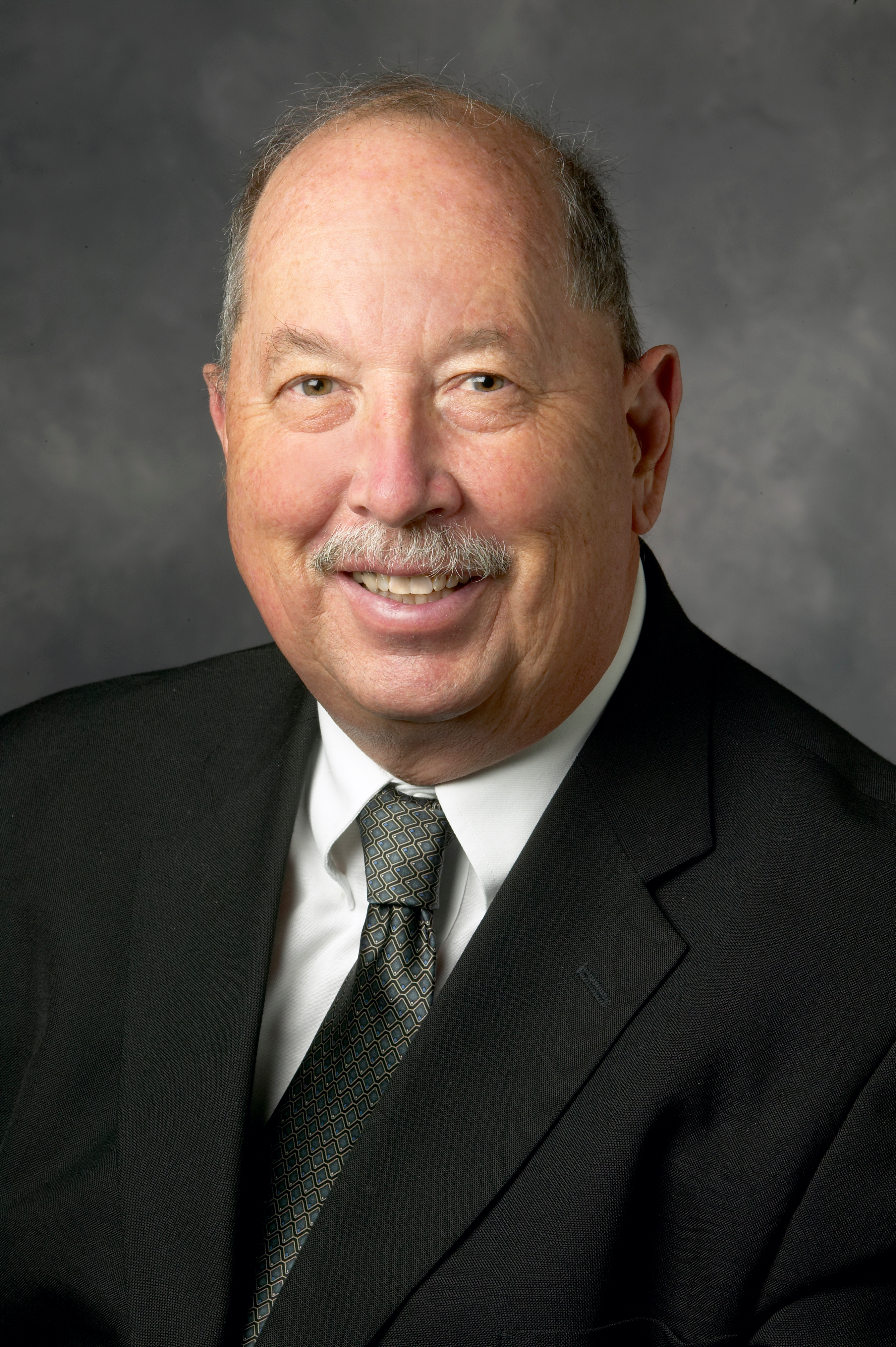
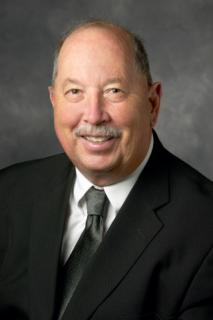
Paul R. Gregory

Research Fellow
Biography: 

Paul Gregory is a research fellow at the Hoover Institution. He is Cullen Professor Emeritus in the Department of Economics at the University of Houston, a research fellow at the German Institute for Economic Research in Berlin, and emeritus chair of the International Advisory Board of the Kiev School of Economics. Gregory has held visiting teaching appointments at Moscow State University and the Free University of Berlin.

Gregory was the director of the Russian Petroleum Legislation Project of the University of Houston Law Center from 1992 to 1997 and has written broadly on Russian energy.

The holder of a PhD in economics from Harvard University, he is the author or coauthor of twelve books and more than one hundred articles on economic history, the Soviet economy, transition economies, comparative economics, and economic demography. His most recent books are Women of the Gulag: Portraits of Five Remarkable Lives (Hoover Institution Press, 2013), Politics, Murder, and Love in Stalin’s Kremlin: The Story of Nikolai Bukharin and Anna Larina (Hoover Institution Press, 2010), Lenin’s Brain and Other Tales from the Secret Soviet Archives (Hoover Institution Press, 2008), Terror by Quota (Yale, 2009), and The Political Economy of Stalinism (Cambridge, 2004), for which he received the Hewett Prize, awarded to works on the political economy of Russia, Eurasia, or Eastern Europe. He co-edited The Lost Transcripts of the Politburo (Yale, 2008). His archival work is summarized in “Allocation under Dictatorship: Research in Stalin’s Archive” (Journal of Economic Literature.) As a producer, Gregory worked with director Marianna Yarovskaya on the documentary film Women of the Gulag, which was short-listed for the 2019 Academy Awards.

Gregory blogs for Defining Ideas and The Hill and tweets at #PaulR_Gregory.

Filter By:

Topic

Type

Recent Commentary

Analysis and Commentary

The EU Has No Choice But To Cut Greece Loose

by Paul R. Gregoryvia Forbes
Monday, July 6, 2015

In the end, Sunday’s referendum wasn’t close: 60% of Greeks voted “no.” It was an in-your-face message to the country’s creditors (largely the European Union, the European Central Bank and the International Monetary Fund) that Greece won’t be lectured on repaying debts or pension reform anymore.

Analysis and Commentary

EU Calls Greece's Bluff, Is Athens Going To Fold?

by Paul R. Gregoryvia Forbes
Thursday, July 2, 2015

The lead editorial in today’s Wall Street Journal praised Europe for finally calling Greece’s bluff, noting that European bond markets have largely shrugged off Greece’s nonpayment of its International Monetary Fund (IMF) loan. Europe appears convinced that a Greek departure from the Euro will be manageable.

Analysis and Commentary

Residents Of Donbass Tell Separatists To Leave: A Glimmer Of Hope?

by Paul R. Gregoryvia Forbes
Wednesday, June 17, 2015

The residents of occupied Donbass have suffered death and hardship that would disappear if the separatists went away. Will they eventually, driven by desperation, use people power to rid themselves of the Russian-backed forces? If so, Russia will face a hard decision.

Putin
Analysis and Commentary

Deconstructing Putin's Approval Ratings: One Thousand Casualties For Every Point

by Paul R. Gregoryvia Forbes
Monday, June 8, 2015

Vladimir Putin stakes his claim to leadership on approval ratings that would be the envy of any democratic politician. Skeptics, however, question the meaning of approval ratings when a dictator appoints all political positions and ensures that rivals are distrusted by the electorate.

Kotkin's new book was available for sale after the event
Analysis and Commentary

Books About Stalin Everywhere In Moscow

by Paul R. Gregoryvia What Paul Gregory Is Thinking About (Blog)
Tuesday, June 2, 2015

My colleague, Marianna Yarovskaya, sent me these images of a typical Moscow bookstore. Books on Stalin are everywhere. This is part of an official campaign to glorify Stalin's image as a strong and decisive leader who was up to all challenges.

Analysis and Commentary

The Russian Decline Is Accelerating: GDP Down 4.3% In 1Q15

by Paul R. Gregoryvia Forbes
Monday, June 1, 2015

In his annual address to parliament on April 21, Russian president Dmitry Medvedev reported that gross domestic product (GDP) had declined 2 percent in the first quarter.  Medvedev assured the Russian people that his economic team had everything under control, that the recession would be mild, and that growth would resume in 2016.

Analysis and Commentary

Sanction FIFA And Putin At The Same Time: Take The 2018 World Cup From Russia

by Paul R. Gregoryvia Forbes
Thursday, May 28, 2015

The soccer World Cup gives the host country prestige, publicity, and international recognition. The World Cups in 2010 and 2014 hosted by South Africa and Brazil–two BRICS countries–signaled their arrival on the world scene. A third BRICS member, Russia, is scheduled to host in 2018. The two largest public relations feathers in Vladimir Putin’s hat are the Sochi Olympics and now the upcoming World Cup.

Analysis and Commentary

A Russian Crisis With No End In Sight, Thanks To Low Oil Prices And Sanctions

by Paul R. Gregoryvia Forbes
Thursday, May 14, 2015

Unlike the 2008/9 financial crisis, Russia faces a long and deep recession because the underlying causes are unlikely to go away in the near term. Former Russian prime minister Evgeny Primakov warned that, if Vladimir Putin continues his Ukraine policies, Russia will become a pariah third-world petro state. The fundamentals of the Russian economy, as it enters 2015, suggest that Russia is fulfilling Primakov’s prophesy.

Analysis and Commentary

Europe Gives $260 Billion For Anti-EU Greece But Balks At $65 Billion For Pro-Europe Ukraine

by Paul R. Gregoryvia Forbes
Monday, May 4, 2015

Greece’s election of an anti-Europe government showed it wants out. Ukraine’s EuroMaidan revolution shows it was willing to risk its existence to become a part of Europe. Europe has showered recalcitrant Greece with hundreds of billions of bailout funds while begrudgingly giving Ukraine tens of billions just to keep it alive, even though Ukraine is fighting Europe’s war against Russian expansionism.

Analysis and Commentary

The Ultimate Putin Sympathizer: Germany’s Ex-Chancellor Helmut Schmidt

by Paul R. Gregoryvia What Paul Gregory Is Thinking About (Blog)
Thursday, April 30, 2015

Former German Chancellor (“Alt Kanzler”) Helmut Schmidt appeared on the Sandra Maischberger interview show on Germany’s Channel 1 (ARD) to express his views of the world at age 96. Schmidt served as German chancellor from 1974 to 1982 under his social democratic (SPD) administration. Chain-smoking Schmidt remains Germany’s most popular (living) former chancellor and still has enormous influence over German political thought. 

Pages