Richard A. Epstein

Peter and Kirsten Bedford Senior Fellow
Awards and Honors:
American Academy of Arts and Sciences
Biography: 

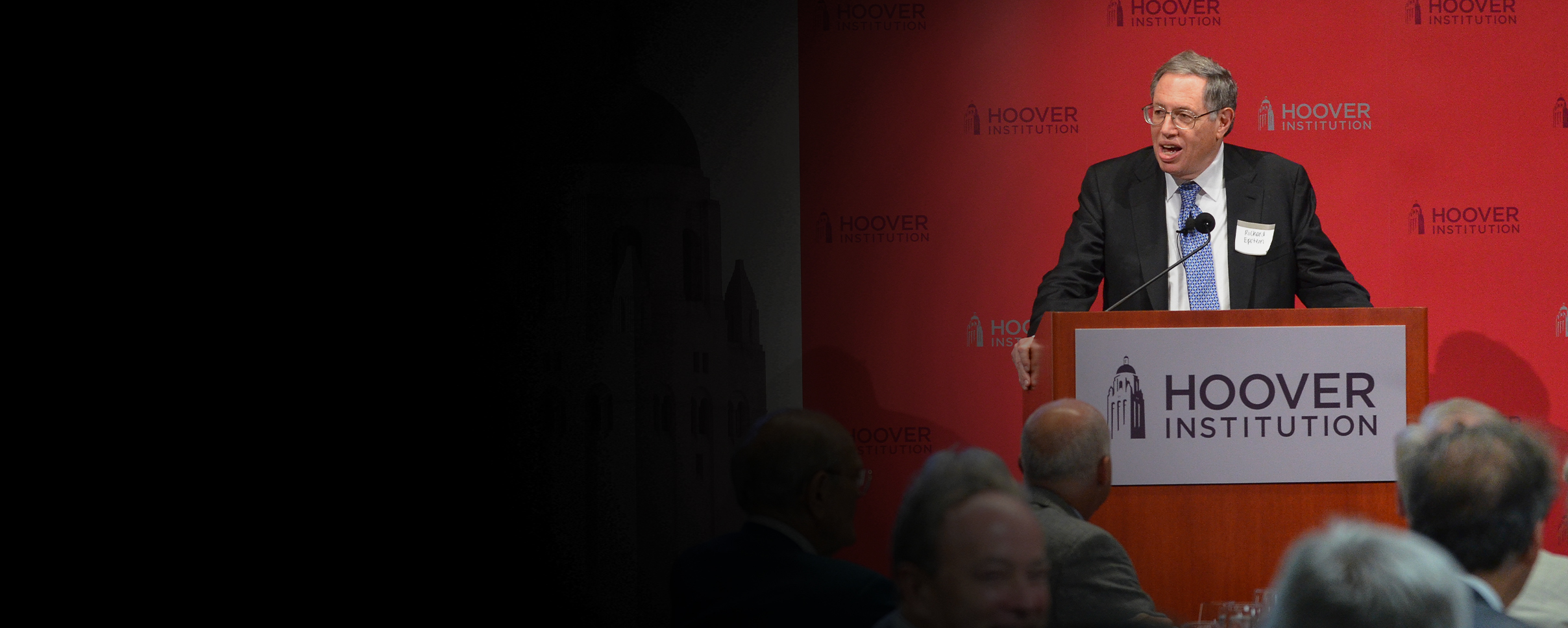
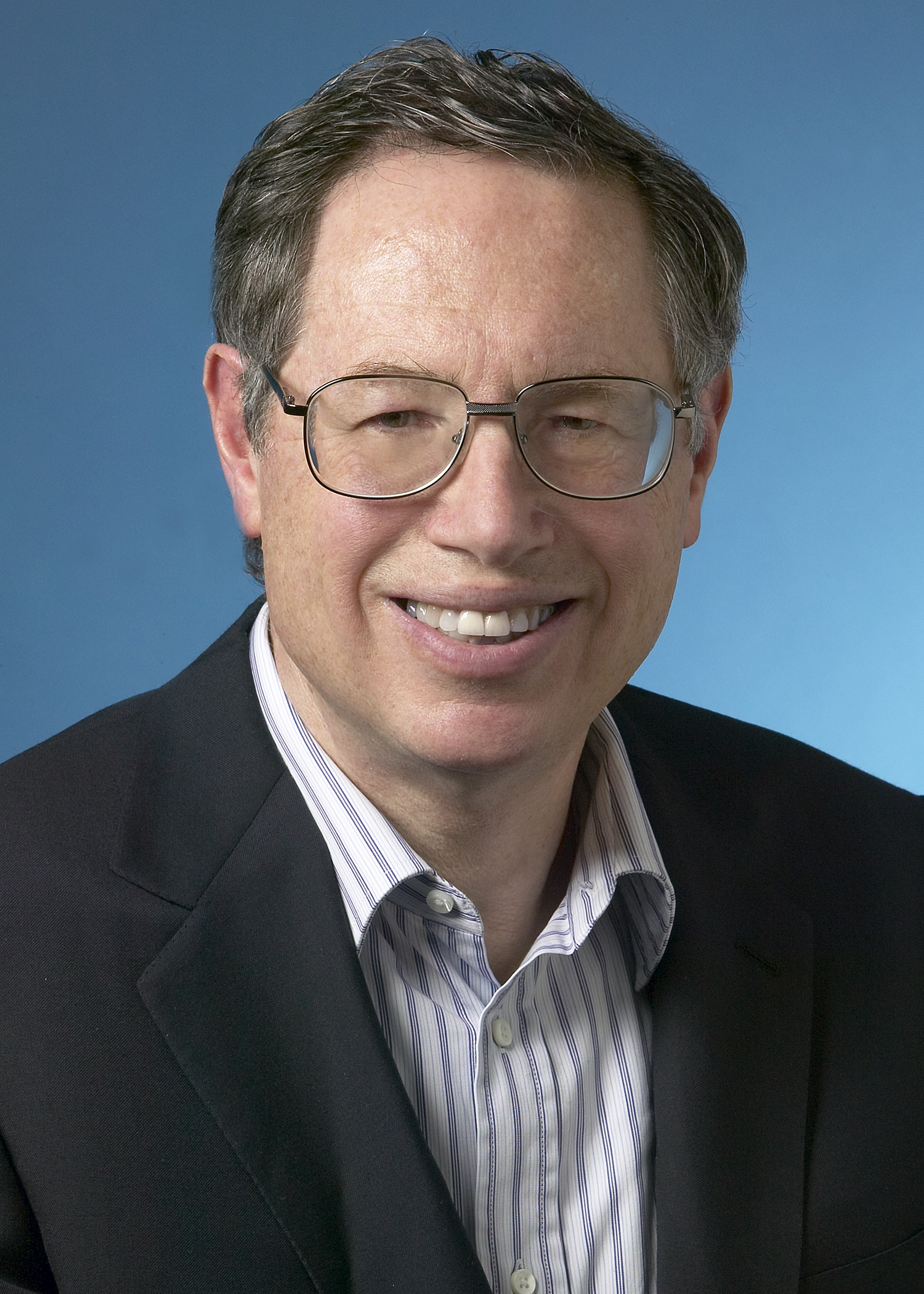
Richard A. Epstein, the Peter and Kirsten Bedford Senior Fellow at the Hoover Institution, is the Laurence A. Tisch Professor of Law, New York University Law School, and a senior lecturer at the University of Chicago.

In 2011, Epstein was a recipient of the Bradley Prize for outstanding achievement. In 2005, the College of William & Mary School of Law awarded him the Brigham-Kanner Property Rights Prize.

Epstein researches and writes in a broad range of constitutional, economic, historical, and philosophical subjects. He has taught administrative law, antitrust law, communications law, constitutional law, corporation criminal law, employment discrimination law, environmental law, food and drug law, health law, labor law, Roman law, real estate development and finance, and individual and corporate taxation.

He edited the Journal of Legal Studies (1981–91) and the Journal of Law and Economics (1991–2001).

Epstein’s most recent publication is The Classical Liberal Constitution: The Uncertain Quest for Limited Government (2014). Other books include Design for Liberty: Private Property, Public Administration, and the Rule of Law (2011); The Case against the Employee Free Choice Act (Hoover Institution Press, 2009); Supreme Neglect: How to Revive the Constitutional Protection for Private Property (2008); How the Progressives Rewrote the Constitution (2006); Overdose (2006); and Free Markets under Siege: Cartels, Politics, and Social Welfare (Hoover Institution Press, 2005).

He received a BA degree in philosophy summa cum laude from Columbia in 1964; a BA degree in law with first-class honors from Oxford University in 1966; and an LLB degree cum laude, from the Yale Law School in 1968. Upon graduation he joined the faculty at the University of Southern California, where he taught until 1972. In 1972, he visited the University of Chicago and became a regular member of the faculty the following year.

He has been a senior fellow at the MacLean Center for Clinical Medical Ethics since 1984 and was elected a fellow of the American Academy of Arts and Sciences in 1985. He has been a Hoover fellow since 2000.

Filter By:

Topic

Type

Recent Commentary

this is an image

Epstein discusses civil liberties after Boston on the John Batchelor Show

by Richard A. Epsteinvia John Batchelor Show
Monday, May 6, 2013

Richard Epstein, the Peter and Kirsten Bedford Senior Fellow at the Hoover Institution, notes that, in the aftermath of the terrorist bombing at the Boston Marathon, a major debate has broken out over surveillance and targeted searches.

Analysis and Commentary

Book Review: The Rule of Lawyers

by Richard A. Epsteinvia Wall Street Journal
Sunday, May 5, 2013

Law schools are under siege. Applications have dropped to around 54,000 annually, from around 100,000 in 2004. First-year enrollment has slipped to under 40,000 students, from 50,000 in 2010. Jobs are scarce—especially for students coming from lower-tier law schools.

Hoover launches “The Libertarian” podcast

Civil Liberties After Boston

by Richard A. Epsteinvia Defining Ideas
Wednesday, May 1, 2013

Richard Epstein, the Peter and Kirsten Bedford Senior Fellow at the Hoover Institution, discusses the rule of law and how it applies to alleged Boston bomber Dzhokar Tsarnaev.

Analysis and Commentary

Civil Liberties After Boston

by Richard A. Epsteinvia Defining Ideas (Hoover Institution)
Tuesday, April 30, 2013

Civil Liberties After Boston

by Richard A. Epsteinvia Defining Ideas
Tuesday, April 30, 2013

Given the stakes, law enforcement officials should follow all leads, even if that means more surveillance and ethnic profiling.

this is an image

Hoover fellow Epstein discusses civil liberties after Boston on the John Batchelor Show

by Richard A. Epsteinvia John Batchelor Show
Saturday, April 27, 2013

Richard Epstein, the Peter and Kirsten Bedford Senior Fellow at the Hoover Institution and a member of the Property Rights, Freedom, and Prosperity Task Force, notes that in the aftermath of the terrorist bombing—no lesser word will do—at the Boston Marathon, a major debate has broken out over the proper law enforcement procedures in two key areas: general surveillance and targeted searches.

Analysis and Commentary

Searches and Seizures: Reasonable or Unreasonable?

by Richard A. Epsteinvia Defining Ideas (Hoover Institution)
Tuesday, April 23, 2013

Searches and Seizures: Reasonable or Unreasonable?

by Richard A. Epsteinvia Defining Ideas
Tuesday, April 23, 2013

Two recent Supreme Court cases address the balance between liberty and security in criminal cases.

Pages