Economic

History

Filter By:

Type

Fellow

Research Team

Use comma-separated ID numbers for each author

Support the Hoover Institution

Join the Hoover Institution's community of supporters in advancing ideas defining a free society.

Support Hoover

Analysis and Commentary

Book Review: War Reparations and the UN Compensation Commission: Designing Compensation After Conflict.

by Kenneth Andersonvia Lawfare
Thursday, April 23, 2015

War Reparations and the UN Compensation Commission: Designing Compensation After Conflict, is a study of the UNCC, ranging from its establishment to its operations and administration.  An edited volume, most chapters are written by former UNCC staff.

In the News

The New Global Marketplace Of Political Change

mentioning Larry Diamondvia The Carnegie Endowment For International Peace
Monday, April 20, 2015

Western democratic powers are no longer the dominant external shapers of political transitions around the world. A new global marketplace of political change now exists, in which varied arrays of states, including numerous nondemocracies and non-Western democracies, are influencing transitional trajectories.

Adam Smith, Life Coach

by Nick Gillespievia Hoover Digest
Monday, April 20, 2015

The great economist pondered not just markets but the people who use them—and how honorable, happy citizens represent the true wealth of nations. Hoover fellow Russ Roberts explains.

Analysis and Commentary

Want To Reduce Inequality? Consult China, Vietnam And India

by Edward Paul Lazearvia Wall Street Journal
Tuesday, March 31, 2015

President Obama has called income inequality the “defining challenge of our time.” Many progressives blame the market economy and doubt John F. Kennedy’s view that “a rising tide lifts all boats.” In 2011 Mr. Obama chided those who believe “the market will take care of everything.” It’s a “simple theory,” he said. “It fits well on a bumper sticker. Here’s the problem: It doesn’t work. It’s never worked.”

an image
Blank Section (Placeholder)

Policies to Energize the United States Economy

featuring Lee Ohanianvia Fellow Talks
Tuesday, February 3, 2015

Senior Fellow Lee Ohanian discusses the US economy, juxtaposing quotes from the 2015 State of the Union address with his graphs.

Sound Money, Sound Policy

by John B. Taylorvia Hoover Digest
Wednesday, January 28, 2015

These are the keys to restoring the Fed and our economy.

Analysis and Commentary

European Economic Errors for the U.S. to Avoid

by Jesús Fernández-Villaverde, Lee Ohanianvia Wall Street Journal
Monday, December 29, 2014

The story of the Continent’s moribund economy began long before the European Central Bank was founded.

Analysis and Commentary

Did the North and South Converge?

by David R. Hendersonvia EconLog
Friday, December 26, 2014

Former Econlog blogger Arnold Kling's latest post is titled "Why Did the South Not Converge?" In it, he quotes from a book by Ira Katznelson and goes on to suggest various factors behind the failure of per capita incomes in the northern and southern states to converge.

Thomas Sowell Brings the World into Focus through an Economics Lens
Blank Section (Placeholder)Analysis and CommentaryCentennial News

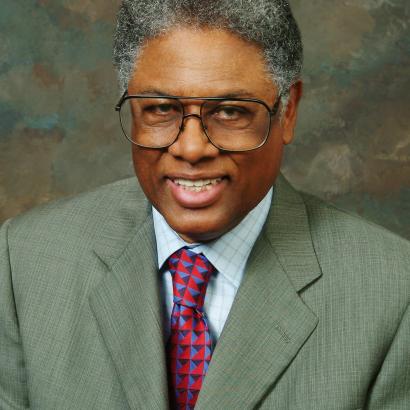
Thomas Sowell Brings the World into Focus through an Economics Lens

interview with Thomas Sowellvia Uncommon Knowledge
Wednesday, December 10, 2014

In this episode of Uncommon Knowledge, Peter Robinson interviews Hoover fellow and author Thomas Sowell on his 5th edition of Basic Economics: A Common Sense Guide to the Economy. In this interview, Sowell brings the world into clearer focus through a basic understanding of the fundamental economic principles and how they explain our lives. Sowell draws on lively examples from around the world and from centuries of history.

Balance

Balance: The Economics of Great Powers from Ancient Rome to Modern America

by R. Glenn Hubbard, Timothy Kanevia Simon & Schuster
Tuesday, May 21, 2013

In this groundbreaking book, two economists explain why economic imbalances cause civil collapse— and why the United States could be next.

Pages