Military

History

Filter By:

Type

Fellow

Research Team

Use comma-separated ID numbers for each author

Support the Hoover Institution

Join the Hoover Institution's community of supporters in advancing ideas defining a free society.

Support Hoover

Interviews

Victor Davis Hanson, Author Of The Second World Wars: How The First Global Conflict Was Fought And Won Chats On DrAlvin.Com

interview with Victor Davis Hansonvia Dr. Alvin Jones
Monday, November 6, 2017

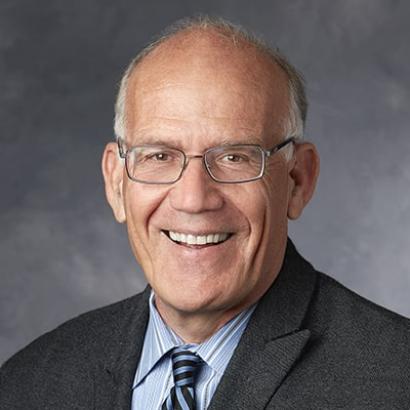
Hoover Institution fellow Victor Davis Hanson discusses his recent book The Second World Wars, which examines how combat unfolded in the air, at sea, and on land to show how distinct conflicts among disparate combatants coalesced into one interconnected global war. Drawing on 3,000 years of military history, Victor Davis Hanson argues that despite its novel industrial barbarity, neither the war’s origins nor its geography were unusual.

In the News

The Ken Burns Version, Cont’d

featuring Charles Hillvia Power Line
Friday, November 3, 2017

I put everything I had to offer on the Ken Burns/Lynn Novick/Geoffrey Ward documentary The Vietnam War into “Notes on the Ken Burns version.” I think the documentary seeks to fix the record in falsity.

The Classicist with Victor Davis Hanson:
Blank Section (Placeholder)Analysis and Commentary

The Classicist: Behind The Book: The Second World Wars

interview with Victor Davis Hansonvia The Classicist
Thursday, November 2, 2017

The Classicist, with Victor Davis Hanson: "Behind the Book: The Second World Wars

Blank Section (Placeholder)Analysis and Commentary

Are There Consequences For The All-Volunteer Military?

by Williamson Murrayvia Military History in the News
Tuesday, October 31, 2017

In the summer of 1970 in the immediate aftermath of a disastrous spring of rioting by university students, President Richard Nixon decided that a draft lottery would determine the following year’s call up. To the astonishment of university administrators who believed that the students were deeply motivated by moral concerns, the troubles disappeared in the fall.

The Classicist with Victor Davis Hanson:
Blank Section (Placeholder)Analysis and Commentary

The Classicist: The Second World Wars

interview with Victor Davis Hansonvia The Classicist
Monday, October 30, 2017

An in-depth look at VDH's new book on World War II.

Autobiography & Memoir

General Makriyannis, Aponimonevmata (Memoirs)

by David Berkeyvia Classics of Military History
Tuesday, October 10, 2017

A leading figure in the Greek War of Independence (1821-1832), Ioannis Makriyannis (1797-1864) lacked both formal education and military training. His desire to record his participation in the remarkable events that secured the freedom of Greece from the Ottoman Empire, and the subsequent chaos that ensued at the conclusion of that struggle, inspired him to write the Memoirs. Makriyannis, therefore, set out to learn the remaining sixteen letters of the alphabet to supplement the eight he had learned as a child to write his name. Not published until forty-five years after his death, it would take more than another half-century for an abridged translation to appear in English (H.A. Lidderdale, editor and translator, Makriyannis: The Memoirs of General Makriyannis, 1797-1864 [Oxford University Press, 1966]).

Interviews

Victor Davis Hanson On The Americhicks Podcast

interview with Victor Davis Hansonvia Americhicks
Friday, October 27, 2017

Hoover Institution fellow Victor Davis Hanson discusses his new book, The Second World Wars, and examines how combat unfolded in the air, at sea, and on land to show how distinct conflicts among disparate combatants coalesced into one interconnected global war.

Interviews

Victor Davis Hanson On The World In Time

interview with Victor Davis Hansonvia The World In Time
Friday, October 27, 2017

Hoover Institution fellow Victor Davis Hanson discusses his new book, The Second World Wars, and explains how the war’s ending might have been predictable—and why he decided to go with the plural in his title.

In the News

A Word From Victor Davis Hanson

featuring Victor Davis Hansonvia Powerline
Wednesday, October 25, 2017

The Second World Wars is not a chronological narrative of the conflict, but is organized by themes—e.g., “earth,” “fire,” “air,” “water,” etc.—that analyze the choices each belligerent made on land and on the seas and in the air—in terms of technological, industrial, human,, and strategic and tactical considerations. 

Blank Section (Placeholder)Analysis and Commentary

Grant, Sherman, And The American Way Of War

by Williamson Murrayvia Military History in the News
Tuesday, October 24, 2017

Russell Weigley, one of America’s leading military historians in the twentieth century, used Sherman’s 1864 scorched-earth March to the Sea that made “Georgia howl,” as an example of the American way of war. While there is some truth in Weigley’s description, he missed another aspect of the framework within which Grant and Sherman broke Confederate resistance and ended the Civil War: namely logistics and the problems that it raised for Union strategists in waging the war.

Pages

Military History Working Group


The Working Group on the Role of Military History in Contemporary Conflict examines how knowledge of past military operations can influence contemporary public policy decisions concerning current conflicts.