Military

History

Filter By:

Type

Fellow

Research Team

Use comma-separated ID numbers for each author

Support the Hoover Institution

Join the Hoover Institution's community of supporters in advancing ideas defining a free society.

Support Hoover

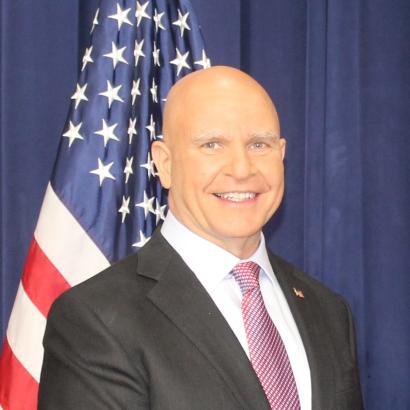
California Gold Star Parents event, "A Toast to America's Finest" with Lieutenant General H.R. McMaster at the Marines' Memorial Club

by H. R. McMaster
Friday, February 19, 2016

Remembering the sacrifices of fallen soldiers and Gold Star families and their enduring example as warriors and humanitarians.

Blank Section (Placeholder)Featured

Millennials And The Military

by Matthew Colford, Alec J. Sugarmanvia Defining Ideas (Hoover Institution)
Tuesday, August 2, 2016

They are not antagonistic toward the military, as past generations were, but they appear to be fundamentally ignorant about it despite growing up in an era of continuous war.

Featured

When A War Went Worldwide 75 Years Ago

by Victor Davis Hansonvia National Review
Thursday, July 28, 2016

Seventy-five years ago, the world blew up in just six months. World War II ostensibly started two years earlier, when Germany invaded Poland. In truth, after the rapid German defeat of Poland in September 1939, the conflict was mostly confined to Western Europe for nearly the next two years.

Blank Section (Placeholder)Analysis and Commentary

NATO In The Baltics: And Then What?

by Angelo M. Codevillavia Military History in the News
Monday, July 25, 2016

On July 24, 1941, Secretary Of War Henry L. Stimson, reacting to yet another rise in tensions with Japan, ordered that U.S. forces in the Philippines be reinforced. Subsequently, the Philippine Commonwealth Army was called into direct U.S. service. Douglas MacArthur was recalled to active duty and placed in overall command.

Blank Section (Placeholder)Analysis and Commentary

Peace Through Predominance

by Angelo M. Codevillavia Military History in the News
Wednesday, July 13, 2016

On July 8, 1853, Commodore Matthew C. Perry sailed into Tokyo Bay with four ships to deliver a letter from U.S. President Millard Fillmore proposing peaceful commercial relations. The Japanese refused to accept the letter, until Perry made it clear that this would result in a cannonade from his ships that would have devastated downtown Tokyo.

Blank Section (Placeholder)

On the Cover

via Hoover Digest
Monday, July 11, 2016

Ships ride at anchor and planes fly overhead in this curiously placid sketch of British forces sent to Gallipoli, one of the most bitter battles of the Great War.

Blank Section (Placeholder)

The Accidental State

by Hsiao-ting Linvia Hoover Digest
Monday, July 11, 2016

The making of Taiwan.

Blank Section (Placeholder)

Seven Deadly Strategic Sins

by Mark Moyarvia Hoover Digest
Monday, July 11, 2016

A common thread runs through US military disappointments: errors at the top.

Blank Section (Placeholder)Featured

Ending America’s Civil War, And Restarting It

by Angelo M. Codevillavia Military History in the News
Thursday, July 7, 2016

Between June 29 and July 4, 1913, some 53,000 Union and Confederate veterans of the Civil War gathered at Gettysburg, where many had shot and bayonetted each other fifty years earlier. They embraced—often tearfully—dressed in Blue and Gray, surrounded by the flags under which each side had fought. President Woodrow Wilson told them, “We have found one another again as brothers and comrades in arms, enemies no longer, generous friends rather, our battles long past, the quarrel forgotten—except that we shall not forget the splendid valor.”

Analysis and Commentary

The Centenary Of The Battle Of The Somme

by Kenneth Andersonvia Lawfare
Saturday, July 2, 2016

Americans (myself included) have tended not to be attentive to the Great War. Our attention is focused instead on World War II, and we think of the Great War as "World War I" - and regard the "First" merely as wind-up to the "Second."

Pages

Military History Working Group


The Working Group on the Role of Military History in Contemporary Conflict examines how knowledge of past military operations can influence contemporary public policy decisions concerning current conflicts.