
Videos
The Counter Revolution: Victor Davis Hanson On The Fall And Rise Of Trump
How did Donald Trump go from political defeat and the aftermath of January 6 to a second term in the White House?
October 19, 2026

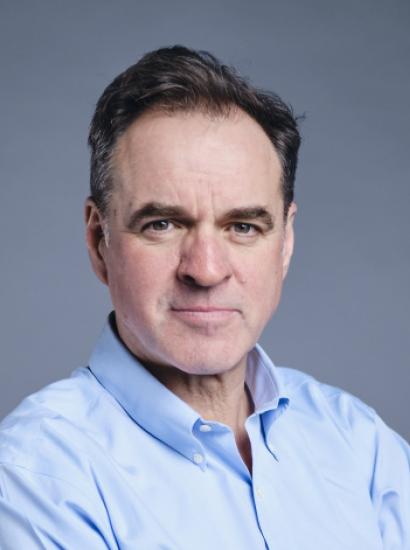
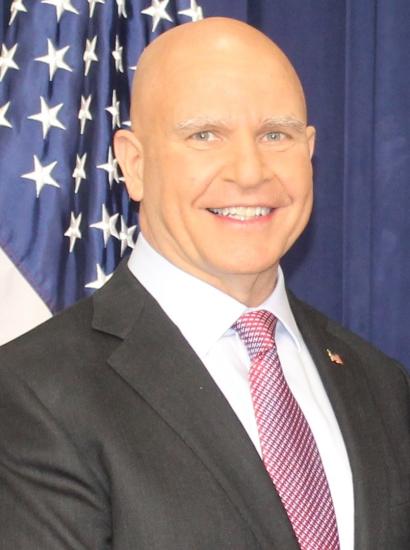
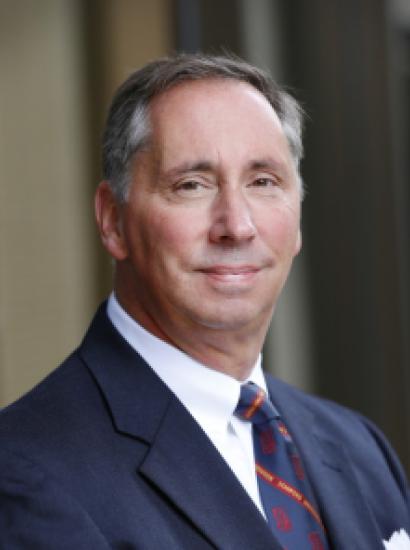
In a special “mailbag” episode, Hoover senior fellows Sir Niall Ferguson, John Cochrane, and H.R. McMaster answer audience questions. Among the topics (after a brief opening segment devoted to the latest in the Iran-US impasse – aka, “Schrödinger’s ceasefire”): who are today’s great leaders; is “the American experiment” doomed, as some intellectuals posit; China’s move to gold from dollar-denominated securities; the futures of the European Union and the UK’s Reform movement; North Korea’s relative silence; the cooled-down rhetoric of climate change; whether our PhD-wielding historians bother with televised historical dramas; thoughts on gentlemen-scholars’ sartorial style (“buy [clothes] when you’re a graduate student and wear them until they fall apart”); plus managerial lessons to be drawn from the recent successes of Sir Niall’s beloved Arsenal football club.
Recorded on June 3, 2026.
- Wednesday, June 3rd, 2026, and welcome back to "GoodFellows," a Hoover Institution broadcast examining history, economics, and geopolitics. I'm Bill Whalen. I'm a Hoover Distinguished Policy Fellow, and I'll be your moderator today. If you've been watching this show for these many years, you already know that. You also know what I'm gonna do next, which is introduce the stars of our show. My great pleasure to welcome back the historian Sir Niall Ferguson, the economist John Cochrane, and former Presidential National Security Advisor Lieutenant General H.R. McMaster. Niall, John, and H.R. are all Hoover Senior Fellows. Guys, it's great to see you. I hope your June is off to a good start, and we're gonna do a mailbag show today. But before we do the mailbag show, since we haven't been together for a few weeks, let's talk about pressing news, breaking news. In fact, this morning, apparently the airport in Kuwait has been struck. H.R., I turn to you. Let's do about 10 minutes on a Iran here with this question. H.R., is it game on now?
- Yeah, I mean, this is all predictable, right? I mean, people keep talking about, "Hey, the end of the war." There won't be an end of the war, because it's been going on for 47 years, you know? And this is just the latest phase in a 47-year-old war, and what we've seen, you know, over the last, you know, 60 days or so is a ceasefire war, I guess you could call it. You know, it's a pretty, it's a pretty darn inaccurate term, this ceasefire, it turns out. And so, I think what you will have is this continuous interaction with the Iranian regime. But I think what President Trump will have to conclude is we can no longer continue this kind of tit for tat, you know, strikes against Iran. They retaliate. I mean, I think what you're going to see is a resumption of the massive air campaign aimed initially, you know, at causing further attrition on their missile and drone strike complex, and then going after targets that are aimed at clearing the way for a forcible opening of the Strait of Hormuz, and that's a phase of the campaign that was planned, you know, at the outset, but never got to it, because of this ceasefire. So I think that's what we're up for, and one of the reasons why, you know, I think there've been all these predictions, "Hey, is there gonna be a deal," as people were focused on like what Donald Trump's gonna do. Hey, this has a lot to do with the intransigence of the Iranian regime, and of course, and we have to remember that, hey, every off-ramp that was provided for the Iranians, they've just blown past it. And so, I think you're gonna have a resumption of a large-scale air campaign, naval campaign, land campaign with long-range strike capabilities and the air defense capabilities.
- Well, you say we haven't talked about it for a while, but it turns out that we didn't need to, 'cause nothing changed since we last talked about it. We still have-
- Touche.
- We still have Schrodinger's ceasefire, which is simultaneously a ceasefire and not a ceasefire, and we have the Iranians stringing President Trump along with negotiations that they have no great incentive to wrap, because they're not under the kind of duress that we had hoped. Operation Economic Fury was supposed to bring the Iranian economy to its knees. I was told that that would happen within days, or at least weeks, but that was more than a month ago, and here we are. Turns out that they can avoid having to shut down their oil wells, 'cause they can get enough out by one way or another. A surprising number of ships are out there in the world's oceans with Iranian oil on board. Guess what? Blockades are hard. And so, I think the problem is not that different from when we last discussed it. I'm more skeptical than H.R. that there will be a significant effort to retake control of the Strait of Hormuz. I think President Trump decided not to do that seven or eight weeks ago, and I think his incentives have only increased in the direction of not doing that, because the costs would be high, higher than if they had taken that action seven or eight weeks ago, because the IRGC is now ready for any kind of operation. Turns out we didn't do as much damage to their missiles and drones as we had initially thought. So my sense is that we're not about to see a great breakthrough, despite the occasional promises, or perhaps I should say frequent promises of a great breakthrough on Truth Social. In fact, I'll be surprised if we're not having this exact same conversation on July 4th and again on Labor Day.
- John-
- Let me, I'll phrase it, some of this, as questions for my colleagues. I love you, H.R., but sometimes what the US should do versus what the US will do are two different questions, and I see, you know, give up as where we seem to be heading. I'm curious about the Iranians. Why do they want to talk forever, and why can they talk forever? Will, you know, the various ageddons keep not coming? Also, why don't they sign promises they don't intend to keep as they always have? There must be something internal about them needing to show-
- Should I answer that, John?
- But let me-
- 'Cause I think-
- What?
- That is a key question-
- Okay, but then I have another one. Yeah, please.
- But I wanna answer that-
- One point at a time is good.
- H.R. may take a different view. My view is the reason that they're not settling, even, although, I think, quite an attractive deal has been put to them, is that they haven't yet inflicted enough pain on the US economy. They wanna wait 'til there has been a meaningful increase in the pain, and that's coming. We've managed to cushion the shock of the closure of the strait by drawing down the Strategic Petroleum Reserve, amongst other things. We're beginning to get close to the end of that option. I think there is an upward move in oil prices coming if this doesn't get resolved. The inflationary pressures are only building. I don't need to tell you, John, the kind of problems that lie ahead for the new Fed chair, Kevin Warsh. He's inheriting a serious headache with inflation heading to double the target. I think the Iranians are waiting until the US equity market picks up the pain that's already visible in other markets. That's why they're not settling. They're gonna settle once they've inflicted that pain, because then they'll get the deal that they want, and the deal they want is a worse deal from a US perspective than the JCPOA.
- So then let me ask, that's great, and then you can also speculate on why Iran is not feeling pain. They were supposed to be capping their oil wells with permanent damage and so forth-
- Well, as I said, that didn't work-
- H.R., you're on mute. Your explosion has been muted-
- No, they are feeling pain. I mean, Niall, I think, you know, Iranians are watching the Western media, I guess, and are encouraged, right? I mean, they're encouraged because they think that, you know, that we're, you know, the time is on their side. It's not on their side. They're desperate for cash flow right now, and, you know, and they're in a position of profound weakness. The reason they keep pushing it is their ideology and their belief that we're weak, right? They've studied us. They look at, you know, they look at Vietnam, "Oh, we lost Vietnam." You know, they look at Afghanistan. They think that all they have to do is wait us out and we'll buckle, you know? And so-
- Yeah, you're right.
- You know, and I mean, are they right about that? Damn, I hope not, but they're in a position of profound weakness. This idea that they have the advantage, it just, I mean, it's baffling to me, baffling to me
- Well, I wanna ask you guys a long-run thought on this deal. We keep saying, "Give up your nukes, give up your nukes," and it occurs to me, there is no way they will ever give up their nuclear program, and why not? Because they look around the world, they look at Ukraine, Iraq, Libya-
- North Korea.
- And they conclude that, "Oh, keeping nuclear," North Korea, "People who have nuclear weapons "don't have their leadership attacked." "They're immune," not because they want to on day one bomb Tel Aviv. If they wanted to do that, they would've done it already with chemical, biological, or regular missiles. They know the Israelis would go completely nuts, and that would be the end of that. So what do they want? They want a nuclear weapon as a get out of jail free card, so they can continue to harass Israel and the neighboring states, more than harass, inflict as much damage as they can just below the level of a massive attack, and that level is pushed back dramatically when they have a nuclear weapon. So that strikes me as why they're never gonna give up a nuke as long as that regime and its goals is in place. And so, asking them to do it seems fairly hopeless.
- We have about four minutes left in the segment, guys. I'd like to quickly get your thoughts on the state of the alliance between the US and Israel, the Bibi-Trump relationship, and then the US-Arab states relationship. Niall?
- Well, President Trump appears to have leant quite hard on Prime Minister Netanyahu to lay off his strikes against Hezbollah in Lebanon. Israel was ramping up its campaign against Hezbollah. This, of course, was making it very difficult with the Iranians for whom Hezbollah are proxies, and it's not the first time that President Trump has leant on the Israeli prime minister. From an Israeli perspective, it's frustrating, because they haven't entirely dealt with the Hezbollah threat in the way that they want to. On the other hand, they're clearly the junior partner in the US-Israeli relationship, so they can't defy President Trump's pressure. What I hear from Jerusalem is a good deal of frustration that President Trump did not finish the job off, that he's left Iran in too strong a position. Here, H.R., I'm afraid you would meet some significant dissent from Israelis. They fear that the Iranians, despite all the damage that's been inflicted, are actually in a strategically stronger position than they were in before, because they now control the Strait of Hormuz, which previously was not at all the case. So there's a lot of dissatisfaction in Jerusalem, but they have to suck it up.
- Also, Hezbollah now has drones. This has really changed things from Israel's point of view. That's a really significant threat to the northern half for Israel. And, you know, it's kind of funny in these negotiations, where US has negotiated with Iran about other things, then Iran says, "Oh, and how about Hezbollah?" They can have a ceasefire anytime they want. Just tell Hezbollah to stop shooting. Ceasefire's over. So that, it's really unfortunate that we let the Iranians drag that in, and then Trump just says, "Oh, whatever you want, guys." You know, it's like they say, "Well, we want ice cream cones for everybody." "Well, okay, we're gonna give you ice cream cones forever."
- Well, there had been two ceasefires really from the outset, and the one in which the fire really didn't cease was the one between Israel and Hezbollah.
- And since the April ceasefire, you know, they've, you know, the Hezbollah has killed an Israeli citizen, wounded over 300 Israeli civilians, forced the evacuation of towns in northern Israel, and killed 15 IDF soldiers, okay? So, hey, how the hell is that a ceasefire? And, you know, so I think, you know, the continuation of the campaign against Hezbollah, and really intensifying the military action against Iran is really the only way forward. Now, if Trump falls back into really what has governed, you know, our approach toward Iran for so long of deescalation, you know, and we get, you know, kind of the war managers back involved, you know, like those who were managing the war with Iran under the Biden administration, I mean, then we're gonna see the initiative, you know, to the Iranians, which is wholly unnecessary in my view. Again, you know, it's easy to sort of look at ourselves and say, "Oh, look how hard it is for us." Hey, look at it from the Iranian perspective, you know? And I'm thinking, you know, I think that, you know, when you look at it from their perspective, you know, where's their leadership? Well, I mean, a lot of it's dead, you know? I mean, a lot of that leadership's dead. Hey, it doesn't look too good from their perspective. You know, how does it look in terms of their economy? They're losing $450 million a day, Niall, you know, through, you know, just through the restriction of exports on Kharg Island, and actually, the blockade is working. It is working in terms of the financial constraints they're under. They are desperate for a payoff. One of the reasons they're doing what they're doing with Kuwait and Bahrain with these attacks is they're trying to send a message to the Emiratis and to the Saudis, "Hey, we're gonna do this to you, "so you better tell the Americans to lay off," to not respond in a massive way against them.
- This is the-
- So if we fall for that, I mean, shame on us for that, you know, and I think now is the time to push hard against them, because, you know, they're reading the Western press, you know, they think that we're ready to throw in the towel, you know, and that we're in a position of disadvantage. It's crazy to me, the difference between the reality of the situation they're in and the reporting of it in terms of, you know, relative strength and weakness, advantage, disadvantages, I think is like 180 degrees out.
- So why doesn't the Trump team say, "This isn't about Hezbollah. "We're not gonna drag these. "This is about us and you. "We're not gonna drag this into Israel versus Hezbollah. "That's something totally different." At least they-
- Why the hell should the Iranians have any damn say about what happens-
- All right-
- In Lebanon, you know? I mean, are you kidding me? You know, and then, I mean, and you've got the situation where you've got the Lebanese government, you know, who's working, you know, toward kind of a ceasefire, maybe even at some stage, you know, a normalization of relations. You know, they met together for the first time. And, of course, you know, Iran is desperate for that not to happen. And so, what they've done, what they're trying to do is preserve, you know, the force that has destroyed the country of Lebanon, that is, you know, has forced, what is it, I think it's like 70% of the Lebanese population is out of the country, you know, as a result of the violence that has racked that country for decades. So, you know, it's just, it's crazy to me that we would in any way allow Iran to have any say in what's going on outside of its borders.
- Okay, let's leave it there 'til the next show. If Niall is right, we'll be talking about this come the 4th of July, come the 4th of August, who knows. So gentlemen, great conversation, and now it's on to the mailbag. ♪ Yo ♪ ♪ Viewer mail, viewer mail ♪ ♪ The GoodFellows answer their viewer mail ♪ ♪ The GoodFellows answer their viewer mail ♪
- So first, I'd like to thank everybody who took the time to write in. As always, very smart, very thoughtful questions. Our apologies if we didn't get to yours. It wasn't because we didn't like it, just simply too many good questions, too little time. Gentlemen, I'd like to begin with a question from Nick in Fremont, California, who writes, "The GoodFellows often remark that our leaders don't seem "to know how or have the stomach for winning wars. "What qualities should we look for "in a leader who can win wars? "Do you have any great leaders in mind?"
- Yes. I mean, I think, you know, what really, we have to recognize a couple of things that we've forgotten, that we've forgot, that war is, as Clausewitz said, an extension of politics, and what he meant is that the aim in war has to be to achieve a sustainable political outcome consistent with what brought you into the fight to begin with. It seems that we've forgotten that. And so, what we talk about is responsible end. You know, "We just want a responsible end to this war." Okay, hey, guess what? War is a competition. It's a competition that involves life and death. So, I mean, even in a low-stakes competition, like a boxing match, I mean, hell, I never got into the ring and said, "I just wanna bring this fight "to a responsible end," because you know why? I would get my ass kicked. And so, in war, each side tries to outdo the other, and winning in war means convincing your enemy that your enemy's been defeated. The way that we have waged recent wars is fundamentally incompetent, because we divorce what we're doing militarily from what we want to achieve politically and diplomatically. I mean, think about Afghanistan. What did we do? Hey, we set out, "Oh, hey, Taliban. "Here's our timeline for withdrawal. "Oh, and, well, let's negotiate an outcome to the war, "as we told you, after we told you we're leaving." It's ludicrous. So I think it's really important just to recognize that war really is a contest of wills. War is aimed at achieving a political outcome. And of course, war is human, because people fight for the same reasons Thucydides identified 2,500 years ago. So understanding the nature of war and/or the misunderstanding of it I think is what has led to our inability to achieve favorable outcomes in war.
- Mm-hmm, all right. Great leaders in mind, maybe great-
- Well-
- Any great living leaders come to mind?
- Oh, hey, I mean, you know-
- Well, I can go there.
- Okay.
- We actually have-
- Ulysses S. Grant, maybe, you know?
- Living?
- Well, we have an example, a shining example of a successful war leader in the world today, and that's Volodymyr Zelenskyy, who, to the amazement of the world, mutated from comedian and sitcom actor into war leader. And I think what we've seen from Ukraine is an answer to Nick's question. Obviously, a leader has to have conviction that victory can be achieved, even when the odds seem overwhelmingly against that, which they certainly did back in February of 2022. But the other thing is you need a people to follow that leader, and I think our problem today is it's not just with leadership, it's with followership. It's the fact that the American public for a long time has not really had, to quote Nick, "The stomach for winning wars," because that involves casualties and costs, it involves sacrifice, and our society has changed quite profoundly since 1945. The stalemate in Korea wasn't a defeat. Vietnam was a defeat. I don't think Iraq was a defeat, but it wasn't a triumph. Afghanistan was, I think, ultimately a pretty clear defeat. That can't just be blamed on leadership, can it, H.R.? It's as much about the appetite of the public to see through a conflict to a victorious end-
- You know, Niall, I think, you know, I think you're making a really good point here, you know, is that, you know, can you win a war is a good question, but can you win a war at a cost that's acceptable to the American public? I think that's always the question to ask. I think leaders, though, to put it back on, you know, some of the war leadership, have not made a good case, you know, for not only understanding what is at stake in wars, but what is the strategy that will deliver the outcome at an acceptable cost and risk, and that poor communication, the poor ability to, you know, I don't think Americans really were even paying attention to Afghanistan when we engaged in our self-defeat there, you know, for example. So yeah, I mean, I think this is a really important question that our viewers asked, and John, what is your-
- I would add don't start wars too frequently, and don't start them unless you have a clear and attainable objective to win, not end wars. I like the emphasis on these win, but let's emphasize, kind of tie together what you guys are saying. What we're focusing on here is political leaders, not military leaders, and the job of a political leader is to rally domestic and international support for the cause, not to just take what Americans feel, but to lead them to feeling that this is an important cause worth taking the casualties and suffering for. That's a political job, not a military job. And, you know, so, a lot, there's lots of historical examples. Roosevelt, you know, America was very divided on should we fight World War II, and he got people to believe in that. I guess the Japanese helped a little bit at Pearl Harbor. You know, Thatcher rallied the UK to not just accept defeat. Lincoln, I love the movie "Lincoln" because it shows Lincoln the politician in there talking to people, and telling his long stories, and just patiently bit by bit getting people to agree on the war end, and, you know, this 250th, we have to admire George Washington, who was a great political leader helping to rally his country and his troops for a very long, difficult, and painful cause.
- You don't need to go back that far-
- That's what's missing, and Bush won, just call it-
- Exactly.
- That Bush won in Iraq, you know, rallying-
- Old George W.
- The international community to this is the important thing to do. Sorry, Niall.
- Are you-
- Yeah, and I would say George W. Bush on the surge decision in Iraq, you know, making that decision against, you know, a lot of political headwinds, you know, and explaining it to the American people, and I think really that's what that resulted in a, I would call Iraq a win, you know, because you did have a government kind of hang together. There's still a lot of problems in Iraq. You know, you've got the militia. Anyway, but, you know-
- I mean, and even Bush, Bush's decision, Bush's handling going to war in Iraq, he got all the Democrats to vote for it.
- Our enemy is a radical network of terrorists and every government that supports them.
- Rallied popular support. Things went wrong afterwards, but he got that going right.
- All right, next question. It comes from London in Denver, not to be confused with Denver in London, but London in Denver, and London writes, "In his recent interview on 'Uncommon Knowledge,' "Thomas Sowell said he thinks "the United States might be doomed."
- I do think that there is a very serious chance that we are doomed.
- "I just started reading Friedrich Hayek's "'Law, Legislation, and Liberty,' "and in the introduction, he points to the decay of liberty "in the United States and point blank says "that the only conclusion to draw is "that the great experiment has failed. "Do the Fellows also believe "that the United States is doomed?" Niall, you wrote a book on doom.
- Well, as Franklin said, "A republic, if you can keep it," and the great thing about Americans is that they've been worrying about this ever since the founding. It's a recurrent feature of American discourse that the great experiment is failing, that we're Rome, that the republic will give way to empire, and as long as Americans worry about that, I think we'll be fine. My view is that the Constitution, which is really the key to the success of the republic, remains an extraordinarily impressive operating system, and as I check up on it regularly, it's doing exactly as the founders intended. So I'm more optimistic than you, London. I think the system is doing exactly what the founders hoped it would do, and as long as you keep worrying about it, I think we'll be fine.
- H.R.?
- Yeah, I agree with Niall. You know, I think that you have this interaction between, you know, different political factions. On the far left, it's just catastrophism, you know, that we're finished, we're done, and really what we need to do is just demand better of our political leaders, because we do have a say in how we're governed. We have agency. We have authorship over the future. That's the beauty of our democratic system. So I would just say, you know, hey, don't buy into the fact that, you know, these impersonal forces are gonna lead to the demise of our republic. You know, do your part, citizens, right, and demand better political leadership, and then really opt out, or transcend, you know, the toxic, vitriolic discourse that characterizes our, you know, our political discourse these days.
- Well, I'll just echo, but there is reason to worry. Many of our public institutions are rusty, creaky, and dysfunctional, not working as they should. There was a, you know, maybe this is rose-colored glasses, but some sense of a pitched battle. It's worth throwing everything away to win today's battle. We need to keep this thing together. That seems to be declining. So I think there's a reason to, and our institutions are becoming politicized, tools of partisan warfare, things that used to be off-limits are not. The optimistic thing is there's a reservoir just in American culture of common sense that our educational system tries to beat out of people, but nonetheless, they keep common sense, and at some point they say, "You have got to be kidding," and throw the bums out. So the remaining institutions and that cultural common sense give me hope.
- Let's turn our attention overseas, and this question from Dennis in Framingham, Massachusetts, who writes, "Can you foresee an economic situation "or event in China that would cause the CCP "to sell a significant amount of their US Treasuries?"
- But they've already sold a significant amount of their US Treasuries. Their holdings are down significantly insofar as we can know them. It's not an entirely transparent system, and they have a preference for gold these days. John can help you figure out why. A clue, it's hard to sanction somebody's gold holdings. It's a lot easier to sanction their holdings of dollar-denominated securities. So I think there has been a significant shift in the way that the Chinese structure their reserves, and that's an obvious geopolitical response to the events of the last 10 or so years. John, do you agree?
- Yeah, and they've sold a lot, and in some sense, does it really matter? They held, I think, roughly a trillion out of 36 trillion, whatever it is we have these days. Other people are willing to step in and buy them. China can buy other assets than US Treasuries. So I don't think that the possible meltdown of the Treasury market will not be because China decides to sell. It will be because everybody else decides to sell for reasons not having to do with China, but having to do with faith in the US paying back the debt.
- Mm-hmm, H.R., anything to add?
- No, I defer to Niall and John on that one.
- All right, let's turn our attention to Europe, gentlemen. A question from Angus in Melbourne, Australia, who writes, "Sir Niall, I am a big fan. "You have spoken of Nigel Farage "as a kind of fool in British politics. "Do you feel this is still the case, "or has your opinion changed as his policies have become "more popular and times have changed?" I would add, Niall, that your colleague Andrew Roberts the other day called Reform UK the, quote, "Party of misfits," and described the current British leadership as Lilliputian.
- Well, I am no fan of Nigel Farage and un-Reform. My view is that for Britain to right itself, the Conservative Party has to recover from the mistakes that it made in the period after 2016 when I think it went off the rails following the Brexit referendum. I think under Kemi Badenoch that's possible. I think she's an admirable and impressive leader. And a good example of the difference is the way they've reacted to the recent dreadful murder of a young man named Henry Nowak in Southampton.
- Right.
- This case is causing huge amounts of outrage in Britain, because this young man was stabbed to death by a Sikh who claimed to the police that Nowak had insulted him racially when the police arrived on the scene, and in a completely grotesque inversion, the police arrested the dying Nowak, and put him in handcuffs, even as he was explaining that he'd been stabbed, and using the famous words, "I can't breathe," that, of course, we can all remember from 2020 in the-
- George Floyd.
- Case of George Floyd. The response of Nigel Farage to this awful event was to call for an outpouring of, quote, "Pure cold rage." In other words, he reached for the kerosene, and poured it right on the fire. And I think Kemi Badenoch's response has been a great deal more measured and responsible.
- I just kept thinking, "What if that was my boy, "that his last moments, "his last moments were spent in handcuffs, "he knew he was dying, and he could see the confusion, "his attacker claiming that he had been a racist?" It's an awful, awful way for anyone to die.
- I think this was an outrageous illustration of what has gone wrong in British policing, where the indoctrination of the police with ideas such as anti-racism has actually produced a bizarre new form of racism in which a young white man is assumed to be at fault, even when he's been mortally stabbed. But I think Farage's response is a perfect illustration of why he's unfit to be prime minister.
- Mm-hmm.
- Could I ask, Niall, maybe support for Farage represents a cri de coeur of a British electorate, some, as I mentioned with the US, some remaining cultural, "What the heck is going on?" And, you know, like a lot of Trump, it was, "Well, we're voting for this "because the sort of standard center-left blob "that runs us has shown itself to be incompetent," and perhaps the good thing that will come is it will push the Conservatives to be conservative again, rather than sort of what they look like to me is center-left Democrats in the US political spectrum, and Kemi Badenoch seems wonderful on that, and that might in the end be a great thing. If they're just, if the Conservatives are just in opposition to the Labor Party, then they will, you know, still stay where they are. If they have to reach out to Farage voters, perhaps they will take the common sense of the British voter without the craziness. What do you think?
- Well, I'm hopeful that between now and the general election, we can see the difference between Kemi Badenoch's vision for Britain and Nigel Farage's, because Kemi understands that we have to resolve some of the profound problems with our welfare system, stabilize public finances, get enterprise working, get the market working. She's much closer to you, John, as a kind of economic libertarian. That's, of course, one reason she was at our Thomas Sowell conference. But Nigel Farage's populism is big government populism. It's spend populism, and, you know, cut taxes, and nevermind the deficit. If you actually try and cost Reform's policies, it would almost double the deficit-
- Yeah.
- In a way that's completely unsustainable. So the choice is actually between a responsible conservatism and an irresponsible populism. And fortunately, we don't have to make that choice this year. There's time, and that-
- Yeah.
- Gives Kemi Badenoch time to rebuild the Conservative Party, which suffered something of a train wreck in the period after Brexit. But it's suffered train wrecks in the past in British history. I always remind people who say, "Oh, the Conservatives are finished," well, they were to blame for appeasement, but they weren't finished despite that horrendous mistake in the 1930s. All you need, to go back to our earlier conversation, is leadership, but leadership has to have integrity, and that is, I think, the key question that remains to be posed about Nigel Farage. I don't think he's a-
- Yeah.
- Man of integrity.
- A million men not working, permanently not working, half of them on mental disability, you know, that's the kind of problem that Badenoch will face, and more money will make that worse.
- Let's stay with Europe and this question from Joachim in Norway, who writes, "How can the EU survive "if many of its most important members continue "on their economic decline?" John?
- Well, if they're happy with economic decline, then they can survive in union as well as they can survive independently. Now, what the EU as a union will not survive, if people start to believe that the union is the cause of their decline, and that endless red tape from Brussels is the problem, and, you know, the European Union at least says it understands that problem, the Draghi report, and it's up to them to fix it.
- I mean, the European Union is a kind of triumph in the sense that its doom has been repeatedly predicted, and yet here we are. It's actually continued to grow in size, even if its economic growth has been dismal. And I think that's partly because in crises it's proved itself capable of responding. It ultimately did respond to the Eurozone crisis that followed the financial crisis in the United States, even if it was too often too little, too late. Its response to the COVID pandemic was, I think, a relatively successful one. And its response to the war in Ukraine has actually been not bad. The problem, I think, is not actually so much with the European institutions, though they're usually blamed. It's actually with the national governments, and the reason that growth is suboptimal in Italy, in France, in Germany isn't Brussels. It's the way the national governments are run, and Britain's the perfect illustration of the point, isn't it, John? Because Britain tried to blame everything on Brussels in the period running up to 2016, then had a referendum. Britain voted to leave. Britain's been out now for, in effect, a decade, and its economic performance is just as bad as the economic performance of the continental countries. There's little difference between them. So the answer is it's actually not much to do with Europe. If anything, Europe has somewhat helped by creating a single market, by creating at least some kind of fiscal response to crises. The problems really lie at the national level, and until they're solved at the national level, Europe will underperform.
- Yeah, the UK took Brexit as an excuse to add more regulations, not to get rid of Brussels regulations. H.R. hasn't been in for a while, so I wanna turn this to the international dimension. Europe seems to be cooperating on defense and rather aggressively helping Ukraine. This, on that level, EU seems to be stepping up, and moving forward. What do you say?
- That is happening, and there's a recognition that there's a lot things happening on the economic front, the Draghi report, you know, when he warned, "Hey, we're just, it's gonna be a slow agony "unless we do reform." And so, at the EU level, and I think at the national level, you're seeing a real movement to try to reform. I just got back from two weeks in Germany, you know, and there's a real sense of urgency there, you know, to make government more effective, but a recognition that they do need to deregulate. They've gotta focus on energy security, that the economic model they had bought into for a long time of, you know, getting, you know, cheap energy from Russia, and to be able to manufacture at relatively low cost and export that, hey, they've gotta move to something else that allows them to take advantage of the benefits of artificial intelligence, and so forth. There is a real, you know, doubt in Germany, Europe overall, about, you know, the reliability of the United States as a partner. I was really worried about that, you know, when I was there and trying to say, "Hey, you know, "the agenda for Europe is the kind of agenda "we need in the United States as well," right? Energy security, deregulation, invigorating our industrial manufacturing to ensure that we have more resilient supply chains, and that China doesn't have coercive power over our economy. I mean, these all align along with the defense agenda as well. So I'm hoping that there can be kind of a positive transatlantic agenda that we can work on here in the future.
- Mm-hmm, and North Korea, H.R., Robert in Cornwall, Ontario writes, "Let's talk about North Korea. "It's been off the radar for a while. "It shouldn't be. "When will this grotesque experiment end and how? "Will we ever see a unified Korean Peninsula?"
- Yeah, I mean, you know, I'll tell you, we really are in bad situation now, because North Korea is not as isolated as it used to be, you know? And so, they're able to draw on the support of Russia and China in particular, and that's what can help, I think, keep the Kim family regime alive, right? And, of course, you know, they stay alive through the brutal repression of their own population, and now, they have enough kind of economic wherewithal, I think, to remain in power. You know, it's not clear who's gonna succeed, you know, Kim Jong Un. But, you know, he may live a really long time, despite his unhealthy habits.
- Well, I agree with H.R. It's interesting that the North Koreans themselves have somewhat shifted their policy away from unification, and whether that's to be seen as good or bad is really a matter of taste. I think one has to be skeptical about their motives. They pose a grave threat, and not just to South Korea, to the region, and they benefit from the fact that the China-Russia-Iran axis has them as a member too. Indeed, they're providing assistance even as we speak to Putin, as Putin tries to stabilize an increasingly unstable situation in Ukraine. So I think H.R. is dead right, and that's why although North Korea's been off the radar in terms of media coverage, we've hardly heard from Little Rocket Man, you still see him popping up as he did in Beijing at the great Xi Jinping Victory parade last year.
- Yeah, this is the case of why we don't want Iran to have nuclear weapons. You know, he's gonna stay in power pretty much forever. No one's gonna touch it, and also for our own inconvenience, and China's, it would be a big mess if he fell apart, refugees going over, and to the great suffering of the North Korean people. Nobody wants to see that. So it'll go on until it doesn't.
- John, you have a admirer in Victoria, BC, Junah in particular, who writes for John Cochrane, "What three books would you recommend to someone "who has read no books on economics "to start learning about?" I have three choices in mind, John. One's called "Asset Pricing." Another one's called "The Fiscal Theory of the Price Level," and another one's called "Crisis Cycle: "Challenges, Evolution, and the Future of the Euro." Who wrote those books, John Cochrane?
- I did, and I would strongly recommend that Junah not read those books as the first introduction to economics, 'cause they're not intended as that. Read things that are fun, and intrigue you, and make you read something else. So anything by Tom Sowell. His economics textbook is wonderful. That's a good place to start. I love the Marginal Revolution blog, anything out of, a lot of out of Hoover, but the Cato Institute does a great job on economics, more than we do. So read things that are fun and it'll keep going from there.
- Mm-hmm, and Niall Ferguson, you have an admirer in Latvia, Tim, who writes, "Sir Niall, you always seem to be supremely well-dressed. "What are the basics of a gentleman-scholar's wardrobe?"
- Well, Tim, I'm rather letting you down this evening as I'm really rather scruffily attired, and I feel self-conscious in answering this question, because I have spent I think more or less 30 years not thinking too hard about clothes, that the key to not thinking too hard about clothes is to buy some clothes you like, and then just wear them unthinkingly. One of my son Campbell's friends, a little boy called Rory, once asked a question which has become famous in Ferguson family lore. "Niall," he said, "why do you always wear the same clothes?" And that was a very good question, and my answer was, "Because that way, Rory, "I don't need to think about clothes." So the essence of being a gentleman-scholar is not to think about clothes. Buy them when you're a graduate student and wear them until they fall apart.
- That supposedly was the Einstein rule. Didn't Einstein wear the same outfit every day, because he did not wanna think about what clothes he had to choose?
- Yeah, that, I didn't know that I'd got it from Einstein, but he's a bit above my pay grade intellectually. But I think it's the same basic principle. You don't wanna have to waste time thinking about clothes. I mean, I think clothes are very distracting when you're young, 'cause there is always this dream which is instilled in you by advertisers that if you wear the right clothes you'll be more appealing to the opposite sex.
- Oh, Peter's just got points out Steve Jobs too. I'd point out, by the way, the turtleneck worked out very well for him, not so well for Elizabeth Holmes.
- I would say that-
- Hey, there's a great book by Paul Fussell, you know, who's a fantastic literary critic, you know? It's called "Uniforms: Why We Are What We Wear," and you know, Fussell had a great sense of humor, and I recommend that book.
- Mark Twain said, "Clothes do make the man. "Naked people have very little influence in society," which is a good quote. I wish I were better dressed. I think we need to ask that question to Steve Kotkin when he comes on, 'cause I certainly noticed hanging around Hoover, he is always the best dressed.
- When I first got into the White House, you know, I was surrounded by, you know, a large number of pretty wealthy people, you know, and I'm like an army officer, you know? I had like the worst suits. President Trump once said, I think, I looked like a beer salesman, at least that was reported that he said that about me and my suit. So I tried over my time in the White House to upgrade my look to a purveyor of fine scotches, you know? But in my first meeting, I'm standing next to Gary Cohn, you know? I said, "Gary, I'm gonna have to upgrade my look "being around guys like you," and he said, you know, he said, "Well, you know, that suit doesn't look too bad." So I opened up the label. You know what it said? Mobin Tailor, Kabul, Afghanistan. I said, "Well, you know, the bad news is "it'll set you back 90 bucks."
- All right, a question from Andrew in South Africa, who writes, "It seems to me that the GoodFellows, "particularly John Cochrane," oh, this'll go to you, John, but he said, "John Cochrane, "are strongly against those who are worried about "human-induced climate change. "Do you, like your president, believe "that climate change is a hoax? "Why are you so against moving to clean energy? "Surely fossil fuels generate huge waste "and we should be focusing on reducing "harmful waste in whatever form." John?
- Well, let me take issue with the question. Against those who are worried about climate change? I'm not against anyone. I'm against bad policies and bullshit, but I'm not against people, and I'm not against moving to clean energy. I'm against the costly, unproductive policies. Climate change is real. Climate change is caused by human-emitted carbon dioxide largely. I'm not proclaiming those as verities. I'm just summarizing what the actual science says. I'm sad though that this got turned into a massive green pork project that wastes trillions of dollars, de-industrializes places like Europe all to no benefit of the climate. So, like, I'm against climate policies that don't begin to pass a whiff of a cost-benefit test. California's $230 billion high-speed train is an example. And the perversion of actual science that has gone on in trying to whip us all into a millenarian cause. Bjorn Lomborg just had a great little op-ed in "The Wall Street Journal" today on one tiny example. The World Health Organization is once again trying to declare climate, the climate catastrophe, I think we're up to that now, as a human health emergency, because more old people are dying. More people are dying of heat in the heat waves in Europe. Wait a minute. If you adjust that for age, Europe's getting older, there's no change whatsoever, and in fact, people are, less people are dying because there's less people are dying of cold. So that's just, that doesn't mean climate change is good, but it, you know, people are lying to you, are perverting the science in a political agenda that is wasting trillions of dollars to no benefit whatsoever. I'm all for nuclear power, renewables, solar where appropriate, where you can buy power, and on an intermittent basis, all those wonderful things that technology and adaptation will bring us to lower carbon emissions. But trillions and trillions of taxpayer dollars into big rat holes in the ground while we burn flags of we're all so good for climate change is just not the answer.
- Niall, it's been about 20 years since Al Gore got a Nobel Peace Prize, but it seems to me that the rhetoric is at least a little less heated these days than it was back then.
- Which is exactly why we should be worried, because with the climate activists dialing it down, I noticed Bill Gates, for example-
- Yeah.
- Earlier this year declaring that it was no longer a top priority. That's just when we're going to have very serious problems with climate change, because it's always just as the hysteria abates that you begin to understand the magnitude of the problem. I've never been a denier or a skeptic on this issue. My argument has always been let's talk about China, because the emissions are going down in the West. They've been going down in the US for some time. They're way down in Europe. It's China that has been the principal source of greenhouse gases, because of its insatiable consumption of coal in particular. People don't realize this, because they're taken in by CCP propaganda, but actually the Chinese economy doesn't run on solar and wind. It overwhelmingly runs on hydrocarbons, and the biggest source of primary energy is coal. So the climate change problem is real, and it's principally driven by massive Asian and especially Chinese emissions, and all of the discussions that have produced Green New Deals in America and disastrous energy policies in Western Europe are based on a fundamental misunderstanding of what is driving this problem. Unfortunately, I think we're heading towards an extremely trying period, because all kinds of climate issues are going to become more acute, though I think it's important to realize that it won't be the way the most extreme scenario of the International Panel on Climate envisioned, 'cause that seems to have been a very misspecified model. But trouble lies ahead, I'm afraid, and it's just when people like Bill Gates say you can relax that you really need to start filling the sandbags and preparing yourself for trouble.
- H.R., anything you'd like to add?
- Hey, I'm just, you know, a fan of, you know, Steven Koonin's work, our colleague, and Bjorn Lomborg, our colleague. I think they do great work on this, and hey, if you do think that, you know, that man-made carbon emissions are an existential threat, that you have to admit that, hey, what we're doing isn't working. As Niall said, and John said, you know, I think the problem isn't, you know, isn't gonna be solved by, you know, policy decisions in the US and in Europe. And so, what you need is you need a solution that will be effective based on the market, you know, that to make it a kind of a false dilemma of either trading off energy security to reduce carbon emissions. You need a cost-effective way to do that, and we have that on the horizon I think with nuclear fission, you know, for example. The largest man-made, you know, reduction in man-made carbon emissions in history was in the United States based on the availability of cheap natural gas, right? A market solution. So, hey, I think, you know, yeah, this is where, you know, people who are skeptical that it's an existential threat and those who believe it is, they should come together and say, "Okay, let's work "on a market-based solution to this problem."
- And I think the military, I hope you'll comment a little on it, our military went big into we have to worry about climate change. I think it's actually one of your predecessors said, "Climate change is our greatest strategic threat."
- Oh-
- Climate change is a long-run problem, but it's not our greatest strategic threat, and economics teaches you a moral crusade is we all must stop using fossil fuels, and even the case where it's most effective, you know, a tank does not run well on batteries. A tank-
- Yeah.
- There's something about fossil fuels deliver concentrated energy that tanks and airplanes, they really need those, and it's okay to have a couple tanks and airplanes, and other stuff can bear the brunt of decarbonization. But trying to run tanks on batteries is, you know, an example of doing things extremely inefficiently.
- Right, two last questions, gentlemen. One from James in Greenwood. He didn't say Greenwood where, but Greenwood. He writes, "What are your favorite fictional representations "of historical periods on cinema and TV? "Has Sir Niall watched 'Vikings' from History Channel "and 'Medici: Masters of Florence'?"
- One of my pieces of advice to aspiring young historians is never watch historical drama. Just never ever watch it. It is a kind of mental contaminant, because since its very inception, Hollywood has existed to misrepresent the past in the most heinous ways. So you just mustn't ever watch those movies if you're serious about history.
- Mm-hmm, John?
- I completely agree. I have watched "Medici: Masters of Florence." It was awful. I can see, if you wanna read about Florence, read "Florence in the Forgotten Centuries" by one Eric Cochrane, which is wonderful. Yes, read good actual history. Well, there is a art of historical fiction, which my wife is writing in, and so, I'm a fan. The Hilary Mantel style, she did the Thomas Cromwell series, where you take nothing is provably false, you research like crazy, and then you fill in the details to try to tell an interpretive story. So I found the, and even the adaptations of that, I found that worthwhile and I hope Niall won't whack me too much for some, for that brand of deeply researched historical fiction as being worth watching.
- H.R.?
- Hey, I'll tell you, I wish that cinema would bring George MacDonald Fraser's "Flashman" series to the screen. That would be, that, I think that would be worth watching. And if anybody hasn't read the "Flashman" series, you've gotta read it. It's, I mean, they are fantastic. They are historically based. These are , these are works of historical fiction with extensive end notes, you know, and gosh, George MacDonald Fraser had a great sense of humor, you know, 'cause Flashman, you know, the protagonist in this story, or antagonist, I guess, in the story is a, you know, he's this cad, and a coward who just winds up in these situations where then he appears to be the hero, you know? It's a fantastic series, and there there's even a US version during the Civil War, "Flash for Freedom," when he comes to the US during the Civil War. But yeah, I think those would be worth bringing to the silver screen.
- So unlike Niall and H.R., I don't have a PhD in history, so I'll play along with James here, and I'll give him one, and that's the HBO series "Rome," which begs the question why does every depiction of Rome featured two things, everybody has excellent white teeth, and everybody has a British accent?
- Right, and the reality about the past is that life expectancy was very short, health was very poor, teeth mostly fell out. I mean, it's hard to convey how awful the past was relative to the modern period we are lucky enough to live in, and any film that accurately represented the past would be unwatchably shocking. That's the reality. and history is a huge fight against the stereotypes that people have built up from watching movies and TV and reading historical novels. That's really enemy for the historian is all that accumulated romanticization of the nasty past.
- The "John Adams" movie I enjoyed very much. Among other things, they painted-
- [Niall] You're allowed to enjoy these things, but don't mistake them for history.
- No, but that one was based on a real biography. So it was decent, and they made everyone's teeth look awful, because the fact is Americans' teeth were so terrible back then that the British made fun of us for our bad teeth.
- Those-
- H.R., do we also apply this to war movies? D-Day is coming up in a couple of days, for example. Is it worth watching "Saving Private Ryan"?
- Yeah, it is. I mean, that's a fantastic movie, because what it does, it does what few movies do is they explain, like it helps explain why soldiers fight-
- Mm-hmm.
- And we actually, you know, you fight for one another, right? And so, it gets to that kind of bond, you know, between soldiers, and the kind of, you know, element of combat readiness that is really important, the unit cohesion, and the confidence they have in one another, you know? So yeah, I mean, I think that's definitely worth watching, and so is "The Longest Day," which is still a pretty good war movie on, you know, about D-Day itself, and yeah, so definitely worth watching.
- Our final question. The odd thing about this batch of mailbag questions, this topic got the most questions, and Niall, it was the Arsenal Football Club. So we're gonna end with this question, Niall. It comes from Alexis in Twentynine Palms, California. He writes, "Sir Niall, in light of Arsenal's "fantastic achievement in the Premier League this season, "what leadership lessons can we draw "from manager Mikel Arteta? "As an Arsenal fan and junior infantry officer "in the Marines, I marvel at his accomplishments "from a purely leadership perspective. "What can leaders at every level draw from Arteta's success "in the top flight of English football?"
- Well, with apologies to American viewers who are not fans of football, as we must learn to call it, you've gotta get ready, 'cause the World Cup's about to begin, and-
- Correct.
- Whether you like it or not, you're playing host to the world's game. And so, you should try and understand a few key things about it. First of all, the World Cup is essentially Arsenal v. Arsenal, because there are so many Arsenal players in so many different sides, Brazilians, Spaniards. Of course, the English team has many Arsenal players. So essentially you'll be watching Arsenal quite a lot of the time, even though they'll be wearing their national strips. And secondly, the challenge for World Cup teams is that the managers, the coaches have relatively little time with the players. The players are normally playing for clubs such as Arsenal, not for national teams such as England, and what Mikel Arteta has done at Arsenal, it's taken quite a few years, has been to build a formidably disciplined team. I'm always trying to explain to people that any human organization, whether it's an army, or a company, or even an academic institution, is only as good as its teamwork, and Mikel Arteta's Arsenal are a formidably good team. There are individual stars, Bukayo Saka, for example, one of the world's great players. I could list several others, but it's as a team that they are truly brilliant, and we saw that at the moment of defeat. They won the Premier League, but then they had the ultimate challenge, which was to try and beat Paris Saint-Germain, PSG, in the Champions League Final. This is just a few days ago, and we're still recovering from the fact that we didn't win, but we so nearly did.
- Right.
- We took them all the way to penalties, the peculiar ritual where football games at the highest level are decided with a penalty shootout. That should never have happened because PSG are by almost any measure a superior team. They're a fantastic team. They have astonishing talent. How did Arsenal manage to avoid being demolished the way Inter Milan were by PSG at the same event 12 months ago? Through incredible teamwork, unbelievable defensive play, which shot down the fantastic talents of the PSG frontline. So there's a lot to be learned from football, whatever your walk of life. Ultimately, everything, even history itself, is more like football than it is like literature, and this is a very important lesson to learn. Football is much more than just a game. It's more important, as a famous football manager once said, than life and death, because it's all there. So even if you've never really got into the beautiful game, this summer gives you a chance to see it, and if you wanna swat up-
- Hey, Niall, Niall, there's-
- Study the Arsenal season.
- Come on, man. I mean, we're not buying that. I mean, there's no physical contact, man. I mean, I mean, like, it's-
- Oh, you clearly haven't been-
- And when if there is physical contact, the guy flips over-
- You clearly haven't been watching football if you-
- And like cries, acts like, I mean-
- There's no physical contact-
- It's so, it's so lame. So, hey, if you wanna learn life lessons from a sport, read James Kerr's "Legacy" about the All Blacks. I mean, then, you know, that's a real sport, man, you know?
- So clearly those, not everybody is physically suited to playing the beautiful game. Let me put it that way, and for those people, rugby was invented.
- Mm-hmm.
- I wanna note that this is a really important moment on "GoodFellows." For the first time ever, I have no opinions whatsoever on this topic.
- No, you do have an opinion. Real men fly gliders. Yes.
- See, this is the proper shape of a ball right here. This is a proper shape of a ball, right?
- I think-
- Not that round, not that round thing, you know?
- I think to avoid a false dichotomy, let it be made clear that it is possible to like both the round ball and the oval ball, as long as you're playing by codes that were made in Britain. That's the key. Association football and rugby football are the games we're talking about here, and they are really the only enduring legacies of the British Empire. And those are good legacies, legacies to be proud of. Enjoy the World Cup, and become an Arsenal fan. It'll change your life.
- Thank you, and gentlemen, I hope you enjoy your June. We don't have another show scheduled until the end of the month, but we might try to slip one in between. So until then, guys, safe travels. Again, thanks, everybody, for sending in their questions today. We'll do another mailbag some point down the road. We'll let you know. By the way, if you wanna keep up with what Niall, John, and H.R. are doing, they all are very active on social media. They have X accounts. Also, you should sign up for the Hoover Daily Report, which keeps you abreast of what they're doing. On behalf of the GoodFellows, Sir Niall Ferguson, John Cochrane, H.R. McMaster, and all of us here at the Hoover Institution, thanks as always for watching the show. 'Til next time, take care. ♪ North London forever ♪
- [Announcer] If you enjoyed this show and are interested in watching more content featuring H.R. McMaster, watch "Battlegrounds," also available at hoover.org. ♪ And my heart ♪ ♪ Will leave you never ♪ ♪ My blood will forever ♪
Videos
How did Donald Trump go from political defeat and the aftermath of January 6 to a second term in the White House?
October 19, 2026
Videos
From politics and economics to journalism and culture, leading voices reflect on how Thomas Sowell’s ideas shaped their thinking and continue to inspire new generations.
October 15, 2026
Articles
Government borrowing lets Americans enjoy the benefits of spending today. Just wait.
October 13, 2026