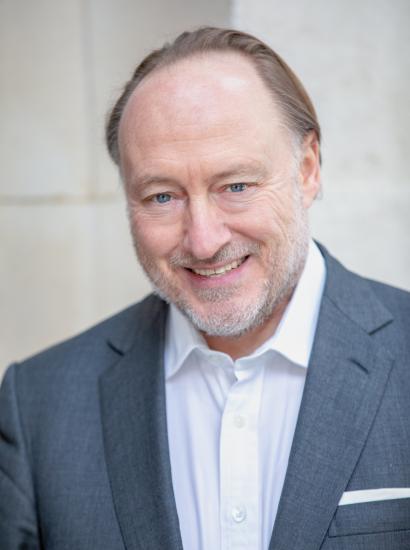
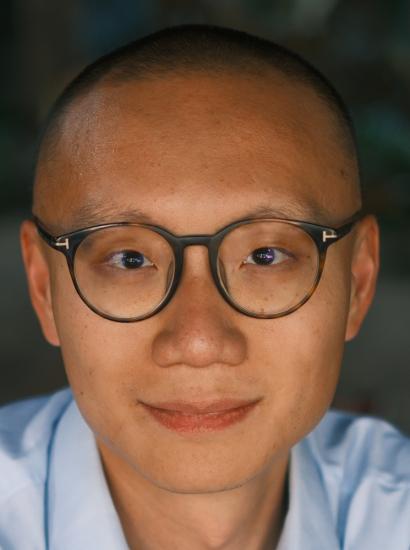
- Dan Wang is author of Breakneck China's Quest to engineer the Future, and he's a fellow of the Hoover Institution, and he's also one of the most sighted experts on China's technological capabilities. Dan, you've written that America and China are quote, fundamentally alike, restless, eager for shortcuts, ultimately driving most of the world's big changes. Who's, who's winning in that in that race?
- There is no winner, but I would say that there are two losers, namely the US as well as China, perhaps only superseded by one bigger loser, namely Europe. So I think that there are three major geopolitical blocks in the world. All of them have had this amazing capacity for self-harm that gets demonstrated again and again. Now I speak from the perspective of a Canadian, perhaps the biggest loser of all, but I think that from my perspective, that China has messed up a lot of its own economy out of a choice by top leader C paying to mostly demolish a lot of the property sector as well as smack around a lot of tech company founders like Jack Ma, president Donald Trump is doing what Donald Trump is doing, and namely eroding a lot of alliances with partners harming the manufacturing sector through tariffs and imposing all sorts of harms on the US as well. And we don't even need to attract the Europeans into this, but look at what they're doing to their own energy supply as well as the fundamental lack of growth on the continent. So not three big losers on the table.
- A any winners in the world that you can look at? I know Britain isn't one, and I don't think that China, Japan is particularly, certainly not Russia either. I mean, it must be pretty unusual in world history to have endless losers. No, and no winners whatsoever.
- Well, I, here's where I apologize for being blib. You know, I don't wanna suggest Kyrgyzstan is winning, but you know, it, it seems to be a very beautiful place. First of all, I want to acknowledge that for the most part, growth is positive for most of the world. For people in China, the US and Europe and many other parts of the rich world. People are, for the most part, living without fear. They are getting on with their lives, markets are going up. But I think there is a substantial case to be made that at least with these big powers, they have engaged in a lot more self-harm than is necessary. And a lot of what I wanna do is for the humiliating self beatings to seize so that morale can improve.
- You mentioned tariffs. Obviously we've had this supreme court judgment that seemed to underline what a lot of people thought anyway, which was that the founding fathers thought that tariffs were the role of Congress rather than the executive. Is that going to change everything or anything or nothing?
- Hopefully some things, as President Trump has asserted these new tariff powers, and our colleague Philip Zko has written a piece to say, well, the tariffs are illegal under these new tariff authorities as well. But I think that it is a fairly messy process. I think that it is really good that the Supreme Court push back very forcefully to say that the president may have the power to impose a blockade, but that doesn't mean that he has a power to create further taxes without congressional approval. And I think that the, the main issue with the tariffs is not exactly which legal authority that they are based on. I think that there may be a way to impose the tariffs smartly at a good level. And we have not seen that happen under Trump, in which it is a scattered shot in which some firms, especially those connected with the Republican party, may be able to have greater exemptions. He raises them, he lowers them, it destroys business's capacity to plan. And what we have seen is that over essentially the past year after the tariffs, the US has lost around 80,000 manufacturing jobs. So at a first approximation, the US is not re industrializing.
- So the very point, the very underlying drive behind these tariffs is, is just simply not happening. In fact, the opposite is happening
- That, that, that is the evidence so far. It might switch. The Trump administration's always saying that something we'll switch soon, but so far we've lost nearly a hundred thousand manufacturing jobs.
- You've, you've written in the past about the positive aspects of Donald Trump and specifically his dynamism. Tell us more about that.
- I think that Donald Trump is able to ask good questions. Now I suspect that he generally offers the wrong answers to, to useful questions, but I think that he was someone who opened the discussion in a much wider way among, at least in Washington dc Well, should the US do something about China? Now, I think that a lot of his proposed solutions against China, namely tariffs, namely export controls in his earlier administration, namely prosecutions of Chinese scientists or scientists of Chinese heritage, most of these I think have backfired on the US and have not accomplished very good goals. And he has erratically switched to being, I I would say probably the most pro-China panda hugger in the White House today. And it is very, very strange. Some of these statements that he would make about c pink in which he has said, I quote nearly verbatim when he said to the Wall Street Journal that she is brilliant, nearly perfect, and you know, everything about him just comes out of Hollywood. And you know, this is like he's describing Tom Cruise or something. But you know, it's just very, very odd the sorts of compliments that roll out off of Donald Trump's
- Tongue. He seems to have much the same kind of bromance thing with Putin going on as well. Is it just that he likes strong men slightly, which as he was one himself, admires the fact that they can, they can dominate their countries in a way that he hasn't quite been able to himself?
- Well, Heather can also throw in Orban, and I don't know what exactly it is, he has also praised Xi Jinping's great head of hair. We can't say that about Putin. You can't say that about you or me Andrew. So
- Maybe that's something so true, so true there. It's back in 1960 it was that there was a missile gap between the Russians and the Americans. Is there an engineering gap today between the Chinese and the Americans?
- I think that the, my understanding of the missal gap was that it was overstated at the start and rapidly prove a fairly wrong, but it was a little bit of a limited understanding to certain folks in the national security defense intelligence establishment that actually what, what the, what the truth was. Now when it comes to the US and China today, I would say that the truth is much more evident that many of us can see that Chinese manufacturing is overrunning the world, including the US in many ways. We can see that with something like electric vehicles in which I think that the Chinese are making much better electric vehicles with higher capabilities than American EVs at much lower price points all at the same time. The Chinese built around 300 gigawatts of solar power in China last year. The US built about 30 gigawatts. China has about 40 nuclear power plants under construction. The US has zero and continental Europe has like negative three. So you know, we have all of these pretty stark disparities that all of us are able to see in which my expectation is that China is going to be by default going to be the world's most sophisticated manufacturer in a few years from now, maybe a decade from now, there's some exceptions in which the Chinese are not making pretty critical technologies that include semiconductors and aviation where they have not cut up to the leading edge. But where it comes to pretty much anything else, any other manufactured good, you care to name. My expectation is that within 10 years they are going to reach German, Japanese American levels of quality at the Chinese prices.
- And they're going to, you mentioned nuclear, obviously not having great oil reserves there. They're going to need energy, vast amounts of energy. They don't want to continue to buy it from Iran and Russia and they prob possibly might not be able to buy it from Venezuela for that much longer. Is how long do you think it'll be before China is self-sufficient in terms of energy?
- Self-sufficiency, at least with respect to oil is a very tall order. So China remains the world's largest oil importer. Now what they have done is that they have blunted the growth of oil. And so I think that there is a quite keen sense that China has already reached peak oil and they're on the path to decline. And that, how have they achieved that? Well, mostly by electrifying the economy as much as possible. So what uses a lot of gasoline? Well, gasoline powered vehicles and what has China done well, about one or two cars sold in China last year were electric vehicles and some of the best electric vehicles on the market. So China has figured out EVs, it's figured out, especially the critical battery supply chain that has built enormous amounts of power, not just nuclear and solar as I mentioned, but also vast fleets of coal plants. And so in a sense, China is not very clean when it is powering its vehicles. But what it has done is that it has been able to power its vehicles with domestic nuclear, domestic coal, domestic solar. And it has done that by electrifying the economy. So China right now is I believe the second most electrified major economy right after Japan. And pretty soon in a couple of years will be the most electrified economy because it has built so much capacity, so much of the transmission lines to move these, the power across the country and also figured out the use cases so that people actually desire to use these big products. And so that's a very keen sense in which they are investing in the future to solve a national security need. And this is where I wish that there was more urgent sense from the west, the us, continental Europe, the UK really to try to engage in a lot of this thinking, to invest in a lot of the same sorts of projects to solve its own deficiencies.
- You mentioned EV and EV and national security. There was a debate in the House of Lords only yesterday about how Chinese electric vehicles are not going to be allowed onto military British military stations because they're considered essentially to be sort of, I don't know, spy mobiles for, for China. Is that, is that paranoia or is there something genuinely behind that?
- Well, I think that it, the UK wouldn't be alone in having this fear. And we can take a look at only a few years ago when the Biden administration, not the Trump administration, but the Biden administration reached the same determination and essentially has banned a lot of Chinese EVs from coming into the country through this connected vehicle rule. So, you know, the Americans have, you know, a pretty high ban against Chinese EVs, which is partly why we can see Chinese EVs in Mexico, a lot of parts of Europe. And we cannot see them almost at all in the US Now. I think that I would say that first this is a a, a fairly paranoid move. It may be legitimate, but it is also quite paranoid at the same time because if we take a look at what the Chinese are doing, the Chinese have allowed a lot of Teslas electric vehicles to be produced in Shanghai as well as driven around in China. And you know, my sense is that Beijing is not lax about national security, but they have somehow made the determination that Tesla's EVs could be driven around. And I'm wondering, you know, why, you know, the Chinese are, are somehow less paranoid in this case than the West. What do you think?
- Well, I I don't think that Elon Musk is using each all of his cars as attempts to spy on, on China in the way that perhaps the Chinese EVs could be used to spy on us. That's the, I suppose, the obvious.
- Well, I think that the Beijing, it is really hard for Beijing to put their fears to bet that whether Elon Musk or someone else in the US and the US government could not compel some of this data to be transmitted to Washington DC or London or wherever else. And so I think it is difficult for them to fully trust that such things could be possible. It doesn't have to be driven by Eli.
- With regard to engineering, how does a, a country like America, which isn't centralized and where you can choose your own college major, how does it close a engineering gap like the one that you are talking about where only a few matter of years, the, the situation is going to be very much worse for the United States.
- I think that has to be a recognition of America's own strengths as an engineering state from the past. So the US has been no slouch in terms of building incredible projects. You know, this, there's this term called the American technological sublime that refers to projects that include Manhattan Project, the Apollo missions, Hoover Dam, golden Gate Bridge. All of these are highly inspiring, incredible feats of engineering to say nothing of the continental Transcontinental railway, the the federal highways, the skyscrapers in Chicago and Manhattan, the US has certainly built, the UK has certainly built when it was the, when it founded the Industrial Revolution with all of these little steam engine contraptions in Scotland and where, wherever else in northern England. And so I think that the West has certainly had these heritages of engineering and a lot of that came to a halt in the US by roughly the year in 1970 when the US had this very stark turn against the engineering state driven by books like The Power Broker about Robert Moses building too much in New York City, silent Spring, too many chemicals being sprayed by the US Department of Agriculture change, Jacobs. So, you know, there was a cultural moment, there was a legal movement to really restrain the engineers. And I think now is a moment to ask given pretty severe housing shortages across the US and the UK rusted manufacturing base, the inability to complete almost any infrastructure whether or not we should recover some bad heritage. And I think that there should also be a glance over the Pacific, not towards, not across the pond at at Europe, but across the Pacific. But the Chinese are building to seriously ask, the Chinese are adding so much power capacity, they have excellent ports and railways, their manufacturing base is not rusted. You know, if we take geopolitical competition seriously, we take seriously this idea that the Chinese are making not only a lot of rare earth magnets, but also active pharmaceutical ingredients like fermented antibiotics, like cardiovascular drugs. What happens if the Chinese deny cardiovascular drugs to the elderly across the world? Should we not do something about that? Should we not do something about not witting the future of technology? Namely things like electrifying the economy, not artificial intelligence. Anything else? You know, I think what we, we have nothing to lose from acknowledging that the Chinese are ahead in many ways. The Chinese have been very good students of the West, including Japan, Korea, Taiwan, Europe, the us and they have really tried to catch up in a very big way. And I think that it is now time for the US to really try to look at China to be in a sense of catch up vote.
- I think you've, you, you hinted at it earlier, hasn't American notorious litigiousness held America back, not just America, Britain also with our statutory in instruments and our endless legal requirements with regard to building and and so on. You've called it, and it's a word I've never seen before, a veto as in a veto. The, the, the, the power of the lawyers to veto things. We've obviously had the most appalling business with HS two, the rail link in, in Britain, which has cost hundreds of billions and nothing's happened. Heathrow airport now is going to cost 30 billion pounds to, to build. So that's what the chief executive has said about the third runway there. And a lot of this is down to lawyers. What can be done about that? I mean, China does not have this problem for obvious reasons.
- Well, first I should acknowledge that I picked up the term Photocracy from our colleague Francis Fukuyama, who has pointed out that the US is extremely complex by a lot of different standards, too many jurisdictions. The Bay area, speaking to you from Stanford now I've learned, has 26 different transit agencies to survey not especially large population. And so, you know, there is some weird complexity with the US and indeed with across the Anglosphere where it's not just the Americans who have not built enough, the Kiwis, the Canadians, the the Irish have also not built enough homes as well as infrastructure. And so my view is that at a first approximation when it comes to urban planning, don't trust anyone who speaks English. I think that they have just the anglosphere with a, a system of common law in which, you know, the just convinced the judge to block a development that has actually been, I think far worse than let's say the French way of building in which this is much more bureaucratically managed. And my, my description of the US is as a lawyerly society where all the presidents went to law school, every single presidential nominee from the Democrats between 1980 to 2024 went to law school. And I think that there is a way in which Donald Trump is a highly litigious person and therefore a product the lawyerly society himself. Now the uk as I understand is a little bit different. S starmer may have been a lawyer and perhaps a lawyer's lawyer, but actually there has not been that many lawyers inside the House of Commons. As I understand the UK is a place I described as the PPE society, which it's pretty remarkable how many prime ministers studied politics, philosophy, and economics at Baal College, at Oxford University. Now I think you get a pass, Andrew, because you went to, you went to Cambridge, but
- Thank you. And also we don't have PPE as a subject. It's not a, it's not a Cambridge, you can't get a Cambridge degree in PPE, but that is kind of you to mention. You are quite right. It is, it is an extraordinary thing. The the power of that lawyers and, and PP together, they're going to strangle a country.
- Yes, well two great things even better together. And it's some sort of a toxic mixture. And I do, I do find it incredible how, you know, the FT has just reported that home building in London has completely collapsed. It's like housing starts are, are nearing zero. It seems to me like London has housing prices that are close to California levels while the country as a whole has income levels closer to the state of Mississippi. So how does this work? HS two is, you know, extremely expensive. Third runway at row has been going on forever. And you know, I I've also recently learned about the Leeds Tramway project in which I believe the, the, the Council of leads legislated to have a tram project starting in the 1990s to to build a tram. And last I checked this, you know, the first phase will not be completed until the 2030s. Now, you know, the Californians are struggling over something mighty to build high-speed rail between San Francisco and Los Angeles. I just hope one day that Leeds will have a tram. Do you think it will ever happen?
- No, I don't. I'm afraid it's, and it's, and it's likely, it's less likely the more the, in the local elections you have more and more parties each of them playing to different, different constituencies. Also, of course, Seki Stamos said that he's going to build 1.5 million homes in one parliament and essentially the planning and building regulations and so on are stopping him. And so what, what can one do? I mean this is essentially, it's a political issue, isn't it? 'cause if you can get the politicians to, to impose their will on the lawyers, then things can start to move. But until you do, we are stuck, as you say, in a country which has got the house prices of California and the income levels of Mississippi.
- Help us reason through this, because I suspect a lot of our listeners are also puzzled by this, when it is manifestly untrust for young people to not be able to afford homes when a lot of people are very tired of these endless construction sites. When you throw, you know, $30 billion to build a runway, my, that's quite a lot of money. How, how can Britain be so stuck when there seems to be a need to confront these challenges?
- Do you have the expression nimbyism in Yes. The United States?
- Yes, I believe we invented it.
- But did you Yes. Got it. Well unfortunately, like so many things in, in Britain, you, when you, when you coughed, we caught cold. And it's, so there's an element of nimbyism and there's also just the, the power of, of local authority committees to hold things up and especially judicial review of absolutely everything which, which holds, holds things up. But as I say it, it ultimately has to be a, a political, an issue of political will. And if you do have a prime minister who's a lawyer and a lot of his cabinet and lawyers and nobody in his cabinet at all has made so much as a dollar from private entrepreneurship or private enterprise or ever run a company, you are going to have a, a log jam that therefore holds up the, the, the whole process. And yes, as you say, I mean in California, at least what you are holding up is ultimately going to be an extraordinary thing if it happens. Whereas, whereas we can't even put some trams on the, on the streets of, of Leeds. Tell me, one of the things that this has, has might lead to, which is something else that you've written about is a series of European trumps. And we have, we have Nigel Farage, the leader of the populist party reform party in, in England, but obviously the, the French and Germans and Hungarians and many others have, have political parties, populist parties wait at the right of him. C can you see a, a world in which we would have a series of European trumps?
- Well my, if I sound a little bit gloomy about the US I, I wanna shift registers on Europe, which I, you know, feel is much more apocalyptic. So my sense of Europe is that at least economically it faces two pretty big threats. Now I'm married to a European, I'm married to an Austrian and we spent quite a bit of time in Europe every year. Last summer we spent the most of the summer in the city of Copenhagen and Denmark has been one of the relative winners in the eu. But when we were there one day, I opened up the papers to see that the share price of Noble Nordisk originator of Ozempic fell by about 30% in one day and mostly out of competition from US based Eli Lilly. And that was one of these very stark realizations I had that, you know, it is pretty obvious that China is de industrializing Europe right now. We can see it in the German industrial data already, that China is threatening a lot of traditional competencies in industry in across Europe. But with the Novo Nordisk news that helped me better appreciate is that the Europeans are going to be outcompeted by the Americans on essentially everything else that, you know, there's these gems in Europe like A SNL in the Netherlands, which is making EUV lithography equipment. But with respect to pretty much everything else, I think that Americans are more competitive on biotech, more competitive on us on banking finance, more competitive on software ai. And so, you know, I see Europe as, you know, fighting this two front economic war against the Chinese on manufacturing the Americans on everything else. And they're losing and waiting in the wings or these right populous parties, national rally in France, the A FD in Germany, which seem to be out polling ruling incumbents today. And so if the electoral chaos is one electoral cycle away, I suspect that these populists will not deliver healthy economies. And so, you know, and, and as the economies weaken, how are the political systems gonna get better? How, how, what, what is a more optimistic case about Europe that, that I may be missing?
- No, you are being, you're being optimistic yourself. I think the massive unemployment that, that AI and robotics are about to unleash, we've already got 16% youth unemployment in, in Britain 16%. And I can't see that coming down if we carry on the way we're going. And so of course that is, I mean historically that kind of thing has always helped extremist parties, both of the right and the left, but specifically as you say, of the, of the right, in Europe's case. And so the closer we get, unless we are able somehow to work out a way that AI and robotics is going to bring down unemployment rather than, rather than increase it, there are very dark political days ahead. It strikes me. So, so I'm afraid I'm just as pessimistic or more than you,
- What happens if ha Nigel Farage becomes pn?
- Well, he, I mean the, the party he leads is, is full of, of has beens cranks a few rather disreputable, I'm afraid quite a few of them from my own party, the conservative party. And as you say, he doesn't have the, the economic answers he's got, it's a, it's a melange really of, of, of nationalist knee jerk responses and a bit of left wing nationalization still. He was talking about nationalizing the steel industry, for example, and, and then he changes his mind a good deal. So, so what we're not gonna see is some kind of an economic renaissance such as we saw under Margaret Thatcher, which is what we desperately need. That's, that's the way I see it anyway. I, I obviously can't look into the future anymore than anybody else. Let's talk about math or maths as you call it. Maths as we called it, four out of 10 American eighth graders school below basic in, in math. The Chinese seems to have, have dealt with this problem educationally in their schools. What's going to be the result of that in 10, 20, 30 years time?
- Well, it is a trying scandal. How, how many American children have not been given great education, not only in mathematics, but also in reading generally. And this is where I think, you know, I I want to remain hopeful about the us and this is part of the promise of the US is that one, one usually has something hopeful to be hopeful about. We brought up Mississippi earlier for having a low income, that is definitely true that Mississippi is one of the poorest states in the union, but there's been something quite astonishing to come out of Mississippi over the last few years in which they changed some aspects of their reading curriculum in which reading scores have improved very, very substantially in the state of Mississippi. Mathematics is quite challenging. It seems like on, on average the American school system is trying to reduce the emphasis on mathematics and reducing these requirements on, on calculus. Now, if you and I stroll through the Stanford Library, I suspect what we will find is that a lot of pretty smart kids at Stanford are plugging everything they see into artificial intelligence chatbot tools and then taking a break by watching TikTok short videos. And so I'm not sure that we can find inspiration right here on campus, but I think that we could all, we could also be hopeful that maybe there is a way to integrate the AI tools, which are probably unstoppable for a lot of these students to encourage some of the smartest folks to use them a little bit better. At the same time, you know, we should hope that, you know, American students are much more interested in physical chemistry or, or physics or all sorts of engineering projects such that it's not just the Chinese which are graduating all of the STEM PhDs. And as a simple reform, I propose that, you know, if we take a look at the number of STEM PhDs being graduated in China every year, it's about 10 times as many as US STEM PhDs. And if we take a look at the US STEM PhDs, many of them are of Chinese heritage, Chinese origin to whom the Americans kind of kick out as soon as they finish their PhDs for them to go back to China. And so the, the, the STEM PhD gap is real and it is perhaps even understated if we just take a look at the numbers alone. And so, you know, something I proposed quite simply is to stop kicking out all of these foreign PhDs and make them do science in America instead.
- When you say make them, you mean encourage them, allow them
- Not create a hostile visa environment in which they feel like they have to have a job immediately, otherwise they have to exit the country.
- Tell us about Chinese demography. Quite a lot of people, especially those who believe in the lucidity and trap look to which essentially sort of argues that that China, like every other country in the world that gets to the position globally that China's in, starts to dream about world domination. But but is that the case with China firstly, which does have a very different world history than most other countries. And also is it even possible considering their demographics over the next 20, 30, 50 years?
- Yeah, well, 50 years from now, the world will be very different. China's demo demographic picture is quite severe 50 years from now in which possibly their median age is going to rise to something like, you know, 50 in the, into the fifties. And it's, it's impossible to imagine a society in which the median person is aged 50. But that is seems to be the scenario a few decades from now in China. But if we look at the nearer term, something like the next 20 years, then China's demographic picture does not look all that severe up, up until 20 years from now. So it it's gonna take until the late 2040s when their demographic picture is going to really bite because the curve decline right now is not so severe. And what I'm mostly focused on is the next 20 years, the next 10 years in which China might threaten to overrun a lot of western manufacturing and use that to create a fairly decisive advantage for themselves before the demographic picture really bites. And so, you know, something I'm afraid of is that just right on the cusp of the demography becoming a really serious problem for them? What if they fully deindustrialized Germany? I think that, you know, what, if that's the last thing they do, that would be a pretty severe problem for the West. And if we, you know, buy into a lot of this ai hype ai apocalyptic scenario, you know, it is really difficult for a lot of the engineers in Silicon Valley to imagine the next two years to say nothing of the next 20 years. When I'm trying to talk to 'em about, oh, what might happen 20 years from now. Some of them tell me that they're focused on just about my happen the next two months from now. Now I'm speaking to Hugh as a historian, Andrew, you know, two years and two months is not a, an especially long unit of time, but
- No, there's 20 years actually in terms of history. It's the blink of an eye, isn't it? It's the blink of
- An eye. Maybe we should think in century terms, but that is not the California way. And when I'm in California, I, I usually try to spend a lot of time with these engineers in their twenties going to these house parties with them. And you know, the level of enthusiasm they have with AI is really just off the charts. I'm constantly surprised at a pretty high level from when I'm already pretty fak in my expectations of how enthusiastic they are about ai. They're still surpassing by expectations. And so, you know, they, this is part of these really puzzling things that we really have to grapple with, know it's hard enough imagining the, you know, first order impact of what AI is going to do. And, and it's, and and we're also think supposed to think about the 17th order impact of ai and that is, but but still we, we have to start grappling with some of these big questions.
- And one of the questions, at least in Britain at the moment that's dominating this subject is the regulation of ai, the areas in which for societal reasons, AI is going to places that we don't want to go to. And how do you stop it essentially what the, the latest example obviously being the way in which chat GBT and and and various other companies are able to do things with regard to, to pornography that has, has sort of shocked quite a lot of Britains and has got parliamentarians interested in the question of regulation. Where do you stand on that? Do you think that that we can regulate it, that we should? What, what if we don't?
- I think that there is a growing populist wave against ai and what we can see, at least in the US is that Bernie Sanders has been speaking quite extensively about a ai and I think that it is probably not great news for the industry that the, probably the furthest left senator in the US Senate is very keenly interested in this topic. At the same time, we have someone like Steve Bannon who has publicly proclaimed a Holy War against AI and Silicon Valley red large. And so, you know, when, when you have a Bannon and Bernie in agreement, it probably doesn't bode super well this year has been an awfully miserable winter for the US East Coast and big snow storms, really cold weather and people are starting to complain about their electoral bills fairly or unfairly being driven up by data centers. Now whether or not this can translate into regulation, whether or not this can translate into effective regulation are different questions, but I suspect that from our wonderful bubble in Silicon Valley where weather is usually pretty great, we are not quite appreciating how much the rest of the country is actually pretty keen to re in a lot of the tech titans to have not, I would say covered themselves in glory over the past year as they cozied up to, you know, too many elements of the worst aspects of the Trump administration. And so I think that the regulatory element is a, is a different question, but at least the politics don't appear to be very favorable towards the tech titans today who speak in these very strange terms. If we listen to Dario Ammo de of Anthropic, Sam Altman, I don't believe that they have been especially good spokespeople for the industry. They come across as either cold and bureaucratic or they're speaking about the apocalypse. And these are, you know, registers that do not speak very well, I think to the rest of Americans and the rest of the world.
- What was it like to have been in China during COVID? You were, you were there throughout COVID, weren't you? What insights did you get into the, into the Chinese governments thinking about, about such an extraordinary occasion? As as that
- I spent three years in China throughout the entirety of zero COVID. And one of these Chinese perspectives of COVID is that I think that, you know, COVID is for the most is something that they prefer to block out which years exactly were COVID again. Now for the Chinese, I think there are, there's a very clear start date of COVID and there's a very clear end date of COVID. The start date of COVID was January 23rd, 2020 in which the Beijing announced a, a lockdown in the city of Wuhan and the, the general province of Hube. And the end of COVID came mid December in 2022 when central government announced a series of regulations to essentially dismantle zero COVID essentially overnight. And so within, across these three years of January, 2020 to December, 2022, what we saw was at the very start this, the first act was this remarkable anger about against the government in which this was the second pandemic in two decades. The first was sars, in which local officials seems to have covered up a bad news of a bad political event. And the central government had to impose a pretty severe quarantine process in order to control the virus in which we had these heroes like Dr. Lee, Wendy Young, who was a medical whistleblower who tried to alert the public about this disease and was disciplined by the authorities from spreading rumors, essentially was the allegation. And then there was a, a second act of COVID in which as COVID started to spread from Wuhan and Hubei, it seemed like the rest of the world did not distinguish themselves in reacting very, very well to the spread of the virus in which Chinese saw that first the Italians, then the Americans, then the rest of the world really did not control this virus effectively. And zero, the zero COVID program in China seemed to look not so bad, in which my life in Beijing then and then subsequently in Shanghai did not feel like it was, there was too much to ask to put on masks or flash or a contact tracing app in return for broadly normal life in which we were able to go to cinemas, we were able to go into restaurants while the virus was not spreading. And then there was a third act of COD in which Shanghai lockdown in which the, I would say that the Chinese government imposed what was probably the most ambitious quarantine in the history of humanity, in which China's largest city of about 25 million people was essentially unable to step foot outside of their apartment compounds over 10 weeks in the spring of 2022, in which a lot of people were shocked, you know, China's rich city people there were, have suffered food shortages in which parents were going hungry to save food for their kids because the logistical system entirely broke down. And then there was a mont to this great act in which protests spread sporadically but intensively throughout the country, especially in Shanghai in which people were chanting down with the CCP down with Cxi Ping, but really extraordinary things I had never expected that people would step outside of the streets to, to chant something like this. And I went to some of these Shanghai protests in which young people were very, very mad about what was happening there. And so, you know, this was something that it, you know, something that started awfully in which the Chinese state capacity really asserted itself and then everything collapsed because the engineers cannot manage a society very effectively. And this is one of these central episodes in my book, along with the one child policy in which I point out how literal minded the Chinese can be in terms of treating society as a math exercise in which the number is right there in the name of Sero COVID and one child. There's no ambiguity about what these things mean. And I was reminded by a quote from Western Churchill, perhaps you've come across this one that scientists should be on tap and not on top. And that still feels like a, a very wise statement to me,
- Very wise indeed. Yes. Yes. He, he, he did say that you are a great foodie, aren't you? You, you, you love your food. You've written about the food of Danang and what you call the croson theory and you've written about mango and passion fruit. Tell us, first of all, tell us what the croson your croson theory of history is and what and why we should all go to danang to to to eat.
- Well, I am a, a great fan of croissants. You know, having married an Austrian who claimed to have sort of invented the croissant after they defeated the Turks, I took that crescent shape almost as a sort of mockery. I I I seek out croissants everywhere. Now the French obviously have excellent croissants, but I I believe that the, the, the Danish have the best baked goods in the world, what they call, is it Sri Vien Vienna Bread, yes. But everything, all these cardamon bonds, they're, they're really excellent. Now, in terms of a general food profile, I prefer to eat in Spain or Italy if I, if I could eat in European cuisine. But strangely to me it is, although the Spanish and the Italians have the best overall cuisines, they have not produced excellent baked goods. And so when the Europeans give the Americans a hard time for not having excellent croissants, which I acknowledge is mostly real. I also point out that the Spanish and the Italians haven't gotten there either in Vietnam, I think is an underrated food city. I think that the rice products there is in the best that I've had, and they are, have the excellent use of seafood, they have excellent use of beef and I encourage anyone to go to Dandenong and trance in the rice products. They, the beef as well as the seafood, it's right in between Hanoi and Saigon. So it's a, it's a wonderful place to travel.
- Mango and passion fruit. They're also passions of yours, aren't they? Tell, tell us about, I love fruits about the, your, your theory of how there needs to be round, round the round the clock mango.
- Oh, absolutely. I think this would not surprise anyone in South India, south South Asia that we need to have mangoes all the time. I am a great lover of tropical fruits. This is something I really crave in the winters in the us and so passion, fruit, mango to say nothing of dairy in, I think that we all need to be eating a lot more, a lot more of these tropical fruits in our lives, these lush, very sweet, perhaps too sweet, but these lush, vitamin rich tropical fruits. These are my great lobsters.
- What book history book or biography are you reading at the moment, Dan?
- I have a, a book that is next on my shelf and presently I'm reading a new his history book called, I believe it's just called Mexico by Paul Gillingham, which is, which has just come out. I'm supposed to take a, a trip with my wife to Oaxaca. And so I'm, I'm reading a little bit about the Spanish quest of the Americas right now. The next big history book on my list is by historian, I believe named NAM Rogers called The Price of Victory, which is a, a history of the Royal Navy. And that
- Is, it's, it's excellent by the way. In fact, I think excellent. That cover plugging it. It's a, it's a really very fine pride book. And actually for somebody like you who's very interested in, interested in engineering and finance and the way that the two are put together to, in order to create national security, that is the app that will give you so many lessons and messages and, and facts and figures and quotations, you'll be absolutely inundated with great data for the way in which that was done in the late 1830 19th century by Britain.
- I think that's a, that's a very strong endorsement and it's quite remarkable how the Navy has produced these excellent historians like Paul Kennedy who wrote a book called Engineers of Victory about how so many of the British engineers helped to win the war. So I am always very curious now, when I, when I had, when I chatted with my rabbi at Hoover, Stephen Kotkin about some great history books, you know, I I really wanna help. I I wanna ask you, Andrew, given my interests, let me build a great books program in history. I'm gonna put you on the spot. What are five excellent history No, that I,
- That I really need to read. Very fortunately, this is, this is my podcast interview you rather than the other way around. But actually, funny enough, I think I did write a five great books once for I'll, I'm gonna email you this one and very good last question, what if the great, the great counterfactual, what's your, what's your historical, what if that that interests you?
- Let's see. I think that, you know, I read your book on the Second World War about, you know, about when it came out, when I was still in, in college.
- Oh, thank you. Appreciate that.
- And you know, something I, something I'm I'm curious about is now if the Acht was able to reach Moscow and overrun Moscow, would the war have ended right then and there because the Russian, the Russian will to resist, will have collapsed after the Ach disease red square? Or might Stalin have moved deeper into the Euros and fought on as indeed the Russians allowed for Moscow to be burned by Napoleon in the past? Could, could, could the war have ended there or was France holder their right or was the Fairmont had, they must have keep fighting
- Stalin had his personal train made ready in, in Moscow on the 19th of October, 1941. He could have got on it and left. If he had and gone back behind the Euros, fought on from Berg or somewhere like that, then a kind of partisan stroke gorilla war would've continued, but it wouldn't have, the Russians wouldn't have had any industrial capability with regard to building factories. They tried to move factories back beyond the Euros, but it was, it was very basic. So yes, they'd have fought on, but they would've been a, a sort of tiny disorganized gorilla movement that the bear market would've been able to have taken care of. It might've gone on for years and years, but it wouldn't have have altered the geopolitics. So yes, it was, it would've, the world would've been a much more horrible, dark and dangerous place with Hitler in complete control from the Euros to breast. Essentially. The war wouldn't have ended because he'd have then attacked Britain, but, or he'd have gone down through, through Egypt and, and cut us off from, from our, from our commerce and our oil, which large part of which came from Iraq. So it would've been a, a catastrophic moment for, for the, for the West as well as obviously for the Soviet Union. Gosh, what a good, what if I, I like that one very much. Can I give you one, what, what, what if China wasn't communist? What if ment Ang had won the Civil War in 1949, do you think a I'm not obviously arguing that it's a turns into a free market country in the 1950s necessarily, but is it less or more of a, of a danger considering the lucidity and trap than it is today?
- It might well be that a China not ruled by the Communist Party is more of a danger to the West today because I think what we under underlying a lot of how China thinks of itself, the broader Chinese society beyond the Leninist aspect of the Communist Party, let's remember what the Ang stands for. It is the Nationalist party. I i now, I expect that the nationalist party will continue to remain quite nationalist. Maybe if Chiang Kai Shk had prevailed with American intervention as we see in the island of island nation of Taiwan today, that it could be a pretty pro America place, but it might also be the case that the Chinese may be nursing their humiliations from the OP wars, from the, the fascist invasion by Japan. That they are still, you know, trying to return to some, you know, aspect of their self, self understanding that Asia, east Asia and South Asia was much greater in the past, and that they need to do a lot better, that they understand themselves to have been the world leaders in science, technology, commerce, high-end manufactured goods in which the west was able to offer very little in exchange for Chinese porcelain, Chinese silk a a lot of fine made Chinese products. And it might be the case that the communist party is, has been, has repressed the Chinese people for far too long. That if the Chinese nation was able to escape something like the Great leap forward as well as all the landlord reforms, as well as the cultural revolution, that China would be much stronger today. That it could be much prouder today and therefore, you know, be much more emboldened to challenge the West today. And so, you know, we have to think the whatev hinges on our judgment of whether the Communist party has repressed the people more or has, you know, saved the people more. Now, you know, if we focus on the Maers, I think it is undeniable that the Communist party has, you know, makes too much of the century of humiliation and should really focus a little bit more on the quarter century of self humiliation quite a lot more instead. But if we take a look at everything that and his successors have built, which China is, you know, after all still overrunning the world on electric vehicles, building so much of the power capacity, inventing the technologies of the future, maintaining a choke holds on many critical technologies, then, you know, that still represents a, a, a pretty big threat. So, you know, that's a, a very unsatisfying answer, a very two, two-sided handed answer to your what if, I'm sorry.
- It's, it's a brilliant answer, and, and I, and you are obviously right, Dan Wong, author of the brilliant Breakneck and Distinguished Chief Fellow, thank you very much indeed for coming on Secrets of Statecraft. Thank you very much, Andrew. Thank you, Dan. My next guest on Secrets of Statecraft is Lord Nigel, bigger author of Colonialism, A Moral Reckoning.
- This podcast is a production of the Hoover Institution, where we generate and promote ideas advancing freedom. For more information about our work, to hear more of our podcasts or view our video content, please visit hoover.org.