







- History
- US
- Military
- Revitalizing American Institutions
- Revitalizing History
As Europe descended into another continental war in 1939–40, new weapons of war brought destruction to homelands far from the front lines. Unlike the limited use of airpower in the Great War, by the time World War II erupted, airplane technology had extended the range and payload of bombers to become the greatest threat to cities and civilians where armies could not reach.
The London Blitz, with its nightly bombings starting in September 1940, had proved that national capitals were largely defenseless against air attack. The danger of aerial attack soon became the preoccupation of Archibald MacLeish, the young Librarian of Congress. MacLeish took the position in October 1939, just weeks after Germany invaded Poland. He quickly commissioned studies which concluded that the Library of Congress’s nineteenth-century masonry could not withstand the bombs Germany was raining down on European cities. This put at risk not only its vast collections but its greatest treasure, the original parchment Declaration of Independence, which it had received from the State Department in 1921 and placed into a bronze and marble “shrine” on the west wall of the second-floor gallery. There, it received over a million visitors a year during the 1920s and 1930s.
Convinced that America would eventually enter the war, MacLeish had written to President Franklin D. Roosevelt as early as October of 1939 about the need to prepare “a safe depository for the most valuable books” of the Library. After considering dozens of alternatives, including a bombproof shelter underneath the Library itself and a railway tunnel running beneath downtown Washington, by April 1941, they had concluded that only one place could ensure the documents’ survival: the gold bullion depository at Fort Knox in Kentucky.
When Pearl Harbor was attacked on December 7, MacLeish immediately moved to protect the Declaration. It was removed from its shrine on the second floor, carefully wrapped and packed in a crate before being secured in a padlocked and sealed box that weighed 150 pounds. The same treatment was given to the Constitution and to the finest copy of Britain’s Magna Carta, from 1215, which had been deposited with the Library for safekeeping.
After receiving final approval from the Attorney General, on December 26, MacLeish ordered the Declaration sent out of Washington in secret. That evening, with temperatures in the low forties, the Declaration and other Charters, along with the copy of Magna Carta, were driven to Washington’s Union Station. Only one staff member and a pair of armed Secret Service agents accompanied the bulky packages onto the Baltimore and Ohio Railroad’s National Limited, which left Union Station and traveled west through the dark countryside all night. When the train arrived in Louisville, Kentucky, the next morning, the Declaration was met by four additional Secret Service agents and a platoon of soldiers from the Thirteenth Armored Division. It was then loaded onto an Army truck and driven forty miles south to Fort Knox. There, it was placed in the Bullion Depository in a compartment about the size of a large living room. There it stayed for the next three years, safe from any potential aerial attack or sabotage. While kept in Fort Knox, the fragile Declaration also underwent the first professional conservation in its history, with tears and holes repaired and the document cleaned and placed on a new mount for its eventual return to Washington.
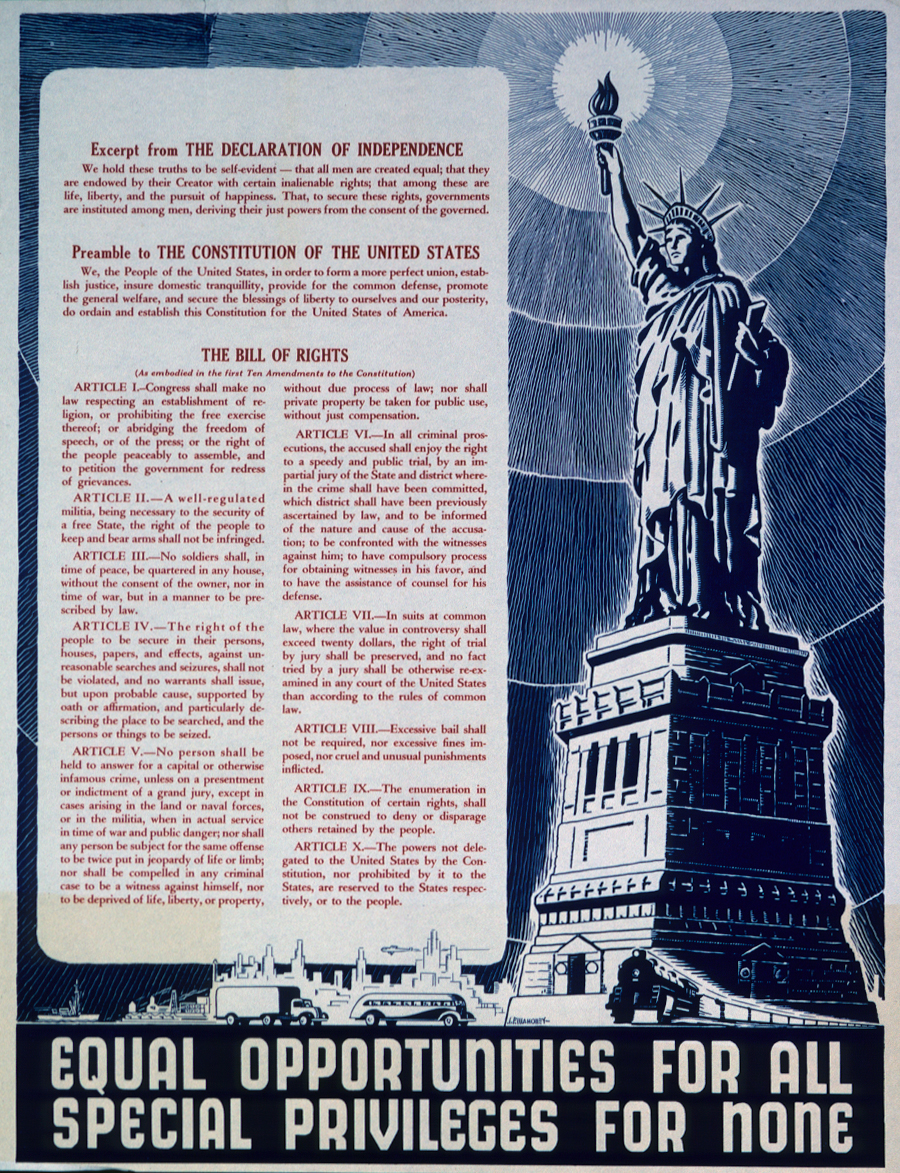
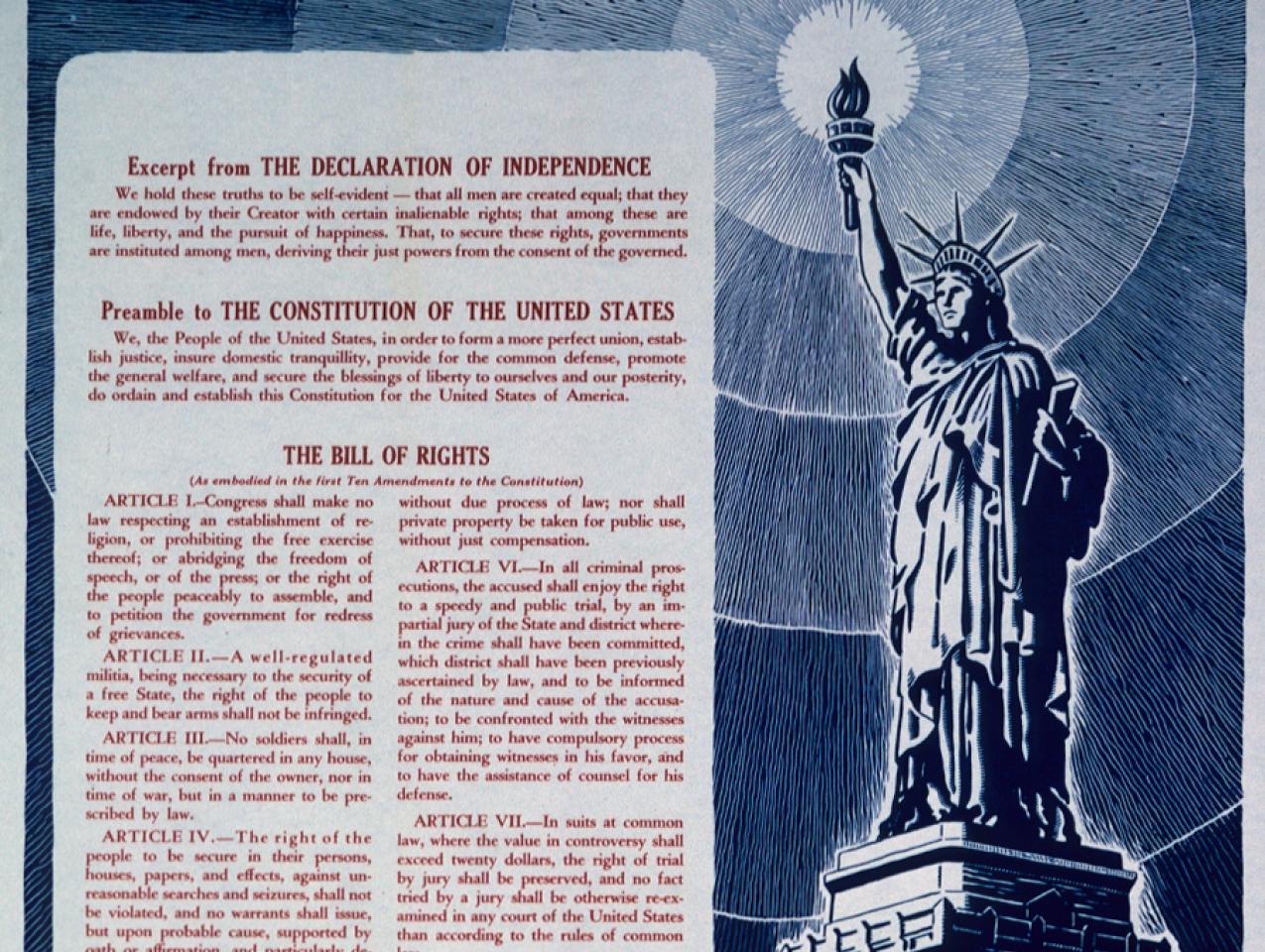
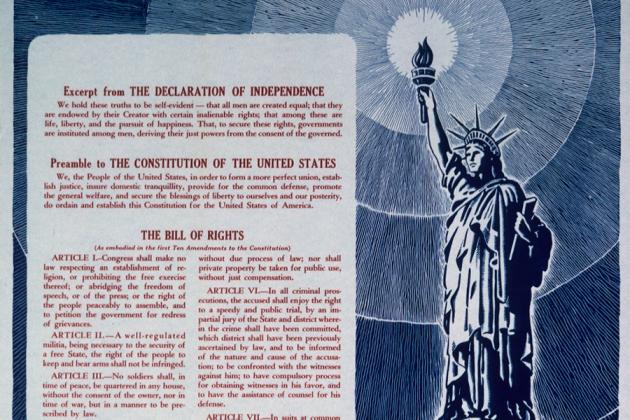
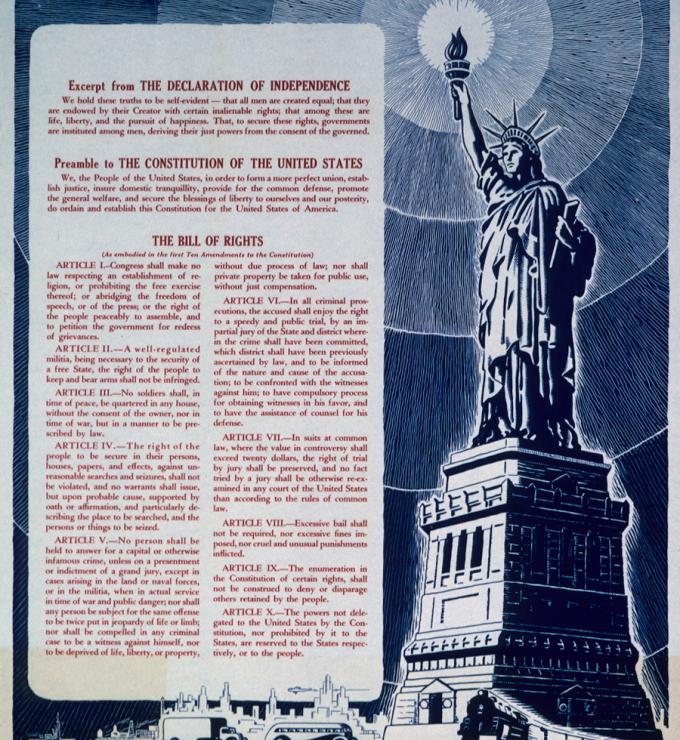
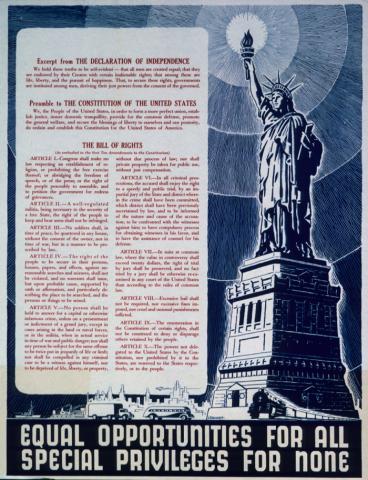
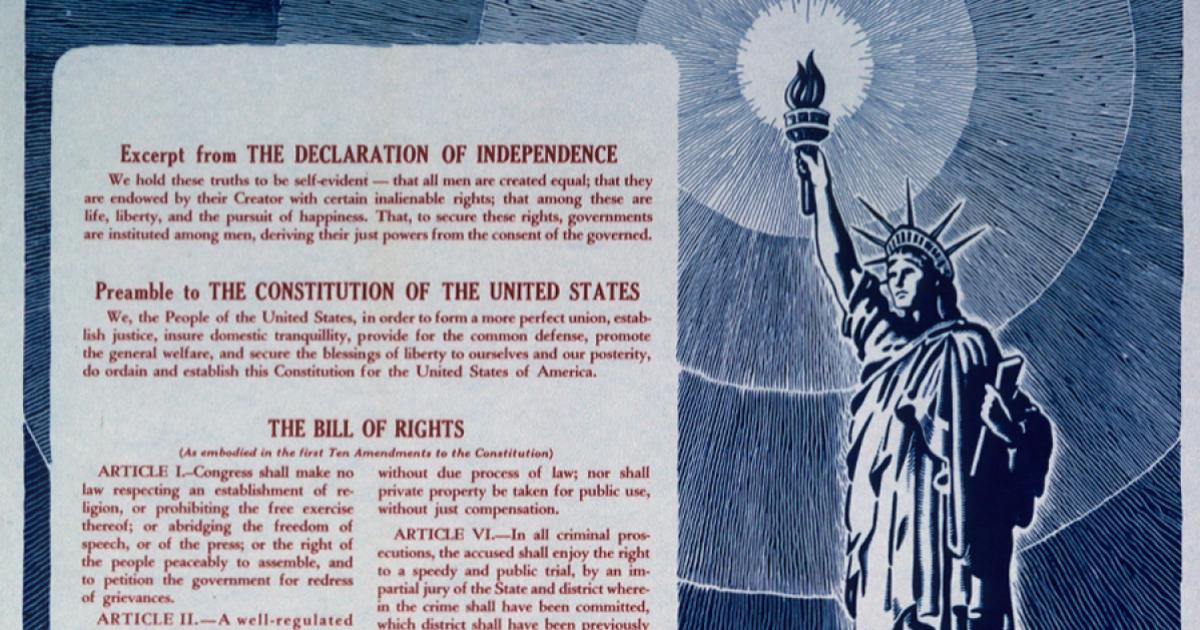
Though hidden from public view hundreds of miles from Washington, the spirit of the Declaration played an even more powerful role during World War II than it had in the Great War. Appealed to regularly by opinion writers and academics, the values of the Declaration were seen as justification for the extirpation of totalitarianism. One columnist asserted that World War II was a continuation of the struggle against tyranny first begun in 1776, writing “We reverently stand before the very Declaration they signed, and as we read it, paragraph after paragraph, we see that every single right for which they struck is jeopardized by Axis despots.” When it was brought back to the Library of Congress in the fall of 1944, a potential Nazi attack no longer a threat, Librarian MacLeish organized a solemn reinstallation ceremony on October 1, with the Declaration’s shrine surrounded by an honor guard of U.S. Marines. There the Declaration would rest until December 1952, when it was transferred to a new shrine in the Rotunda of the National Archives, where it has remained since.
A fuller account of the journey of the Declaration of Independence during World War II, including a secret return to Washington in the midst of the war, can be found in National Treasure: How the Declaration of Independence Made America, available now from Simon & Schuster’s Avid Reader Press.
Michael Auslin is the Payson J. Treat Distinguished Research Fellow at the Hoover Institution. He is the author of National Treasure: How the Declaration of Independence Made America, from which this essay is adapted.

