


Research
As a policy-oriented enterprise steeped in academic tradition, the Hoover Institution seeks to deploy its unique intellectual resources toward practical and timely applications, focusing on peace, personal freedom, and safeguards to the US system.
Featured Research

Essays
Beyond New START
Introduction
Nuclear weapons appear in almost any analysis of global strategic issues. Currently, they have become promine

Working Papers
How Much Do Public Employees Value Defined Benefit Versus Defined Contribution Retirement Benefits?
Abstract: We survey public employees across the United States about their preferences regarding retirement plan options, and in pa

Articles
2022 Survey Of Investors, Retirement Savings, And ESG
Older investors who rely on retirement savings to pay for living expenses are largely opposed to ESG initiatives and unwilling to suffer financial
Articles
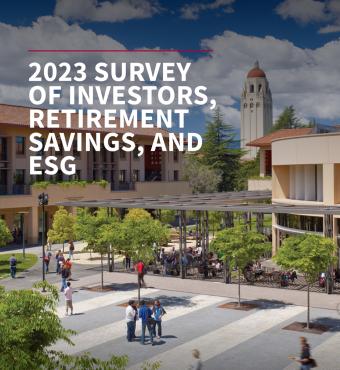
2023 Survey Of Investors, Retirement Savings, And ESG
Support for ESG falls precipitously year-over-year, particularly among young and middle-aged investors.
Older investors continue to overwhe

Articles
2024 Survey Of Investors, Retirement Savings, And ESG
Sentiment toward ESG continues to sour, with investors in a new survey expressing less concern for environmental and social issues than one year ag
Key Focus Areas
The Institution focuses on the application of its research and scholarship to address the most pressing issues affecting our country today.
Explore Research Teams
As a policy-oriented enterprise steeped in academic tradition, the Hoover Institution seeks to deploy its unique intellectual resources toward practical and timely applications, focusing on peace, personal freedom, and safeguards to the US system.

Topics
America continues to grapple with a broad set of complex policy challenges relating to the future of the nation’s security and prosperity; its citizens’ access to equal economic opportunities; and the resilience of its democratic institutions. In keeping with the Institution’s mission to be on the cutting edge of research and analysis, Hoover adapts its deep and talented team of scholars to help support the development of clear and actionable policy solutions that can enlighten and inform public officials at all levels of government, as well as society’s other important stakeholders.
Explore the Collections of the Hoover Library & Archives
The Hoover Institution Library & Archives holds more than one million volumes and over six thousand archival collections documenting war, revolution, and peace in the twentieth and twenty-first centuries.
Publications

Published Scholarship
Cutting edge research and analysis from Hoover scholars to support the development of clear and actionable policy solutions that can enlighten and inform.
- Featured
- For You
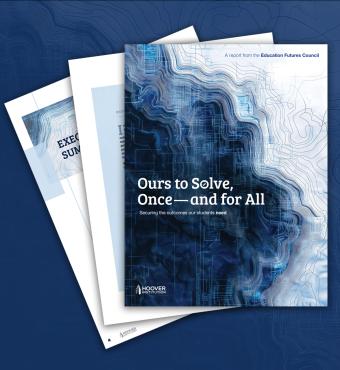
Education Futures Council Unveils Report ‘Ours To Solve - Once, And For All’ Highlighting Path To Revitalize Public Education In America
The Education Futures Council (EFC) has released its report, “Ours to Solve, Once - and For All,” to address the public education crisis in America. The report outlines a new framework for revitalizing public K–12 education across the nation.
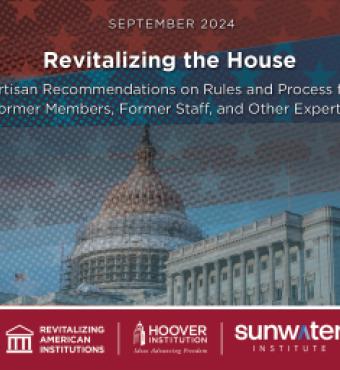
Revitalizing the House: Bipartisan Recommendations on Rules and Process
Our Constitution has endowed power to the American people by empowering Congress, especially the representatives closest to the people—the members of the House of Representatives. To revitalize the House and reinvigorate our democracy, our bipartisan task force recommends these reforms to House rules and procedures, both to re-empower individual members and committees in lawmaking and to facilitate participation in a democratic, deliberative process.


What is MyHoover?
MyHoover delivers a personalized experience at Hoover.org. In a few easy steps, create an account and receive the most recent analysis from Hoover fellows tailored to your specific policy interests.
Watch this video for an overview of MyHoover.
Forgot Password
Login?

Explore
Edit Filters
Refine Results