
Articles
How One Lawyer Freed Thousands From Castro’s Cuba
James Donovan proved that patience, respect, and even a fishing rod could accomplish what military force could not.
October 16, 2026
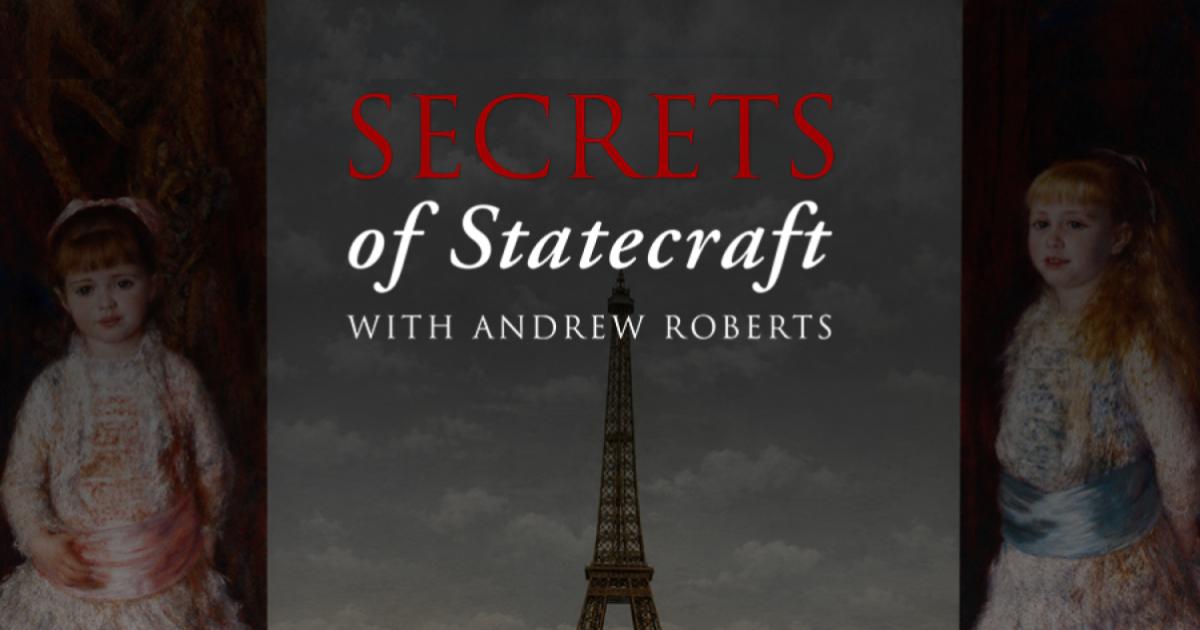
Catherine Ostler joins Andrew Roberts to discuss her new book The Renoir Girls, which unravels the extraordinary true story behind Pierre-Auguste Renoir’s famous portraits of the Cahen d’Anvers sisters — a tale that stretches from the glittering salons of Belle Époque Paris and the fury of the Dreyfus Affair to Nazi-occupied France and Auschwitz concentration camp. Blending art, aristocracy, scandal, betrayal, and survival, Ostler reveals how one wealthy Jewish family became caught in the violent currents of French anti-Semitism, while the paintings themselves survived war, looting, and exile to become silent witnesses to one of Europe’s darkest centuries.
Recorded on May 8, 2026.
- Catherine Osler is a journalist and former editor and author of The Renoir Girls, A Hidden History of Art, war and Betrayal. Catherine, at this time of a recrudescence of antisemitism, your book could not really be, be better timed. It's called The Renoir Girls, A Hidden History of Art, war and Betrayal. And of course, it set in that, in that period in which the Dreyfus affair really came to dominate the life of, of French Jews and others. So what were the conditions in France that laid the ground for the Dreyfus affair? Explain what it was.
- Well, first of all, the, the, the d dr for Affair itself, as many of your listeners will know, was a very sort of peculiar case that blew up France for 12 years, in which a piece of paper referred to as the Borderer was found in a bin in the German embassy. And they went on a sort of, this piece of paper was covered in sort of troop documents and artillery notes about artillery, and was written to one of the German diplomats by somebody in the French Army. J Captain Alfred Drefus is convicted of treason for writing this on false evidence because he is a Jewish officer. And it turns into the most sort of horrific saga in which almost everyone in the world, other than half of France can see that he's innocent and that he's been set up. But the origins of this lie in a sort of, kind of a gathering storm of French antisemitism that had led up to 1894 when he was arrested France, the Catholic church in France had a longstanding sort of prejudice against the Jews, but France has become by then a republic. We will go into that a bit more later. But the immediate triggers for this sort of frenzy of the 1880s and the 1890s were a series of financial scandals, all of which got blamed on the Jews and the, and the assassination of the Czar in St. In St. Petersburg. Two things happened really. One is there was a perception that the Jewish immigrants had money, more money than everybody else. And Paris in the 1880s was the richest and the poorest place in France. And to go along with this idea of the French, their very sort of prominent French banking dynasties was the idea that immigration was also, and jobs were also going to the Jews because the assassination of the Czar was a group called the People's will Claim Responsibility. And in this, there was a small Jewish element, and this element got scapegoated for the assassination. And the pilgrims in Russia started, and it's estimated that of the 4 million Jews then living in Russia, a third of them left, and a vast number of them came to Paris and moved into the, so in French society there was, if you could sort of combine annoyance at the rich and annoyance at poor immigration was all sort of heed together as the Jewish problem. In addition to this, we have the, the collapse of the Catholic Bank, the Union General in 1882 was pinned completely unfairly on the Rothschilds. They thought there was a perception in the financial community that they didn't want a Catholic bank to survive in France. In fact, it was just mismanagement. Then in 1886, a writer called Eduard Dral writes a track called La France, in which he blames the Jews in France for every conceivable problem. And this starts as a pamphlet and becomes an enormous bestseller. So French society is already sort of soaked in antisemitism in 1890, there's another financial scandal, the bearing panic starts in London. They've overinvested in Argentine securities. Everything in France is about to go bust. They are saved by consortium of bankers. Instead of gratitude, the, the sort of resentment kicks in again. And then there's the Panama scandal. So you have incident upon incident in which reasons are found to be annoyed with the Jews. And then along comes Dreyfus
- And talk us through the Dreyfus affair, and especially its impact on French Jews at the time.
- Well, so the Dreyfus affair could have been, or was, was the first trial of Dreyfus was heard in, it was a court martial and it was heard in secret and he was convicted. But people very quickly began to realize that the evidence was shaky. And Frances Jews and indeed everybody abroad started getting wind of what was going on, including Queen Victoria who was writing about it. And it became an, it was sort of international scan, international scandal as sort of miscarriage of justice quite fast. But the French Army had decided to make spectacle of Dreyfus. And they had done the, although the trial was in secret, the punishment was very public and they got him out. They did this sort of bizarre, almost sort of campy theatrical event where they stripped him of his honors and his sort of dignity. And the night before they took his uniform, they pulled off all the insignia and then they sort of sewed it back on again very lightly. They took his sword and they broke it, and then they sort of welded it back together very, very lightly again. And then, so when he was taken out in January, 1895 into the military academy in Paris, the Sergeant Major came up, ripped apart his uniform in front of us, baying crowd of drunk Frenchmen and journalists in the Army, and smashed the sword over his knee. And everybody rolled death to the Jew. So they turned it into this sort of massive sort of spectacle of horror, which can only remind one of the sort of blood, thirstiness of the terror after the French Revolution. Then he was sent to, sorry,
- No, carry on.
- Yeah, then he's sent to Devil's Island where he's put in a sort of cell with ants and insects crawling all over him, the most horrific punishment. But the Germans, of course know that he's innocent because they know who their spy was. Now, as it happened, somebody in the German embassy was having a homosexual affair with somebody in the Italian embassy. And so the Italians knew that he was innocent. And then the Italian embassy is very sympathetic to the French. So word starts going round that this is a setup and it leads on to a second trial by which time more evidence has come out. And he's obviously innocent, but outrageously they find him guilty again, but they try and fudge it by giving him a pardon. Meanwhile, France has completely divided itself into dra FALs and anti dra facades. The DRA facades are some politicians, writers, intellectuals, Jews and sympathizers who concede that this is a setup and is completely innocent. They are the writers and the politicians involved are become known as the intellectuals, which is an insult by the way. And then the anti-real are those who cannot accept or believe that the, the, the army or the French state can do anything wrong. And they will pin their colors to the mast and say, this man is guilty because the French army would never frame a person. And this has the most terrible effect, best described by Proust who says that in high society, for example, people who had been living very happily in Paris, buying up houses and art and holding salons, suddenly the doors shut and the temperature drops when they walk in. And the antisemitism affects every part of society.
- Devil's Island is in French Guiana, is that right? Yes, yes, yes, yes. And famous for famously depicted in the movie Papillon. It's a particularly horrible part of, of the world where people had been sent for some time, including by Napoleon. And once you, once you weren't there, you weren't really expected to come back, were you? But, but he does come back. Tell us about, tell us about his comeback and his,
- Well, amazingly he comes
- Back and how long does it take for him to be exonerated?
- Well, he's retried in 1899, and then he sort of pardoned, but he's been found guilty such as the drama of the affair that his lawyer Labour at the second trial, as he's walking into court, gets shot and the would be assassin runs off and is never caught. And he goes into hospital and then by, by some, another sort of miracle that he, two days later, this guy's back in court giving evidence, but by one vote it goes against him. And then he is pardoned. But he doesn't get really exonerated until 1906 when he's given the Legion donna and he's reinstated into the French army. He is not, but he's, his promotions are not backdated and they weren't backdated until they have been vaccinated now. And that happened in the last five years. So unbelievably
- Here, here in the last five years in the, in the 20th, in the 21st century. Yeah.
- Yes. Unbelievably, this is still almost hard to conceive of. This is still a live issue in France because, so mishandled was it by the French state who sort of sacrificed the reputation of the army in the state in the name of, and they overlooked, I don't know how a common justice, you know, the sense of fairness that we all have that has nothing to do with what the court found was abused for so long and so publicly did, did is, you know, it was still up for grabs this century.
- And what was its legacy? What was the legacy of the affair on France?
- Well, I think when we get into, it should have been the end in 1906, that should have been some kind of sort of resolution. But you know, it wasn't, it had gone on for so long and it had been so bitter that the strains in World War I, the Jews were very, the Jewish population of France was very keen to show their loyalty. And they fought alongside the French. And for one moment in that horrible war, it seemed like France was united against its enemy and that the divisions of Dreyfus had slipped away. By the time we get to the 1920s after the Wall Street crash and the rise of anti-Semitism in Germany, it there, there is a appetite for anti-Semitism that is more than willing, ready to sort of return. And one of the most shocking things that I, you know, came across in this book is how many relations of anti DRA for SARS were part of the Vichy government.
- Why was the, I know, why was division the sort of natural state of of France since the revolution? You have three different aristocrats, don't you explain
- That. Yes, so, so I think we've had the revolution in 1789. So you have the old regime aristocracy. Some of them have been guillotine, some of them have, many of them lost, have lost their shadows or their, and their furniture and their art. A lot of which is traded in the hotel drew in Paris, which is why Paris became the sort of century of luxury and commerce in the 19th century. As Walter Benjamin calls it, the capital of the 19th century. People wanted to go there partly for the shopping opportunities, partly because they had equal rights. So the revolution has bred this old aristocracy, some of which survives. Then Andrew, as you know, better than anyone, there's the second wave, which is the Bonaparte aristocracy. All the generals of Bonaparte, he's made them due, his marshals have been given DDoS and titles and they are not particularly in sympathy with the first lot who looked down on them because they're newer. And then you have a third wave, which is after the revolutions of 1848. You get the, the Jewish families come over. And in the case of the family, I've written about the Cayan Don verse. They are given titles by the King of Italy in exchange for loans during reunification. So they are the newest of the three aristocrats, all of which, you know, they sort of loathe each other. They intermarry, but the, they're not united as one class and fra nor is France United because you have Monarchists people who believe it's a republic anti-capitalist people who wish it was still a Catholic country. There are, it doesn't divide neatly other than in Dreyfus because there are already many factions who believe that this, the constitution which keeps reinventing itself should be something other than it is.
- And in the middle of all this, you have this VE family and they decide they're a couple of of very rich people. They have a beautiful house in the avenue. They have a, a famous song. They're charming, intelligent people, intellectuals to use the insulting word, or at least he is Louis is, isn't he? And, and they're connected to the other big fam Jewish families, the Es and the Kondos. The Rothchild, of course, yes. And and your, your book is framed around a painting. Tell us about that.
- It is, well the mother, actually, Louise who was born Louise de more Pergo in Triste was also a great intellectual. She was brought up in a family of sort of poets and linguists and she was known for authors novelists would come to her and get 'em to read their proofs. She always had, her salon was, was sort of literary and musical and artistic one. But she is a very sort of glamorous figure who's been married off when she's very young in an arranged marriage to this fellow Jewish family. And she starts having an affair in Paris with Charles Arue. And Charles Arue is an art critic and the editor rather brilliant editor of the Gazette de Bos Art, which is the most important art journal in Europe at the time. He's five years younger than her. He's rather sort of handsome, redheaded, bearded figure. And he is also the younger son of a Jewish banking dynasty. His older brothers are the banker, so he doesn't have to do it. So he has the freedom to be an art critic and he meets him in Paris. And he,
- Sorry, and also just about him here, he's also yes, a proust's model for Charles Swan, isn't he?
- He is also Proust. Yes. He's a great friend of Proust and he is the model for Charles Swan, though Louise and Swan stroke of free seed start their affair. And Renoir has, who is at this point a sort of struggling artist. He's in his late thirties and he's had a few successes but not enough money to live on. He's fallen in love. Bt dad doesn't think that he can get married and he is seeking out portrait commissions. And Charles Rei promises to introduce him to people who will commission him, which he does. And one of the people he makes commission him is Louise, his mistress. So first of all, in 1880 he paints the oldest daughter Iran in the garden of the house in Avenue 10. It's a beautiful picture of an 8-year-old girl with rippling red hair and a blue ribbon against a sort of leafy background, a sort of beautiful impressionist. It's hard to describe now to our sort of eye that's become so acclimatized to impressionism how avant-garde this picture was. Because everything before that looked much more like a photograph. It was very neat lines and sort of classical portraiture. But this picture they love and the next year they're gonna commission another one or as Reir hoax two because there are two more daughters. And then it starts getting mysterious because instead of commissioning a picture of each child, they commission one of two of them together. And Renoir is furious and disappointed because he thought he was gonna get double the money and he's only gonna get half of it 'cause it's one picture. So these two little girls, white lace dresses, one in blue sat in sash and the other in pink come downstairs and they are painted inside this house. I always think because they were so little, they were gonna misbehave and the garden and they are against gilded furniture and carpets and you use all the richness of the Bella Pocket is in this painting and they are very sweet little, they're holding hands. And the older sister looks a bit bossier than the little one. And the little one's got a feet blade. And he paints this beautiful picture of these two little girls. They looked like two little dolls. In fact, there was a doll brand in Paris at the time called Jumo. And all the girls in Paris were crazy for it. And if you get a 19th century jumo doll, it looks almost exactly like the face of Alice. But the parents did not like the picture. And it is very mysterious to know why a portrait is many things. It's the work of art, it's in itself, it's also a representation of someone. So we don't know because we don't have a photograph of them at that exact age, whether they felt it didn't look like one of them. It's very large, it's much larger picture than Aen. I have a feeling. But there is also quite an interesting bit in Proust where the Duke of Antes is talking about Charles Swan, a fui. And he says he made my wife buy all these awful dobs from this artist called Sair, who is pro's version of Renoir. And she doesn't like them and I don't like them, but we keep being landed with them because of this man. And I don't know, I always have this idea that the husband was fed up of the wife's boyfriend forcing her to commission art that he didn't like so well, he would
- Great. You would be, wouldn't you? Yeah, yeah.
- I think he's feeling like a mug at this point.
- When Renoir was something of an anti-Semite himself,
- He was his son Jo Reir, the great film director described him as a cork in the current. So whatever people were feeling at that time, he would go along with, so it, it's not a competition. There are more impressionists, the impressionists as a group are a sort of very sort of efficient test case for Dreyfus because they were completely divided by it. So Manet and Monet were Drer Sars Dega. And Julie Ma Dega particularly was a vicious antiar. He stopped talking to Bizaro who was Jewish and Reir was sort of in the middle. So he'd say, I don't wanna do any more work for the Jews. They don't pay me well enough, they don't pay me on time. And he, but then, you know, he retained one of his Jewish dealers and they were still his friends. So he was a sort of casual anti-Semite of the kind of, of a, he wasn't a vicious anti dray facade, he would just sort of try to stay out of it. He didn't really have an ideology.
- Why did you choose to write about these pictures and this family?
- Because I, for two reasons. One is I came across the, a mention of the, these, these people in the hair with amber eyes Al's great book about his family in which he describes Charles Fui, his distant relative, collecting it as Suki with his mistress who was their mother. And he mentioned that Renoir painted these girls. I looked up the picture, I was very, thought it was so beautiful. And then I was horrified. 150 pages later there's the throwaway, what's not the throwaway line, but a short mention of the fact that one of them died in Auschwitz. So it is a book that started with a beginning and an ending and I wanted to fill in the middle. And then a few years after that book came out, some local French historians in the Lois did a very good, very exact sort of study of how exactly the people in the village Rinat had been sent to the transfer camp outside Paris that sent French citizens onto outfits. And they came up with this blow by blow account of what happened. And horrifically, I realized that she had been betrayed by the local mayor, the Marco Dee, who had known her as a child. So she had been in hiding, she was nearly 70, she was living in a cottage. She wasn't a sort of resistance member or any threat to anyone. And this man who'd known her family for generations kept filling in forms saying, I know she's got Jewish ancestry. And he was a, and he ensured her murder in outfits. Another reason was that I've always been enamored by this period because of Proust. And because many years ago I met in Paris, a woman through the man who then became my husband. And she was very old and she lived in this beautiful flat in the il and she died a few years later. And we went out for dinner and she said Marcel Pro was my godfather.
- Oh wow.
- Yes. And she was called Princess Priscilla Sco. And her father was the model for San Loop who's sort of Marcel and Narrat eraser in Proust's aristocratic friend who's sort of slightly in love with who's the, and she doesn't re she didn't remember him. He died when she was two. But he said when she was born, he said, in this little girl, all that we now know continues. And I had that wonderful moment that I know you've had Andrew, where you think you can almost touch the past.
- Yeah, yeah. What was the effect of the Dreyfus affair on, on the three sisters, the three Karen girls.
- So if you were a woman, you were both like their mother, a sort of a kind of piece of bartering equipment where you could be married off to another dynasty in order to sort of firm up relations, which is what, what the rothchilds like to do. So the older sister was that she was married to a fellow Jewish bank who was a great friend of the parents. He was 12 years older than her. They weren't in love and she was very young and they had two children, but they weren't happy at all. And then Dreyfus happened and she was even more unhappy and she left him converted Catholicism and ran off with his horse trainer who sort of passed himself off as an Italian count. And all three sisters left behind their Jewish roots and married out as it were. And we don't know for sure, but people who converted during that. There were many more conversions outta Judaism during Draper's, I mean obviously. And these women became, one of them became a British, an English woman who was later described as more English than the English. She married a soldier called Charles Townsend. And Elizabeth, the girl in the blue sash, married a succession of slightly sort of inadequate French aristocrats. She the first one, Jean de Ville. So, but within a short period of time, these three Jewish sisters are contest on Pierre contest force Phil and Mrs. Charles Townsend. So they have completely left behind the Jewish ancestry in some ways.
- And by the time of the First World War, I know Charles Townsend fights very bravely in the first World War, but what was the state of France in the first World War for this family?
- So for this family, they had, by then, the parents had bought at the height of Dreyfus, they bought this enormous shadow outside France. It was what we would always call a money pit. It was falling down, but it had a magnificent ancestry. It had been, Madam de Pompadour had lived there for two years and they did it up in what they considered the most sort of loyal style. They copied statues from the gardens at Versailles and put them in the grounds. They built a whole sort of floor on the top. It was a sort of magnificent thing. But by the time we get to the First World War, they, every man in the family fought in the First World War. They are loyal. Most of 'em have been born there by then. I mean the, the patriarch Louis wasn't, he'd been born in, out outside France, but all their children have been born in France and they consider themselves French. And so chil children, grandchildren, cousins, sons-in-law, they are in the army or the Air Force or Charles Townsend who's stuck over in Mesopotamia. And the daughters equally are all sort of nurses. So the, the shadow sort of stables become a hospital. And so everybody's fully involved in the, in the war effort.
- And but that doesn't save them, does it Being patriotic, brave, resourceful and so on, that doesn't help ultimately when the only thing that you are judged on basically is your race. So tell us what happened to the three sisters in the second World War?
- So, so the first World War, they go through this, it doesn't end well. Even the sonnie commander who's young, who's the son of the older sister is shot down over the western front. There's a terrible period where everybody's writing to his father saying, well, somebody else was shot down and they've just turned up and they're still alive. And then you have this agonizing weight and then it turns out that he's dead. So she's left sort of heartbroken. Her daughter is still alive. And the, by the time we get to the second World War, Charles Townsend is dead, the parents are dead. The three sisters are all sort of on their own and widowed. And their children have married one of them, Alice, who is now an English woman, is living in England. She her, comes to France to take her grandchildren who are eight and 12 outta France as it falls to the Germans. She, her, both her son-in-law and her daughter are in the Belgian Secret Service. And she doesn't want 'em to be in France because they've got Jewish ancestry. And so she embarks on this remarkable journey outta Bordeaux in Operation Aerial, the Churchill second miracle of deliverance after dunk cook. And she finds these two children, one of them's got a broken leg, they're eight and 12, and they sleep in a ditch for two nights and they get themselves onto what they think is a Dutch ship to come to England. A British sailor onboard. The ship realizes it's actually been taken over by Dutch fifth columnists. And it's being in sailed to Hamburg. He jumps off the ship, gets on a British boat, goes back to Bordeaux, which is about to be overrun by the Nazis calls the British Navy, and they come and rescue the ship, tie up the Dutch and take it into fud. So this is a crossing that takes four days and, but they survive.
- What an extraordinary, extraordinary
- Story. It's an extraordinary story. Yeah. And I got told this with an open mouth by the now 94-year-old Marina who in South Kensington, who is still alive joyously and was an 8-year-old girl at the time.
- How fantastic the
- Older brother. Yeah. You don even know, I've gotta tell you about the older brother. 'cause you'll love this. The older brother who was 12 fell in love with the Royal Navy at this point, and he lied about his age. Four years later, he came back on Juneau Beach when he was 15 as part of the Con d Day liberation. Yeah,
- How fantastic. I
- Know.
- 'cause the stories in this book are superb. It's a beautifully written book. And you'd write about the, the Bella Park with the balls and sandals and races, regattas operas and the social life and yeah. And yet it also ends in Auschwitz. I mean, it really does have everything. This, this book. What happened to the,
- The other two sisters? Should I tell you what the other happened to the other two sisters or have we not got done?
- Yes, and and but don't tell us what the, there's a, there's a big reveal in the book, which we we're not, I'm not gonna tell you that gonna to tell our, our listeners because we hope obviously that they're going to, to enjoy the book themselves. But yes, tell us what, tell us what happened to the two sisters and then, and then I wanna hear about what happened to the paintings.
- Paintings. Okay, so Ien, the older sister survived in Paris. Now, when I went into the Rothchild archive, there were letters flying between the other siblings and they all felt she was a collaborator and they were all appalled by her because she inherited, tragically her daughter and son-in-law and two grandchildren were all arrested and they all died in Auschwitz. And she inherited all the money and became a sort of gambler in the south of France. Now this is one of those things where you can say she had managed to procure herself as certificates to say she wasn't Jewish and she lived with her daughter by her second marriage. And it's one of those things where you can say, what would we all do if we had to survive? And there was a lot of bitterness in the family about it. The other sister had, who I mentioned earlier, was in this rural France. The mare signs a piece of paper January, 1944 when she must have thought she was safe because it was so late on the knock on the door comes and she is driven off to ancy where in outside Paris. And then she is sent onto Auschwitz and she either dies on the way or when she gets or when she gets there. So a heartbreaking number of people in this family died. The brother, there were two brothers. One had already died, and then there was one brother who'd already gone to South America, which is now the only place where the surname survives. Because he had got out in the 1930s, the pictures had an equally extraordinary fate. So the picture of was, had been given to her dau daughter, Beatrice Roch, who dies in Auschwitz. But her husband sent it to the Shadow de Shamble in the noir where the Louvre sent pictures for safekeeping. And anybody with a big collection sent, sent as there to, it was looted by Herman Goring's men. And they took this picture, Leon Ra Reinhart wrote to the authorities to try and get it back. And appallingly it may have been this letter that made the authorities turn on the family and arrest them. He said quite fairly, my wife's relations and my relations and my wife's wider family have given so much art to the state that be louv has had to build an extra wing to fit it in. Which was true. Couldn't you at least give us back this one picture? Because it means so much to us. They don't give it back. It gets sent to Germany and then it gets traded for a Florentine picture. And at the end of the war, it gets found by the monuments men as played by George Clooney in the film and sent back to Paris from Munich where it hangs in a gallery in a big show of returned art. And Aen goes in and sees it and says, that's me. And then embarks on the legal battle to get it back, which she wins. But she then makes the extraordinary decision to sell it, sell to a Swiss collector Emil Burla, who is both a philanthropist who built a wonderful art collection and an arms dealer who has sold weapons to the Nazis. And it is now in Zurich as part of the Burla collection, which is on loans, the Kuntz house, where it is the center of an enormous row at the moment. But as Switzerland examines its own supposed neutrality in the wall. And the other picture, Alice and Elizabeth Pink and blue is bought the picture of the father didn't like is bought by the dealer, the Jewish dealer, Gaston Bernheim DiUS. Now either because he knew what was coming or by some extraordinary stroke of fate, the chief curator at the Louv decided that a great exhibition of the treasures of French art must go on tour in 1938. And he packs up a hundred of France's finest paintings and sends them on this enormous tour of North and South America. So 1938 De La Cross Renoirs Monets, you name it, arrive and start going around Chile and Argentina. And this is one of the pictures. Then war breaks out and the American government say, well, clearly we can't send any of this back because it'll be stolen. And the picture is wrapped up and goes into a storage vault in New York for the whole of the Second World War where I always think it was in hiding itself and representative of the Jewish diaspora then in it sits there and it never comes back to France. It's sold in 1950s just as Gaston DiUS whose art that stayed in France has all been stolen. Many of it was never returned. He's lost all his money. His gallery is shut, and he makes the decision to sell the picture in New York. It's bought by a Brazilian tycoon who is setting up a gallery in Sao Paulo. And that is where it still is in an art gallery in Sao Paulo, where it is the most popular picture in the entire art gallery. And little girls dress up in party dresses and stand in front of it to have their photographs taken.
- And you went there to see it. How did you feel when you saw it?
- I felt incredibly moved. I think the magic of art to me, as I was saying about Priscilla Bsco in Paris is that time slips away. And you think there is the moment where somebody was standing there standing next to their sister, holding their hand, feeling a bit bored in itchy in their new party dress. And there's somebody else sitting there with their brush on the canvas wondering how exactly they're gonna get the luminosity onto that little soft cheek. And you are there and it's 1881 and everything else has dissolved.
- Catherine, tell us what book or or biography or history book or biography you are reading at the moment.
- At the moment, I'm reading a book called Seven Sisters by a American historian called Var Veronica Buckley. It's very interesting. It's about all the siblings who are the children of Empress, Maria Teresa of, of Austria, so the siblings of Mary Antoinette. And it is interesting to read about her as a sort of younger sibling rather than just as the Queen of France. And it also resonated with me, particularly because the women and the princesses in this book, they are sort of pawns on it's that expression. People have, it's they're pawns on a chessboard where all the pieces are scorpions. You know, everybody, everybody's being farted in marriage and swapped all the time and everybody behaves horrifically. And it's, it's interesting to think of the Habsburgs as like our royal family. They're both royal and a family. So I'm, I'm enjoying that very much.
- What about your what if of history, your counterfactual?
- Okay, I'm gonna go back to Dreyfus here because there's a French fake French cleaner who's also a spy called Mary Bastia. And she's going through the rubbish in the German embassy, and this is her job. And she finds this wretched bordero, as they call it, and it hasn't been ripped up very much so she can piece it back together. And she kicks off the Dreyfus of affair because she takes it to her bosses and they say, what is this? We can read it. So I imagine what if the German diplomat who had shoved that in the bin had just ripped it up a bit more and she'd ignored it, or he'd had a shredder or she'd been ill that day and someone else had thrown it away. If that hadn't been, if that hadn't happened and the Drefus affair would then not have happened and f France wouldn't have ripped itself apart for 12 years, but he, we
- Could, could never. But he, they did discover who really was the man, the traitor, Mr. Captain esi. And, and it did mean that they were able to, to, to plug that gap. Este Hasi in the end had to go into exile in England, didn't he?
- He did, but you know, it's an appalling thing to think Dreyfuss grandchild died in Auschwitz. You know, there is, I don't think he, in the end, justice was done, but I think it was done too late and after too much division
- And well, it wasn't done to Este, has he? Was it, I think a slightly better, if I can Yes. Go in the tiny way altar, is that Yes, the German attach attache, the, the German military attache uses a paperclip to attach to the document the name of Esther Hazy. That would've saved a lot of trouble.
- Yes. Okay, there we are. I'll take that.
- That's brilliant. Thank you very much. Okay. Catherine Osler, a journalist, former editor and author of the Renoir Girls A, his History of Art, war and Betrayal. Thank you so much for coming on. Secrets of Statecraft.
- Thank you so much for having me, Andrew.
- Thank you, Catherine. My next guest on Secrets of Statecraft is Hugo Vickers, author of Queen Elizabeth ii, A Personal History,
- This podcast is a production of the Hoover Institution, where we generate and promote ideas advancing freedom. For more information about our work, to hear more of our podcasts or view our video content, please visit hoover.org.
Articles
James Donovan proved that patience, respect, and even a fishing rod could accomplish what military force could not.
October 16, 2026
Videos
Fei-Fei Li, the “Godmother of AI,” speaks with Stephen Kotkin about her journey to the frontiers of spatial intelligence.
October 21, 2026
Podcasts
Hoover Institution fellow Lanhee Chen on why good policy so often fails politically.
October 20, 2026