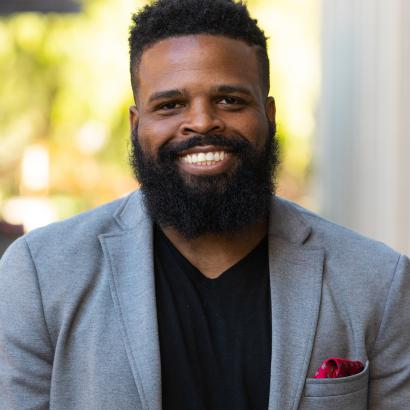
>> Mike Steadman: Welcome to Frontline Voices, a podcast brought to you by Stanford University's Hoover Institution, where we explore leadership, service, and real-world solutions to some of our nation's most pressing issues. I'm your host, Iron Mike Steadman, a member of the inaugural class of Hoover Veteran Fellows and a Marine Corps veteran.
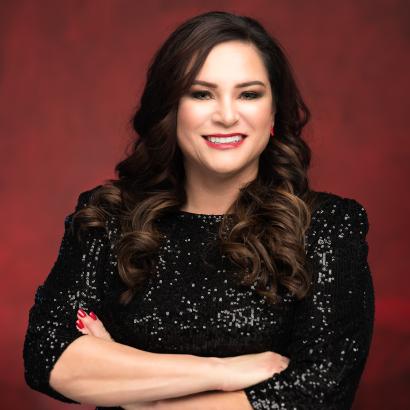
What happens when a 26-year army veteran trades the uniform for a microphone and finds healing and humor? That's exactly what we explore in today's conversation with Robin Phoenix Johnson, a fellow veteran and VFP alumni who developed the comedy-based mental health program that helps veterans and Frontline professionals reframe stress and trauma through laughter.
Robin shares her story of transitioning out of the military during the height of the pandemic, navigating identity shifts, and rediscovering her voice through stand-up comedy. Whether you're a veteran, a caregiver, or simply someone trying to stay afloat in today's chaotic world, Robin's story offers a refreshing human take on healing purpose and why we can't lose our sense of humor, especially when the stakes are high.
As always, I hope you enjoyed today's show and look forward to hearing your feedback. Robin, thanks for making time to join Frontline Voices. We had a podcast scheduled originally a few weeks ago. I know you all spent a few weeks since you've seen us record, but I was just a bit under the weather.
I wasn't myself and so we had to reschedule. But it was important for me to make sure I got you on this platform to share your story for a couple of reasons. Even before we just kind of went live, you and I were talking about pedigree and how certain places can feel intimidating because of beliefs we have about ourselves or where we come from and stuff, et cetera.
And with this program, it's important for us to have all voices represented, including those of mustangs, which hold a special place in the heart the United States military, which we're going to be talking about, and then also your work with humor and how it relates to kind of mental health and helping people navigate some tough challenges.
So we got a lot to unpack here and I'm just so happy you're here today.
>> Robin Johnson: Get into it. And I'm glad you're feeling better. You look great. Nice.
>> Mike Steadman: Thank you, thank you, thank you. So, Robin, please introduce yourself to our viewers today who are not familiar with you and the work that you do.
>> Robin Johnson: Why they don't know who I am? This is crazy. Hi everyone. No, I'm Robin Phoenix Johnson. Phoenix is just kind of a nickname, by the way. It's not like a real name, but I am an army veteran, part of the fourth cohort for the Hoover Veteran Fellowship program.
More importantly, I'm a mom of two very busy kids. They keep me running. So I'm basically an Uber driver, glorified Uber driver as a soccer mom.
>> Mike Steadman: Do you have a minivan?
>> Robin Johnson: I do. I have a Toyota Sienna xle. Yes, I am a loud and proud minivan.
I call it my Swagger Wagon.
>> Mike Steadman: Okay.
>> Robin Johnson: If you've ever seen this Toyota Swagger Wagon commercial, that is. It's hilarious. Just Google Toyota Swagger Wagon. It's actually what inspired me to buy the minivan. But the minivan's going away. This is the last year. I'm coming up on a milestone birthday this year, and I am going to buy myself a new vehicle.
So this is the first time in a decade to get a new vehicle. So back to this. Yep. So my real passion. I left the army after 26 years of service and found that my true passion is somewhere in the intersection of leadership and mental health and helping people navigate life with the use of humor.
That humor is more than just entertainment. That is also a superpower. And that's what I ultimately built my capstone about. And I will get into that later, but just felt like people talk about resiliency all the time, but it's not grit, it's wit that truly gets you through the tough times.
>> Mike Steadman: One thing I appreciate about Robin is, you know, I was part of the inaugural cohort of the Veteran Fellowship program. And so I know my fellow cohort members, you know, pretty intimately. We got to travel to the Republic of Georgia together, got to spend some time together and stuff, et cetera.
But as a program has grown, it's hard for me to keep up with all the new cohort members, you know, all the fellows over the years. But, you know, I think at one of the. We call them the fly ins, where we all kind of come together in D.C. you were super social.
You introduced yourself, and the Hoover team was like, you gotta. You gotta talk to Robin, you gotta talk to Robin. And so that's one of the reasons why I knew I had to get you on this podcast today, too, because this also gives us opportunity to just kind of learn a little bit more about each other.
I know I'm pretty visible. A lot of people assume they know what I'm do, but I'm generally curious in the work that you've done with your capstone. So. But before we get into that, I do Want to talk about your kind of background? Where were you born?
>> Robin Johnson: Well, I was born in Fort Lauderdale now.
Okay, so, by the way, I consider myself to be a master at escape rooms because of my being from South Florida. We have escape rooms in, like, every corner. I mean, we call them rehab, but very similar. But I I have to tell that joke. But I wasn't really raised in South Florida, so I grew up in Ohio and, like, on a farm or like in the country.
So not at all like a city, Miami day, Broward County girl. But I do have a lot of families still there, and I go back to visit, so there's a special place in my heart for Florida. But I consider myself an Ohio Ohioan.
>> Mike Steadman: What made you join the military?
>> Robin Johnson: I didn't want to live in Ohio the rest of my life. I love that I was from a small town. I think it taught me a lot of great work ethic. It taught me that giving a darn mattered. That showing up mattered, community mattered. Like, I. I feel like that was a really good foundation, but I wanted to see more of the world.
You know, I didn't come from a lot of money or affluent, so I felt like that was my best way to kind of travel, see the world, get an education, broaden my horizons, if you will.
>> Mike Steadman: And at what point did you decide to go to school and become an officer?
>> Robin Johnson: Right away. So I joined when I was 17, and my mom had to sign a waiver for me to go in at 17, and her condition assigning the waiver was that I would use the college benefit. What I didn't know is that I would do ROTC and become an officer.
I mean, I knew I wanted to be something more than just a private. And actually, I was at E3 twice, a long story behind that. It's good for character building. But I think I just always wanted to lead. I'm the oldest of four kids. I'm the oldest grandchild on both sides of the family.
I'm the oldest of, like, all the cousins on both sides. So I've kind of always inherently had a leadership mindset, or the eldest child syndrome, if you will. My sisters would just say I'm bossy. I say I have leadership skills, but they would just say bossy.
>> Mike Steadman: Okay, and then where'd you go to school?
>> Robin Johnson: The Ohio State University.
>> Mike Steadman: That's right.
>> Robin Johnson: That's right. You can't see it, but it's behind me on my wall, yeah.
>> Mike Steadman: Yeah. And how many years. So how many years had you served before you made the decision? I know you said right away, but did you go?
You didn't go right away. Right? You spent some time on active duty before you went to Ohio State?
>> Robin Johnson: No, I was in the National Guard. So they have a simultaneous membership program where you're in the National Guard and you can go to college. So that's what I did.
And I didn't go on active duty until I commissioned as an officer. So all my enlisted time was in the Guard. I never got to be a non commissioned officer because I got busted from E4 to E3. So I had to repeat. And that held me back some, and then I just said, well, I'm going to be a lieutenant before I ever make that back again.
So I just.
>> Mike Steadman: Yeah. And so then you did 26 years and then when did you transition?
>> Robin Johnson: 2020, I know.
>> Mike Steadman: Right in the middle of the pandemic.
>> Robin Johnson: Yes. My gosh. It was terrible. It was so anti-climatic. It was terrible to get. I got my DD214 emailed to me and they did.
The person who sent to me didn't even take the time to say thank you for your service. There was nothing in the email. It was just an attached attachment. And that was it. And I clicked it open and There was my Dhu14. No fanfare, nothing. Five deployments, 26 years of my life.
And it was like, next, see ya. It was very. Just. It was. I was a rough year.
>> Mike Steadman: Yeah. I got my DD214 in 2015. It was May. April or May of 2015, whatever. Freaking left the base the next day. You know, I was already living off the base, but I remember grabbing my DD214 actually.
Then I remember leaving Camp Lejeune literally the next day. So it is anti-climatic, y'all, which is why I do think at times a lot of vets struggle when they transition. Because, you know, you spend all this time kind of fighting for your country, doing a good fight, and then there's really no kind of grand applause.
You know, maybe if you retire, you have a retirement ceremony or something like that. But for the most part, it's like people were just kinda, yeah, not in COVID, people just kind of kick back into the civilian world.
>> Robin Johnson: Yeah. You know, I call. I always say that it was like an amicable divorce and I felt like I was getting divorce papers when I got my DD214.
Like they were finalized. Like I was kind of done with the army. It was done with me. Like we were just at a good place where we were just going to go our separate ways very nicely. And I. I still to this day call my retirement pay my alimony, like just like as a joke.
>> Mike Steadman: Yeah, it was just time. It's just time. You're entering a new season of life and it was time to transition out. How did you start to. What was the origin stories of your kind of work with humor? Was it informed by this kind of transition and everything that was going on at that time?
>> Robin Johnson: No, I've been a consumer and lover of comedy for a long time. I remember when I was little, my mom was watching the Tonight Show and she was just laughing really hard. Her shoulders are shaking and the really belly laughing, and her face was so lit up.
And I remember even back then I thought, wow, I never see my mom like this during the day. She's stressed, she's like, she's got chasing the kids, she's working multiple jobs. Like, I just didn't see that side of her and then. But I did see that when like she was watching the Tonight Show.
So then I decided that I was gonna try to make her laugh and goof off and be funny. So I really started being funny, like probably around 7 to intentionally to like kind of get. Get her attention or her probably some validation, you know, from my mom. I'm competing with three siblings for attention.
So that was the start of it. And then I had that initially, but then it's like somewhere along the way I lost it. I lost my sense of humor, my funny Bo naturophied. I just, I don't know if it was my assignment in the Pentagon or where I was.
It just sucked it out of my soul. But I just started being overly serious, I couldn't even laugh. So I wanted to reconnect and find that person when I retired. You know how you go through a little bit of an identity crisis? You're trying to like figure out who are you?
Like, I'm not Lieutenant Colonel Robin Johnson. Who is this person apart from the uniform and the ring? So in that exploration time, I remembered, God, you know, you used to be funny. What happened to that girl? Where is she? I liked her. And so I started to explore comedy again.
Took a course through Armed Services Arts Partnership, which I highly recommend. ASAP. ASAP.org if you haven't heard of it, they have like storytelling comedy bootcamp. And I just really fell in love with comedy, yeah.
>> Mike Steadman: And how did you make the connection between kind of comedy and healing?
>> Robin Johnson: Now, that's a bigger jump. So first it was just like a hobby. I was just doing comedy. For me, just a side hobby. Like somebody would do golf or maybe take martial arts or tennis. Like you just have something you do on the side for fun, escape, you know, the day to day.
That's all it was. And then it happened to be that I started helping to do some caregiving for my mother in law who was diagnosed with stage four cancer. And I used to try to make her laugh and joke around and even like her care, her larger like medical care team tried to make them laugh at appointments.
And then I would make other patients around who were going through the same Thing laugh. And the last thing that she said to me before she passed away was thank you for making me laugh. You need to do this for more people. And I just felt like it was my.
All of a sudden I had this calling, this charge to a new mission statement. And I had been researching about it anyway just in her situation. I was researching like Patch Adams and the, the science and all that behind it. And I joined this association for applied and therapeutic humor, a.org which is behind me.
And they had, they were offering a three year, they offer a three year program where you can get your certification to be a certified humor professional. So that's somebody who is certified and trained to use humor in therapeutic settings. It doesn't make you a clinician, you can't treat patients, but you work in partnership with clinicians to deliver humor based programming.
So as part of that program you have to do a pilot or that pilot like a capstone project, kind of like Hoover, you have to do a capstone project. So mine was I'm going to create a humor based therapy group for my local va. So at the Ralph Johnson VA center in Charleston, South Carolina.
They were nice enough to let me just pilot it there and I just kind of created something. Basically the idea was let's reframe the way we see our problems and stressors through the eyes of a comedian. Think like a comedian instead of thinking through your normal len. And it, it was a little rocky at first because I really didn't know what I was doing.
But it grew into being the most well attended group locally and getting a lot of great reviews and response from veterans and seeing their progress. And so now we're still doing it. Now it's several years in and that's what I brought to Hoover because I wanted to do more than just my little local va.
I wanted to figure out how to scale it and help more veterans.
>> Mike Steadman: So that's your new purpose now is using the power of comedy to help more veterans and help more people just kind of heal in general?
>> Robin Johnson: Yeah. And not just veterans. I've even like broadened it now because like there's such burnout and compassion fatigue in the healthcare industry.
So helping just those at risk or overly stressed career fields, I mean veterans is where I start and that's where my heart is because that's where now I come from. But there's lots of industries that's high stress and so I'm really looking at nurses, doctors for police, law enforcement.
And so, bringing that in is different. Like, they get entertained and they get educated. And so it's a two for one. Nobody wants to sit in a conference or train. That's boring. But if you can have a stand up comedian deliver like this really practical way, like to give you tools in your tool bag for, like, how to be more resilient, that's great.
And it's also great for leadership. So I've also been opening up and teaching this at like, for MBA programs, because if you can be, there's a lot of leadership lessons from being a comedian, reading the room, thinking on your feet, being very present in the moment. Those skills are invaluable.
>> Mike Steadman: Yeah, I think it's funny, too, because I was having a conversation with some friends lately. I feel like there just feels a seriousness. I don't know if it's just because we're getting older now, you know, life is kind of starting to beat people up a little bit more.
But I have law. I've seen, you know, people that I've kind of grown up with kind of start to lose that spark and lose that twinkle, you know, And I'm just more the person, you know, you saw, you know, my personality. I'm like, listen, every day ain't a given.
You know, every day I write in my journal, and I say that I'm thankful for waking up to see another day. That's the first thing I write. And so, like, I do try to be a little bit more bubbly in personality. I'm a social person. Like, I just kind of can't help myself.
But I do notice a lot more people seem to be just wound kind of so tight. And I just want to be like, man, relax, smile some.
>> Robin Johnson: It's like a social battery. I mean, I feel like as I've aged, my social battery gets weaker, you know? So, like, it used to be, because I am an extrovert, I love being around people.
Used to be I could go to an event, work a room, be around people, and I would leave there feeling energized. I can still do that and be happy and energetic, but I leave exhausted.
>> Mike Steadman: Right.
>> Robin Johnson: And I don't know if it's perimenopause, you know, age, if it was an effect of COVID and becoming in that time, like, not recovering from being isolated for that period of time, or that I'm so much on social media that my attention span and being present is such focused work.
It takes a lot for. I have a little bit of adhd, so it's a lot to stay focused for me. I mean, I'm like, squirrel.
>> Mike Steadman: Yeah.
>> Robin Johnson: You know, so it's. This is. Yeah. And so this exhausting when you're concentrating. Like, okay, I'm talking to my. I'm here.
But God forbid, somebody I know walks by, goes, hey, Robin. And then I'm like, I've. And then I've lost myself in that conversation.
>> Mike Steadman: Yeah. I had a chance to watch one of your TED Talks, right. And you mentioned this line that, like, laughter is the Heimlich maneuver for the brain.
Can you talk about that a little bit?
>> Robin Johnson: Yeah, so if you were choking right now on something, your body would know what to do? You would just expel the object. You would start to cough and it's gonna try to do whatever it can to clear the airway so that you can get oxygen.
But if you couldn't do that, then you would give the international sign for choking. Somebody around you would give the Heimlich. If you're there alone in your studio, you'll lean over your chair, administer it to yourself. And so there's a protocol, there's a process. But we know that depression is like just negative thought patterns and cognitive distortions.
We also know the number one cause of suicide is untreated depression. So essentially your brain is choking. This is metaphorically on these negative thoughts, these thought patterns that are just running rampant in your mind. And no one can see that you're choking. You're not. There's no international sign for you to give someone and there's no Heimlich maneuver protocol to address it.
I mean, ask for help, go get therapy. But it's not like that rapid solution that you would have. And so my idea was that, that you can allow enough positivity or air into your cognitive processes to like get you from, convince you to not cause self harm or take actions that were harmful to yourself.
And so it was a life saving measure. I'm still working on this. I mean that was the whole like premise of my work at Hoover. I'm still working on it. I'm still trying to get where I can work more with like MRIs and brain research. I just joined a group called the Neuroplasticity Network.
So talking about neuroplasticity and your brain function. So that's, that's totally fascinating to me. Like I just want to dive in deeper. And what was so great about the fellowship is I got to connect with people that are of like minded and are researching some of this as well and who are looking at the brain or are looking at humor as a superpower.
I mean they teach it at the gsb. I got to go meet with folks over at medicine and humanities department at Stanford Medical School. So there's lots of alignment and people kind of exploring this space. I'm not the first one and I won't be the last. But what's unique about Hilarious, which is the program I built, is that it's more about reef.
It's just, it's cognitive behavioral theory, reframing your thoughts, which is done. That's not my. That obviously has been around for a long time, but it's with a twist of funny. I mean, instead of just saying that you're gonna say, well, let's choose to look at this from another lens.
No, let's look at it like you're Jim Gaffigan or if you were Dave Chappelle or Jerry Seinfeld. Well, how would they write material about this? And in doing so, you, like, get. You get a whole different relief from it. I love to share about one of my veterans I was working with.
He was really upset with his wife. He is a visually impaired veteran, so his wife had driven him to the group, and they were arguing. When they came in, he's like, I don't feel very funny. I'm not going to participate in the group today. I said, no, we are absolutely going to write a joke about this.
Turns out he just felt like his wife wasn't being empathetic to the situation. Living as a blind. A blind man. So we wrote a joke together, and it was like, my. The joke went like this. My name is Melvin. I've been legally blind for six years. But this morning, my wife asked me if I'd seen her keys.
Nope. Then she asked me, have you seen my glasses? Nope. Then she asked me, do I look fat in this dress? Yep, and just doing that joke made him laugh, and you could feel it physically reduce the tension between the two of them.
>> Mike Steadman: Yeah. Just so you're more studied on, like, the academic and the whole science behind, like, this laughter stuff.
So. But I wanna ask you something, okay? There's a group of. Of people I've served with in the military. I have not seen them in person in probably, like, I don't know, 15 years, 10 years, whatever. But we have this habit of sending memes back and forth to each other online all day, every day.
And one of the things I realized, it's like. It's a form of, like, kind of even keeping us connected. And occasionally, like, we'll have these group threads where we'll kind of check in on each other. And I have found that, you know, I'm very lucky. Okay, I get to deal with vets all day, every day.
I get to see people all day, every day. I live in New York City, which is a very populated area. I had a veteran come in yesterday. We grabbed lunch or we grabbed breakfast. But I know a lot of my peers, they don't really have that. Some of them are very isolated, and they just, you know, some of these group threads, they just.
They've just been like, hey, thank you so much. You know, they appreciate that kind of constant contact we have with one another because, you know, everybody's life and, like, you know, life is life and as we like to say. But I think there's something there with even why we do that.
>> Robin Johnson: Well, that's what we remember. The camaraderie, this Brie score, all that. Like, it's the jokes, it's the motor pool banter. It's, you can't tell me you can't find them. Or you couldn't find a movie like Mashed as a TV show, but a band of brothers. How many scenes are in those movies and TV shows where they're just joking with each other and giving each other a hard time?
That's part of our culture in the military. And so I think it's. It's really important. Also, we have a gallows kind of a darker sense of humor in the military that a lot of other people wouldn't appreciate. So it feels safe when you can do. Because I don't know that I could send those same memes, which is a love language, by the way.
I say that sending memes is a love language. I don't know. I could send the same memes to my civilian friends that I send to my military friends. We're just a different breed. I went into one of the Marines. That is a friend of mine was participating in one of my groups.
Unfortunately, he attempted to take his own life. He shot himself in the chin, in. The bullet ricocheted off of his dental work and exited out his cheek. And I went into the hospital to visit him, and his wife said, look, don't feel sorry for him. He doesn't want any pity.
He just wants you to make him laugh. And I was like, what? I was like, okay, that's tough, what? And so I was like, hey, I was like, I'm gonna need you to prove with your paperwork that you were a Marine, because, I mean, you missed.
>> Mike Steadman: Yeah.
>> Robin Johnson: And he just started cracking up. And I was like, hey, remember when I told you that if you wanted to do comedy, you had to get headshots? Wasn't being literal, you know, and he just. It was just, you know, something we could laugh at, but probably a lot of people would think that was super inappropriate.
The other thing, I reason, I love what. What we're doing with humor is also the veteran narrative. That was another passion, was the veteran narrative was sad, depressing. It was like, we're all broken. We're all ptsd, we're all homeless. We're struggling. We're struggling. And that is not the narrative, the only narrative.
That's not the only stories we have. I can tell you some stories of hardship, and I was deployed five times, and it certainly. Some stories that aren't great stories to share, but I have hundreds of funny, great stories of my time in the service, and how come those never get told?
So comedy was a platform for me to tell the other side and to make sure America, like that signal divide was less because they knew both aspects of our. Our story of service.
>> Mike Steadman: So were you intimidated to apply to the Hoover Institution to work on comedy?
>> Robin Johnson: I sure was.
I mean. I mean, you could say, well, I thought they think I was a joke, right? Well, I mean, 1. Because the topic isn't serious. I'm not. I'm not addressing, you know, foreign policy or geopolitical or like, I'm not addressing some. Some big hundred pound elephant in the room.
I'm addressing an important topic, which is our veteran mental health and finding innovation in that. And I'm glad. I'm very grateful that they saw that. But also, I mean, I didn't feel I was the pedigree. I mean, I went to a state school, went to Ohio State, the Ohio State University.
I did not go to an academy. My master's degree was, you know, at night, when I was, you know, in the army, so not from like anything prestigious. And I just didn't. I wasn't sure. I really didn't know what they were looking for, but I didn't. I honestly, I didn't think I had much of a chance, but I said, well, if I don't apply, I definitely don't have a chance.
So let me just try and see.
>> Mike Steadman: And that was your thought process going into the program and now how has it shifted on the other side?
>> Robin Johnson: Gosh. I think the Hoover Institution does a great job of looking at the total person and the viability of their project and its importance and tie into like national, like, security imperatives.
Like, and this, even though it's mental health and that's important, which ultimately ties back to an all volunteer force which is so important to our national security. So I really. Not to say I didn't think they were. I just. Now I'm like, I'm telling all these people to fly.
I just was speaking with somebody who was. And enlisted, it was a female prior Navy enlisted. And I was like, no, absolutely apply. She told me what her capstone would be, and she was very articulate. And I was like, you should, don't, don't let it scare you. You.
You got this. And then, you know, if you want me to look it over, I'll look it over.
>> Mike Steadman: Yeah. And what I tell people is it's less about just national security stuff, but it's just like people, you know, we need. There's hard problems. There's a lot of hard problems out there.
We need creative people to come up with solutions to these problems. And a lot of times they're happening in our own backyard. You know, whether it's veteran mental health, whether it's housing insecurity, you know, whether it's, you know, the future of work. Right. There's a lot of different challenges that are taking place because the world is just changing so rapidly.
And I love that, you know, the Hoover Institution is creating a safe space for veterans to address these issues. Now we've got people that are probably tuning in that are either thinking of applying or on the fence about applying. What words of encouragement would you give them?
>> Robin Johnson: You know, I have this little saying actually, it's right here, I have.
It's kind of dirty, but it says, you did not wake up to be mediocre. It's one of my favorite sayings, and I think my encouragement would be, you did not wake up to be mediocre. You only get one life, and tomorrow's not promised. Dream big. Go for the hard things.
Put yourself out there. What do you have to lose? And then I would also say also, if you're going to do this and you. I'm gonna just be direct. If you're going to do this, if you're going to take up a spot in a very coveted fellowship, come prepared to work.
This isn't to get something on your resume. This isn't to look good on paper. You know, this is. You should be driving to make a change and to make an impact and do the work and show up and participate and be part of the team of your cohort.
I was really fortunate to have a really good cohort, but I just. I guess I just would not be happy if somebody came in, like, I'm just here to, like, get. Get a check block on my resume. No, that's not what this is.
>> Mike Steadman: Well, Robin, I appreciate you making time to chat with me today.
You're doing important work. Thank you for rescheduling, cuz, again, this is the second time here Robin had to do this call because I was under the weather. But we appreciate you. And for everyone that's tuning in, I think by the time this interview comes out, there'll still be about a week and a half left to apply to the fellowship.
So make sure you head over to Hoover.org/VFP and apply. Look forward to seeing you all in the program, and good luck.