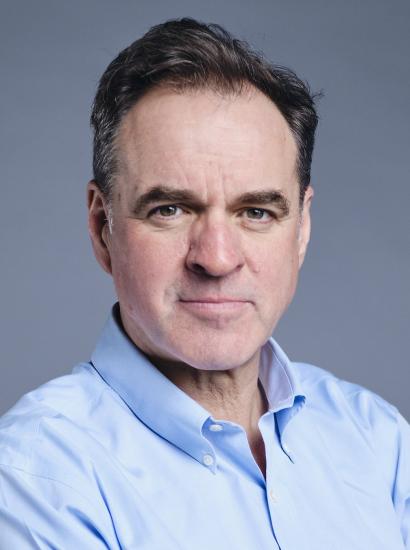
- This is the Capitalism and Freedom, the 21st Century podcast, an official podcast of the Hoover Institution Economic Policy Working group, where we talk about economics, markets, and public policy. I'm Jon Hartley, your host Today my guest is Sir Niall Ferguson, who is the Milbank Family senior fellow, and, and at the Hoover Institution, and also one of the greatest living historians, Niall's world renowned for his great works in international history and economic history, including many great books ranging from the histories of Great Britain and America, biographies of Henry Kissinger and the Rothschilds, the ascent of Money, and so much more. Thank you so much, Neil, for coming on the podcast. It's a real honor to have you on.
- It's a pleasure, John. Great to be with you.
- So, so you, you grew up in Scotland. What was your childhood like? I mean, how did it shape your interest in history and economics? Was it a coincidence that Scotland was also where the great Adam Smith lived? You know, who wrote the, the Great Wealth of Nations 250 years ago?
- Well, I was fortunate. I was born into the bourgeoisie, the middle class of the west of Scotland, and my parents were the first in their families to go to university. My father became a doctor, my mother, a physics teacher, and I grew up in the city of Glasgow. They could afford to send me to an excellent private school, the Glasgow Academy. And it was there that I began to think, I suppose in my early teens about questions of an economic nature. My father didn't believe that his children should ever be ill. I think it somewhat affronted his self-respect as a doctor, one day I was ill and was lying in bed feeling sorry for myself. And as I recollect it, before he left for work, which must have been a rather an early hour, he came in, looked sternly at me and handed me a book saying, if you're not going to school, you'd better read this. And it was The Wealth of Nations by Adam Smith. And I began to leaf through it and found myself entering a new world, a world in which the economic life that of course I saw all around me as a boy, began to make some sense. So that was the point of origin. The combination of being in a declining city, Glasgow was early to slip from prosperity to rust belt. And then thinking about it with the help of the great founder of the discipline of economics, that, that I think was quite a decisive moment. And I thank my father for, for that. It was, it was, I suppose intended as a kind of subtle punishment, but it wasn't a punishment at all.
- That's terrific. Were there other teachers or, or others that sort of pushed you toward becoming a, a historian?
- The Academy had exceptionally good teachers in d just about every field. I was at a reunion of my contemporaries. We all left high school in 1981, so I hadn't seen some of these gentle in for 45 years. And I made the observation that we had been lucky to, to have been taught by an extraordinarily good staff. Some had served in World War II and could always dazzle us with tales of their exploits. Others were younger, but many had been to Oxford or to Cambridge, and those that had been to the Scottish universities were also exceptionally good teachers. Ronnie Woods, Alex Farka, to name just a couple, introduced me to history as a serious discipline. And that was important because I had, I suppose as a young man, or at least as a child, expected to follow my parents in the direction of, of the sciences or or medicine. I remember toying with zoology as a, as a very young boy wanting to go off and study gorillas. But by the time I had spent a couple of years studying history seriously, and also reading widely in, in historic literature, I realized that I wanted to study particles with consciousness. I wanted to do the physics, or I wanted to do the physics of, of the human particle. And that led me to want to study history. I think Tolstoy played a key part. I remember reading War and Peace in the Garden. My parents had a rather small backyard in the tone of air by the time I was really studying history, seriously. And, and Tolstoy absolutely captured my imagination. War and peace is the greatest novel. And at the end of the book, there's this extraordinary theoretical appendix or coder where Tulsa says, well, what does this all mean? What does this tell us about the nature of, of things? And that question that he asks, what is the power that moves nations? Why did all these Frenchmen march hundreds of miles to Russia and commit violence? Why did the Russians fight them? Why did that all happen? Tolstoy poses the question brilliantly. Well, and it was at that moment that I thought, no, I will not study literature. I will study history.
- Wonderful. You know, both excellent disciplines, and that's fascinating that you came from reading Tolstoy. I mean, so many great, so many great, you know, between Tolstoy and, and Dusti Iki, I'm a huge fan as well. What, at what point did you say you wanted to be an academic historian? And was this, when you were at Oxford, were there certain intellectual influences there? When did you sort of wanna or feel confident that you really wanted to be an academic historian? That would be writing books?
- Not until my third final year as an undergraduate at, at Malin College Oxford, I'd gone up to Oxford expecting a quite different career path in those days, you must remember. So in the early 1980s, it wasn't as if one went to, to university expecting to to found a tech company. Oxford in the early eighties seemed to have only a few possible paths. You could make money in the city of London become a banker, you could become a lawyer, you could conceivably go into the foreign service, you could maybe go off to the BBC. That was about it. My thought was, in fact, in the area of, of drama, I suppose I quite wanted to write, but my initial impulse was to write plays or, or comic sketches. It was the era of Monty Python, and it seemed tremendously appealing that to be funny for a living. And I pursued that dream in a rather dissolute two years during which I did very little academic work. Part of the appeal of Oxford was that there really were no exams until the very end, and you could be quite badly behaved. And I was without any real penalty. Everything hinged on your final exams at ten three r essay papers over one week. And so as long as you excelled in those, you could have a whale of a time before. And I did, but it was, it was by the end of the second year that I realized I wasn't really good enough to act or, or write comedy. I, I, I wasn't actually that funny. And I also realized that I was rather miserable doing it. It wasn't really very fulfilling. And I, I remember vividly one night playing the part of the caterpillar in a musical version of Alice Wonderland in the Dean's Garden at Christchurch. So I, I thought I was sitting on a giant toad stool with a hooker thinking to myself, this is absurd. You must immediately stop all this and go back to the one thing that you are actually good at, which is, is writing history essays. So I gave it all up abandoned acting or decided just to act one part from then on, which was I suppose, the part of a historian. And I spent the final year studying very hard, and I was much happier. And I'm still much happier because that is what I really love to do. I like to read about history, think about history, and write about history. And I've, I've done ever since. But it wasn't really until that summer night in the, in the Dean's Garden at Christchurch that I had the epiphany.
- That's terrific. I I feel like you still carry a lot of humor into your, your speaking engagements and, and in your writing as well. So I, I I think you, you, you've still carried on those, those skills as well. I wonder sort of going through your works and, you know, going through sort of different themes in, in, in your books, and I think one thing that just distinguishes your work is, you know, you often your willingness to use counterfactuals, you know, sort of think about what might have been otherwise that some different direction in history been taken. Economists like thinking about counterfactuals a lot, sort of the basis of, of causal inference. Where did that sort of approach come from and how would you sort of describe your approach to, to history in general?
- Well, I think I came to counterfactual reasoning by doing it rather than by theorizing. I did my doctoral dissertation about the German hyperinflation of the early 1920s, the post first World War monetary disaster. And it's worth saying that that in itself was unusual. I chose to do economic history as an undergraduate and as a graduate student at a time when it was not in the least bit fashionable. And it still isn't, I think it's remained consistently unfashionable throughout my life. But I wanted to do both history and economics. I didn't find economics attractive as a discipline. I can remember picking up Samuelson's great textbook and leafing through it in a bookshop and thinking first it looked terribly boring. And secondly, that it had a chart showing projected gross national product of the Soviet Union exceeding that of the United States in the mid 1980s. And I remember thinking, well, any discipline that could possibly imagine that has to be bowls. So I didn't want to do economics at Oxford. It was done as part of PPE politics, philosophy, and economics. I'm actually quite bad at abstract thought, so I knew I'd be hopeless at, at, at, at philosophy. But once I realized the way economics worked, I realized I'd be bad at that too. The solution, the compromise was to do economic history, and you could do that at Oxford. It was regarded as a bit eccentric, but it meant reading Adam Smith instead of Aristotle and Cas instead of Russo. So I opted for the economic thoughts. I opted for the Industrial Revolution paper with the great Peter Matthias. I just chose every economic option that was available. And by the time I was trying to work out what to do as a doctoral topic, it seemed to me, with the advice of my old mentor and drinking companion Norman Stone, that the German hyperinflation would be a good challenge. I mean, Norman's argument was, you should do something involving a sip put at number crunching. In other words, quantitative economic history would be the way to go. And if you look at Norman's early work, for example, the Eastern Front Book or Europe transformed, there's really quite a lot of statistical material in there. Now, if you're gonna do number crunching, crunch, the biggest possible numbers, and they don't get bigger than German nominal prices in 1923. So I embarked on this enterprise and found myself sitting in archives in Hamburg and, and Berlin and elsewhere trying to piece together the story of the German hyperinflation. There was a moment as I was researching it when it struck me that it could have been avoided, that the whole monetary disaster of 1923 was in many ways the result of decisions taken mostly in Berlin, but also in some cases abroad that propelled Germany down a path of fiscal and monetary disaster. And so I wrote not only the dissertation, but also a, an article based on it, arguing that the thing was avoidable and if they had taken the right decisions in 1920, they could have had no hyperinflation. So this was the counterfactual argument, the first of my career, and it implied a fiscal stabilization program to put it very simply, plus what Tom Sargent was then calling a regime change in other areas as policy. And sergeant was one of those economists I was reading. Then, as I tried to think through the more theoretical aspects of the problem, well this was then sent off as an article for peer review to the great Bohart who was the grand master of German economic historians. And I still remember vividly getting his not very anonymized comments back on the paper, 12 single space pages of devastating criticism, the essence of which was it is not legitimate to speculate about alternative histories. That is not the role of the historian. And for about half an hour to maybe an hour, I sat there thinking my career is over. I have essentially been intellectually shot down in flames like a spitfire pilot in 1940. And then I revolted. I remember sitting thinking he's just, he's just wrong. He must be wrong. It can't be the case that the events of 1923 were inevitable and predestined, and we shouldn't even contemplate alternatives because after all, the contemporaries at the time debated the alternatives. They talked about them, they had in their mind's eye a very different outcome. In fact, relatively few people in 1920 could imagine a complete collapse of the German currency. And that set me off on the path that produced the book Virtual History. My response to Klin Bohart was, not only are you wrong about the German hyperinflation, but you are wrong about the philosophy of history too.
- That's terrific. And I, I love Tom Sargent's work on, on this topic, you know, on the European hyperinflations, the, the 1920s, you know, this famous paper, the ends of four big inflations is a classic. And you know, it's, it's been, what's interesting is I feel like we're getting more natural experiments in of this sort recently with, you know, the end of more big inflations, like for example, in Argentina. Yes. Following the big fiscal consolidation that, you know, president have Malay there is undertaken and you know, essentially successfully defeated there, hyperinflation there. For now I wanna talk about networks because networks is something I, I feel like that's a theme in a, a number of your works. You, your early work on the Rothchilds, you know, very archival and terrific. You had also the Square and the tower and you framed sort of history is sort of a struggle between hierarchies and, and, and networks. You always felt that networks were important in history or, or at what point did you sort of come along in this idea that there were sort of key figures, key networks that were important particularly in financial and economic history?
- Well, I think I felt it instinctively, but again, it took me a while to get to the theory. So a lot of my early work is about networks. In the case of the Rothschild book, networks of, of bankers. When I wrote a history about the British Empire that was really about networks of traders and, and missionaries, I suppose I was drawn to study networks because the hierarchies that you encounter in state archives, the bureaucrats writing to other bureaucrats always bored me. And I found that the state archives in Germany were much less interesting than the, the private archives. It was in the private papers of the Banker Max VA book that I got closest to what I thought had really happened in Germany in the early 1920s. Whereas in the Hamburg State Archives, one saw the world through the eyes of, of bureaucrats who, who almost seemed programmed to ignore the extraordinary monetary revolution that was happening around them. So I have naturally been drawn to the world of, of, of private actors, and when you enter, say, the realm of finance, you immediately realize that that things are in fact organized as, as networks. The Rothchild had a very large pool of capital of their own by the end of the 1820s, and they became the dominant financial institution of the 19th century. But most of what they did was through a network of agents and corresponding banks. It it was that, that I encountered in the Amazing Rothschild Archive now in new court, in the Rothschild and company offices in the city of London. That was eye-opening, but I sort of encountered it before trying to understand the economy of the city of Hamburg in the 1890s through to the 1930s. If you're interested in the history of, of the economy, not, not in the theory of economics, but in how economies really work, then what you discover is that economies are just lots and lots and lots of interacting firms. Some very large, some very small, but they exist in some kind of network. And that is in fact the economy now. I guess it took me many, many years, certainly until I was probably a hoover thinking back to understand the theo theoretical importance of that insight. Most historians go to state archives and write the history of states and the people who work for states from pri prime ministers and presidents write down to lowly officials. I intuitively and instinctively didn't like doing that, and I preferred to see history from the vantage point of, of bankers and, and businessmen generally. I suppose it was in the late 2010s that I began to think that there was something here of meaningful theoretical importance. And then I discovered and moving to Stanford helped that there was an entire network science that was extraordinarily rich and, and variated, it had its mathematical aspects. The work of people like Leonard Oiler had created a whole branch of mathematics devoted to the study of networks. Physicists did it, biologists did it. I met Jeffrey West at the Santa Fe Institute who was working on a whole theory of networks at every scale. And the deeper I delved into it, the more thrilled I became to discover that what I had been doing in practice was also legitimate, in theory, very pleasing, like counterfactuals before that, Laslo Bar Bassi, the great physicist whose work on networks is, is really just so brilliant, was a source of huge inspiration to me. And I, I began to understand that I could formalize what I was doing instead of using terms loosely. I could graph the networks and then I could calculate who in the network was really important with concepts like between the centrality all tremendously exciting. And then COVID happened, and as the pandemic began in January, 2020, it suddenly struck me that it would be possible to think of it as a network phenomenon. And indeed it turned out that Barabasi already had a chapter in his textbook on epidemics and pandemics as, as network phenomena. So from that point on, really, I had to write a book that put all of that into some kind of a formal structure and the square in the tower was the result.
- That's terrific. And in the Sanford economics department we have Matt Jackson as well, who's a, a great economic theorist of, of networks. I wanna talk a little bit about economic history in, in general and in financial history. You wrote the Cash Nexus in 2001, talking a lot about the relationship between sort money and power over the centuries. You, your fantastic economic history and, and financial history, the ascent of money published in 2009, probably perhaps fair to say your your most widely read book which trades this sort of financial history from the Renaissance to the global financial crisis of 2008. What do you think economic policy makers today should be reminded of from the history of finance?
- Well, I do wish that more policy makers had some financial history in their background because it is a different discipline from economics and it does, I think provide some very valuable insights to, to practitioners. The way the ascent of money works is that it sets out the history of each component of the financial system, beginning with, you know, money and, and then banking and then looking at, at bond markets and, and stock markets, real estate insurance. And then the way in all of these things have been globalized. And I think the most important of these for today is, is the bond market. Because I, I think we have to have a better awareness of the extraordinary problems that have been accumulating in public finance this century because in most countries and certainly most developed countries since the beginning of the 21st century, there has been a sustained but clearly unsustainable increase in public debt and a habit of, of borrowing that is produced in the United States, six or 7% of GDP deficits as far as the eye can see that that chapter's important because it explains where the bond market came from, that there really wasn't until, I guess the mid 18th century in England, a way in which investors could lend money over the long term and get a predictable return with a standardized marketable bond that, that for which there was a secondary market, this was a really new thing. There had been antecedents going all the way back to Renaissance Italy and the Dutch Republic, but the, the emergence of the consolidated fund and the bond called the console perpetual or near perpetual bond was a really important part of what became known in the literature as the financial revolution. So my basic argument has for 20 plus years, the United States is heading towards some kind of reckoning because it's accumulating debt and running deficits in ways that are not sustainable. And I've thought a lot in many books about this problem with each year the problem getting bigger so that that chapter on the history of the bond market would be a, a good, a good read for any, anybody working in a treasury or a finance ministry today.
- I, I couldn't agree with you more and I think I'd probably go even further in saying that. I think it would be great if we had mandatory economics and, and financial education be, you know, beginning in, in our schools. Yes. And I think, I think that's, that's where it all, I think we, if we could fix that, I think we, we could fix a lot of things perhaps.
- I agree, John, financial literacy is a very grave problem throughout the world, and it's astonishing that it should be a problem in of all places the United States. But it's always struck me as, as perhaps to the advantage of rent seeking institutions that the population leaves high school more or less completely ignorant of, of finance. If they knew what they were doing, they, they'd be much less easy marks, wouldn't they?
- Absolutely. And I, I'd love to get back to America in a second, but I, I want to get into the British Empire and the, and the Commonwealth for, for a moment. I, I grew up in Canada. I was born in Canada, so this, this includes Canada and, and the, and Australia and New Zealand as well. But you know, I I want to talk about your writings there. You, you wrote Empire in, in 2003, and I think you claim that, you know, the British Empire had some positive institutional legacies. I'm curious, you know, what you think about, you know, I guess like the current backlash against Imperial history today. I mean, we hear this often, but also want to talk a little bit about, you know, your, your 2013 book, which I thought was quite pressing. This is the, the great degeneration where you, you talk a lot about how the, some of the West great institutions are failing, you know, things like the rule of law and property rights. I feel like certainly during COVID, we saw at this front and center a lot of attacks on individual freedoms. And, and since then, I think we've seen sort of a further breakdown in, in free, free speech protections. Do you think that this is, you know, particularly the case in the anglosphere sort of outside the US and the uk, Canada, Australia, New Zealand, where you don't have some of the, you know, you don't have strong written constitutions that are hard to change like in the US and the uk It, it wrote the first Bill of Rights in 1689 after the glorious revolution, but it's since obviously been, you know, legislated over. Do you think, you know, is there a hope in the sense that, do you think it could, there there's hope that legislators could legislate individual rights back into the UK and, and other, you know, commonwealth countries? I I asked this recently of Liz Truss and she was very optimistic about this, this idea. I'm not sure, sure if I, I'd be quite as quite optimistic, but I think a lot of this came to the fore certainly during COVID where a lot of the commonwealth countries had some of the most pernicious lockdowns. I'm curious what, what you think about the, the legacy of those arguments that you made over, over a decade ago.
- Well, it's certainly true that the Anglosphere has been on a strange well series of, of diverging paths. I stumbled into this field because I think in around 2001, somebody at Channel four, the British television station came to me and said, Hey, we'd like a television series about the British Empire, history of the British Empire. We'd like you to do it. And I, I busted been at a bit of a loose end because I, I said yes, but I said on, on one condition, I said, I don't want to do some kind of nostalgia trip. I, I'd like to do a history of, of globalization, because that's really what this would be describing how the British Empire created a world economy in a way that hadn't really been true before. So I wanted to do economic history and I thought doing it on television would be just a great way to get to an audience. I wasn't gonna re reach sitting in, in Oxford teaching the, the elite writing that history was very illuminating to me as, as a Scotsman who who'd grown up with like all Scots relatives in Canada, relatives in the United States. I I was familiar with the, the kind of social history of globalization. Families like ours had been all over the place. It wasn't unusual to spend at least part of your time as my family did in, in Kenya. So I wanted to try and show how this had works and how this small and rainy island or archipelago off the coast of northern Europe, but managed to conquer 25% of the world's land surface because that just seemed like an amazing story. How that worked and empire was the results I can still find on YouTube, a very young Ferguson striding around exotic locations explaining every aspect, at least most aspects of imperial history. But as an economic historian, I was really just doing a cost benefit analysis in a, in what seemed to me a fairly straightforward way. I said, look here, here are all these benefits of integrated global markets for labor, for land and, and the transfer of technology, et cetera. All of this was in the economic history literature. And then you look on the other side and you see the costs, clearly slavery. But then the British Empire abolishes, the slave trade, abolishes slavery, there are other obvious shadow sides. Indians are second class citizens in their own country. On the hand other hand, the British actually made the Indian subcontinent into a single country. And I, I went through all, I thought the costs and benefits quite rigorously. It came to the conclusion that whatever you might think about the negatives, the fact that the British Empire existed in 1939 greatly reduced the probability that much worse. Empires like Hitlers and Stalins and Hirohito would become dominant in the world. The British Empire hadn't existed. The axis would've a pretty decent shock at winning World War ii. That was the argument of the book. And I expected a debate because John, I knew that the left would disagree with this. And I was looking forward to a debate about the costs and benefits. And I was expecting reviews to say, oh, well he's understated the cost that he's overstated the benefits. None of that happened. None of it. There were almost no reviews of that sort where the book was reviewed. It was just of the form, here is a terrible person whitewashing racism. That was the, the kind of guardian style response. And I, I entered a new era in my life in which debate was replaced with character assassination as a strategy. And it was suddenly clear to me that, that the left's approach had shifted away from economics. 'cause after all in the Cold War, they'd been unequivocally beaten into the realm of, of culture. And in the culture war, anybody who said anything positive about the British Empire must be a racist, racist. And that meant that there was no satisfactory debate about that book. Much to my great irritation. I followed it up with the great degeneration as a kind of, well, hang on, I'm getting my own chronology wrong. I followed it up with a book about American Empire called Colossus, which said, ah, there is an attempt to run something like an empire by another English speaking power. It's probably not going to go so well. That was Colossus the rise and fall of America's Empire. But I went back to this field with civilization, a book that went on an even larger scale to show the nature of western civilization's ascendancy, beginning from say the 16 hundreds. And the great degeneration was the kind of counterpoint to that showing that western ascendancy was clearly over in our time and we were entering a period of western descent. That that was really the argument of, of those books dig down and you find that they're really arguments inspired by the institutional view of economic history by Douglas North and others who of course were really building on the foundational work of Adam Smith. And I think I come out of all that writing and indeed reading, believing that institutions are pretty critical, but also so are ideas. And the ideas and institutions that were necessary for Western ascendancy were like open source code. Other people and other cultures could download them. And that's what happened. And so over time, beginning with Japan, non-Western societies downloaded the killer apps of Western civilization and were able to replicate pretty much all that had been achieved in Britain and then in British colonies in the great degeneration. I point out that what had made Britain, all the United States so successful, the institutions that were foundational were in some state of decay, public finance, which we've already talked about in the rule of law, which I argued was becoming the rule of lawyers in the realm also of regulation and in the realm of education. And so I made an argument in the great degeneration, my shortest book to date that, that something was going wrong. And I think what really became clearer in the last 10 years was that it was going more wrong in Britain than it was going wrong in the United States. And it was also going somewhat wrong in Canada and in Australia and New Zealand. And COVID was really the revelation which showed that, for example, individual liberty, individual property rights were just being accorded much less importance than the priorities of a state obsessed with, with safety. And safety is,
- Well I, you know, it's fascinating to you, I think about some of these shows, like, you know, man in the Hightower, you know, talks about sort of the counterfactual of, you know, what would've happened if the allies had lost the second World War and, and it imagines in the show, you know, what America would look like if it had been taken over by, you know, the Nazi German empire and the, and the, you know, the, the, the Imperial Japanese as well. So it's, it is, it's a very, very interesting sort of, I, I feel like a very Ferguson type drama. I wonder necessarily just, I guess drilling down on, on Colossus and, and Civilization and Hegemons, I'm, you know, where it, it's about 250 years since deciding of the Declaration in Independence. I mean, what do you think America's at today, 250 years later? We ta you talked a little bit about the trajectory of government debt. I feel like in the past, you know, 10, 15 years, there's, you know, been a lot of discussion about America's role in the world from a foreign policy perspective. You know, there, yeah, there's questions about growing government debt, but I'm curious where, where do you fall in terms of like, one, does the world need a global hement? Is it good? You know, is is America a force for good in the world sort of playing this, you know, something of a role of a, of a, a policeman? I mean pr preventing a country like Iran from developing nuclear weapons sounds like a, a, a good good reason for, for me. But obviously there's a lot of critics as well. Where do, where do you fall on all this? I, I think in the foreign policy sort of debates, there's always the, the institutionalists that believe in sort of middle powers that they can sort of be okay on their own sort of articulated by Mark Carney's Davos speech a little bit. But then I think there's obviously the other side, the sort of more, more pro heman side and is the Sam Huntington sort of view, I'm not a a foreign policy expert, but I'm curious where you, where you fall in all of this.
- Well, I think about these things historically and, and it's quite hard to find a period of history in which there's no empire and in which they're just lots of middle powers getting along the Davos or its equivalent Fascinatingly history is mostly the history of empires. And of course there's really just one, there are usually at least two and sometimes there are half a dozen. But, but history is mostly the history of empires. You can't wish it away just because you are upset by imperialism because you read too much. Edward Saeed in the, the key thing about the term middle power is that it is an oxymoron. They are in the middle and they don't have power because in today's world there are really only two superpowers. As was true in the first Cold War. In the second Cold War, there is the United States and a Marxist superpower. Now it's China. It used to be the Soviet Union. And the reality of the world then, as now, is that those who are not superpowers are either aligned with one or other superpower, or they're caught in the middle pretending to be non-aligned, but in reality being aligned one way or the other. So I'm, I'm much as I like Mark Carney person, I've known him for many years, I didn't agree with that, that speech, or at least I, I didn't interpret it in the way that most of his fans did because I think it was a much more pessimistic speech than they realized. And he quoted the million dialogue from fides, if I remember rightly. And my point at, at Davos back in, in January this year was, yeah, it really is a million world again. And the strong do what they will and the weak do what they must, that that is the reality. Now, if the United States fails to maintain its primacy, the primacy that it fought hard for in the 1980s, that it nearly lost in the 1960s, if it, if it fails to retain its primacy and the world becomes a world in which the people's Republic of China is the preeminent superpower, it will not be fun to be a so-called middle power. And it will not be fun to be a free individual who like you and like me, enjoys to speak their mind because the Chinese empire will be an unfree empire in which we shall all be to some extent slaves. That's the thing I'm against. I'm, I'm very, very convinced that liberty is the central point of human life. And and if you take it away, life is radically worse. The United States is not perfect, but it's fundamental operating system was designed with the ideas of the 18th century enlightenment and, and the concept that you could create an institutional structure that would uphold individual liberty. What makes the founding father so impressive and why we should raise a glass, several glasses, hold bottles to them this year is the beginning. 250 years ago, they had a vision of a federal republic in which institutionally liberty would be protected and upheld in ways that it couldn't be under the British crown. And as it evolved, as they debated and finally produced their constitution, the founders came up with the best operating system yet to preserve individual liberty and indeed to promote it. That's the great promise of America. The rest of the anglosphere doesn't really make liberty individual liberty so central as the United States does. Now, when people are ringing their hands about whether it's middle powers or the liberal international order, or just the future of the republic, and there's much hand wring in the age of Trump, I say to them, sure, you may not like the president and you may even be right about his darker impulses, but the founders designed the constitution for the eventuality that somebody would become president who wasn't terribly committed to the fundamental principle of liberty. And it would be okay because that was how it was designed. The presence, power circumscribed, there are checks and balances, they're real, they work. And so the founders wouldn't have been surprised by our predicament today. They would've said, well, as how Hamilton says in one of of the Federalist papers, there will be somebody like this at some point who, who will be motivated perhaps by the, the popular tide. But we've set it up so that that person can't become Napoleon or Caesar. The great thing about the founding fathers, especially Hamilton and Madison, is they were applied historians. All the arguments they make for separation of powers and the way that the thing is gonna be constructed are based on historical precedent. They say to one another, how can we avoid being like all the other republics, including the British one that was set up the previous century and had lasted a very short pace space of time before it became Oliver Cromwell's dictatorship, the protectorate. So I, I'm excited by this, this great celebration of 250 years because we have a chance to remind ourselves what's really distinctive and what's distinctive about the American Republic is that it's based on those ideas that we began by talking about, it's partly Adam Smith. It's partly David Hume. They're not name checked in the constitution, but they're clearly very influential in the minds of the founders who were more steeped in the Scottish Enlightenment than they were in the French Enlightenment. And that's an important point for me.
- Absolutely. And, and, and you know, extremely well read, you know, and many of the founders knew several languages. I mean, they, they, they knew they were contemporaries of Smith. You know, Smith was writing, he wrote The Wealth of Nations in 1776. They were familiar with it. They had sort of different views. Hamilton was, I think somewhat more interventionist than say, you know, Jefferson or, or Madison. But, but you know, it's, it's funny or interesting because, you know, Smith, he wasn't an anarchical libertarian either. He certainly believed in liberty and was writing against mercantilism, you know, pernicious or are extremely high tariffs and, and hoarding gold and all this. But he still made some exceptions for tariffs, like in part four, the Wealth of Nations. He believed in having a tax system in part five of the Wealth of Nations. So it's, I think it, it's, it's good that people go back to reading these things, these founding sort of documents and, and pieces of literature this year. I wanna talk just a little bit about economic growth. I think one interesting trend that's come up since the global financial crisis is that, you know, western European nations seem to, including in addition to Canada and, and Japan, other, other western nations have seen their g per capita essentially flatlined since the global financial crisis. The US is sort of this exception to this. And you know, it keeps growing. There's these big tech companies here that are, are very unique to the United States. You know, Canada might have Shopify and Sweden might have spot Spotify or something like that, but at the end of the day there's, there's very a few exceptions to where the, the global tech hub in the world is, which is in the us So in, in, in something history and, and I'm just curious what you think about the role economic freedom plays. Is it fair to say that liberal economic institutions cause growth, say rather than like inclusive economic institutions in the way that maybe Drone Alu and James Robinson would, would put it? And by liberal economic institutions, I mean sort of property rights and rule of law and so forth. Is that a better framing in your mind? I know we're, we're sort of getting into abstraction here rather than sort of concrete history, but I'm just curious what, what your sort of take is on, on what causes economic growth and the role that economic freedom plays.
- I'm sure I'm, I'm radically opposed to all that say Robinson and Aslu argue in, in why nations fail. It's actually quite close and in some ways to the arguments in civilization and the great degeneration that, that institutions really matter. But I think there's a, a kind of difference in the historical framing there, particularly in the account of, of the glorious revolution, for example, or in the social history that seems to underpin some of their arguments because there's always a, a tendency, I think to create a slightly caricatured account of, of, of, of, of British history and to anti date democratization. The industrial revolution does not happen in a democracy. It happens in a place where the, the property rights of entrepreneurs and other property owners are very well protected. And that that's I think the, the critical point. It's the rule of law based on private property rights is really the, the, the vital ingredient without which it's very hard to have an industrial revolution. And I think one can see that by looking at places where the industrial revolution doesn't happen, for example, in the Ottoman Empire, which is not far from the ideas that make possible the industrial revolution, but but doesn't actually apply them. And it's partly because they just have a completely different legal orders to McCarran has, has shown. I think the most important point about the industrial revolution and its dissemination is that, that some of what makes the success happen is, is not particularly sexy and, and telling a story about inclusion and presumably also diversity and equity is just a new version of the wig interpretation of history. It sort of modernizes a story which is actually much more contingent. David Hume is one of my heroes sitting on my desk as we talk, is his history of England, which is also published as a history of Great Britain in Scotland. And, and Hume's historical dynamics are, I think, preferable to the, just so stories of the new wig historiography, a lot of what produces the breakthrough to industrial revolution in the British Isles is sort of accidental. It's weird that it works in both the civil law system of Scotland and the common law system of England. It's weird that it sort of happens at a time when the penal code is unbelievably draconian and you get sent to Australia for stealing a chicken, which is like being sent to Mars in our time. So I think that the key to understanding the historical process is not to create some perfect narrative of uplift that you can then regale your classes with at elite Colleges is better to tell people that there's a lot of, of of accidental contingent forces at work. That war played a part. The do you think the industrial revolution would've happened if there hadn't been a British state with an insatiable appetite for cannons? Not to mention warships, come on. Where does public debt come from? Is it because people think it would be good to have a risk-free asset? No, it comes about because of war finance history's not just so story. A lot of it's nasty and a lot of it's highly contingent. That's kind of the way I think about these things. And if you come to the United States today, you can look around and you can see that the success of the Californian tech companies is, despite the Californian state, the Californian system of government seems calculated to asphyxiate capitalism. It's extraordinary how well co corporations based here do. The great thing about the federal system is it's like 50 experiments being run simultaneously and you can see pretty easily which one's working that will be Texas and which one isn't. Well step forward Illinois, but California's sort of vying to be Illinois 20 years from now. That's the way I approach these problems and it it probably is less morally satisfying, but it is, I think historically much more accurate.
- Ab absolutely, and I I love that this idea that the history is, you know, somewhat contingent. I wanna talk, I think this is a great segue into the 21st century rise of socialism that we're seeing sort of in the West and, and all this discussion about inequality as, as being, you know, one of the great social ills of, of today, which they argue, I was actually born on November 11th, 1989 as the Berlin Wall was falling and, and essentially no one born since has really any direct memory of Soviet communism and, and that socialist system that they had which failed. I'm just curious if you have any thoughts on the sort sort of resurgence and the rise of sort of socialist economic thinking. Obviously there's, you sort of mentioned, you know, there's challenges in California that proposed California wealth tax, 10% income tax. I can Washington state and Washington state that's scaring away wealthy individuals. I'm just curious, like I feel like in the past 10 years we've seen a, a change that, that is subtle, but I think important, which is this sort of just blanket discussion of inequality as being the chief social and economic ill of our times. And I think there's a challenge with using that as a framework compared to, say, promoting economic growth and fighting poverty, which I think are very important are the kind of most important economic goals. And I think this gets back to, you know, Margaret Thatcher's famous saying in a 1990 parliamentary exchange where she, she was talking to, I believe a labor MP saying that, you know, the honorable member suggests, you know, preferring the poor to be poor, the rich were less rich. And you know, the idea is that, you know, by using the metrics of Tom's Pickety and and his co-authors, that making you know, the the poor, making the poor poor is, is actually acceptable if it's making the rich comparatively more poor. And, and at some level, I think this is, that that's what that kind of thinking, the, the path that it can take one on and, and perhaps we're seeing that play out in California. I'm curious what you think about this, this whole trend of sort of the new socialism and the this, all this discussion about inequality,
- We should care about poverty. I think we should care about inequality too. The, the situation of people in the bottom quintile of the income distribution in the United States is quite miserable. And the statistics and life expectancy to give just one example are dreadful. So these are problems, but the fatal mistake is to think that socialism is the solution. And it's extraordinary to me that anybody could possibly think that after all the experiments that have been run in the last 100 and nearly 110 years, all of which have failed without exception. I mean the definition of insanity is doing the same thing a hundred times and expecting a different outcome. We've had at least a hundred experiments with socialism and they all end the same way. So people can only believe that this is the solution to the problem of poverty and inequality if they have had their memories wiped clean of any historical experience. It's amazing to me that we're having a discussion about socialism in America in 2026. What an indictment of our educational system that this should be. So if we taught properly the history of say the Russian Revolution and its horrendous consequences or the history of Vietnam and the fate of South Vietnam after it was taken over by communism, I could go on and on if we just distributed the Black book of communism and gave people a chance in high school to reflect on just how many millions of people fell victim to the ideas of Marxism and Leninism. If we looked at Maoism through the eyes of our colleague Frank Deter in high school, then I think this kind of delusion might be less recurrence. But there is a complete amnesia at work here. As I said, there are problems, they're real life at the bottom of the social heap in America. Mostly sucks, but that is not because billionaires exist. If the billionaires were the sons grandsons, great grandsons of billionaires, if the American elite of wealth was a hereditary elite, that would concern me would be a bad sign. But actually there's more turnover in the American top, not 0.1% than in any European equivalent. There's high social mobility in the United States. The problem is that most of them start out middle class and they get to be rich mostly through their own endeavors. The problem is very few of them start in the bottom quintile. What's the reason for that? The education that we give the people in the bottom quintile is terrible. Why is it terrible? It's a public monopoly and it's dominated by the teacher's unions who have absolutely no incentive in to give kids a good education. This is fixable, but it has to be fixable through educational reform, not punitive taxation of those who in the middle class have been successful and made it to the top. It's simple really. I don't know why this is complicated, but I think bad education is itself an explanation for the confusion.
- I fully agree with you on, on, on the important role of education. You know, I really wanna thank you for coming on. It's a real honor to speak with you on such a broad range of topics. I really do think that you are one of the great historians, the one of the greatest living historians today, so it's a real honor to speak with you.
- Thank you very much indeed for those kind words. John. It's been a a fun conversation and I've enjoyed it.
- This is the Capital of Freedom in the 21st Century podcast, an official podcast of the Hoover Institution and Economic Policy Working group where we talk about economics, markets, and public policy. I'm John Hartley, your host. Thanks so much for joining us.